Search results
Search for "aldehydes" in Full Text gives 760 result(s) in Beilstein Journal of Organic Chemistry. Showing first 200.
Amino acid-based surfactants: sustainable synthesis and antimicrobial mechanisms
Beilstein J. Org. Chem. 2026, 22, 1067–1085, doi:10.3762/bjoc.22.85
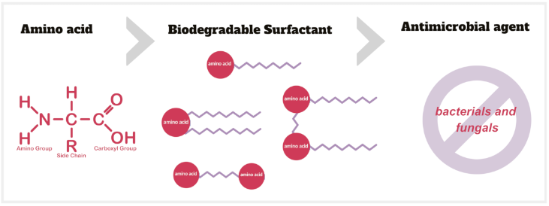
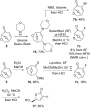
- reactions. N-Alkylation is mainly achieved either by reductive amination with long-chain aldehydes followed by chemical reduction, or by direct nucleophilic substitution using activated alkyl halides or sulfonates [6][10][13]. Reductive amination generally affords improved control over mono-N-alkylation and


Synthesis of functionalized, 13-alkyl-substituted coralyne derivatives and investigation of their interactions with duplex and abasic site-containing DNA
Beilstein J. Org. Chem. 2026, 22, 1057–1066, doi:10.3762/bjoc.22.84
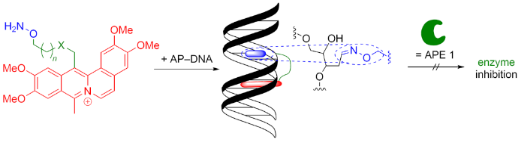
- -functionalized coralyne derivative 2g binds to AP site-containing DNA, as the observed effect is characteristic of AP–DNA ligands. Moreover, this result is in agreement with the control experiment that demonstrated the general ability of compound 2g to form oxime ethers with aldehydes (Scheme 4). As a result


One-pot four-component sequential synthesis of S-alkyl dithiocarbamates using lipase as a biocatalyst
Beilstein J. Org. Chem. 2026, 22, 1048–1056, doi:10.3762/bjoc.22.83
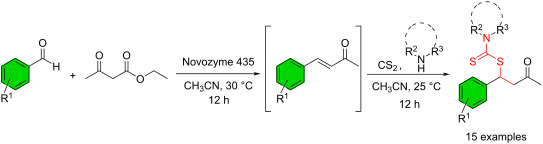
- , where they serve as antifungal and anticancer agents. As a result, their synthesis has garnered significant attention in recent years. In this study, we present an efficient one-pot four-component approach for the synthesis of these scaffolds, utilizing aldehydes, ethyl acetoacetate, carbon disulfide
- (CS2), and amines. Initially, α,β-unsaturated carbonyl compounds, serving as Michael acceptors, were generated from aldehydes and ethyl acetoacetate through a decarboxylative Knoevenagel reaction under mild conditions, using lipase as a biocatalyst. These intermediates then sequentially undergo a
- ) resulted in yields of 71%, 65%, and 73%, respectively. In contrast, using a non-polar solvent such as n-hexane resulted in a significantly lower yield of 32% (Table 1 entry 9). After having optimized the reaction conditions, the scope of the reaction was investigated using various aldehydes and amines, as


Rh(III)-catalyzed chelation-assisted C–H activation/annulation of 2-arylimidazolines with cyclic diazo-1,3-dicarbonyl compounds: a novel approach to tetracyclic annulated derivatives of 2,3-dihydroimidazo[2,1-a]isoquinoline
Beilstein J. Org. Chem. 2026, 22, 997–1003, doi:10.3762/bjoc.22.78
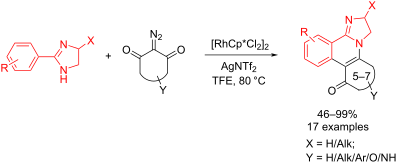
- azides, while 2-arylimidazolines 2 were prepared via condensation of aromatic aldehydes with ethylenediamine in the presence of N-bromosuccinimide [25]. We began our investigation with the model reaction of 2-(4-chlorophenyl)imidazoline (2a) with 2-diazodimedone (3a), which resulted in the formation of


Cascade transformation of 2-(diazoacetyl)-2H-azirines to 2-aroyl-3-hydroxy-1H-pyrroles via condensation with aromatic aldehydes
Beilstein J. Org. Chem. 2026, 22, 897–904, doi:10.3762/bjoc.22.70
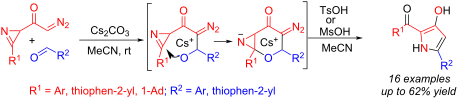
- with aromatic aldehydes does not result in the formation of an azirinyl-substituted β-hydroxy-α-diazocarbonyl compound, but is accompanied by a tandem intramolecular cyclization involving the hydroxy group and the C=N bond of the azirine to form a bicyclic intermediate, a 4-diazo-2-oxa-7-azabicyclo
- . Considering that the condensation of acyldiazomethanes to aldehydes leads to the β-hydroxy-α-diazo carbonyl compound [20][21][22], we hypothesized that such condensation of aldehydes with 2-(diazoacetyl)-2H-azirines could yield the corresponding azirinyl-substituted diazo compounds. This paper describes the
- reaction of 2-(diazoacetyl)-2H-azirines 1 with aromatic aldehydes 2, which does not terminate in condensation to form an azirinyl-substituted β-hydroxy-α-diazocarbonyl compound 3, but is accompanied by a tandem intramolecular cyclization involving the hydroxy group and the azirine C=N bond to form a


Site-specific labelling of native peptides and proteins: chemical and enzymatic strategies
Beilstein J. Org. Chem. 2026, 22, 857–881, doi:10.3762/bjoc.22.67
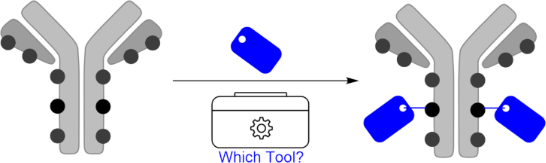
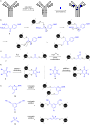
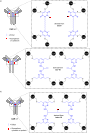
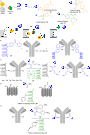
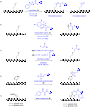
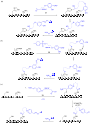
- -like linkages (≈9 M−1 s−1; Scheme 1d) [10], whereas 2-formylphenylboronic acid 3 (FPBA) generates thiazolidino boronate with noticeably improved kinetics (103 M−1 s−1; Scheme 1e) [11][12]. Aldehydes can be introduced at protein N-termini through several strategies: oxidation of serine or threonine with








Knoevenagel condensation of 4,5- and 1,8-diazafluorenes
Beilstein J. Org. Chem. 2026, 22, 803–812, doi:10.3762/bjoc.22.62
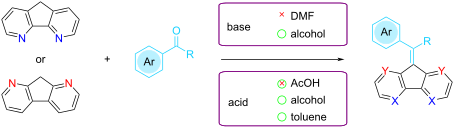
- . However, there are currently only limited methods for their synthesis, which are complicated and typically based on modifications of 4,5-diazafluorenone. Herein, we systematically studied the Knoevenagel condensation of both 4,5- and 1,8-diazafluorenes with aromatic aldehydes and evaluated the
- examples are scarce, especially for 1,8-diazafluorene. We have previously reported the condensation of 4,5-diazafluorene (1) with aromatic aldehydes and dialdehydes under ammonium acetate catalysis in acetic acid giving the corresponding products in good yields [5][23]. Remarkably, the only condensation of
- -diazafluorenes with aromatic aldehydes and evaluated the influence of the diazafluorene nature and solvent on the reaction mechanisms and reactivity. The reactivity of diazafluorenes under basic conditions was demonstrated to be improved in protic solvents due to solvation of ion pairs by these solvents. We




Preparation of 3-(alkylamino)imidazo[1,2-a]pyridine-2-carbaldehydes via Kornblum oxidation and unexpected ring-opening reactions of the corresponding alcohols under oxidative conditions
Beilstein J. Org. Chem. 2026, 22, 763–770, doi:10.3762/bjoc.22.58
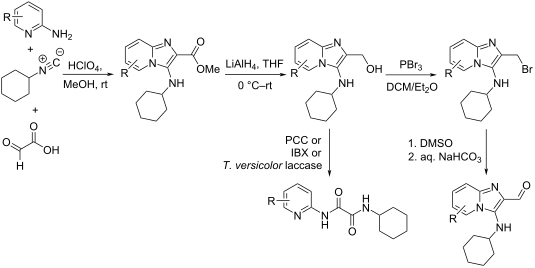
- oxidation conditions, reaction in the presence of DMSO and NaHCO3 under conventional or microwave heating to ≈100 °C, were applied to the bromides derived from these alcohols by treatment with PBr3, resulting in the desired aldehydes which successfully underwent reductive amination reactions with 2
- ester being recovered. Thus, for the preparation of the aldehydes we opted for reduction of the esters 13a–d and 13f to their corresponding alcohol derivatives (17) followed by oxidation to the aldehyde. Esters 13a–c were readily converted into the corresponding alcohols 17a–c in excellent yields of 92
- laccase in the presence of TEMPO and O2, were tested on compounds 17 in order to obtain the corresponding aldehydes, but both of these methods also gave rise to the ring-opened products 18. A detailed investigation into the mechanism of this ring-opening reaction was not conducted. However, this failure


Synthesis of heterocycles based on azomethine ylides from α-amino acids (or amines) and carbonyl compounds
Beilstein J. Org. Chem. 2026, 22, 705–741, doi:10.3762/bjoc.22.55
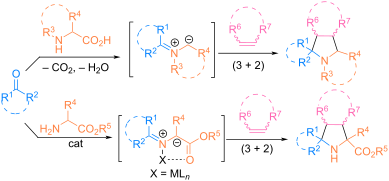
- glycinates and aromatic or aliphatic aldehydes, to alkyl acrylates 2 proceeds with high endo-diastereoselectivity and moderate enantioselectivity. However, most pyrrolidine derivatives 8, obtained from tert-butyl acrylate, are solids that can be enantiomerically enriched by recrystallization. In [43], a
- sulfone, cinnamic, croton, and methacrylic aldehydes, and β-nitrostyrene as dipolarophiles. Depending on the dipolarophile used, pyrrolizidines 11 were obtained with an enantiomeric excess of up to 94% and yields of up to 92%. In 2009, Wang and co-workers reported the catalytic endo-selective
- of very efficient protocols have been developed to carry out this reaction in an organocatalytic asymmetric version. In particular, Vicario [61][62][63][64] reported the first organocatalytic enantioselective (3 + 2) cycloaddition reaction between α,β-unsaturated aldehydes and azomethine ylides. The


Continuous-flow carbonyl hydrogenation under subatmospheric to atmospheric hydrogen pressure enabled by robust heterogeneous Pt–Fe catalysts
Beilstein J. Org. Chem. 2026, 22, 575–582, doi:10.3762/bjoc.22.43
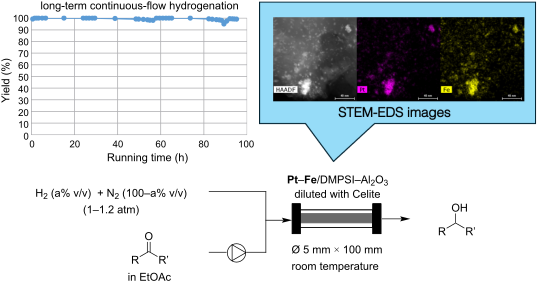
- , including ketones and aldehydes, to alcohols is a fundamental and important reaction in organic synthesis. One of the most ideal methods is catalytic hydrogenation, however, the hydrogenation of ketones generally requires harsh reaction conditions, such as high temperature and high pressure. We developed a
- bimetallic Pt–Fe nanoparticle catalyst immobilized on a composite support of dimethylpolysilane and alumina. Both ketones and aldehydes, including highly bulky and sterically hindered substrates, were smoothly hydrogenated using the newly developed catalysts under continuous-flow conditions at room
- : bimetallic nanostructure; carbonyl reduction; continuous-flow reaction; heterogeneous catalyst; subatmospheric hydrogen; Introduction The reduction of carbonyl compounds, ketones and aldehydes to alcohols is a fundamental and important reaction in organic synthesis that can provide valuable chemicals such


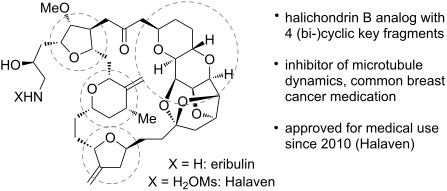
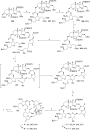
Modern synthetic pathways towards eribulin and its subunits
Beilstein J. Org. Chem. 2026, 22, 495–526, doi:10.3762/bjoc.22.37
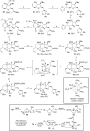
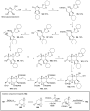
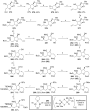
- with a remarkable total yield of 24%. In 2023, Kaghad and co-workers designed a novel route towards C14–C35 fragment 255 involving three stereoselective α-chlorinations of aldehydes as the key steps (Schemes 26–28) [100]. From tartrate salt 232 (obtained from tetrahydrofurfurylamine and ᴅ-(−)-tartaric








Synthesis and uranyl(VI) extraction performance of a calix[4]pyrrole–tetrahydroxamic acid receptor
Beilstein J. Org. Chem. 2026, 22, 486–494, doi:10.3762/bjoc.22.36
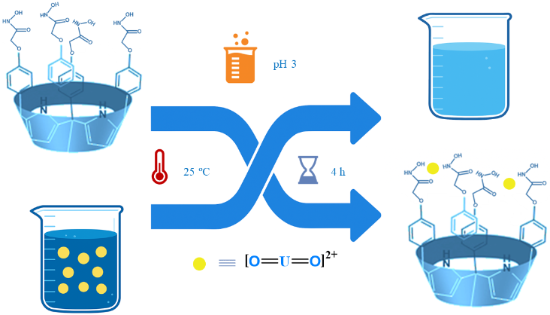
- aldehydes [45], alcohols [46], and amides [47] have also been reported. However, the literature states that there is no particular reagent or reaction condition that can serve as a general rule for the synthesis of hydroxamic acids [48]. In this study, the direct reaction of hydroxylamine with the PCP ester


A facile and practical method for the synthesis of trans-(±)-taxifolin and its derivatives via Darzens reaction
Beilstein J. Org. Chem. 2026, 22, 443–450, doi:10.3762/bjoc.22.31
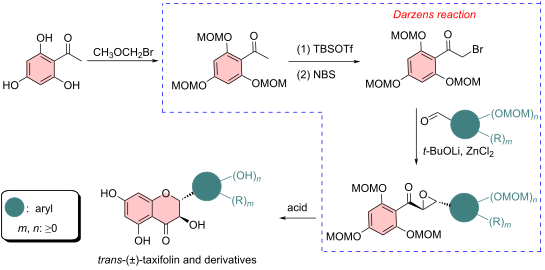
- synthesis uses hydroxyacetophenones as starting material, whose hydroxy groups are first protected by various protecting groups and then reacted with aromatic aldehydes to form the corresponding chalcone intermediates. The chalcones are then oxidized with peroxides, such as H2O2, to give the α,β
- further confirmed the formation of a single product. To demonstrate the generality of the optimized reaction, compound 2 was reacted with a variety of aromatic aldehydes with different substituents (Scheme 2). The results showed that all reactions were efficient affording the α,β-epoxycarbonyl products
- (±)-4 with yields in the range of 58–92% when the aromatic aldehyde was substituted with either electron-withdrawing (NO2) or electron-donating (alkoxy) groups. It is worth noting that aldehydes bearing oxidant-sensitive substituents, which are incompatible with peroxide-based approaches commonly


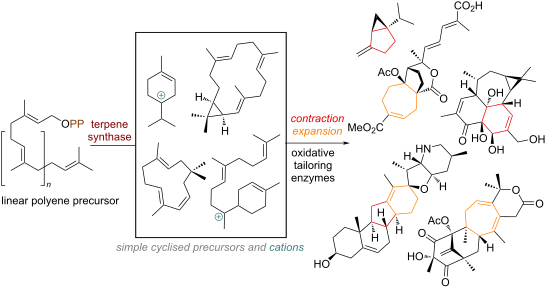
Ring contraction and ring expansion reactions in terpenoid biosynthesis and their application to total synthesis
Beilstein J. Org. Chem. 2026, 22, 289–343, doi:10.3762/bjoc.22.21






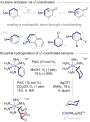
Arene activation via π-bond localization: concepts and opportunities
Beilstein J. Org. Chem. 2026, 22, 257–273, doi:10.3762/bjoc.22.19
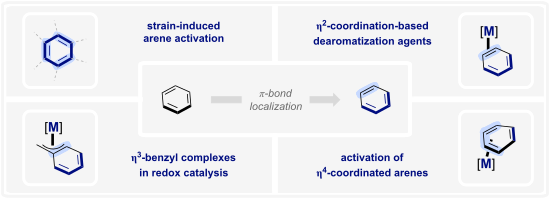
- (Figure 6C), so suitable aromatic ligands are limited to those lacking strongly π-acidic functional groups, e.g., alkenes, alkynes, aldehydes, certain ketones, and nitriles. Lewis-basic heteroarenes, such as pyridines or imidazoles, tend to coordinate via nitrogen instead, disfavoring η2-binding (Figure




A mild and atom-efficient four-component cascade strategy for the construction of biologically relevant 4-hydroxyquinolin-2(1H)-one derivatives
Beilstein J. Org. Chem. 2026, 22, 244–256, doi:10.3762/bjoc.22.18
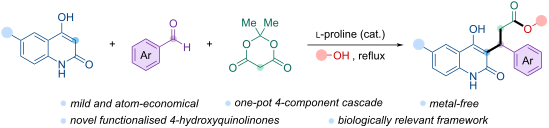
- and selective synthesis of previously inaccessible 4-hydroxyquinolin-2(1H)-one derivatives. Utilizing readily available 6-halo-4-hydroxyquinolinones, aromatic aldehydes, Meldrum’s acid, and alcohols under ʟ-proline catalysis, the reaction proceeds via in situ formation of arylidene-substituted Meldrum
- a related protocol operating at room temperature using the ionic liquid [Bmim]HSO4 as a catalyst, expanding the scope to include aliphatic aldehydes [38]. Later, in 2017, Esmayeel Abbaspour-Gilandeh et al. reported a modified variant of this transformation under solvent-free heating, catalyzed by
- approach involves the 1,4-Michael addition of the ambident anion derived from 6-halo-4-hydroxyquinolin-2-one to suitably activated unsaturated compounds. Considering the target structures (Figure 2), suitable Michael acceptors include α,β-unsaturated esters, aldehydes, methyl ketones, arylidene malonates


Circumventing Mukaiyama oxidation: selective S–O bond formation via sulfenamide–alcohol coupling
Beilstein J. Org. Chem. 2026, 22, 158–166, doi:10.3762/bjoc.22.9
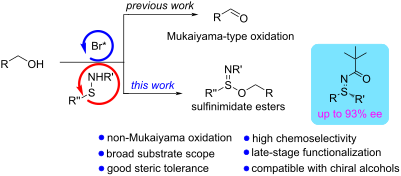
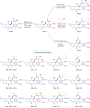
- , such transformations remain synthetically challenging. This is primarily due to the well-known Mukaiyama-type oxidation, wherein sulfenamides serve as redox catalysts for NBS- or NCS-mediated oxidations of alcohols to aldehydes or ketones (Scheme 1b, top) [38][39][40][41][42]. Under such oxidative


Synthesis and applications of alkenyl chlorides (vinyl chlorides): a review
Beilstein J. Org. Chem. 2026, 22, 1–63, doi:10.3762/bjoc.22.1
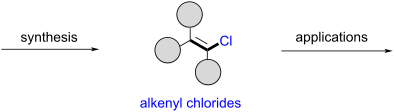
- -catalyzed additions of alkynes to acyl chlorides to access β-chlorovinyl ketones (2024) [31]. A review by Sharma and Singh covers comprehensively the synthesis and application of β-halovinyl aldehydes [32]. It should be noted that the synthesis of β-chloroalkenes substituted with an electron-withdrawing
- constitutional isomeric chloro derivatives 66 and 67 were formed in a 65:35 ratio. In the case of non-enolizable ketones such as benzophenone, dichlorodiphenylmethane 68 was obtained in 93% yield. Aldehydes consistently afforded gem-dichlorides in excellent yields, regardless of enolizability (not shown). It is
- gel (Scheme 60D). As mentioned in the introduction, a comprehensive account of this work has been recently reported by Hoveyda [39]. 1.9 Olefinations of ketones and aldehydes In 1961, Wittig and Schlosser reported the first synthesis of alkenyl chlorides via the classical Wittig reaction (Scheme 61A



















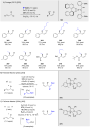


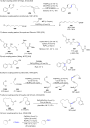


Competitive cyclization of ethyl trifluoroacetoacetate and methyl ketones with 1,3-diamino-2-propanol into hydrogenated oxazolo- and pyrimido-condensed pyridones
Beilstein J. Org. Chem. 2025, 21, 2716–2729, doi:10.3762/bjoc.21.209
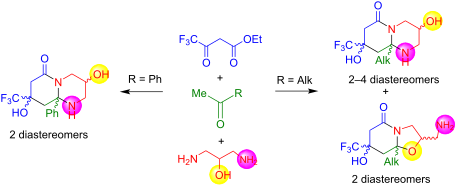
- are cyclized with aldehydes and ammonia (monoamines) or urea to yield a certain type of products only: pyridines and pyrimidines; and formation of the products proceeds with the involvement of an acyl fragment and the meso-position of an oxo ester component [9]. Although the introduction of 2


Mechanistic insights into hydroxy(tosyloxy)iodobenzene-mediated ditosyloxylation of chalcones: a DFT study
Beilstein J. Org. Chem. 2025, 21, 2703–2715, doi:10.3762/bjoc.21.208
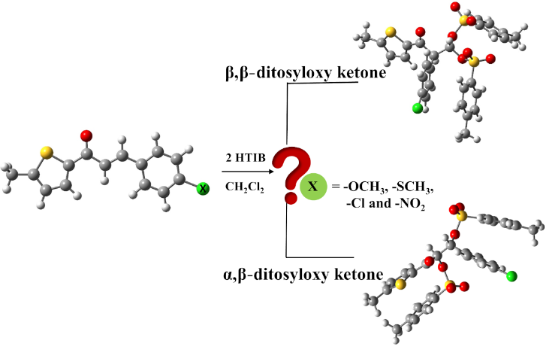
- . The reactivity characteristics of these compounds are similar to transition metal reagents, as a result these hypervalent compounds can be used as an alternative. For example, iodobenzene diacetate (PhI(OAc)2), can be used to selectively oxidize alcohols to aldehydes or ketones over toxic chromium(VI


Thiazolidinones: novel insights from microwave synthesis, computational studies, and potentially bioactive hybrids
Beilstein J. Org. Chem. 2025, 21, 2618–2636, doi:10.3762/bjoc.21.203
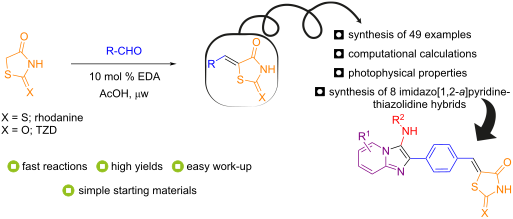
- 10.3762/bjoc.21.203 Abstract Various 5-arylidene derivatives were prepared via a Knoevenagel condensation-type reaction of aromatic/heteroaromatic aldehydes with rhodanine or thiazolidine-2,4-dione (TZD) catalyzed by EDA/AcOH under microwave heating. This convenient methodology is broad in scope (49
- condensation-type reaction between aromatic aldehydes with rhodanine or thiazolidine-2,4-dione [39]. Various protocols have been reported employing diverse catalyst systems and reaction conditions. Common catalysts include inorganic bases such as sodium acetate (NaOAc) [40], urea/thiourea [41], NaOH [42
- applied to a variety of aromatic aldehydes (Scheme 2). Aldehydes containing halides (–F, –Cl, –Br) or strong electron-withdrawing groups at the ortho-position provided excellent yields (87–99%) for the 5-benzylidene-2-thioxothiazolidin-4-one derivatives 3b–e. The presence of an electron-donating group in






Visible-light-driven NHC and organophotoredox dual catalysis for the synthesis of carbonyl compounds
Beilstein J. Org. Chem. 2025, 21, 2584–2603, doi:10.3762/bjoc.21.200
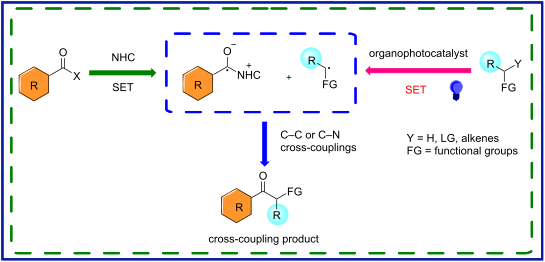
- carbenes (NHCs) with photocatalysts. The review encompasses transition-metal-based photocatalytic reactions for C–C and C–HA cross-coupling reactions involving various acyl fluorides, amides, aldehydes, carboxylic acids, and esters, highlighting their broad applications in organic synthesis and medicinal
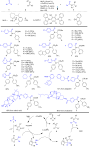
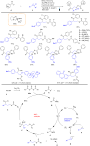
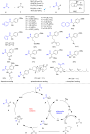
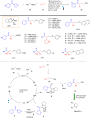
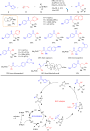
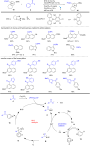
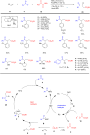
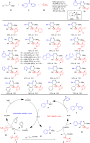
- , and advanced optical and energy materials. Review Visible-light-driven NHC/4CzIPN-catalyzed reactions Recently, Shu and co-workers developed a direct and innovative preparation of highly functionalized aryl amide derivatives 3 from aryl aldehydes 1 and substituted imines 2 under mild conditions in the
- , generating an N-centered radical species C. This species subsequently undergoes a rapid C–N cross-coupling with ketyl radical B. This cross-coupling method offers a transition-metal free route to highly substituted amides 3 from aldehydes 1 and imines 2, without the need for any external reductants or



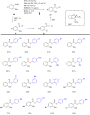

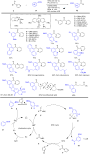

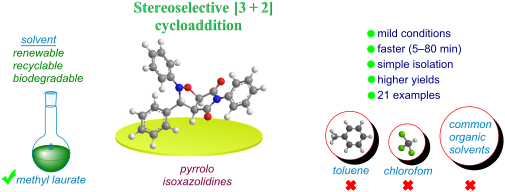
The high potential of methyl laurate as a recyclable competitor to conventional toxic solvents in [3 + 2] cycloaddition reactions
Beilstein J. Org. Chem. 2025, 21, 2389–2415, doi:10.3762/bjoc.21.184
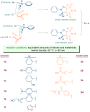
- aromatic aldehydes exhibit a Z-configuration [112][113] and it appears that endo-coupling of the Z-configured C,N-diphenylnitrone with maleimide is more favorable. Indeed, the distribution of the cis/trans product is also found to be significantly influenced by the nature of the substituents present in the






Recent advances in Norrish–Yang cyclization and dicarbonyl photoredox reactions for natural product synthesis
Beilstein J. Org. Chem. 2025, 21, 2315–2333, doi:10.3762/bjoc.21.177
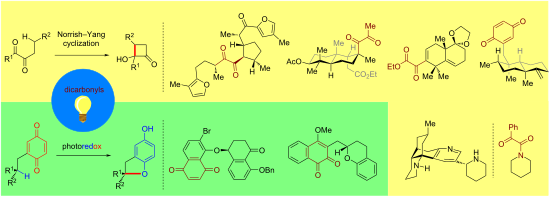
- synthesis of natural products but also establish a solid foundation for subsequent pharmaceutical investigations. Keywords: dicarbonyls; natural product; Norrish–Yang cyclization; photoredox; total synthesis; Introduction In the 1930s, Norrish documented the photodecomposition of aldehydes and ketones [1




Halogenated butyrolactones from the biomass-derived synthon levoglucosenone
Beilstein J. Org. Chem. 2025, 21, 2297–2301, doi:10.3762/bjoc.21.175
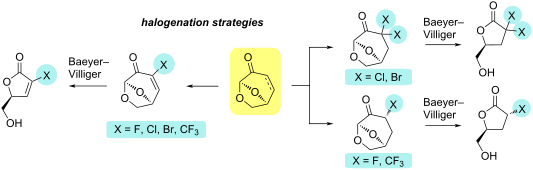
- low, the synthesis of 7c via this method represents a substantial improvement on previous approaches to this material [24]. The Baeyer–Villiger oxidation of 7c was uneventful and the fluorinated alkene 17 was isolated in 50% yield. The α-trifluoromethylation of ketones and aldehydes can be performed