


Search results
Search for "chiral" in Full Text gives 1074 result(s) in Beilstein Journal of Organic Chemistry. Showing first 200.
Construction of CF2 moieties in FDA-approved drugs (2016–2025): industrial routes, mechanisms, and scale-up considerations
Beilstein J. Org. Chem. 2026, 22, 1122–1150, doi:10.3762/bjoc.22.91
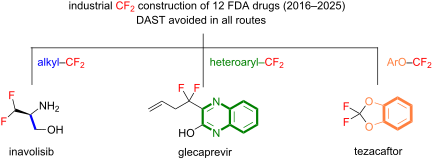
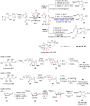
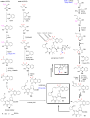
- an inexpensive enzymatic process [8]), route a suffered from several scale-up issues: the use of OsO4 (highly toxic) and DAST (hazardous), the low fluorination yield, and a low overall yield of only 7% over ten steps. Route b [7] used compound 19, which contains an aldehyde group and a chiral carbon
- the product, which is unfavorable for the subsequent cyclopropane ring formation. Attempts to use chiral auxiliaries used to promote E-olefin formation gave extremely low yields in the synthesis of 26. In route d, during the Knoevenagel condensation in the first step, due to the exceptionally
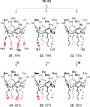
- -product 29 was formed in up to 90% yield, both 28 and 29 were competent substrates in the subsequent cyclopropanation, giving an 83% two-step overall yield. Subsequent steps, including selective ester hydrolysis (56% yield), Curtius rearrangement (70% yield), chiral resolution, and ester hydrolysis (40






Synthesis and optical resolution of 4,5-diaminohomoadamantane: a promising scaffold for chiral ligands and bioactive compounds
Beilstein J. Org. Chem. 2026, 22, 1013–1022, doi:10.3762/bjoc.22.80
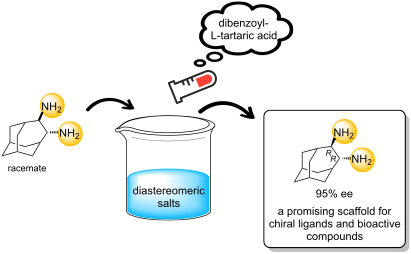
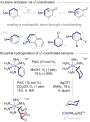
- based on a rigid polycyclic framework such as homoadamantane remain underexplored. We anticipated that the unique steric and lipophilic properties of chiral trans-4,5-diaminohomoadamantane could provide the necessary stereoinduction in metal-catalyzed asymmetric reactions. In addition, such structures
- may serve as a novel scaffold for bioactive compounds. Herein, we report a synthetic approach to this previously inaccessible chiral scaffold. 4,5-Diaminohomoadamantane was prepared as a mixture of cis- and trans-isomers by reduction of the corresponding vicinal azidoxime with LiAlH4. In contrast, the
- suggest that further molecular design of homoadamantane-based chiral N,N-ligands is promising. Keywords: asymmetric Henry reaction; asymmetric Michael reaction; diaminohomoadamantane; enantiodivergent effect; resolution of racemate; Introduction The chemistry of organic polycyclic cage compounds has


Novel macrocycles: from synthesis to supramolecular function
Beilstein J. Org. Chem. 2026, 22, 982–985, doi:10.3762/bjoc.22.76
- functional soft materials. Asymmetric frameworks are also central to the research reported by Niemeyer and co-workers [36], who focused on the synthesis of crown ethers bearing one or two BINOL units. Their paper outlines highly practical synthetic routes to open a diverse library of chiral architectures
Electrochemical reduction of unsaturated carbon–carbon bonds via 3d transition-metal catalysis
Beilstein J. Org. Chem. 2026, 22, 955–981, doi:10.3762/bjoc.22.75
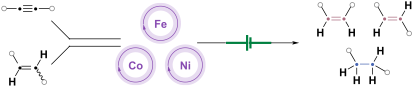
- the cobalt mediator can be productively integrated with a chiral nickel cocatalyst and structurally varied substrates to enable efficient, stereocontrolled hydrogenation under comparatively mild, fixed-potential conditions. Mechanistic studies using deuterium-labeled substrates further indicated that








Recent advances in copper-catalyzed direct hydroamination of alkenes with (hetero)aromatic amines
Beilstein J. Org. Chem. 2026, 22, 925–947, doi:10.3762/bjoc.22.73
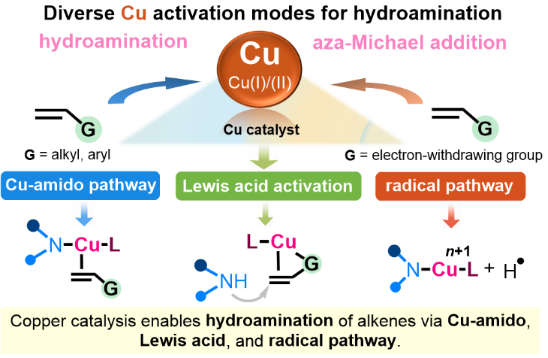
- authors also explored an asymmetric version of this reaction using chiral bisoxazoline–Cu(II) complexes. Coordination of ethenetricarboxylate substrate 16 to the chiral Lewis acid created a chiral environment that controlled the facial selectivity of the nucleophilic attack. The conjugate addition of N
- transformation, the chiral Pybox-diPh/Cu(OTf)2·C6H6 complex initially promoted imine formation followed by asymmetric alkynylation, generating the α,β-unsaturated ester intermediate 23. Subsequent treatment with LiHMDS (lithium bis(trimethylsilyl)amide) induced base-promoted intramolecular aza-Michael
- catalyst, affording chiral cyclopropyl pyrazoles with high levels of regio-, diastereo-, and enantioselectivities (Scheme 15) [55]. In the presence of Cu(CH3CN)4PF6 (5 mol %) and the chiral bisphosphine ligand (R,R)-iPr-DuPhos, the coupling of pyrazoles with substituted cyclopropenes proceeded efficiently







Chiral cyclopropenimine-catalyzed enantioselective Michael reactions of phenol and benzofuran-derived α,β-unsaturated pyrazolamides with benzophenone-imine of glycine esters
Beilstein J. Org. Chem. 2026, 22, 888–896, doi:10.3762/bjoc.22.69
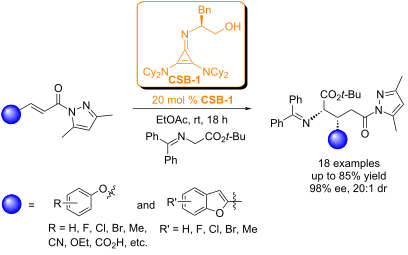
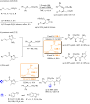
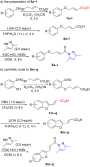
- , 710032, China School of Pharmacy, Lanzhou University, Lanzhou, 730000, China 10.3762/bjoc.22.69 Abstract The enantioselective Michael reactions of benzophenone-imine of glycine esters with phenol- and benzofuran-derived α,β-unsaturated pyrazolamides have been realized by using a chiral cyclopropenimine
- adjacent stereocenters, which was obtained from in-situ acidic hydrolysis and lactamization of the corresponding Michael product. Keywords: α,β-unsaturated pyrazolamide; chiral cyclopropenimine; glutamic acid; lactamization; Michael addition; Introduction Phenols and benzofurans are feedstock chemicals
- series of 3-substitued glutamic acid esters in high yields and diastereoselectivities through DBU-catalyzed Michael additions of benzophenone-imine of glycine ester and α,β-unsaturated esters which derived from phenols and benzofurans under mild conditions [5][6]. The chiral 3-aryl-substituted glutamic






Unsymmetrical sulfoxides with sterically hindered catechol fragment: synthesis, structure, electrochemical properties, and antiradical activity
Beilstein J. Org. Chem. 2026, 22, 828–837, doi:10.3762/bjoc.22.65
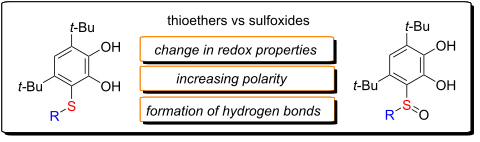
- component of Oxone®) [37] – are commonly employed for this purpose. One of the most accessible approaches uses hydrogen peroxide along with catalytic systems based on transition metals [38]. Notably, this process is not stereoselective and affords chiral sulfoxides as a mixture of enantiomers. Besides


Rongalite addition to dienones: diastereoselectivity in cyclic sulfone synthesis; stereochemical rationalization and prospects as a general conjugate nucleophile
Beilstein J. Org. Chem. 2026, 22, 742–752, doi:10.3762/bjoc.22.56

- (chiral) diastereomer of the products 3 and 4 in each case – reaction of the nucleophile with either face of the iminium ion or ketone gives the same diastereomer, as illustrated. By contrast, hydride reduction of 1b gave an approx. 9:1 mixture of products 5 and 6, as judged by the crude 1H NMR spectrum




Synthesis of heterocycles based on azomethine ylides from α-amino acids (or amines) and carbonyl compounds
Beilstein J. Org. Chem. 2026, 22, 705–741, doi:10.3762/bjoc.22.55
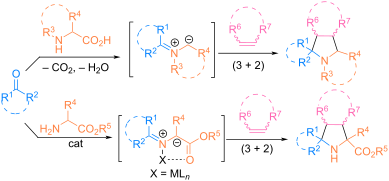
- derivatives with multiple chiral centers under high regio- and stereocontrol. Currently, strategies using azomethine ylides based on imino esters or α-amino acids with a variety of cyclic and acyclic carbonyl compounds dominate. Enantioselective (3 + 2) cycloaddition reactions of azomethine ylides obtained
- from imino esters, catalyzed by chiral Cu(I,II) and Ag(I) complexes, are widely used. Reactions using α-amino acids proceed, in most cases, without the use of catalysts, with high yields and high stereoselectivity. Electrophilic alkenes of various structures, (hetero)aromatic olefins and benzofulvenes
- with a dipolarophile, such as an alkene or alkyne, to form a five-membered heterocycle in one step. Currently, this type of reaction allows for the efficient preparation of bi- and polycyclic fused or spiro-linked structures with multiple chiral centers and high regio- and stereocontrol [1][2][3][4


Synthesis of depressin, cryptomeridiol and 4-epi-cryptomeridiol enabled by a terpenoid chiral pool-producing platform
Beilstein J. Org. Chem. 2026, 22, 683–690, doi:10.3762/bjoc.22.53
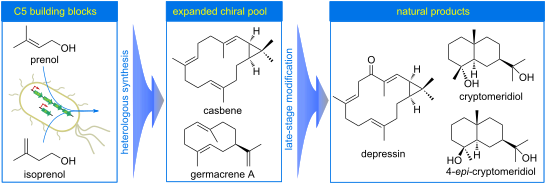
- of different plants with broad biological activity. Most of the syntheses focused on the transformation of chiral pool substrates into their trans-6/6-fused ring system. We herein report the synthesis of compounds 1–3 by taking advantage of an expanded chiral pool strategy, in which the terpenoid
- hydroxy group allowed the synthesis of compound 1 from 4 in nine steps. Selective acid-mediated 5,10-transannular cyclization of 5 followed by hydration reaction furnished both products 2 and 3 in two steps. Keywords: chemoenzymatic synthesis; chiral pool; isopentenol utilization pathway; terpene
- also provided us with several abundant chiral building blocks which are normally referred to as the ‘chiral pool’ to start with [4][5]. Representative terpenoid products, such as (−)-carvone, (+)-3-carene, and (+)-sclareolide that are typically isolated from renewable resources (Figure 1a), continue to


Kinetic resolution of racemic planar-chiral vinylcymantrenes by molybdenum-catalyzed asymmetric metathesis dimerization
Beilstein J. Org. Chem. 2026, 22, 568–574, doi:10.3762/bjoc.22.42
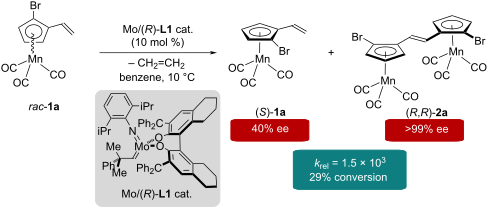
- Science Institute, Tokushima University, Tokushima 770-8501, Japan 10.3762/bjoc.22.42 Abstract Highly diastereo- and enantioselective kinetic resolution (KR) of a series of racemic planar-chiral 1-R-2-vinylcymantrenes (rac-1; R = Br, Me, I) was realized by an asymmetric metathesis dimerization (AMD
- ) reaction catalyzed by a chiral molybdenum-alkylidene precatalyst. The Mo/(R)-L1 precatalyst promoted the AMD/KR reaction of rac-1a (R = Br) to give (E)-(R,R)-2a of 99% ee together with unreacted recovered (S)-1a of 45% ee at 37% conversion. The diastereoselectivity of this reaction was excellent with
- chiral-2a/meso-2a = 96:4 molar ratio, and the selectivity factor (krel) was calculated to be 754 based on a second-order equation. In all the three substrates examined, the dimerized products, chiral-2, were obtained in >98% ee thanks to the outstanding enantioselectivity. Keywords: cymantrene; kinetic


Experimental and DFT studies on the regioselective methanolysis of 5-azido-9-oxabicyclo[6.1.0]nonan-4-yl 4-nitrobenzoate isomers
Beilstein J. Org. Chem. 2026, 22, 547–556, doi:10.3762/bjoc.22.40
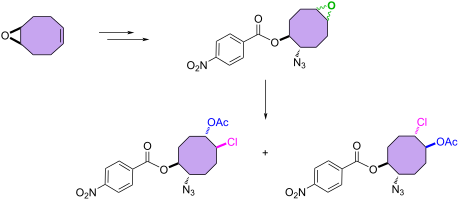
- , pharmaceutical compounds, and chiral ligands. The Lewis acid-catalyzed ring-opening reaction of cyclohexene oxide by MeZH (Z = O, S, and NH) is well known [20]. However, studies on large-sized bicyclic epoxides remain relatively limited in the published literature. In our previous study, we performed the ring


Modern synthetic pathways towards eribulin and its subunits
Beilstein J. Org. Chem. 2026, 22, 495–526, doi:10.3762/bjoc.22.37
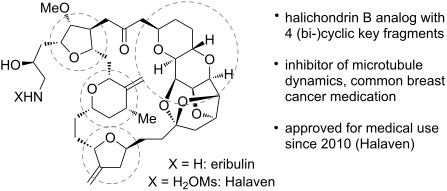
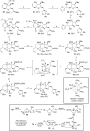
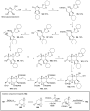
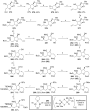
- , Nicolaou and co-workers merged both building blocks within a Ni(II)/Cr(II)-catalyzed NHK reaction using chiral ligand 206 (Scheme 23) [95]. Upon treatment with DBU, 3-methylenetetrahydrofuran 201 was obtained in 56% yield over two steps. PMB-deprotection, iodination and selective reduction of the ester








Recent advances in the stereoselective synthesis of distal biaxially chiral molecules
Beilstein J. Org. Chem. 2026, 22, 461–479, doi:10.3762/bjoc.22.34
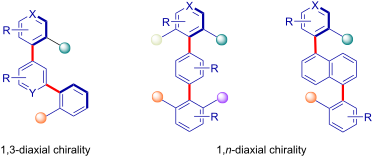
- distal axial chiralities are widely applied in chiral ligands, natural products, and anticancer agents, with their unique spatial configurations endowing them with distinctive functions and values. Although significant progress has been made in the asymmetric synthesis of distal biaxial chirality
- biaxial chirality, multistep sequential generation, and conversion from central to biaxial chirality, with the aim of providing new perspectives and methodologies for further development in this area. Keywords: axially chiral compounds; stereoselective synthesis; Introduction In recent years, axially
- chiral scaffolds, which arise from hindered rotation between two planes connected by a single bond, have attracted increasing attention due to their widespread applications in chiral ligands, organocatalysts [1], and functional materials [2], making them highly valuable molecular frameworks in organic


A facile and practical method for the synthesis of trans-(±)-taxifolin and its derivatives via Darzens reaction
Beilstein J. Org. Chem. 2026, 22, 443–450, doi:10.3762/bjoc.22.31
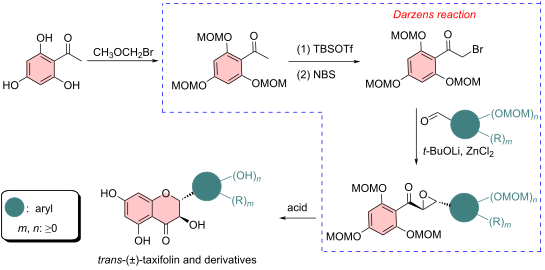
- Pharmacy, Shenzhen Technology University, Shenzhen 518118, China 10.3762/bjoc.22.31 Abstract The synthesis of racemic trans-taxifolin (trans-(±)-taxifolin) and its derivatives and subsequent chiral separation is the most prevalent chemical method to obtain enantiomerically pure taxifolin and its
- transformation from dietary food to multifunctional medications in the near future. Taxifolin is a chiral compound with two stereocenters and exists as trans or cis isomers. It is commonly referred to as the trans dextral form (trans-(+)-taxifolin), which has higher bioactivity than its levorotatory enantiomer
- produce taxifolin but also faces the problems of scale-up and high cost. As a result, the development of a practical synthetic approach is of importance and significance. A chiral synthesis for taxifolin was reported by the use of (+)-catechin as the starting material [15][16], but (+)-catechin is not


Synthesis and stereochemical analysis of dynamic planar chiral oxa[7]orthocyclophene
Beilstein J. Org. Chem. 2026, 22, 436–442, doi:10.3762/bjoc.22.30

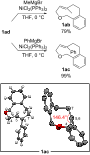
- Advanced Science and Technology, Kumamoto University, Kurokami, Kumamoto 865-8555, Japan 10.3762/bjoc.22.30 Abstract Planar chiral C6-substituted oxa[7]orthocyclophenes were designed and synthesized, and their stereochemical behavior was analyzed. The Kumada–Tamao coupling of the C6-iodo-substituted
- successfully transformed into central chirality by epoxidation without loss of enantiomeric purity. Keywords: dynamic chirality; medium-sized heterocycle; orthocyclophene; planar chirality; stereochemical analysis; Introduction In the course of our study on planar chiral medium-sized cyclic molecules [1][2
- ideal alkene plane. Stereochemical analysis of C6-substituted oxacyclophenes Next, HPLC analyses using a chiral stationary phase (chiral column) of the C6-substituted oxacyclophenes were conducted. The baseline separations of the enantiomers of 1ab and 1ad were achieved by using CHIRALCEL OJ-H as the




Cone p-aminocalix[4]arenes enriched with ‘clickable’ alkyne or azide functionalities
Beilstein J. Org. Chem. 2026, 22, 399–415, doi:10.3762/bjoc.22.28
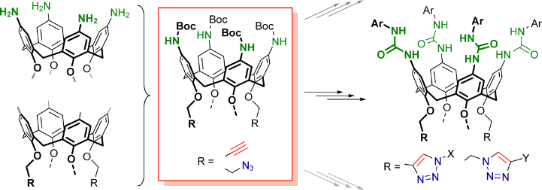
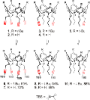
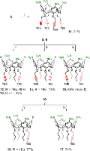
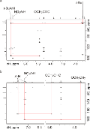
- corresponded to chiral C2-symmetric homodimeric capsules in both cases. The 1H NMR spectrum of the equimolar mixture 48/52 (taken as an example) contained one set of signals from the C2-symmetric heterodimer 48·CDCl3·52, but not from the homodimers 48·CDCl3·48 and 52·CDCl3·52, and thus reflected the expected






Electrosynthetic access to unsymmetrical oxaza[8]helicenes with high chiral stability and strong circularly polarized luminescence (CPL)
Beilstein J. Org. Chem. 2026, 22, 372–382, doi:10.3762/bjoc.22.25
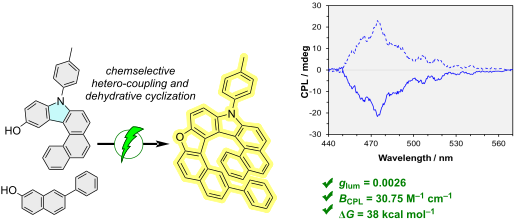
- Heterohelicenes are compelling chiral π-conjugated scaffolds for optoelectronic and chiral-photonic technologies because their helical frameworks and doped heteroatoms endow them with various photophysical, chiroptical, and electronic merits. However, unsymmetrical heterohelicenes remain rare, as their synthesis
- ) relative to their oxaza[7]helicene analogues (<25 kcal/mol). After chiral HPLC separation, the enantiomers display mirror-image CD and strong solution CPL, with |glum| up to 2.6 × 10⁻³ and fluorescence brightness up to 30.75 M−1 cm−1. Keywords: chemoselectivity; chiroptical; circular dichroism
- ; electrochemistry; emission; helical elongation; helicene; photophysical; Introduction Chirality is a pervasive feature of natural and artificial systems, and chiral small molecules continue to underpin advances in chemistry and materials science [1][2]. Among them, helicenes – ortho-condensed polycyclic aromatic




Non-central chirality in organic chemistry
Beilstein J. Org. Chem. 2026, 22, 370–371, doi:10.3762/bjoc.22.24
- axial, planar, or helical chirality individually, often organized along specific molecular classes or application-driven themes such as asymmetric catalysis or chiral materials. In contrast, this Thematic Issue deliberately brings together diverse manifestations of non-central chirality under a single
- complementary roles played by non-central chiral molecules in contemporary organic chemistry. First, they continue to serve as demanding benchmarks for asymmetric synthesis, probing how far stereochemical information can be transmitted and controlled when the stereogenic element is spatially or conceptually
- remote from the reaction site. Second, non-central chiral frameworks remain fertile ground for catalyst design, not only as derivatives of established motifs but also as newly conceived architectures that redefine how chirality can be embedded into catalytic systems. Third, the pronounced chiroptical and
Recent advances in the cleavage of non-activated amides
Beilstein J. Org. Chem. 2026, 22, 352–369, doi:10.3762/bjoc.22.23
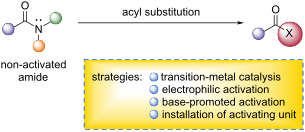
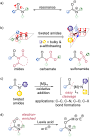
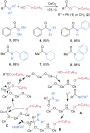
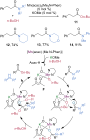
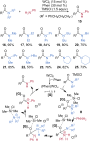
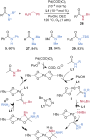
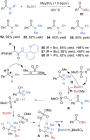
- undergoes hydrolysis to afford the benzyl ester 30. Under the optimized conditions, primary, secondary, and tertiary amides 12, 31–33 were successfully converted to benzyl esters in high yields. Notably, loss of enantiopurity of chiral amide 33 was not observed during esterification. Sulfuryl fluoride
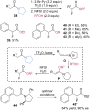
- electrophilic activation of pyrrolidine-derived amides with Tf2O and 2-bromopyridine generates a keteniminium ion O, which undergoes nucleophilic addition to form an enamine intermediate P. Subsequent electrophilic α-fluorination followed by hydrolysis produces the α-fluoroester products. Notably, the C2-chiral
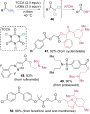
- amide 44, incorporating (2S,5S)-2,5-diphenylpyrrolidine as a chiral auxiliary, furnished the enantioenriched ester 45* in 64% yield with 90% ee. Wan et al. investigated the chlorination of primary amides using trichloroisocyanuric acid (TCCA) to promote esterification (Scheme 10) [58]. In the presence





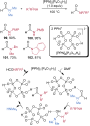


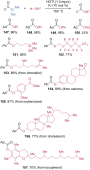

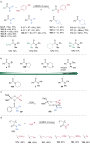


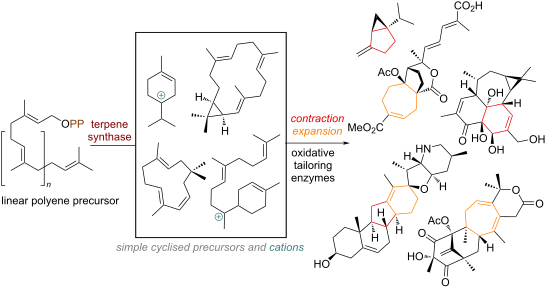
Ring contraction and ring expansion reactions in terpenoid biosynthesis and their application to total synthesis
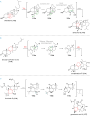
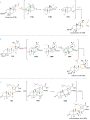
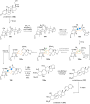
Beilstein J. Org. Chem. 2026, 22, 289–343, doi:10.3762/bjoc.22.21






Arene activation via π-bond localization: concepts and opportunities
Beilstein J. Org. Chem. 2026, 22, 257–273, doi:10.3762/bjoc.22.19
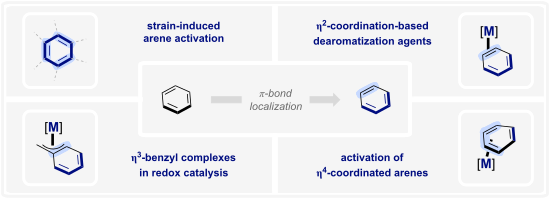
- aromatic ligand is necessary to set the absolute stereochemistry of the organic product. This relative stereochemistry depends on which face of the arene is coordinated and can be governed by high chiral recognition for binding (coordination diastereomer ratio, cdr) or stereoelectronic differentiation
- manifolds) and unlocking enantioselective variants to access three-dimensional, chiral architectures. In contrast, η2- and η4-coordination modes have been explored extensively from a structural and stoichiometric reactivity standpoint, yet catalytic manifestations remain conspicuously rare. The energetic




Synthesis of diaryl phosphates using phytic acid as a phosphorus source
Beilstein J. Org. Chem. 2026, 22, 213–223, doi:10.3762/bjoc.22.15
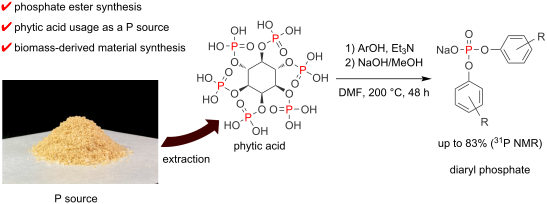
- [22] and as insecticides [23]. Particularly, phosphate diesters are among the most important synthetic catalysts, such as the Akiyama–Terada catalyst that serves as a chiral Brønsted acid catalyst [24][25] and promotes a variety of stereoselective reactions. Phosphate diesters also catalyze the ring




Screwing the helical chirality through terminal peri-functionalization
Beilstein J. Org. Chem. 2026, 22, 205–212, doi:10.3762/bjoc.22.14
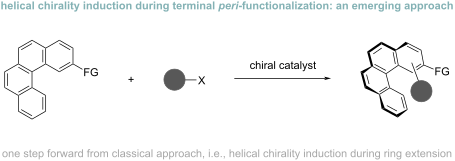
- of chirality. Molecules with helical chirality impart a crucial role in several biological phenomena as well as in modern materials applications. Classically, the generation of chiral helicity in organic molecules relies on a ring extension by means of cycloaddition and related reactions. Recently
- , the peri-functionalization approach paved a new pathway for the generation of chiral helical molecules. In this article, we highlight the key advancements in these parallel approaches for the generation of helical chiral architectures. Keywords: catalysis; C–H functionalization; helical chirality
- another important type of chirality, where the chirality is controlled by restricted rotation among an axis. These types of molecules play an important role as chiral ligands in organic synthesis, i.e., BINOL, BINAP, etc. [9][10][11]. Another form of chirality, where chirality depends on a constrained


Streptoquinolines A and B, new antibacterial meroterpenoids produced by Streptomyces sp. TMPU-A0679
Beilstein J. Org. Chem. 2026, 22, 185–191, doi:10.3762/bjoc.22.12
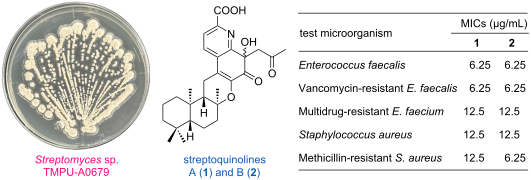
- 1H,1H COSY and HMBC correlations as those observed for 1 (Figure 2), confirming that compound 2 shared the same planar structure. The specific rotations of 1 and 2 were similar in both sign and magnitude, suggesting that they shared the same absolute configuration for most chiral centers. However, a





