


Search results
Search for "nitration" in Full Text gives 72 result(s) in Beilstein Journal of Organic Chemistry.
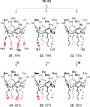
Cone p-aminocalix[4]arenes enriched with ‘clickable’ alkyne or azide functionalities
Beilstein J. Org. Chem. 2026, 22, 399–415, doi:10.3762/bjoc.22.28
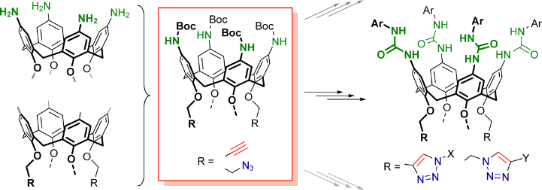
- were ipso-nitrated followed by reduction of the nitro groups. To prepare 2-azidoethylated macrocycles, the ipso-nitration/reduction sequence was applied to p-tert-butylcalix[4]arenes containing 2-tosyloxyethyl groups at the narrow rims followed by replacement of the tosyloxy groups with azide ones. In
- important functionalities which can be introduced into calix[4]arene structures either through a wide-rim exhaustive nitration followed by reduction of the nitro groups [5][6][7][8][9][10][11][12][13], or through azo coupling followed by cleavage of the calixarene azo compounds thus formed [14][15][16][17
- into various multifunctional structures and sophisticated supramolecular systems. Results and Discussion In the majority of cases, the introduction of four amino groups into the calix[4]arene wide rim requires exhaustive (ipso-)nitration of the core followed by reduction of the resulting p-nitrocalix[4






A new synthesis of Tyrian purple (6,6’-dibromoindigo) and its corresponding sulfonate salts
Beilstein J. Org. Chem. 2026, 22, 167–174, doi:10.3762/bjoc.22.10
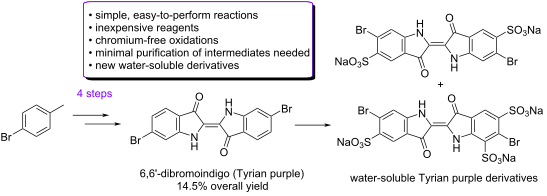
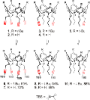
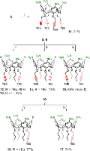
- nitration of p-toluidine (2), followed by a Sandmeyer bromination [5][6][7][8][9]. While such chemistry is effective in smoothly generating 3 in good yield, this process requires the production of and use of a potentially explosive aryldiazonium intermediate [10]. Oxidation of the methyl group in 3 yields 4
- sulfonation. In line with developing a shortened synthetic scheme, we chose p-bromotoluene (5), as a starting material, as nitration would yield 3 in a single step. Benzylic bromination followed by a Kornblum oxidation would then yield 4 in three steps from 5 without the use of a chromium(VI) oxidant or
- polynitrated side-products, but was unable to effectively separate the two regioisomers, and this mixture was carried on to the next step. The regioselectivity of nitration obtained in this reaction was better than the 5:4 ratio of 3 to 7 reported for a traditional nitration of p-bromotoluene [5][19]. Despite


Sustainable electrochemical synthesis of aliphatic nitro-NNO-azoxy compounds employing ammonium dinitramide and their in vitro evaluation as potential nitric oxide donors and fungicides
Beilstein J. Org. Chem. 2025, 21, 2739–2754, doi:10.3762/bjoc.21.211
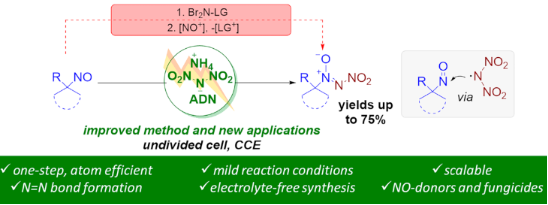
- leaving group X. The second step is substitutive nitration of the latter with nitronium salts (NO2BF4, (NO2)2SiF6) or N2O5). The main limitations of this approach are the use of hazardous and expensive nitrating reagents and its inapplicability for preparation of nitro-NNO-azoxy compounds containing
- 68% yield without cleavage of the acetonide protecting group. Note that compound 2f is not accessible using the known approach (see Scheme 1a), because the dioxane ring is opened during the nitration step. Surprisingly, nitro-NNO-azoxylation products 2g and 2h were obtained from methyl and ethyl 2
- . Subsequent nitration of the obtained diol 3f with a HNO3/Ac2O mixture afforded dinitrate 4f in 79% (74% over two stages, Scheme 3, reaction 2). Due to the presence of two nitrate groups, compound 4f may be of interest as a potential NO donor [92] and a precursor of new nitro-NNO-azoxy compounds via

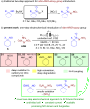




Palladium-catalyzed regioselective C1-selective nitration of carbazoles
Beilstein J. Org. Chem. 2025, 21, 2479–2488, doi:10.3762/bjoc.21.190
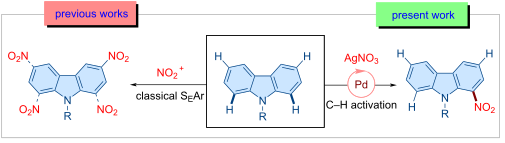
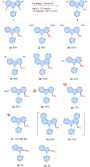
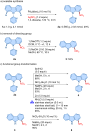
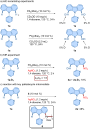
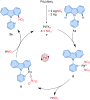
- challenging due to the inherently higher reactivity at the C3/C6 positions. In this study, we report a palladium-catalyzed, directing group-assisted, regioselective C1–H nitration of carbazoles. The protocol features a removable directing group and is amenable to gram-scale synthesis. This strategy provides a
- valuable platform for the selective functionalization of carbazoles, offering potential applications in optoelectronics, functional organic materials, and related areas while contributing to the advancement of C–H activation methodologies. Keywords: C–H activation; carbazole; catalysis; nitration
- and functional materials (Scheme 1a) [62][63][64][65][66]. Traditional electrophilic aromatic substitution methods for the nitration of carbazole typically result in a mixture of 1-nitro-, 2-nitro-, and 3-nitro-substituted isomers (Scheme 1b) [67]. Therefore, developing a method for the regioselective


Adaptive experimentation and optimization in organic chemistry
Beilstein J. Org. Chem. 2025, 21, 2367–2368, doi:10.3762/bjoc.21.180
- . provide a comprehensive review of machine learning applications in enantioselective organocatalysis, highlighting both achievements and remaining challenges [10]. Guo et al. present an automated flow chemistry system for nitration reactions, combining kinetic modeling with experimental optimization [11
Continuous-flow-enabled intensification in nitration processes: a review of technological developments and practical applications over the past decade
Beilstein J. Org. Chem. 2025, 21, 1678–1699, doi:10.3762/bjoc.21.132
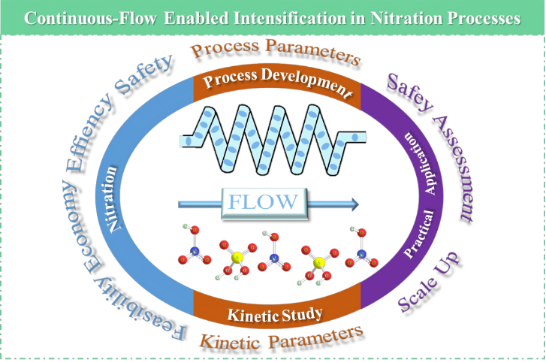
- potential in advancing the green transformation of the chemical industry while enhancing inherent process safety. Safety, cost-effectiveness, and operational efficiency serve as pivotal drivers for advancing flow chemistry in nitration processes. This review provides a comprehensive analysis of the
- continuous-flow nitration technology – a process historically recognized as one of the most hazardous industrial operations – focusing on its technological advancements in process design, reaction kinetics characterization, and practical implementation over the past decade. Detailed discussions encompass
- engaged in the development of continuous-flow nitration systems. Keywords: continuous-flow; kinetics; nitration; optimization; scale up; Introduction Nitro compounds hold an extremely important position in the field of organic chemistry, mainly because they are easily obtainable and can be converted



Selective monoformylation of naphthalene-fused propellanes for methylene-alternating copolymers
Beilstein J. Org. Chem. 2025, 21, 1183–1191, doi:10.3762/bjoc.21.95
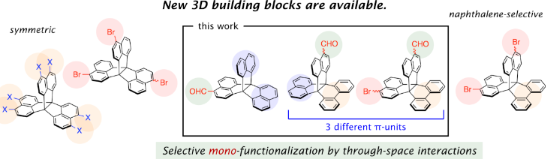
- chromatography on silica gel because of their low polarity and poor solubility in n-hexane. On the other hand, nitration of [3.3.3] gave solely the six-fold nitrated product due to low solubility of the starting material [46]. The current reaction is the first practical method for the selective
- on a naphthalene ring. It was reported that bromination proceeded in three- or six-fold manners for a [3.3.3]propellane [45][47][48][49][50][51][52], and in two-fold one for a [4.3.3]propellane [53][54]. Nitration of the [3.3.3]propellane also yielded an exclusive six-fold product [46]. The current


Cryptophycin unit B analogues
Beilstein J. Org. Chem. 2025, 21, 526–532, doi:10.3762/bjoc.21.40
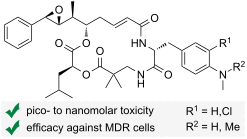
- of N-alkylation on the non-chlorinated unit B derivatives. Results and Discussion For the synthesis of unit B derivatives with amino groups instead of the naturally occurring methoxy group ᴅ-phenylalanine served as the fundamental substrate (Scheme 1). Nitration [23] followed by methyl ester


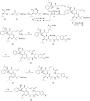

Emerging trends in the optimization of organic synthesis through high-throughput tools and machine learning
Beilstein J. Org. Chem. 2025, 21, 10–38, doi:10.3762/bjoc.21.3
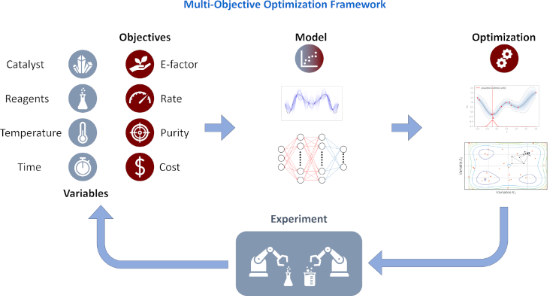
- nitration reaction was monitored by in-line NMR. The overlapping peaks were resolved for accurate quantification by building a chemometric model. The model also allowed for flexibility to small changes in peak positions and shapes in repetitive analyses. An in-house-designed flow cell equipped with a


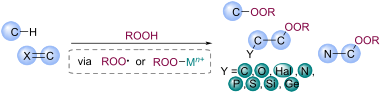
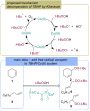
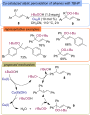
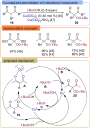
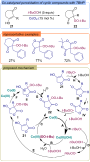
Advances in radical peroxidation with hydroperoxides
Beilstein J. Org. Chem. 2024, 20, 2959–3006, doi:10.3762/bjoc.20.249







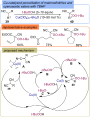


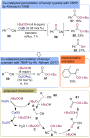
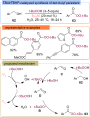

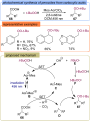








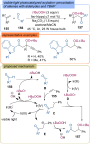
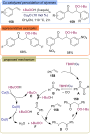


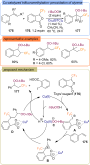
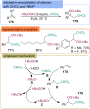

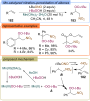
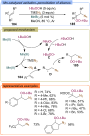


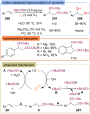
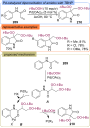

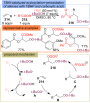


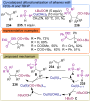
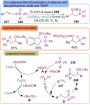
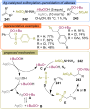





Homogeneous continuous flow nitration of O-methylisouronium sulfate and its optimization by kinetic modeling
Beilstein J. Org. Chem. 2024, 20, 2408–2420, doi:10.3762/bjoc.20.205
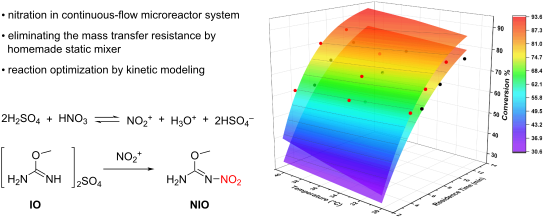
- 10.3762/bjoc.20.205 Abstract Nitration of O-methylisouronium sulfate under mixed acid conditions gives O-methyl-N-nitroisourea, a key intermediate of neonicotinoid insecticides with high application value. The reaction is a fast and highly exothermic process with a high mass transfer resistance, making
- its control difficult and risky. In this paper, a homogeneous continuous flow microreactor system was developed for the nitration of O-methylisouronium sulfate under high concentrations of mixed acids, with a homemade static mixer eliminating the mass transfer resistance. In addition, the kinetic
- 94%, initial reactant concentration of 0.5 mol/L, reaction temperature of 40 °C, molar ratio of reactants at 4.4:1, and a residence time of 12.36 minutes. Keywords: continuous flow; kinetic modeling; nitration; reaction optimization; static mixer; Introduction The demand for high-quality


![[Graphic 1]](/bjoc/content/inline/1860-5397-20-205-i17.svg?max-width=637&scale=1.18182)


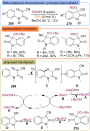
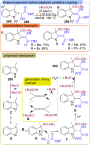
Tetrabutylammonium iodide-catalyzed oxidative α-azidation of β-ketocarbonyl compounds using sodium azide
Beilstein J. Org. Chem. 2024, 20, 1510–1517, doi:10.3762/bjoc.20.135
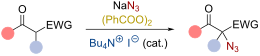
- an ammonium hypoiodite species which first facilitates the α-iodination of the pronucleophile, followed by a phase-transfer-catalyzed nucleophilic substitution by the azide. Furthermore, we also show that an analogous α-nitration by using NaNO2 under otherwise identical conditions is possible as well
- . Keywords: azidation; nitration; organocatalysis; oxidation; quaternary ammonium iodides; Introduction Organic compounds containing an azide functionality are highly valuable synthesis targets that offer considerable potential for various applications and further manipulations [1][2][3][4][5][6][7][8][9
- instead of NaN3 under otherwise identical conditions and obtained a first proof-of-concept for the analogous, to the best of our knowledge so far unprecedented, quaternary ammonium hypoiodite-mediated α-nitration reaction. Results and Discussion We started our investigations by optimizing the α-azidation


Bismuth(III) triflate: an economical and environmentally friendly catalyst for the Nazarov reaction
Beilstein J. Org. Chem. 2024, 20, 1167–1178, doi:10.3762/bjoc.20.99
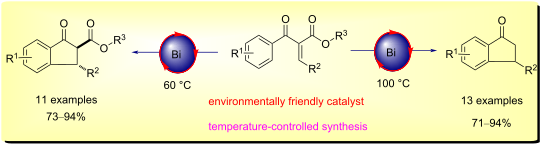
- synthesis has been reported for several transformations, such as epoxide opening [56], ketal formation and deprotection [57][58], Mannich reaction [59], intramolecular Sakurai cyclization [60], alcohol oxidation [61], aromatic hydrocarbon nitration [62], imine allylation [63], Knoevenagel condensation [64




Substitution reactions in the acenaphthene analog of quino[7,8-h]quinoline and an unusual synthesis of the corresponding acenaphthylenes by tele-elimination
Beilstein J. Org. Chem. 2024, 20, 243–253, doi:10.3762/bjoc.20.24
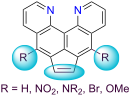
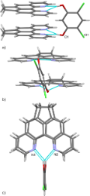
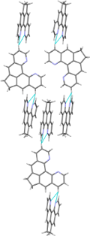
- (base 5). At the same time, in contrast to quinoquinoline 3, which sometimes adopts a twisted shape [11][13], molecule 5 each time remains almost flat. Nitration, nucleophilic methoxylation, and basicity measurements The nitration reaction of compound 5 should proceed in the same way as in other
- quinolines, at the benzene ring, and the resulting nitro compounds could potentially be subjected to further transformations, including nucleophilic substitution of nitro groups. Indeed, under the action of a small excess of the nitrating mixture, dipyridoacenaphthene 5 undergoes double nitration at
- results of 1H NMR spectra and TLC analysis, the second component was still present. This “permanent impurity” cannot be separated by chromatography or recrystallization, but it can be eliminated to some extent by washing the nitration products with hot chloroform, in which the impurity is slightly better




1,4-Dithianes: attractive C2-building blocks for the synthesis of complex molecular architectures
Beilstein J. Org. Chem. 2023, 19, 115–132, doi:10.3762/bjoc.19.12
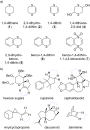
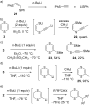
- transformations of aryl substrates have also been reported for thiovinyl ethers, and also for dihydrodithiins (Scheme 5), although there are obvious limitations to this point of view. Classical electrophilic aromatic substitution procedures such as the Vilsmeier–Haack reaction or a simple nitration have been
- products (viz 16, Scheme 5b) [37]. Electrophilic aromatic substitution under less forcing reaction conditions of the same substrate 15, using a room temperature nitration procedure, does yield the expected mononitrated dithiin 17 in good yield, without desulfurization [38]. 1,4-Dithiin-2-carbaldehyde (18










A new route for the synthesis of 1-deazaguanine and 1-deazahypoxanthine
Beilstein J. Org. Chem. 2022, 18, 1617–1624, doi:10.3762/bjoc.18.172
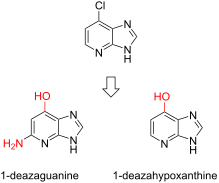
- nitration. A further strength of our route is divergency, additionally enabling the synthesis of 1-deazahypoxanthine (c1I base). Keywords: deazapurine; heterocycles; imidazopyridines; nucleoside; nucleotides; pyrrolopyrimidines; RNA atomic mutagenesis; Introduction Deazapurines (imidazopyridines and
- differed from the above path by leaving the hydroxy group of all intermediate 4-hydroxypyridine derivatives 12–15 unprotected [19]. Moreover, instead of azo coupling or nitroso formation, a simple nitration protocol with nitric acid to give the nitro derivative 13 and subsequent reduction with Raney nickel
- yields [22]. The switch from 2-tetrahydropyranyl to tert-butyloxycarbonyl protected compound 19 was required for an efficient installation of the exocyclic amine via regioselective nitration in the presence of trifluoroacetic anhydride (TFAA) and tetrabutylammonium nitrate (TBAN) to give a mixture of the


Structural basis for endoperoxide-forming oxygenases
Beilstein J. Org. Chem. 2022, 18, 707–721, doi:10.3762/bjoc.18.71
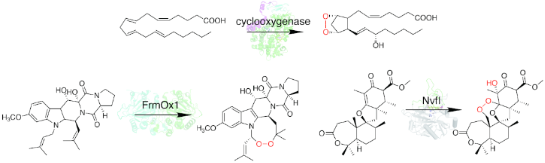
- enzymes with tetranitromethane, a reagent for tyrosyl residue nitration, eliminated the cyclooxygenase activity, while the activity was not abolished in the presence of the cyclooxygenase inhibitor indomethacin, indicating that the tyrosine residue(s) is the catalytic center for endoperoxide formation


Breaking paracyclophane: the unexpected formation of non-symmetric disubstituted nitro[2.2]metaparacyclophanes
Beilstein J. Org. Chem. 2021, 17, 1518–1526, doi:10.3762/bjoc.17.109
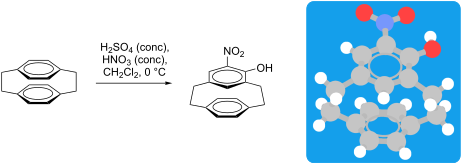
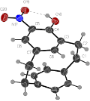
- undoubtedly the result of the lengthy syntheses of these compounds. We report the simple synthesis of a rare example of a non-symmetric [2.2]metaparacyclophane. Treatment of [2.2]paracyclophane under standard nitration conditions gives a mixture of 4-nitro[2.2]paracyclophane, 4-hydroxy-5-nitro[2.2
- ]metaparacyclophane and a cyclohexadienone cyclophane. Keywords: cyclophane; metaparacyclophane; nitration; paracyclophane; rearrangement; Introduction Cyclophanes have been described as having bent and battered benzene rings [1] due to a structure that involves one, or more, aromatic rings linked by aliphatic
- number of years [45][46][47][48][49][50][51][52], and have recently focused on 4-amino[2.2]paracyclophanes [14][53][54][55]. For the most part, we have avoided nitration. The literature is full of many different procedures, and the results can be unpredictable [55][56][57][58][59][60]. Yet nitration




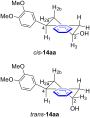
Cascade intramolecular Prins/Friedel–Crafts cyclization for the synthesis of 4-aryltetralin-2-ols and 5-aryltetrahydro-5H-benzo[7]annulen-7-ols
Beilstein J. Org. Chem. 2021, 17, 1481–1489, doi:10.3762/bjoc.17.104
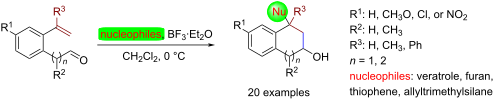
- -vinylnaphthalen-2-yl)acetaldehyde (13h) was prepared from 1-bromo-2-naphthaldehyde in 48% yield over the three steps. It should be noted that the nitro-substituted intermediate 11d was prepared by nitration of 11a with nitric acid under the promotion of acetic anhydride. With the accessibility of the aromatic




Design, synthesis and photophysical properties of novel star-shaped truxene-based heterocycles utilizing ring-closing metathesis, Clauson–Kaas, Van Leusen and Ullmann-type reactions as key tools
Beilstein J. Org. Chem. 2021, 17, 1374–1384, doi:10.3762/bjoc.17.96
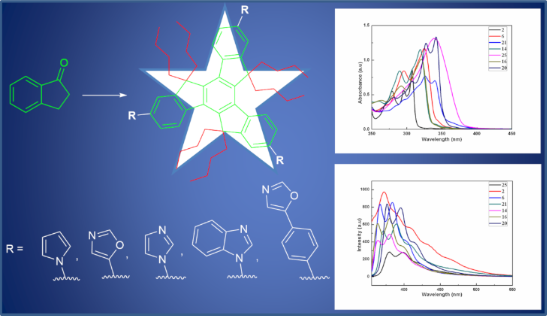
- required C3-symmetric tripyrroltruxene 6 by means of RCM in the presence of Grubbs′ first generation catalyst (G-I, 9) followed by self-aromatization without the involvement of any oxidizing agent. Compound 3 was produced from the hexabutylated truxene system 2 involving nitration, reduction and N
- , compound 2 was subjected to nitration followed by reduction to deliver triaminotruxene 4 in excellent yield. Later, compound 4 was subjected to six-fold N-allylation in the presence of NaH/allyl bromide to provide the required compound 3 which was directly treated with G-I catalyst (9) to afford the


Application of the Meerwein reaction of 1,4-benzoquinone to a metal-free synthesis of benzofuropyridine analogues
Beilstein J. Org. Chem. 2021, 17, 977–982, doi:10.3762/bjoc.17.79
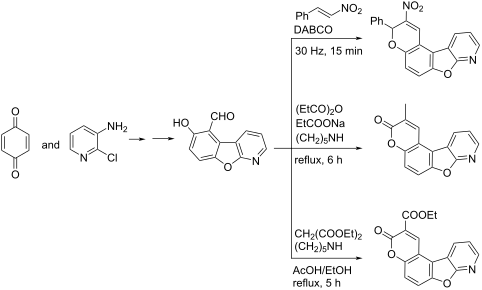
- expand the library of derivatives containing core structure 13, electrophilic aromatic substitution of this compound was explored (Scheme 2). Nitration of 13 using 70% nitric acid in glacial acetic acid gave the corresponding regioisomers 14 and 15 in 53% and 41% isolated yield, respectively. The 1H NMR
- novel and may have a potential medicinal interest. Conclusion In conclusion, we have successfully synthesized hydroxy-substituted pyridobenzofuran 13. Furthermore, nitration of 13 yielded two regioisomers, 14 and 15, which were further converted to oxazoles 19 and 20. Formylation of 13 was


The synthesis of chiral β-naphthyl-β-sulfanyl ketones via enantioselective sulfa-Michael reaction in the presence of a bifunctional cinchona/sulfonamide organocatalyst
Beilstein J. Org. Chem. 2021, 17, 494–503, doi:10.3762/bjoc.17.43
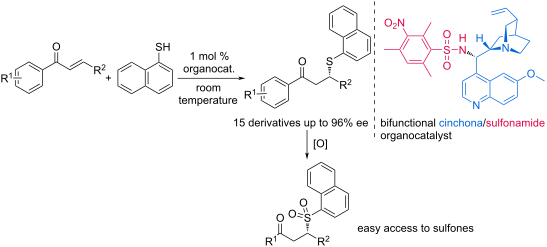
- synthesis of the basic part was initiated by converting quinine to quinineamine via a Mitsunobu reaction, followed by a Staudinger reduction [40]. Then it was coupled with the acidic part, which was obtained by the nitration of 2,4,6-trimethylbenzenesulfonyl chloride [39] to obtain organocatalyst 5 (Scheme


Diels–Alder reaction of β-fluoro-β-nitrostyrenes with cyclic dienes
Beilstein J. Org. Chem. 2021, 17, 283–292, doi:10.3762/bjoc.17.27

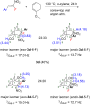
- one of the most widely used fluorine-containing building blocks [48][49]. Recently, we have developed an efficient stereoselective synthesis of β-fluoro-β-nitrostyrenes 1 based on the radical nitration of 2-bromo-2-fluorostyrenes [50]. This process takes place with simultaneous elimination of bromine



Synthetic approaches to bowl-shaped π-conjugated sumanene and its congeners
Beilstein J. Org. Chem. 2020, 16, 2212–2259, doi:10.3762/bjoc.16.186

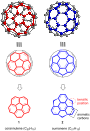
- they are the most trustworthy strategies for direct functionalization of aromatic scaffolds [50]. As can be inspected from Scheme 18, monoiodosumanene 79 was obtained by gold-catalyzed iodination in the presence of N-iodosuccinimide (NIS). The mononitrosumanene 80 was achieved through the nitration
- separable regioisomers were obtained in moderate-to-good overall yields (Scheme 19). In similar fashion, trisubstituted sumanene derivatives were also prepared as shown in Scheme 19. The monochlorosumanene 88 was also reported by Amaya and Hirao in three steps from the sumanene (2) using a classic nitration











The biomimetic synthesis of balsaminone A and ellagic acid via oxidative dimerization
Beilstein J. Org. Chem. 2020, 16, 2026–2031, doi:10.3762/bjoc.16.169
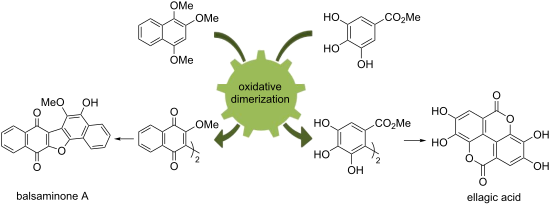
- challenges since the solubility of CAN in organic solvents determines the likelihood of nitration or oxidative dimerization [1]. It was found that dry acetonitrile was more conducive to nitration, whereas methanol afforded the desired biaryl in 55% yield. In contrast to CAN, both V2O5 and CrO3 required





