Search results
Search for "racemization" in Full Text gives 123 result(s) in Beilstein Journal of Organic Chemistry.
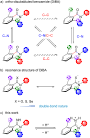
Synthesis and stereochemical analysis of dynamic planar chiral oxa[7]orthocyclophene
Beilstein J. Org. Chem. 2026, 22, 436–442, doi:10.3762/bjoc.22.30

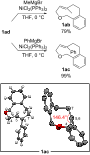
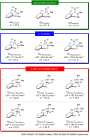
- still observed in the measurement at 5 °C, albeit only slightly. The phenyl-substituent effect on the stereochemical stability can be understood as a destabilization of the ground state due to the transannular repulsion, and a stabilization of the transition state for racemization by a conjugation
- the eluted samples (solvent: hexane/iPrOH 95:5). The plot of ln a (a = |R − S|/|R + S|) versus time furnished a straight line, affording the first-order rate constant k of racemization. The half-lives of the optical activity of 1ab and 1ad are 10.8 h (ΔG‡ at 25 °C: 24.4 kcal/mol) and 13.6 h (ΔG‡ at 25
- nm). Plausible phenyl-substituent effect on the stereochemical stability of 1ac. Kinetic measurements for the racemization of 1ab and 1ad. HPLC analysis of 1ab and 1ad using a CD detector at 5 °C (OJ-H column, 4.6 mm × 250 mm, eluent: hexane/iPrOH 95:5, flow rate: 0.5 mL/min, monitoring wavelength




Recent advances in the cleavage of non-activated amides
Beilstein J. Org. Chem. 2026, 22, 352–369, doi:10.3762/bjoc.22.23
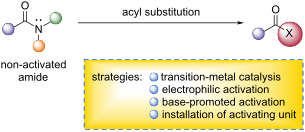
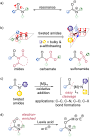
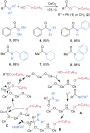
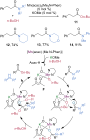
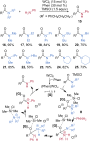
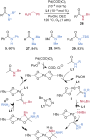
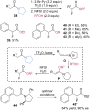
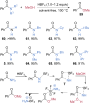
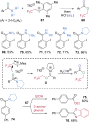
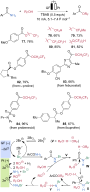
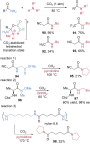
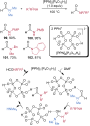
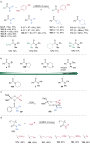
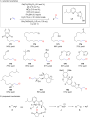
- ,N-disubstituted tertiary amides 53–55 were used, moderate yields were observed for the esterification. Notably, 8-aminoquinoline-derived chiral amides 56–58 were also smoothly cleaved in high yields without racemization. This is significant because the 8-aminoquinoline moiety is widely used in
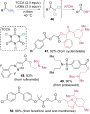
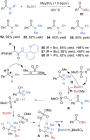
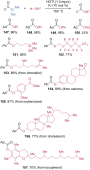
- benzoates 59, 185, and 51 in essentially quantitative yields. A key advantage of this protocol is its applicability to amino acid- and peptide-derived amides. Complex alcohols were successfully employed, producing the corresponding esters 186–192 in high yields without any detectable racemization or










Arene activation via π-bond localization: concepts and opportunities
Beilstein J. Org. Chem. 2026, 22, 257–273, doi:10.3762/bjoc.22.19
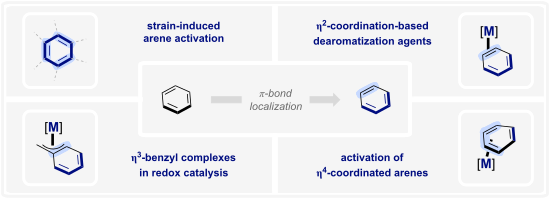
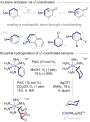
- metal center with α-pinene and subsequent ligand substitution proceeds with retention of configuration, the corresponding Mo(0) complex undergoes racemization during substitution (Scheme 2A). This obstacle was overcome by a redox-based approach: oxidation of the Mo(0)–α-pinene complex with iodine to a




Asymmetric Mannich reaction of aromatic imines with malonates in the presence of multifunctional catalysts
Beilstein J. Org. Chem. 2026, 22, 151–157, doi:10.3762/bjoc.22.8
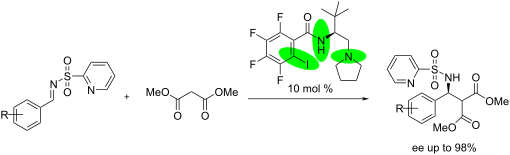
- ]. Although basic conditions caused partial racemization during the protection or deprotection step, the Boc-protected amine was obtained in low enantiomeric purity. Chiral HPLC analysis and comparison with an authentic sample revealed the S-configuration of the Mannich adduct [29]. Absolute configurations of


Efficient solid-phase synthesis and structural characterization of segetalins A–H, J and K
Beilstein J. Org. Chem. 2025, 21, 2612–2617, doi:10.3762/bjoc.21.202
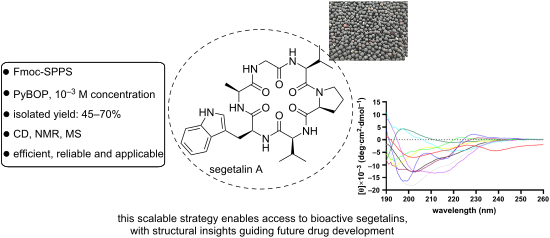
- , culminating in cyclization mediated by N,N'-dicyclohexylcarbodiimide (DCC)/N-methylmorpholine (NMM) at 0 °C for 7 days [18]. This method, however, is lengthy, operationally complex, difficult for product isolation, and carries a significant risk of racemization. Wong and Jolliffe synthesized segetalins B (2


Catalytic enantioselective synthesis of selenium-containing atropisomers via C–Se bond formations
Beilstein J. Org. Chem. 2025, 21, 2447–2455, doi:10.3762/bjoc.21.186
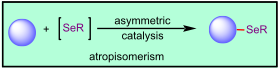
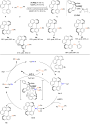
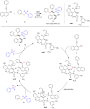
- intermediate Int 16 on VQM to form intermediate Int 17. As bifunctional organic catalysts, chiral ureas can synergistically activate both alkynes and selenols, thereby addressing the challenge of overcoming the increased difficulty of racemization caused by the presence of bulky SeR groups (Scheme 5). Summary




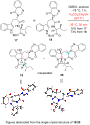
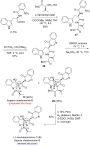
Further elaboration of the stereodivergent approach to chaetominine-type alkaloids: synthesis of the reported structures of aspera chaetominines A and B and revised structure of aspera chaetominine B
Beilstein J. Org. Chem. 2025, 21, 2072–2081, doi:10.3762/bjoc.21.162
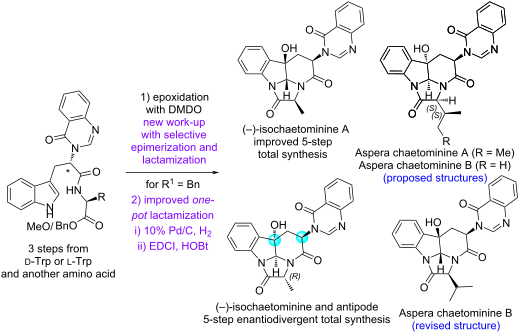
- that in the field of chiral drug R & D, the evaluation of bio-profiles of both enantiomers and racemic compound is required by the U.S. FDA. The result presented herein shows that by a late-stage racemization, one could obtain a racemic sample in just one step, instead of repeating the total synthesis
- from another enantiomeric chiral starting material or racemic one. On the basis of this consideration, such racemization represents a valuable “enantiodivergent synthesis”. Nevertheless, a more useful and generally acceptable enantiodivergent synthesis is the one that allows accessing two enantiomers




Enantioselective desymmetrization strategy of prochiral 1,3-diols in natural product synthesis
Beilstein J. Org. Chem. 2025, 21, 1932–1963, doi:10.3762/bjoc.21.151
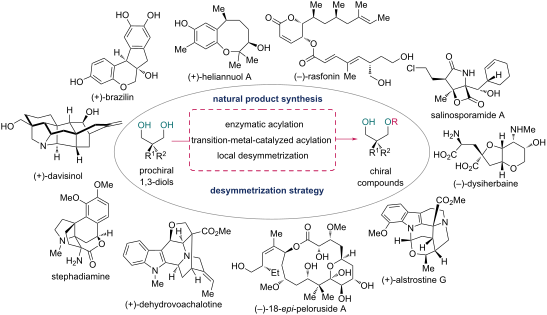
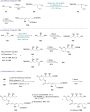
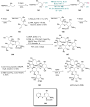
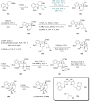
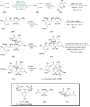
- with 99% ee. The TBS protection was crucial to prevent the potential racemization by intramolecular transesterification. Ester 79 was then prepared from 78 in eight steps. To complete the dimerization, fragments 80 and 81 were independently prepared from 79. An intermolecular Suzuki–Miyaura coupling










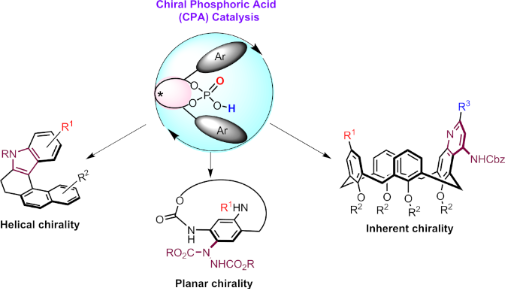
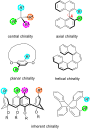
Chiral phosphoric acid-catalyzed asymmetric synthesis of helically chiral, planarly chiral and inherently chiral molecules
Beilstein J. Org. Chem. 2025, 21, 1864–1889, doi:10.3762/bjoc.21.145
- conducted a thorough evaluation of the stability of the helical chirality across the synthesized quinohelicenes, indicating a high racemization barrier. In 2024, our group further extended the CPA-catalyzed sequential Povarov reaction and aromatization strategy by using 2-vinylphenols 14 as the olefin
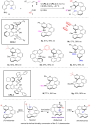
- -membered cyclic ketones 74 and hydroxylamines 75 (Scheme 21) [57]. High to excellent yield and enantioselectivity were achieved for the inherently chiral products when using a range of substituted arylhydroxylamines (see 76a–c). The racemization barrier of the product 76a was determined to be 110.5 kJ/mol









Unique halogen–π association detected in single crystals of C–N atropisomeric N-(2-halophenyl)quinolin-2-one derivatives and the thione analogue
Beilstein J. Org. Chem. 2025, 21, 1748–1756, doi:10.3762/bjoc.21.138
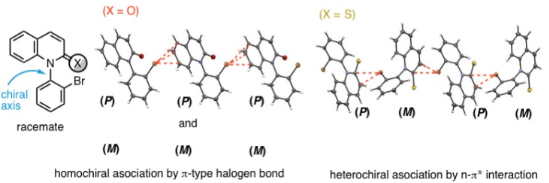
- -preparative chiral IH column. The rotational barriers of 1a and 1b were evaluated to be 32.0 and 30.8 kcal mol−1, respectively, by a thermal racemization experiment of the separated (P)-1a and (P)-1b. In contrast to quinolinones 1a,b, the atropisomers in the precursors (3,4-dihydroquinolinones 4a,b) could not


pH-Controlled isomerization kinetics of ortho-disubstituted benzamidines: E/Z isomerism and axial chirality
Beilstein J. Org. Chem. 2025, 21, 1568–1576, doi:10.3762/bjoc.21.120
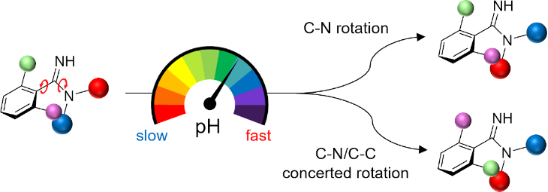
- peaks corresponding to the atropisomers arising from the C–C axis. Each atropisomer could be separated by chiral HPLC, and the isomer eluting earlier was used for the following kinetic analysis. The effect of pH on the kinetics of the racemization was investigated. The isomer was heated in the buffer
- . Notably, at pH 9.2, racemization proceeded minimally, even under high temperature conditions. Furthermore, it was confirmed that racemization requires a higher pH where a higher proportion of the amidine exists in its molecular form. This result was consistent with our DFT calculations, which showed that
- the rotational barrier of the C–N/C–C concerted rotation is higher than that of C–N rotation. This finding is consistent with the calculated pKa of 10.6 for amidine 1, indicating that racemization is minimal under the conditions where most of the amidine remains in its protonated form. As pH was



Wittig reaction of cyclobisbiphenylenecarbonyl
Beilstein J. Org. Chem. 2025, 21, 1454–1461, doi:10.3762/bjoc.21.107
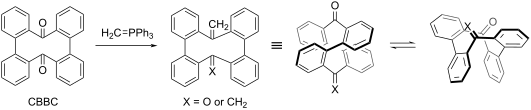
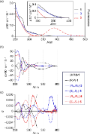
- low racemization barrier as with structurally similar methylenedioxy-substituted DBC derivative [22]. Racemization dynamics The racemization barriers of CBBC 1, mono-olefin 3, and bis-olefin 5 were evaluated by monitoring the decrease of circular dichroism (CD) signals in 1,2-dichlorobenzene at 170 °C
- (Supporting Information File 1, Figures S22–S24). The decrease of CD intensity was fitted by a single exponential curve, affording half-lifes of 1.3 h for 1, 6.4 h for 3, and 29 h for 5. These results indicate that the transformation of carbonyl groups to exocyclic olefins is effective to retard racemization
- . The racemization dynamics of 5 was investigated by DFT calculations at the B3LYP/6-31G(d) level of theory, employing the Gaussian 16 software package and the global reaction route mapping (GRRM17) [23] program (Figure 4). The interconversion between figure-eight conformation (M,M)-B and bathtub



Advances in nitrogen-containing helicenes: synthesis, chiroptical properties, and optoelectronic applications
Beilstein J. Org. Chem. 2025, 21, 1422–1453, doi:10.3762/bjoc.21.106
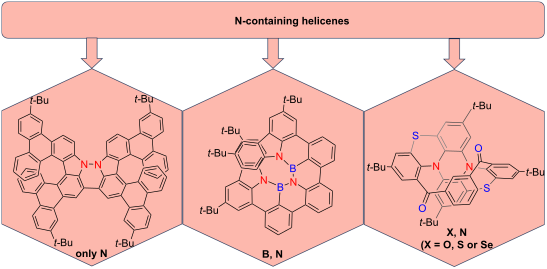
- reported azabora[6]helicenes 45a and 45b [60]. However, their enantiomers could not be isolated due to low racemization barriers. The F- and Ph-coordinated derivatives displayed moderate PLQYs in solution (0.26 and 0.18, respectively), which dropped markedly in the solid state (0.02 and 0.04) owing to
- reported a bis(N,Se)-hetero[4]helicene 59b and systematically compared its structural and dynamic properties with those of its sulfur analogue 59a [74]. Despite their close structural resemblance, the longer C–Se bond in 59b led to a markedly higher racemization barrier (145.7 vs 112.8 kJ/mol), thereby
- construct aza-oxa-dehydro[7]helicenes, yielding helicenes with high racemization barriers and notable chiral stability [84]. The quasicirculenes 70a and 70b demonstrated strong blue CPL activity, with |glum| values of 2.5 × 10⁻³ at 433 nm and 2.4 × 10⁻³ at 418 nm, respectively (Table 24). Building on this

Pd-Catalyzed asymmetric allylic amination with isatin using a P,olefin-type chiral ligand with C–N bond axial chirality
Beilstein J. Org. Chem. 2025, 21, 1018–1023, doi:10.3762/bjoc.21.83
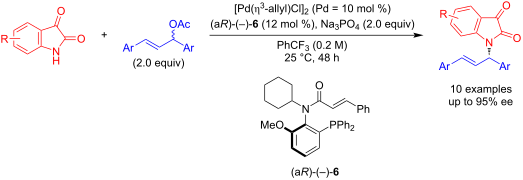
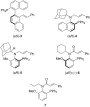
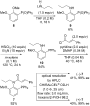
- , compound 7 has a primary alkyl group (n-propyl). This difference reduces steric hindrance and lowers the rotational barrier around the carbon–nitrogen bond, increasing the likelihood of racemization. Results and Discussion N-Propyl-N-cinnamoylamide 7 was prepared from phosphine oxide 8 [32] via an SNAr
- detector and found that the C(aryl)–N(amide) bond axial chirality exists in amide compound 7. We attempted the optical resolution of racemic compound (±)-7 and obtained (+)-7 and (−)-7 using a semi-preparative chiral HPLC on 50 milligram scales. We also investigated the racemization process associated with
- the axial chirality of compound 7 (see Supporting Information File 1). The racemization barrier (ΔG‡rac) of (−)-7 in n-dodecane was determined to be 25.0 kcal/mol at 25 °C, as calculated using the Arrhenius and Eyring equations [33][34][35]. Therefore, the half-life of racemization of ligand (−)-7 at




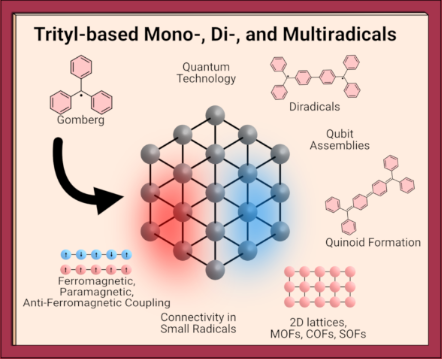
On the photoluminescence in triarylmethyl-centered mono-, di-, and multiradicals
Beilstein J. Org. Chem. 2025, 21, 964–998, doi:10.3762/bjoc.21.80
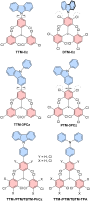
- mixture of right- and left-handed propellers can be resolved by chiral high pressure liquid chromatography (HPLC) into the P- and M-enantiomers, respectively [40][41]. However, due to the low racemization barrier of only about 22 kcal mol−1, the enantiomers racemize within minutes at room temperature. TTM
- is synthesized with slightly improved ϕ of 2% and a blue-shifted emission compared to PTM with a maximum photoluminescence wavelength λem = 569 nm (in CCl4) [40][42]. The racemization barrier remains almost identical at 21.1 kcal mol−1. Both PTM and TTM exhibit circularly polarized emission (CPL) for









Development and mechanistic studies of calcium–BINOL phosphate-catalyzed hydrocyanation of hydrazones
Beilstein J. Org. Chem. 2025, 21, 755–765, doi:10.3762/bjoc.21.59
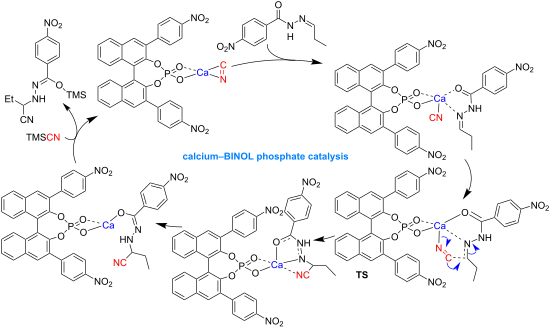
- moiety are non-linear with a Ca–N–C angle of 100°. Due to the stereospecificity of the reaction, racemization would have to occur already in 9 through a topomerization (e.g., similar to a Berry pseudorotation) of the metal complex, considering that species with a quaternary carbon, as they appear in
- experimentally achievable ee values. Maximal theoretical ee values are 70% "S" for Z-hydrazone and 70% "R" for E-hydrazone. The relatively high racemization barriers in 9 preclude a Curtin–Hammett scenario (with fast pre-equilibrium), which would otherwise render the enantiomeric outcome (ee value) independent


Recent advances in allylation of chiral secondary alkylcopper species
Beilstein J. Org. Chem. 2025, 21, 639–658, doi:10.3762/bjoc.21.51
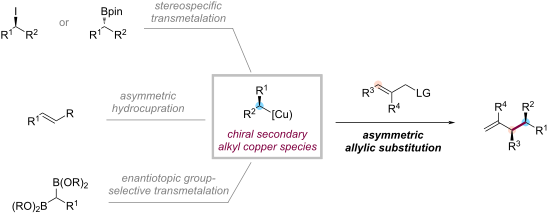
- generation of chiral secondary alkylcopper species has been a significant challenge in organic synthesis, primarily due to their inherent instability and tendency to racemization [38]. For generating the key chiral organocopper intermediates, two distinct approaches have been developed: one utilizing chiral
- the Li/I exchange is essential for preventing racemization of the configurationally labile organolithium intermediate. The subsequent transmetalation with CuBr·P(OEt)3 introduces P(OEt)3 as a supporting ligand, which plays a vital role in stabilizing the resulting chiral organocopper species 14. A key
- importance of reaction conditions after ZnCl2 addition (Scheme 5). When the reaction mixture was stirred at −30 °C for 1 hour (entry 1 in Scheme 5), the product 19 maintained a high diastereomeric ratio (dr), indicating minimal racemization. However, extending the stirring time or increasing the reaction




Organocatalytic kinetic resolution of 1,5-dicarbonyl compounds through a retro-Michael reaction
Beilstein J. Org. Chem. 2025, 21, 473–482, doi:10.3762/bjoc.21.34
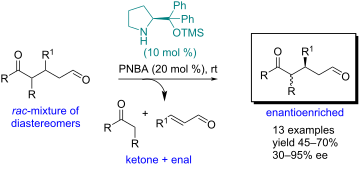
- racemization when treated with inorganic bases [25], which had led us to check the equilibrium between Michael and the retro-Michael reaction (Scheme 1). These observations have prompted us to conduct further research into this reaction for potential applications in the kinetic resolution of these adducts. In


Recent advances in organocatalytic atroposelective reactions
Beilstein J. Org. Chem. 2025, 21, 55–121, doi:10.3762/bjoc.21.6
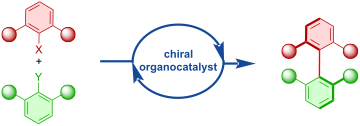
- enantioselectivities were achieved. The products showed no thermal racemization at 150 °C, what was supported by a calculated high rotational barrier of 49.9 kcal/mol. The usefulness of chiral phosphoric acids also shows in the atroposelective Pictet–Spengler reaction of N-arylindoles 104 with various aldehydes 105
- enantioselectivities, the authors also calculated the racemization barrier of products 133. It was determined as a class-3 atropoisomer with 30.1 kcal/mol at 90 °C in toluene. The preparation of 133 on a gram scale yielded 75% of the product with a similar level of enantiomeric purity (90% ee). A key step of this
- stereoselectivity (96% ee, >95:5 dr). No racemization was observed after 36 hours at 150 °C in o-xylene. The asymmetric synthesis of arylindolylindolinones 139 or 141 bearing both central and axial chirality was accomplished by a combination of arylindoles 137 or 140 and indolinones 138 with CPA (R)-C22 acting as






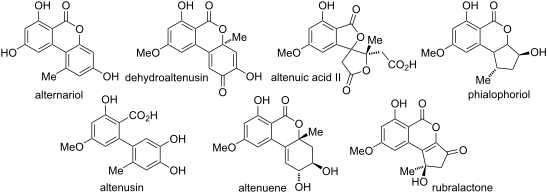
Natural resorcylic lactones derived from alternariol
Beilstein J. Org. Chem. 2024, 20, 2171–2207, doi:10.3762/bjoc.20.187
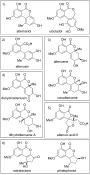
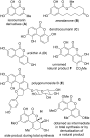
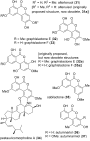
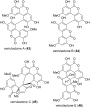
- structure of verrulactone A was later unambiguously confirmed by X-ray crystallographic analysis [160]. Chirality and absolute configurations remained unresolved, where it should be noted that even verrulactones A and B are axially chiral with an assumed significant racemization barrier. At least it has






Selectfluor and alcohol-mediated synthesis of bicyclic oxyfluorination compounds by Wagner–Meerwein rearrangement
Beilstein J. Org. Chem. 2024, 20, 1462–1467, doi:10.3762/bjoc.20.129
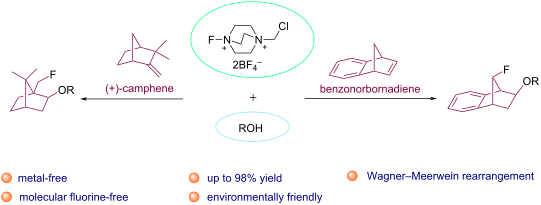
- compounds 4a–j were also obtained in very good yields (60–98%, Scheme 2). Since the reaction mechanism proceeding with a Wagner–Meerwein rearrangement does not cause racemization or a diastereomeric mixture and preserves the initial enantiomeric excess in the camphene's fluoroalkoxy derivatives (Scheme 4


Advancements in hydrochlorination of alkenes
Beilstein J. Org. Chem. 2024, 20, 787–814, doi:10.3762/bjoc.20.72
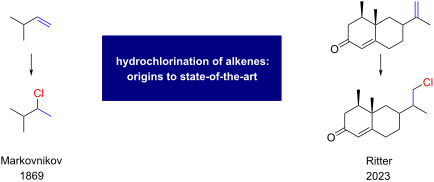
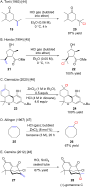
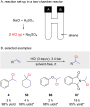
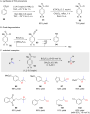
- 50 mmol scale [60]. Little racemization (<7%) of 77 occurred during the reaction. The simplicity of the Kropp protocol resulted in a report in the journal of chemical education [61]. Similar work was reported by Delaude and co-workers [62]. They studied a series of zeolites for the hydrochlorination






Photochromic derivatives of indigo: historical overview of development, challenges and applications
Beilstein J. Org. Chem. 2024, 20, 228–242, doi:10.3762/bjoc.20.23
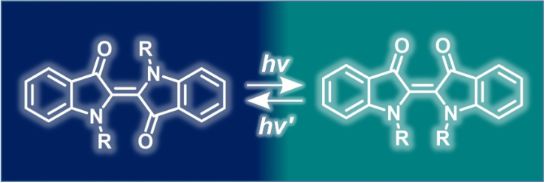
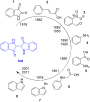
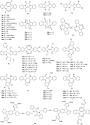
- isomerization and photochemical (only for 13a) isomerization [46]. Compounds 13 showed intrinsic planar chirality and their enantiomers could be separated by HPLC. Notably, upon thermal and photochemical isomerization of these compounds, no Z-isomers were detected and only the racemization took place. Such





Perspectives on push–pull chromophores derived from click-type [2 + 2] cycloaddition–retroelectrocyclization reactions of electron-rich alkynes and electron-deficient alkenes
Beilstein J. Org. Chem. 2024, 20, 125–154, doi:10.3762/bjoc.20.13
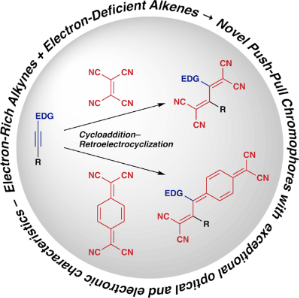
- in the visible region were evident in their CD spectra. Using the Arrhenius and Eyring formalisms, the kinetic parameters for the thermal racemization of 57 and 58 were obtained. The activation free enthalpy (ΔG‡) for the racemization of 57 (ΔG‡298 K = 24.8 kcal mol−1) was ≈1.5 kcal mol−1 larger than
- determined the absolute configurations of these atropisomers through the X-ray crystallographic analyses of (Sa)-59 and (Ra)-60. Surprisingly, heating the enantiomers of 69 and 60 at 80 °C for 3 h resulted in negligible thermally induced racemization. Meanwhile, in O2-free toluene solution under illumination
- , the racemization was observed at 80 °C. Torres et al. performed detailed theoretical calculations and showed that the racemization observed in 59 and 60 is caused by triplet-state photogeneration, which leads to the rotation around the sterically hindered buta-1,3-diene chiral axis [132]. In fact, the


Radical chemistry in polymer science: an overview and recent advances
Beilstein J. Org. Chem. 2023, 19, 1580–1603, doi:10.3762/bjoc.19.116
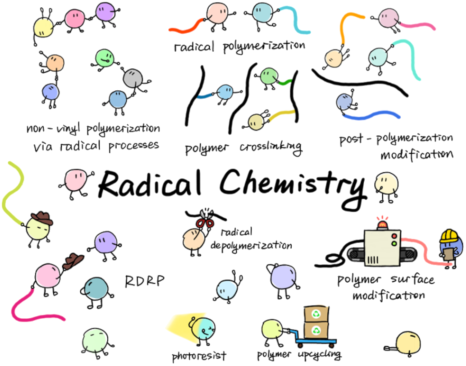
- has been used to cure a liquid isoprene polymer in precise digital light processing 3D printing [105]. Recently, Kanbayashi et al. reported that thiol–ene chemistry would not cause racemization of an asymmetric center linked to a pendant vinyl group, which can be particularly valuable for