Search results
Search for "transformations" in Full Text gives 1184 result(s) in Beilstein Journal of Organic Chemistry. Showing first 200.
Electrochemical reduction of unsaturated carbon–carbon bonds via 3d transition-metal catalysis
Beilstein J. Org. Chem. 2026, 22, 955–981, doi:10.3762/bjoc.22.75
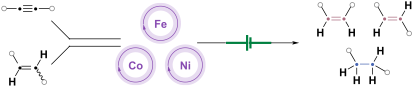
- achievable reactivity and selectivity [29]. A design for electroorganic synthesis Chemical transformations are inherently governed by the movement of electrons. Consequently, electrochemistry offers a platform in which an applied potential directly controls the electron flow, enable redox processes without
- . As this review primarily addresses reductive electroorganic transformations, the anodic process is often not directly involved in product formation. In such cases, sacrificial anodes, most commonly zinc or magnesium, are employed, wherein the electrode material undergoes dissolution to maintain
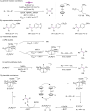
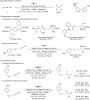
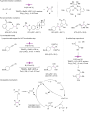
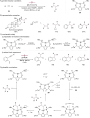
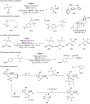
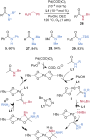
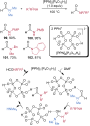
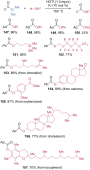
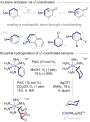
- protonation to furnish the final product (Scheme 2D). Cobalt Alkynes to alkenes Cobalt readily operates within open-shell and radical manifolds [92][93], rendering it particularly effective for HAT-based reductive transformations. In 2022, the Baran group reported a ligand-controlled E- or Z-selective alkyne








Recent advances in copper-catalyzed direct hydroamination of alkenes with (hetero)aromatic amines
Beilstein J. Org. Chem. 2026, 22, 925–947, doi:10.3762/bjoc.22.73
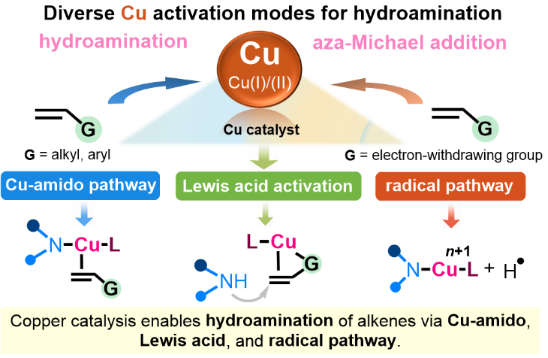
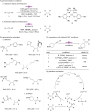
- coordination behavior of these substrates render such transformations inherently challenging. Recently, copper catalysis has emerged as a versatile and practical platform for addressing these limitations. Owing to its redox flexibility and ligand tunability, copper facilitates multiple activation modes
- yields under mild conditions. Furthermore, the heterogeneous catalyst could be readily recovered and reused without significant loss of activity, demonstrating the practical utility of NP-based copper catalysts for sustainable aza-Michael transformations. Under conditions B, Rahman et al. developed a bio
- crystallinity and well-defined lattice features, characteristic of the polycrystalline spinel phase of CuCo2O4. These sheet-like structures provide a large surface area and abundant exposed catalytic sites, which are advantageous for heterogeneous catalytic transformations. Under optimized conditions using 6







Diastereodivergent electrophilic trapping of α-boryl lithium derivatives
Beilstein J. Org. Chem. 2026, 22, 882–887, doi:10.3762/bjoc.22.68
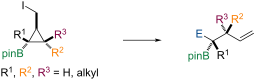
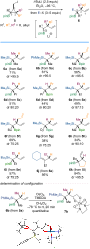
- diverse catalytic and stereoselective transformations [28][29][30][31][32][33]. In this context, we have recently demonstrated that a broad range of arylated (iodomethyl)cyclopropylboronic ester 2 [34] undergo ring-opening reactions, followed by electrophilic trapping of the resulting α-boryl carbanion
- , this work establishes α-boryl lithium intermediates as valuable stereogenic platforms for conducting highly diastereoselective nucleophilic transformations. The combination of the anion-stabilizing capability of boron with strain-release-driven ring fragmentation provides exceptional chemo- and




Site-specific labelling of native peptides and proteins: chemical and enzymatic strategies
Beilstein J. Org. Chem. 2026, 22, 857–881, doi:10.3762/bjoc.22.67
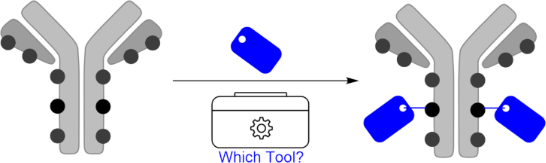
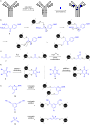
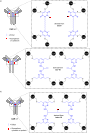
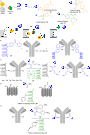
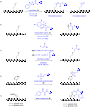
- transformations [3][4]. However, the limited abundance of free cysteine residues in proteins has driven the development of alternative approaches targeting other chemical motifs. This review summarizes current strategies for site-specific modifications of these alternative sites, followed by a comparative
- ) refer to chemical changes to a protein in-cell after it is synthesised by the ribosome, encompassing over 650 types of transformations, including phosphorylation, methylation, acylation, ubiquitination and glycosylation [110]. While numerous naturally occurring PTMs have been repurposed for









The trans-influence in gold chemistry from a catalytic perspective
Beilstein J. Org. Chem. 2026, 22, 838–856, doi:10.3762/bjoc.22.66
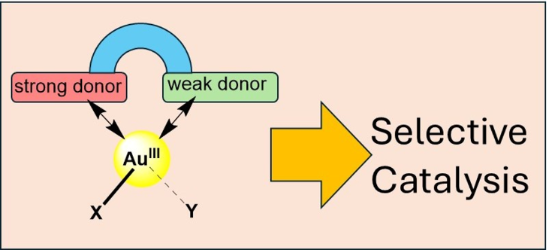
- recent mechanistic insights. Keywords: catalysis; gold; ligands; reaction mechanism; trans-influence; Introduction Gold catalysts have emerged as catalysts of choice in a multitude of organic transformations, not least due to their high functional group tolerance. Their applications have been widely


Unsymmetrical sulfoxides with sterically hindered catechol fragment: synthesis, structure, electrochemical properties, and antiradical activity
Beilstein J. Org. Chem. 2026, 22, 828–837, doi:10.3762/bjoc.22.65
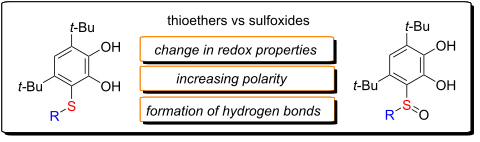
- on the sulfoxide group. Keywords: antioxidant activity; catechol thioethers; redox-transformations; sulfoxides; X-ray analysis; Introduction Polyphenolic compounds can participate in redox processes and undergo a wide range of chemical modifications. As a result, they possess diverse biological
- 1.82–1.91 V. The value of Epox2 for the above-mentioned compounds is shifted anodically by 0.26–0.31 V relative to the corresponding thioethers, reflecting an increase in the Gibbs free energy (ΔG) of the electrooxidation process by 12–15 kcal/mol. Redox transformations at the sulfur atom occur in
- either one or two stages, depending on the degree of branching of the hydrocarbon substituent. A possible mechanism for the anodic transformations of sulfoxides is the two-electron oxidation of the substituted o-benzoquinone formed in the first stage to a dication (Scheme 2, path a). Further


Synthesis and structural elucidation of a novel bis-spirooxindole from isatin and ethylenediamine
Beilstein J. Org. Chem. 2026, 22, 813–820, doi:10.3762/bjoc.22.63
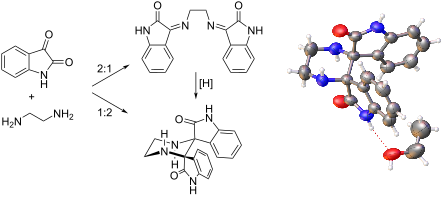
- conditions. Keywords: ethylenediamine; isatin; spirooxindole; Introduction Isatin (1) is a highly versatile platform for heterocycle construction, particularly through skeletal editing, ring expansion, and related transformations that enable rapid access to complex molecular architectures [1]. In parallel


Synthetic study of vic-bromination of diarylacetylenes, easy purification and separation
Beilstein J. Org. Chem. 2026, 22, 795–802, doi:10.3762/bjoc.22.61
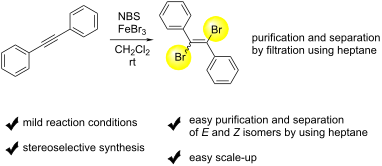
- ; Introduction The addition reaction of bromine to diphenylacetylene is one of basic reactions and is recognized as important, because resulting 1,2-dibromo-1,2-diphenylethylene can serve as a precursor for various molecular transformations in organic synthesis [1][2]. This reaction seems to be simple, but some
- interested in the selective synthesis of the E isomer of 1,2-dibromo-1,2-diphenylethylene, together with simple purification and separation toward process chemistry, because the compound is an attractive synthetic intermediate for further transformations. During the course of our studies, we have found that



Rongalite addition to dienones: diastereoselectivity in cyclic sulfone synthesis; stereochemical rationalization and prospects as a general conjugate nucleophile
Beilstein J. Org. Chem. 2026, 22, 742–752, doi:10.3762/bjoc.22.56

- heterocycles and also those looking to use Rongalite as a source of nucleophilic sulfur in other transformations. We are currently examining extensions of this method and other sulfinate reaction development and catalysis. Rongalite as an equivalent of the unstable hyposulfite ion. Sulfone diastereomers 1a and


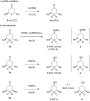


Synthesis of heterocycles based on azomethine ylides from α-amino acids (or amines) and carbonyl compounds
Beilstein J. Org. Chem. 2026, 22, 705–741, doi:10.3762/bjoc.22.55
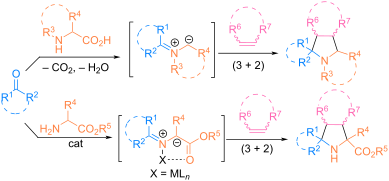
- , the importance of the formation of azomethine ylides from amino esters, amino acids, imine derivatives, aziridines or other substrates was emphasized. A review [26] demonstrates metal-catalyzed as well as metal-free asymmetric and racemic transformations of imino ethers upon interaction with various


Photoorganocatalytic trifluoromethylation of (het)arenes in green conditions
Beilstein J. Org. Chem. 2026, 22, 662–671, doi:10.3762/bjoc.22.50
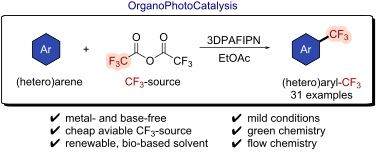
- trifluoromethyl-substituted compounds. Over the past decade, numerous photocatalytic protocols for the trifluoromethylation of arenes and heteroarenes have been developed, including approaches employing microflow techniques [6]. These transformations utilize a broad spectrum of catalysts, ranging from Ru- and Ir
- -catalyzed [8], organic photocatalyst-mediated, or electrochemical transformations [9], and also include continuous-flow processes [6][10][11][12][13]. Given that photocatalytic reactions align with the principles of green chemistry, particularly energy efficiency and the use of catalytic pathways, such
- transformations were performed in acetonitrile, which reduces their ecological compatibility, particularly for large-scale applications. Tlili and co-workers have described the use of an organic photocatalyst for the CF3-functionalization of styrenes with the Langlois reagent (sodium trifluoromethanesulfinate




Computational prediction of C–H hydricities and their use in predicting the regioselectivity of electron-rich C–H functionalisation reactions
Beilstein J. Org. Chem. 2026, 22, 603–610, doi:10.3762/bjoc.22.46
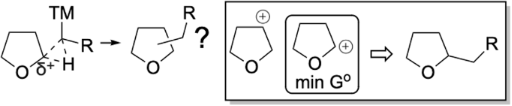
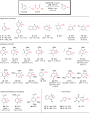
- –N, C–C, and C–X bond formations, carbene insertions, and oxidative transformations. Comparative analysis with ALFABET, a bond dissociation energy (BDE)-based ML model, reveals that hydricity predictions, when combined with steric accessibility, correctly identify the reactive site in eight out of
- one of the most common C–H functionalisation approaches for sp3 C–H bonds [6]. Despite the prevalence of these transformations, predicting which of several electron-rich C–H sites will react remains challenging, especially when electronic and steric effects compete. As Cernak et al. [6] have pointed
- ). Many of these transformations are not formal hydride transfers; however, they commonly involve buildup of positive charge (e.g., via metal–carbene/nitrene insertion transition states, radical cations, or polar hydrogen atom transfer). Hydricity could therefore serve here as an empirical reactivity


![[Graphic 6]](/bjoc/content/inline/1860-5397-22-46-i8.svg?max-width=637&scale=1.18182)


Modern synthetic pathways towards eribulin and its subunits
Beilstein J. Org. Chem. 2026, 22, 495–526, doi:10.3762/bjoc.22.37
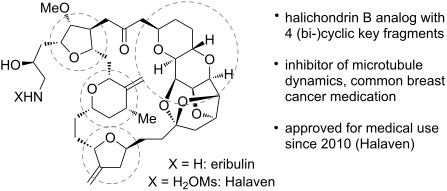
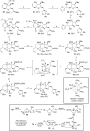
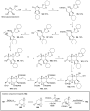
- cyclization proved to be suitable, but only moderately yielding, procedures. Further, this pathway, with the exception of the coupling reaction between 167 and 171, involves only simple and mild transformations using standard reagents. As mentioned above, 186 served as an intermediate for the total synthesis
- thereafter, Nasam and co-workers developed a novel synthesis of 1`s fragment 272 using multiple asymmetric catalytic transformations (Schemes 29–31) [102]. 256 was synthesized from trans-crotonic acid and served as a starting material for the first building block (261, Scheme 29). Hosomi–Sakurai allylation
- sequence of 12 steps, which only included the use of cheap materials and preparatively simple transformations. Therefore, if the overall yield can be increased even further, this synthesis represents a useful alternative to existing pathways. Conclusion In summary, numerous advancements were made in the








Recent advances in the stereoselective synthesis of distal biaxially chiral molecules
Beilstein J. Org. Chem. 2026, 22, 461–479, doi:10.3762/bjoc.22.34
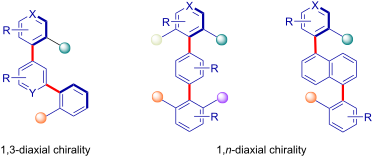
- induce axial chirality. In this approach, the initial formation of one or more stereogenic centers establishes a defined three-dimensional framework, which subsequently guides the generation of one or more chiral axes through cyclization, oxidative aromatization, or related transformations. This central


Concept-driven strategies in target-oriented synthesis
Beilstein J. Org. Chem. 2026, 22, 451–454, doi:10.3762/bjoc.22.32
- (vibralactone, Zhi-Yun Liu, Hong-Dong Hao et al.), interrupted [2 + 2]/retro-Mannich (aspidosperma alkaloids, Zhen Yang, Zhong-Chao Zhang et al.), dipolar cycloaddition (malayamycin A, Sha-Hua Huang, Jian Jin, Ran Hong, et al.), Zr-mediated radical transformations (review, Hugh Nakamura and co-worker)]. The


Cone p-aminocalix[4]arenes enriched with ‘clickable’ alkyne or azide functionalities
Beilstein J. Org. Chem. 2026, 22, 399–415, doi:10.3762/bjoc.22.28
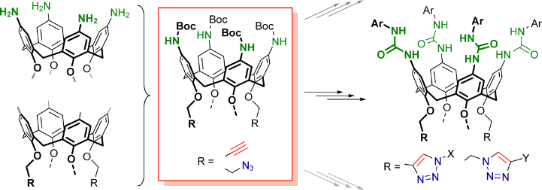
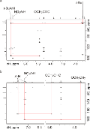
- tetraureacalix[4]arenes was obtained. Examination of the 1H NMR spectra of the tetraureas in CDCl3 showed that in most cases triazole heterocycles do not intervene the formation of homo- and heterodimeric capsules by these compounds. Thus, considering the synthetic value of CuAAC and amine transformations, p
- herein report on the synthesis approaches to a series of cone p-aminocalix[4]arenes having propargyl or 2-azidoethyl groups at the narrow rims (Figure 1). The newly synthesized compounds may be thus treated as novel building blocks in calixarene chemistry capable of step-wise orthogonal transformations
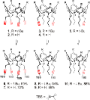
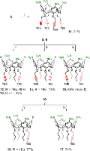
- compatible with propargyl or 2-azidoethyl functionalities residing at the calixarene narrow rims, these ‘simple’ transformations are not applicable to the available propargylated/2-azidoethylated p-tert-butyl- or p-H-calix[4]arenes. Therefore, the multistep reaction sequences presented below have been




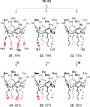


Electrosynthetic access to unsymmetrical oxaza[8]helicenes with high chiral stability and strong circularly polarized luminescence (CPL)
Beilstein J. Org. Chem. 2026, 22, 372–382, doi:10.3762/bjoc.22.25
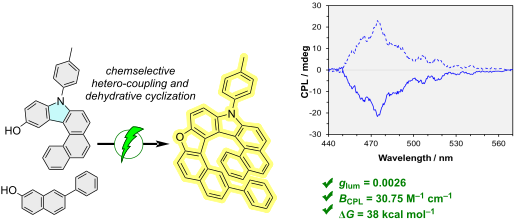
- characteristic transformations of the organosulfur functionality [32][33]. In 2024, Badani, Karnik, and co-workers accessed one member of this class, 7,12-dioxa[8]helicene I, through a sequence featuring photochemical E–Z isomerization, electrocyclization, and oxidative aromatization [34]. In parallel, Liu and




Recent advances in the cleavage of non-activated amides
Beilstein J. Org. Chem. 2026, 22, 352–369, doi:10.3762/bjoc.22.23
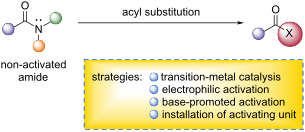
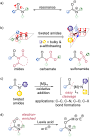
- ]. Such activation has enabled a wide array of transformations, including metal-catalyzed cross-couplings via oxidative addition into the amide C–N bond (Scheme 1c) [32][33][34][35][36], and transition-metal-free acyl substitutions facilitated by improved leaving-group ability [37][38][39][40]. Although
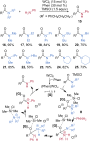
- -promoted transformations enhanced by alkali-metal counter-cation effects, and (iii) installation of activating groups on the nitrogen to enable chemoselective cleavage under tailored conditions. These approaches collectively offer promising avenues for the efficient transformation of non-activated amides
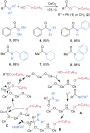
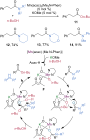
- activation assisted by alkali metal counter cations Although strong bases can promote nucleophilic transformations of amides, such reactions have traditionally required harsh conditions [69][70]. Recently, however, the role of alkali metal counter cations in facilitating acyl substitution has been recognized










Ring contraction and ring expansion reactions in terpenoid biosynthesis and their application to total synthesis
Beilstein J. Org. Chem. 2026, 22, 289–343, doi:10.3762/bjoc.22.21
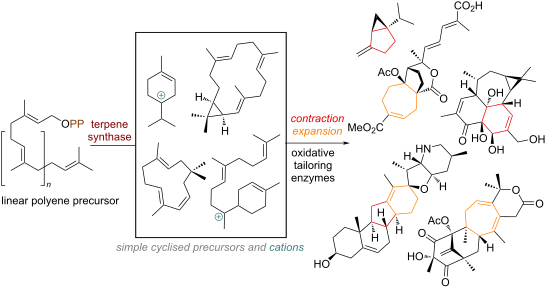
- secured. Organic synthetic chemistry can help to fill gaps or evaluate, support or revise initially implausible proposed biogenesis routes by attempting to mimic these transformations (= bioinspired or biomimetic synthesis) [11][12][13][14][15][16][17][18]. In general, the biogenesis of unique carbon
- Moving on from these carefully characterised biosynthetic transformations, where often single steps were carried out with specific enzymes or isotope-labelled substrates to prove origin, we now move to the much larger body of speculative biosynthetic relationships. From macrocyclic lathyrane frameworks
- previous studies, no detailed studies on the transformations connecting all these families have been performed thus far [133][134][135][136]. Novel Euphorbia diterpenoids recently isolated by Wang, Zheng and Yu in 2024 (see Scheme 23A) could be considered “missing links” offering an explanation as to how






Arene activation via π-bond localization: concepts and opportunities
Beilstein J. Org. Chem. 2026, 22, 257–273, doi:10.3762/bjoc.22.19
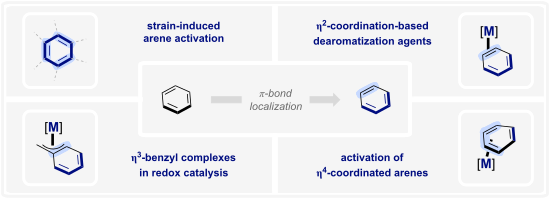
- transformations for the synthesis of complex, three-dimensional molecular architectures with tailored physicochemical properties. Despite notable advances in dearomative methodologies over the past decades, the selective and controlled disruption of the aromatic core continues to represent a fundamental challenge
- disrupting the aromatic core, such as electrophilic and nucleophilic aromatic substitutions, transition metal-catalyzed cross-couplings [11], and C–H functionalizations [12]. Taken together with their natural abundance, these transformations have established arenes and heteroarenes as versatile synthetic
- aromaticity and unveiling the latent double-bond character within the aromatic ring. This dramatically increases reactivity, enabling alkene-like transformations with aromatic molecules that are inaccessible by conventional synthetic methods, thereby complementing traditional arene chemistry. Other modes of




A mild and atom-efficient four-component cascade strategy for the construction of biologically relevant 4-hydroxyquinolin-2(1H)-one derivatives
Beilstein J. Org. Chem. 2026, 22, 244–256, doi:10.3762/bjoc.22.18
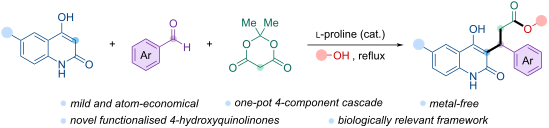
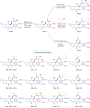
- acids followed by sequential Michael-type addition and subsequent cascade transformations. This versatile one-pot protocol delivers structurally diverse open-chain 3-arylpropanoate esters in moderate to good yields (46–69%), while cyclic pyranoquinolinones are formed under kinetically controlled
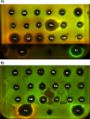
- conditions. Subsequent transformations afford isopropyl and cyclohexyl analogues via hydrolysis–esterification. A preliminary biological evaluation revealed low cytotoxicity and modest antibacterial activity against Escherichia coli ΔtolC strains. This sustainable synthetic approach constitutes the first


Screwing the helical chirality through terminal peri-functionalization
Beilstein J. Org. Chem. 2026, 22, 205–212, doi:10.3762/bjoc.22.14
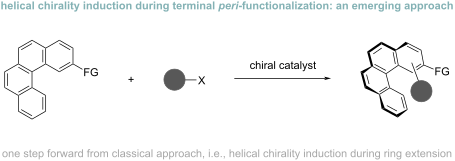
- substitution pattern along the plane of symmetry, is known as planar chirality, as seen in metallocene and cyclophanes. Molecules containing planar chirality have greater relevance in materials science and stereoselective transformations [12][13]. The fourth branch of the chiral tree is helical chirality. A
- further transformed into representative derivatives. Notably, the reaction performed well in the scale-up demonstration and the post-synthetic transformations proceeded smoothly without hampering the enantiomeric excess (Scheme 2). Another report applying peri-C–H functionalization for the synthesis of
- enantiomeric excess and diastereomeric ratio (Scheme 3). The developed protocol was also tested for up-scale synthesis and post-synthetic transformations. Notably, the reaction worked well at a 4.0 mmol scale providing product 8g in quantitative yield and >99% ee. This product was further reduced to the


Base-promoted deacylation of 2-acetyl-2,5-dihydrothiophenes and their oxygen-mediated hydroxylation
Beilstein J. Org. Chem. 2026, 22, 192–204, doi:10.3762/bjoc.22.13
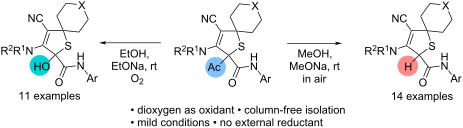
- , Leuven B-3001, Belgium 10.3762/bjoc.22.13 Abstract Solvent-dependent transformations of polysubstituted 2-acetyl-2,5-dihydrothiophenes to the corresponding 2-hydroxy- or deacetylated derivatives are described. The treatment of a methanolic solution of the dihydrothiophene substrates with sodium
- methoxide afforded the deacylated products. Conversely, the treatment with sodium ethoxide in an oxygen saturated ethanolic solution produced 2-hydroxy substituted 2,5-dihydrothiophenes. Keywords: 2-acetyl-2,5-dihydrothiophenes; deacylation; 2-hydroxy-2,5-dihydrothiophenes; transformations; Introduction
- Oxidative transformations are an important area of modern organic synthesis [1], producing a broad range of valuable synthetic products for the industry. A variety of catalytic reactions were developed for the oxidative conversions of unsaturated compounds [2][3][4][5], alcohols [6][7], alkanes [8][9][10




Circumventing Mukaiyama oxidation: selective S–O bond formation via sulfenamide–alcohol coupling
Beilstein J. Org. Chem. 2026, 22, 158–166, doi:10.3762/bjoc.22.9
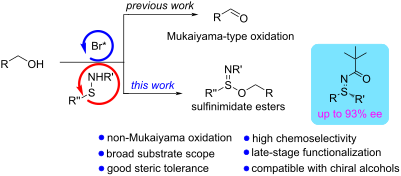
- , such transformations remain synthetically challenging. This is primarily due to the well-known Mukaiyama-type oxidation, wherein sulfenamides serve as redox catalysts for NBS- or NCS-mediated oxidations of alcohols to aldehydes or ketones (Scheme 1b, top) [38][39][40][41][42]. Under such oxidative


Asymmetric Mannich reaction of aromatic imines with malonates in the presence of multifunctional catalysts
Beilstein J. Org. Chem. 2026, 22, 151–157, doi:10.3762/bjoc.22.8
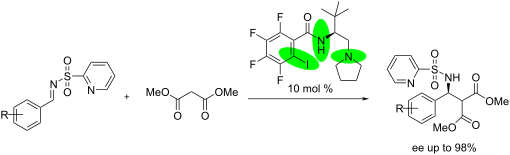
- efficient in Mannich reactions, as demonstrated by our studies [18] and those of others [19][20][21]. Halogen bonding has also been introduced to further broaden the field of noncovalent interactions. Despite the limited number of asymmetric transformations driven solely by halogen-bond activation [22