


Search results
Search for "Molecular recognition" in Full Text gives 172 result(s) in Beilstein Journal of Organic Chemistry.
Complexes of resorcin[4]arene with secondary amines: synthesis, solvent influence on “in-out” structure, and theoretical calculations of non-covalent interactions
Beilstein J. Org. Chem. 2023, 19, 1525–1536, doi:10.3762/bjoc.19.109
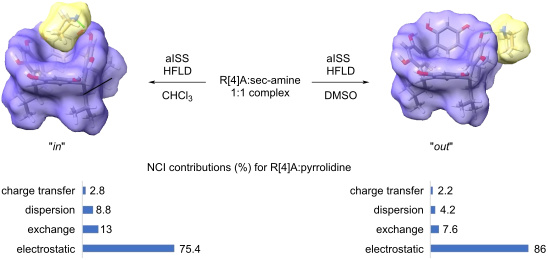
- ], amino alcohols [10], and amino acids [11] have been studied due to their potential applications in supramolecular chemistry, drug delivery, and molecular recognition. The complexation of R[4]A with amines is based on the formation of hydrogen bonds between the hydroxy groups of the resorcinol units and
- affinity and selectivity towards specific amines. In addition to their potential applications in sensing and molecular recognition, R[4]A have also been studied for their potential pharmaceutical [13] and biochemical [14] applications. R[4]A typically exhibit complex structures containing over a hundred




Cyclodextrins as building blocks for new materials
Beilstein J. Org. Chem. 2023, 19, 889–891, doi:10.3762/bjoc.19.66
- . CDs are the most studied supramolecular hosts. They provide the most extensive database on molecular recognition in the literature, with more than 100,000 publications [2]. CDs owe their success not only to the unique molecular structure [3], which allows them to act as host compounds, but also to
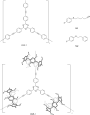
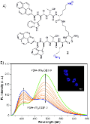
A fluorescent probe for detection of Hg2+ ions constructed by tetramethyl cucurbit[6]uril and 1,2-bis(4-pyridyl)ethene
Beilstein J. Org. Chem. 2023, 19, 864–872, doi:10.3762/bjoc.19.63
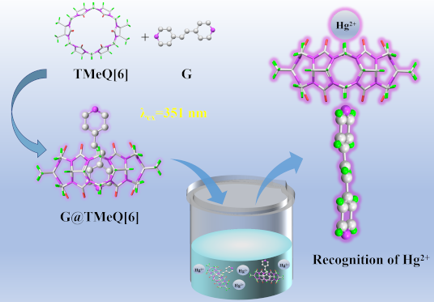
- form various host–guest inclusion complexes [16][17][18][19][20], which have broad application prospects in supramolecular catalysis [21][22][23], molecular recognition [24][25], and drug delivery [26][27]. In recent years, in the field of supramolecular chemistry, the detection of analytes based on


Supramolecular approaches to mediate chemical reactivity
Beilstein J. Org. Chem. 2022, 18, 1463–1465, doi:10.3762/bjoc.18.152
- Molecular Sciences, CAS Key Laboratory of Molecular Recognition and Function, Institute of Chemistry, Chinese Academy of Sciences, Beijing 100190, China University of Chinese Academy of Sciences, Beijing 100049, China Dipartimento di Chimica e Biologia “A. Zambelli”, Università di Salerno, I-84084 Fisciano
- characteristic of supramolecular catalysis is that the general modes of activation based on intermolecular interactions can operate on substrates in a selective way, and in confined environment, like the active site of natural enzymes [5][6][7][8][9][10][11][12][13][14]. As a result, molecular recognition of the
1,4,6,10-Tetraazaadamantanes (TAADs) with N-amino groups: synthesis and formation of boron chelates and host–guest complexes
Beilstein J. Org. Chem. 2022, 18, 1424–1434, doi:10.3762/bjoc.18.148
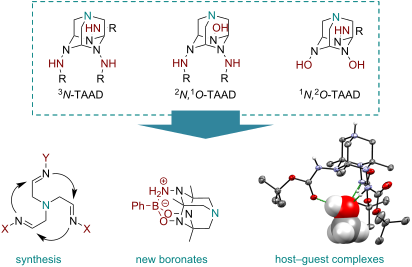
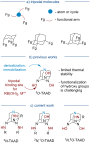
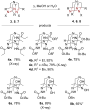
- hydrazone groups. The use of N-TAAD derivatives as potential ligands and receptors was showcased through forming boron chelates and host–guest complexes with water and simple alcohols. Keywords: azaadamantanes; cyclotrimerization; hydrazones; inclusion complexes; molecular recognition; Introduction
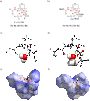
- ), although lattice methanol molecules and chloride anions are present in the structure. The larger tris-Boc derivatives 4c·HCl and Bn-4c form the same guest–host complexes with methanol (Figure 3d). Thus, these TAAD-based systems may exhibit molecular recognition properties. Deprotected N-TAADs such as 19e






Heteroleptic metallosupramolecular aggregates/complexation for supramolecular catalysis
Beilstein J. Org. Chem. 2022, 18, 597–630, doi:10.3762/bjoc.18.62
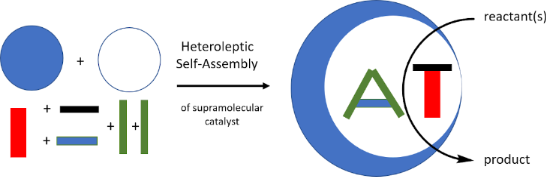
- have led to a multitude of extremely useful functional applications (molecular recognition, ion sensing, catalysis, etc.) [9][22]. Since most of these structures are homoleptic in nature, i.e., they are constructed from a single type of ligand [4][5][6][7][8][9][10][11][12][13][14][15][16][17][18][19


Bioinspired tetraamino-bisthiourea chiral macrocycles in catalyzing decarboxylative Mannich reactions
Beilstein J. Org. Chem. 2022, 18, 486–496, doi:10.3762/bjoc.18.51
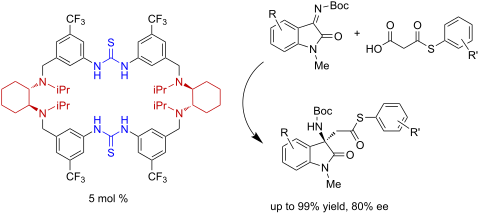
- Hao Guo Yu-Fei Ao De-Xian Wang Qi-Qiang Wang Beijing National Laboratory for Molecular Sciences, CAS Key Laboratory of Molecular Recognition and Function, Institute of Chemistry, Chinese Academy of Sciences, Beijing 100190, China University of Chinese Academy of Sciences, Beijing 100049, China




Site-selective reactions mediated by molecular containers
Beilstein J. Org. Chem. 2022, 18, 309–324, doi:10.3762/bjoc.18.35
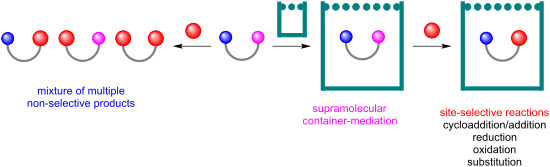
- important fields in modern chemistry [13][14][15]. It is based on a wide range of noncovalent interactions between molecules [16][17][18] and has been applied to a variety of research areas including molecular recognition, molecular devices, nanochemistry, catalysis, etc. [13][14][15][16][17][18]. By


Halides as versatile anions in asymmetric anion-binding organocatalysis
Beilstein J. Org. Chem. 2021, 17, 2270–2286, doi:10.3762/bjoc.17.145
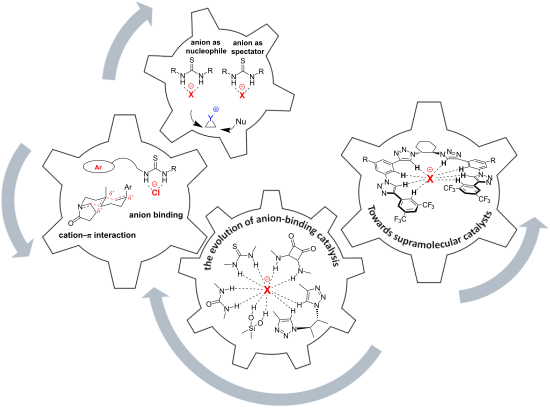
- , the regulation of membrane potentials is one of such applications, in which the transport of chloride anions is facilitated by noncovalent hydrogen bonding interactions (Figure 1a) [6]. Noncovalent interactions are in fact one of the essential factors for the molecular recognition in enzymatic



Chemical approaches to discover the full potential of peptide nucleic acids in biomedical applications
Beilstein J. Org. Chem. 2021, 17, 1641–1688, doi:10.3762/bjoc.17.116
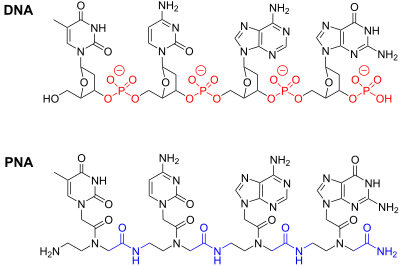
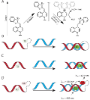
- –Crick base pairing at mixed sequences that do not have polypurine tracts is also possible, but requires chemical modifications to alter the binding properties of PNAs. These binding modes further illustrate the diversity of molecular recognition that can be achieved with PNAs. Taken together, the early
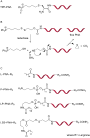
- suggesting that Io4 may be a promising alternative to T where stronger binding is desired [108]. PNA nucleobases for Hoogsteen recognition of pyrimidines: Triple helix formation, especially using tailored oligonucleotide analogues as PNA, could be a general and sequence specific approach for molecular
- recognition of dsDNA and dsRNA. However, the triple helical recognition has a severe sequence limitation – the requirement of polypurine tracts in target nucleic acids. Natural triple helices allow only T•A–T (or U•A–U) and C+•G–C triplets stabilized by two Hoogsteen hydrogen bonds (Figure 6) [94]. Analogous








19F NMR as a tool in chemical biology
Beilstein J. Org. Chem. 2021, 17, 293–318, doi:10.3762/bjoc.17.28
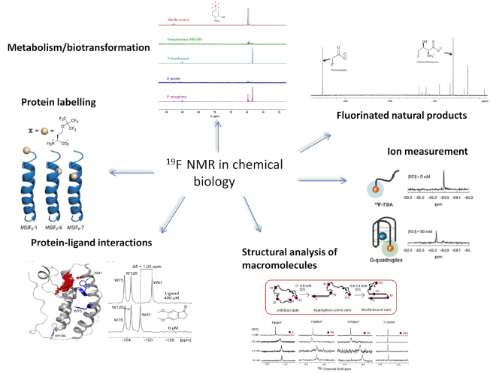
- -butyloxyproline, with the 4R analogue exhibiting a higher propensity for the polyproline helix structure than the 4S [17]. This differentiated conformational bias observed highlights the potential application of these amino acids as unique probes for molecular recognition studies. The synthesis of unnatural amino


Multiswitchable photoacid–hydroxyflavylium–polyelectrolyte nano-assemblies
Beilstein J. Org. Chem. 2021, 17, 166–185, doi:10.3762/bjoc.17.17
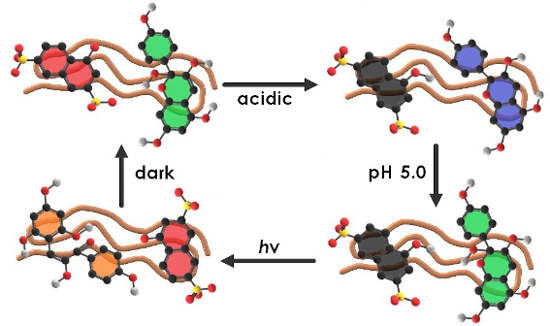
- molecular recognition processes have been established based on different non-covalent interactions such as hydrogen bonding [9][10][11][12], π–π interaction [13][14][15][16][17], hydrophobic effects, and amphiphilicity [18][19][20][21]. It has been highly desirable to establish concepts that could be




Insight into functionalized-macrocycles-guided supramolecular photocatalysis
Beilstein J. Org. Chem. 2021, 17, 139–155, doi:10.3762/bjoc.17.15
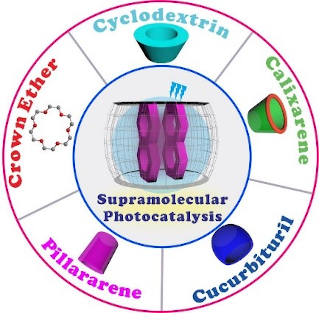
- via photophysical analyses is relatively important. Hence, this review aims to summarize the photochemical transformation and catalytic reactivity of different guests within the various macrocyclic hosts of various sizes and shapes based on molecular recognition as well as the role of macrocyclic-host






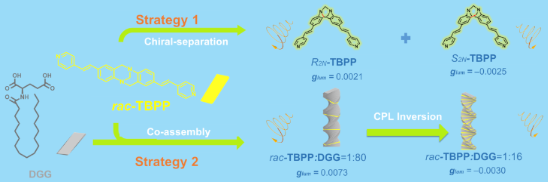
Circularly polarized luminescent systems fabricated by Tröger's base derivatives through two different strategies
Beilstein J. Org. Chem. 2021, 17, 52–57, doi:10.3762/bjoc.17.6
- suggestions and discussion on our researchs on molecular recognition during his visit in Nanjing Univ. in 2011 and afterwards. Funding This work was supported by the National Natural Science Foundation of China (Nos. 21901113, 21871135, 21871136), and the Natural Science Foundation of Jiangsu Province (No


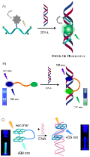
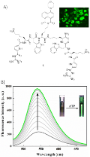
Selected peptide-based fluorescent probes for biological applications
Beilstein J. Org. Chem. 2020, 16, 2971–2982, doi:10.3762/bjoc.16.247

- recognition; peptide-based; Introduction Molecular recognition involving amino acids or peptides are important factors in biochemical and medicinal processes [1][2][3]. Amino acids work as biosynthetic building blocks or as signaling molecules. For example, the well-known neurotransmitters glutamate and γ
- -aminobutyric acid associate with membrane-bound protein receptors and trigger changes in receptor shape and activity with subsequent signaling across the membrane. Noncovalent H-bonding and van der Waals interactions are the basis for the selective molecular recognition between a G-coupled protein receptor and
- antibiotic, is used for the treatment of resistant bacterial infections. Its interaction with a small peptidic segment of the bacteria cell wall is a classic example of molecular recognition [6][7]. Peptides are often substrates for protease enzymes [8][9]. Enzymologists have studied the chemical principles



Construction of pillar[4]arene[1]quinone–1,10-dibromodecane pseudorotaxanes in solution and in the solid state
Beilstein J. Org. Chem. 2020, 16, 2954–2959, doi:10.3762/bjoc.16.245
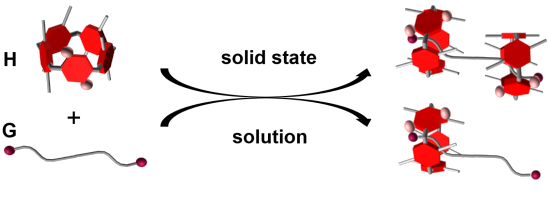
- constructing functional materials from the bottom up as well as an important way to create new substances with functions [1][2][3][4][5]. Through ingenious designs and the applications of molecular recognition and self-assembly strategies, many exquisite supramolecular architectures have been fabricated


UV resonance Raman spectroscopy of the supramolecular ligand guanidiniocarbonyl indole (GCI) with 244 nm laser excitation
Beilstein J. Org. Chem. 2020, 16, 2911–2919, doi:10.3762/bjoc.16.240
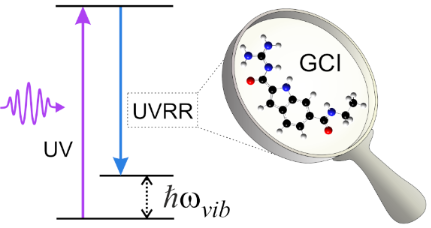
- , Universitätsstrasse 7, 45141 Essen, Germany 10.3762/bjoc.16.240 Abstract Ultraviolet resonance Raman (UVRR) spectroscopy is a powerful vibrational spectroscopic technique for the label-free monitoring of molecular recognition of peptides or proteins with supramolecular ligands such as guanidiniocarbonyl pyrroles
- relevant peptide. In the case of RGD, the more pronounced differences between the UVRR spectra of the free and complexed GCI (1:1 mixture) clearly indicate a stronger binding of GCI to RGD compared with BA. A tentative assignment of the experimentally observed changes upon molecular recognition is based on
- (CBS) [6][7][8][9]. The GCP takes part selectively and efficiently in the complexation of carboxylates based on the electrostatic interaction between the positively charged CBS and the negatively charged carboxylate in the combination with hydrogen bonding, enabling molecular recognition even in the


NMR Spectroscopy of supramolecular chemistry on protein surfaces
Beilstein J. Org. Chem. 2020, 16, 2505–2522, doi:10.3762/bjoc.16.203
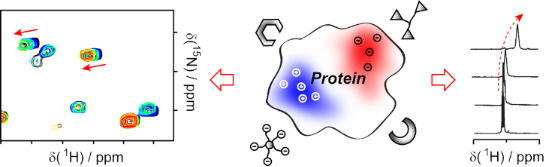
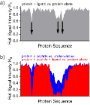
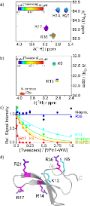
- modulate protein–protein interactions. Here we present NMR methods that have been applied to characterize these molecular interactions and discuss the challenges of this endeavor. Keywords: molecular recognition; NMR; protein ligand interaction; protein surfaces; supramolecular chemistry; Introduction In
- as distance of targeted residues and their dynamics - must be taken into account. Supramolecular chemistry is ideally suited to address these challenges because it merges the knowledge of non-covalent molecular recognition with the possibility to combine multiple recognition units into one molecule



Host–guest interaction of cucurbit[8]uril with oroxin A and its effect on the properties of oroxin A
Beilstein J. Org. Chem. 2020, 16, 2332–2337, doi:10.3762/bjoc.16.194
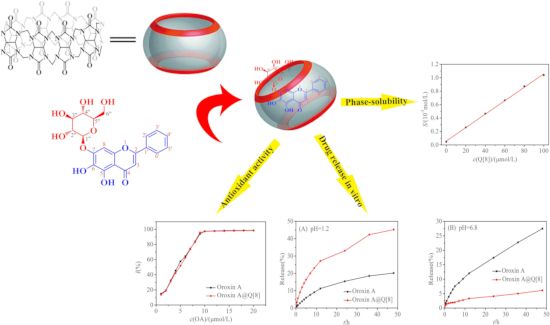
- involve three main intermolecular forces: a hydrophobic effect, hydrogen bonding and ion–dipole interactions at the carbonyl portals [7][8][9]. The high thermal stability [10], ease of synthesis [11], general absence of cytotoxicity or toxicity [12][13] and their good molecular recognition and binding


Design and synthesis of a bis-macrocyclic host and guests as building blocks for small molecular knots
Beilstein J. Org. Chem. 2020, 16, 2314–2321, doi:10.3762/bjoc.16.192
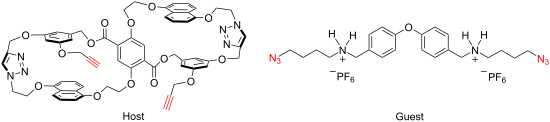
- . Keywords: alkynes; azides; host–guest; macrocycles; molecular knots; Introduction Macrocycles have played a central role in the development of molecular recognition, self-assembled molecular devices, and molecular topology [1][2][3][4][5][6]. For example, early work by Pedersen on crown ethers [1], Lehn
- (ammonium) 2 and bis(pyridinium) 3 (Figure 1). The electron-rich macrocycles of host 1 might also render it useful for other molecular recognition applications. A principle goal driving our second-generation TLC approach was to test the lower limit on the size of a molecular trefoil knot. In 2008 we


Synthetic approaches to bowl-shaped π-conjugated sumanene and its congeners
Beilstein J. Org. Chem. 2020, 16, 2212–2259, doi:10.3762/bjoc.16.186

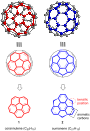
- a tendency of crystal packing [17][18][19][20]. Since these chiral buckybowls contain stable convex or concave faces suitable for the generation of chiral molecular recognition sites which can be used for the construction of helical assemblies and have been used to coordinate the metal atom(s) [21











How and why plants and human N-glycans are different: Insight from molecular dynamics into the “glycoblocks” architecture of complex carbohydrates
Beilstein J. Org. Chem. 2020, 16, 2046–2056, doi:10.3762/bjoc.16.171
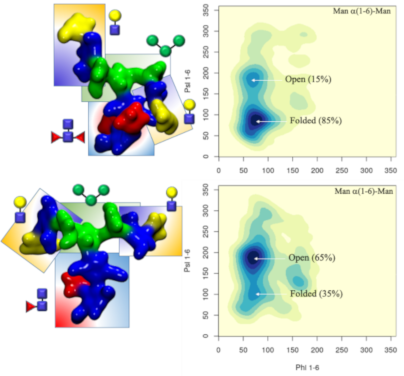
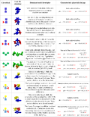
- relationships in complex carbohydrates, with important implications in glycoengineering design. Keywords: complex carbohydrates; fucose; glycoblocks; molecular dynamics; molecular recognition; N-glycans; xylose; Introduction Complex carbohydrates (or glycans) are an essential class of biomolecules, directly
- implicated in the cell’s interactions with its environment, facilitating communication and infection [1][2]. These processes are often initiated by molecular recognition involving carbohydrate-binding proteins (lectins) or by glycan–glycan interactions [1][3][4][5], all events that hinge on specific
- also of how specific modifications affect molecular recognition. Computational Methods All starting structures were generated with the GLYCAM Carbohydrate Builder (http://www.glycam.org). For each sequence we selected the complete set of torsion angle values obtained by variation of the 1-6 dihedrals


Selective preparation of tetrasubstituted fluoroalkenes by fluorine-directed oxetane ring-opening reactions
Beilstein J. Org. Chem. 2020, 16, 1936–1946, doi:10.3762/bjoc.16.160
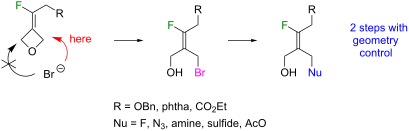
- the latter was not yet synthetized. It is expected that the introduction of fluorine into the carbon–carbon double bond, in a position equivalent to the ring oxygen of the naturally occurring nucleotide, will improve molecular recognition and activity. In addition, the polarity of the nucleotide and


Polarity effects in 4-fluoro- and 4-(trifluoromethyl)prolines
Beilstein J. Org. Chem. 2020, 16, 1837–1852, doi:10.3762/bjoc.16.151
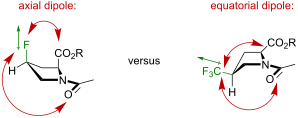
- analogues in complex biological systems such as peptides and proteins, especially in 19F NMR labelling, where fluorinated prolines can serve as spectroscopic probes. Potential areas for the application of fluorinated prolines are numerous, and include the design of molecular recognition systems [101


A dynamic combinatorial library for biomimetic recognition of dipeptides in water
Beilstein J. Org. Chem. 2020, 16, 1588–1595, doi:10.3762/bjoc.16.131
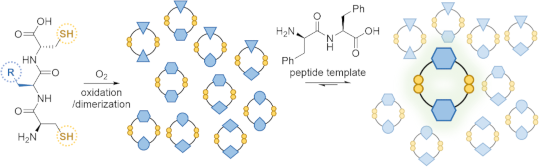
- ), while AA binds significantly weaker (K ≈ 65–71 M−1). Keywords: artificial receptor; dynamic combinatorial chemistry; dynamic covalent chemistry; molecular recognition; thiolate–disulfide exchange; Introduction Peptides are one of the most abundant and structurally versatile motifs in nature. Thus





