Search results
Search for "blue" in Full Text gives 1005 result(s) in Beilstein Journal of Organic Chemistry. Showing first 200.
Pentacyclic aromatic heterocycles from Pd-catalyzed annulation of 1,5-diaryl-1,2,3-triazoles
Beilstein J. Org. Chem. 2025, 21, 2524–2534, doi:10.3762/bjoc.21.194
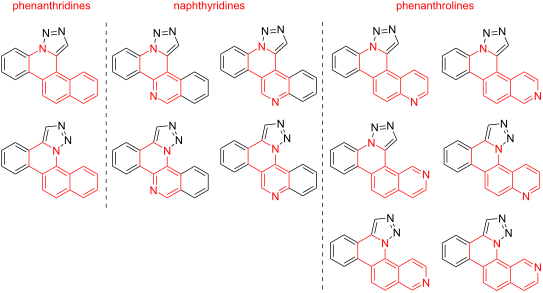
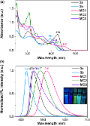
- control compounds 37–42 (blue lines) in acetonitrile solvent. Synthesis of pentacyclic aromatic heterocycles from varying alkynes.a Synthesis of pentacyclic aromatic heterocycles from varying azides.a Summary of UV–vis absorbance/emission signals. Minimum inhibitory concentration assay results.a


Isoorotamide-based peptide nucleic acid nucleobases with extended linkers aimed at distal base recognition of adenosine in double helical RNA
Beilstein J. Org. Chem. 2025, 21, 2513–2523, doi:10.3762/bjoc.21.193
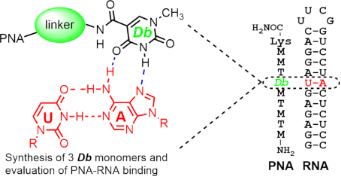
- PNA oligomer with the N-(2-aminoethyl)glycine backbone (in red); (b) Representative monocyclic synthetic nucleobase triples through Hoogsteen hydrogen bonding (blue dashed lines). Watson–Crick hydrogen bonds are in red (dashed lines). Representative extended nucleobase triples through Hoogsteen
- hydrogen bonding (blue dashed lines). Watson–Crick hydrogen bonds are in red (dashed lines). Evolution of the strategy for U–A recognition. Isoorotamide-derived nucleobases for A–U recognition. Proposed isoorotamide distal binding (Db) nucleobases designed from the Io5 core. Hydrogen bonding donors to the
- green, white, red, and blue, respectively. Synthesis of the Db1 monomer (8). Synthesis of Db2 monomer 15. Synthesis of Db3 monomer 21. Microwave promoted optimization of glutaric anhydride opening with 12a. Binding dataa for PNA containing Db monomers using UV thermal meltingb and isothermal titration


Effect of a photoswitchable rotaxane on membrane permeabilization across lipid compositions
Beilstein J. Org. Chem. 2025, 21, 2498–2512, doi:10.3762/bjoc.21.192
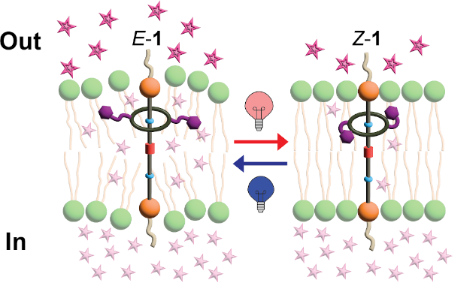
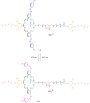
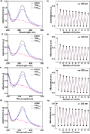
- strips) or 467 nm light (blue strips), and after 5 minutes post-irradiation. b) Percentage of sulforhodamine B released from LUVs containing axle 3 upon ten light irradiations at either 370 nm or 467 nm. Green strips represent one minute of irradiation at either wavelength. c) Changes in absorbance of
- EYPC/Chol 8:2 LUVs containing axle 3 upon five irradiation cycles. The absorbance was measured before and after 1 minute irradiation at 370 nm light and 467 nm light alternately, where the blue trace corresponds to the absorption after the last irradiation at 467 nm. d) Changes in absorbance of EYPC
- five alternating light-irradiation cycles. The fluorescent emission of sulforhodamine B was measured before and after 1 minute irradiation with 370 nm light (pink strips) or 467 nm light (blue strips), and after 5 minutes post-irradiation. The sulforhodamine B (10 mM) was encapsulated in LUVs composed




Synthesis of the tetracyclic skeleton of Aspidosperma alkaloids via PET-initiated cationic radical-derived interrupted [2 + 2]/retro-Mannich reaction
Beilstein J. Org. Chem. 2025, 21, 2470–2478, doi:10.3762/bjoc.21.189
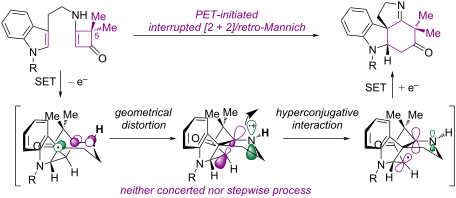
- catalysts that could promote the proposed PET reaction of 9a on the basis of our previous results [15]. The reaction was performed in MeCN in the presence of photocatalysts under blue light-emitting diode (LED) irradiation at 30 °C. The results are listed in Table 1. Catalysts I [28], II [29], and III [30
- free energies were calculated at the B3LYP-D3/def2-tzvp//B3LYP/6-31G(d) level in MeCN. b) Spin density of IN4 (isovalue = 0.004). c) IRC analysis of TS2 (red line) and bond-length changes of C19–C3 (yellow line) and C19–C12 (blue line) along IRC path. d) Mayer bond order changes of selected structures


Recent advances in Norrish–Yang cyclization and dicarbonyl photoredox reactions for natural product synthesis
Beilstein J. Org. Chem. 2025, 21, 2315–2333, doi:10.3762/bjoc.21.177
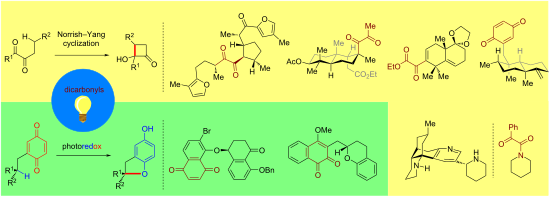
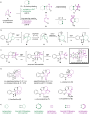
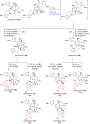
- blue LEDs at room temperature constructed a single diastereoisomer 23 in 90% yield. From 23, the ABCDE pentacyclic skeleton of phainanoids (27) was ultimately established via a Mitsunobu reaction, intramolecular nucleophilic substitution with in situ-generated aryllithium, and protecting group
- under blue LED irradiation. Solid-state reactions differ from solution-phase processes due to restraints on molecular motions imposed by the crystal lattice, thereby avoiding side reactions caused by unrestricted molecular motions in solution [41]. It has also been demonstrated that for crystalline 1,2
- pyrrolidine-derived phenyl keto amide substrate 91 with blue LEDs produces the pyrrolidine-fused 4-oxazolidinone (N,O-acetal) 92, precluding preparation of the pyrrolidine analog of lycoplatyrine A (94) by this method. Compound 92 is presumably formed via either the radical mechanism [41] or possibly




Insoluble methylene-bridged glycoluril dimers as sequestrants for dyes
Beilstein J. Org. Chem. 2025, 21, 2302–2314, doi:10.3762/bjoc.21.176
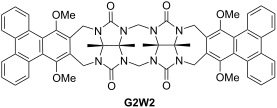
- along with comparator H2 as solid-state sequestrants for a panel of five dyes (methylene blue, methylene violet, acridine orange, rhodamine 6G, and methyl violet 6B). We find that catechol-walled H2 (OH substituents) is a superior sequestrant compared to G2W1–G2W4 (OMe substituents). X-ray crystal
- structures for G2W1 and G2W3 suggest that the OMe groups fill their own cavity and thereby decrease their abilities as sequestrants. H2 achieved a removal efficiency of 94% for methylene blue whereas G2W1 demonstrated a 64% removal efficiency for methylene violet; both sequestration processes were largely
- textile, leather, paint, plastic, cosmetics, pharmaceuticals, and food industries [4]. It has been estimated that about 7 × 10⁶ tons of dyes (e.g., methylene blue, rhodamine B, methyl orange, Congo red, disperse violet 26, methyl red, crystal violet) are produced annually worldwide [5]. Many dyes are



Enantioselective radical chemistry: a bright future ahead
Beilstein J. Org. Chem. 2025, 21, 2283–2296, doi:10.3762/bjoc.21.174
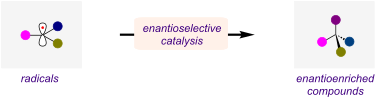
- preparation of chiral β-aminoalcohols [63]. Chiral copper(I) complexes convert imidate radicals, formed transiently through energy-transfer catalysis, to oxazolines. The transformation includes a regioselective and enantioselective HAT process. Upon blue LED irradiation, oxime imidates (derived from alcohols


A chiral LC–MS strategy for stereochemical assignment of natural products sharing a 3-methylpent-4-en-2-ol moiety in their terminal structures
Beilstein J. Org. Chem. 2025, 21, 2243–2249, doi:10.3762/bjoc.21.171
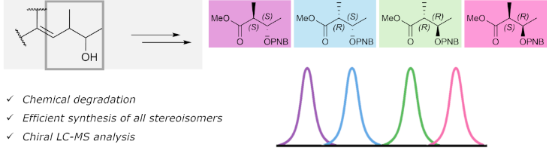
- tool for the structural determination of diverse MPO-containing natural products in future studies. Representative natural products sharing the 3-methylpent-4-en-2-ol (MPO) moiety in their terminal structures, with the moiety highlighted in blue (assigned configuration) or yellow (undetermined


Synthesis of triazolo- and tetrazolo-fused 1,4-benzodiazepines via one-pot Ugi–azide and Cu-free click reactions
Beilstein J. Org. Chem. 2025, 21, 2202–2210, doi:10.3762/bjoc.21.167
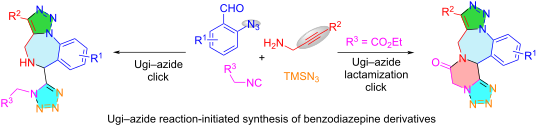
- of compounds 6a (red) and 8a (blue). Ugi–azide reaction for the synthesis of 1,5-DS-T-containing heterocycles. Proposed Ugi–azide-initiated synthesis of polyheterocyclic scaffolds 7 and 8. 4-CR vs stepwise Ugi–azide reactions for the synthesis of 7a. Synthesis of benzodiazepines 7a–k. Reaction


Solar thermal fuels: azobenzene as a cyclic photon–heat transduction platform
Beilstein J. Org. Chem. 2025, 21, 2036–2047, doi:10.3762/bjoc.21.159
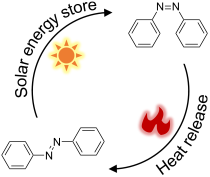
- charged solar thermal fuels for deicing tests [74], showing effective ice removal capability under green light irradiation (Figure 7a). Wang et al. developed a photostimulated self-heating wristband [94] that elevates surface temperature from 29 °C to 44 °C upon blue light irradiation, protecting users
- irradiation (550 nm). Figure 7a was reprinted with permission from [74] Copyright © 2020 American Chemical Society. This content is not subject to CC BY 4.0. (b) Real-time infrared thermal imaging images of a charged self-heating wristband under blue light irradiation (450 nm). Figure 7b was reprinted from




Understanding the origin of stereoselectivity in the photochemical denitrogenation of 2,3-diazabicyclo[2.2.1]heptene and its derivatives with non-adiabatic molecular dynamics
Beilstein J. Org. Chem. 2025, 21, 2007–2020, doi:10.3762/bjoc.21.156
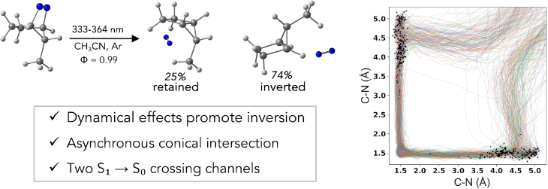
- are closer to the range of irradiation wavelengths of the experimentally used light source (333–364 nm). For 1, this peak is closer to experimental absorbance, λmax = 338 nm [80]. The remaining peaks, shown in blue and green for S2 and S3, respectively, absorb at higher energy than the experimental
- ), S2 (blue), and S3 (green) states. Relevant structures (S0 and S1 minima and endpoints of the MEP calculation) are shown below the plots. The C–N and N=N bond lengths are in angstroms on the structures shown. S1 energy is shown on the plot with a red star. (a) The bond lengths we calculated are
- with CASSCF (8,9)/ANO-S-VDZP, monitoring C–C-bond formation, H–C–C–C dihedral angle, and relative energy for 1 (b), 3 (c), and 5 (d). The energy is relative to the lowest total energy of each trajectory. The red trajectories return to reactant, the green trajectories form retained housane, the blue


Photochemical reduction of acylimidazolium salts
Beilstein J. Org. Chem. 2025, 21, 1973–1983, doi:10.3762/bjoc.21.153
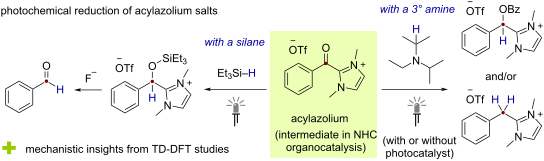
- reactions have been developed. Employing the simple amine, DIPEA, as the terminal reductant, products resulting from overall 2-electron or 4-electron-reduction processes could be obtained using either a photocatalytic approach under blue light irradiation or directly under UV-A light irradiation without an
- = 4,4′-di-tert-butyl-2,2′-dipyridine) as a photocatalyst and the simple tertiary amine diisopropylethylamine (DIPEA, 5 equiv) in MeCN (0.05 M). After 24 h under irradiation with light from blue LEDs (λmax = 440 nm), the crude mixture was concentrated under reduced pressure and analyzed by 1H NMR
- changed from 440 nm (blue LEDs) to 370 nm (UV-A). This resulted in an overall improvement in the reduction efficiency with the fully reduced species 2 becoming the major product formed in 38% yield alongside the O-benzoylated species 3 (9%, Table 1, entry 5). This result is again remarkable in that it


Rhodium-catalysed connective synthesis of diverse reactive probes bearing S(VI) electrophilic warheads
Beilstein J. Org. Chem. 2025, 21, 1924–1931, doi:10.3762/bjoc.21.150
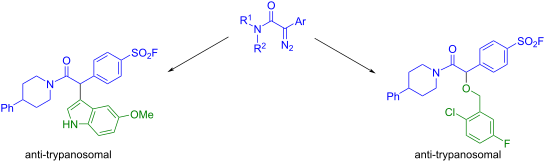
- products observed by analytical HPLC. Structures and structure elucidation of intermolecular reaction products. The relevant reactivity modes are indicated by colour: O–H insertion (green); N–H insertion (blue); formal C–H insertion (yellow); and cyclopropanation (pink). Synthesis of α-diazoamide


Synthesis of N-doped chiral macrocycles by regioselective palladium-catalyzed arylation
Beilstein J. Org. Chem. 2025, 21, 1917–1923, doi:10.3762/bjoc.21.149
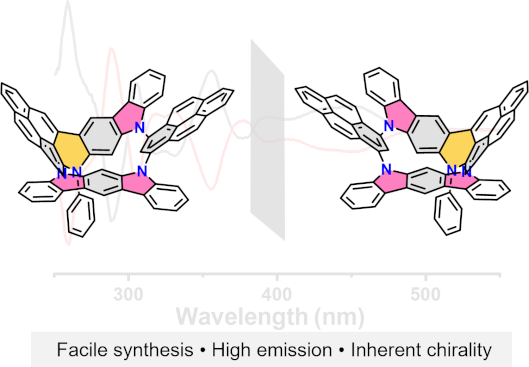
- , these macrocycles show blue to green emissions with high fluorescence quantum yields (ΦF up to 0.69). Owing to the existence of inherent chirality, two enantiomers of N-doped macrocycle MC1 were successfully isolated by chiral resolution, enabling detailed investigation of its chiroptical properties
- , respectively. Correspondingly, 3a exhibits a deep blue emission at 453 nm with a quantum yield (ΦF) of 0.79, while a hypsochromic shift of the signal for 3b to 424 nm is observed and the ΦF value is decreased to 0.22 due to the electron-deficient character of the 3,5-bis(trifluoromethyl)phenyl groups. The
- eV for MC1, 2.61 eV for MC2, and 2.68 eV for MC3, respectively, based on the onset absorptions. MC2 and MC3 display strong blue emissions at 487 nm and 458 nm, respectively, while MC1 exhibits green photoluminescence at 516 nm. To better understand the electronic structures of these N-doped




Synthesis, biological and electrochemical evaluation of glycidyl esters of phosphorus acids as potential anticancer drugs
Beilstein J. Org. Chem. 2025, 21, 1909–1916, doi:10.3762/bjoc.21.148
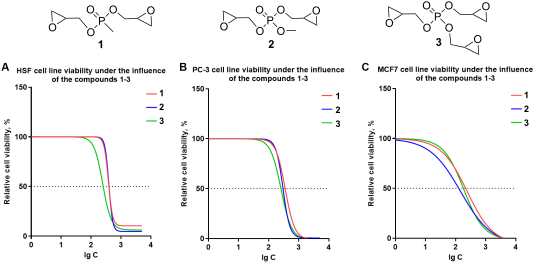
- ), diglycidyl methylphosphate (2, blue), and triglycidyl phosphate (3, green) for 48 hours. Cell viability was determined using the MTT assay. Data represent mean ± standard deviation (n = 3). The y-axis shows relative cell viability (%) compared to untreated control, and the x-axis indicates the logarithmic
- concentration of each compound. The dashed line marks the 50% viability threshold (IC50). Linear sweep voltammograms of 1 × 10⁻⁴ М HSA (black) and HSA mixed with each of the three alkylating agents; 1 (red), 2 (green), and 3 (blue). Conditions: supporting electrolyte: 0.1 M Et4NBF4, working electrode: glassy


Stereoselective electrochemical intramolecular imino-pinacol reaction: a straightforward entry to enantiopure piperazines
Beilstein J. Org. Chem. 2025, 21, 1897–1908, doi:10.3762/bjoc.21.147
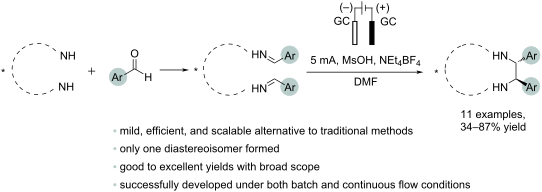
- on a 0.1 mmol scale. Proposed reaction mechanism. Cyclic voltammetry investigation. Cyclic voltammetry of a 0.325 M solution of Et4NBF4 in DMF (light-blue line). Cyclic voltammetry of diimine 1a (10 mM) recorded in a 0.325 M solution of Et4NBF4 in DMF (dark-blue line). Cyclic voltammetry of diimine



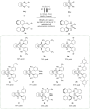


Preparation of spirocyclic oxindoles by cyclisation of an oxime to a nitrone and dipolar cycloaddition
Beilstein J. Org. Chem. 2025, 21, 1890–1896, doi:10.3762/bjoc.21.146
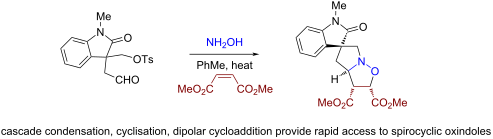
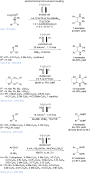
- ; nitrogen – blue; carbon – grey; hydrogen – pale green). Proposed synthetic approach. Preparation of the aldehyde 4. Cycloaddition with N-methylmaleimide. Cycloaddition with N-phenylmaleimide. Cycloaddition with dimethyl fumarate and dimethyl maleate. Supporting Information Supporting Information File 30


Photoswitches beyond azobenzene: a beginner’s guide
Beilstein J. Org. Chem. 2025, 21, 1808–1853, doi:10.3762/bjoc.21.143
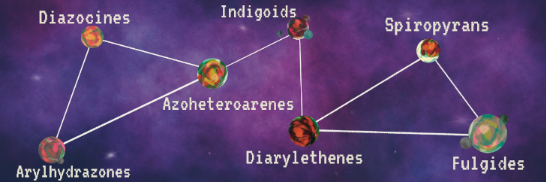
- it is switched to one that absorbs at a higher wavelength (i.e., blue). The opposite phenomenon is called negative or inverse photochromism [3]. A shift towards higher energies is called hypsochromic or blue shift, while a shift towards lower energies is called bathochromic or red shift. When working
- conjugated with the chromophore structure, will influence its absorption spectrum and stability [4]. The solvent will also affect the properties, as it can stabilise or destabilise either the ground or the excited state, resulting in a red- or blue shift of the spectra. The thermal half-life (t1/2) measures
- 14, box) and repulsion between the aryl and the carbonyl group in the E-isomer. Some studies on N-acylindigo derivatives reported, besides the expected spectral blue-shift, also a decrease in the fatigue resistance due to photochemical rearrangements [68][69]. Dube and co-workers reported a series of




On the aromaticity and photophysics of 1-arylbenzo[a]imidazo[5,1,2-cd]indolizines as bicolor fluorescent molecules for barium tagging in the study of double-beta decay of 136Xe
Beilstein J. Org. Chem. 2025, 21, 1627–1638, doi:10.3762/bjoc.21.126
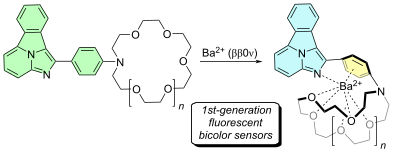
- decoupling between the para-phenylene and benzo[a]imidazo[5,1,2-cd]indolizine components that results in a blue shift upon Ba2+ coordination. Keywords: aromaticity; DFT-TDDFT calculations; double-beta decay; fluorescent sensors; polycyclic arenes; Introduction Double beta-decay [1] is a radioactive decay
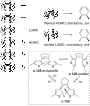
- a stabilization energy of ca. 17 kcal/mol. In the alternative hyperhomodesmotic reaction B, defined as 5 + 6 → 7 + 1, the formal ten-electron Hückel aromaticity of the imidazo[1,2-a]pyridine moiety (in blue) was preserved while the phenyl component was decomposed. The computed stabilization energy
- phenyl (yellow) and imidazo[1,2-a]pyridine (blue) components of 1 and that these aromatic units preserve their respective aromatic characters. We next examined the aromatic character of benzo[a]imidazo[5,1,2-cd]indolizine 1 by analyzing its geometry in terms of bond equalization. Three possibilities were


Synthesis of optically active folded cyclic dimers and trimers
Beilstein J. Org. Chem. 2025, 21, 1603–1612, doi:10.3762/bjoc.21.124
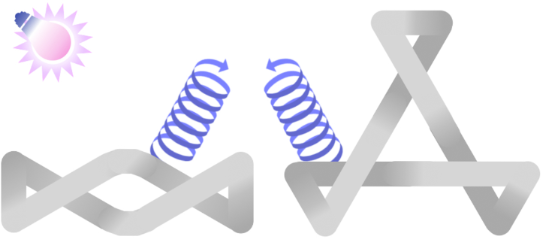
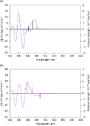
- solutions (1.0 × 10⁻⁵ M) of (Sp)-6 and (Sp)-7 were photo-excited around their absorption peak maxima, and both oligomers emitted blue fluorescence as shown in Figure 1. Their PL spectra with vibrational structures were identical, and the PL quantum efficiencies (ΦPL) of both (Sp)-6 and (Sp)-7 were estimated



Facile synthesis of hydantoin/1,2,4-oxadiazoline spiro-compounds via 1,3-dipolar cycloaddition of nitrile oxides to 5-iminohydantoins
Beilstein J. Org. Chem. 2025, 21, 1552–1560, doi:10.3762/bjoc.21.118

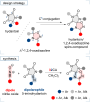
- 96-well culture plates at a concentration of 4–7 × 10³ cells/mL and incubated at 37 °C for 24 hours. The cells were counted after treatment with trypan blue solution (0.4%) in a Goryaev chamber. Then, after incubation at 37 °C for 72 h, the cells were exposed to various concentrations of the studied
- (Figure 3b, red ring) than 4-NO2 or 4-Cl substituents (IC50 of 5h was lower than 5l and 5f). The presence of a methoxy group in the imine aromatic core (blue ring) also had a significant impact on cytotoxicity. This can be concluded from the results obtained for compounds 5f and 5g: the substitution of



General method for the synthesis of enaminones via photocatalysis
Beilstein J. Org. Chem. 2025, 21, 1535–1543, doi:10.3762/bjoc.21.116
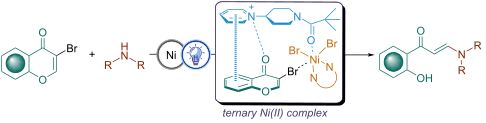
- carried out by using 3-bromochromone (7a) and morpholine (8a) as model substrates in the presence of Ni(II) salt (5 mol %) and ligand (5 mol %), a pyridinium salt (1 equiv) and a photocatalyst (1 mol %) under 427 nm blue LEDs. After carefully screening of the reaction parameters (Table 1 and Tables S1–S7




Highly distinguishable isomeric states of a tripodal arylazopyrazole derivative on graphite through electron/hole-induced switching at ambient conditions
Beilstein J. Org. Chem. 2025, 21, 1496–1507, doi:10.3762/bjoc.21.112
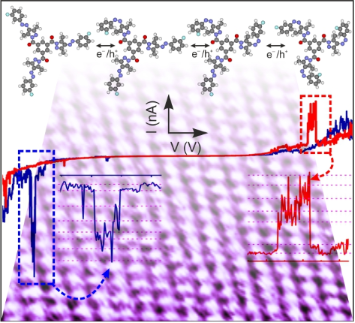
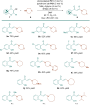
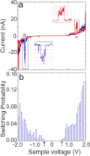
- isomerization of the molecules at both positive and negative sample voltages (marked by red/blue arrow heads); 2) the switching probability increases exponentially with increasing voltage; 3) the switching probability at positive voltage is almost double than that at negative sample voltage; 4) a strong
- asymmetry in the switching probability induced by electrons and holes. The threshold voltage of switching suggests that the switching is electron/hole-induced [7][10][11][12][15][33][38]. The threshold voltage observed for the electron injection (marked by red arrowhead) and hole injection (marked by blue
- the vectors. Black arrows indicate the compact lattice directions of graphite. Magenta dashed lines depict possible non-bonding interactions between carbonyl groups and aromatic hydrogen atoms. Blue dashed lines depict the same between fluorine and aromatic/methyl hydrogen atoms. (a) Current versus



Photoredox-catalyzed arylation of isonitriles by diaryliodonium salts towards benzamides
Beilstein J. Org. Chem. 2025, 21, 1480–1488, doi:10.3762/bjoc.21.110
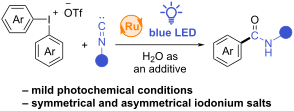
- synthesis of benzamides via the arylation of isonitriles with diaryliodonium salts under blue light irradiation (Scheme 1C). Results and Discussion We commenced our investigation by the optimization of the reaction conditions. During the preliminary experiments we tested different solvents and solvent-to
- ones [31][32][33] introducing the photocatalyst [Ru(bpy)3](PF6)2, which successfully initiated the reaction under blue light irradiation and afforded benzamide 2aa in 36% yield (Table 1, entry 2). In that case less than 2% of the iodonium salt 1a remained in the reaction medium according to the 1H NMR
- [Ru(bpy)3](PF6)2 as the photocatalyst, under an Ar atmosphere with irradiation by blue LED light (Table 1, entry 2). With the optimized conditions in hands, a series of benzamides 2aa–je were synthesized using various symmetrical diaryliodonium salts 1a–k and isonitriles (Scheme 2). The analysis of


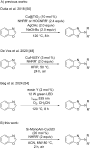
Microwave-enhanced additive-free C–H amination of benzoxazoles catalysed by supported copper
Beilstein J. Org. Chem. 2025, 21, 1462–1476, doi:10.3762/bjoc.21.108
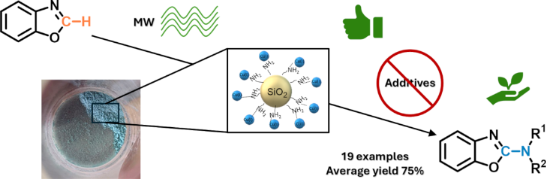
- in the literature [62][63]. The suspension was stirred magnetically for 6 hours at room temperature, resulting in the formation of a blue-coloured catalyst. We aimed to vary the amount of copper loaded onto the silica surface to achieve different catalyst loadings (Cu wt %) and compared their