Search results
Search for "continuous flow" in Full Text gives 199 result(s) in Beilstein Journal of Organic Chemistry.
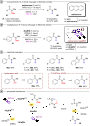
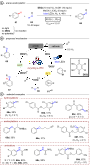
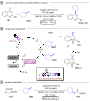
Metal-catalyzed coupling/carbonylative cyclizations for accessing dibenzodiazepinones: an expedient route to clozapine and other drugs
Beilstein J. Org. Chem. 2024, 20, 193–204, doi:10.3762/bjoc.20.19
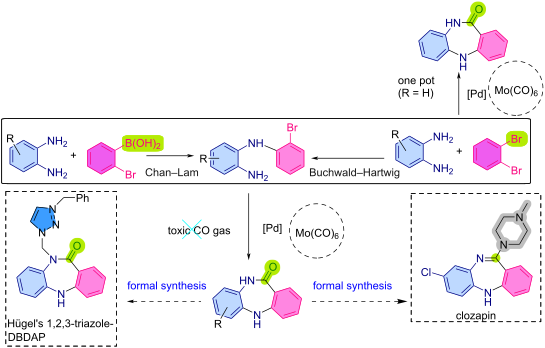
- suitable surrogate. Not only that, the use of safer to use surrogates, is important for use in enabling technologies, like continuous flow and microwave-heated reactions. In fact, CO-free aminocarbonylation reactions are well known, and molybdenum hexacarbonyl (Mo(CO)6) is a very useful surrogate having


Optimizing reaction conditions for the light-driven hydrogen evolution in a loop photoreactor
Beilstein J. Org. Chem. 2024, 20, 74–91, doi:10.3762/bjoc.20.9
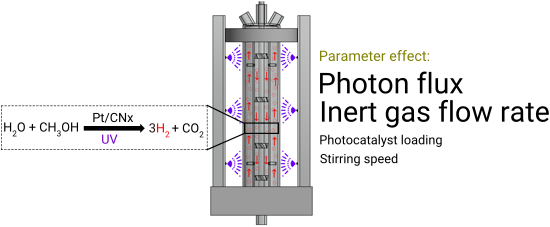
- Supporting Information File 1, Figure S2b), while maintaining a continuous flow of N2 in the headspace through a septum. The resulting suspension exhibited a yellow/greenish color and was subsequently washed with deionized water 3–5 times, followed by drying at 70 °C overnight and grinding. The synthesized


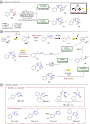
Radical ligand transfer: a general strategy for radical functionalization
Beilstein J. Org. Chem. 2023, 19, 1225–1233, doi:10.3762/bjoc.19.90
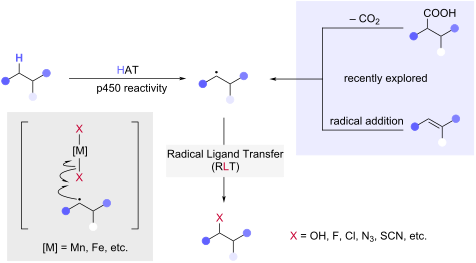
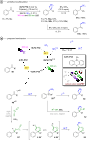
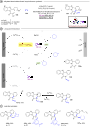
- . Further, we demonstrated that diazidation could be rendered catalytic using Fe(III) nitrate hydrate III as the iron source and performing the reaction under continuous flow conditions. Interestingly, this mechanism bears some similarity to Lin’s electrocatalytic diazidation, where azido radical generation


Selective and scalable oxygenation of heteroatoms using the elements of nature: air, water, and light
Beilstein J. Org. Chem. 2023, 19, 1146–1154, doi:10.3762/bjoc.19.82
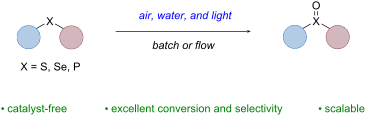
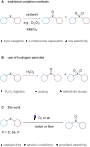
- running the process in continuous flow [5][6][7][8]. Moreover, flow reactors that provide intense mixing can overcome the gas–liquid mass transfer limitations typical of batch reactions and improve productivity. Several studies have demonstrated the scalability and safety of such methods for the oxidation
- of water (Table 1, entries 1 and 2), the addition of oxygen (entries 1, 5, and 6) and light in the UV-A region (entries 8 and 9) turned out to be crucial (see Supporting Information File 1, Table S2). Additives With the ultimate goal in mind to develop a safe and scalable protocol in continuous flow
- ., HANU 2X 5 flow reactor) from Creaflow, as this system can easily handle demanding slurry processes under continuous-flow conditions. The reaction was carried out using an adapted setup as illustrated in Scheme 4 as triphenylphosphine is very sticky and tends to clog easily in the feeding tubes. This





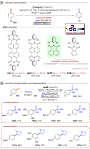
Photoredox catalysis harvesting multiple photon or electrochemical energies
Beilstein J. Org. Chem. 2023, 19, 1055–1145, doi:10.3762/bjoc.19.81
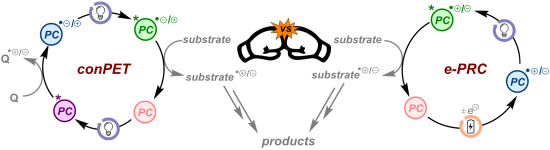
- feedstocks, and scalability up to gram scales in continuous flow. This review provides comparisons between the two techniques (multi-photon photoredox catalysis and PEC) to help the reader to fully understand their similarities, differences and potential applications and to therefore choose which method is
- first efforts in this direction [32][33]. Finally, both techniques are amenable to large-scale synthesis and ideally integrated with state-of-the-art reactor technology platforms, such as continuous flow reactors and high throughput screening plates. Various examples of scalability will be highlighted
- indoline scaffolds (22a,b) via a radical-polar crossover mechanism (Figure 12C) [65], showcasing the power of conPET in dearomatization reactions. Finally, the synthesis of tetraphenylphosphonium chloride (20a) could be scaled up efficiently in an operationally very simple continuous-flow setup with only

























Honeycomb reactor: a promising device for streamlining aerobic oxidation under continuous-flow conditions
Beilstein J. Org. Chem. 2023, 19, 752–763, doi:10.3762/bjoc.19.55
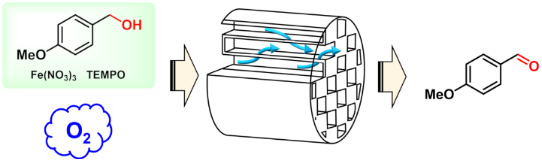
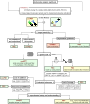
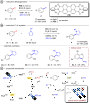
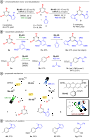
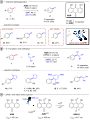
- 10.3762/bjoc.19.55 Abstract We report on the high potential of a honeycomb reactor for the use in aerobic oxidation under continuous-flow conditions. The honeycomb reactor is made of porous material with narrow channels separated by porous walls allowing for high density accumulation in the reactor. This
- structure raised the mixing efficiency of a gas–liquid reaction system, and it effectively accelerated the aerobic oxidation of benzyl alcohols to benzaldehydes under continuous-flow conditions. This reactor is a promising device for streamlining aerobic oxidation with high process safety because it is a
- from operators or the equipment can have disastrous consequences. Because the large headspace of batch reactor aggravates these safety risks, the use of O2 in batch manufacturing is very limited [14]. Recently, continuous flow synthesis has recently been studied as a way to mitigate the safety risks


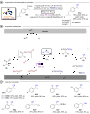
C3-Alkylation of furfural derivatives by continuous flow homogeneous catalysis
Beilstein J. Org. Chem. 2023, 19, 582–592, doi:10.3762/bjoc.19.43
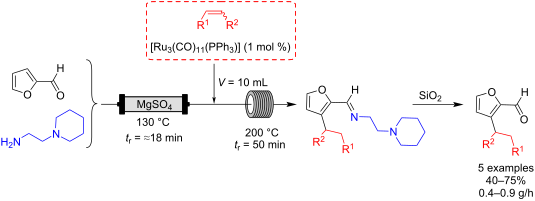
- develop a continuous flow process specifically for the C3-alkylation of furfural (Murai reaction). The transposition of a batch process to a continuous flow process is often costly in terms of time and reagents. Therefore, we chose to proceed in two steps: the reaction conditions were first optimized
- using a laboratory-built pulsed-flow system to save reagents. The optimized conditions in this pulsed-flow mode were then successfully transferred to a continuous flow reactor. In addition, the versatility of this continuous flow device allowed both steps of the reaction to be carried out, namely the
- temperature). Thus, despite the synthetic interest of the molecules that can be obtained, transfers to industry are difficult. In order to circumvent this drawback, we considered transposing these batch reactions to a flow chemistry process. In recent years, the use of continuous flow chemistry in organic


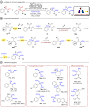
Transition-metal-catalyzed C–H bond activation as a sustainable strategy for the synthesis of fluorinated molecules: an overview
Beilstein J. Org. Chem. 2023, 19, 448–473, doi:10.3762/bjoc.19.35
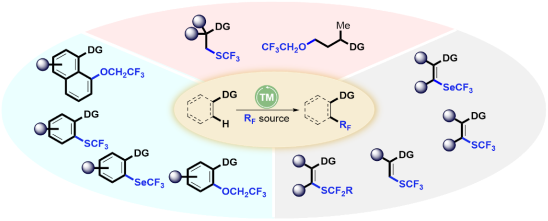
- . Note that in 2018, Besset and Lebel developed a more efficient process for the palladium-catalyzed trifluoromethylthiolation by C–H bond activation under continuous flow conditions [127]. I.4) Difluoromethylthiolation of aromatic and vinylic C(sp2)–H bonds (C–SCF2H and C–SCF2CO2Et bonds) More recently








Continuous flow synthesis of 6-monoamino-6-monodeoxy-β-cyclodextrin
Beilstein J. Org. Chem. 2023, 19, 294–302, doi:10.3762/bjoc.19.25
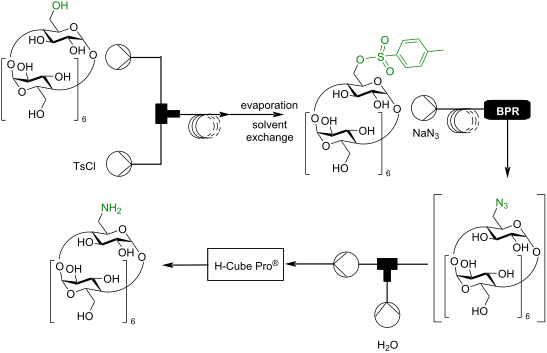
- of Science, Charles University, 128 43 Prague 2, Czech Republic 10.3762/bjoc.19.25 Abstract The first continuous flow method was developed for the synthesis of 6-monoamino-6-monodeoxy-β-cyclodextrin starting from native β-cyclodextrin through three reaction steps, such as monotosylation, azidation
- and reduction. All reaction steps were studied separately and optimized under continuous flow conditions. After the optimization, the reaction steps were coupled in a semi-continuous flow system, since a solvent exchange had to be performed after the tosylation. However, the azidation and the
- reduction steps were compatible to be coupled in one flow system obtaining 6-monoamino-6-monodeoxy-β-cyclodextrin in a high yield. Our flow method developed is safer and faster than the batch approaches. Keywords: azidation; continuous flow; β-cyclodextrin; H-cube; 6-monoamino-6-monodeoxy-β-cyclodextrin


Modern flow chemistry – prospect and advantage
Beilstein J. Org. Chem. 2023, 19, 33–35, doi:10.3762/bjoc.19.3
- , agrochemicals, fragrances, and many more. Implementation of new and innovative technologies has played a vital role in this mission and has contributed to the opening of new research areas and to pushing the frontiers of existing ones. Among these new technologies, continuous flow chemistry has stepped on the
- chemicals. This has again led to improved scalability, higher purity of products, and eventually decreased manufacturing costs. From the undisputed role of continuous flow chemistry for process chemists, the advent of this technology in academic research laboratories, especially for method development and
- application of continuous flow technology for academic research, leading to an expansion of synthetic options and generally more sustainable operations. Among the many advantages of performing organic reactions in continuous flow, enhanced heat-, mass- and photon transfer, an improved safety profile, broad
Two-step continuous-flow synthesis of 6-membered cyclic iodonium salts via anodic oxidation
Beilstein J. Org. Chem. 2023, 19, 27–32, doi:10.3762/bjoc.19.2
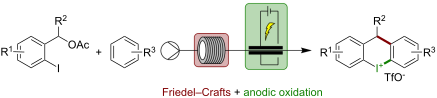
- continuous-flow procedure for the generation of six-membered diaryliodonium salts. The accompanying scalability and atom economy are significant improvements to existing batch methods. Benzyl acetates are submitted to this two-step procedure as highly available and cheap starting materials. An acid-catalyzed
- . Conclusion In summary, we have developed the first multi-step continuous-flow procedure for the generation of cyclic six-membered diaryliodonium salts. Starting from easily accessible benzyl acetates we were able to combine a Friedel–Crafts alkylation with a subsequent anodic oxidative cyclization in flow


Inline purification in continuous flow synthesis – opportunities and challenges
Beilstein J. Org. Chem. 2022, 18, 1720–1740, doi:10.3762/bjoc.18.182
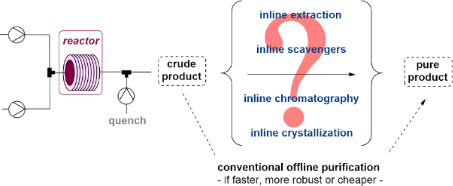
- Jorge Garcia-Lacuna Marcus Baumann School of Chemistry, University College Dublin, Science Centre South, Belfield, Dublin 4, Dublin, Ireland 10.3762/bjoc.18.182 Abstract Continuous flow technology has become the method of choice for many academic and industrial researchers when developing new
- chemistry tools developed in academia. Keywords: flow synthesis; inline purification; process development; reaction telescoping; scale-up; Introduction Continuous flow chemistry is a mature and widely applied platform technology that exploits intrinsic advantages over batch processing such as better heat
- , chemists can choose from a variety of tools when developing continuous flow experiments, however, more sophisticated flow processes are more complex in nature and will require additional tools and control points to ensure the success of a given campaign. The integration of inline analysis techniques is




Heterogeneous metallaphotoredox catalysis in a continuous-flow packed-bed reactor
Beilstein J. Org. Chem. 2022, 18, 1123–1130, doi:10.3762/bjoc.18.115
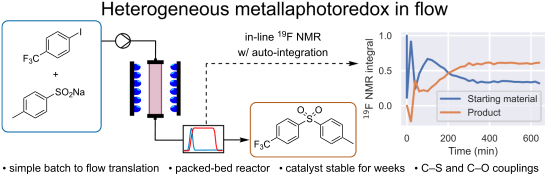
- and scalable reaction conditions. Here, we report a continuous-flow approach to metallaphotoredox catalysis using a heterogeneous catalyst that combines the function of a photo- and a nickel catalyst in a single material. The catalyst is embedded in a packed-bed reactor to combine reaction and
- (catalyst) separation in one step. The use of a packed bed simplifies the translation of optimized batch reaction conditions to continuous flow, as the only components present in the reaction mixture are the substrate and a base. The metallaphotoredox cross-coupling of sulfinates with aryl halides was used
- [4][5]. This is underlined by several photochemical and photocatalytic transformations that have been performed on industrial scales in continuous-flow reactors [6][7][8]. A particularly appealing branch of photocatalytic organic synthesis is the combination with other modes of catalysis in dual





First example of organocatalysis by cathodic N-heterocyclic carbene generation and accumulation using a divided electrochemical flow cell
Beilstein J. Org. Chem. 2022, 18, 979–990, doi:10.3762/bjoc.18.98
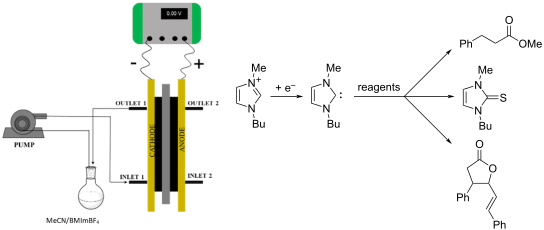
- membrane, under N2 atmosphere, at room temperature, under galvanostatic conditions (I = 134 mA) with continuous flow rate of 36 mL/min, studying the effect of cathode material, anode solution and number of Faradays per mole of IL supplied (Table 1). At the end of the electrolysis, excess elemental sulfur
- in a continuous flow electrochemical process, the flow methodology was applied to the self-annulation of cinnamaldehyde, a classical NHC-catalyzed reaction (Scheme 4). All the experiments were carried out using a solution of 0.1 M BMImBF4 in acetonitrile (20 mL) as catholyte, stainless steel as


Continuous flow synthesis of azobenzenes via Baeyer–Mills reaction
Beilstein J. Org. Chem. 2022, 18, 781–787, doi:10.3762/bjoc.18.78
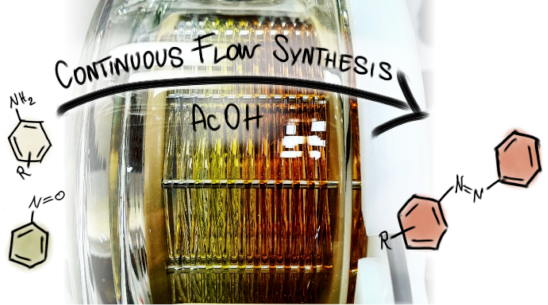
- used Baeyer–Mills coupling reaction was adopted to a continuous flow setup. The versatility was demonstrated with a scope of 20 substances and the scalability of this method exemplified by the synthesis of >70 g of an azobenzene derivative applied in molecular solar thermal storage (MOST) systems
- . Keywords: azobenzenes; Baeyer–Mills reaction; continuous flow; molecular switches; solar fuel; Introduction Although the red-colored azobenzenes (AB) have been known for years as dyes, their applications nowadays span from energy and information storage [1][2][3][4][5], organocatalysis [6], photobiology
- the proposed mechanism, which involves nucleophilic attack of the aniline on the nitrosobenzene derivatives in acidic or basic media (Scheme 1) [18][19][20][21]. However, in order to use azobenzenes as functional materials, access to a large-scale process is necessary. In this context continuous flow


Synthesis of odorants in flow and their applications in perfumery
Beilstein J. Org. Chem. 2022, 18, 754–768, doi:10.3762/bjoc.18.76
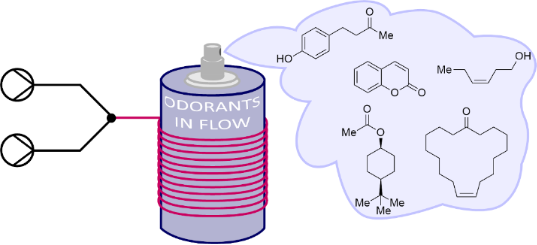
- , Germany 10.3762/bjoc.18.76 Abstract Continuous flow technology is a key technology for sustainable manufacturing with numerous applications for the synthesis of fine chemicals. In recent years, the preparation of odorants utilizing the advantages of flow reactors received growing attention. In this
- “has a pleasant, fresh-citrusy, and peppery-woody odor with a discretely mint note” [9]. Very recently, Kobayashi, Ishitani, and co-workers described a three-step sequential continuous flow process for the synthesis of (S)-α-phellandrene (30) from (R)-carvone (25, Scheme 6) [36]. In the first step, a


Inductive heating and flow chemistry – a perfect synergy of emerging enabling technologies
Beilstein J. Org. Chem. 2022, 18, 688–706, doi:10.3762/bjoc.18.70
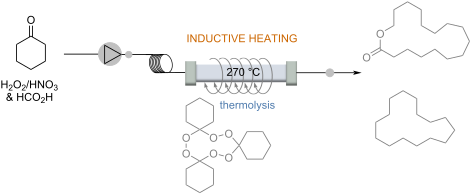
- is important not only in the context of energy storage, CO2 reduction, and climate change prevention, but also because they provide a country-independent source of energy. However, for use in a continuous flow system, the catalyst must have extremely high SAR and catalytic activity. Recently, a
- mesoflow technology and indirect heating 3.1 Microwave-accelerated reactions under flow conditions Reactions that take 20 minutes or longer under classical batch conditions can be accelerated considerably under continuous flow conditions by rapid heating, because flow chemistry usually involves the use of
- dioxide (core-shell nanostructured particles), called MagSilicaTM to be used as fixed-bed materials in many different continuous flow processes (Figure 4A) [50]. These materials are excited very rapidly in a medium frequency (25 kHz) electromagnetic field, heating reaction mixtures in packed bed reactors




Rapid gas–liquid reaction in flow. Continuous synthesis and production of cyclohexene oxide
Beilstein J. Org. Chem. 2022, 18, 660–668, doi:10.3762/bjoc.18.67
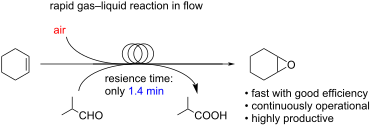
- Medical Science, Nijigaoka, Kani-city, Gifu Prefecture, 509-0293, Japan 10.3762/bjoc.18.67 Abstract The enhanced reaction rate in the epoxidation of cyclohexene with air as an oxidant was discovered without any added catalyst utilizing a continuous flow reactor constructed with readily available
- stainless steel parts and devices. This continuous-flow process demonstrates a significant improvement in reaction time for highly selective epoxide production over the batch process due to the efficient mass transfer between the liquid phase and air. The flow process discovered was operated continuously
- with good operational stability, evaluated by a constant high yield of cyclohexene oxide, to obtain the desired product with high productivity. Keywords: air; continuous flow; cyclohexene oxide; flow epoxidation; rapid gas–liquid reaction; Introduction From the past to the present, organic synthesis


Shift of the reaction equilibrium at high pressure in the continuous synthesis of neuraminic acid
Beilstein J. Org. Chem. 2022, 18, 567–579, doi:10.3762/bjoc.18.59
- Abstract The importance of a compound that helps fight against influenza is, in times of a pandemic, self-evident. In order to produce these compounds in vast quantities, many researchers consider continuous flow reactors in chemical industry as next stepping stone for large scale production. For these
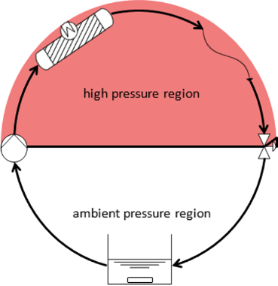
- recycling steps, and were characterized regarding the reaction kinetics (initial rate) and scalability (different lab scales) in a batch reactor. The reaction kinetics were studied in a continuous flow reactor. A high-pressure circular reactor (up to 130 MPa) was applied for the investigation of changes in


Synthesis of piperidine and pyrrolidine derivatives by electroreductive cyclization of imine with terminal dihaloalkanes in a flow microreactor
Beilstein J. Org. Chem. 2022, 18, 350–359, doi:10.3762/bjoc.18.39
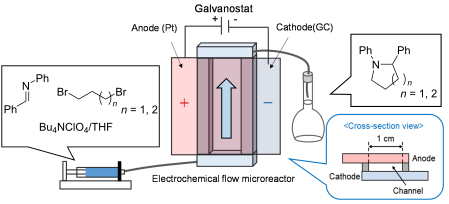
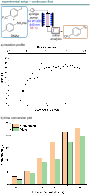
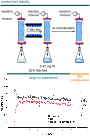
- determined (Figure 3). Continuous flow electrolysis could be performed without any problem at least until the fifth fraction collection. The yields of the fractions were almost the same, and the average yield of the five fractions was 77%. In addition, no precipitates were observed on the electrodes after
- American Chemical Society. This content is not subject to CC BY 4.0. Yield of 3a for each fraction sample in the continuous flow reductive cyclization. Conventional synthetic routes for piperidine derivatives. Synthesis of 1,2-diphenylpiperidine (3a) by the electroreductive cyclization mechanism. Effect of


Flow synthesis of oxadiazoles coupled with sequential in-line extraction and chromatography
Beilstein J. Org. Chem. 2022, 18, 232–239, doi:10.3762/bjoc.18.27
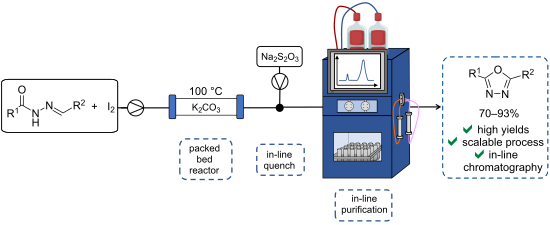
- Kian Donnelly Marcus Baumann School of Chemistry, University College Dublin, Science Centre South, Belfield, Dublin 4, Ireland 10.3762/bjoc.18.27 Abstract An efficient continuous flow process is reported for the synthesis of various 1,3,4-oxadiazoles via an iodine-mediated oxidative cyclisation
- the ability to improve reaction efficiency, safety and provide access to chemistry that was not previously possible [9][10][11]. Carrying out a reaction in continuous flow mode can improve its efficiency in several ways, including decreasing reaction times, increasing yields, or eliminating tedious
- significant development in continuous flow platforms, particularly in industry [16][17][18][19][20]. 1,3,4-Oxadiazoles are biologically relevant 5-membered heterocyclic compounds with various favourable pharmacokinetic properties and have been investigated as potential candidates for antiviral, antifungal and


1,2-Naphthoquinone-4-sulfonic acid salts in organic synthesis
Beilstein J. Org. Chem. 2022, 18, 53–69, doi:10.3762/bjoc.18.5
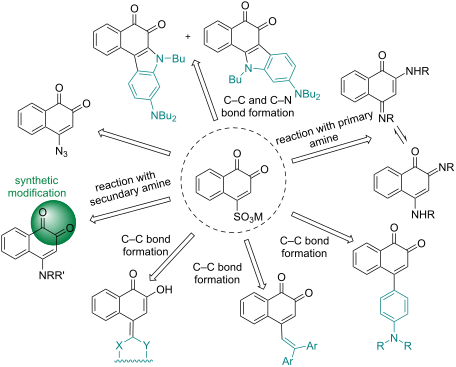
- addition, several authors concluded that this was a good method for analytically determining low levels of activated aromatic amines in drugs. This method continued to be used over the years and was subsequently optimized by a spectrophotometric determination technique coupled with continuous flow [55]. In


Electrocatalytic C(sp3)–H/C(sp)–H cross-coupling in continuous flow through TEMPO/copper relay catalysis
Beilstein J. Org. Chem. 2021, 17, 2650–2656, doi:10.3762/bjoc.17.178
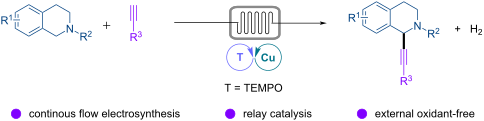
- terminal alkynes has been achieved in a continuous-flow microreactor through 2,2,6,6-tetramethylpiperidine 1-oxyl (TEMPO)/copper relay catalysis. The reaction is easily scalable and requires low concentration of supporting electrolyte and no external chemical oxidants or ligands, providing straightforward
- and sustainable access to 2-functionalized tetrahydroisoquinolines. Keywords: continuous flow; copper; catalysis; dehydrogenative cross-coupling; electrochemistry; Introduction The dehydrogenative cross-coupling of two C–H bonds represents an ideal strategy for the construction of C–C bonds [1][2
- reaction of tetrahydroisoquinolines with terminal alkynes (Scheme 1C) [10]. The chiral ligand was found to be critical for the stereoinduction as well as product formation for these electrochemical reactions that are conducted in batch. Continuous-flow electrochemical microreactors offer several advantages




Photoredox catalysis in nickel-catalyzed C–H functionalization
Beilstein J. Org. Chem. 2021, 17, 2209–2259, doi:10.3762/bjoc.17.143
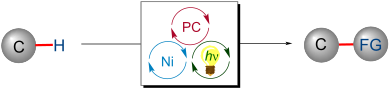
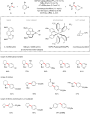
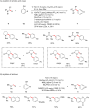
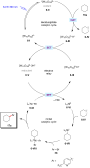
- process in a continuous-flow reactor. The mechanistic studies indicated that a nickel hydride intermediate generated with C(sp3)–H as the hydride source is involved in this catalytic transformation. The hydronickelation step results in the sterically less hindered vinylnickel intermediate 15-I, which










A comprehensive review of flow chemistry techniques tailored to the flavours and fragrances industries
Beilstein J. Org. Chem. 2021, 17, 1181–1312, doi:10.3762/bjoc.17.90
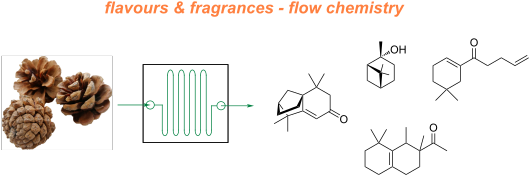
- temperatures, fragrance ingredients/intermediates make ideal candidates for continuous-flow manufacturing. This review highlights the potential crossover between a multibillion dollar industry and the flourishing sub-field of flow chemistry evolving within the discipline of organic synthesis. This is
- investment to maintain and operate (requirements for large volumes of solvent during work-ups and cleaning of reactors between processes). Alternatively, in the continuous-flow approach, a fully automated reaction system can be assembled, in which, transformations occur within reactors with a continuous
- flow [86]. Due to the inherently low active volumes of reactants that are processed in the reaction zone within a continuous-flow reactor, the safety risks associated with critical event are greatly diminished. In addition, process reliance and sustainability are further improved by adding extra safety