


Search results
Search for "elimination" in Full Text gives 910 result(s) in Beilstein Journal of Organic Chemistry. Showing first 200.
Recent advancements in the synthesis of Veratrum alkaloids
Beilstein J. Org. Chem. 2025, 21, 2657–2693, doi:10.3762/bjoc.21.206
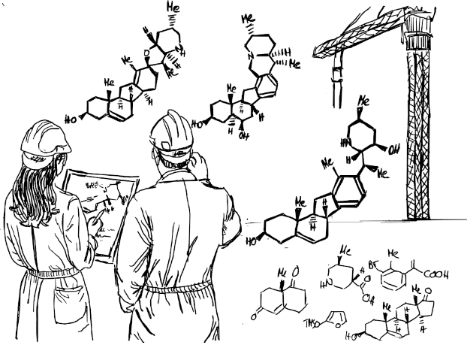
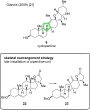
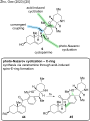
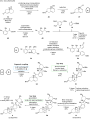
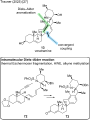
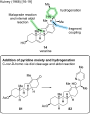
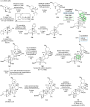
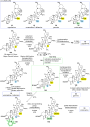
- starting material was again the (S)-Wieland–Miescher ketone (34). This was transformed to nitrile 46 via a seven-step sequence consisting of protecting group manipulations, a double bond isomerization to position C5–C6, as well as a 1,2-cyanide addition, and subsequent elimination (Scheme 10). The cyanide
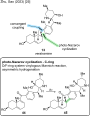
- selectively, and, through acid-catalyzed cyclization, the spiro-E-ring was fused. Elimination of the alcohol moiety at C13 installed the double bond in the correct position at C12–C13. Final Fmoc-deprotection furnished cyclopamine (6). In summary, the Zhu/Gao group disclosed the total synthesis of cyclopamine
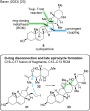
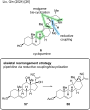
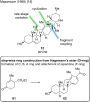
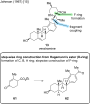
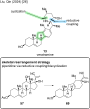
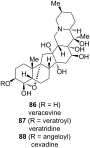
- rearranged scaffold 85 in three steps. Acetyl protection and elimination at C9–C11, followed by a Birch reduction, yielded a dienone structure. The latter was then hydrogenated, a methyl group was installed in α-position to the ketone, and an enone was formed to give 81 over 12 steps. Then, 2-ethyl-5
















Chemoenzymatic synthesis of the cardenolide rhodexin A and its aglycone sarmentogenin
Beilstein J. Org. Chem. 2025, 21, 2637–2644, doi:10.3762/bjoc.21.204
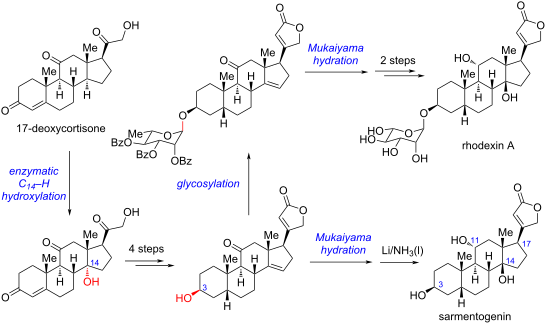
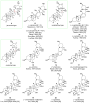
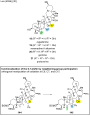
- donor, through a late-stage glycosylation. The aglycon 2 can be derived from the Δ14 olefin intermediate 3 via Mukaiyama hydration and several functional group transformations. In turn, 3 would be generated from the key C14α-hydroxylated intermediate 4 via an elimination process. For the synthesis of 4
- transforming it into the pivotal C14 β-hydroxylated steroidal intermediate. As shown in Scheme 2, a BF3·Et2O-promoted elimination afforded the 14-olefinated intermediate 3 in a moderate yield. However, the following Mukaiyama hydration to introduce the C14 β-hydroxy group was unsuccessful. Owing to the
- reagent [20], the key intermediate 8 bearing a butenolide motif was obtained in 76% yield. Next, with the aid of the strong Lewis acid Bi(OTf)3, the regioselective elimination of 8 was achieved to produce the Δ14 olefin intermediate 9 in 86% yield. Afterwards, we evaluated the reactivity of 9 towards



Thiazolidinones: novel insights from microwave synthesis, computational studies, and potentially bioactive hybrids
Beilstein J. Org. Chem. 2025, 21, 2618–2636, doi:10.3762/bjoc.21.203
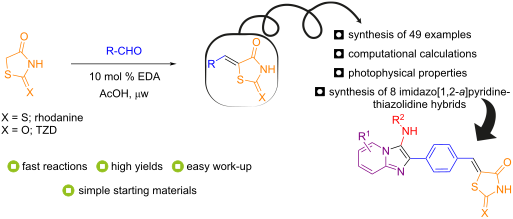
- aldehyde 1, activated by protonation of the oxygen atom through structure ii, forming the intermediate aldol iii. In the presence of EDDA, water elimination occurs in intermediate iv, yielding the Knoevenagel adducts 3 or 4. Synthesis of novel imidazo[1,2-a]pyridine–thiazolidinone hybrids To further






Visible-light-driven NHC and organophotoredox dual catalysis for the synthesis of carbonyl compounds
Beilstein J. Org. Chem. 2025, 21, 2584–2603, doi:10.3762/bjoc.21.200
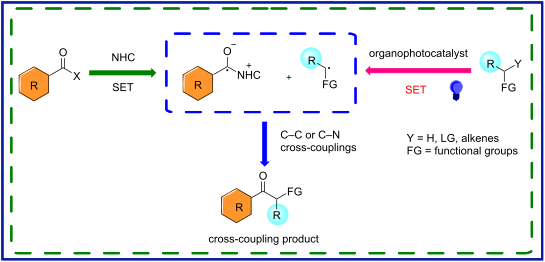
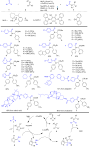
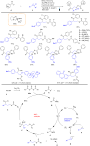
- system involves the efficient nucleophilic addition of an imidazolyl anion B to radical cation species A, generated via single-electron oxidation of electron-donating arenes 31. The azolide anion B is released from acylimidazole 9 through an addition/elimination sequence in the presence of an NHC





Recent advances in total synthesis of illisimonin A
Beilstein J. Org. Chem. 2025, 21, 2571–2583, doi:10.3762/bjoc.21.199
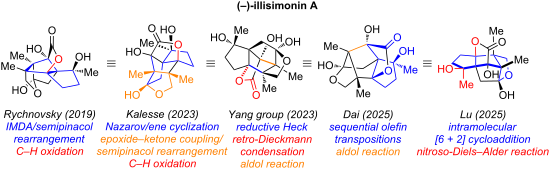
- encumbered tricyclic lactone 84 via an intramolecular [6 + 2] cycloaddition (Scheme 8). Attempts to achieve an asymmetric version of the cycloaddition were unsuccessful. Treatment of the lactone with MeMgBr, followed by mesylation and elimination of the resulting hemiacetal, afforded enol ether 85. Reaction






Total syntheses of highly oxidative Ryania diterpenoids facilitated by innovations in synthetic strategies
Beilstein J. Org. Chem. 2025, 21, 2553–2570, doi:10.3762/bjoc.21.198
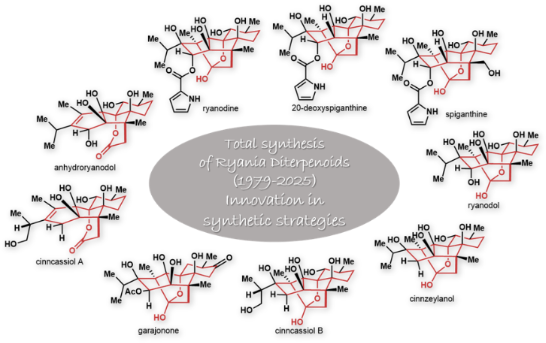
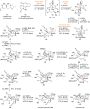
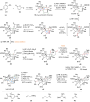
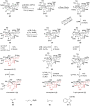
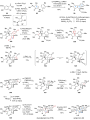
- epoxidation of the tetrasubstituted alkene followed by Grieco elimination yielded diene 92. Subsequent oxidation of the hemiacetal, saponification of the lactone, intramolecular epoxide opening, and Hoveyda–Grubbs (II)-catalyzed RCM afforded tetracyclic compounds 94 and its transesterification product 93
- oxidation with freshly prepared trifluoroperacetic acid in n-pentane converted 111 to bis-epoxide 112 with excellent stereoselectivity and yield. Subjecting 112 to oxidation and organoselenium-mediated regioselective α,β-epoxy ketone opening, followed by intramolecular transesterification and elimination







Ni-promoted reductive cyclization cascade enables a total synthesis of (+)-aglacin B
Beilstein J. Org. Chem. 2025, 21, 2548–2552, doi:10.3762/bjoc.21.197
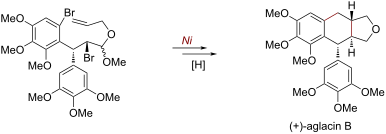
- followed by reaction with CH(OMe)3 afforded acetal 17, which was then subjected to a CH2Cl2 solution of TMSOTf and iPr2NEt. A mixture of enol methyl ethers 18 were thus produced by an elimination reaction. Eventually, a site-selective bromination of the double bond over the electron-rich benzene rings with


Rapid access to the core of malayamycin A by intramolecular dipolar cycloaddition
Beilstein J. Org. Chem. 2025, 21, 2542–2547, doi:10.3762/bjoc.21.196
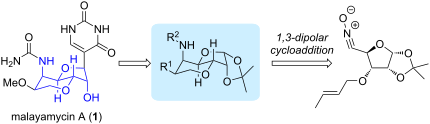
- development of potent fungicides. Keywords: dipolar cycloaddition; elimination; fungicide; nucleoside; oxazoline; Introduction Modern agriculture relies on various effective fungicides to combat crop diseases for achieving significant gains [1]. However, the long-term and widespread use of chemicals and




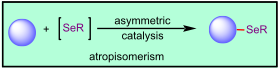
Catalytic enantioselective synthesis of selenium-containing atropisomers via C–Se bond formations
Beilstein J. Org. Chem. 2025, 21, 2447–2455, doi:10.3762/bjoc.21.186
- phenyl-substituted benzoisoquinoline derivatives. Two plausible reaction mechanisms were proposed in the study: one involving oxidative addition of Int 4, a five-membered rhodium cyclic intermediate, followed by reductive elimination and the other proceeding via a bimolecular nucleophilic substitution




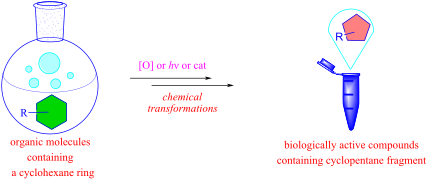
Transformation of the cyclohexane ring to the cyclopentane fragment of biologically active compounds
Beilstein J. Org. Chem. 2025, 21, 2416–2446, doi:10.3762/bjoc.21.185
- trimethylamine N-oxide and Dess–Martin periodinane, α-selenylation, and hydrogen peroxide-induced selenoxide elimination led to unsaturated ketone 183, from which artalbic acid (180) was obtained through a series of chemical transformations. The synthetic versatility of the photoinduced carboborative ring
- formation of ketone 191. This was observed when BF3·Et2O, InCl3, TfOH, or ZnBr2 were used as catalysts. Elimination of a proton from C15 led to formation of alcohol 192 with a second exocyclic double bond in reaction mediated by ZnBr2, Bi(OTf)3, p-TSA or TFA. A 1,2-rearrangement or migration of C2 results
- was the product of the double dehydration of carbocations B and C. The regioisomer of alcohol 192, a tertiary alcohol 196, was formed as a result of the elimination of a proton from the C15 atom. It is noteworthy that the reaction of 1,2-oxirane 190 with InCl3, ZnBr2, TfOH, or Bi(OTf)3 resulted in the


Synthetic study toward vibralactone
Beilstein J. Org. Chem. 2025, 21, 2376–2382, doi:10.3762/bjoc.21.182

- deprotection followed by C–H insertion. However, when attempting to remove the ketal protecting group, only decomposition of the starting material was observed. A plausible explanation for this outcome is that the β-lactone ring, located at the β-position of the methyl ketone, may undergo facile β-elimination


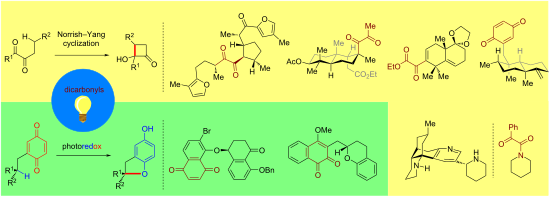
Recent advances in Norrish–Yang cyclization and dicarbonyl photoredox reactions for natural product synthesis
Beilstein J. Org. Chem. 2025, 21, 2315–2333, doi:10.3762/bjoc.21.177
- (50) and D (52), respectively. Alternatively, nucleophilic addition of MeOH to 54a and 56a, followed by ring-opening elimination, arrived at the corresponding γ-keto aldehyde intermediates 72/73. Subsequent intramolecular aldol cyclization of these intermediates furnished gracilisoids C/G (51/55) and
- – was prepared from (+)-pulegone (77) through a six-step manipulation involving epoxidation, epoxide opening with sodium thiophenolate and subsequent concomitant retro-aldol, sulfoxidation, a one pot α-alkylation with acrylonitrile proceeding to thermal syn-elimination of phenylsulfenic acid, ketone
- EG3 (99) via TMSOTf/Et3N-mediated β-elimination of methanol followed by desilylation. Finally, stereoselective epoxidation and reductive opening of the oxirane ring enabled the total synthesis of preussomerin EG2 (98) from preussomerin EG1 (97) in 88% yield over two steps. In this synthesis, the




Halogenated butyrolactones from the biomass-derived synthon levoglucosenone
Beilstein J. Org. Chem. 2025, 21, 2297–2301, doi:10.3762/bjoc.21.175
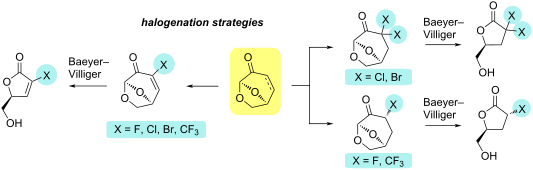
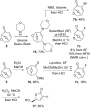
- electrophilic fluorine in the best case gave 15% conversion for NFSI and less than 8% isolated yield of 7c for SF. The major product in these reactions was 5, due to a β-elimination of the amine. In comparison, the reaction of 15 with NBS afforded 7b in an unoptimized yield of 48% after hydrolysis, which
- demonstrated that halogenation reactions with 15 were viable, but dependent on the characteristics of the electrophile. To avoid the elimination of the amine, β-methyl ether 16 was prepared. The reaction of ketone 16 with Selectfluor promoted by ʟ-proline in MeOH/MeCN, which ensured that the equilibrium
- species in situ was crucial for this transformation. By modifying a procedure for the trifluoromethylation of ketene dithioacetals reported by Liu and co-workers using TMSCF3 [43], rapid consumption of enamine 15 was observed. Acidic treatment of the intermediate promoted the hydrolysis/elimination



Enantioselective radical chemistry: a bright future ahead
Beilstein J. Org. Chem. 2025, 21, 2283–2296, doi:10.3762/bjoc.21.174
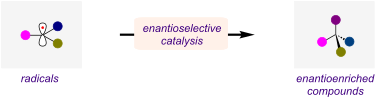
- as reductive elimination [62]. G. Liu and Stahl disclosed an elegant methodology to functionalize benzylic C–H bonds via copper catalysis [30]. Under the catalytic conditions, alkylarenes were converted to benzylic nitriles in good yields and excellent enantioselectivities. In the proposed mechanism
- , a chiral Cu(III) complex forms from an achiral benzylic radical and a Cu(II)–CN species, and subsequent reductive elimination affords the enantioenriched benzylic nitrile product. Recently, X.-Y. Liu and co-workers reported an enantioselective aminofluoroalkylation of alkenes using a Cu(I)/chiral


Pathway economy in cyclization of 1,n-enynes
Beilstein J. Org. Chem. 2025, 21, 2260–2282, doi:10.3762/bjoc.21.173
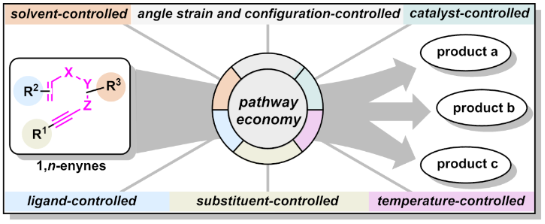
- (THF) was used as solvent, the proton elimination and protodeauration led to the formation of dihydrophenanthrene 12 due to solvent effects (Scheme 3, path b). This pathway-controlled approach for the syntheses of phenanthrenes complemented the established protocols. In 2020, Mutra et al. achieved a
- ]. Ph3PAuCl/AgOTf catalyzed a tandem 7-exo-dig cyclization followed by a cyclobutyl ring expansion process, yielding intermediate 84. The deprotonation followed by protonolysis-mediated gold elimination delivered the ring-expanded product 85 (Scheme 18, path a). When a bulkier ligand was used, steric
- (Scheme 28, path b). When IPrAuNTf2 was used as the catalyst, product 138 was obtained via a 6-exo-dig cyclization, whereas when Ph3PAuNTf2 was employed as the catalyst, product 139 was exclusively obtained through a hydroarylation/isomerization/elimination pathway. This work disclosed an unprecedented


Pd-catalyzed dehydrogenative arylation of arylhydrazines to access non-symmetric azobenzenes, including tetra-ortho derivatives
Beilstein J. Org. Chem. 2025, 21, 2234–2242, doi:10.3762/bjoc.21.170
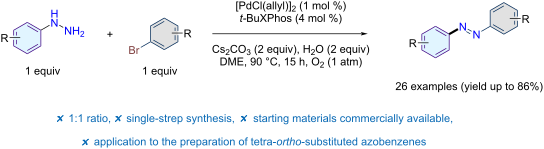
- formed to minimize steric clashes. Finally, reductive elimination leads to the formation of N,N-diarylhydrazine (D), which has been identified and characterized during the optimization process (see Supporting Information File 1 for details). In a second catalytic cycle, the N,N-diarylhydrazine (D
- carbonate, yielding the Pd(II) intermediate G. This intermediate then undergoes β–H elimination to afford the desired azobenzene product, along with a Pd(II) species H. Finally, reductive elimination regenerates Pd(0), completing the catalytic cycle. Then, a general reaction pathway for the formation of


Thiadiazino-indole, thiadiazino-carbazole and benzothiadiazino-carbazole dioxides: synthesis, physicochemical and early ADME characterization of representatives of new tri-, tetra- and pentacyclic ring systems and their intermediates
Beilstein J. Org. Chem. 2025, 21, 2220–2233, doi:10.3762/bjoc.21.169
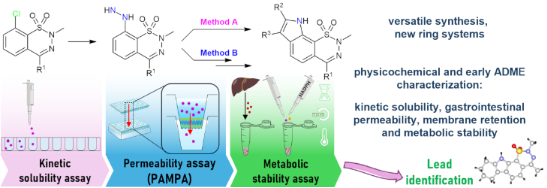
- Table 3. The preliminary ADME investigation, characterized by first-order kinetics due to low substrate concentration (≤10 µM), aids in establishing intrinsic clearance (Clint), which indicates the predicted elimination efficacy of drugs [43]. According to the generally accepted Clint ≈ 10 μL/min/kg (or
- -zero sample. The natural logarithm of the percentage remaining was plotted against incubation time to determine the first-order elimination rate constant (k) using linear regression. The half-life (t₁/₂) was calculated using Equation 4: Intrinsic clearance (Clint) was calculated and scaled to in vivo


Electrochemical cyclization of alkynes to construct five-membered nitrogen-heterocyclic rings
Beilstein J. Org. Chem. 2025, 21, 2173–2201, doi:10.3762/bjoc.21.166
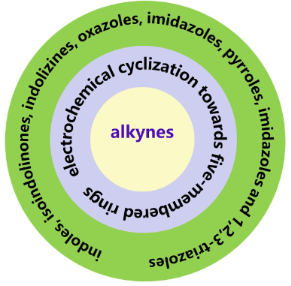
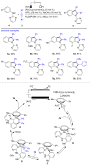
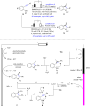
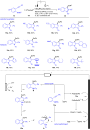
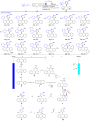
- reversible C–H activation to give the six-membered intermediate C. Substitution of the acetate ligand in C by 3 caused the generation of complex D. The six-membered ruthenacycle E was then obtained by migratory insertion of acetylene into the Ru–C bond. Finally, reductive elimination of E formed the target
- five-membered rhodacycle B, which underwent alkyne coordination followed by nucleophilic cyclization with 20a to give the biindolyl–Rh species D. The reductive elimination of D produced the bisindole-ligated CpxRhI intermediate E, which performed anodic oxidation to finish 21a and regenerate A. Notably
- of 22 with Cu(OPiv)2 and the following anodic copper(II) oxidation provided copper(III) carboxylate intermediate B. Facile carboxylate-promoted C–H activation and ligand exchange with 23 formed the copper(III) species D, which underwent metalation/reductive elimination to generate intermediate E







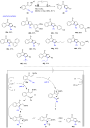


C2 to C6 biobased carbonyl platforms for fine chemistry
Beilstein J. Org. Chem. 2025, 21, 2103–2172, doi:10.3762/bjoc.21.165
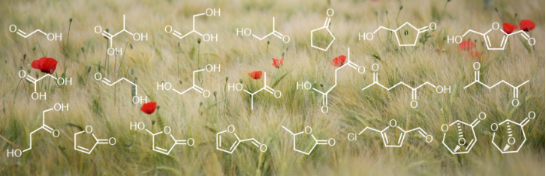


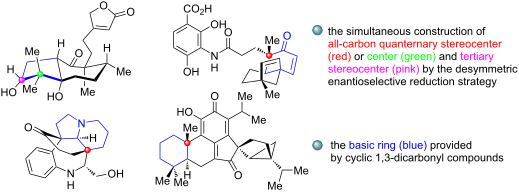
The application of desymmetric enantioselective reduction of cyclic 1,3-dicarbonyl compounds in the total synthesis of terpenoid and alkaloid natural products
Beilstein J. Org. Chem. 2025, 21, 2085–2102, doi:10.3762/bjoc.21.164
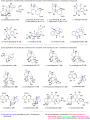
- -catalyzed intermolecular Diels–Alder reaction of 106 with methacrolein 107 afforded the common intermediate 108 in high yield. Sequential Grignard reagent addition and acid-promoted ethoxy elimination provided the separable planar diene 109 (dr = 1:1), which underwent a Mn-catalyzed HAT hydrogenation to
- -mediated condensation with 112 accomplished the total synthesis of (−)-platensilin (23). Based on the aforementioned successful work, the authors focused on the synthesis of (−)-platencin (24) and (−)-platensimycin (25) (Scheme 11) [82]. Accordingly, Wittig reaction of 108 followed by 1,4-elimination and




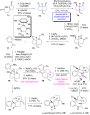

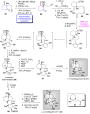


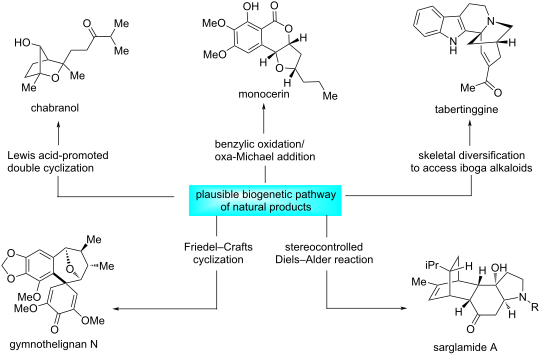
Bioinspired total syntheses of natural products: a personal adventure
Beilstein J. Org. Chem. 2025, 21, 2048–2061, doi:10.3762/bjoc.21.160
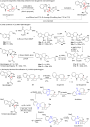
- underwent dehydroxylation protocol involving base-promoted mesylate elimination and catalytic hydrogenation reactions, providing 31a. Reduction of lactam and ester in one pot with LiAlH4 and acid-promoted hydrolysis of ketal protection to ketone furnished 32a. Finally, oxidation of the primary alcohol to




α-Ketoglutaric acid in Ugi reactions and Ugi/aza-Wittig tandem reactions
Beilstein J. Org. Chem. 2025, 21, 2021–2029, doi:10.3762/bjoc.21.157
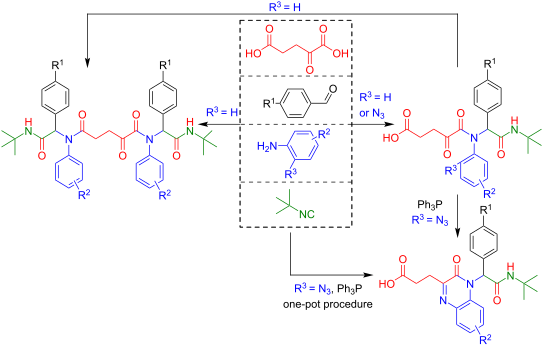
- sufficiently electrophilic carbonyl carbon atom with the elimination of triphenylphosphine oxide via the aza-Wittig reaction. It should be noted that the best method for the isolation of quinoxalinones 9 was column chromatography using an elution gradient of hexane/ethyl acetate 3:1 to hexane/ethyl acetate 1:2


Understanding the origin of stereoselectivity in the photochemical denitrogenation of 2,3-diazabicyclo[2.2.1]heptene and its derivatives with non-adiabatic molecular dynamics
Beilstein J. Org. Chem. 2025, 21, 2007–2020, doi:10.3762/bjoc.21.156
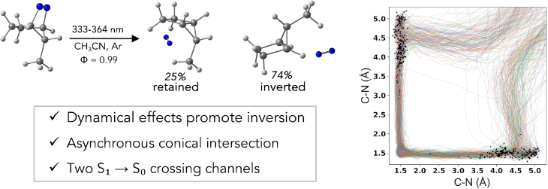
- ]. The experimental studies on the thermal denitrogenation of diazabicyclo[2.1.1]hep-2-ene (DBH, 1) indicate that both the parent compound and its derivatives undergo a concerted elimination of N2 and the inverted product (exo-2) is preferentially formed [55][56]. Deuterium labeling of DBH was employed
- preference for inversion across several derivatives of 1 [77][78]. These studies suggest that the thermal denitrogenation of diazabicyclo[2.1.1]hep-2-ene undergoes a concerted mechanism of elimination of nitrogen, while the photochemical reaction proceeds via a stepwise mechanism. Quantum mechanical


Aryl iodane-induced cascade arylation–1,2-silyl shift–heterocyclization of propargylsilanes under copper catalysis
Beilstein J. Org. Chem. 2025, 21, 1984–1994, doi:10.3762/bjoc.21.154
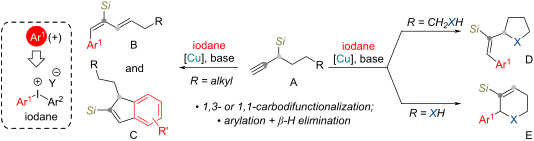
- likely formed via the allylic cation intermediate Int-1 (Scheme 2), from where on two competing mechanistic pathways are possible. Deprotonation of the β-H and reductive elimination affords diene 10. Alternatively, an intramolecular cyclization leads to silylindenes 11. We were interested to see whether
- an internal nucleophile (O-, N-) and reductive elimination affords the arylated product 8 and regenerates the Cu(I) catalyst. The added base (B:) traps the H+, generated in this catalytic cycle. In the case of tert-butyl esters (7: R = COOt-Bu) an equivalent of isobutylene gas is released as a side


Photochemical reduction of acylimidazolium salts
Beilstein J. Org. Chem. 2025, 21, 1973–1983, doi:10.3762/bjoc.21.153
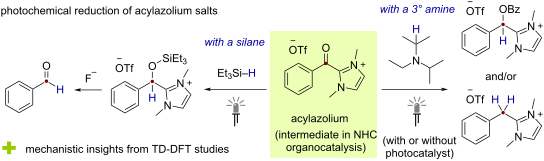
- additional photocatalyst. Moreover, under the same photocatalyst-free conditions, UV-A-light-mediated reduction could be achieved using triethylsilane as the only reductant with subsequent desilylation and NHC elimination with fluoride delivering the corresponding aldehyde product. Keywords: carbenes
- intermediate A (Figure 1a), in which the formerly electrophilic carbonyl carbon reacts as a nucleophilic center. In this way, the traditional reactivity profile of the carbonyl group is transiently inverted, and unconventional product classes are generated. Alternatively, addition/elimination of the NHC to a
- presence of this intermediate reduction product in the reaction mixture. Compound 3 is likely formed in a two-stage process involving initial reduction of the carbonyl group followed by addition/elimination of the resulting alkoxide into a second equivalent of the acylazolium salt 1; a sequence which also





