Search results
Search for "isocyanates" in Full Text gives 70 result(s) in Beilstein Journal of Organic Chemistry.
One-pot synthesis of oxazolidinones and five-membered cyclic carbonates from epoxides and chlorosulfonyl isocyanate: theoretical evidence for an asynchronous concerted pathway
Beilstein J. Org. Chem. 2020, 16, 1805–1819, doi:10.3762/bjoc.16.148
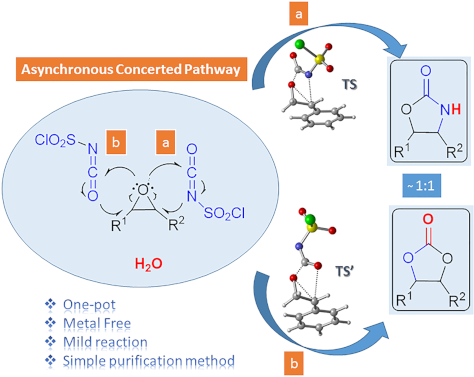
- multicomponent reaction of rare-earth metal amides [28], the reaction of CO2 with propargylamines or aziridines [29][30] and the cycloaddition reaction of epoxides with isocyanates [31][32]. On the other hand, for the synthesis of five-membered cyclic carbonates, the cycloaddition of CO2 to epoxides, the
- computational mechanistic study in the literature regarding the reaction of epoxides with CSI. On the other hand, the reactions of isocyanates with monofluoroalkenes and nitrones were modeled with the Møller–Plesset (MP2) perturbation theory and M06-2X functional, respectively [37][47]. According to these
- computational studies, such reactions of isocyanates may proceed through a concerted pathway. The remaining uncertainties in the mechanisms of the similar reactions inspired us to carry out quantum chemical calculations for the formation of oxazolidinone and five-membered cyclic carbonates. Results and


Photophysics and photochemistry of NIR absorbers derived from cyanines: key to new technologies based on chemistry 4.0
Beilstein J. Org. Chem. 2020, 16, 415–444, doi:10.3762/bjoc.16.40
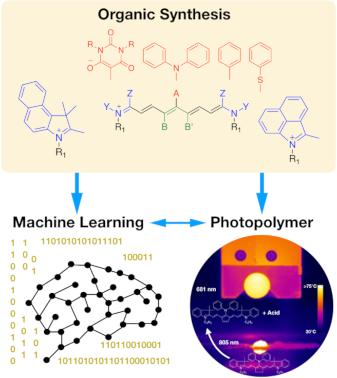
- initiate physical processes such as melting of powder coatings [16] or activation of thermal reaction such as blocked isocyanates [58]. It can exceed, depending on excitation intensity, several 100 °C. Particularly, embedded pigments with higher heat capacity can drive such systems to temperatures greater


p-Pyridinyl oxime carbamates: synthesis, DNA binding, DNA photocleaving activity and theoretical photodegradation studies
Beilstein J. Org. Chem. 2020, 16, 337–350, doi:10.3762/bjoc.16.33
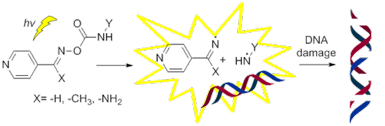
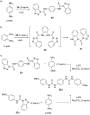
- derivatives were prepared upon the reaction of the corresponding oximes with isocyanates. These novel compounds reacted photochemically in the presence of supercoiled plasmid DNA. Structure–activity relationship (SAR) studies revealed that the substituent on the imine group was not affecting the extend of the
- isocyanates 2–7 in good to excellent yields (Scheme 1). When the reactions have been performed at room temperature the yields were poor for most of the products. However, changing the conditions to reflux, the yields were extraordinarily elevated above 90%. The NMR spectra of the products obtained at rt and
- existence of a broad singlet peak, at 6.2–7.1 ppm integrated for two protons (NH2), whereas NH for the aryl derivatives 9–13 appeared in the area 8.9 to 10.2 ppm. In a similar way, reactions of compound 14 with isocyanates delivered a single product with the E-configuration [63]. In the IR spectra the NH


A three-component, Zn(OTf)2-mediated entry into trisubstituted 2-aminoimidazoles
Beilstein J. Org. Chem. 2019, 15, 1061–1064, doi:10.3762/bjoc.15.103
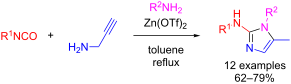
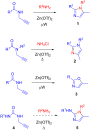
- from the respective isocyanates and propargylamine (or propagyl isocyanate and primary amines), thus could offer an opportunity to synthesize 2-aminoimidazoles 5 in a three-component format. Considering these premises, we started to explore the Zn(OTf)2-catalyzed reaction of 4 with primary amines
- isocyanates. However, its scope is limited to aliphatic amines as the reaction failed to work for anilines (even electron-rich ones, such as p-anisidine). The tolerance of acid-labile protecting groups such as Boc is particularly useful as it offers an opportunity for further side-chain modifications. From



Synthesis and selected transformations of 2-unsubstituted 1-(adamantyloxy)imidazole 3-oxides: straightforward access to non-symmetric 1,3-dialkoxyimidazolium salts
Beilstein J. Org. Chem. 2019, 15, 497–505, doi:10.3762/bjoc.15.43
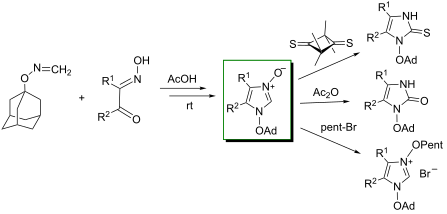
- reactivity analogous to aldonitrones, which enables their conversion via [3 + 2]-cycloadditions with dipolarophiles such as activated ethylenes [8][9], activated acetylenes [10][11] or isocyanates [11][12]. The initially formed [3 + 2]-cycloadducts undergo spontaneous secondary conversions leading to re


Sigmatropic rearrangements of cyclopropenylcarbinol derivatives. Access to diversely substituted alkylidenecyclopropanes
Beilstein J. Org. Chem. 2019, 15, 333–350, doi:10.3762/bjoc.15.29
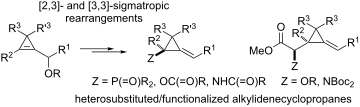
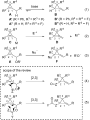
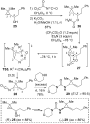
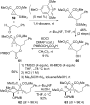
- generate the reactive species by dehydration of carbamates under mild conditions and the ultimate formation of isocyanates which can be derivatized in situ [54]. The conditions were optimized with alcohol 25 substituted by a 2-phenylethyl group at the oxygen-bearing carbon atom (C4) and possessing gem
- subsequently added to the reaction mixture. Under these conditions, the corresponding trifluoroacetamides 51–54 could be effectively isolated in good yields (73–85%). The addition of pyridine to the isocyanates J arising from the [3,3]-sigmatropic rearrangement would probably generate the zwitterionic







Gold-catalyzed post-Ugi alkyne hydroarylation for the synthesis of 2-quinolones
Beilstein J. Org. Chem. 2018, 14, 2572–2579, doi:10.3762/bjoc.14.234
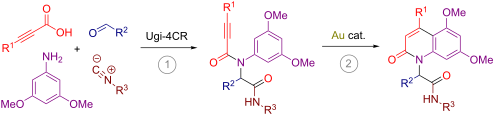
- -deficient aromatic aldehydes only low yields were achieved during the Ugi step. Yet, the subsequent gold-catalyzed cyclization worked well delivering the 2-quinolones 8f–h in up to 93% yield. Besides, several aliphatic and aromatic isocyanates 5 have been successfully employed for the preparation of 2


Hydroarylations by cobalt-catalyzed C–H activation
Beilstein J. Org. Chem. 2018, 14, 2266–2288, doi:10.3762/bjoc.14.202
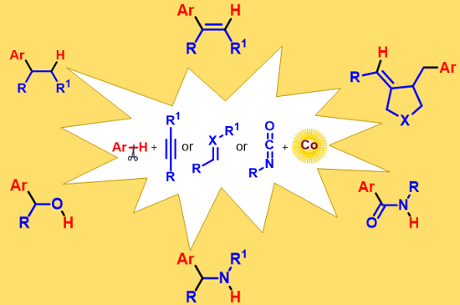
- alkenes, which required a stoichiometric amount of oxidant. Herein, we wish to review the cobalt-catalyzed hydroarylation of alkynes, alkenes, allenes, enynes, imines, and isocyanates. These reactions usually proceed via either an oxidative addition of Ar–H to a low-valent cobalt to form A1 intermediate
- -catalyzed hydroarylation of C=X bonds Transition-metal-catalyzed addition of C–H bond to polar π bonds such as imines, isocyanates and carbonyls is one of the efficient methods to incorporate heteroatoms in organic molecules [45]. Yoshikai et al. developed an addition reaction of arylpyridines 3 to imines
- of aromatic, vinyl, and heterocyclic amides. Thus, Ackermann and co-workers developed an inexpensive cobalt-catalyzed hydroarylation of isocyanates with (hetero)arenes 64 (Scheme 41) [100]. The reaction can tolerate a broad range of arenes and isocyanates, providing amide products 65 with notable








Hyper-reticulated calixarene polymers: a new example of entirely synthetic nanosponge materials
Beilstein J. Org. Chem. 2018, 14, 1498–1507, doi:10.3762/bjoc.14.127
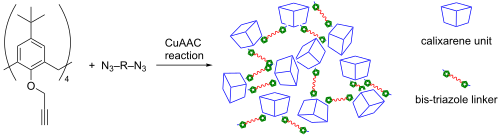
- electrophiles such as epichlorohydrin [6], organic carbonates [7][8][9] or bis-isocyanates [10], in variable ratios depending on the required degree of reticulation. The process, of course, exploits the nucleophilic reactivity of the hydroxy groups of the macrocycle oligosaccharide unit. In general, CyNSs


5-Aminopyrazole as precursor in design and synthesis of fused pyrazoloazines
Beilstein J. Org. Chem. 2018, 14, 203–242, doi:10.3762/bjoc.14.15


From dipivaloylketene to tetraoxaadamantanes
Beilstein J. Org. Chem. 2018, 14, 1–10, doi:10.3762/bjoc.14.1

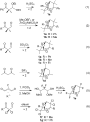
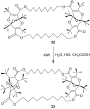
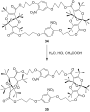
- , urethanes and isocyanates point inward (Scheme 9). This observation was confirmed by X-ray crystallography as well as calculations at the B3LYP/6-31G** level [38][39]. The tert-butyl groups provide steric protection to the exo sides of the molecules, making the diisocyanate stable at ordinary temperatures





Diosgenyl 2-amino-2-deoxy-β-D-galactopyranoside: synthesis, derivatives and antimicrobial activity
Beilstein J. Org. Chem. 2017, 13, 2310–2315, doi:10.3762/bjoc.13.227
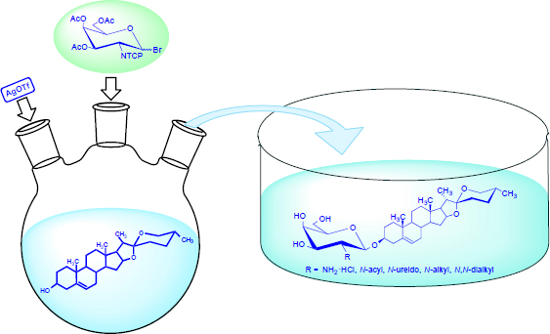
- the condensation of saccharides with ureas or the reaction of glycosylamines, amino sugar, or aminoglycosides with isocyanates, or their equivalents such as carbamates [32][33]. Ureido saponins presented here were obtained in the reaction of ethyl isocyanate (8), chloroethyl isocyanate (9) and phenyl


Mechanochemical synthesis of thioureas, ureas and guanidines
Beilstein J. Org. Chem. 2017, 13, 1828–1849, doi:10.3762/bjoc.13.178
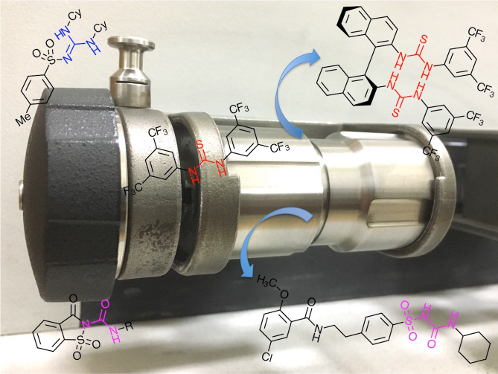
- reactive in the amination reaction. Ureas Just as thioureas are typically synthesized by coupling reaction between amines and isothiocyanates, ureas as oxygen analogues are prepared from the corresponding isocyanates. This approach was employed in the synthesis of anion binding 1-(pyridin-3-yl)-3-p
- more nucleophilic in the addition reaction to isocyanates (Scheme 15a). The ability to selectively convert o-pda into non-symmetrical mono-thioureas provided an opportunity to synthesize hybrid urea–thiourea derivatives 37a–d in a one-pot, two-step mechanochemical solvent-free process. After ball
- ). Sulfonylureas could also be obtained by coupling of sulfonyl isocyanates with amines which was demonstrated by an efficient solvent-, base- and catalyst-free synthesis of tolbutamide (93%) starting from p-toluenesulfonyl isocyanate and n-butylamine. However, this approach was not further pursued due to the air




Regioselective (thio)carbamoylation of 2,7-di-tert-butylpyrene at the 1-position with iso(thio)cyanates
Beilstein J. Org. Chem. 2017, 13, 1032–1038, doi:10.3762/bjoc.13.102
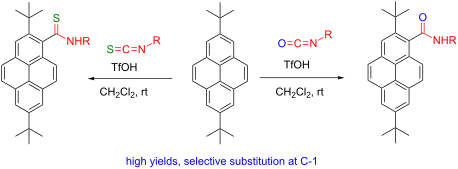
- photophysical properties [4][10][13][14][15][16][17][18][19][20], we thought it would be of interest to study its reactivity in the above reaction (and to extend its scope for isocyanates). An additional reason for such a study was the fact that thioamides (and amides) are versatile starting materials in the
- syntheses of various products (especially heterocycles) [21][22]. Furthermore, aromatic amides undergo a variety of directed C–H bond functionalizations [23]. Herein we report that the reaction of 2 with aliphatic isocyanates and isothiocyanates proceeds regioselectively at the 1-position (Scheme 1
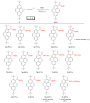
- ). Results and Discussion The reaction was carried out at room temperature in dichloromethane using 1.7 equiv of isocyanate or isothiocyanate and 3.3 equiv of TfOH. For the isocyanates, the reaction was completed in less than 5 min, whereas the reaction with isothiocyanates required ≈30 min for completion




Isoxazole derivatives as new nitric oxide elicitors in plants
Beilstein J. Org. Chem. 2017, 13, 659–664, doi:10.3762/bjoc.13.65
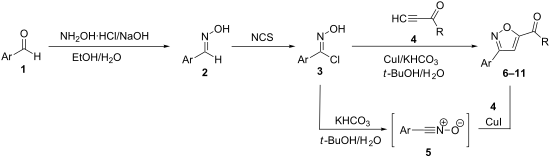
- compounds with isocyanates in the presence of tertiary alkylamines [33]. Generally, the cycloaddition reactions of nitrile oxides to alkenes yield isoxazolines or a mixture of isoxalines and isoxazoles. Cycloaddition reactions of nitrile oxides to alkynes yield isoxazoles directly, without a catalyst, but


N-Propargylamines: versatile building blocks in the construction of thiazole cores
Beilstein J. Org. Chem. 2017, 13, 625–638, doi:10.3762/bjoc.13.61
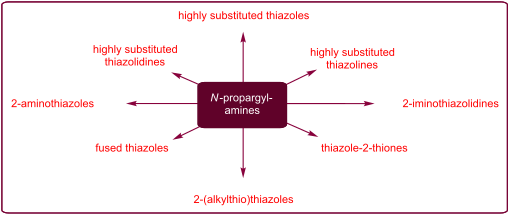
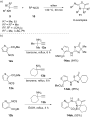
- syntheses of a series of multiply substituted thiazolidines 33 via the cyclization reaction of secondary N-propargylamines 32 with blocked N-isothiocyanate precursors 31. The desired N-isocyanates A are produced in situ upon heating or treatment with a base, in acetonitrile under microwave irradiation




Derivatives of the triaminoguanidinium ion, 5. Acylation of triaminoguanidines leading to symmetrical tris(acylamino)guanidines and mesoionic 1,2,4-triazolium-3-aminides
Beilstein J. Org. Chem. 2017, 13, 579–588, doi:10.3762/bjoc.13.57
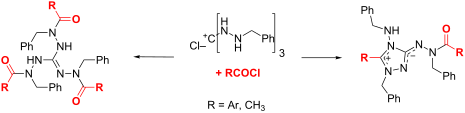
- been addressed only rarely, reactions with acid chlorides appear to be unknown. We have recently reported on the threefold carbamoylation of N,N’,N’’-tris(benzylamino)guanidinium salts with aryl isocyanates [3]. Concerning the reaction with carboxylic acids, it is known that TAG-Cl and formic acid on




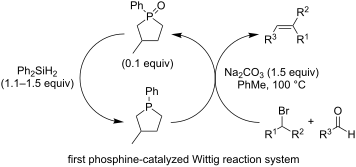
Catalytic Wittig and aza-Wittig reactions
Beilstein J. Org. Chem. 2016, 12, 2577–2587, doi:10.3762/bjoc.12.253
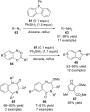
- ]. In this work, biaryl isocyanates 45 could be converted into phenanthridines 46, and aryl isocyanates 47 could be transformed into benzoxazoles 48 directly in refluxing toluene together with the simultaneous release of carbon dioxide. Presumably these reactions proceeded via iminophosphorane
- that afforded isocyanates 52. These were in turn treated in situ with catalyst 44 to afford the final products 50 via presumed iminophosphorane intermediates 53. Subsequently this research group used a very similar strategy for the synthesis of polysubstituted benzimidazoles 54 via sequential Ugi and
- catalytic aza-Wittig reactions (Scheme 16) [33]. It was reported that mixing 2-aminobenzoyl azides 55, carboxylic acids 56, isocyanides 57 with aldehydes 6 in methanol generated intermediates 58, which underwent rearrangement to isocyanates 59 in refluxing toluene. Finally, catalytic aza-Wittig reactions




Cross-linked cyclodextrin-based material for treatment of metals and organic substances present in industrial discharge waters
Beilstein J. Org. Chem. 2016, 12, 1826–1838, doi:10.3762/bjoc.12.172
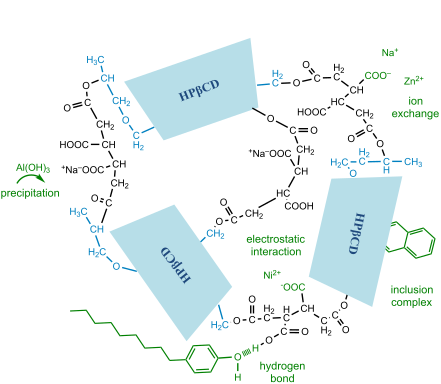
- for the use of carboxylic acids and pyromellitic dianhydride, respectively, as agents to cross-linking CDs. Other cross-linking agents such as epichlorohydrin, ethylene glycol diglycidyl ether, glutaraldehyde, benzoquinone or isocyanates can be also used [1][12]. The main objective of the study was to


Multicomponent reactions: A simple and efficient route to heterocyclic phosphonates
Beilstein J. Org. Chem. 2016, 12, 1269–1301, doi:10.3762/bjoc.12.121
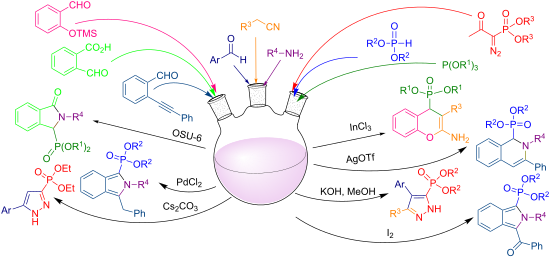
- this case, the one-pot three-component reaction of isoquinoline and diphenyl phosphite with isocyanates 265 or isothiocyanates 266 furnished (dihydroisoquinolin-1-yl)phosphonates 267 or 268 in 96–99% yields under solvent-free conditions at room temperature (Scheme 55) [93]. A solvent-free


Modular synthesis of the pyrimidine core of the manzacidins by divergent Tsuji–Trost coupling
Beilstein J. Org. Chem. 2016, 12, 1111–1121, doi:10.3762/bjoc.12.107
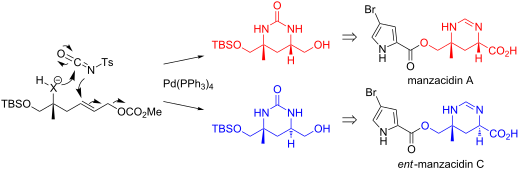
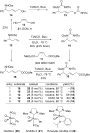
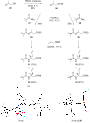
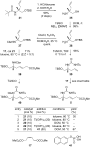
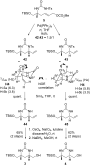
- -deficient isocyanates resulted in lower yields. We then turned our attention to the pivotal intramolecular allylic substitution reaction of 19 to access syn- and anti-pyrimidinones 23 and 24. As previously reported [31], this diastereodivergent coupling could indeed be realized as shown in Scheme 4. Based



Iodine-mediated synthesis of 3-acylbenzothiadiazine 1,1-dioxides
Beilstein J. Org. Chem. 2016, 12, 1072–1078, doi:10.3762/bjoc.12.101
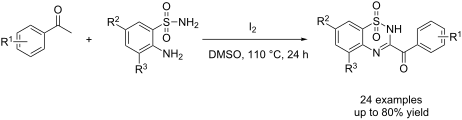
- been developed to synthesize benzothiadiazine 1,1-dioxides and their analogues. The condensations of 2-aminobenzenesulfonamides with urea, isocyanates, carboxylic acid derivatives or other carbonyl reagents are the most used methods [12][13][14][15]. These reactions were usually carried out under harsh


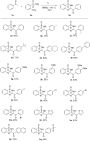


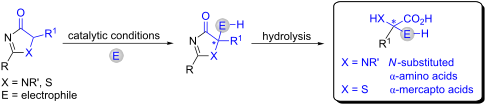
1H-Imidazol-4(5H)-ones and thiazol-4(5H)-ones as emerging pronucleophiles in asymmetric catalysis
Beilstein J. Org. Chem. 2016, 12, 918–936, doi:10.3762/bjoc.12.90
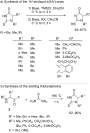
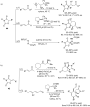
- to an additional stereodirecting group. Following this design and starting from the corresponding N-protected α-amino acid 46 different catalysts were easily synthesized by the reaction of the respective intermediate isocyanates 47 [93] with 9-epi-9-amino-9-deoxyquinine or 9-epi-9-amino-9








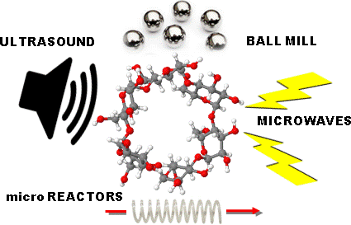
Enabling technologies and green processes in cyclodextrin chemistry
Beilstein J. Org. Chem. 2016, 12, 278–294, doi:10.3762/bjoc.12.30
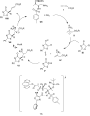
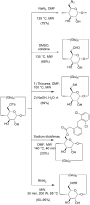
- isocyanates and isothiocyanate gave ureido and thioureido persubstituted β-CD derivatives in a MW oven at 85 °C for 4 h (see Scheme 9). A multivalent azido-scaffold such as persubstituted 6-azido-6-deoxy-α-, β- or γ-CD with conformational constraints can be efficiently perfunctionalized in a MW- and ligand




Polydisperse methyl β-cyclodextrin–epichlorohydrin polymers: variable contact time 13C CP-MAS solid-state NMR characterization
Beilstein J. Org. Chem. 2015, 11, 2785–2794, doi:10.3762/bjoc.11.299
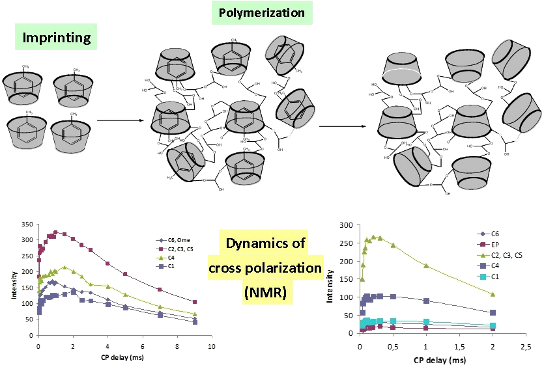
- epichlorohydrin [15][16], isocyanates [17][18], polycarboxylic acids [19][20] and anhydrides [21]. Following a slightly different approach, Trotta [18] and his group demonstrated that polymerization of cyclodextrins with a variety of synthetic equivalents of di- and tetracarboxylic acids provides an easy