


Search results
Search for "red" in Full Text gives 1140 result(s) in Beilstein Journal of Organic Chemistry. Showing first 200.
Improved synthesis and physicochemical characterization of the selective serotonin 2A receptor agonist 25CN-NBOH
Beilstein J. Org. Chem. 2026, 22, 175–184, doi:10.3762/bjoc.22.11
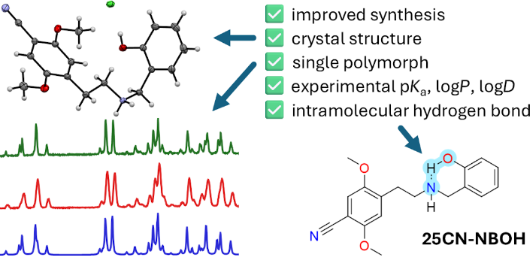
- recrystallized from ethanol (Figure 3, purple), a similar pattern is observed, indicating a high degree of crystallinity. Furthermore, samples of 1·HCl prepared either by rapid precipitation in organic solvents, as described in the Experimental section (red), or material isolated from a saturated solution of 1
- , oxygen atoms red, and chloride ion green. b) The crystal packing reveals alternating layers, a polar layer with hydrogen bonds (black dashed lines), and a hydrophobic layer with π–π-stacking (grey dashed lines). SCXRD and XRPD spectra of different preparations of 1·HCl. Blue: SCXRD spectrum of 1·HCl. Red
- , green, and purple: XRPD spectra of 1·HCl after recrystallization (red), directly as synthesized (green), and of a slurry obtained by stirring excess solid in ultrapure water for 3 days (purple). TGA and DSC thermograms of 1·HCl. Calculated pH-dependent species distribution curves for 25CN-NBOH (1). a


A new synthesis of Tyrian purple (6,6’-dibromoindigo) and its corresponding sulfonate salts
Beilstein J. Org. Chem. 2026, 22, 167–174, doi:10.3762/bjoc.22.10
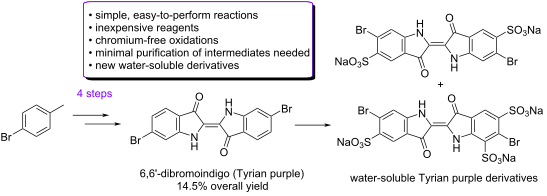
- red shift by 16 and 15 nm with a moderate increase in molar absorptivity, respectively, for compounds 9 and 10 [29]. This means that to the human eye, di- and trisulfonated derivatives of 1 appear blue, not purple. A smaller shift in λmax is observed when indigo is sulfonated, allowing for its blue


Design and synthesis of an axially chiral platinum(II) complex and its CPL properties in PMMA matrix
Beilstein J. Org. Chem. 2026, 22, 143–150, doi:10.3762/bjoc.22.7
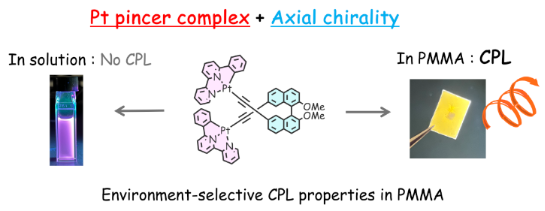
- -derived pendant group, which exhibited aggregation-enhanced red phosphorescence and CPL properties in the solid states [20], while Yam and co-workers also reported pincer-type platinum(II) complexes containing chiral amine moieties, and investigated their aggregation behavior and chiroptical properties


Symmetrical D–π–A–π–D indanone dyes: a new design for nonlinear optics and cyanide detection
Beilstein J. Org. Chem. 2026, 22, 131–142, doi:10.3762/bjoc.22.6
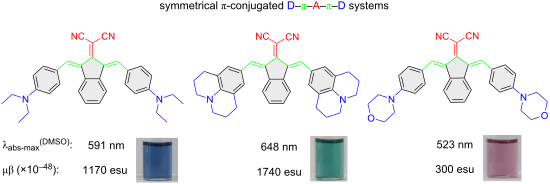
- can be shifted in the deep red/NIR region by changing the donor group with increased conjugated systems [19][20][21][22]. Gupta et al. studied optical properties of D–π–A system-based indan-2-one derivatives, and symmetric derivatives showed a significant bathochromic shift (≈300 nm) compared to
- more polarized than the ground states, as shown by the positive observed μβ values. Moreover, both the ground and excited states were polarized in the same direction for all studied compounds. The standard reference is Disperse Red 1 (μβ = 450 × 10−48 esu) [33]. Comparing the µβ values of Disperse Red
- 1 with the measured values of 2a–c shows that the molecules exhibited a higher NLO response than Disperse Red 1, except for 2c. The dipole moment (μ), polarizability (α), first-order hyperpolarizability (β), and its components, which were calculated at the B3LYP/6-31+G(d,p) level of theory in CHCl3


One-pot synthesis of ethylmaltol from maltol
Beilstein J. Org. Chem. 2025, 21, 2755–2760, doi:10.3762/bjoc.21.212

- Immanuel Plangger Marcel Jenny Gregor Plangger Thomas Magauer Department of Organic Chemistry and Center for Molecular Biosciences, University of Innsbruck, Innrain 80−82, 6020 Innsbruck, Austria Red Bull Central Laboratory, Betriebsgebiet Hängender Stein 1, 6713 Ludesch, Austria Red Bull Service
- Laboratory of Red Bull Service GmbH and was found to meet the quality parameters of commercial ethylmaltol (1), posing no concerns from a food safety perspective (see Supporting Information File 1). Conclusion In conclusion, we have developed a new synthetic approach to the flavor enhancer ethylmaltol (1

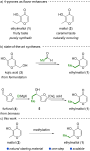

Sustainable electrochemical synthesis of aliphatic nitro-NNO-azoxy compounds employing ammonium dinitramide and their in vitro evaluation as potential nitric oxide donors and fungicides
Beilstein J. Org. Chem. 2025, 21, 2739–2754, doi:10.3762/bjoc.21.211
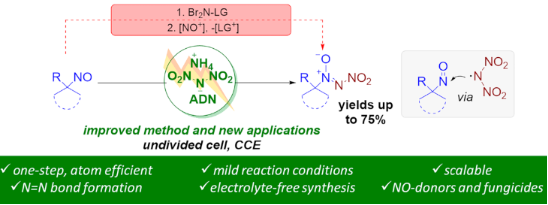
- 0.01 M solutions of 1-nitro-1-nitroso compounds 1a, 1f, 1c, and 1i in MeCN, these substances do not undergo noticeable oxidation up to +2.4 V. On the other hand, 1-chloro-1-nitrosocyclohexane (S3, green curve) and 1-nitrosocyclohexyl acetate (S4, red curve) are oxidized at +1.82 V and +1.77 V
- our study [87], ADN exhibits two irreversible oxidation peaks (red curve) at +1.8 V and +2.1 V, which are higher than or comparable to those of S2–S4 (Figure 2). Upon the addition of ADN to a solution of 1a (Figure 2, green curve), a single oxidation peak was observed at +1.89 V. Finally, the reaction
- ]/CPCM(MeCN) level of theory (in the case of >15 conformers, 15 most stable according to GFN2-xTB were analyzed). CV-curves of 0.01 M solutions of a) 1a (blue), b) 1f (azure), c) 1c (pink), d) 1i (yellow), e) S4 (red), f) S3 (green), g) S2 (brown), and h) S1 (orange) in 0.1 M n-Bu4NBF4 solution in MeCN





Recent advancements in the synthesis of Veratrum alkaloids
Beilstein J. Org. Chem. 2025, 21, 2657–2693, doi:10.3762/bjoc.21.206
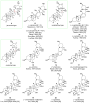
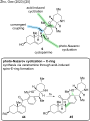
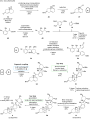
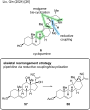
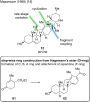
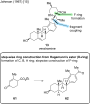
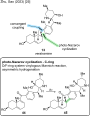
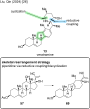
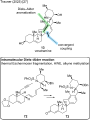
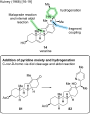
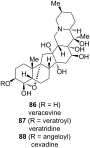
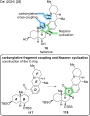
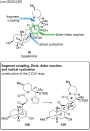
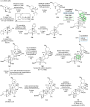
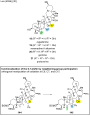
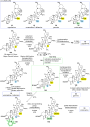
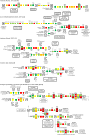
- of green for strategic connections, yellow for neutral, e.g., functional group interconversion and isomerization, orange for non-strategic reactions, and red for protecting group (PG) manipulations (Scheme 3). Protecting group manipulations refer to any protection or deprotection of a functional
- and as a semisynthesis, poses some non-strategic redox transformations (orange) and protecting manipulations (red) especially in the beginning and in the endgame of the synthesis. Nevertheless, several transformations are desirable green transformations, although it is noticeably more difficult to
- the semisynthesis of Liu/Qin [26] 15 years later. The only non-green transformations displayed at the start were a protecting group installation (red) and a condensation (yellow), which was needed for the C–H activation (light green). All other transformations connect either C–C or C–heteroatom bonds
















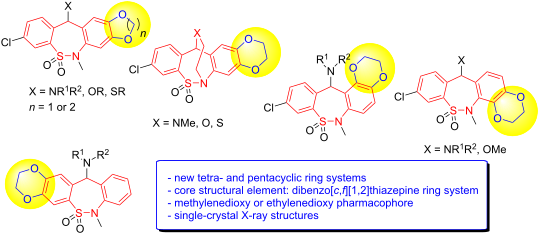
Synthesis of new tetra- and pentacyclic, methylenedioxy- and ethylenedioxy-substituted derivatives of the dibenzo[c,f][1,2]thiazepine ring system
Beilstein J. Org. Chem. 2025, 21, 2645–2656, doi:10.3762/bjoc.21.205
- to 0–5 °C, and SnCl4 (47.28 g, 182 mmol, 21.2 mL) was added to the reaction mixture. The red suspension obtained was stirred at 0–5 °C for 1 h, then at room temperature for 2 h. It was poured onto a mixture of crushed ice (1500 g) and conc. hydrochloric acid (200 mL). It was stirred while warming to


Thiazolidinones: novel insights from microwave synthesis, computational studies, and potentially bioactive hybrids
Beilstein J. Org. Chem. 2025, 21, 2618–2636, doi:10.3762/bjoc.21.203
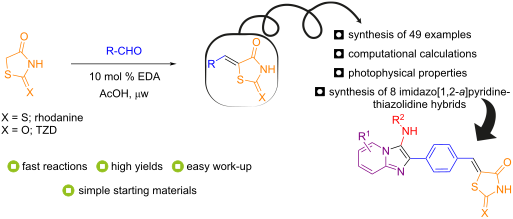
- values ranging between 409–426 nm. In general, the solvatochromic effect of these compounds showed a blue shift in EtOAc, and a red shift in MeCN. The fluorescence emission spectra of these compounds revealed a strong blue to green fluorescence emission, with the maximum emission peaks varying from 535
- to 573 nm for compound 3n and from 479 to 524 nm for compound 4n. Therefore, the fluorescence emission spectra demonstrated a clear dependence on solvent polarity and the maximum emission wavelength λem. Thus, a red shift in the emission bands was observed in solvents with higher polarity, indicating
- observed, however, with an increase in fluorescence emission. Interestingly, in DMSO, a bathochromic effect was observed alongside a significant increase in fluorescence intensity. In aqueous medium, a pronounced red shift was verified, likely due to stabilization of the excited state by water molecules






Visible-light-driven NHC and organophotoredox dual catalysis for the synthesis of carbonyl compounds
Beilstein J. Org. Chem. 2025, 21, 2584–2603, doi:10.3762/bjoc.21.200
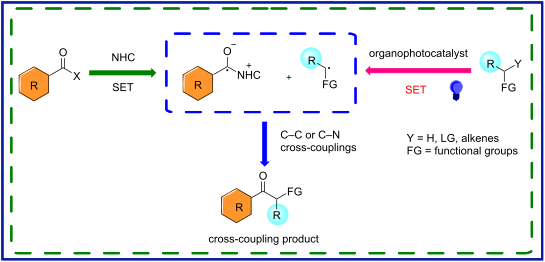
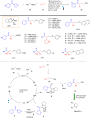
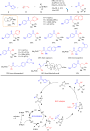
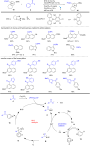
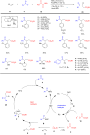
- is reductively quenched by arene 16, producing the corresponding aryl radical cation C and 3CzCIIPN•– (E1/2 red = +1.56 V vs SCE). PC•– then reduces the azolium ion A (E1/2 = −0.81 V vs SCE) to generate the ketyl radical B, thereby closing the photoredox catalysis cycle. 2-Methoxynaphthalene produced
- photocatalysts such as fluorescein, alizarin red S, rhodamine B, and eosin Y. Since photoexcited organophotocatalyst rhodamine 6G (Rh6G*) possesses a sufficiently positive reduction potential in its singlet excited state S1 (Ered* = +1.18 V vs SCE*). The reduced form of Rh6G•– subsequently reduces BrCCl3 to





Pentacyclic aromatic heterocycles from Pd-catalyzed annulation of 1,5-diaryl-1,2,3-triazoles
Beilstein J. Org. Chem. 2025, 21, 2524–2534, doi:10.3762/bjoc.21.194
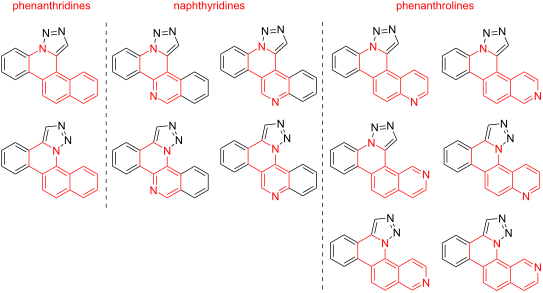
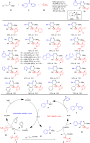
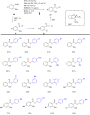
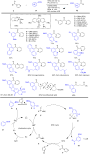
- -connected ortho-bromobenzene subunit analogs failed under microwave irradiation but were successful using conventional thermal heating in yields of 31–65%. The expanded nature of the aromatic ring system following annulation was reflected by the downfield shifting of aromatic 1H NMR signals and the red
- general red-shifting of UV absorbance signals for the annulated pentacycles presented in Table 1 relative to their non-annulated counterparts, further indicating an aromatic π-system expansion upon annulation. Similar trends were observed for those compounds shown in Table 2 (Figure S1, Supporting


Isoorotamide-based peptide nucleic acid nucleobases with extended linkers aimed at distal base recognition of adenosine in double helical RNA
Beilstein J. Org. Chem. 2025, 21, 2513–2523, doi:10.3762/bjoc.21.193
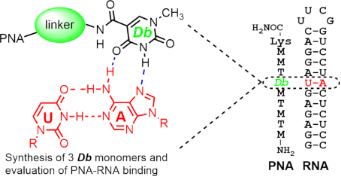
- PNA oligomer with the N-(2-aminoethyl)glycine backbone (in red); (b) Representative monocyclic synthetic nucleobase triples through Hoogsteen hydrogen bonding (blue dashed lines). Watson–Crick hydrogen bonds are in red (dashed lines). Representative extended nucleobase triples through Hoogsteen
- hydrogen bonding (blue dashed lines). Watson–Crick hydrogen bonds are in red (dashed lines). Evolution of the strategy for U–A recognition. Isoorotamide-derived nucleobases for A–U recognition. Proposed isoorotamide distal binding (Db) nucleobases designed from the Io5 core. Hydrogen bonding donors to the
- linker are highlighted in red. Sequences for RNA hairpins and PNA ligands used for binding studies. Major-groove view of hydrogen-bonding interactions in the (A) Db1*U–A triplet, (B) Db2*U–A triplet, (C) Db2*C–G triplet, and (D) Db3*U–A triplet. Carbon, hydrogen, oxygen, and nitrogen are labelled in


Synthesis of the tetracyclic skeleton of Aspidosperma alkaloids via PET-initiated cationic radical-derived interrupted [2 + 2]/retro-Mannich reaction
Beilstein J. Org. Chem. 2025, 21, 2470–2478, doi:10.3762/bjoc.21.189
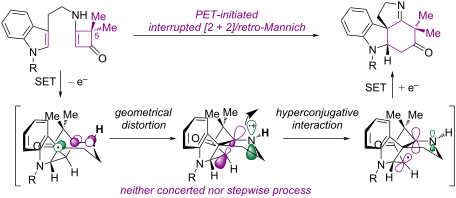
- free energies were calculated at the B3LYP-D3/def2-tzvp//B3LYP/6-31G(d) level in MeCN. b) Spin density of IN4 (isovalue = 0.004). c) IRC analysis of TS2 (red line) and bond-length changes of C19–C3 (yellow line) and C19–C12 (blue line) along IRC path. d) Mayer bond order changes of selected structures


The intramolecular stabilizing effects of O-benzoyl substituents as a driving force of the acid-promoted pyranoside-into-furanoside rearrangement
Beilstein J. Org. Chem. 2025, 21, 2456–2464, doi:10.3762/bjoc.21.187
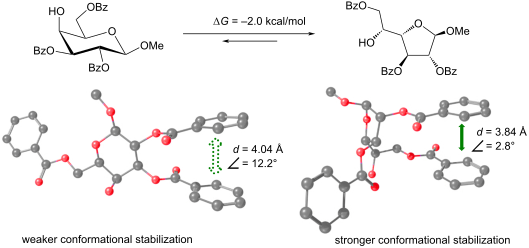
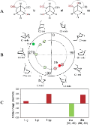
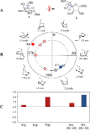
- for the methyl β-ᴅ-galactoside (A) and its α-counterpart (B). Green and red arrows indicate stabilizing and destabilizing spatial interactions, respectively. (A) Supposed PIF-rearrangement of monosaccharide 3. (B) Furanoside ring conformers of monosaccharide 4 in the pseudorotation diagram. The dashed




Catalytic enantioselective synthesis of selenium-containing atropisomers via C–Se bond formations
Beilstein J. Org. Chem. 2025, 21, 2447–2455, doi:10.3762/bjoc.21.186
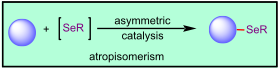
- . Keywords: asymmetric catalysis; atropisomer; chiral selenium-containing compound; C–Se bond formation; Introduction Selenium is an essential trace element for human body [1]. It plays an important role in metabolism. In 1817, the Swedish chemist Berzelius found that red residual mud was attached to the




The high potential of methyl laurate as a recyclable competitor to conventional toxic solvents in [3 + 2] cycloaddition reactions
Beilstein J. Org. Chem. 2025, 21, 2389–2415, doi:10.3762/bjoc.21.184
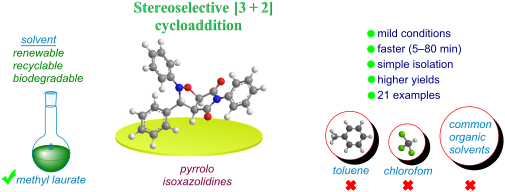
- solvents. Furthermore, the evidence suggests that the majority of these solvents is hazardous and their utilization is to be avoided. As demonstrated in Figure 8a, the color of the spheres of the customary proportional solvents employed in [3 + 2] cycloadditions is red or yellow, thereby substantiating the
- (RED). In the absence of any energy difference, the RED number is equivalent to 0. RED numbers that are less than 1 indicate high affinity, whilst RED numbers that are equal to or close to 1 represent a boundary circumstance. RED numbers that are progressively higher demonstrate increasingly lower
- affinities. Accordingly, when the values are substituted, It is evident that, given the RED value of approximately 0.876, which is less than 1, the nitrone is likely to dissolve in a methyl laurate solvent. Methyl laurate is a medium-sized molecule that exhibits a combination of polar and non-polar






Rotaxanes with integrated photoswitches: design principles, functional behavior, and emerging applications
Beilstein J. Org. Chem. 2025, 21, 2345–2366, doi:10.3762/bjoc.21.179

- cannot undergo the photocyclization reaction when the macrocycle is in the BAA site due to conformational restraint. This system was used to form water-soluble nanoparticles to investigate their biological applications. The obtained nanoparticles exhibited bright red photoluminescence and the ability to
- the naphthalimide. Specifically, red fluorescence was observed when the merocyanine formed, and green fluorescence when the spiropyran was generated. Notably, this rotaxane was employed for the detection of sulfite, where the addition of sulfite led to the deactivation of FRET. This occurs due to a
- Michael addition taking place at the active site (C=C−C=N+) in the merocyanine unit in the presence of sulfite ions, resulting in color changes from red to green. This work represents a substantial advancement in the development of rotaxane-based fluorescent probes, providing highly sensitive and


Recent advances in Norrish–Yang cyclization and dicarbonyl photoredox reactions for natural product synthesis
Beilstein J. Org. Chem. 2025, 21, 2315–2333, doi:10.3762/bjoc.21.177
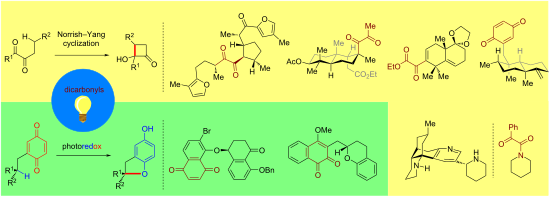
- : reactive substrates exhibited λmax < 460 nm (yellow-orange), whereas unreactive ones showed λmax > 460 nm (dark red-purple). This suggests insufficient excitation energy for Norrish type-II hydrogen abstraction in the latter. Such chromophore-dependent reactivity provides critical insights for designing




Insoluble methylene-bridged glycoluril dimers as sequestrants for dyes
Beilstein J. Org. Chem. 2025, 21, 2302–2314, doi:10.3762/bjoc.21.176
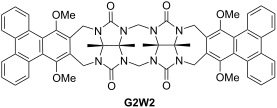
- textile, leather, paint, plastic, cosmetics, pharmaceuticals, and food industries [4]. It has been estimated that about 7 × 10⁶ tons of dyes (e.g., methylene blue, rhodamine B, methyl orange, Congo red, disperse violet 26, methyl red, crystal violet) are produced annually worldwide [5]. Many dyes are
- by UV–vis of the supernatant. Experiments were performed in triplicate (n = 3). Error bars represent the error propagation of uncertainty. Cross-eyed stereoview of: a) one molecule of G2W3 in the crystal, and b) the packing of G2W3 in the crystal. Color code: C, grey; H, white; N, blue; O, red; F
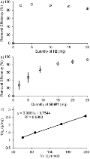
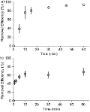
- , green; H-bonds, yellow-red striped. Cross-eyed stereoview of: a) a molecule of G2W1 in the crystal, b) the packing of G2W1 along the xz-diagonal in the crystal. Color code: C, grey; H, white; N, blue; O, red. a) Plot of removal efficiency of methylene blue (240 μM, 1 mL) from water after incubating with



Thiadiazino-indole, thiadiazino-carbazole and benzothiadiazino-carbazole dioxides: synthesis, physicochemical and early ADME characterization of representatives of new tri-, tetra- and pentacyclic ring systems and their intermediates
Beilstein J. Org. Chem. 2025, 21, 2220–2233, doi:10.3762/bjoc.21.169
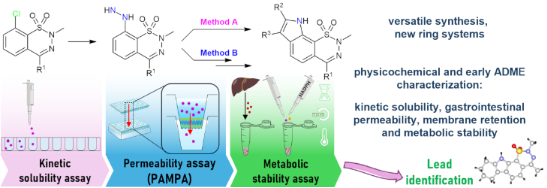
- both Figures, beside the selective 1D NOESY spectrum (upper part in Figure 2 and Figure 3), the 1H NMR spectrum (lower part) is also presented. The spatial proximity of NH with N=CH (marked with a red arrow in Figure 2) or with CH2 (red arrow in Figure 3) proves the (E) or (Z) configuration of the N=C


Synthesis of triazolo- and tetrazolo-fused 1,4-benzodiazepines via one-pot Ugi–azide and Cu-free click reactions
Beilstein J. Org. Chem. 2025, 21, 2202–2210, doi:10.3762/bjoc.21.167
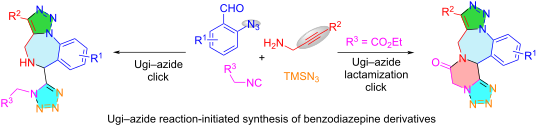
- of compounds 6a (red) and 8a (blue). Ugi–azide reaction for the synthesis of 1,5-DS-T-containing heterocycles. Proposed Ugi–azide-initiated synthesis of polyheterocyclic scaffolds 7 and 8. 4-CR vs stepwise Ugi–azide reactions for the synthesis of 7a. Synthesis of benzodiazepines 7a–k. Reaction


C2 to C6 biobased carbonyl platforms for fine chemistry
Beilstein J. Org. Chem. 2025, 21, 2103–2172, doi:10.3762/bjoc.21.165


Understanding the origin of stereoselectivity in the photochemical denitrogenation of 2,3-diazabicyclo[2.2.1]heptene and its derivatives with non-adiabatic molecular dynamics
Beilstein J. Org. Chem. 2025, 21, 2007–2020, doi:10.3762/bjoc.21.156
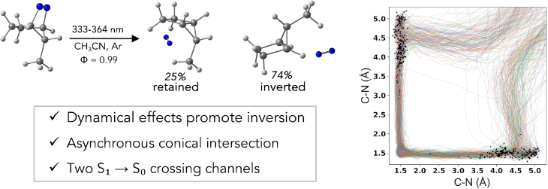
- inverted hopping points can be found in high-density regions, plotted in red within their respective clusters across all molecules. The observed geometric differences and distinct clustering patterns suggest the existence of two separate S₁ → S₀ crossing channels. To test this hypothesis and investigate
- isosurface is 0.001. Absorption spectra and geometric overlays corresponding to Wigner-sampled geometries of 1 (a), 3 (b), and 5 (c) with XMS-CASPT2(8,9)/ANO-S-VDZP. Minimum energy path using XMS-CASPT2(8,9)/ANO-S-VDZP for 1 (a), 3 (b), and 5 (c). The dots on the graphs correspond to the S0 (black), S1 (red
- ), S2 (blue), and S3 (green) states. Relevant structures (S0 and S1 minima and endpoints of the MEP calculation) are shown below the plots. The C–N and N=N bond lengths are in angstroms on the structures shown. S1 energy is shown on the plot with a red star. (a) The bond lengths we calculated are


Measuring the stereogenic remoteness in non-central chirality: a stereocontrol connectivity index for asymmetric reactions
Beilstein J. Org. Chem. 2025, 21, 1995–2006, doi:10.3762/bjoc.21.155
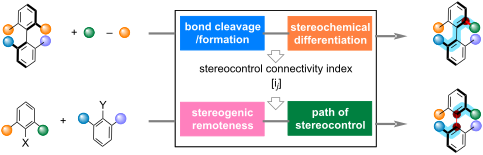
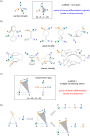
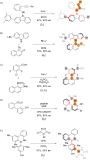
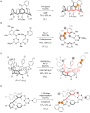
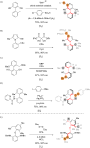
- products are highlighted in grey color. The shortest connecting bonds between them are colored red. Accordingly, the asymmetric hydrogenation of 2-butanone is designated as [20] process because there are two connecting bonds between the stereogenic carbon and the stereochemical differentiation atoms, and





Synthesis, biological and electrochemical evaluation of glycidyl esters of phosphorus acids as potential anticancer drugs
Beilstein J. Org. Chem. 2025, 21, 1909–1916, doi:10.3762/bjoc.21.148
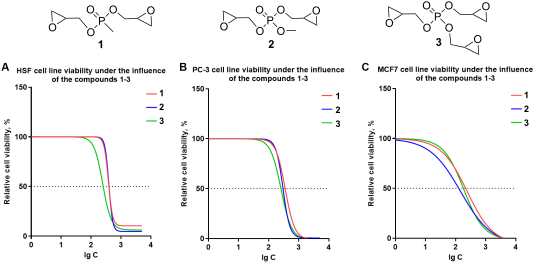
- or aziridine fragments. Dose–response curves for the cytotoxic effects of glycidyl esters of phosphorus acids 1–3 on human cell lines. (A) Human skin fibroblasts (HSF), (B) prostate cancer cells (PC-3), and (C) breast cancer cells (MCF7) were treated with diglycidyl methylphosphonate (1, red
- concentration of each compound. The dashed line marks the 50% viability threshold (IC50). Linear sweep voltammograms of 1 × 10⁻⁴ М HSA (black) and HSA mixed with each of the three alkylating agents; 1 (red), 2 (green), and 3 (blue). Conditions: supporting electrolyte: 0.1 M Et4NBF4, working electrode: glassy





