Search results
Search for "solvent polarity" in Full Text gives 99 result(s) in Beilstein Journal of Organic Chemistry.
A deep-red fluorophore based on naphthothiadiazole as emitter with hybridized local and charge transfer and ambipolar transporting properties for electroluminescent devices
Beilstein J. Org. Chem. 2023, 19, 1664–1676, doi:10.3762/bjoc.19.122
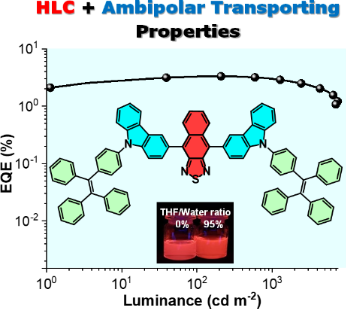
- , the molecule contains both the intrinsic LE and CT excited states or demonstrates HLCT characteristics. Besides, the Stokes shifts between absorption and emission spectra were plotted as a function of solvent polarity function (Δf) corresponding to the Lipper–Mataga model which defines the
- PL emission and a weakened emission intensity with the increased solvent polarity [57][58]. As the fw was further raised to 95%, the PL emissions became more intense and were blue-shifted. This was attributable to the formation of nanoaggregates and suppression of the ICT process. This finding proves
- silica substrate and solid powder (insert: fluorescence images of the solution, thin film, and solid powder under UV light at 356 nm). a) Normalized UV–vis absorption/PL spectra in different solvents. b) Lippert–Mataga plot of Stokes shift vs solvent polarity function (Δf). c) Transient PL decay traces


Organic thermally activated delayed fluorescence material with strained benzoguanidine donor
Beilstein J. Org. Chem. 2023, 19, 1289–1298, doi:10.3762/bjoc.19.95
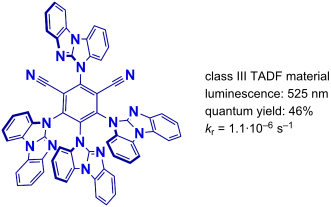
- experience a very weak solvatochromic effect with increasing solvent polarity from cyclohexane to dichloromethane. This indicates only minor change of the dipole moment upon vertical excitation from S0 (6.4 D) to S1 (7.2 D) excited states according to the TD-DFT theoretical calculations (Table S2, Supporting


Enabling artificial photosynthesis systems with molecular recycling: A review of photo- and electrochemical methods for regenerating organic sacrificial electron donors
Beilstein J. Org. Chem. 2023, 19, 1198–1215, doi:10.3762/bjoc.19.88

- solvent polarity [24][25]. Hence, it is important when considering new reagents and catalysts to only compare potentials measured in conditions as close to the photocatalytic conditions as possible. For instance, quinones have 2 one-electron reductions in aprotic media and one two-electron reduction at a


Exploring the role of halogen bonding in iodonium ylides: insights into unexpected reactivity and reaction control
Beilstein J. Org. Chem. 2023, 19, 1171–1190, doi:10.3762/bjoc.19.86
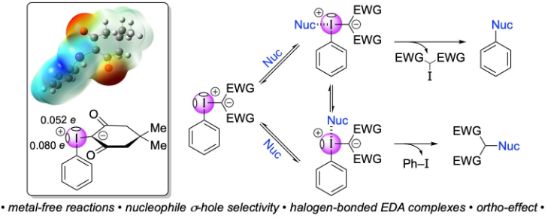
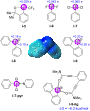
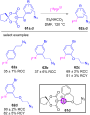
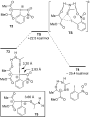
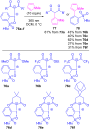
- negative electrostatic potential (VS,min) of the acceptor [46][48][51][52], but also by other factors [53][54][55][56][57] including hydrogen bonding [31][48], solvent polarity [47][58], the Lewis basicity of the acceptor [46][50] and by sterics [46]. As with any interatomic interaction, the energy of a







The effect of dark states on the intersystem crossing and thermally activated delayed fluorescence of naphthalimide-phenothiazine dyads
Beilstein J. Org. Chem. 2023, 19, 1028–1046, doi:10.3762/bjoc.19.79
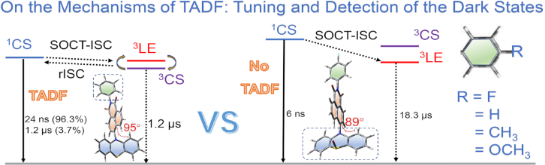
- that affects the fluorescence of these two dyads. Indeed, the highly solvent polarity dependent fluorescence emission intensity, and wavelength are different from the 4-amino NI derivatives, which are much less solvent polarity-dependent [59][61]. Since a TADF molecule is characterized by a stronger
- process is thermodynamically allowed in these solvents and the CS state energy of the dyads calculated by the redox potentials are slightly higher than the experimental values in HEX (the fluorescence, Figure 2). For the unoxidized molecules, with increasing solvent polarity, the CS state energy decreases
- 1CS/3CS states should be small, on a <0.1 eV scale [39][58]. For the dyads with oxidized PTZ moieties, the CS state energy is higher than that of the unoxidized molecules, and it is also decreased with increasing solvent polarity. The T1 state of NI was determined as 2.25 eV (phosphorescence method


Naphthalimide-phenothiazine dyads: effect of conformational flexibility and matching of the energy of the charge-transfer state and the localized triplet excited state on the thermally activated delayed fluorescence
Beilstein J. Org. Chem. 2022, 18, 1435–1453, doi:10.3762/bjoc.18.149
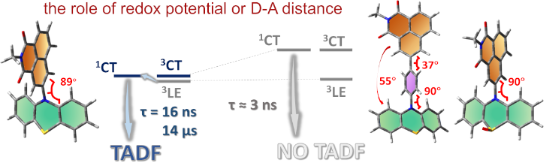
- quenching in polar solvents is less significant than that of NI-PTZ (Figure 2b), and the CT emission band is blue-shifted as compared to that of NI-N-PTZ [20], a likely consequence of the reduced electron-donating ability of the PTZ moiety. For NI-PTZ2, a solvent polarity-dependent fluorescence band was
- (approximated from the low temperature phosphorescence). Therefore, it is evident that the 3LE state is the lowest-lying triplet state in both NI-Ph-PTZ and NI-PhMe2-PTZ. It is known that the CT state energy decreases substantially when increasing the solvent polarity. For instance, in NI-PTZ, the CT state lies
Synthesis of 3,4,5-trisubstituted isoxazoles in water via a [3 + 2]-cycloaddition of nitrile oxides and 1,3-diketones, β-ketoesters, or β-ketoamides
Beilstein J. Org. Chem. 2022, 18, 446–458, doi:10.3762/bjoc.18.47

- enol tautomer of the 1,3-diketone was predominant in CDCl3, while the keto tautomer was predominant in methanol-d4, which is a more polar solvent than CDCl3 (Figure 7). Our observations thus reinforce Meyer’s rule [34][35], which states that the keto tautomer is favored as the solvent polarity
- thermodynamical product. The solvent polarity also affects the keto–enol equilibrium of the intermediate II-D. In polar solvents, the keto tautomer is predominant as an electrophilic group for the intramolecular cyclization, while in nonpolar solvents, the enol tautomer could not accept a nucleophilic attack for
- -withdrawing substituents present in the 1,3-diketones would increase the degree of enolization of the 1,3-diketones [30][33], and the polarity of the solvent would have only a little effect on the keto–enol tautomerization of such 1,3-diketones [30]. During our studies, we also observed the effect of solvent



Photophysical, photostability, and ROS generation properties of new trifluoromethylated quinoline-phenol Schiff bases
Beilstein J. Org. Chem. 2021, 17, 2799–2811, doi:10.3762/bjoc.17.191
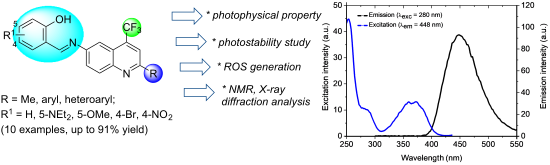
- the 400–550 nm region depending on the solvent polarity (CHCl3, DMSO, and MeOH). Therefore, it is possible to infer that the polarity of the solvents directly influences the electronic transitions in the excited state, with significant changes for the compound in more polar and protic solvents, by
- revealed significant differences, mainly according to the change in solvent polarity, being, for example, higher for compounds in DMSO and MeOH than in chloroform solution. Furthermore, the highest values were found in the presence of electron-donating groups, i.e., in compounds 3bb (R = Ph, R1 = 5-NEt2




Regioselective N-alkylation of the 1H-indazole scaffold; ring substituent and N-alkylating reagent effects on regioisomeric distribution
Beilstein J. Org. Chem. 2021, 17, 1939–1951, doi:10.3762/bjoc.17.127
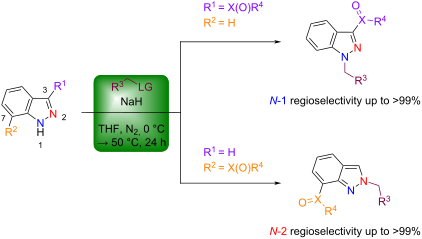
- solubility of Cs2CO3 in toluene and 1,4-dioxane [24]. Using K2CO3 in MeCN, Longworth et al. have obtained 10 with a similar degree of N-1 regioselectivity (ratio N-1:N-2 = 2.8:1) [26]. However, altering solvent polarity when employing 1,8-diazabicyclo[5.4.0]undec-7-ene (DBU) as a base (Table 1, entries 15–17


Synthesis of 1-indolyl-3,5,8-substituted γ-carbolines: one-pot solvent-free protocol and biological evaluation
Beilstein J. Org. Chem. 2021, 17, 1453–1463, doi:10.3762/bjoc.17.101
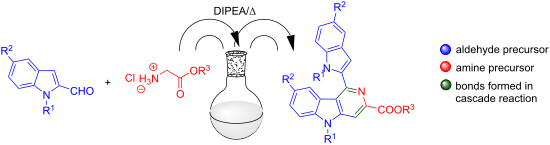
- absorption maximum (λmax) was observed at 230 nm for 3ac in DMSO (Figure 3, left side). The fluorescence studies carried out for 3ac in four different solvents revealed that the emission maxima shifted bathochromically by almost 40 nm upon changing the solvent polarity, for instance, from non-polar hexane to






CF3-substituted carbocations: underexploited intermediates with great potential in modern synthetic chemistry
Beilstein J. Org. Chem. 2021, 17, 343–378, doi:10.3762/bjoc.17.32
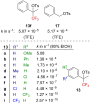
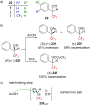
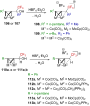
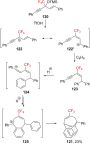
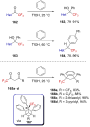
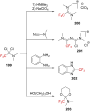
- solvolysis rate for derivatives 13f or 13g and the solvent polarity parameter YOTs [45]. The solvent participation in the solvolysis of these tertiary benzylic tosylates was thus defined as “unimportant” by the authors. Gassman and Harrington successfully measured the solvolysis kinetics of CF3-substituted

















19F NMR as a tool in chemical biology
Beilstein J. Org. Chem. 2021, 17, 293–318, doi:10.3762/bjoc.17.28


Naphthalonitriles featuring efficient emission in solution and in the solid state
Beilstein J. Org. Chem. 2020, 16, 2960–2970, doi:10.3762/bjoc.16.246
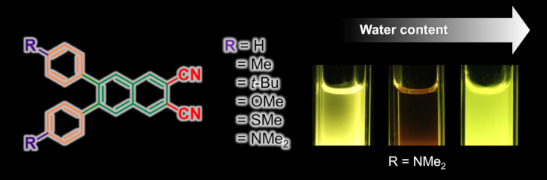
- mixture (Table 2). All the compounds exhibited an up-down tendency in intensity upon increasing the water fraction. Compounds H, Me and t-Bu showed a progressive red-shift with growing water content, owing to the increased solvent polarity and dielectric constant favoring the CT character of the emissive



Selective recognition of ATP by multivalent nano-assemblies of bisimidazolium amphiphiles through “turn-on” fluorescence response
Beilstein J. Org. Chem. 2020, 16, 2728–2738, doi:10.3762/bjoc.16.223
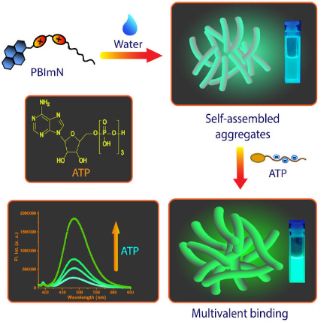
- reported lifetimes for monomeric pyrenes [66][67]. In aqueous buffer, the lifetime of the 395 nm band decreased (≈15–35 ns, Supporting Information File 1, Table S3) probably owing to the increment in the solvent polarity [68]. The average lifetime values (τavg) of the excimeric bands of PBIm10, PBIm12 and


Styryl-based new organic chromophores bearing free amino and azomethine groups: synthesis, photophysical, NLO, and thermal properties
Beilstein J. Org. Chem. 2020, 16, 2282–2296, doi:10.3762/bjoc.16.189
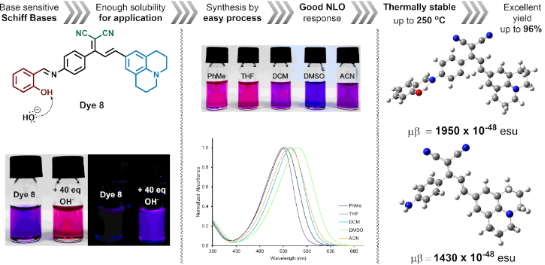
- absorption maxima (λabsmax), oscillator strengths (f), and relevant transitions and their contributions (w) are given in Table 1 and Table S1 in Supporting Information File 1). The shifts of the absorption maxima of the dyes were little dependent on the solvent polarity and there was no obvious correlation


Recent synthesis of thietanes
Beilstein J. Org. Chem. 2020, 16, 1357–1410, doi:10.3762/bjoc.16.116
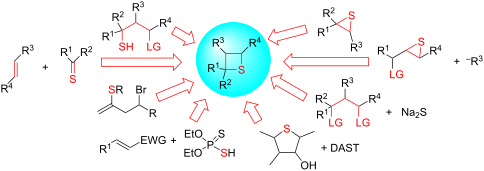
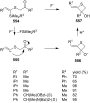
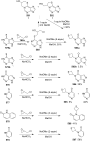
- -donating substituents present in the allenes enhanced the overall reaction rate. There was little effect of the solvent polarity on the reaction rate. The formation of thietanes involved the excited triplet thiones and the π-bond of allenes [66]. In 1984, Bos and co-workers realized the photocycloaddition














Synthesis and properties of quinazoline-based versatile exciplex-forming compounds
Beilstein J. Org. Chem. 2020, 16, 1142–1153, doi:10.3762/bjoc.16.101
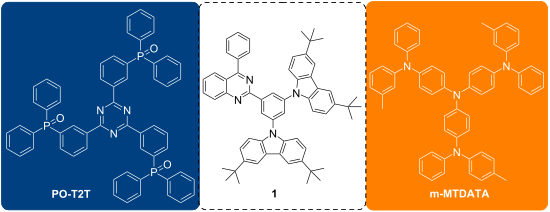
- -transfer (CT) transitions [20]. The PLQY quantum yields of the dilute solutions did not exceed 2%. The dependence of the emission wavelengths of the derivatives on the solvent polarity was also tested. Figure 5 shows the emission spectra of the compounds dissolved in three solvents with increasing
- polarities, i.e., toluene (0.099), tetrahydrofuran (0.207) and dimethylformamide (0.4) (values in parentheses are the solvent polarities relative to water) [21]. The PL spectra of the solutions of compound 3 appeared to be solvent-polarity independent as only the structured emission band of the locally


Synthesis of novel multifunctional carbazole-based molecules and their thermal, electrochemical and optical properties
Beilstein J. Org. Chem. 2020, 16, 1066–1074, doi:10.3762/bjoc.16.93
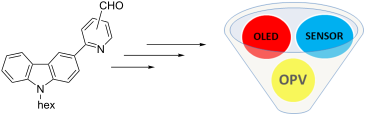
- microscopic solvent polarity [43][44], ET(30), increased from toluene to dimethyl sulfoxide (see also Table 3). A 141 nm red-shift was observed for 7a (from 465 nm to 606 nm) and an 86 nm red-shift was observed for 7b (from 423 nm to 509 nm). In comparison for 7b, this red-shift was more pronounced for 7a


Suzuki–Miyaura cross coupling is not an informative reaction to demonstrate the performance of new solvents
Beilstein J. Org. Chem. 2020, 16, 1001–1005, doi:10.3762/bjoc.16.89
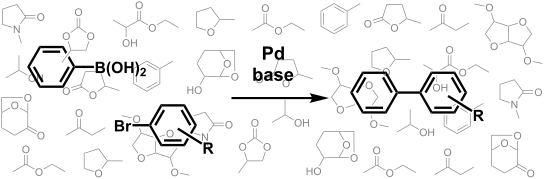
- Supporting Information Supporting Information File 292: Synthetic procedures and calculation of reaction conversions and solvent polarity data. Funding This research was funded by the Bio-Based Industries Joint Undertaking (JU) under the European Union's Horizon 2020 research and innovation programme


Cation-induced ring-opening and oxidation reaction of photoreluctant spirooxazine–quinolizinium conjugates
Beilstein J. Org. Chem. 2020, 16, 904–916, doi:10.3762/bjoc.16.82
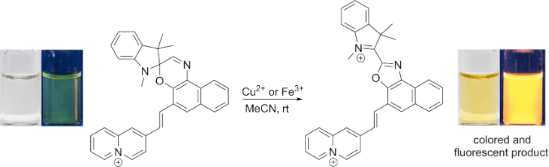
- position of the absorption maximum and the quantum yields or the rate constants of the forward and reverse reaction also depend largely on the solvent polarity as well as on the position and the nature of the substituents either at the indoline or the chromene unit. Surprisingly, there are only a few


Bipyrrole boomerangs via Pd-mediated tandem cyclization–oxygenation. Controlling reaction selectivity and electronic properties
Beilstein J. Org. Chem. 2020, 16, 895–903, doi:10.3762/bjoc.16.81
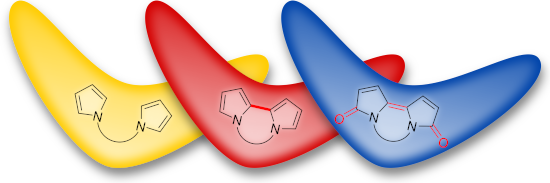
- fluorescence was only moderately quenched with increasing solvent polarity, and the quantum yields of 64 and 66% were recorded in acetonitrile for cNMI2H and cNMI3H, respectively. To explore the chiral properties of the helically distorted boomerangs, the separation of enantiomers was attempted for all of them




Aldehydes as powerful initiators for photochemical transformations
Beilstein J. Org. Chem. 2020, 16, 833–857, doi:10.3762/bjoc.16.76
- state quencher, as well as by the lowered rate of the reaction in the presence of the triplet energy quencher 2,5-dimethylhexa-2,4-diene or pyridazines, additives with lower triplet state energies than 4-anisaldehyde (52). The fact that the solvent polarity did not affect the sensitivity of the process






Emission solvatochromic, solid-state and aggregation-induced emissive α-pyrones and emission-tuneable 1H-pyridines by Michael addition–cyclocondensation sequences
Beilstein J. Org. Chem. 2019, 15, 2684–2703, doi:10.3762/bjoc.15.262
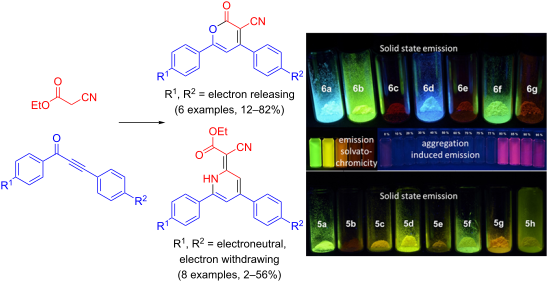
- with increasing solvent polarity in a range from green fluorescence (529 nm) in toluene to red fluorescence in DMSO (638 nm) (Figure 12). The observed positive emission solvatochromism is a consequence of a significant change in the dipole moment from the electronic ground to the vibrationally relaxed
- , and 6g recorded in dichloromethane at T = 298 K. Absorption (top) and fluorescence (bottom) of compound 6c with variable solvent polarity (left to the right: toluene, ethyl acetate, acetone, DMF and DMSO, c(6c) = 10−4 M; λexc = 365 nm, handheld UV lamp). Absorption (solid lines) and emission (dashed


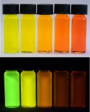


Plasma membrane imaging with a fluorescent benzothiadiazole derivative
Beilstein J. Org. Chem. 2019, 15, 2644–2654, doi:10.3762/bjoc.15.257
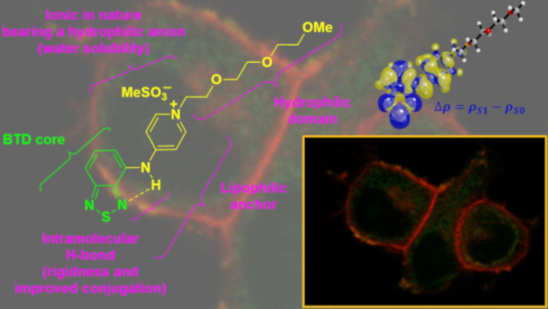
- 2,1,3-benzothiadiazole (BTD) core and its derivatives that are successfully applied in bioimaging experiments. (Left) UV–vis, (center) fluorescence emission and (right) solvatochromic effect (Stokes shift in wavenumbers versus solvent polarity in ETN) of the synthesized BTD-4APTEG (10 μM for all


Arylisoquinoline-derived organoboron dyes with a triaryl skeleton show dual fluorescence
Beilstein J. Org. Chem. 2019, 15, 2612–2622, doi:10.3762/bjoc.15.254
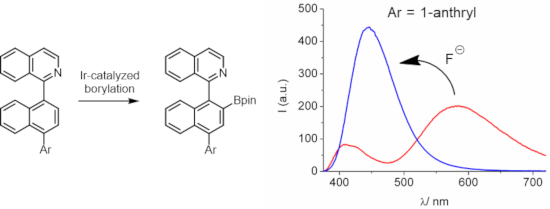
- emission maximum on changing to the polar solvent (Δλ = +7 nm). However, dye 19 features a solvatofluorochromic effect of Δλ = +41 nm under the same conditions. The dyes 16 and 18 show somewhat smaller bathochromic shifts on increasing the solvent polarity (Δλ = +20–22 nm). Regarding the fluorescence