Search results
Search for "Suzuki–Miyaura cross coupling" in Full Text gives 82 result(s) in Beilstein Journal of Organic Chemistry.
Total synthesis of elansolids B1 and B2
Beilstein J. Org. Chem. 2017, 13, 1280–1287, doi:10.3762/bjoc.13.124
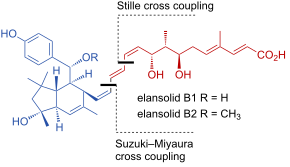
- . Results and Discussion The improved synthesis utilizes the Suzuki–Miyaura cross-coupling reaction to merge the western fragment derived from ketone 9 with the newly designed eastern building block 13. This fragment was obtained in very good yield from vinyl iodide 12 [9] by a Stille protocol using doubly
- elansolid B1 (2). The improvements are mainly associated with the preparation of the triene unit at C10–C15 by utilizing the Stille and the Suzuki–Miyaura cross-coupling reactions as well as the highly versatile difunctionalized building block 14. In principal, the synthesis sheds light on how such (Z,E,Z
- )-configured triene units are ideally be constructed, clearly demonstrating that enediynes are less preferred precursors for such structural elements. It has to be noted that there is precedence in the literature for the use of the Suzuki–Miyaura cross-coupling reaction as key step to assemble differently


Automating multistep flow synthesis: approach and challenges in integrating chemistry, machines and logic
Beilstein J. Org. Chem. 2017, 13, 960–987, doi:10.3762/bjoc.13.97
- kinetics parameters of a series-parallel substitution reaction [38]. Reizman et al. have studied Suzuki–Miyaura cross-coupling optimization using a DoE-based algorithm and feedback system [45]. The authors studied both continuous and discrete variables for optimization. Recently Fitzpatrick and Ley have




High performance p-type molecular electron donors for OPV applications via alkylthiophene catenation chromophore extension
Beilstein J. Org. Chem. 2016, 12, 2298–2314, doi:10.3762/bjoc.12.223
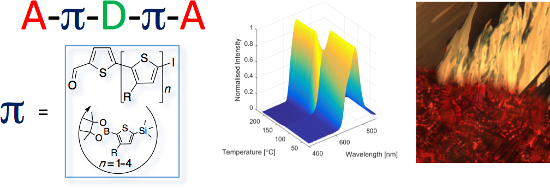
- π-bridges by simple Suzuki–Miyaura cross-coupling reactions could be completed. Starting with commercially available 5-bromothiophene-2-carboxaldehyde and then reaction with 3a–c to generate the required bithiophenes, then terthiophenes, while further catenation with 3b resulted in synthesis of the
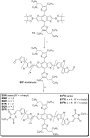
- analytically pure material isolated by filtration in excellent yields >90%, Scheme 4. This simplified purification is in direct contrast with reported procedures for the bis-iodinated or bis-stannylated analogues [20][21]. A simple Suzuki–Miyaura cross coupling of 5, 7, 9 or 11 with 13 gave the required BXx




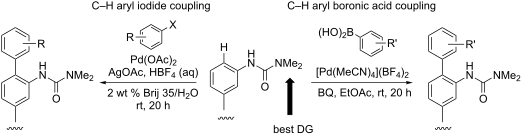
Cationic Pd(II)-catalyzed C–H activation/cross-coupling reactions at room temperature: synthetic and mechanistic studies
Beilstein J. Org. Chem. 2016, 12, 1040–1064, doi:10.3762/bjoc.12.99
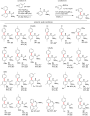
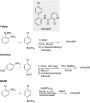
- diaminobenzene promoted by TiCl3 [209]. A number of additional syntheses can also be found in the literature [86][210]. Moreover, the BASF has patented routes using a traditional Suzuki–Miyaura cross-coupling in the presence of 0.5 mol % Pd catalyst to reach the same nitro-intermediate found in the Felpin route






Bi- and trinuclear copper(I) complexes of 1,2,3-triazole-tethered NHC ligands: synthesis, structure, and catalytic properties
Beilstein J. Org. Chem. 2016, 12, 863–873, doi:10.3762/bjoc.12.85
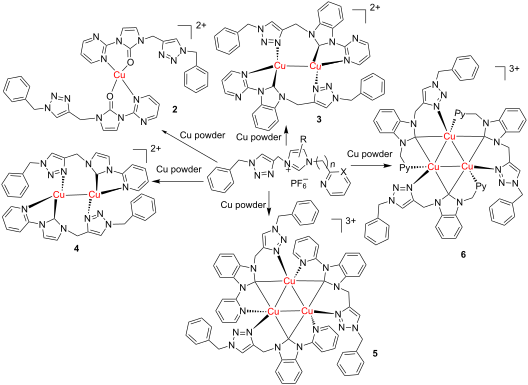
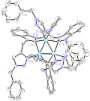
- and platinum complexes containing 1,2,3-triazole-tethered NHC ligands. The obtained palladium complexes displayed high activity in aqueous Suzuki–Miyaura cross-coupling reactions. We are interested in the synthesis and use of functionalized NHC ligands [20][28][29][30][31]. Herein, the synthesis



A convenient route to symmetrically and unsymmetrically substituted 3,5-diaryl-2,4,6-trimethylpyridines via Suzuki–Miyaura cross-coupling reaction
Beilstein J. Org. Chem. 2016, 12, 835–845, doi:10.3762/bjoc.12.82
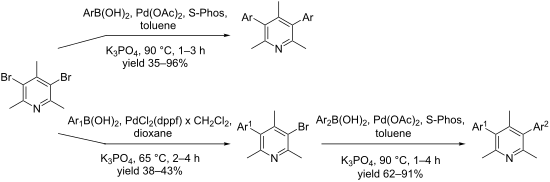
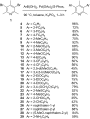
- convenient synthesis of symmetrically and unsymmetrically substituted 3,5-diaryl-2,4,6-trimethylpyridines via Suzuki–Miyaura cross-coupling reaction. Several diarylpyridines with mixed aryl rings were produced by sequential two-step Suzuki cross-coupling reaction with separation of intermediary 3-aryl-5




Syntheses of dibenzo[d,d']benzo[2,1-b:3,4-b']difuran derivatives and their application to organic field-effect transistors
Beilstein J. Org. Chem. 2016, 12, 805–812, doi:10.3762/bjoc.12.79
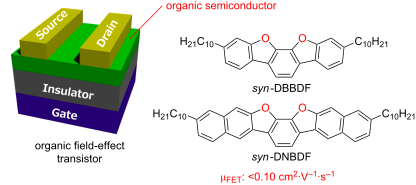
- -isopropoxy-4,4,5,5-tetramethyl-1,3,2-dioxaborolane (iPrO-Bpin) gave boronate ester 7 in 57% yield. Then, terphenyl 9 was synthesized via palladium-catalyzed Suzuki–Miyaura cross coupling of boronate ester 7 with 2,3-difluoro-1,4-diiodobenzene (96% yield) and subsequent demethylation (95% yield). Finally, the




Hydroquinone–pyrrole dyads with varied linkers
Beilstein J. Org. Chem. 2016, 12, 89–96, doi:10.3762/bjoc.12.10
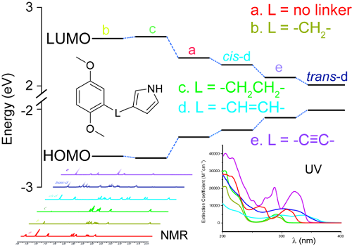
- considered satisfactory because of the ready availability of starting materials and the modest reaction time of 4 hours. Since the starting materials in the Suzuki–Miyaura cross-coupling tolerate a wide variety of functional groups, facile and versatile combination of different dihydroxybenzyl halide
- –Miyaura cross-coupling as shown in Scheme 1, with a total yield of nearly 50% (from 2,5-dimethoxybenzyl bromide (5)). Starting material 5 was prepared from 2,5-dimethoxybenzylalcohol by a reported procedure [18] in 95% yield. Using typical conditions, the yield of the coupling reaction was 56%, which was
- utilized for C–C cross coupling of benzyl halides with heteroarylboronic acids. However, in contrast to its use for the synthesis of thiophene and furane derivatives, it has rarely been employed for the coupling of pyrrolylboronic acids with benzyl halides [13][14][15][16][17]. We applied the Suzuki


N-Methylphthalimide-substituted benzimidazolium salts and PEPPSI Pd–NHC complexes: synthesis, characterization and catalytic activity in carbon–carbon bond-forming reactions
Beilstein J. Org. Chem. 2016, 12, 81–88, doi:10.3762/bjoc.12.9
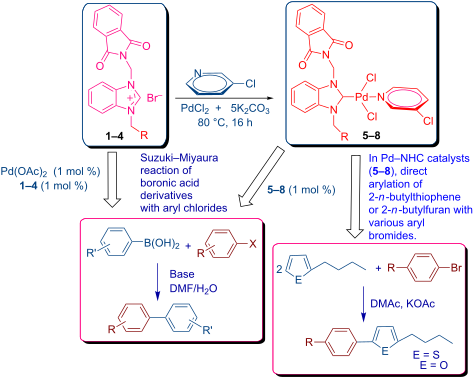
- -alkylbenzimidazolin-2-ylidene and Py = 3-chloropyridine, were synthesized and characterized by means of 1H and 13C{1H} NMR, UV–vis (for 5–8), ESI-FTICR-MS (for 2, 4, 6–8) and FTIR spectroscopic methods and elemental analysis. The synthesized compounds were tested in Suzuki–Miyaura cross-coupling (for 1–8) and
- with 4-chlorotoluene. Keywords: arylation; benzimidazolium salts; catalysis; N-heterocyclic carbene; PEPPSI complex; Suzuki–Miyaura cross-coupling reaction; Introduction The use of N-heterocyclic carbenes (NHCs) as ligands was started by Wanzlick [1] and Öfele [2] almost fifty years ago. There have
- complexes have been used in different coupling reactions such as Mizoroki–Heck cross-coupling [22][23], Suzuki–Miyaura cross-coupling [24][25], Sonogashira [26] and arylation reactions [27]. There are suitable precatalyst scaffolds, which were developed by Nolan [28], Organ [21] and Buchwald [29]. To find


Synthesis of Xenia diterpenoids and related metabolites isolated from marine organisms
Beilstein J. Org. Chem. 2015, 11, 2521–2539, doi:10.3762/bjoc.11.273
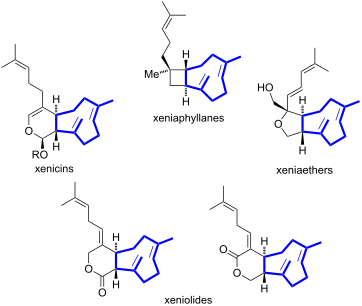
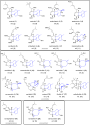
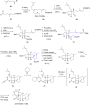
- iodide 97. The following palladium-catalyzed B-alkyl Suzuki–Miyaura cross coupling between the borane derived from alkene 98 and vinyl iodide 97 furnished a Z-configured alkene. Deprotection of the trimethylsilyl ether then afforded alcohol 99. A rhodium(II)-catalyzed O–H insertion reaction of the
- -membered carbocycle was realized via a B-alkyl Suzuki–Miyaura cross-coupling reaction. Optimization studies of this key ring closure with different protecting groups on the lactol functionality revealed methyl acetal 135 as the most efficient substrate for this transformation. The challenging key step was







Half-sandwich nickel(II) complexes bearing 1,3-di(cycloalkyl)imidazol-2-ylidene ligands
Beilstein J. Org. Chem. 2015, 11, 2171–2178, doi:10.3762/bjoc.11.235
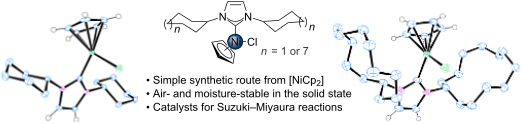
- . The new species were fully characterised using methods including NMR spectroscopy and X-ray crystallography. When tested in model Suzuki–Miyaura cross-coupling reactions, these complexes were found to be active for the cross-coupling of aryl bromides and aryl chlorides. Keywords: catalysis; cross
- NHC·HCl salt, rendering these species highly accessible (Scheme 1b) [10]. After the initial work by Cowley and Jones, various other researchers have disclosed complexes of this form and tested them in cross-coupling reactions such as Buchwald–Hartwig amination [11], Suzuki–Miyaura cross-coupling [12], and
- )] complexes in Suzuki–Miyaura cross-coupling reactions of 4’-bromoacetophenone and 4’-chloroacetophenone with phenylboronic acid (Scheme 4) [12]. It was therefore decided to study these reactions as part of our preliminary evaluation of these new complexes as potential pre-catalysts for cross-coupling


The simple production of nonsymmetric quaterpyridines through Kröhnke pyridine synthesis
Beilstein J. Org. Chem. 2015, 11, 1781–1785, doi:10.3762/bjoc.11.193

- pathway [17][20], or a Suzuki–Miyaura cross-coupling reaction [21]. The use of triazine derivatives (which under particular conditions undergo an inverse Diels–Alder reaction) can also produce oligopyridines [22]. On the other hand, there are a limited number of reports dealing with the preparation of


Pyridine-promoted dediazoniation of aryldiazonium tetrafluoroborates: Application to the synthesis of SF5-substituted phenylboronic esters and iodobenzenes
Beilstein J. Org. Chem. 2015, 11, 1494–1502, doi:10.3762/bjoc.11.162
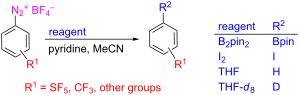
- . Starting from aniline derivative 1b, a one pot diazotization–borylation sequence using different acids afforded the corresponding borylated product 2b in good yields (Table 3). Suzuki–Miyaura cross-coupling reactions of boronates 2a and 2b with aryl iodides using a simple system without any optimization


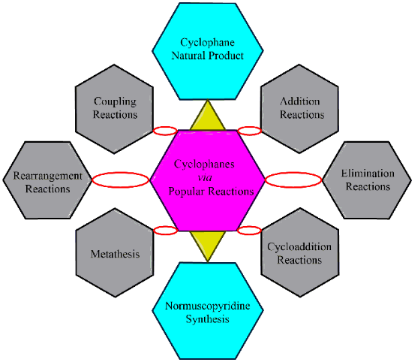
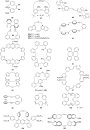
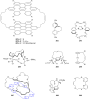
Selected synthetic strategies to cyclophanes
Beilstein J. Org. Chem. 2015, 11, 1274–1331, doi:10.3762/bjoc.11.142






Weakly nucleophilic potassium aryltrifluoroborates in palladium-catalyzed Suzuki–Miyaura reactions: relative reactivity of K[4-RC6F4BF3] and the role of silver-assistance in acceleration of transmetallation
Beilstein J. Org. Chem. 2015, 11, 608–616, doi:10.3762/bjoc.11.68
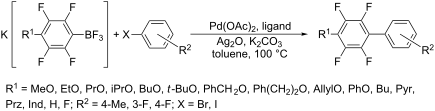
- continuation of systematic research of the Suzuki–Miyaura cross-coupling reaction of weakly nucleophilic organotrifluoroborates we report here the study of the relative reactivity of K[4-RC6F4BF3] in the Pd-catalyzed reactions with some aryl bromides and iodides in the presence of Ag2O. The borates were chosen
- ability to transmetallation, to coordinate to the organoboronic acid with the three-coordinated boron atom to ArPdL2OH and subsequent transmetallation (Scheme 1). However, some experimental facts indicate the multilateral role of silver(I) compounds AgmY in the acceleration of the Suzuki–Miyaura cross
- -coupling. Beside generation of ArPdLnOH, AgmY may act as a Lewis acid producing complex [RPdLn][XAgmY] with a highly electrophilic cation. The reactions often are performed in polar aprotic solvents (MeCN, THF, acetone) and the complexes exist in solutions as solvates [RPdLn(solv.)][XAgmY]. Some complexes


A novel 4-aminoantipyrine-Pd(II) complex catalyzes Suzuki–Miyaura cross-coupling reactions of aryl halides
Beilstein J. Org. Chem. 2014, 10, 2821–2826, doi:10.3762/bjoc.10.299
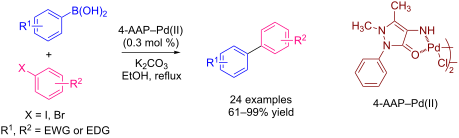
- 58030, tel.: +52 443 326 5790; fax: +52 443 326 5788 10.3762/bjoc.10.299 Abstract A simple and efficient catalytic system based on a Pd complex of 4-aminoantipyrine, 4-AAP–Pd(II), was found to be highly active for Suzuki–Miyaura cross-coupling of aryl iodides and bromides with phenylboronic acids under
- ppm, with its integration indicating one proton. This result suggests to us that the palladium interacts with the carbonyl and amine groups of the pyrazole ring of 4-AAP. The synthesized 4-AAP–Pd(II) complex was used to carry out all palladium-catalyzed Suzuki–Miyaura cross-coupling reactions


Solution processable diketopyrrolopyrrole (DPP) cored small molecules with BODIPY end groups as novel donors for organic solar cells
Beilstein J. Org. Chem. 2014, 10, 2683–2695, doi:10.3762/bjoc.10.283
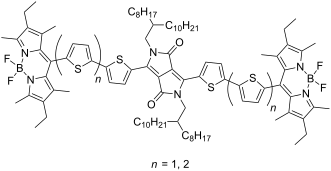
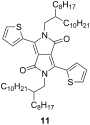
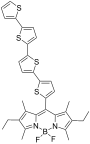
- synthesise 6. Whereas the synthesis of 6 was achieved in 33% yield, the yield decreased to 12% when the derivative with two thiophenes was prepared [47]. The BODIPY-DPP-BODIPY triads (9 and 10) were synthesised via Suzuki–Miyaura cross-coupling by reaction of the functionalised DPP core 8 [48] with the




Aryl substitution of pentacenes
Beilstein J. Org. Chem. 2014, 10, 1692–1705, doi:10.3762/bjoc.10.178
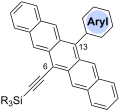
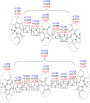
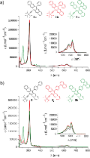
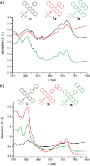
- nucleophilic addition (yields given are for the pentacene product 3, over the two steps from either 4a or 4b). Functionalization of iodoaryl pentacene 3g using the Suzuki–Miyaura cross-coupling reaction. Optical properties of pentacenes 3a–k, unsubstituted pentacene (PEN), and TIPSPc. Thermal properties of a




Atherton–Todd reaction: mechanism, scope and applications
Beilstein J. Org. Chem. 2014, 10, 1166–1196, doi:10.3762/bjoc.10.117

- reaction produced the arylstannane in 75 to 90% yield [88]. The Suzuki–Miyaura cross-coupling reaction is another type of reaction with the phosphate group acting as a leaving group. As exemplified in Scheme 30, the aryl dialkyl phosphate was produced in good yield by an AT reaction [89]. Then, this




4-Hydroxy-6-alkyl-2-pyrones as nucleophilic coupling partners in Mitsunobu reactions and oxa-Michael additions
Beilstein J. Org. Chem. 2014, 10, 1159–1165, doi:10.3762/bjoc.10.116

- could find only limited precedent for this procedure being used previously in this way [15][16][17]. In our case, we were able to further modify the resulting pyronyl ether forming a trisubstituted enol ether, which then underwent a Suzuki–Miyaura cross-coupling or direct arylation-type reaction. As


Palladium-catalysed cross-coupling reaction of ultra-stabilised 2-aryl-1,3-dihydro-1H-benzo[d]1,3,2-diazaborole compounds with aryl bromides: A direct protocol for the preparation of unsymmetrical biaryls
Beilstein J. Org. Chem. 2014, 10, 1107–1113, doi:10.3762/bjoc.10.109
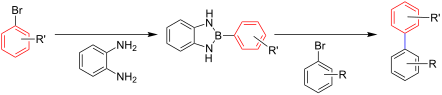
- absorption and fluorescence characteristics. Here we describe the first palladium-catalysed Suzuki–Miyaura cross-coupling reaction of easily accessible and ultra-stabilised 2-aryl-1,3-dihydro-1H-benzo[d]1,3,2-diazaborole derivatives with various aryl bromides. Aryl bromides bearing electron-withdrawing
- [1][2][3][4][5]. Amongst them, the Suzuki–Miyaura cross-coupling reaction of aryl halides/triflates and organoboron compounds is one of the most documented and versatile cross-coupling reaction in the literature [6]. The use of organoboron compounds 1, 2 and 3 (Figure 1) as nucleophilic coupling
- partners in the Suzuki–Miyaura cross-coupling reaction is particularly attractive due to the non-toxicity of the byproducts, the ease with which they are transmetalated and their high stability towards air and moisture, which are the key features for coupling reactions [7]. On one hand, structural diverse


Clean and fast cross-coupling of aryl halides in one-pot
Beilstein J. Org. Chem. 2014, 10, 897–901, doi:10.3762/bjoc.10.87
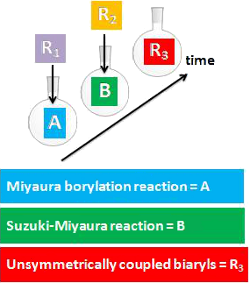
- and the method does not require the use of inert conditions. The use of non-toxic isopropanol or 2-butanol as reaction solvent further adds to the environmental benefits of this new green synthetic methodology. Keywords: borylation; SiliaCat; Suzuki–Miyaura; cross-coupling; one-pot; Findings
- Affording valued biaryls and heterobiaryls, namely ubiquitous chemical moieties in pharmaceuticals, natural products, photoactive species and many other functional molecules, the Suzuki–Miyaura cross-coupling reaction is widely employed by the fine chemicals and pharmaceutical industries [1]. The reaction


Columnar/herringbone dual crystal packing of pyrenylsumanene and its photophysical properties
Beilstein J. Org. Chem. 2014, 10, 841–847, doi:10.3762/bjoc.10.80
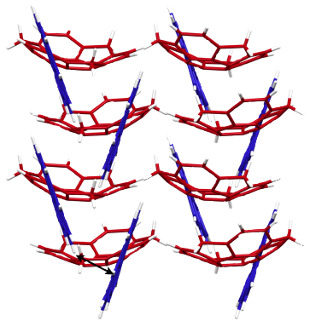
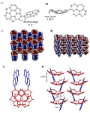
- Pyrenylsumanene (1) was prepared from iodosumanene [8] and pyreneboronic acid in 84% yield through a Suzuki–Miyaura cross-coupling reaction (Scheme 1). The preparation of iodosumanene was improved by using a catalytic amount of scandium (III)triflate (Sc(OTf)3) with 6,6’-diiodo-2,2’-dimethoxy-1,1’-binaphthol (DIH




Imidazole as a parent π-conjugated backbone in charge-transfer chromophores
Beilstein J. Org. Chem. 2012, 8, 25–49, doi:10.3762/bjoc.8.4
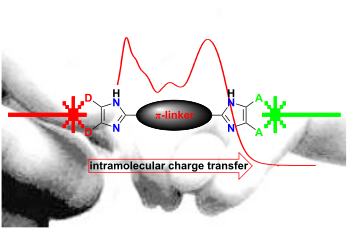
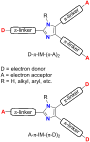
- –Miyaura cross-coupling reactions [107] on 2-bromoimidazole 2 (Scheme 2) as three series a, b, and c according to the type of the used donor D (H, OMe, and NMe2). The π-conjugated path was systematically varied and enlarged in order to study its influence on the chromophore polarizability. The chromophores
- on alkoxysilanes [105][106]. This new material is to be applied as an electro-optic modulator. Our synthetic efforts in the field of 4,5-dicyanoimidazole-derived chromophores began with the initial set of push–pull molecules 88–93 (Figure 16; [30]). Chromophores 88–93 were synthesized by Suzuki




Recent advances in direct C–H arylation: Methodology, selectivity and mechanism in oxazole series
Beilstein J. Org. Chem. 2011, 7, 1584–1601, doi:10.3762/bjoc.7.187
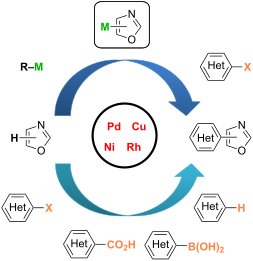
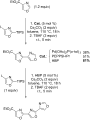
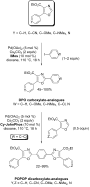
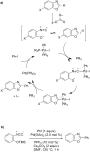
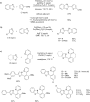
- direct (hetero)arylation of (hetero)arenes is an attractive alternative to traditional Kumada, Stille, Negishi and Suzuki–Miyaura cross-coupling reactions, notably as it avoids the prior preparation and isolation of (hetero)arylmetals. Developments of this methodology in the oxazole series are reviewed