Search results
Search for "aromatic rings" in Full Text gives 256 result(s) in Beilstein Journal of Organic Chemistry. Showing first 200.
An alternative C–P cross-coupling route for the synthesis of novel V-shaped aryldiphosphonic acids
Beilstein J. Org. Chem. 2022, 18, 1518–1523, doi:10.3762/bjoc.18.160
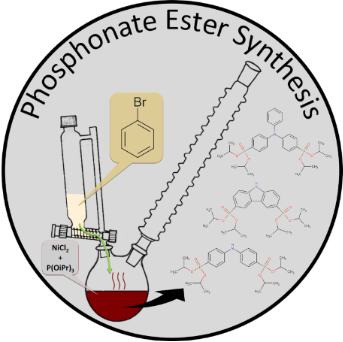
- construction of metal phosphonate frameworks, two main considerations were made when selecting these substrates with regards to rigidity and geometry (Figure S1, Supporting Information File 1). In the compounds considered here, rigidity is ensured by the network of sp2-hybridized carbon atoms, or aromatic
- rings, and is important to ensure stability in the potential MOF structures derived from the proposed linkers. The geometry of these linkers, termed as V-shaped, was selected to try and move away from the pillared-layered structures that are obtained when using linear diphosphonate linkers, which are


Isolation and biosynthesis of daturamycins from Streptomyces sp. KIB-H1544
Beilstein J. Org. Chem. 2022, 18, 1009–1016, doi:10.3762/bjoc.18.101
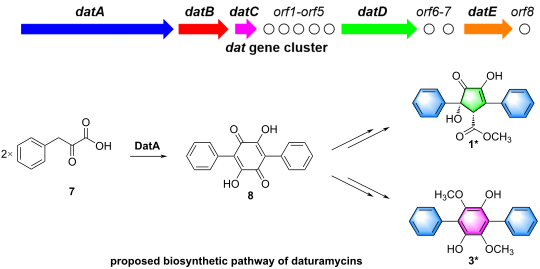
- HMBC signals (H-2’ to C-1’, C-4’, C-6’; H-3’ to C-1’, C-5’; H-4’ to C-2’, C-6’ ; H-5’ to C-1’, C-3’; H-2’’ to C-1’’, C-4’’, C-6’’; H-3’’ to C-1’’, C-5’’; H-4’’ to C-2’’, C-6’’, and H-5’’ to C-1’’, C-3’’) of compound 1 indicated the presence of two mono-substituted aromatic rings. The cross-peaks from H


Automated grindstone chemistry: a simple and facile way for PEG-assisted stoichiometry-controlled halogenation of phenols and anilines using N-halosuccinimides
Beilstein J. Org. Chem. 2022, 18, 999–1008, doi:10.3762/bjoc.18.100
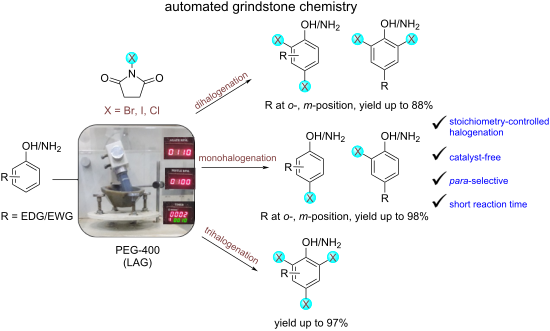
- observed for 4-phenylphenol indicating this electrophilic halogenation is selective to electron-rich aromatic rings only (product 2f, Scheme 3). Also, aromatic halogenation prevails over α-halogenation of a ketomethyl group as was demonstrated by the formation of product 2m as the sole product for the




Introducing a new 7-ring fused diindenone-dithieno[3,2-b:2',3'-d]thiophene unit as a promising component for organic semiconductor materials
Beilstein J. Org. Chem. 2022, 18, 944–955, doi:10.3762/bjoc.18.94
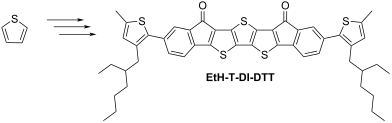
- s−1. Keywords: dithienothiophene (DTT); fused ring system; organic field-effect transistor (OFET); organic semiconductor; thienoacene; Introduction In recent years, organic molecules with several fused aromatic rings have gained much attention. Fusing aromatic rings leads to planar structures


Anti-inflammatory aromadendrane- and cadinane-type sesquiterpenoids from the South China Sea sponge Acanthella cavernosa
Beilstein J. Org. Chem. 2022, 18, 916–925, doi:10.3762/bjoc.18.91
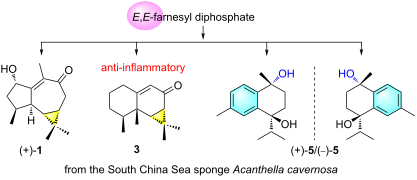
- yet been discovered. Phenolic sesquiterpenoids, for instance, illudacetalic acid and illudinine from Omphalotus olearius, were also discovered. Based on bioinformatics analysis, their aromatic rings were proposed to be constructed by putative P450 enzymes or oxidoreductase [33]. The Huang group






Synthesis of α-(perfluoroalkylsulfonyl)propiophenones: a new set of reagents for the light-mediated perfluoroalkylation of aromatics
Beilstein J. Org. Chem. 2022, 18, 788–795, doi:10.3762/bjoc.18.79
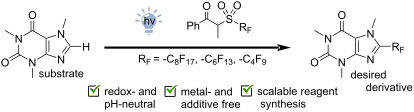
- perfluorinated chains into aromatic rings have been developed since the first reports of such transformation by George Tiers in 1960, and McLoughlin and Thrower in 1969 [2][3]. Most approaches have made extensive use of organometallic chemistry, radical initiators, photocatalysis, electrochemistry, and more
- of aromatics, for which trifluoromethylation was also possible in good to high yields for electron-rich aromatic rings [10]. In this protocol, inspired by Norrish type I reactions and the elimination of β-substituents after ketone photoexcitation [11][12][13], a series of reagents containing an α


Recent advances in the asymmetric phosphoric acid-catalyzed synthesis of axially chiral compounds
Beilstein J. Org. Chem. 2021, 17, 2729–2764, doi:10.3762/bjoc.17.185
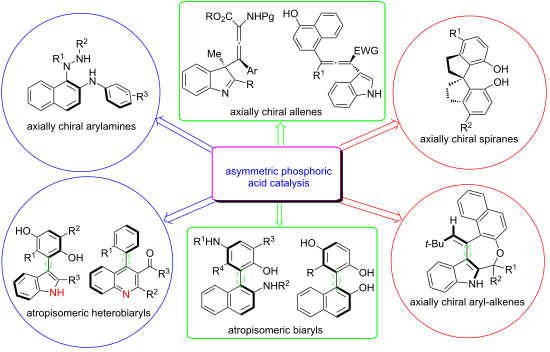
- electronic properties of the substituents on the aromatic rings of the indole have limited influence on the reactivity and remarkable effects on the enantioselectivity. For example, in the case of indole 20b, the enantioselectivity was drastically reduced due to steric hindrance present at the 2-position of
- reaction. Moreover, both electron-withdrawing and donating groups on the aromatic rings of propargyl alcohols or azlactones smoothly participated in the asymmetric 1,8-conjugate addition and afforded the corresponding chiral allenes in good yields with high enantioselectivity. The control experiments




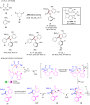


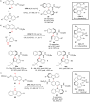


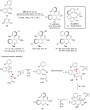


The ethoxycarbonyl group as both activating and protective group in N-acyl-Pictet–Spengler reactions using methoxystyrenes. A short approach to racemic 1-benzyltetrahydroisoquinoline alkaloids
Beilstein J. Org. Chem. 2021, 17, 2716–2725, doi:10.3762/bjoc.17.183
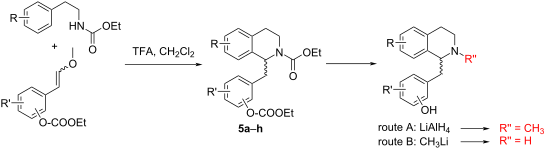
- ), and identified 1-benzyl-1,2,3,4-tetrahydroisoquinolines bearing phenoxy and benzyloxy substituents (SG-005, SG-094; for structures of bioactive compounds mentioned in this text, see Figure S1 in Supporting Information File 1) on both aromatic rings as potent blockers with promising antitumor activity
- -substituted 1-benzyl-1,2,3,4-tetrahydroisoquinolines (SG-005 and SG-094) as potent lead structures. For activity on TPC2 as well as tumor cells, these compounds were preferably bearing phenoxy and benzyloxy substituents on both aromatic rings, however, some analogues missing this “aromatic decoration
- antiproliferative effect from this and a previous investigation (N-methylcoclaurine (1)) have in common a 4-hydroxybenzyl residue at C-1. These results indicate that the „aromatic decoration“ of benzylisoquinolines (phenoxy or benzyloxy residues on both aromatic rings) [15] is also important for antiproliferative


Synthesis of highly substituted fluorenones via metal-free TBHP-promoted oxidative cyclization of 2-(aminomethyl)biphenyls. Application to the total synthesis of nobilone
Beilstein J. Org. Chem. 2021, 17, 2668–2679, doi:10.3762/bjoc.17.181
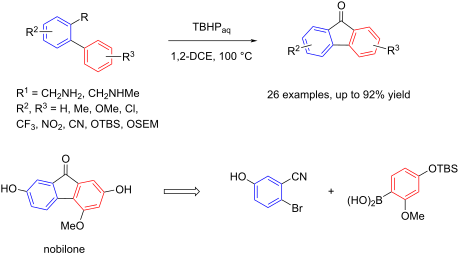
- Suzuki cross-coupling reactions, followed by reduction or reductive amination. The oxidative cyclization conditions are compatible with many functional groups on the aromatic rings (methoxy, chloro, cyano, nitro, and phenol protecting groups like TBS and SEM – but not benzyl and methylenedioxy


Recent advances in organocatalytic asymmetric aza-Michael reactions of amines and amides
Beilstein J. Org. Chem. 2021, 17, 2585–2610, doi:10.3762/bjoc.17.173
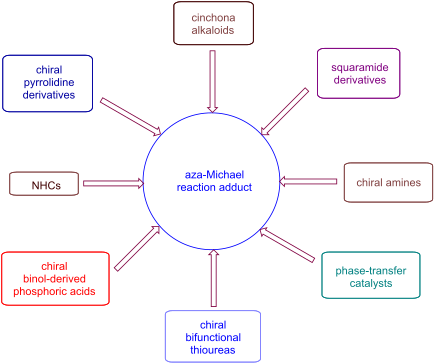
- formed Michael adduct (Scheme 1) [25]. The proposed catalytic cycle involved generation of the active complex through hydrogen bonding between catalyst and aniline followed by interaction with chalcone via π–π stacking of aromatic rings and hydrogen bonding leading to the Michael adduct. Likewise, Lee et


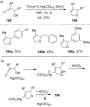
Advances in mercury(II)-salt-mediated cyclization reactions of unsaturated bonds
Beilstein J. Org. Chem. 2021, 17, 2348–2376, doi:10.3762/bjoc.17.153
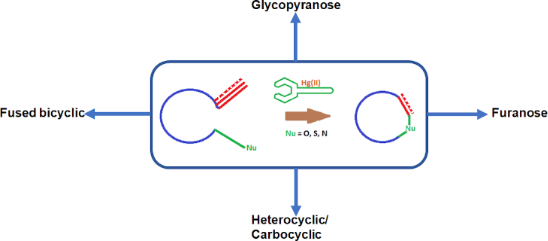
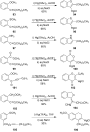
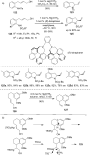
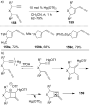
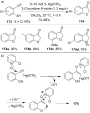
- literature. Utilization of Hg(II) salts in the intramolecular cationic cyclization of olefinic, acetylenic, and allenic substrates having aromatic rings, nucleophiles, and heteroatoms in the neighborhood were well documented. Hg(II) reagents were also often employed in the important cyclization step during












Phenolic constituents from twigs of Aleurites fordii and their biological activities
Beilstein J. Org. Chem. 2021, 17, 2329–2339, doi:10.3762/bjoc.17.151
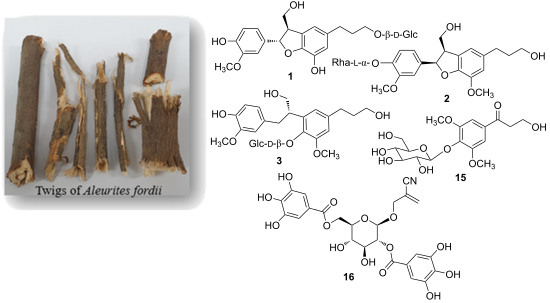
- positive ion HRESIMS. The 1H NMR spectrum of 16 (Table 2) showed two 1,3,4,5-tetrasubstituted aromatic rings [δH 7.10 (s, 2H, H-2′′ and H-6′′), and 7.11 (s, 2H, H-2′′′ and H-6′′′)], a terminal olefinic methylene [δH 5.97 (br s, 1H, H-3a), and 5.95 (br s, 1H, H-3b)], two oxygenated methylenes [δH 4.34 (dt


Transition-metal-free intramolecular Friedel–Crafts reaction by alkene activation: A method for the synthesis of some novel xanthene derivatives
Beilstein J. Org. Chem. 2021, 17, 2203–2208, doi:10.3762/bjoc.17.142
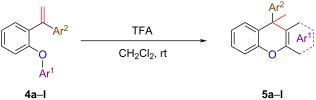
- phenyl bromide to 2-phenoxybenzaldehyde. As a result, phenoxy secondary alcohol 2a containing three aromatic rings was obtained. In the third step, 2a was oxidized and the ketone derivative 3a was obtained in high yield. The oxidation reaction was carried out using PCC in DCM at room temperature. In the


Recent advances in the syntheses of anthracene derivatives
Beilstein J. Org. Chem. 2021, 17, 2028–2050, doi:10.3762/bjoc.17.131
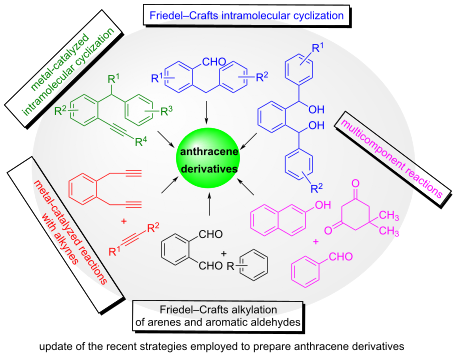
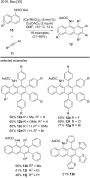
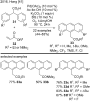
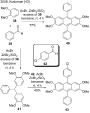
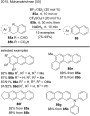
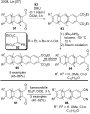
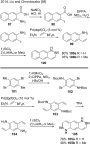
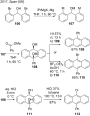
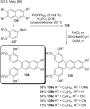
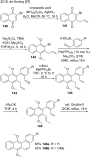
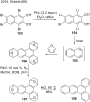
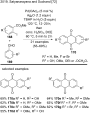
- formation, and further decarboxylative aromatization. The authors used several diphenyl carboxylic acids bearing electron-donating and electron-withdrawing groups on the aromatic rings to produce the corresponding substituted anthracenes, such as compounds 33a–f, in good yields [41]. Recently, Kim and co















Electron-rich triarylphosphines as nucleophilic catalysts for oxa-Michael reactions
Beilstein J. Org. Chem. 2021, 17, 1689–1697, doi:10.3762/bjoc.17.117
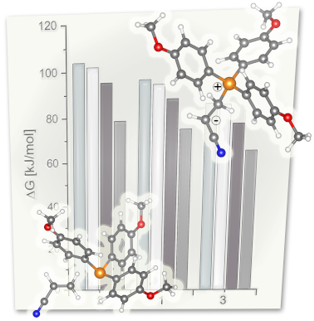
- aromatic rings with methoxy groups increases the pKa value from 1.31 (TPP) to 4.20 (TMTPP) (Figure 1). Methyl cation affinities (MCA) which can be used as descriptors for the nucleophilicity of a compound were calculated by Lindner et al. who suggested TMTPP (651.0 kJ/mol) to be a stronger Lewis base than


Breaking paracyclophane: the unexpected formation of non-symmetric disubstituted nitro[2.2]metaparacyclophanes
Beilstein J. Org. Chem. 2021, 17, 1518–1526, doi:10.3762/bjoc.17.109
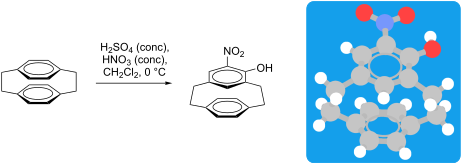
- ]metaparacyclophane and a cyclohexadienone cyclophane. Keywords: cyclophane; metaparacyclophane; nitration; paracyclophane; rearrangement; Introduction Cyclophanes have been described as having bent and battered benzene rings [1] due to a structure that involves one, or more, aromatic rings linked by aliphatic
- archetypal cyclophane, with a strong interaction between the two aromatic rings, but it is readily available, being a ‘dimer’ for the polymer parylene [6][7]. Over the last twenty years, there has been a resurgence in interest in this compound as a scaffold for the synthesis of asymmetric catalysts, energy
- materials, and as the basis of the study of through-space conjugation [2][8][9][10][11][12][13][14][15][16]. There are fewer studies of [2.2]metacyclophane (2) and its derivatives. This is probably related to a lack availability as well as the reduced interaction between the aromatic rings [17]. But the odd




N-tert-Butanesulfinyl imines in the asymmetric synthesis of nitrogen-containing heterocycles
Beilstein J. Org. Chem. 2021, 17, 1096–1140, doi:10.3762/bjoc.17.86



Helicene synthesis by Brønsted acid-catalyzed cycloaromatization in HFIP [(CF3)2CHOH]
Beilstein J. Org. Chem. 2021, 17, 396–403, doi:10.3762/bjoc.17.35
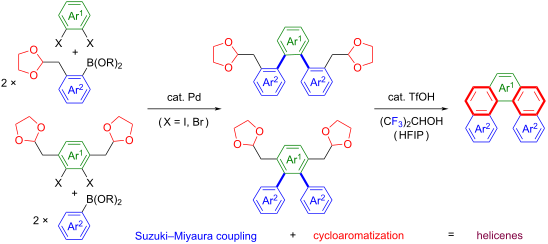
- gram-scale syntheses of higher-order helicenes, double helical helicenes, and heterohelicenes. Keywords: acid; catalyst; cyclization; fluoroalcohol; helicenes; Introduction Helicenes are a class of polycyclic aromatic hydrocarbons (PAH) that consist of ortho-fused aromatic rings arranged in a helical
- which heterol rings were set as central aromatic rings (Ar1) (Scheme 3, route a and Scheme 6b). As in the original strategy (Scheme 3, route a), coupling of 3,4-dibromofuran (13a), 3,4-dibromothiophene (13b), and 3,4-dibromo(N-tosyl)pyrrole (13c) with phenylboronic acid ester 3 bearing an acetal moiety
- is suitable for mass production of helicenes not only because multiple aromatic rings can be constructed at the same time but also because precursors can be easily prepared from commercially available compounds. Therefore, further progress can be made in applied research on helicenes as organic


CF3-substituted carbocations: underexploited intermediates with great potential in modern synthetic chemistry
Beilstein J. Org. Chem. 2021, 17, 343–378, doi:10.3762/bjoc.17.32
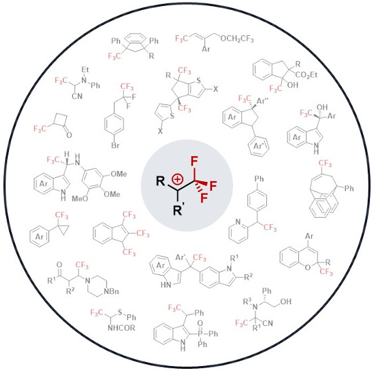
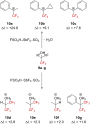
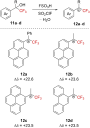
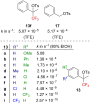
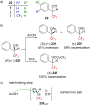
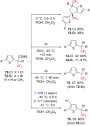
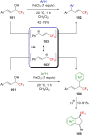
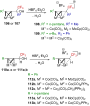
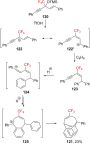
- –Crafts arylation at the C4-position led to derivatives 76. In this latter case, a two-step one-pot process was developed in order to access derivatives bearing two different aromatic rings. Mechanistic investigations were then undertaken by in situ low-temperature NMR experiments, allowing the

















The fluorescence of a mercury probe based on osthol
Beilstein J. Org. Chem. 2021, 17, 22–27, doi:10.3762/bjoc.17.3
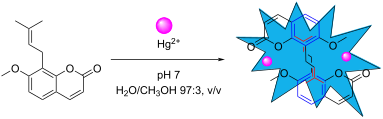
- the two aromatic rings so that the protons Hf, Hh, and Hi on the branched chain were in the shielding region of the benzene ring and their signals shifted to a higher field. When the protons Hh and Hi of the two methyl groups were in the shielding region of the aromatic ring, the chemical shifts moved


Synthesis, crystal structures and properties of carbazole-based [6]helicenes fused with an azine ring
Beilstein J. Org. Chem. 2021, 17, 11–21, doi:10.3762/bjoc.17.2
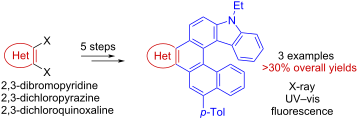
- ). Keywords: azine-fused helicenes; carbazole-based [6]helicenes; helical structures; Introduction [n]Helicenes are polycyclic aromatic molecules with nonplanar screw-shaped helical skeletons formed by n-ortho-fused benzene or other aromatic rings. Their helical structure is a consequence of the steric



Synthesis of tetrafluorinated piperidines from nitrones via a visible-light-promoted annelation reaction
Beilstein J. Org. Chem. 2020, 16, 3104–3108, doi:10.3762/bjoc.16.260
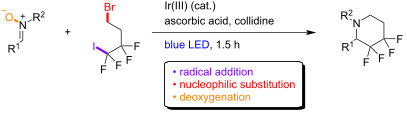
- conditions. In the previous research on the radical addition to nitrones we sometimes encountered a fluoroalkylation of the aromatic rings, if an excess of the fluorinated alkyl iodide was used [22][23][24]. This prompted us to attempt the reaction with an equimolar amount of the iodide 2b, which resulted in


Metal-free synthesis of biarenes via photoextrusion in di(tri)aryl phosphates
Beilstein J. Org. Chem. 2020, 16, 3008–3014, doi:10.3762/bjoc.16.250
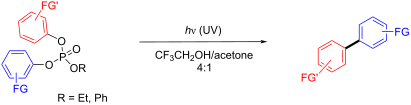
- two aromatic rings to direct the selective Ar–Ar bond formation (Scheme 1b) [41][42][43]). In this case, N-methyl sulfonamides were the elective substrates albeit a part of the tether is maintained in the final structure. This is common even for other related metal-free biaryl syntheses exploiting the



Naphthalonitriles featuring efficient emission in solution and in the solid state
Beilstein J. Org. Chem. 2020, 16, 2960–2970, doi:10.3762/bjoc.16.246
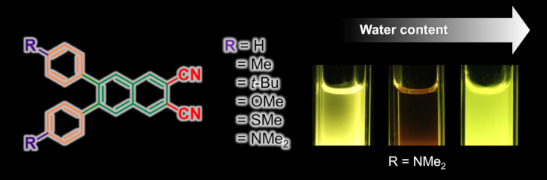
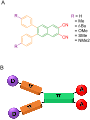
- aromatic rings that emit efficiently in very dilute solutions. However, the photoluminescence quantum yields tend to decrease or even fully quench in the aggregated or solid states, due to the well-known effect of aggregation caused quenching (ACQ) [9][10]. This is mainly related to intersystem crossing



Thermodynamic and electrochemical study of tailor-made crown ethers for redox-switchable (pseudo)rotaxanes
Beilstein J. Org. Chem. 2020, 16, 2576–2588, doi:10.3762/bjoc.16.209

- hand, additional π–π-interactions of the phenyl ring in A1·PF6 to the crown ether aromatic rings favor the complex formation. On the other hand, the flexibility of the alkyl substituent in A2·PF6 is diminished upon complexation, inducing a larger entropic penalty visible in the overall more negative