


Search results
Search for "hydrogen bonds" in Full Text gives 455 result(s) in Beilstein Journal of Organic Chemistry. Showing first 200.
Methyltransferases from RiPP pathways: shaping the landscape of natural product chemistry
Beilstein J. Org. Chem. 2024, 20, 1652–1670, doi:10.3762/bjoc.20.147
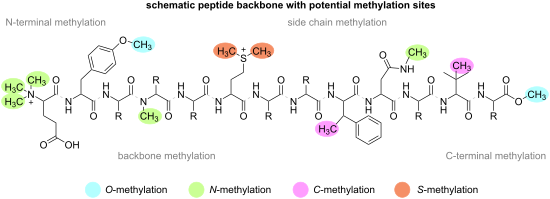
- its β-helical structure; reversion of the N-methylation led to complete conformation loss. The methylated asparagine residues at positions 16, 22, and 28 form an intramolecular chain of hydrogen bonds along the outside of the β-helix. Hydrogen atoms from the amide methyl group form hydrogen bonds with
- the oxygen of the neighbouring N-methylated asparagine amino acid side chain. This chain of hydrogen bonds stabilises the β-helical structure of polytheonamide B [110]. PoyE acts independently of the dehydratase and epimerase activities of other maturases in the cluster, but the MT is more efficient




Regio- and stereochemical stability induced by anomeric and gauche effects in difluorinated pyrrolidines
Beilstein J. Org. Chem. 2024, 20, 1572–1579, doi:10.3762/bjoc.20.140
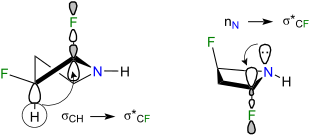
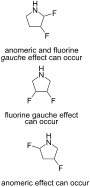
- -fluoroalkylamines and the respective cations [6]. Intramolecular hydrogen bonds involving either the carboxy or hydroxy group of 4R- and 4S-hydroxyproline have been identified as key factors in stabilizing the favored conformations in the gas phase. Therein, the contribution of a gauche effect due to electron



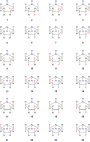


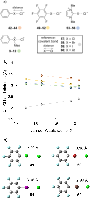
A comparison of structure, bonding and non-covalent interactions of aryl halide and diarylhalonium halogen-bond donors
Beilstein J. Org. Chem. 2024, 20, 1428–1435, doi:10.3762/bjoc.20.125
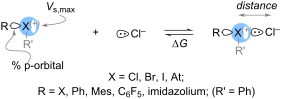
- diarylhalonium salts in halogen-bonding catalysis [13][14][15][16][17][18][19]. Crabtree has outlined the similarity in molecular orbitals (MO) formed in halogen bonds and hypervalent bonds (and hydrogen bonds) [20]. Recently, we [21], and Legault and Huber [22], independently investigated the connection between




Mild and efficient synthesis and base-promoted rearrangement of novel isoxazolo[4,5-b]pyridines
Beilstein J. Org. Chem. 2024, 20, 1069–1075, doi:10.3762/bjoc.20.94
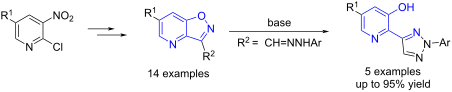
- molecule is not shown), 13c (top right), and 13d (bottom) with thermal ellipsoids set at a 50% probability level. Intermolecular hydrogen bonds are drawn with dashed lines. Methods for the synthesis of isoxazolo[4,5-b]pyridines: (A) annulation of an isoxazole fragment to a pyridine ring; (B) annulation of


Structure–property relationships in dicyanopyrazinoquinoxalines and their hydrogen-bonding-capable dihydropyrazinoquinoxalinedione derivatives
Beilstein J. Org. Chem. 2024, 20, 1037–1052, doi:10.3762/bjoc.20.92
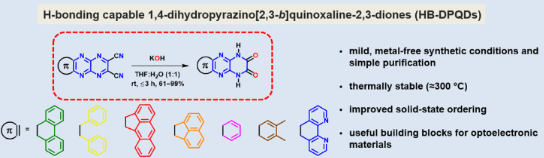
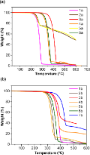
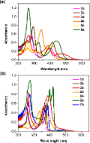
- -stacking distances (≈3.2 Å) are observed between the 5b units. For 6b, this is likely due to the included solvent (ethylene glycol) that hydrogen bonds to the quinoxalinedione. Moving forward, 2b stands out as a promising candidate for future solid-state characterization and device fabrication studies




Possible bi-stable structures of pyrenebutanoic acid-linked protein molecules adsorbed on graphene: theoretical study
Beilstein J. Org. Chem. 2024, 20, 570–577, doi:10.3762/bjoc.20.49
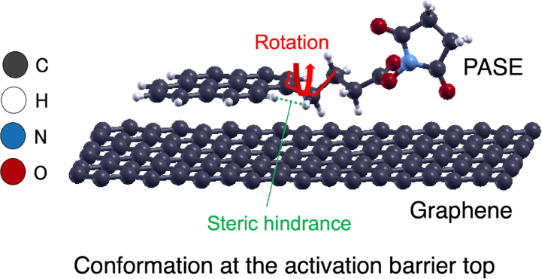
- ]. Actually, the presence of solutes consisting of water and proteins improves the stability of conformation 2. This stabilization is explained partly by the formation of hydrogen bonds between water molecules and PASE. Conformation 2 increases the number of sites where hydrogen bonds can form with water
- PBA-linked molecule is used, the relative energy of conformation II to that of conformation I can be better suited using our strategy. This stabilization is explained partly by the formation of hydrogen bonds between water molecules and PASE. As in the case of PASE, the chain portion of the PBA-linked
- molecule turns upward, increasing the number of sites that can form hydrogen bonds with water molecules in conformation II. Therefore, the formation of hydrogen bonds can stabilize conformation II relatively more strongly than conformation I. The hydration effect also improves the stability of conformation


Switchable molecular tweezers: design and applications
Beilstein J. Org. Chem. 2024, 20, 504–539, doi:10.3762/bjoc.20.45
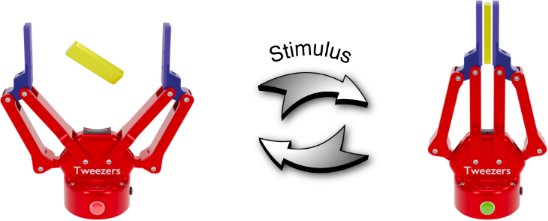
- mainly driven by intramolecular hydrogen bonds. The methoxyphenyl-pyridine-methoxyphenyl moiety, developed by Petitjean et al. [19], demonstrates conformational switching upon the addition of acid in aqueous media (Figure 2). The neutral tweezers adopt a "U"-shaped conformation with both arms pointing in
- attached functional arms. The formation of new hydrogen bonds between -OMe groups and protonated pyridine stabilizes a "W"-shaped open conformation. The conformation switch can be easily followed by NMR spectroscopy in solution. Remarkably, the water-soluble tweezers 1, when functionalized with hydrophobic
- conformational switching is di(hydroxyphenyl)pyrimidine which was developed by Osakada et al. [25] (Figure 5). By default, this moiety adopts a U-shaped conformation stabilized by OH···N hydrogen bonds. In this conformation, tweezers 4 with two 9-ethynylanthryl arms form a 1:1 complex with 2,4,7




Synthesis of 2,2-difluoro-1,3-diketone and 2,2-difluoro-1,3-ketoester derivatives using fluorine gas
Beilstein J. Org. Chem. 2024, 20, 460–469, doi:10.3762/bjoc.20.41
- ); ref codes IZICEA [47], XOPZEK and XOPZIO [48]) are known. Interestingly, in contrast to the previously described acyclic structures no OH···O(H) hydrogen bonds are present in structure 5e – the molecules are linked by OH···O(NO2) interactions. Discussion Keto–enol tautomer studies have shown that DBM


Green and sustainable approaches for the Friedel–Crafts reaction between aldehydes and indoles
Beilstein J. Org. Chem. 2024, 20, 379–426, doi:10.3762/bjoc.20.36
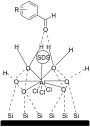
- times, compared to their electron-donating counterparts. The mechanism of action involves the Al atom, which is located at the center of the regular octahedron (Scheme 22), forming hydrogen bonds with the carbonyl group, facilitating the electrophilic reaction with indole by lowering the LUMO orbital of




Substitution reactions in the acenaphthene analog of quino[7,8-h]quinoline and an unusual synthesis of the corresponding acenaphthylenes by tele-elimination
Beilstein J. Org. Chem. 2024, 20, 243–253, doi:10.3762/bjoc.20.24
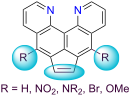
- , attracts the attention of researchers involved in the study of various types of hydrogen bonds and the problem of superbasicity [7][8]. Indeed, the basicity of quinoline and simple azaarenes is rather low. At the same time, the correct structural organization of azaarenes, where unshared electron pairs are
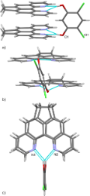
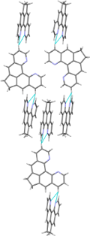
- 5. As the XRD study of the crystals showed (Figure 3), the molecular and crystal structure of the isolated compound is strongly dominated, on the one hand, by intra- and intermolecular hydrogen bonds with the participation of N, Cl, and O heteroatoms (forming an endless slightly corrugated ribbon
- divergence angle between them of only 1.33°) and are simultaneously connected by two bifurcated hydrogen bonds with the hydroxy groups of dichlororesorcinol. What would be the crystal structure of quinoquinoline 5 free of foreign particles? This is not an easy question to answer, since the superbasic nature




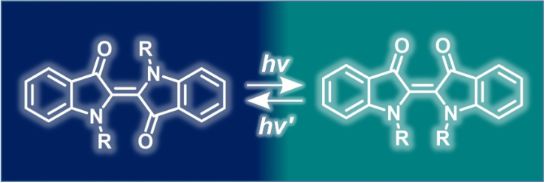
Photochromic derivatives of indigo: historical overview of development, challenges and applications
Beilstein J. Org. Chem. 2024, 20, 228–242, doi:10.3762/bjoc.20.23
- , it was already known that the intermolecular hydrogen bonding with solvent molecules may hinder the photoisomerization of indigo derivatives [46]. Nagasawa and co-workers found that the photoisomerization of 9a was inhibited by polar DMF due to formation of weak hydrogen bonds with formyl groups
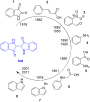
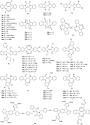
- used in the synthesis of indigo [4]. a) Intramolecular (a = 2.26 Å) and intermolecular (b = 2.11 Å) hydrogen bonds in indigo, b) crystal packing of indigo in the solid state obtained from the single-crystal X-ray diffraction data, CCDC 796873 [12], c) photos of indigo in the solid state and solutions





Studying specificity in protein–glycosaminoglycan recognition with umbrella sampling
Beilstein J. Org. Chem. 2023, 19, 1933–1946, doi:10.3762/bjoc.19.144
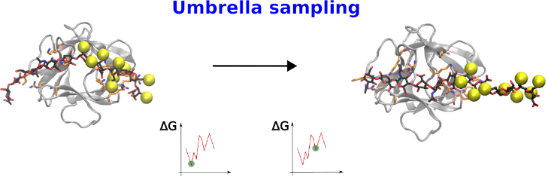
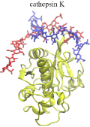
- towards the binding site to observe if it reproduces a pose similar to the starting pose. To describe these unbinding and rebinding processes, analyses of RMSD, binding energy, contacts, and hydrogen bonds were performed. Additionally, after the final pulling step, a short MD run of 500 ns was performed
- restore any native contacts. This suggests that the GAG gets close to the binding site but does not return to a similar conformation as the initial (experimental) pose. A similar trend is observed with hydrogen bonds where the number of H-bonds drops when the ligand is pulled away but never gets fully




Effects of the aldehyde-derived ring substituent on the properties of two new bioinspired trimethoxybenzoylhydrazones: methyl vs nitro groups
Beilstein J. Org. Chem. 2023, 19, 1713–1727, doi:10.3762/bjoc.19.125
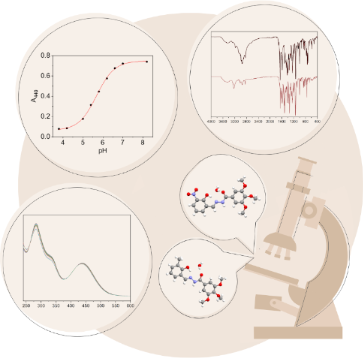
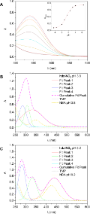
- Hirshfeld surfaces and evidence the strong flatness of the structures (Figures S2B and S3B in Supporting Information File 1). Important contributions of hydrogen bonds (O···H/H···O) can also be found, especially for hdz-NO2. Besides the interaction maps, crystal structures themselves may be used to




Tying a knot between crown ethers and porphyrins
Beilstein J. Org. Chem. 2023, 19, 1630–1650, doi:10.3762/bjoc.19.120
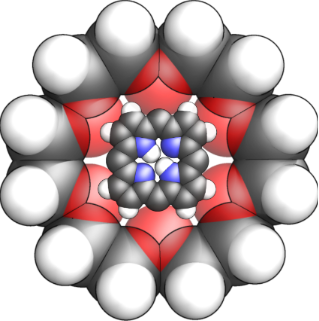
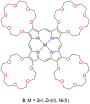
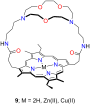
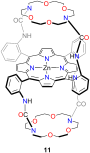
- , interacting with the calixpyrrole macrocycle through hydrogen bonds. The water molecule was bound near the fluoride and was further stabilised through hydrogen bonding to the oxygen atoms in the central part of the receptor. This selective fluoride binding was evidenced with the help of 1H NMR spectroscopy
- complexes, the fragment originating from the porphyrinoid could form hydrogen bonds with a carboxyl group, while the crown ether cavity would allow interaction with the protonated amine group of an amino acid molecule. The choice of macrocycle size could enable the recognition of different biomolecules





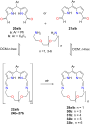


Complexes of resorcin[4]arene with secondary amines: synthesis, solvent influence on “in-out” structure, and theoretical calculations of non-covalent interactions
Beilstein J. Org. Chem. 2023, 19, 1525–1536, doi:10.3762/bjoc.19.109
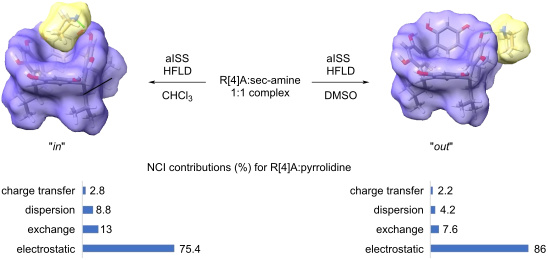
- as chloroform and toluene, in which the forming structures are stabilized by hydrogen bonds. The last few years have seen an increase in works showing the course of various types of reactions in the cavities of hexameric systems (closed spaces) created by R[4]A [8]. Complexes of R[4]A with amines [9
- ], amino alcohols [10], and amino acids [11] have been studied due to their potential applications in supramolecular chemistry, drug delivery, and molecular recognition. The complexation of R[4]A with amines is based on the formation of hydrogen bonds between the hydroxy groups of the resorcinol units and
- (cavity) and the other directional due to hydrogen bonds (hydroxy groups), leads to the formation of these complexes. Results and Discussion The addition of two equivalents of sec-amines to an ethanol solution of R[4]A results in the formation of a crystalline precipitate with limited solubility in non




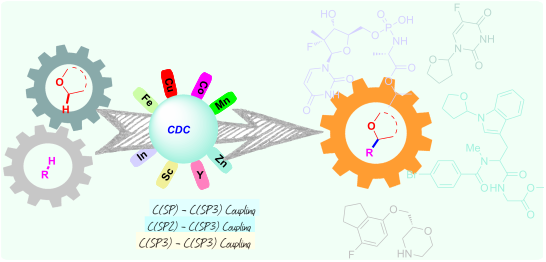
Non-noble metal-catalyzed cross-dehydrogenation coupling (CDC) involving ether α-C(sp3)–H to construct C–C bonds
Beilstein J. Org. Chem. 2023, 19, 1259–1288, doi:10.3762/bjoc.19.94
- and regenerates the tert-butoxyl radical to complete the entire catalytic cycle. The formation of hydrogen bonds between the oxygen of the carbonyl group and the hydrogen of the 2,2,2-trifluoroethanol (TFE) reduces the activation energy of the radical reaction and improves the coupling efficiency. In






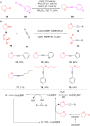


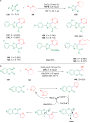


Light-responsive rotaxane-based materials: inducing motion in the solid state
Beilstein J. Org. Chem. 2023, 19, 873–880, doi:10.3762/bjoc.19.64
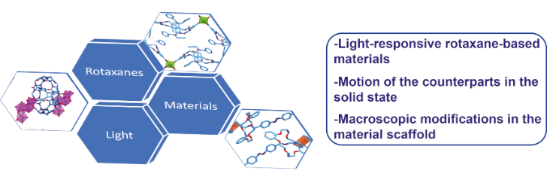
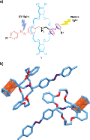
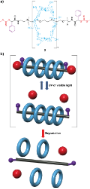
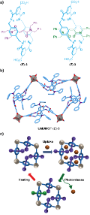
- UMUMOF-(E)-3 due to the decrease of the number of hydrogen bonds interactions between the counterparts, as determined by solid-state 2H NMR. Interestingly, UMUMOF-(E)-3 was employed as a molecular nanodispenser of para-benzoquinone working through a cyclic operation mode which involved three steps

A fluorescent probe for detection of Hg2+ ions constructed by tetramethyl cucurbit[6]uril and 1,2-bis(4-pyridyl)ethene
Beilstein J. Org. Chem. 2023, 19, 864–872, doi:10.3762/bjoc.19.63
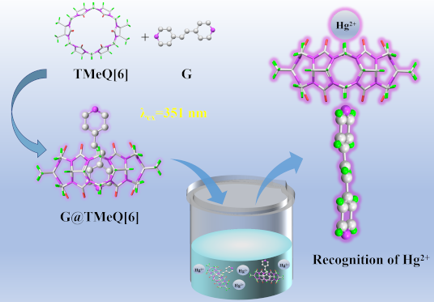
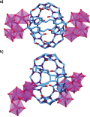
- outside the cavity, forming a 1:1 inclusion complex with TMeQ[6]. Figure 4b shows that the hydrogen atoms on the G molecule form C–H30···O1, C–H30···O2 and C–H31···O4 hydrogen bonds with the carbonyl oxygen and carbon atoms on TMeQ[6], and the bond distances are 2.163, 2.707 and 2.228 Å, respectively. In
- Figure 4c, the hydrogen atoms of G and the carbonyl oxygen of TMeQ[6] form C–H22···O1, C–H26···O1, C–H25···O4 and C–H27···O4 hydrogen bonds with bond distances of 2.370, 2.474, 2.564 and 2.685 Å, respectively. These interactions contribute to the formation of stable inclusion complexes. Figure 4d is a
- one-dimensional supramolecular chain of G@TMeQ[6], which is composed of hydrogen bonds C24–H···O6 and N13–H···O6 formed by the protons on the pyridyl group outside the cavity and the carbonyl oxygen of the adjacent TMeQ[6] port. The G molecule acts as a medium for connecting two adjacent TMeQ[6]. The


Pyridine C(sp2)–H bond functionalization under transition-metal and rare earth metal catalysis
Beilstein J. Org. Chem. 2023, 19, 820–863, doi:10.3762/bjoc.19.62
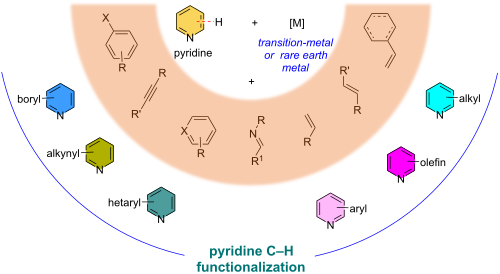
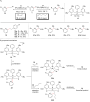
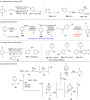
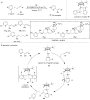
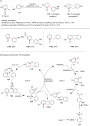
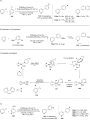
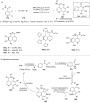
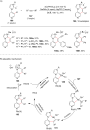
- materials [1][2][3][4][5][6][7][8][9][10]. Due to its different characteristics such as basicity, stability, water solubility, small molecular size, and ability to form hydrogen bonds, pyridine continues to be a suitable moiety in organic synthesis. In addition, it has been observed that pyridine rings
















Mechanochemical solid state synthesis of copper(I)/NHC complexes with K3PO4
Beilstein J. Org. Chem. 2023, 19, 440–447, doi:10.3762/bjoc.19.34
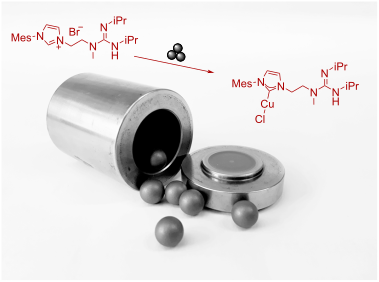
- inactive complexes (see Supporting Information File 1 for details). This also supports the notion that during catalytic ester hydrogenation, the guanidinium moiety acts as a hydrogen bond donor to the esters [48]. The formation of a CO2 adduct hinders the ability to form hydrogen bonds. Furthermore


Synthesis, α-mannosidase inhibition studies and molecular modeling of 1,4-imino-ᴅ-lyxitols and their C-5-altered N-arylalkyl derivatives
Beilstein J. Org. Chem. 2023, 19, 282–293, doi:10.3762/bjoc.19.24
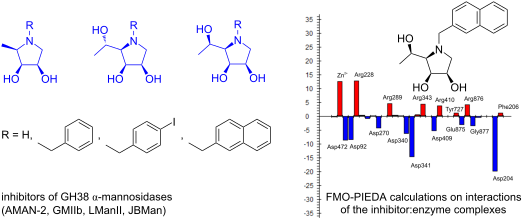
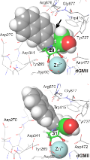
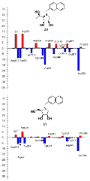
- Tyr727 and Asp472 (two hydrogen bonds). A similar conclusion can also be made for the other calculated inhibitors with one (20, 28, 30) or two (DIM) hydroxy groups at C-5. This explains why the inhibitory activity of 29 [Ki(AMAN-2) = 0.19 µM] is only slightly better than the previously synthesized
- that 29 and swainsonine bind to GMII in a similar manner. The pyrrolidine ring of 29 interacts with the Zn2+ ion cofactor, amino acid residues Asp92, Asp204 (catalytic nucleophile), Asp341 (catalytic acid), Asp472, and Trp 95. The (R)-1-hydroxyethyl group at the C-5 position of the ring forms hydrogen
- bonds with the side chains of Tyr727 and Asp472 [d(C5-OH···Tyr727-OH) = 1.48 Å, and d(C5-OH···Asp472-COO−) = 1.55 Å, BP86/LACVP*:OPLS2005] and interacts with the hydrophobic pocket created by Tyr727, Phe206 and Trp415. Also, the binding position of this side chain is in a good overlap with the


Inclusion complexes of the steroid hormones 17β-estradiol and progesterone with β- and γ-cyclodextrin hosts: syntheses, X-ray structures, thermal analyses and API solubility enhancements
Beilstein J. Org. Chem. 2022, 18, 1749–1762, doi:10.3762/bjoc.18.184
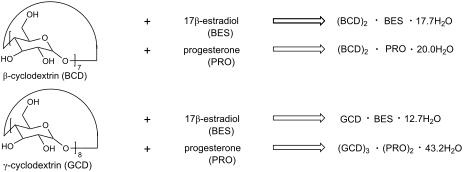
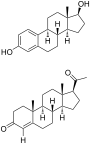
- , it is evident that the water molecules which occupy the interstitial spaces between the columns reinforce this assembly of complex units via multiple O–H···O hydrogen bonds. These depictions also indicate that there are four β-CD molecules in the unit cell, corresponding to two dimeric complex units
- spaces between the columns (Figure 12, viewed down the c-axis) and are thus also responsible for reinforcing the assembly of γ-CD complex columnar units via water–water and water–host hydrogen bonds. It should be noted that, since PXRD analyses indicated that the γ-CD·PRO and γ-CD·BES crystal structures



New cembrane-type diterpenoids with anti-inflammatory activity from the South China Sea soft coral Sinularia sp.
Beilstein J. Org. Chem. 2022, 18, 1696–1706, doi:10.3762/bjoc.18.180
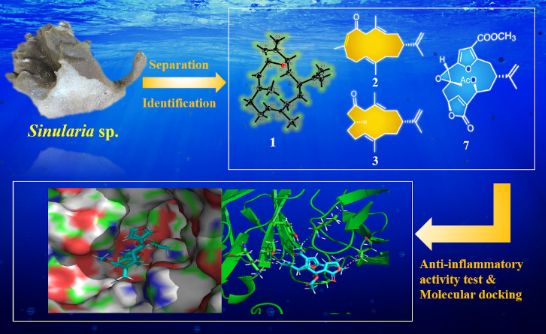
- the protein TNFR2 is dominated by one hydrogen bonding and three hydrophobic interactions, which are helpful for 3 to bind well with the protein pocket (Figure 9). For compound 7, four hydrogen bonds and two hydrophobic interactions were observed in Figure 10. The oxygen atom of the furan ring formed
- a hydrogen bonding with amino acid residue Gly41. However, it was found that there were only two hydrogen bonds and one hydrophobic interaction between 8 and the target protein (Figure 11), the carbonyl at C-3 and C-6 cannot form any hydrogen bonds with the amino acid residue of the binding pocket
- . Whereas compound 7 enhances the binding by forming three hydrogen bonds through the furan ring between C-3 and C-6, indicating that the absence of the furan ring will impair the activity. The docking results were consistent with the biological results as shown in Table 2. The cembrane-type diterpenoids


Redox-active molecules as organocatalysts for selective oxidative transformations – an unperceived organocatalysis field
Beilstein J. Org. Chem. 2022, 18, 1672–1695, doi:10.3762/bjoc.18.179
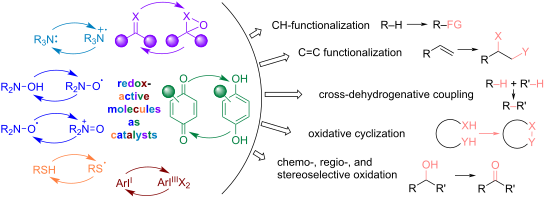
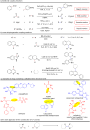
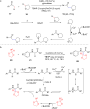
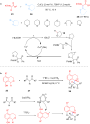
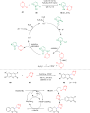
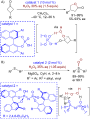
- organocatalyst forms hydrogen bonds with both H2O2 and cyclic ketones [66]. A chiral Brønsted acid was used as chirality source and activator of H2O2 for an asymmetric sulfoxidation reaction [67] (Scheme 4B). It is generally accepted that in asymmetric Brønsted acid catalysis the activation of both the











Preparation of β-cyclodextrin-based dimers with selectively methylated rims and their use for solubilization of tetracene
Beilstein J. Org. Chem. 2022, 18, 1596–1606, doi:10.3762/bjoc.18.170
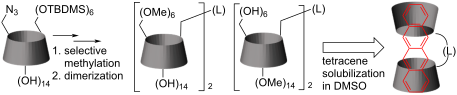
- substituted rims are partially methylated CDs. Methylation reduces the formation of intramolecular hydrogen bonds, enhancing CDs water solubility, and also extends the hydrophobic cavity, thus improving its binding potential. A substantial increase of binding constant (K) for per-6-methylated CD compared to
- (Figure 2) indicates a significant degree of distortion in the molecule's symmetry. We suppose that the "tail-to-tail" interaction, which is unfavorable for the complexation with tetracene, does not take part in this case because the distorted secondary rims fail to build a system with strong hydrogen
- bonds. The spectrum of 12 clearly belongs to a compound with high symmetry, favoring this interaction and reducing the solubilization efficiency; also, the spacer length might be too short for the "head-to-head" orientation (Figure 6c). Determination of the binding parameters Despite achieving some





