


Search results
Search for "interconversion" in Full Text gives 151 result(s) in Beilstein Journal of Organic Chemistry.
Chemical synthesis of tripeptide thioesters for the biotechnological incorporation into the myxobacterial secondary metabolite argyrin via mutasynthesis
Beilstein J. Org. Chem. 2019, 15, 2922–2929, doi:10.3762/bjoc.15.286
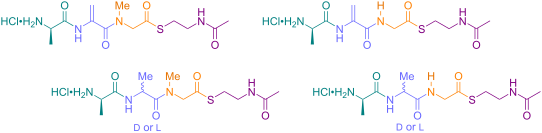
- performed following solution phase Boc-protected peptide coupling and functional group interconversion (Scheme 1). The central alanine carrying nonnatural derivatives were sequentially synthesized from C- to N-terminus, using ester protected glycine or sarcosine and coupling to Boc-protected ᴅ- or ʟ-alanine

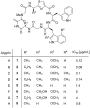


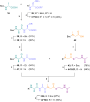
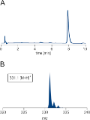
A chiral self-sorting photoresponsive coordination cage based on overcrowded alkenes
Beilstein J. Org. Chem. 2019, 15, 2767–2773, doi:10.3762/bjoc.15.268
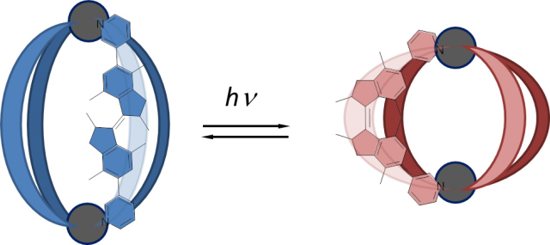
- supramolecular coordination complexes consisting of a Pd2L4 stoichiometry. As shown by NMR, CD and X-ray studies, as well as DFT calculations, these complexes form cage-like structures by chiral self-sorting. Photochromic ligands derived from first generation molecular motors enable light-driven interconversion


A review of asymmetric synthetic organic electrochemistry and electrocatalysis: concepts, applications, recent developments and future directions
Beilstein J. Org. Chem. 2019, 15, 2710–2746, doi:10.3762/bjoc.15.264
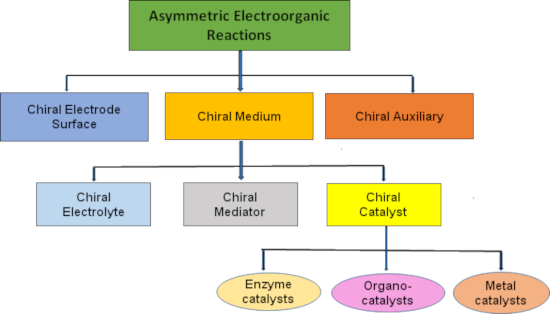
- developed an electrochemical approach for a Sharpless asymmetric dihydrohydroxylation of alkenes using an osmium complex [63]. In this protocol, the traditional chemical oxidant was replaced by an anode that regenerates [FeCN)6]3− via an Os(VIII) to Os(VI) interconversion. Similarly, Torri and co-workers






Acid-catalyzed rearrangements in arenes: interconversions in the quaterphenyl series
Beilstein J. Org. Chem. 2019, 15, 2655–2663, doi:10.3762/bjoc.15.258
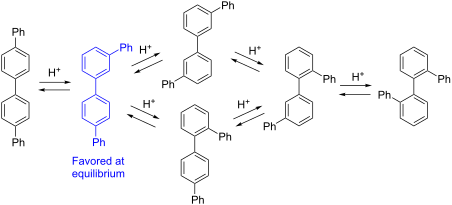
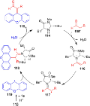
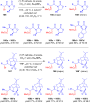
- [20][21]. One classic example of arenium ion chemistry is the interconversion of terphenyl isomers 1–3 (Scheme 1). This rearrangement was first reported by Allen and Pingert in 1942 [22] and then independently rediscovered by Olah and Meyer twenty years later [23]. Interconversion of isomers 1–3 is
- facile acid-catalyzed interconversion, as well as the fact that m-terphenyl (2) is favored at equilibrium (observed ratio 1:2:3 is <1:69:31) and used theory to explain this product selectivity [25]. This preference is consistent with formation of the most stable arenium ion intermediate, as shown by DFT
- extended polyphenyls but the factors controlling interconversion of isomers are poorly understood [30][31][32][33]. As one recent example, Jasti and co-workers showed that cycloparaphenylenes undergo rapid acid-catalyzed rearrangement which precludes using Scholl-type chemistry in this series [30]. In the


Ultrafast processes triggered by one- and two-photon excitation of a photochromic and luminescent hydrazone
Beilstein J. Org. Chem. 2019, 15, 2438–2446, doi:10.3762/bjoc.15.236
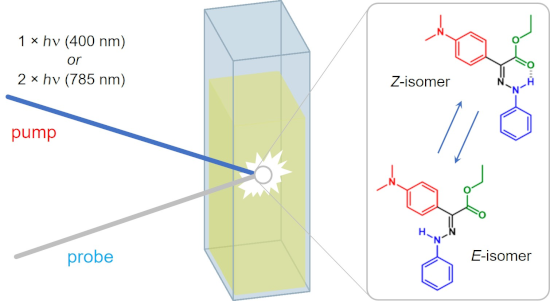
- properties: they can be chemically or photochemically controlled, can undergo a configurational change by acid or base addition and have interconversion timescales which can span over several orders of magnitude. Furthermore, a substantial shift of their absorption profile can be enabled through substitution



Photochromic diarylethene ligands featuring 2-(imidazol-2-yl)pyridine coordination site and their iron(II) complexes
Beilstein J. Org. Chem. 2019, 15, 2428–2437, doi:10.3762/bjoc.15.235
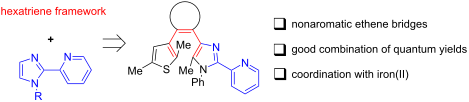
- for realization of light-triggered guest uptake/release [52] and light-controlled interconversion between distinct supramolecular assemblies [53]. Ligand 6 featuring two coordination sites in the heteroaryl moiety and bridge provides unique opportunities to construct novel macrocyclic systems. Our


Recent advances in transition-metal-catalyzed incorporation of fluorine-containing groups
Beilstein J. Org. Chem. 2019, 15, 2213–2270, doi:10.3762/bjoc.15.218
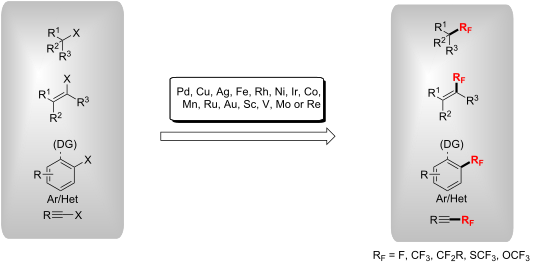
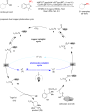
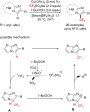
- different catalysts, such as palladium, copper, silver, iron, nickel, ruthenium, cobalt, etc. Palladium catalysis Palladium is a member of the nickel triad in the periodic table, and palladium complexes exist in three oxidation states, Pd(0), Pd(II), and Pd(IV). Straightforward interconversion between








Synthesis and anion binding properties of phthalimide-containing corona[6]arenes
Beilstein J. Org. Chem. 2019, 15, 1976–1983, doi:10.3762/bjoc.15.193
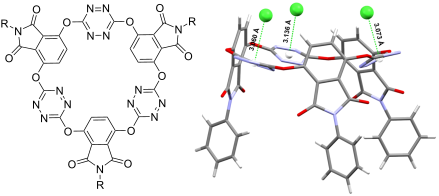
- ]. The observation of the single set of proton and carbon resonance signals of 3 indicated the presence of the conformer with high symmetry or most likely a mixture of conformers which underwent very fast interconversion relative to the NMR time scale. In comparison to diethyl terephthalate, a


Synthesis, enantioseparation and photophysical properties of planar-chiral pillar[5]arene derivatives bearing fluorophore fragments
Beilstein J. Org. Chem. 2019, 15, 1601–1611, doi:10.3762/bjoc.15.164
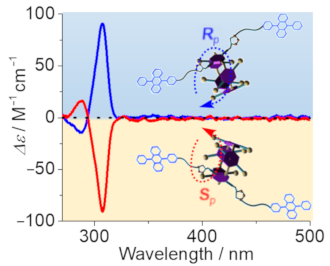
- interconversion can only occur when the guest molecule decomplexed from the cavity [19][20][21]. Several strategies have been established to block the interconversion of the Sp and Rp conformers: Implanting a guest moiety in the pillar[5]arene cavity by rotaxanation or introducing a fused side ring into one of

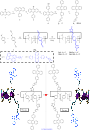


2,3-Dibutoxynaphthalene-based tetralactam macrocycles for recognizing precious metal chloride complexes
Beilstein J. Org. Chem. 2019, 15, 1460–1467, doi:10.3762/bjoc.15.146
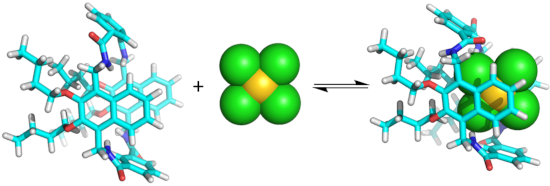
- orientations of the two 2,3-dibutoxynaphthalene moieties; but the same number of peaks in NMR spectra should be observed. Nevertheless, only one set of signals are observed, suggesting that either only one conformation is predominant in solution or the conformational interconversion is fast at the NMR
- timescale. H3 is diastereotopic and could be split when the conformational interconversion is slow on the NMR timescale, as observed for oxatub[4]arene [30] and zorb[4]arene [32]. When lowering the temperature to 223 K, H3 of 1 was split to two peaks while other peaks become broadened (Figure 1b). This
- suggests that the conformational interconversion is slow at this temperature and only one conformer is predominant in the solution at 298 K. However, the exact conformer cannot be assigned because the two conformers have the same number of peaks. In contrast, H3 of 2 are broadened even at room temperature


Selective detection of DABCO using a supramolecular interconversion as fluorescence reporter
Beilstein J. Org. Chem. 2019, 15, 1371–1378, doi:10.3762/bjoc.15.137
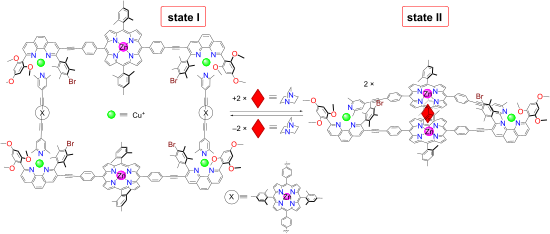
- sites. The structural changes are accompanied by a huge spatial contraction/expansion of the zinc porphyrin–zinc porphyrin distances that change from 31.2/38.8 Å to 6.6 Å and back. The supramolecular interconversion was used for the highly selective detection of DABCO in a mixture of other similar
- compounds. Keywords: copper; detection; fluorescence; interconversion; macrocycles; self-assembly; self-sorting; zinc porphyrin; Introduction Since dynamic multicomponent supramolecular structures are nowadays abundant [1][2], the weak intercomponent binding [3][4][5][6][7][8][9] is often instrumentalized
- dual-state supramolecular transformation driven by addition/removal of DABCO (4) and it requires a transition between completive vs incomplete self-sorting [27][28]. The fact that DABCO (4) exclusively drives the supramolecular interconversion was further developed into a fluorescent reporter system


Efficient resolution of racemic crown-shaped cyclotriveratrylene derivatives and isolation and characterization of the intermediate saddle isomer
Beilstein J. Org. Chem. 2019, 15, 1339–1346, doi:10.3762/bjoc.15.133
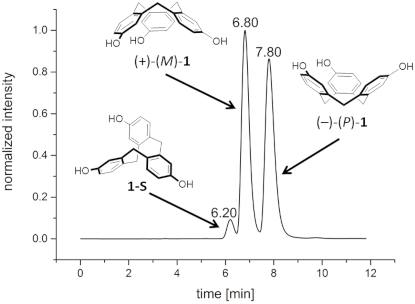
- amount of 1-S is nearly constant over the course of the racemization, e.g., at 40 °C there are about 3% and at 70 °C about 4.5% of 1-S present in solution (see Supporting Information File 1). In the past, Collet determined rate constants for the interconversion of 1 under the assumption of first order


Bambusuril analogs based on alternating glycoluril and xylylene units
Beilstein J. Org. Chem. 2019, 15, 1268–1274, doi:10.3762/bjoc.15.124
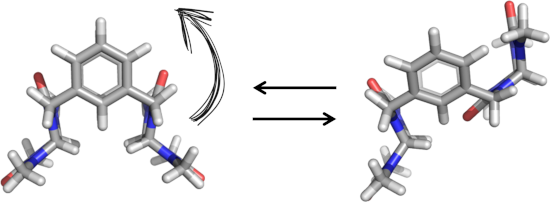
- macrocycle, we envisioned that the signal broadening is caused by rapid interconversion between several preferred conformers of the macrocycle. The DFT optimization performed at the CAM-B3LYP/6-31G(d) level of theory revealed that 1a can occur in form of two preferred conformers 1a-1 and 1a-2 (Figure 2). The


Alkylation of lithiated dimethyl tartrate acetonide with unactivated alkyl halides and application to an asymmetric synthesis of the 2,8-dioxabicyclo[3.2.1]octane core of squalestatins/zaragozic acids
Beilstein J. Org. Chem. 2019, 15, 1194–1202, doi:10.3762/bjoc.15.116
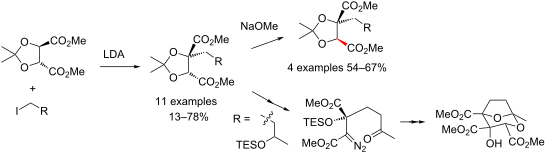
- Discussion The general viability of the α-ketoester to α-diazoester functional group interconversion envisaged in Scheme 2 (10 → 3) was readily established on a simpler but closely structurally-related system (Scheme 3). Thus, the known Z-hydrazone 12, previously prepared by us from α-ketoester 11 in 75


Conformational signature of Ishikawa´s reagent using NMR information from diastereotopic fluorines
Beilstein J. Org. Chem. 2019, 15, 506–512, doi:10.3762/bjoc.15.44
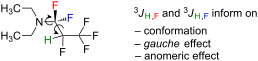
- complex than the study of six-membered cyclic compounds, which usually exhibit only two conformations as the result of chair interconversion [26]. Results and Discussion The preferred conformation along the H–C2–C1–F fragment in 1 was first analyzed using 3JH,F(pro-S/R) SSCC data, since such an NMR


Ruthenium-based olefin metathesis catalysts with monodentate unsymmetrical NHC ligands
Beilstein J. Org. Chem. 2018, 14, 3122–3149, doi:10.3762/bjoc.14.292
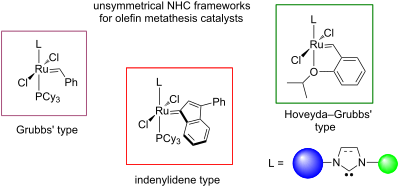
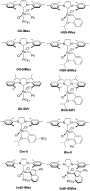
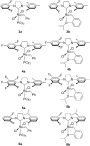
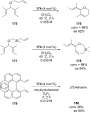
- case of 172, the Hoveyda-type analogue of 164 (Figure 32), for which a room temperature interconversion between syn and anti rotamers, observed at a ratio of 7.8:1, was revealed by NOE experiments. Surprisingly, despite such rotation the reactivity profiles and the enantioselectivities observed for 164
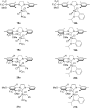
- catalytic cycle, catalysts 173 and 174, possessing additional substituents on the N-aryl group, were synthesized in moderate yields (42–44%, Figure 32). Both complexes were isolated as a mixture of rotamers, with a prevalence of the syn isomer and no interconversion between the syn/anti rotational isomers











Oxidative and reductive cyclization in stiff dithienylethenes
Beilstein J. Org. Chem. 2018, 14, 2812–2821, doi:10.3762/bjoc.14.259
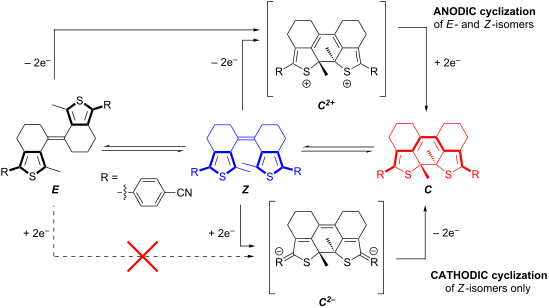
- enabled isomerization of the central exocyclic double bond, sDTEs form a three-state system undergoing interconversion between ring-open E- and Z-isomers and a ring-closed C-isomer (Scheme 1). Here we describe the oxidatively and reductively induced isomerization behavior of sDTEs as investigated by


Microwave-assisted synthesis of biologically relevant steroidal 17-exo-pyrazol-5'-ones from a norpregnene precursor by a side-chain elongation/heterocyclization sequence
Beilstein J. Org. Chem. 2018, 14, 2589–2596, doi:10.3762/bjoc.14.236
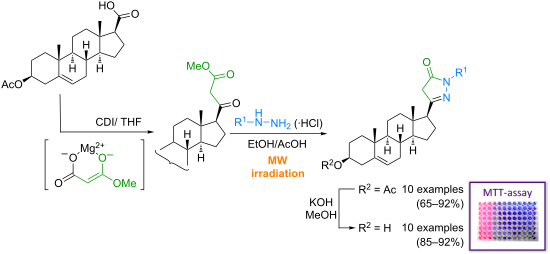
- between these latter isomers is low and their interconversion is rapid on the NMR timescale, only average signals can be observed for the 4'-H and NH/OH protons [31]. Pharmacological studies The pharmacological activities of the synthesized 17-exo-heterocycles 6a–j and 7a–j were studied in vitro. Their


Carbonylonium ions: the onium ions of the carbonyl group
Beilstein J. Org. Chem. 2018, 14, 2568–2571, doi:10.3762/bjoc.14.233
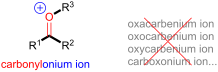
- organylated) carbonyl (1) and hydroxy (or organyloxy) carbenium ion (2): two possible representations of the same intermediate. Oxacarbenium, oxocarbenium, oxycarbenium and carboxonium ions. Acid-catalyzed interconversion of carbonyls, hydrates, hemiacetals and acetals.


Synthesis of eunicellane-type bicycles embedding a 1,3-cyclohexadiene moiety
Beilstein J. Org. Chem. 2018, 14, 2461–2467, doi:10.3762/bjoc.14.222
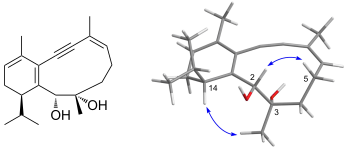
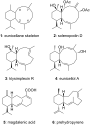
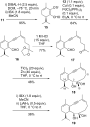
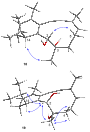
- if there are examples, where this was not the case [21][22]. Access to partially unsaturated eunicellane systems could also be of interest for studies on biosynthesis and chemical interconversion [7][10]. Results and Discussion Dihydrocarvone 9 was converted to the enolate and quenched with ethyl





Tetrathiafulvalene – a redox-switchable building block to control motion in mechanically interlocked molecules
Beilstein J. Org. Chem. 2018, 14, 2163–2185, doi:10.3762/bjoc.14.190
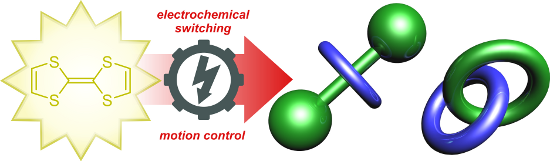
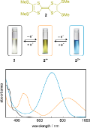
- by trace amounts of acid [51][52] or photochemically [53]. The interconversion usually prevents a sufficient separation of the two isomers on the laboratory timescale. However, substitution of the TTF molecule by electron-withdrawing groups can stabilize the isomers [54] and a separation becomes











Calix[6]arene-based atropoisomeric pseudo[2]rotaxanes
Beilstein J. Org. Chem. 2018, 14, 2112–2124, doi:10.3762/bjoc.14.186
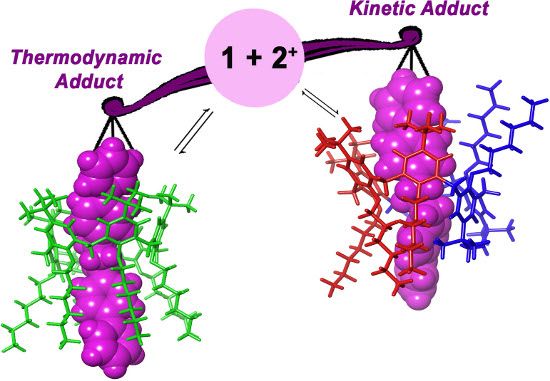
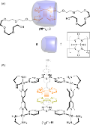
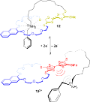
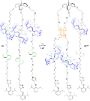
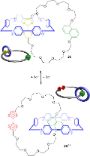
- and cone conformations. The interconversion between them cannot be obtained by simple rotation around the ArCH2Ar bonds of the calixarene wheel, which is blocked by the presence of the axle inside its cavity. Therefore, it can only be obtained through a mechanism of de-threading/re-threading of the
- ascertained at 328 K in CDCl3; below this temperature the conformations of 1 were frozen, while at temperatures above 328 K the conformational interconversion is fast with respect to the NMR time scale (400 MHz). From the coalescence data we calculated a barrier of 14.6 kcal/mol for this process. In summary
- to consider the interconversion between the two isomeric pseudorotaxane 2+11,2,3-alt and 2+1cone. It could take place through two possible mechanisms (Figure 5): a) de-threading of axle 2+ from 2+11,2,3-alt and a subsequent re-threading with 1 in a cone conformation; b) a direct conformational


![[Graphic 2]](/bjoc/content/inline/1860-5397-14-186-i3.svg?max-width=637&scale=1.18182) 1cone and 2+
1cone and 2+


The phenyl vinyl ether–methanol complex: a model system for quantum chemistry benchmarking
Beilstein J. Org. Chem. 2018, 14, 1642–1654, doi:10.3762/bjoc.14.140
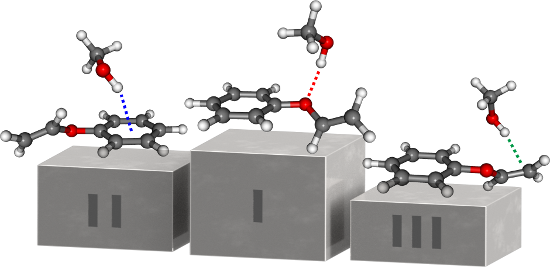
- minimum due to broad or high interconversion barriers must have their OH stretching fundamental at 3625 ± 5 cm−1 or be significantly less abundant. If one were to trust the relative harmonic wavenumber predictions from the preceding subsection (cf. Table 1), this would imply a single docking motif, as
- elusiveness would be a low interconversion barrier. However, rotational spectroscopy further reveals the presence of the OH–P isomer as a second isomer, being less populated, which is not observed with the less sensitive FTIR technique and might be superimposed by fragmentation of larger clusters in the


A conformationally adaptive macrocycle: conformational complexity and host–guest chemistry of zorb[4]arene
Beilstein J. Org. Chem. 2018, 14, 1570–1577, doi:10.3762/bjoc.14.134
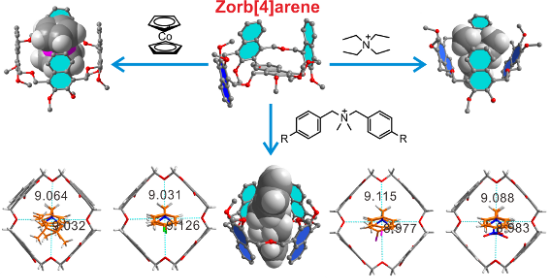
- macrocycles possess multiple conformers due to the naphthalene flipping in analogy with the phenyl-ring flipping seen in the more common calixarenes. The conformers so formed undergo quick interconversion and each one has a slightly different cavity. Thus, these conformers consist of a complex conformational


Lanyamycin, a macrolide antibiotic from Sorangium cellulosum, strain Soce 481 (Myxobacteria)
Beilstein J. Org. Chem. 2018, 14, 1554–1562, doi:10.3762/bjoc.14.132
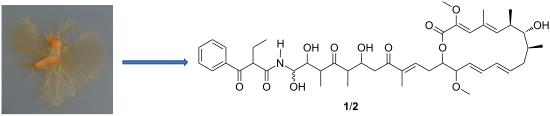
- . The only remaining NH group finally filled the gap between the amide C-27 (δC 171 ppm) and C-26 (δC 75 ppm) based on the HMBC correlation H-26/C-27 thus forming the unusual and unstable N-acyl hemiaminal that explains the interconversion of lanyamycin isomers 1 and 2. The E configuration of the diene





