Search results
Search for "lactones" in Full Text gives 170 result(s) in Beilstein Journal of Organic Chemistry.
Anthelmintic drug discovery: target identification, screening methods and the role of open science
Beilstein J. Org. Chem. 2020, 16, 1203–1224, doi:10.3762/bjoc.16.105
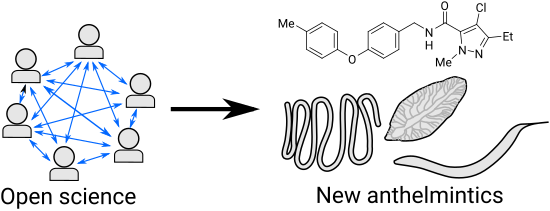
- cattle treated annually is hundreds of millions [1]. Treatment of horses, other equids, and companion animals is also a major use of anthelmintics. Anthelmintic drug discovery has been a continued emphasis in the animal health industry, driven by the spread of resistance to the macrocyclic lactones [2
- action of anthelmintic compounds, since it has been recognised that we do not fully understand how many anthelmintics work – for example the concentrations of macrocyclic lactones that paralyse worms in vitro are much greater than the concentration achieved by effective doses in vivo [147]. Several


Activated carbon as catalyst support: precursors, preparation, modification and characterization
Beilstein J. Org. Chem. 2020, 16, 1188–1202, doi:10.3762/bjoc.16.104
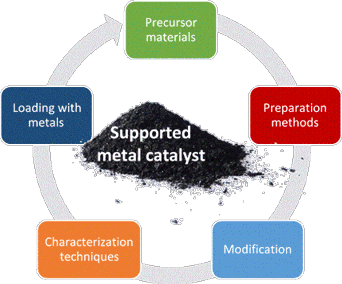
- forming phosphate esters or polymerization byproducts that bind on the solid carbon matrix [30]. Boehm titrations: Boehm titrations are used for the determination of acidic or basic surface oxygen functional groups of solid materials. The acidic character is caused by carboxyl groups (R–COOH), lactones (R
- gases were determined by mass spectrometry. In general, each type of surface group decomposes to a defined product such as CO2 from carboxylic acid or lactones and CO from carbonyl, hydroxide, phenol, ether or quinone groups and thus, information on the amounts of oxygen-containing surface groups are


Copper-catalysed alkylation of heterocyclic acceptors with organometallic reagents
Beilstein J. Org. Chem. 2020, 16, 1006–1021, doi:10.3762/bjoc.16.90
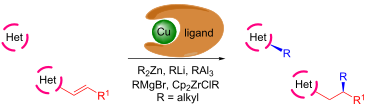
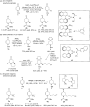
- alkenylaluminium and alkylaluminium reagents to the β-substituted unsaturated conjugated lactams 25 was utilized (Scheme 7B) [32]. Chiral lactones are yet another interesting class of heterocyclic substrates that have attracted great attention because of their usefulness in both organic synthesis and medicinal
- chemistry. The copper-catalysed ACA of organozinc reagents to 5,6-dihydro-2-pyranone is one of the best methods to obtain chiral lactones. During the past two decades, the research groups of Chan, Hoveyda (who applied an approach depending on the trapping by an aldehyde), Mauduit, and Wang reported a
- variety of methods employing the chiral ligands L9–L13 that, in combination with copper, efficiently catalysed the ACA of diethylzinc to 5,6-dihydro-2-pyranone (Scheme 8), providing access to chiral β-substituted lactones with high enantioselectivity and conversion [33][34][35][36][37]. Although the



Recent advances in Cu-catalyzed C(sp3)–Si and C(sp3)–B bond formation
Beilstein J. Org. Chem. 2020, 16, 691–737, doi:10.3762/bjoc.16.67
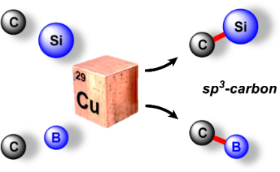
- scope of this silicon addition to unsaturated lactones using copper catalysis together with NHC ligand L16. The ligand used previously to great advantage by the Hoveyda and Oestreich groups for conjugate additions did not yield high ees for these substrates. The authors designed a new NHC possessing


A green, economical synthesis of β-ketonitriles and trifunctionalized building blocks from esters and lactones
Beilstein J. Org. Chem. 2019, 15, 2930–2935, doi:10.3762/bjoc.15.287
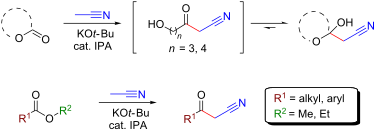
- Daniel P. Pienaar Kamogelo R. Butsi Amanda L. Rousseau Dean Brady Molecular Sciences Institute, School of Chemistry, University of the Witwatersrand, PO Wits 2050, Johannesburg, South Africa 10.3762/bjoc.15.287 Abstract The acylation of the acetonitrile anion with lactones and esters in ethereal
- solvents was successfully exploited using inexpensive KOt-Bu to obtain a variety of β-ketonitriles and trifunctionalized building blocks, including useful O-unprotected diols. It was discovered that lactones react to produce the corresponding derivatized cyclic hemiketals. Furthermore, the addition of a
- preparation of trifunctionalized building blocks (hydroxylated β-ketonitriles) and valuable β-ketonitriles (including enolizable compounds) in modest to good yields from lactones and esters. We are currently investigating novel applications of diols 1 and 8, as well as the application of this methodology for


A review of asymmetric synthetic organic electrochemistry and electrocatalysis: concepts, applications, recent developments and future directions
Beilstein J. Org. Chem. 2019, 15, 2710–2746, doi:10.3762/bjoc.15.264
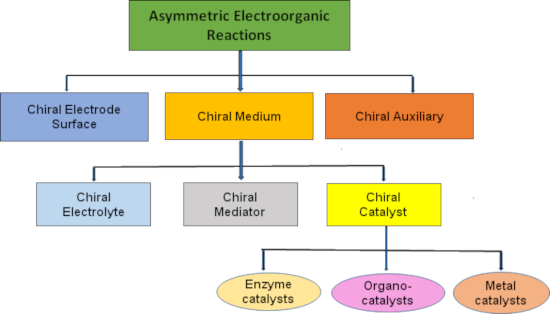
- lactonization of diols 51. However, in this method instead of a chiral base, they used 1-azaspiro[5.5]undecane N-oxyl 52 as a radical mediator for modifying the electrodes which resulted in optically active lactones 53 with enantiopurity of up to 99% (conditions B, Scheme 20) [52]. Chiral medium In this section
- 66 (Scheme 26). Galvanostatic electrolysis of 66 in an undivided cell using a catalytic amount of 67 resulted in the corresponding lactones 68 in moderate yields and good stereoselectivities. The stereoselectivity was proposed to be controlled through the preferential formation of transition state A
- over B after reaction of the enolates of 66 with chiral iodoarene 67. Steric factors restrict the formation of transition state B, and the reaction preferentially proceeds via transition state A to stereoselectively form the lactones [62]. Chiral catalysts Achieving enantiocontrol in electrochemical






Nanangenines: drimane sesquiterpenoids as the dominant metabolite cohort of a novel Australian fungus, Aspergillus nanangensis
Beilstein J. Org. Chem. 2019, 15, 2631–2643, doi:10.3762/bjoc.15.256
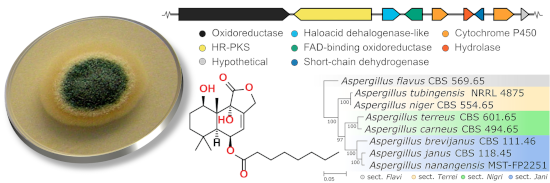
- File 1) yielded ten drimane metabolites shown in Figure 1: one trihydroxylated drimane sesquiterpenoid lactone, nanangenine A (1), four drimane lactones bearing C6/C8 acyl chains, nanangenines B, C, D and E (2, 4, 5 and 6), two acylated drimanes bearing isomeric lactones, isonanangenines B and D (3 and
- Our investigations into unique Australian microbial biodiversity have led to discovery of a family of drimane sesquiterpenoids, the nanangenines, which serve as key chemotaxonomic markers for the novel fungal species, A. nanangensis. Although related drimane sesquiterpenoid lactones have been found in


An overview of the cycloaddition chemistry of fulvenes and emerging applications
Beilstein J. Org. Chem. 2019, 15, 2113–2132, doi:10.3762/bjoc.15.209
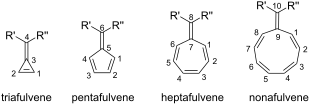
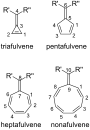
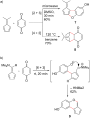
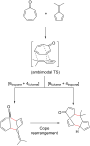
- the formation of several different products, although predominantly enol lactones [47][50][51][52] (Scheme 3). Highly reactive intermediates formed during these reactions (Scheme 3) have only been observed spectroscopically at low temperatures (−55 °C) [52]. Heptafulvenes also undergo reactions with





Characterization of two new degradation products of atorvastatin calcium formed upon treatment with strong acids
Beilstein J. Org. Chem. 2019, 15, 2085–2091, doi:10.3762/bjoc.15.206
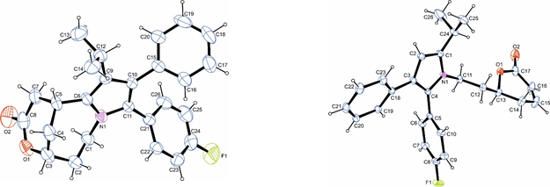
- dehydration of the δ-hydroxy group and some epimers resulting from acid-catalyzed isomerization reactions. In contrast, Vukkum et al. [13] describe, besides lactones 2 and 3, an α,β-unsaturated carboxylic acid 4. Treatment under more drastic conditions (6 M HCl, reflux, 3 h) was reported to result mainly in


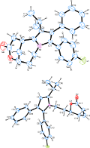


Isolation and characterisation of irinans, androstane-type withanolides from Physalis peruviana L.
Beilstein J. Org. Chem. 2019, 15, 2003–2012, doi:10.3762/bjoc.15.196
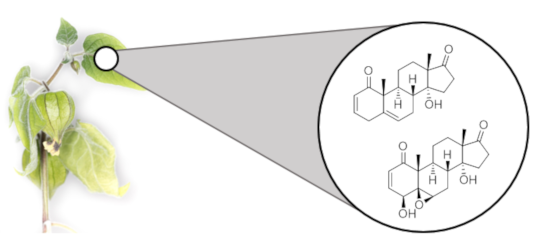
- Withanolides are steroidal lactones widespread in Nightshade plants with often potent antiproliferative activities. Additionally, the structural diversity of this compound class holds much potential for the discovery of novel biological activity. Here, we report two newly characterised withanolides, named
- research. An important example is Withania somnifera, also known as ashwaghanda or Indian ginseng, which has been used in Ayurvedic medicine to treat a large variety of ailments [1]. Extensive studies revealed withanolides, a class of steroidal lactones, to be primarily responsible for the medicinal



A review of the total syntheses of triptolide
Beilstein J. Org. Chem. 2019, 15, 1984–1995, doi:10.3762/bjoc.15.194
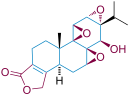
- -catalyzed lactonization, and iii) construction of the epoxides by a newly developed methodology. The synthesis commenced from the alkylation of tetralone 22 with 3-(2-iodoethyl)dihydrofuran-2(3H)-one (23) to give diastereomeric lactones that subsequently reacted with dimethylamine to afford a 1:1 mixture of


Archangelolide: A sesquiterpene lactone with immunobiological potential from Laserpitium archangelica
Beilstein J. Org. Chem. 2019, 15, 1933–1944, doi:10.3762/bjoc.15.189
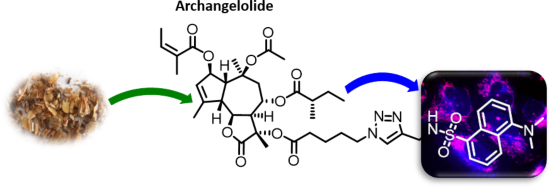
- Sciences of the Czech Republic, Flemingovo náměstí 2, 166 10 Prague 6, Czech Republic Institute of Experimental Medicine, Academy of Sciences of the Czech Republic, v.v.i., 14220 Prague 4, Czech Republic 10.3762/bjoc.15.189 Abstract Sesquiterpene lactones are secondary plant metabolites with sundry
- studied by us and others, there are only scarce reports on the biological activity of archangelolide. Here we present the preparation of its fluorescent derivative based on a dansyl moiety using azide–alkyne Huisgen cycloaddition having obtained the two sesquiterpene lactones from the seeds of Laserpitium
- fluorescent conjugate; sarco/endoplasmic reticulum calcium ATPase; sesquiterpene lactone; trilobolide analogue; Introduction Sesquiterpene lactones (SLs) have been attracting interest already for some time due to the plethora of biological effects they elicit. Various SLs show anticancer, antimicrobial




Vicinal difunctionalization of alkenes by four-component radical cascade reaction of xanthogenates, alkenes, CO, and sulfonyl oxime ethers
Beilstein J. Org. Chem. 2019, 15, 1822–1828, doi:10.3762/bjoc.15.176

- reaction using xanthogenates, alkenes, and sulfonyl oxime ethers (Scheme 1, reaction 1) [21][22]. The reaction proceeds efficiently to provide good yields of α-alkoxyimino esters, potential precursors of lactams, lactones and β-keto esters. Since the three-component radical reaction involving alkyl halides


Mechanochemical synthesis of poly(trimethylene carbonate)s: an example of rate acceleration
Beilstein J. Org. Chem. 2019, 15, 963–970, doi:10.3762/bjoc.15.93
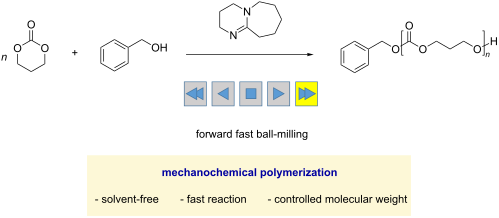
- biomedical applications [24]. The amidine base 1,8-diazabicyclo[5.4.0]undec-7-ene (DBU) is one of the best studied and most popular organocatalysts for ring-opening polymerizations of cyclic carbonates and lactones [25][26][27]. In contrast to the high activity of lactone polymerization, cyclic carbonate


Synthesis of 2H-furo[2,3-c]pyrazole ring systems through silver(I) ion-mediated ring-closure reaction
Beilstein J. Org. Chem. 2019, 15, 679–684, doi:10.3762/bjoc.15.62

- AgOTf efficiently catalyzed the intramolecular cyclization of phenoxyethynyl diols into 2,3-unsaturated lactones [38]. In our case, the addition of 10 mol % chloro(triphenylphosphine)gold(I) improved the yield of product 4a to 69% (Table 1, entry 4). However the best results were obtained when AgOTf was


Reusable and highly enantioselective water-soluble Ru(II)-Amm-Pheox catalyst for intramolecular cyclopropanation of diazo compounds
Beilstein J. Org. Chem. 2019, 15, 357–363, doi:10.3762/bjoc.15.31
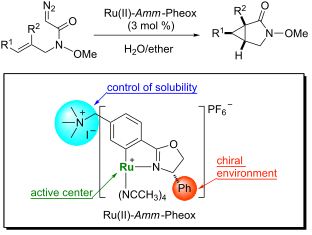
- proceeded smoothly at room temperature, affording the corresponding bicyclic cyclopropane ring-fused lactones and lactams in high yields (up to 99%) with excellent enantioselectivities (up to 99% ee). After screening of various catalysts, the Ru(II)-Amm-Pheox complex having an ammonium group proved to be
- intramolecular cyclopropanation of a variety of diazo compounds such as diazoacetates and diazoacetamides in a biphasic medium. Diazoacetates were tested in our catalytic system because they are widely used for intramolecular cyclopropanation reactions and also the resulted lactones are widely distributed in


Regioselective addition of Grignard reagents to N-acylpyrazinium salts: synthesis of substituted 1,2-dihydropyrazines and Δ5-2-oxopiperazines
Beilstein J. Org. Chem. 2019, 15, 72–78, doi:10.3762/bjoc.15.8

- nucleophilic addition of bis(trimethylsilyl)ketene acetals to pyrazines activated with methyl chloroformate was found to afford polycyclic γ-lactones in moderate yields [3][10][11]. The work by Garduño-Alva and co-workers demonstrated that these TMS-ketene acetals can be regioselectively added to substituted N
- -triflate pyrazinium salts to also generate γ-lactones [12]. Grignard reagents have been used as nucleophiles on a variety of N-acyl-activated pyridines in the production of natural products and biologically active small molecules [13][14][15][16][17][18][19][20]. To our surprise, there are no reports on

Ring-closing-metathesis-based synthesis of annellated coumarins from 8-allylcoumarins
Beilstein J. Org. Chem. 2018, 14, 2991–2998, doi:10.3762/bjoc.14.278
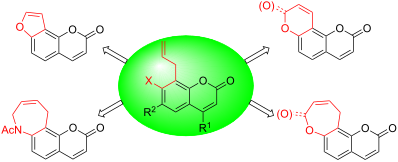
- , we investigated the synthesis of coumarins with annellated unsaturated lactones starting from the same 8-allylcoumarins 8 (Scheme 1). For the synthesis of oxepin-2-one-annellated coumarins 13 compounds 8 were first converted to the corresponding acrylates 12 with acryloyl chloride (Table 3). RCM of


N-Acylated amino acid methyl esters from marine Roseobacter group bacteria
Beilstein J. Org. Chem. 2018, 14, 2964–2973, doi:10.3762/bjoc.14.276
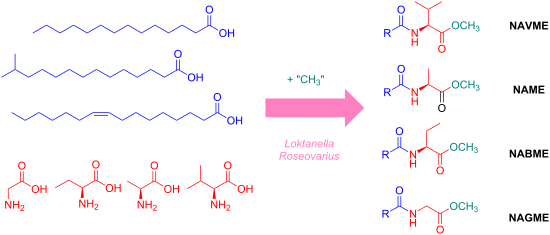
- Roseobacter group (Rhodobacteraceae) are important members of many marine ecosystems. Similar to other Gram-negative bacteria many roseobacters produce N-acylhomoserine lactones (AHLs) for communication by quorum sensing systems. AHLs regulate different traits like cell differentiation or antibiotic
- derivatives; 2-aminobutyric acid; homoserine lactones; natural products; quorum sensing; Introduction The identification and structural elucidation of naturally occurring compounds traditionally requires isolation and NMR investigation as key method to detect novel compounds and new structural classes
- habitats with a broad metabolic potential [4][5][6][7]. Especially attached-living roseobacters produce diverse secondary metabolites, e.g., N-acylhomoserine lactones (AHLs) that the bacteria use for communication by quorum sensing [8][9][10]. AHLs are extensively investigated because of the broad





Copolymerization of epoxides with cyclic anhydrides catalyzed by dinuclear cobalt complexes
Beilstein J. Org. Chem. 2018, 14, 2779–2788, doi:10.3762/bjoc.14.255
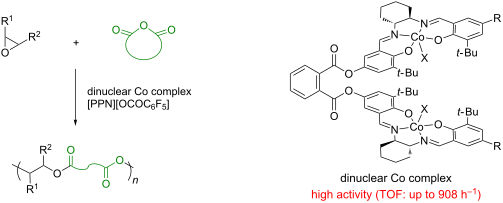
- (ROP) of lactones and cyclic diesters [5][6][7][8][9][10]. In contrast to the step-growth polymerization, the ROP does not give any small molecule byproducts and proceeds under mild conditions. In addition, high molecular weight polyesters with narrow polydispersity can be prepared even at a low
- monomer conversion. A variety of lactones and cyclic diesters, such as ε-caprolactone, β-propiolactone, lactic acid (LA), and glycolide have been used for the ROP. However, the employable monomers are rather limited, which restricts the range of polymer properties. In view of the aforementioned, the


Synthesis of a tyrosinase inhibitor by consecutive ethenolysis and cross-metathesis of crude cashew nutshell liquid
Beilstein J. Org. Chem. 2018, 14, 2737–2744, doi:10.3762/bjoc.14.252
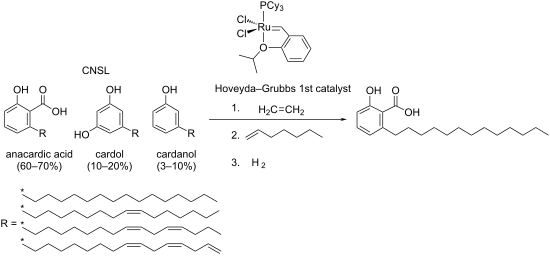
- ]. A limited number of derivatizations of anacardic acid are reported by now, including the synthesis of lactones [18][19][20], sulfonamides [21] or hydrazones [22], typically bioactive compounds though with low commercial value. However, several studies suggest that anacardic acid and its derivatives


Ring-opening metathesis of some strained bicyclic systems; stereocontrolled access to diolefinated saturated heterocycles with multiple stereogenic centers
Beilstein J. Org. Chem. 2018, 14, 2698–2707, doi:10.3762/bjoc.14.247
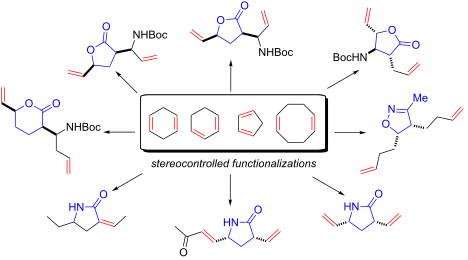
- functionalized derivatives such as bicyclic lactones, γ-lactams or isoxazolines, derived from various cyclodienes and to evaluate their chemical behavior under Ru-catalyzed ring-opening conditions (Scheme 2). First, the ring opening of racemic bicyclic γ-lactone (±)-3 (derived from cyclodiene 1 via β-lactam
- that unsaturated bicyclic β-lactams (±)-2 and (±)-8, bearing the fused four-membered and six-membered ring system, have a lower ring strain than bicyclic, unsaturated γ-lactones (±)-3, (±)-4 and (±)-9. Because of their higher constraint, the latter compounds underwent ring opening providing the
- corresponding monocyclic, dialkenylated amino lactones, albeit with modest yields (Scheme 5); (for relevant literature date for the ROM for various cyclic systems with ring strain see ref. [27][28][29]. We continued our ring-opening investigations with other model derivatives possessing a larger ring system


Non-native autoinducer analogs capable of modulating the SdiA quorum sensing receptor in Salmonella enterica serovar Typhimurium
Beilstein J. Org. Chem. 2018, 14, 2651–2664, doi:10.3762/bjoc.14.243
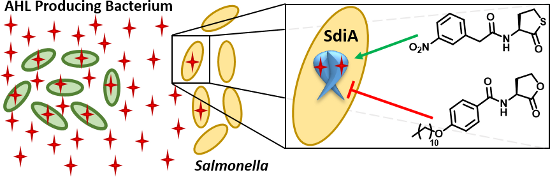
- sub-libraries consisted of substituted phenylacetanoyl homoserine lactones (PHLs), phenylpropionyl homoserine lactones (PPHLs), and phenoxyacetyl homoserine lactones (POHLs), many of which we have previously found to be highly active in a range of LuxR-type receptors as both agonists and competitive
- antagonists [45][47][48][51][56]. The Q and R sub-libraries contain a related group of substituted benzoyl homoserine lactones (BHLs) [56]. Sub-library S probed the effects of branched alkyl groups on the acyl tail [56]. The F sub-library contained a variety of AHL analogs with alternative, often hydrolysis
- derivatives (thiolactones F8 and F5 vs lactones A1 and A3) and the PHL-type derivatives (thiolactones F11 and F12 vs lactones C14 and C24) were nearly an order of magnitude more potent. As thiolactone hydrolysis can occur more slowly than lactone hydrolysis in the AHL scaffold [53], these compounds may find



Targeting the Pseudomonas quinolone signal quorum sensing system for the discovery of novel anti-infective pathoblockers
Beilstein J. Org. Chem. 2018, 14, 2627–2645, doi:10.3762/bjoc.14.241
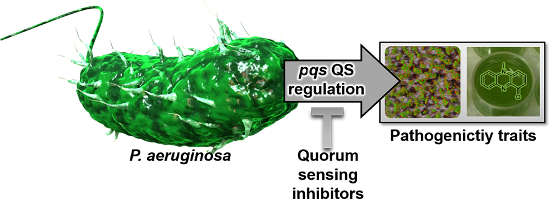
- actually autoinducers (AIs) and, hence, have an agonistic activity toward their receptor, a positive feedback loop is created. In P. aeruginosa three different chemotypes of AIs have been identified, to date: alkyl homoserine lactones (AHLs) used by the las and rhl systems, alkylquinolones (AQs) used by


Pathoblockers or antivirulence drugs as a new option for the treatment of bacterial infections
Beilstein J. Org. Chem. 2018, 14, 2607–2617, doi:10.3762/bjoc.14.239
- Gram-positive bacteria. While Gram-positive bacteria often use peptides as signal molecules, Gram-negative bacteria employ N-acylhomoserine lactones (AHLs) with subtle differences in their chemical structure, as well as other types of autoinducers (Figure 5). Interestingly, the signaling molecule