Search for "malonate" in Full Text gives 144 result(s) in Beilstein Journal of Organic Chemistry.
Beilstein J. Org. Chem. 2020, 16, 917–955, doi:10.3762/bjoc.16.83
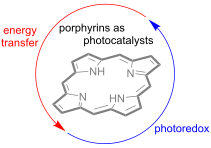
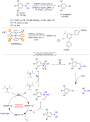
Graphical Abstract
Figure 1: Chemical structures of the porphyrinoids and their absorption spectra: in bold are highlighted the ...
Figure 2: Photophysical and photochemical processes (Por = porphyrin). Adapted from [12,18].
Figure 3: Main dual photocatalysts and their oxidative/reductive excited state potentials, including porphyri...
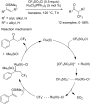
Scheme 1: Photoredox alkylation of aldehydes with diazo acetates using porphyrins and a Ru complex. aUsing a ...
Scheme 2: Proposed mechanism for the alkylation of aldehydes with diazo acetates in the presence of TPP.
Scheme 3: Arylation of heteroarenes with aryldiazonium salts using TPFPP as photocatalyst, and corresponding ...
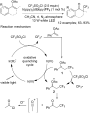
Scheme 4: A) Scope with different aryldiazonium salts and enol acetates. B) Photocatalytic cycles and compari...
Scheme 5: Photoarylation of isopropenyl acetate A) Comparison between batch and continuous-flow approaches an...
Scheme 6: Dehalogenation induced by red light using thiaporphyrin (STPP).
Scheme 7: Applications of NiTPP as both photoreductant and photooxidant.
Scheme 8: Proposed mechanism for obtaining tetrahydroquinolines by reductive quenching.
Scheme 9: Selenylation and thiolation of anilines.
Scheme 10: NiTPP as photoredox catalyst in oxidative and reductive quenching, in comparison with other photoca...
Scheme 11: C–O bond cleavage of 1-phenylethanol using a cobalt porphyrin (CoTMPP) under visible light.
Scheme 12: Hydration of terminal alkynes by RhIII(TSPP) under visible light irradiation.
Scheme 13: Regioselective photocatalytic hydro-defluorination of perfluoroarenes by RhIII(TSPP).
Scheme 14: Formation of 2-methyl-2,3-dihydrobenzofuran by intramolecular hydro-functionalization of allylpheno...
Scheme 15: Photocatalytic oxidative hydroxylation of arylboronic acids using UNLPF-12 as heterogeneous photoca...
Scheme 16: Photocatalytic oxidative hydroxylation of arylboronic acids using MOF-525 as heterogeneous photocat...
Scheme 17: Preparation of the heterogeneous photocatalyst CNH.
Scheme 18: Photoinduced sulfonation of alkenes with sulfinic acid using CNH as photocatalyst.
Scheme 19: Sulfonic acid scope of the sulfonation reactions.
Scheme 20: Regioselective sulfonation reaction of arimistane.
Scheme 21: Synthesis of quinazolin-4-(3H)-ones.
Scheme 22: Selective photooxidation of aromatic benzyl alcohols to benzaldehydes using Pt/PCN-224(Zn).
Scheme 23: Photooxidation of benzaldehydes to benzoic acids using Pt or Pd porphyrins.
Scheme 24: Photocatalytic reduction of various nitroaromatics using a Ni-MOF.
Scheme 25: Photoinduced cycloadditions of CO2 with epoxides by MOF1.
Figure 4: Electronic configurations of the species of oxygen. Adapted from [66].
Scheme 26: TPP-photocatalyzed generation of 1O2 and its application in organic synthesis. Adapted from [67-69].
Scheme 27: Pericyclic reactions involving singlet oxygen and their mechanisms. Adapted from [67].
Scheme 28: First scaled up ascaridole preparation from α-terpinene.
Scheme 29: Antimalarial drug synthesis using an endoperoxidation approach.
Scheme 30: Photooxygenation of colchicine.
Scheme 31: Synthesis of (−)-pinocarvone from abundant (+)-α-pinene.
Scheme 32: Seeberger’s semi-synthesis of artemisinin.
Scheme 33: Synthesis of artemisinin using TPP and supercritical CO2.
Scheme 34: Synthesis of artemisinin using chlorophyll a.
Scheme 35: Quercitol stereoisomer preparation.
Scheme 36: Photocatalyzed preparation of naphthoquinones.
Scheme 37: Continuous endoperoxidation of conjugated dienes and subsequent rearrangements leading to oxidized ...
Scheme 38: The Opatz group total synthesis of (–)-oxycodone.
Scheme 39: Biomimetic syntheses of rhodonoids A, B, E, and F.
Scheme 40: α-Photooxygenation of chiral aldehydes.
Scheme 41: Asymmetric photooxidation of indanone β-keto esters by singlet oxygen using PTC as a chiral inducer...
Scheme 42: Asymmetric photooxidation of both β-keto esters and β-keto amides by singlet oxygen using PTC-2 as ...
Scheme 43: Bifunctional photo-organocatalyst used for the asymmetric oxidation of β-keto esters and β-keto ami...
Scheme 44: Mechanism of singlet oxygen oxidation of sulfides to sulfoxides.
Scheme 45: Controlled oxidation of sulfides to sulfoxides using protonated porphyrins as photocatalysts. aIsol...
Scheme 46: Photochemical oxidation of sulfides to sulfoxides using PdTPFPP as photocatalyst.
Scheme 47: Controlled oxidation of sulfides to sulfoxides using SnPor@PAF as a photosensitizer.
Scheme 48: Syntheses of 2D-PdPor-COF and 3D-Pd-COF.
Scheme 49: Photocatalytic oxidation of A) thioanisole to methyl phenyl sulfoxide and B) various aryl sulfides,...
Scheme 50: General mechanism for oxidation of amines to imines.
Scheme 51: Oxidation of secondary amines to imines.
Scheme 52: Oxidation of secondary amines using Pd-TPFPP as photocatalyst.
Scheme 53: Oxidative amine coupling using UNLPF-12 as heterogeneous photocatalyst.
Scheme 54: Synthesis of Por-COF-1 and Por-COF-2.
Scheme 55: Photocatalytic oxidation of amines to imines by Por-COF-2.
Scheme 56: Photocyanation of primary amines.
Scheme 57: Synthesis of ᴅ,ʟ-tert-leucine hydrochloride.
Scheme 58: Photocyanation of catharanthine and 16-O-acetylvindoline using TPP.
Scheme 59: Photochemical α-functionalization of N-aryltetrahydroisoquinolines using Pd-TPFPP as photocatalyst.
Scheme 60: Ugi-type reaction with 1,2,3,4-tetrahydroisoquinoline using molecular oxygen and TPP.
Scheme 61: Ugi-type reaction with dibenzylamines using molecular oxygen and TPP.
Scheme 62: Mannich-type reaction of tertiary amines using PdTPFPP as photocatalyst.
Scheme 63: Oxidative Mannich reaction using UNLPF-12 as heterogeneous photocatalyst.
Scheme 64: Transformation of amines to α-cyanoepoxides and the proposed mechanism.
Beilstein J. Org. Chem. 2020, 16, 858–870, doi:10.3762/bjoc.16.77
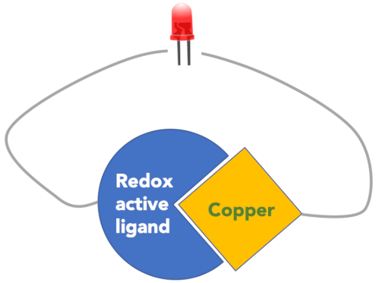
Graphical Abstract
Scheme 1: Copper complexes with amidophenolate type benzoxazole ligands for alcohol oxidations.
Scheme 2: Copper-catalyzed aerobic oxidation of alcohols and representative substrate scope.
Scheme 3: Introduction of H-bonding network in the ligand coordination sphere.
Scheme 4: Well-defined isatin copper complexes.
Scheme 5: Catalyst control in the biomimetic phenol ortho-oxidation.
Scheme 6: Structural diversity accessible by direct functionalization.
Scheme 7: Copper-catalyzed trifluoromethylation of heteroaromatics with redox-active iminosemiquinone ligands....
Scheme 8: Reversal of helical chirality upon redox stimuli and enantioselective Michael addition with a redox...
Scheme 9: Interaction of guanidine-copper catalyst with oxygen and representative coupling products. a4 mol %...
Scheme 10: Access to 1,2-oxy-aminoarenes by copper-catalyzed phenol–amine coupling.
Scheme 11: Copper-catalyzed aziridination through molecular spin catalysis with redox-active iminosemiquinone ...
Scheme 12: Nitrogen-group and carbon-group transfer in copper-catalyzed aziridination and cyclopropanation thr...
Beilstein J. Org. Chem. 2020, 16, 398–408, doi:10.3762/bjoc.16.38
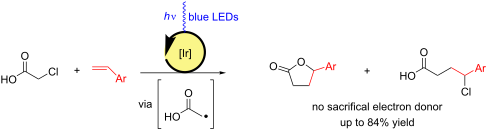
Graphical Abstract
Figure 1: A part of the industry around monochloroacetic acid.
Scheme 1: Redox based activation of haloacetic acid.
Figure 2: Cyclic voltammogram of monochloroacetic acid and ferrocene with 0.1 M [TBA][PF6] in MeCN. The poten...
Scheme 2: Initial attempts for lactone formation by photoredox catalysis.
Scheme 3: The photoredox reaction of TEMPO with monochloroacetic acid catalyzed by fac-[Ir(ppy)3].
Figure 3: EPR spectra measured (black) and simulated (red) based on the structure of the oxidized photoredox ...
Scheme 4: Two possible acid-assisted, reductive activation pathways of monochloroacetic acid (A–H = acid).
Figure 4: Reaction mixtures after overnight irradiation of (A) 4-chloro-4-phenylbutanoic acid (3) and fac-[Ir...
Scheme 5: Substrate scope of styrene derivatives in the photoredox reaction with monochloroacetic acid. Yield...
Scheme 6: Proposed reaction mechanism.
Scheme 7: The photoredox formation of 1-(chloromethoxy)-2,2,6,6-tetramethylpiperidine.
Beilstein J. Org. Chem. 2020, 16, 212–232, doi:10.3762/bjoc.16.24
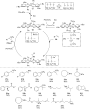
Graphical Abstract
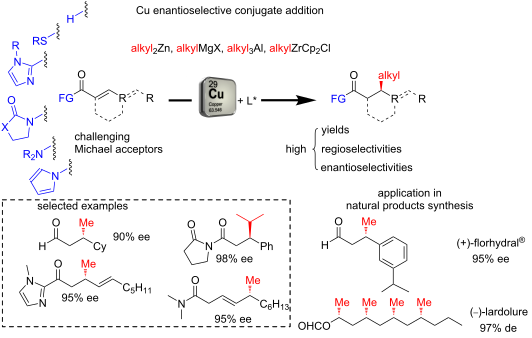
Scheme 1: Competitive side reactions in the Cu ECA of organometallic reagents to α,β-unsaturated aldehydes.
Scheme 2: Cu-catalyzed ECA of α,β-unsaturated aldehydes with phosphoramidite- (a) and phosphine-based ligands...
Scheme 3: One-pot Cu-catalyzed ECA/organocatalyzed α-substitution of enals.
Scheme 4: Combination of copper and amino catalysis for enantioselective β-functionalizations of enals.
Scheme 5: Optimized conditions for the Cu ECAs of R2Zn, RMgBr, and AlMe3 with α,β-unsaturated aldehydes.
Scheme 6: CuECA of Grignard reagents to α,β-unsaturated thioesters and their application in the asymmetric to...
Scheme 7: Improved Cu ECA of Grignard reagents to α,β-unsaturated thioesters, and their application in the as...
Scheme 8: Catalytic enantioselective synthesis of vicinal dialkyl arrays via Cu ECA of Grignard reagents to γ...
Scheme 9: 1,6-Cu ECA of MeMgBr to α,β,γ,δ-bisunsaturated thioesters: an iterative approach to deoxypropionate...
Scheme 10: Tandem Cu ECA/intramolecular enolate trapping involving 4-chloro-α,β-unsaturated thioester 22.
Scheme 11: Cu ECA of Grignard reagents to 3-boronyl α,β-unsaturated thioesters.
Scheme 12: Cu ECA of alkylzirconium reagents to α,β-unsaturated thioesters.
Scheme 13: Conversion of acylimidazoles into aldehydes, ketones, acids, esters, amides, and amines.
Scheme 14: Cu ECA of dimethyl malonate to α,β-unsaturated acylimidazole 31 with triazacyclophane-based ligand ...
Scheme 15: Cu/L13-catalyzed ECA of alkylboranes to α,β-unsaturated acylimidazoles.
Scheme 16: Cu/hydroxyalkyl-NHC-catalyzed ECA of dimethylzinc to α,β-unsaturated acylimidazoles.
Scheme 17: Stereocontrolled synthesis of 3,5,7-all-syn and anti,anti-stereotriads via iterative Cu ECAs.
Scheme 18: Stereocontrolled synthesis of anti,syn- and anti,anti-3,5,7-(Me,OR,Me) units via iterative Cu ECA/B...
Scheme 19: Cu-catalyzed ECA of dialkylzinc reagents to α,β-unsaturated N-acyloxazolidinones.
Scheme 20: Cu/phosphoramidite L16-catalyzed ECA of dialkylzincs to α,β-unsaturated N-acyl-2-pyrrolidinones.
Scheme 21: Cu/(R,S)-Josiphos (L9)-catalyzed ECA of Grignard reagents to α,β-unsaturated amides.
Scheme 22: Cu/Josiphos (L9)-catalyzed ECA of Grignard reagents to polyunsaturated amides.
Scheme 23: Cu-catalyzed ECA of trimethylaluminium to N-acylpyrrole derivatives.
Beilstein J. Org. Chem. 2019, 15, 2043–2051, doi:10.3762/bjoc.15.201
Graphical Abstract
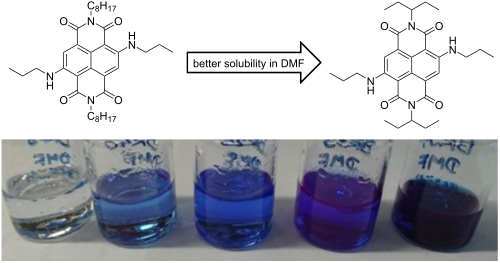
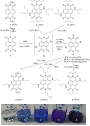
Scheme 1: Synthesis of reference NDI 1 and cNDIs 2–6; bottom: image of saturated solutions of cNDIs 2–6 in DM...
Figure 1: Optical properties of NDI 1 and cNDIs 2 and 6: UV–vis absorbance in CH2Cl2 and in DMF (normal lines...
Scheme 2: Photocatalytic α-alkylation of octanal (12): 500 mM 12, 250 mM 13, 50 mM (20 mol %) organocatalyst ...
Figure 2: Normalized absorbance of cNDI 6 in comparison to normalized emission of the 468 nm, 520 nm, 597 nm,...
Figure 3: Kinetic analysis of yields of product 14 in the presence (solid lines) and in the absence (dashed l...
Beilstein J. Org. Chem. 2018, 14, 3078–3087, doi:10.3762/bjoc.14.287
Graphical Abstract
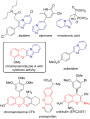
Figure 1: Biologically relevant imidazo[1,2-a]pyridines and chromenes.
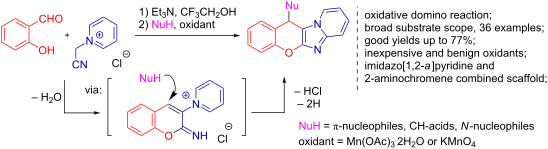
Scheme 1: Domino formation of imidazopyridines and current work.
Scheme 2: Scope of the reaction between N-(cyanomethyl)pyridinium chloride, o-hydroxybenzaldehydes, and nitro...
Scheme 3: Scope of the reaction of o-hydroxybenzaldehydes with N-(cyanomethyl)pyridinium chloride and indoles...
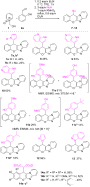
Scheme 4: Scope of the nucleophiles in the reaction of o-hydroxyarylaldehydes with N-(cyanomethyl)pyridinium ...
Scheme 5: N-(Cyanomethyl)thieno[2,3-c]pyridinium chloride (15) and 6-(cyanomethyl)-1-methyl-1H-pyrrolo[2,3-c]...
Figure 2: General view of the molecule 7b in the crystal state (CCDC 1849215). Anisotropic displacement param...
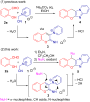
Scheme 6: The presumed mechanism for the formation of target chromenoimidazopyridines (reaction 1) and additi...
Beilstein J. Org. Chem. 2018, 14, 2853–2860, doi:10.3762/bjoc.14.264
Graphical Abstract
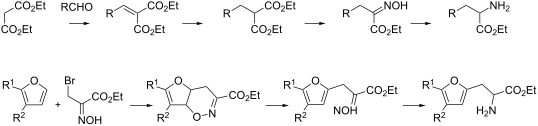
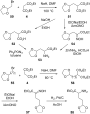
Scheme 1: Malonate-based retrosynthesis of α-amino esters.
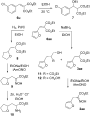
Scheme 2: Some side products and synthesis of α-amino ester 10.
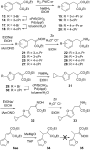
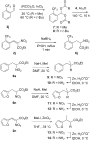
Scheme 3: Syntheses of α-amino esters 22, 24, 26, 28 and 33.
Scheme 4: Syntheses of α-amino esters 38, 41 and 46a,b.
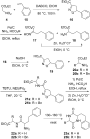
Scheme 5: Syntheses of α-amino esters 53 and 58.
Beilstein J. Org. Chem. 2018, 14, 2846–2852, doi:10.3762/bjoc.14.263
Graphical Abstract
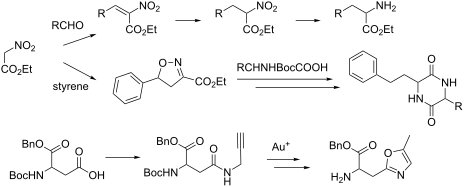
Scheme 1: α-Amino esters from ethyl nitroacetate (4).
Scheme 2: Preparations of α-amino esters 10, 12 and 14.
Scheme 3: Syntheses of α-amino ester 18 and piperazinediones 23a,b.
Scheme 4: Syntheses of α-hydroximino ester 29 and α-amino ester 36.
Scheme 5: Synthesis of α-amino ester 43.
Beilstein J. Org. Chem. 2018, 14, 2589–2596, doi:10.3762/bjoc.14.236
Graphical Abstract
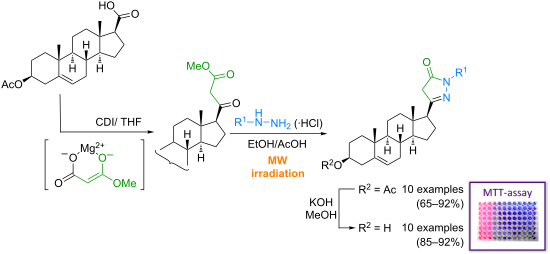
Scheme 1: Multistep synthesis of steroidal β-ketoesters 4 and 4' from pregnenolone acetate (1) and pregnadien...
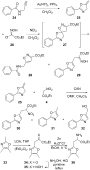
Scheme 2: Cyclization of compound 4 with hydrazine hydrate (5a), phenylhydrazine (5b) and methylhydrazine (5c...
Figure 1: 1H NMR spectra of compound 7f in CDCl3 (top; # solvent signal) and in DMSO-d6 (bottom; # solvent si...
Beilstein J. Org. Chem. 2018, 14, 2482–2487, doi:10.3762/bjoc.14.224
Graphical Abstract
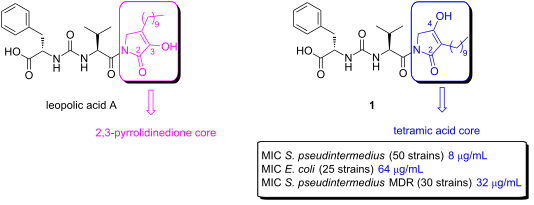
Figure 1: Structures of leopolic acid A and compound 1.
Scheme 1: Synthesis of 3-decyltetramic intermediate 13. Reagent and conditions: a) TEA, THF, 0 °C to rt, 2.5 ...
Scheme 2: Synthesis of dipeptide L-Phe-L-Val intermediate 20. Reagents and conditions: a) PTSA·H2O, benzyl al...
Scheme 3: Synthesis of compound 1. Reagents and conditions: a) n-BuLi, THF, −60 °C, 220 min, 60%; b) H2, Pd/C...
Beilstein J. Org. Chem. 2018, 14, 2082–2089, doi:10.3762/bjoc.14.182
Graphical Abstract
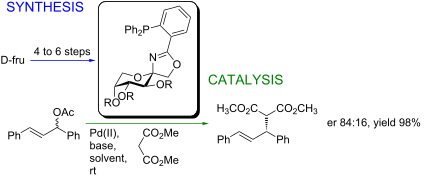
Figure 1: General structure of PHOX ligands 1 and structures of annulated glucosamine-based PHOX and PyOx lig...
Scheme 1: Preparation of 1,2-isopropylidene-protected D-fructose derivatives with different substitution patt...
Scheme 2: Activation of 7 to oxocarbenium ion 9 in the Ritter reaction.
Scheme 3: Zemplén deacetylation of 10i.
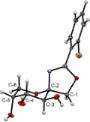
Figure 2: Molecular structure of 10j. Ellipsoids are given at the 50% probability level. Grey = carbon, red =...
Scheme 4: Benzylation of 10j to give 10b.
Scheme 5: Plausible mechanism of the Ritter reaction. For better clarity C-2 is not shown in conformers 9a an...
Scheme 6: Neighboring group participation of ester protective groups. For better clarity C-2 is not shown in ...
Scheme 7: Pd catalyzed Tsuji–Trost reation. BSA: N,O-bis(trimethylsilyl)acetamide, DMM: dimethyl malonate.
Beilstein J. Org. Chem. 2018, 14, 1917–1936, doi:10.3762/bjoc.14.166
Graphical Abstract
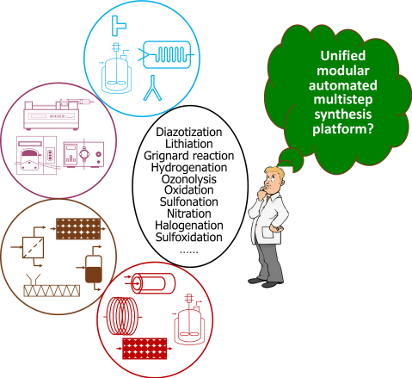
Figure 1: Key features of different approaches for unified multistep synthesis platform.
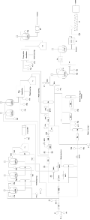
Figure 2: Schematic representation of a unified platform for the flow synthesis (P1–P14 pumps, PBR packed bed...
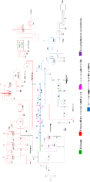
Figure 3: Layout of a unified synthesis platform (including all the component) for multiple drug molecules (a...
Figure 4: Layout for synthesis of 4 molecules on a single platform (approach 2).
Scheme 1: The overall process for the synthesis of diphenhydramine hydrochloride.
Figure 5: Approach 3 for a unified platform for multistep synthesis. M1–M9 = mixers, R1–R4 = tubular reactors...
Beilstein J. Org. Chem. 2018, 14, 1389–1412, doi:10.3762/bjoc.14.117
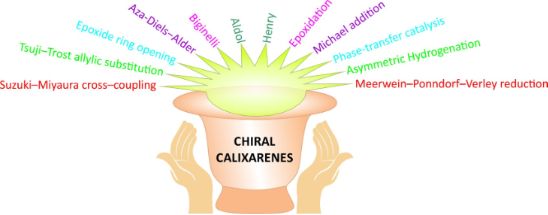
Graphical Abstract
Figure 1: Inherently chiral calix[4]arene-based phase-transfer catalysts.
Scheme 1: Asymmetric alkylations of 3 catalyzed by (±)-1 and (±)-2 under phase-transfer conditions.
Scheme 2: Synthesis of chiral calix[4]arene-based phase-transfer catalyst 7 and structure of O’Donnell’s N-be...
Scheme 3: Asymmetric alkylation of glycine derivative 3 catalyzed by calixarene-based phase-transfer catalyst ...
Figure 2: Calix[4]arene-amides used as phase-transfer catalysts.
Scheme 4: Phase-transfer alkylation of 3 catalyzed by calixarene-triamide 12.
Scheme 5: Synthesis of inherently chiral calix[4]arenes 20a/20b substituted at the lower rim. Reaction condit...
Scheme 6: Asymmetric Henry reaction between 21 and 22 catalyzed by 20a/20b.
Figure 3: Proposed transition state model of asymmetric Henry reaction.
Scheme 7: Synthesis of enantiomerically pure phosphinoferrocenyl-substituted calixarene ligands 27–29.
Scheme 8: Asymmetric coupling reaction of aryl boronates and aryl halides in the presence of calixarene mono ...
Scheme 9: Asymmetric allylic alkylation in the presence of calix[4]arene ligand (S,S)-29.
Figure 4: Structure of inherently chiral oxazoline calix[4]arenes applied in the palladium-catalyzed Tsuji–Tr...
Scheme 10: Asymmetric Tsuji–Trost reaction in the presence of calix[4]arene ligands 36–39.
Figure 5: BINOL-derived calix[4]arene-diphosphite ligands.
Scheme 11: Asymmetric hydrogenation of 41a and 41b catalyzed by in situ-generated catalysts comprised of [Rh(C...
Figure 6: Inherently chiral calix[4]arene 43 containing a diarylmethanol structure.
Scheme 12: Asymmetric Michael addition reaction of 44 with 45 catalyzed by 43.
Figure 7: Calix[4]arene-based chiral primary amine–thiourea catalysts.
Scheme 13: Asymmetric Michael addition of 48 with 49 catalyzed by 47a and 47b.
Scheme 14: Enantioselective Michael addition of 51 to 52 catalyzed by calix[4]arene thioureas.
Scheme 15: Synthesis of calix[4]arene-based tertiary amine–thioureas 54–56.
Scheme 16: Asymmetric Michael addition of 34 and 57 to nitroalkenes 49 catalyzed by 54b.
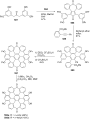
Scheme 17: Synthesis of p-tert-butylcalix[4]arene bis-squaramide derivative 64.
Scheme 18: Asymmetric Michael addition catalyzed by 64.
Scheme 19: Synthesis of chiral p-tert-butylphenol analogue 68.
Figure 8: Novel prolinamide organocatalysts based on the calix[4]arene scaffold.
Scheme 20: Asymmetric aldol reactions of 72 with 70 and 71 catalyzed by 69b.
Scheme 21: Synthesis of p-tert-butylcalix[4]arene-based chiral organocatalysts 75 and 78 derived from L-prolin...
Scheme 22: Synthesis of upper rim-functionalized calix[4]arene-based L-proline derivative 83.
Scheme 23: Synthesis and proposed structure of Calix-Pro-MN (86).
Figure 9: Calix[4]arene-based L-proline catalysts containing ester, amide and acid units.
Scheme 24: Synthesis of calix[4]arene-based prolinamide 92.
Scheme 25: Calixarene-based catalysts for the aldol reaction of 21 with 70.
Scheme 26: Asymmetric aldol reactions of 72 with cyclic ketones catalyzed by calix[4]arene-based chiral organo...
Figure 10: A proposed structure for catalyst 92 in H2O.
Scheme 27: Synthetic route for organocatalyst 98.
Scheme 28: Asymmetric aldol reactions catalyzed by 99.
Figure 11: Proposed catalytic environment for catalyst 99 in the presence of water.
Scheme 29: Asymmetric aldol reactions between 94 and 72 catalyzed by 55a.
Scheme 30: Enantioselective Biginelli reactions catalyzed by 69f.
Scheme 31: Synthesis of calix[4]arene–(salen) complexes.
Scheme 32: Enantioselective epoxidation of 108 catalyzed by 107a/107b.
Scheme 33: Synthesis of inherently chiral calix[4]arene catalysts 111 and 112.
Scheme 34: Enantioselective MPV reduction.
Scheme 35: Synthesis of chiral calix[4]arene ligands 116a–c.
Scheme 36: Asymmetric MPV reduction with chiral calix[4]arene ligands.
Scheme 37: Chiral AlIII–calixarene complexes bearing distally positioned chiral substituents.
Scheme 38: Asymmetric MPV reduction in the presence of chiral calix[4]arene diphosphites.
Scheme 39: Synthesis of enantiomerically pure inherently chiral calix[4]arene phosphonic acid.
Scheme 40: Asymmetric aza-Diels–Alder reactions catalyzed by (cR,pR)-121.
Scheme 41: Asymmetric ring opening of epoxides catalyzed by (cR,pR)-121.
Beilstein J. Org. Chem. 2018, 14, 1120–1180, doi:10.3762/bjoc.14.98
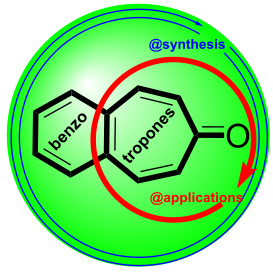
Graphical Abstract
Scheme 1: Tropone (1), tropolone (2) and their resonance structures.
Figure 1: Natural products containing a tropone nucleus.
Figure 2: Possible isomers 11–13 of benzotropone.
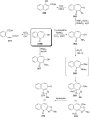
Scheme 2: Synthesis of benzotropones 11 and 12.
Scheme 3: Oxidation products of benzotropylium fluoroborate (16).
Scheme 4: Oxidation of 7-bromo-5H-benzo[7]annulene (22).
Scheme 5: Synthesis of 4,5-benzotropone (11) using o-phthalaldehyde (27).
Scheme 6: Synthesis of 4,5-benzotropone (11) starting from oxobenzonorbornadiene 31.
Scheme 7: Acid-catalyzed cleavage of oxo-bridge of 34.
Scheme 8: Synthesis of 4,5-benzotropone (11) from o-xylylene dibromide (38).
Scheme 9: Synthesis of 4,5-benzotropone (11) via the carbene adduct 41.
Scheme 10: Heck coupling strategy for the synthesis of 11.
Scheme 11: Synthesis of benzofulvalenes via carbonyl group of 4,5-benzotropone (11).
Figure 3: Some cycloheptatrienylium cations.
Scheme 12: Synthesis of condensation product 63 and its subsequent oxidative cyclization products.
Figure 4: A novel series of benzo[7]annulenes prepared from 4,5-benzotropone (11).
Scheme 13: Preparation of substituted benzo[7]annulene 72 using the Mukaiyama-Michael reaction.
Figure 5: Possible benzo[7]annulenylidenes 73–75.
Scheme 14: Thermal and photochemical decomposition of 7-diazo-7H-benzo[7]annulene (76) and the trapping of int...
Scheme 15: Synthesis of benzoheptafulvalene 86.
Scheme 16: Synthesis of 7-(diphenylmethylene)-7H-benzo[7]annulene (89).
Scheme 17: Reaction of 4,5-benzotropone (11) with dimethyl diazomethane.
Scheme 18: Synthesis of dihydrobenzomethoxyazocine 103.
Scheme 19: Synthesis and reducibility of benzo-homo-2-methoxyazocines.
Scheme 20: Synthesis of 4,5-benzohomotropones 104 and 115 from 4,5-benzotropones 11 and 113.
Scheme 21: A catalytic deuterogenation of 4,5-benzotropone (11) and synthesis of 5-monosubstituted benzo[7]ann...
Scheme 22: Synthesis of methyl benzo[7]annulenes 131 and 132.
Scheme 23: Ambident reactivity of halobenzo[7]annulenylium cations 133a/b.
Scheme 24: Preparation of benzo[7]annulenylidene–iron complexes 147.
Scheme 25: Synthesis of 1-ethynylbenzotropone (150) and the etheric compound 152 from 4,5-benzotropone (11) wi...
Scheme 26: Thermal decomposition of 4,5-benzotropone (11).
Scheme 27: Reaction of 4,5-benzotropone (11) with 1,2-ethanediol and 1,2-ethanedithiol.
Scheme 28: Conversions of 1-benzosuberone (162) to 2,3-benzotropone (12).
Scheme 29: Synthesis strategies for 2,3-bezotropone (12) using 1-benzosuberones.
Scheme 30: Oxidation-based synthesis of 2,3-benzotropone (12) via 1-benzosuberone (162).
Scheme 31: Synthesis of 2,3-benzotropone (12) from α-tetralone (171) via ring-expansion.
Scheme 32: Preparation of 2,3-benzotropone (12) by using of benzotropolone 174.
Figure 6: Benzoheptafulvenes as condensation products of 2,3-benzotropone (12).
Scheme 33: Conversion of 2,3-benzotropone (12) to tosylhydrazone salt 182 and gem-dichloride 187.
Figure 7: Benzohomoazocines 191–193 and benzoazocines 194–197.
Scheme 34: From 2,3-benzotropone (12) to carbonium ions 198–201.
Scheme 35: Cycloaddition reactions of 2,3-benzotropone (12).
Scheme 36: Reaction of 2,3-benzotropone (12) with various reagents and compounds.
Figure 8: 3,4-Benzotropone (13) and its resonance structure.
Scheme 37: Synthesis of 6,7-benzobicyclo[3.2.0]hepta-3,6-dien-2-one (230).
Figure 9: Photolysis and thermolysis products of 230.
Figure 10: Benzotropolones and their tautomeric structures.
Scheme 38: Synthesis strategies of 4,5-benzotropolone (238).
Scheme 39: Synthesis protocol for 2-hydroxy-4,5-benzotropone (238) using oxazole-benzo[7]annulene 247.
Figure 11: Some quinoxaline and pyrazine derivatives 254–256 prepared from 4,5-benzotropolone (238).
Scheme 40: Nitration product of 4,5-benzotropolone (238) and its isomerization to 1-nitro-naphthoic acid (259)....
Scheme 41: Synthesis protocol for 6-hydroxy-2,3-benzotropone (239) from benzosuberone (162).
Scheme 42: Various reactions via 6-hydroxy-2,3-benzotropone (239).
Scheme 43: Photoreaction of 6-hydroxy-2,3-benzotropone (239).
Scheme 44: Synthesis of 7-hydroxy-2,3-benzotropone (241) from benzosuberone (162).
Scheme 45: Synthesis strategy for 7-hydroxy-2,3-benzotropone (241) from ketone 276.
Scheme 46: Synthesis of 7-hydroxy-2,3-benzotropone (241) from β-naphthoquinone (280).
Scheme 47: Synthesis of 7-hydroxy-2,3-benzotropone (241) from bicyclic endoperoxide 213.
Scheme 48: Synthesis of 7-hydroxy-2,3-benzotropone (241) by ring-closing metathesis.
Figure 12: Various monosubstitution products 289–291 of 7-hydroxy-2,3-benzotropone (241).
Scheme 49: Reaction of 7-hydroxy-2,3-benzotropone (241) with various reagents.
Scheme 50: Synthesis of 4-hydroxy-2,3-benzotropones 174 and 304 from diketones 300/301.
Scheme 51: Catalytic hydrogenation of diketones 300 and 174.
Scheme 52: Synthesis of halo-benzotropones from alkoxy-naphthalenes 306, 307 and 310.
Figure 13: Unexpected byproducts 313–315 during synthesis of chlorobenzotropone 309.
Figure 14: Some halobenzotropones and their cycloadducts.
Scheme 53: Multisep synthesis of 2-chlorobenzotropone 309.
Scheme 54: A multistep synthesis of 2-bromo-benzotropone 26.
Scheme 55: A multistep synthesis of bromo-2,3-benzotropones 311 and 316.
Scheme 56: Oxidation reactions of 8-bromo-5H-benzo[7]annulene (329) with some oxidants.
Scheme 57: Synthesis of 2-bromo-4,5-benzotropone (26).
Scheme 58: Synthesis of 6-chloro-2,3-benzotropone (335) using LiCl and proposed intermediate 336.
Scheme 59: Reaction of 7-bromo-2,3-benzotropone (316) with methylamine.
Scheme 60: Reactions of bromo-2,3-benzotropones 26 and 311 with dimethylamine.
Scheme 61: Reactions of bromobenzotropones 311 and 26 with NaOMe.
Scheme 62: Reactions of bromobenzotropones 26 and 312 with t-BuOK in the presence of DPIBF.
Scheme 63: Cobalt-catalyzed reductive cross-couplings of 7-bromo-2,3-benzotropone (316) with cyclic α-bromo en...
Figure 15: Cycloadduct 357 and its di-π-methane rearrangement product 358.
Scheme 64: Catalytic hydrogenation of 2-chloro-4,5-benzotropone (311).
Scheme 65: Synthesis of dibromo-benzotropones from benzotropones.
Scheme 66: Bromination/dehydrobromination of benzosuberone (162).
Scheme 67: Some transformations of isomeric dibromo-benzotropones 261A/B.
Scheme 68: Transformations of benzotropolone 239B to halobenzotropolones 369–371.
Figure 16: Bromobenzotropolones 372–376 and 290 prepared via bromination/dehydrobromination strategy.
Scheme 69: Synthesis of some halobenzotropolones 289, 377 and 378.
Figure 17: Bromo-chloro-derivatives 379–381 prepared via chlorination.
Scheme 70: Synthesis of 7-iodo-3,4-benzotropolone (382).
Scheme 71: Hydrogenation of bromobenzotropolones 369 and 370.
Scheme 72: Debromination reactions of mono- and dibromides 290 and 375.
Figure 18: Nitratation and oxidation products of some halobenzotropolenes.
Scheme 73: Azo-coupling reactions of some halobenzotropolones 294, 375 and 378.
Figure 19: Four possible isomers of dibenzotropones 396–399.
Figure 20: Resonance structures of tribenzotropone (400).
Scheme 74: Two synthetic pathways for tribenzotropone (400).
Scheme 75: Synthesis of tribenzotropone (400) from dibenzotropone 399.
Scheme 76: Synthesis of tribenzotropone (400) from 9,10-phenanthraquinone (406).
Scheme 77: Synthesis of tribenzotropone (400) from trifluoromethyl-substituted arene 411.
Figure 21: Dibenzosuberone (414).
Figure 22: Reduction products 415 and 416 of tribenzotropone (400).
Figure 23: Structures of tribenzotropone dimethyl ketal 417 and 4-phenylfluorenone (412) and proposed intermed...
Figure 24: Structures of benzylidene- and methylene-9H-tribenzo[a,c,e][7]annulenes 419 and 420 and chiral phos...
Figure 25: Structures of tetracyclic alcohol 422, p-quinone methide 423 and cation 424.
Figure 26: Structures of host molecules 425–427.
Scheme 78: Synthesis of non-helical overcrowded derivatives syn/anti-431.
Figure 27: Hexabenzooctalene 432.
Figure 28: Structures of possible eight isomers 433–440 of naphthotropone.
Scheme 79: Synthesis of naphthotropone 437 starting from 1-phenylcycloheptene (441).
Scheme 80: Synthesis of 10-hydroxy-11H-cyclohepta[a]naphthalen-11-one (448) from diester 445.
Scheme 81: Synthesis of naphthotropone 433.
Scheme 82: Synthesis of naphthotropones 433 and 434 via cycloaddition reaction.
Scheme 83: Synthesis of naphthotropone 434 starting from 452.
Figure 29: Structures of tricarbonyl(tropone)irons 458, and possible cycloadducts 459.
Scheme 84: Synthesis of naphthotropone 436.
Scheme 85: Synthesis of precursor 465 for naphthotropone 435.
Scheme 86: Generation of naphthotropone 435 from 465.
Figure 30: Structures of tropylium cations 469 and 470.
Figure 31: Structures of tropylium ions 471+.BF4−, 472+.BF4−, and 473+.BF4−.
Scheme 87: Synthesis of tropylium ions 471+.BF4− and 479+.ClO4−.
Scheme 88: Synthesis of 1- and 2-methylanthracene (481 and 482) via carbene–carbene rearrangement.
Figure 32: Trapping products 488–490.
Scheme 89: Generation and chemistry of a naphthoannelated cycloheptatrienylidene-cycloheptatetraene intermedia...
Scheme 90: Proposed intermediates and reaction pathways for adduct 498.
Scheme 91: Exited-state intramolecular proton transfer of 505.
Figure 33: Benzoditropones 506 and 507.
Scheme 92: Synthesis of benzoditropone 506e.
Scheme 93: Synthetic approaches for dibenzotropone 507 via tropone (1).
Scheme 94: Formation mechanisms of benzoditropone 507 and 516 via 515.
Scheme 95: Synthesis of benzoditropones 525 and 526 from pyromellitic dianhydride (527).
Figure 34: Possible three benzocyclobutatropones 534–536.
Scheme 96: Synthesis of benzocyclobutatropones 534 and 539.
Scheme 97: Synthesis attempts for benzocyclobutatropone 545.
Scheme 98: Generation and trapping of symmetric benzocyclobutatropone 536.
Scheme 99: Synthesis of chloro-benzocyclobutatropone 552 and proposed mechanism of fluorenone derivatives.
Scheme 100: Synthesis of tropolone analogue 559.
Scheme 101: Synthesis of tropolones 561 and 562.
Figure 35: o/p-Tropoquinone rings (563 and 564) and benzotropoquinones (565–567).
Scheme 102: Synthesis of benzotropoquinone 566.
Scheme 103: Synthesis of benzotropoquinone 567 via a Diels–Alder reaction.
Figure 36: Products 575–577 through 1,2,3-benzotropoquinone hydrate 569.
Scheme 104: Structures 578–582 prepared from tropoquinone 567.
Figure 37: Two possible structures 583 and 584 for dibenzotropoquinone, and precursor compound 585 for 583.
Scheme 105: Synthesis of saddle-shaped ketone 592 using dibenzotropoquinone 584.
Beilstein J. Org. Chem. 2018, 14, 553–559, doi:10.3762/bjoc.14.42
Graphical Abstract
Figure 1: Structures of pregabalin and methylpregabalin.
Scheme 1: Synthesis of the nitroalkene 6.
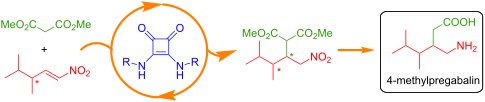
Scheme 2: Catalyst screening in the Michael addition of dimethyl malonate to nitroalkene 6.
Scheme 3: Synthesis of catalysts (Sa,R,R)-C8 and (Sa,S,S)-C8.
Figure 2: Transition state models for the reaction of (R)-6 with dimethyl malonate using catalyst C7 (M06-2X/...
Scheme 4: Synthesis of 4-methylpregabalin (1).
Beilstein J. Org. Chem. 2018, 14, 203–242, doi:10.3762/bjoc.14.15
Graphical Abstract
Figure 1: Selected examples of drugs with fused pyrazole rings.
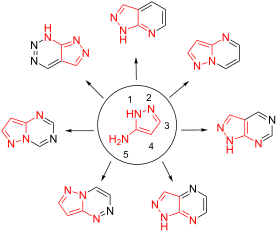
Figure 2: Typical structures of some fused pyrazoloazines from 5-aminopyrazoles.
Scheme 1: Regiospecific synthesis of 4 and 6-trifluoromethyl-1H-pyrazolo[3,4-b]pyridines.
Scheme 2: Synthesis of pyrazolo[3,4-b]pyridine-6-carboxylates.
Scheme 3: Synthesis of 1,4,6-triaryl-1H-pyrazolo[3,4-b]pyridines with ionic liquid .
Scheme 4: Synthesis of coumarin-based isomeric tetracyclic pyrazolo[3,4-b]pyridines.
Scheme 5: Synthesis of 6-substituted pyrazolo[3,4-b]pyridines under Heck conditions.
Scheme 6: Microwave-assisted palladium-catalyzed synthesis of pyrazolo[3,4-b]pyridines.
Scheme 7: Acid-catalyzed synthesis of pyrazolo[3,4-b]pyridines via enaminones.
Scheme 8: Synthesis of pyrazolo[3,4-b]pyridines via aza-Diels–Alder reaction.
Scheme 9: Synthesis of macrocyclane fused pyrazolo[3,4-b]pyridine derivatives.
Scheme 10: Three-component synthesis of 4,7-dihydro-1H-pyrazolo[3,4-b]pyridine derivatives.
Scheme 11: Ultrasonicated synthesis of spiro[indoline-3,4'-pyrazolo[3,4-b]pyridine]-2,6'(1'H)-diones.
Scheme 12: Synthesis of spiro[indoline-3,4'-pyrazolo[3,4-b]pyridine] derivatives under conventional heating co...
Scheme 13: Nanoparticle-catalyzed synthesis of pyrazolo[3,4-b]pyridine-spiroindolinones.
Scheme 14: Microwave-assisted multicomponent synthesis of spiropyrazolo[3,4-b]pyridines.
Scheme 15: Unexpected synthesis of naphthoic acid-substituted pyrazolo[3,4-b]pyridines.
Scheme 16: Multicomponent synthesis of variously substituted pyrazolo[3,4-b]pyridine derivatives.
Scheme 17: Three-component synthesis of 4,7-dihydropyrazolo[3,4-b]pyridines and pyrazolo[3,4-b]pyridines.
Scheme 18: Synthesis of pyrazolo[3,4-b]pyridine-5-spirocycloalkanediones.
Scheme 19: Ultrasound-mediated three-component synthesis of pyrazolo[3,4-b]pyridines.
Scheme 20: Multicomponent synthesis of 4-aryl-3-methyl-1-phenyl-4,6,8,9-tetrahydropyrazolo [3,4-b]thiopyrano[4...
Scheme 21: Synthesis of 2,3-dihydrochromeno[4,3-d]pyrazolo[3,4-b]pyridine-1,6-diones.
Scheme 22: FeCl3-catalyzed synthesis of o-hydroxyphenylpyrazolo[3,4-b]pyridine derivatives.
Scheme 23: Ionic liquid-mediated synthesis of pyrazolo[3,4-b]pyridines.
Scheme 24: Microwave-assisted synthesis of pyrazolo[3,4-b]pyridines.
Scheme 25: Multicomponent synthesis of pyrazolo[3,4-b]pyridine-5-carbonitriles.
Scheme 26: Unusual domino synthesis of 4,7-dihydropyrazolo[3,4-b]pyridine-5-nitriles.
Scheme 27: Synthesis of 4,5,6,7-tetrahydro-4H-pyrazolo[3,4-b]pyridines under conventional heating and ultrasou...
Scheme 28: L-Proline-catalyzed synthesis of of pyrazolo[3,4-b]pyridine.
Scheme 29: Microwave-assisted synthesis of 5-aminoarylpyrazolo[3,4-b]pyridines.
Scheme 30: Microwave-assisted multi-component synthesis of pyrazolo[3,4-e]indolizines.
Scheme 31: Synthesis of fluoropropynyl and fluoroalkyl substituted pyrazolo[1,5-a]pyrimidine.
Scheme 32: Acid-catalyzed synthesis of pyrazolo[1,5-a]pyrimidine derivatives.
Scheme 33: Chemoselective and regiospecific synthesis of 2-(3-methylpyrazol-1’-yl)-5-methylpyrazolo[1,5-a]pyri...
Scheme 34: Regioselective synthesis of 7-trifluoromethylpyrazolo[1,5-a]pyrimidines.
Scheme 35: Microwave-assisted synthesis of 7-trifluoromethylpyrazolo[1,5-a]pyrimidine carboxylates.
Scheme 36: Microwave and ultrasound-assisted synthesis of 7-trifluoromethylpyrazolo[1,5-a]pyrimidines.
Scheme 37: Base-catalyzed unprecedented synthesis of pyrazolo[1,5-a]pyrimidines via C–C bond cleavage.
Scheme 38: Synthesis of aminobenzothiazole/piperazine linked pyrazolo[1,5-a]pyrimidines.
Scheme 39: Synthesis of aminoalkylpyrazolo[1,5-a]pyrimidine-7-amines.
Scheme 40: Synthesis of pyrazolo[1,5-a]pyrimidines from condensation of 5-aminopyrazole 126 and ethyl acetoace...
Scheme 41: Synthesis of 7-aminopyrazolo[1,5-a]pyrimidines.
Scheme 42: Unexpected synthesis of 7-aminopyrazolo[1,5-a]pyrimidines under solvent free and solvent-mediated c...
Scheme 43: Synthesis of N-(4-aminophenyl)-7-aryloxypyrazolo[1,5-a]pyrimidin-5-amines.
Scheme 44: Base-catalyzed synthesis of 5,7-diarylpyrazolo[1,5-a]pyrimidines.
Scheme 45: Synthesis of 6,7-dihydropyrazolo[1,5-a]pyrimidines in PEG-400.
Scheme 46: Synthesis of 7-heteroarylpyrazolo[1,5-a]pyrimidine-3-carboxamides.
Scheme 47: Synthesis of 7-heteroarylpyrazolo[1,5-a]pyrimidine derivatives under conventional heating and micro...
Scheme 48: Synthesis of N-aroylpyrazolo[1,5-a]pyrimidine-5-amines.
Scheme 49: Regioselective synthesis of ethyl pyrazolo[1,5-a]pyrimidine-7-carboxylate.
Scheme 50: Sodium methoxide-catalyzed synthesis of 3-cyano-6,7-diarylpyrazolo[1,5-a]pyrimidines.
Scheme 51: Synthesis of various pyrazolo[3,4-d]pyrimidine derivatives.
Scheme 52: Synthesis of hydrazinopyrazolo[3,4-d]pyrimidine derivatives.
Scheme 53: Synthesis of N-arylidinepyrazolo[3,4-d]pyrimidin-5-amines.
Scheme 54: Synthesis of pyrazolo[3,4-d]pyrimidinyl-4-amines.
Scheme 55: Iodine-catalyzed synthesis of pyrazolo[3,4-d]pyrimidinones.
Scheme 56: Synthesis of ethyl 6-amino-2H-pyrazolo[3,4-d]pyrimidine-4-carboxylate.
Scheme 57: Synthesis of 4-substituted-(3,6-dihydropyran-4-yl)-1H-pyrazolo[3,4-d]pyrimidines.
Scheme 58: Synthesis of 1-(2,4-dichlorophenyl)pyrazolo[3,4-d]pyrimidin-4-yl carboxamides.
Scheme 59: Synthesis of 5-(1,3,4-thidiazol-2-yl)pyrazolo[3,4-d]pyrimidine.
Scheme 60: One pot POCl3-catalyzed synthesis of 1-arylpyrazolo[3,4-d]pyrimidin-4-ones.
Scheme 61: Synthesis of 4-amino-N1,C3-dialkylpyrazolo[3,4-d]pyrimidines under Suzuki conditions.
Scheme 62: Microwave-assisted synthesis of pyrazolo[3,4-b]pyrazines.
Scheme 63: Synthesis and derivatization of pyrazolo[3,4-b]pyrazine-5-carbonitriles.
Scheme 64: Synthesis of 2-thioxo-pyrazolo[1,5-a][1,3,5]triazin-4-ones.
Scheme 65: Synthesis of 2,3-dihydropyrazolo[1,5-a][1,3,5]triazin-4(1H)-one.
Scheme 66: Synthesis of pyrazolo[1,5-a][1,3,5]triazine-8-carboxylic acid ethyl ester.
Scheme 67: Microwave-assisted synthesis of 4,7-dihetarylpyrazolo[1,5-a][1,3,5]triazines.
Scheme 68: Alternative synthetic route to 4,7-diheteroarylpyrazolo[1,5-a][1,3,5]triazines.
Scheme 69: Synthesis of 4-aryl-2-ethylthio-7-methylpyrazolo[1,5-a][1,3,5]triazines.
Scheme 70: Microwave-assisted synthesis of 4-aminopyrazolo[1,5-a][1,3,5]triazine.
Scheme 71: Synthesis of pyrazolo[3,4-d][1,2,3]triazines from pyrazol-5-yl diazonium salts.
Scheme 72: Synthesis of 2,5-dihydropyrazolo[3,4-e][1,2,4]triazines.
Scheme 73: Synthesis of pyrazolo[5,1-c][1,2,4]triazines via diazopyrazolylenaminones.
Scheme 74: Synthesis of pyrazolo[5,1-c][1,2,4]triazines in presence of sodium acetate.
Scheme 75: Synthesis of various 7-diazopyrazolo[5,1-c][1,2,4]triazine derivatives.
Scheme 76: One pot synthesis of pyrazolo[5,1-c][1,2,4]triazines.
Scheme 77: Synthesis of 4-amino-3,7,8-trinitropyrazolo-[5,1-c][1,2,4]triazines.
Scheme 78: Synthesis of tricyclic pyrazolo[5,1-c][1,2,4]triazines by azocoupling reaction.
Beilstein J. Org. Chem. 2018, 14, 194–202, doi:10.3762/bjoc.14.14
Graphical Abstract
Figure 1: Selected indolo[3,2-b]quinolines (quindolines) with biological activity.
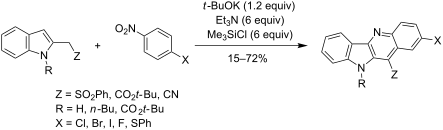
Scheme 1: Selected starting materials for the construction of the quindoline system.
Scheme 2: Synthesis of condensed pyridines mediated by a σH-adduct.
Scheme 3: Formation of condensed isoxazole derivatives.
Scheme 4: Reaction of unprotected indole ester 1c with 4-chloronitrobenzene.
Scheme 5: A plausible mechanism for the formation of 11-(phenylsulfonyl)indolo[3,2-b]quinolines.
Beilstein J. Org. Chem. 2017, 13, 2854–2861, doi:10.3762/bjoc.13.277
Graphical Abstract
Scheme 1: Beirut reaction.
Scheme 2: Reactivity of 4,6-dinitrobenzofuroxan.
Scheme 3: Reactivity of ANBF (1).
Scheme 4: Synthesis of ANBF.
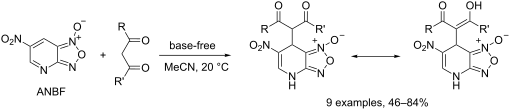
Scheme 5: Reactions of ANBF with β-dicarbonyl compounds.
Figure 1: General view of molecule 12 in crystal. Anisotropic displacement parameters for non-hydrogen atoms ...
Scheme 6: Reaction of ANBF with 2,4,6-trinitrotoluene.
Figure 2: Partial 1H NMR spectrum of compound 15 in DMSO-d6.
Figure 3: General view of molecule 15 in crystal. Anisotropic displacement parameters for non-hydrogen atoms ...
Scheme 7: Plausible mechanism of adducts formation.
Beilstein J. Org. Chem. 2017, 13, 2800–2818, doi:10.3762/bjoc.13.273
Graphical Abstract
Scheme 1: Trifluoromethylation of silyl enol ethers.
Scheme 2: Continuous flow trifluoromethylation of ketones under photoredox catalysis.
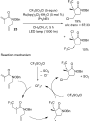
Scheme 3: Trifluoromethylation of enol acetates.
Scheme 4: Photoredox-catalysed tandem trifluoromethylation/cyclisation of N-arylacrylamides: a route to trifl...
Scheme 5: Tandem trifluoromethylation/cyclisation of N-arylacrylamides using BiOBr nanosheets catalysis.
Scheme 6: Photoredox-catalysed trifluoromethylation/desulfonylation/cyclisation of N-tosyl acrylamides (bpy: ...
Scheme 7: Photoredox-catalysed trifluoromethylation/aryl migration/desulfonylation of N-aryl-N-tosylacrylamid...
Scheme 8: Proposed mechanism for the trifluoromethylation/aryl migration/desulfonylation (/cyclisation) of N-...
Scheme 9: Photoredox-catalysed trifluoromethylation/cyclisation of N-methacryloyl-N-methylbenzamide derivativ...
Scheme 10: Photoredox-catalysed trifluoromethylation/cyclisation of N-methylacryloyl-N-methylbenzamide derivat...
Scheme 11: Photoredox-catalysed trifluoromethylation/dearomatising spirocyclisation of a N-benzylacrylamide de...
Scheme 12: Photoredox-catalysed trifluoromethylation/cyclisation of an unactivated alkene.
Scheme 13: Asymmetric radical aminotrifluoromethylation of N-alkenylurea derivatives using a dual CuBr/chiral ...
Scheme 14: Aminotrifluoromethylation of an N-alkenylurea derivative using a dual CuBr/phosphoric acid catalyti...
Scheme 15: 1,2-Formyl- and 1,2-cyanotrifluoromethylation of alkenes under photoredox catalysis.
Scheme 16: First simultaneous introduction of the CF3 moiety and a Cl atom onto alkenes.
Scheme 17: Chlorotrifluoromethylaltion of terminal, 1,1- and 1,2-substituted alkenes.
Scheme 18: Chorotrifluoromethylation of electron-deficient alkenes (DCE = dichloroethane).
Scheme 19: Cascade trifluoromethylation/cyclisation/chlorination of N-allyl-N-(benzyloxy)methacrylamide.
Scheme 20: Cascade trifluoromethylation/cyclisation (/chlorination) of diethyl 2-allyl-2-(3-methylbut-2-en-1-y...
Scheme 21: Trifluoromethylchlorosulfonylation of allylbenzene derivatives and aliphatic alkenes.
Scheme 22: Access to β-hydroxysulfones from CF3-containing sulfonyl chlorides through a photocatalytic sequenc...
Scheme 23: Cascade trifluoromethylchlorosulfonylation/cyclisation reaction of alkenols: a route to trifluorome...
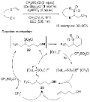
Scheme 24: First direct C–H trifluoromethylation of arenes and proposed mechanism.
Scheme 25: Direct C–H trifluoromethylation of five- and six-membered (hetero)arenes under photoredox catalysis....
Scheme 26: Alternative pathway for the C–H trifluoromethylation of (hetero)arenes under photoredox catalysis.
Scheme 27: Direct C–H trifluoromethylation of five- and six-membered ring (hetero)arenes using heterogeneous c...
Scheme 28: Trifluoromethylation of terminal olefins.
Scheme 29: Trifluoromethylation of enamides.
Scheme 30: (E)-Selective trifluoromethylation of β-nitroalkenes under photoredox catalysis.
Scheme 31: Photoredox-catalysed trifluoromethylation/cyclisation of an o-azidoarylalkynes.
Scheme 32: Regio- and stereoselective chlorotrifluoromethylation of alkynes.
Scheme 33: PMe3-mediated trifluoromethylsulfenylation by in situ generation of CF3SCl.
Scheme 34: (EtO)2P(O)H-mediated trifluoromethylsulfenylation of (hetero)arenes and thiols.
Scheme 35: PPh3/NaI-mediated trifluoromethylsulfenylation of indole derivatives.
Scheme 36: PPh3/n-Bu4NI mediated trifluoromethylsulfenylation of thiophenol derivatives.
Scheme 37: PPh3/Et3N mediated trifluoromethylsulfinylation of benzylamine.
Scheme 38: PCy3-mediated trifluoromethylsulfinylation of azaarenes, amines and phenols.
Scheme 39: Mono- and dichlorination of carbon acids.
Scheme 40: Monochlorination of (N-aryl-N-hydroxy)acylacetamides.
Scheme 41: Examples of the synthesis of heterocycles fused with β-lactams through a chlorination/cyclisation p...
Scheme 42: Enantioselective chlorination of β-ketoesters and oxindoles.
Scheme 43: Enantioselective chlorination of 3-acyloxazolidin-2-one derivatives (NMM = N-methylmorpholine).
Beilstein J. Org. Chem. 2017, 13, 2584–2595, doi:10.3762/bjoc.13.255
Graphical Abstract
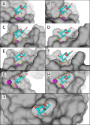
Figure 1: CRDs of the analyzed crystal structures, with mannose pyranosyl units similarly aligned in each str...
Figure 2: A) The solvent exposed binding site of E-selectin interacting with sLex (PDB: 1G1T) [53]. B) The buried...
Figure 3: Dynamic mannose–receptor interactions (20 ns MD simulations), grouped according to the nature of th...
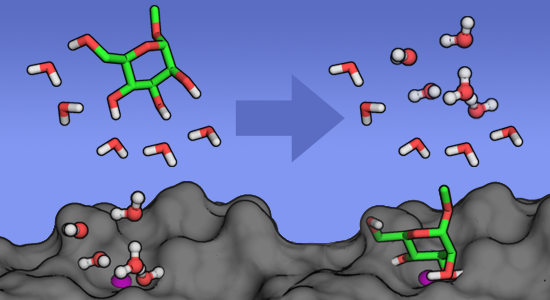
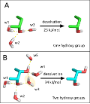
Figure 4: Desolvation of hydroxy groups. A) The desolvation cost of a single hydroxy group associated with th...
Figure 5: Model view of the binding site interactions of DC-SIGN (E) and BC2L-A (H) with water. A) The solven...
Figure 6: Thermodynamic fingerprints of sLex bound to E-selectin and n-heptyl α-D-mannoside bound to FimHLD (I...
Figure 7: Schematic overview of the conformational changes of FimH (I). FimH crystal structures, which corres...
Figure 8: Comparison of the holo (white) and apo (green, magenta) binding sites of LecB (G) and BDCA-2 (A), r...
Beilstein J. Org. Chem. 2017, 13, 2214–2234, doi:10.3762/bjoc.13.220
Graphical Abstract
Scheme 1: Precursors of nitrosoalkenes NSA.
Scheme 2: Reactions of cyclic α-chlorooximes 1 with 1,3-dicarbonyl compounds.
Scheme 3: C-C-coupling of N,N-bis(silyloxy)enamines 3 with 1,3-dicarbonyl compounds.
Scheme 4: Reaction of N,N-bis(silyloxy)enamines 3 with nitronate anions.
Scheme 5: Reaction of α-chlorooximes TBS ethers 2 with ester enolates.
Scheme 6: Assembly of bicyclooctanone 14 via an intramolecular cyclization of nitrosoalkene NSA2.
Scheme 7: A general strategy for the assembly of bicyclo[2.2.1]heptanes via an intramolecular cyclization of ...
Scheme 8: Stereochemistry of Michael addition to cyclic nitrosoalkene NSA3.
Scheme 9: Stereochemistry of Michael addition to acyclic nitrosoalkenes NSA4.
Scheme 10: Stereochemistry of Michael addition to γ-alkoxy nitrosoalkene NSA5.
Scheme 11: Oppolzer’s total synthesis of 3-methoxy-9β-estra(1,3,5(10))trien(11,17)dione (25).
Scheme 12: Oppolzer’s total synthesis of (+/−)-isocomene.
Figure 1: Alkaloids synthesized using stereoselective Michael addition to conjugated nitrosoalkenes.
Scheme 13: Weinreb’s total synthesis of alstilobanines A, E and angustilodine.
Scheme 14: Weinreb’s approach to the core structure of apparicine alkaloids.
Scheme 15: Weinreb’s synthesis of (+/−)-myrioneurinol via stereoselective conjugate addition of malonate to ni...
Scheme 16: Reactions of cyclic α-chloro oximes with Grignard reagents.
Scheme 17: Corey’s synthesis of (+/−)-perhydrohistrionicotoxin.
Scheme 18: Addition of Gilman’s reagents to α,β-epoxy oximes 53.
Scheme 19: Addition of Gilman’s reagents to α-chlorooximes.
Scheme 20: Reaction of silyl nitronate 58 with organolithium reagents via nitrosoalkene NSA12.
Scheme 21: Reaction of β-ketoxime sulfones 61 and 63 with lithium acetylides.
Scheme 22: Electrophilic addition of nitrosoalkenes NSA14 to electron-rich arenes.
Scheme 23: Addition of nitrosoalkenes NSA14 to pyrroles and indoles.
Scheme 24: Reaction of phosphinyl nitrosoalkenes NSA15 with indole.
Scheme 25: Reaction of pyrrole with α,α’-dihalooximes 70.
Scheme 26: Synthesis of indole-derived psammaplin A analogue 72.
Scheme 27: Synthesis of tryptophanes by reduction of oximinoalkylated indoles 68.
Scheme 28: Ottenheijm’s synthesis of neoechinulin B analogue 77.
Scheme 29: Synthesis of 1,2-dihydropyrrolizinones 82 via addition of pyrrole to ethyl bromopyruvate oxime.
Scheme 30: Kozikowski’s strategy to indolactam-based alkaloids via addition of indoles to ethyl bromopyruvate ...
Scheme 31: Addition of cyanide anion to nitrosoalkenes and subsequent cyclization to 5-aminoisoxazoles 86.
Scheme 32: Et3N-catalysed addition of trimethylsilyl cyanide to N,N-bis(silyloxy)enamines 3 leading to 5-amino...
Scheme 33: Addition of TMSCN to allenyl N-siloxysulfonamide 89.
Scheme 34: Reaction of nitrosoallenes NSA16 with malodinitrile and ethyl cyanoacetic ester.
Scheme 35: [4 + 1]-Annulation of nitrosoalkenes NSA with sulfonium ylides 92.
Scheme 36: Reaction of diazo compounds 96 with nitrosoalkenes NSA.
Scheme 37: Tandem Michael addition/oxidative cyclization strategy to isoxazolines 100.
Beilstein J. Org. Chem. 2017, 13, 1085–1098, doi:10.3762/bjoc.13.108
Graphical Abstract
Scheme 1: Molecular structures of the archazolids.
Scheme 2: Retrosynthetic analysis of archazolid A by the Menche group.
Scheme 3: Synthesis of north-eastern fragment 5 through a Paterson anti-aldol addition and multiple Still–Gen...
Scheme 4: Synthesis of 4 through an Abiko–Masamune anti-aldol addition.
Scheme 5: Thiazol construction and synthesis of the southern fragment 6.
Scheme 6: Completion of the total synthesis of archazolid A.
Scheme 7: Synthesis of archazolid B (2) by a ring closing Heck reaction of 38.
Scheme 8: Retrosynthetic analysis of archazolid B by the Trauner group.
Scheme 9: Synthesis of acid 40 from Roche ester 41 involving a highly efficient Trost–Alder ene reaction.
Scheme 10: Synthesis of precursor 39 for the projected relay RCM reaction.
Scheme 11: Final steps of Trauner’s total synthesis of archazolid B.
Scheme 12: Overview of the different retrosynthetic approaches for the synthesis of dihydroarchazolid B (3) re...
Scheme 13: Fragment synthesis of 69 towards the total synthesis of 3.
Scheme 14: Organometallic addition of the side chain to access free alcohol 75.
Beilstein J. Org. Chem. 2017, 13, 960–987, doi:10.3762/bjoc.13.97
Graphical Abstract
Figure 1: A number of experiments for various optimization algorithms [46].
Figure 2: Symbols used for block and P&ID diagrams.
Scheme 1: Multistep synthesis of olanzapine (Hartwig et al. [10])
Figure 3: (A) Block diagram representation of the process shown in Scheme 1, (B) piping and instrumentation diagram o...
Scheme 2: Multistep flow synthesis for tamoxifen (Murray et al. [11]).
Figure 4: (A) Block diagram representation of the process shown in Scheme 2, (B) piping and instrumentation diagram o...
Figure 5: (A) Block diagram representation of the process shown in Scheme 3, (B) piping and instrumentation diagram o...
Scheme 3: Multistep flow synthesis of rufinamide (Zhang et al. [14]).
Figure 6: (A) Block diagram representation of the process shown in Scheme 4, (B) piping and instrumentation diagram o...
Scheme 4: Multistep synthesis for (±)-Oxomaritidine (Baxendale et al. [9]).
Figure 7: (A) Block diagram representation of the process shown in Scheme 5, (B) piping and instrumentation diagram o...
Scheme 5: Multistep synthesis for ibuprofen (Snead and Jamison [60]).
Scheme 6: Multistep synthesis for cinnarizine and buclizine derivatives (Borukhova et al. [23])
Figure 8: (A) Block diagram representation of the process shown in Scheme 6, (B) piping and instrumentation diagram o...
Scheme 7: Multistep synthesis for (S)-rolipram (Tsubogo et al. [4])
Figure 9: (A) Block diagram representation of the process shown in Scheme 7 (colours for each reactor shows different...
Figure 10: (A) Block diagram representation of the process shown in Scheme 8, (B) piping and instrumentation diagram o...
Scheme 8: Multistep synthesis for amitriptyline (Kupracz and Kirschning [7]).
Beilstein J. Org. Chem. 2017, 13, 451–494, doi:10.3762/bjoc.13.48
Graphical Abstract
Figure 1: Biologically active 1-indanones and their structural analogues.
Figure 2: Number of papers about (a) 1-indanones, (b) synthesis of 1-indanones.
Scheme 1: Synthesis of 1-indanone (2) from hydrocinnamic acid (1).
Scheme 2: Synthesis of 1-indanone (2) from 3-(2-bromophenyl)propionic acid (3).
Scheme 3: Synthesis of 1-indanones 5 from 3-arylpropionic acids 4.
Scheme 4: Synthesis of kinamycin (9a) and methylkinamycin C (9b).
Scheme 5: Synthesis of trifluoromethyl-substituted arylpropionic acids 12, 1-indanones 13 and dihydrocoumarin...
Scheme 6: Synthesis of 1-indanones 16 from benzoic acids 15.
Scheme 7: Synthesis of 1-indanones 18 from arylpropionic and 3-arylacrylic acids 17.
Scheme 8: The NbCl5-induced one-step synthesis of 1-indanones 22.
Scheme 9: Synthesis of biologically active 1-indanone derivatives 26.
Scheme 10: Synthesis of enantiomerically pure indatraline ((−)-29).
Scheme 11: Synthesis of 1-indanone (2) from the acyl chloride 30.
Scheme 12: Synthesis of the mechanism-based inhibitors 33 of coelenterazine.
Scheme 13: Synthesis of the indane 2-imidazole derivative 37.
Scheme 14: Synthesis of fluorinated PAHs 41.
Scheme 15: Synthesis of 1-indanones 43 via transition metal complexes-catalyzed carbonylative cyclization of m...
Scheme 16: Synthesis of 6-methyl-1-indanone (46).
Scheme 17: Synthesis of 1-indanone (2) from ester 48.
Scheme 18: Synthesis of benzopyronaphthoquinone 51 from the spiro-1-indanone 50.
Scheme 19: Synthesis of the selective endothelin A receptor antagonist 55.
Scheme 20: Synthesis of 1-indanones 60 from methyl vinyl ketone (57).
Scheme 21: Synthesis of 1-indanones 64 from diethyl phthalate 61.
Scheme 22: Synthesis of 1-indanone derivatives 66 from various Meldrum’s acids 65.
Scheme 23: Synthesis of halo 1-indanones 69.
Scheme 24: Synthesis of substituted 1-indanones 71.
Scheme 25: Synthesis of spiro- and fused 1-indanones 73 and 74.
Scheme 26: Synthesis of spiro-1,3-indanodiones 77.
Scheme 27: Mechanistic pathway for the NHC-catalyzed Stetter–Aldol–Michael reaction.
Scheme 28: Synthesis of 2-benzylidene-1-indanone derivatives 88a–d.
Scheme 29: Synthesis of 1-indanone derivatives 90a–i.
Scheme 30: Synthesis of 1-indanones 96 from o-bromobenzaldehydes 93 and alkynes 94.
Scheme 31: Synthesis of 3-hydroxy-1-indanones 99.
Scheme 32: Photochemical preparation of 1-indanones 103 from ketones 100.
Scheme 33: Synthesis of chiral 3-aryl-1-indanones 107.
Scheme 34: Photochemical isomerization of 2-methylbenzil 108.
Scheme 35: Synthesis of 2-hydroxy-1-indanones 111a–c.
Scheme 36: Synthesis of 1-indanone derivatives 113 and 114 from η6-1,2-dioxobenzocyclobutene complex 112.
Scheme 37: Synthesis of nakiterpiosin (117).
Scheme 38: Synthesis of 2-alkyl-1-indanones 120.
Scheme 39: Synthesis of fluorine-containing 1-indanone derivatives 123.
Scheme 40: Synthesis of 2-benzylidene and 2-benzyl-1-indanones 126, 127 from the chalcone 124.
Scheme 41: Synthesis of 2-bromo-6-methoxy-3-phenyl-1-indanone (130).
Scheme 42: Synthesis of combretastatin A-4-like indanones 132a–s.
Figure 3: Chemical structures of investigated dienones 133 and synthesized cyclic products 134–137.
Figure 4: Chemical structures of 1-indanones and their heteroatom analogues 138–142.
Scheme 43: Synthesis of 2-phosphorylated and 2-non-phosphorylated 1-indanones 147 and 148 from β-ketophosphona...
Scheme 44: Photochemical synthesis of 1-indanone derivatives 150, 153a, 153b.
Scheme 45: Synthesis of polysubstituted-1-indanones 155, 157.
Scheme 46: Synthesis of 1-indanones 159a–g from α-arylpropargyl alcohols 158 using RhCl(PPh3)3 as a catalyst.
Scheme 47: Synthesis of optically active 1-indanones 162 via the asymmetric Rh-catalyzed isomerization of race...
Scheme 48: Mechanism of the Rh-catalyzed isomerization of α-arylpropargyl alcohols 161 to 1-indanones 162.
Figure 5: Chemical structure of abicoviromycin (168) and its new benzo derivative 169.
Scheme 49: Synthesis of racemic benzoabicoviromycin 172.
Scheme 50: Synthesis of [14C]indene 176.
Scheme 51: Synthesis of indanone derivatives 178–180.
Scheme 52: Synthesis of racemic pterosin A 186.
Scheme 53: Synthesis of trans-2,3-disubstituted 1-indanones 189.
Scheme 54: Synthesis of 3-aryl-1-indanone derivatives 192.
Scheme 55: Synthesis of 1-indanone derivatives 194 from 3-(2-iodoaryl)propanonitriles 193.
Scheme 56: Synthesis of 1-indanones 200–204 by cyclization of aromatic nitriles.
Scheme 57: Synthesis of 1,1’-spirobi[indan-3,3’-dione] derivative 208.
Scheme 58: Total synthesis of atipamezole analogues 211.
Scheme 59: Synthesis of 3-[4-(1-piperidinoethoxy)phenyl]spiro[indene-1,1’-indan]-5,5’-diol hydrochloride 216.
Scheme 60: Synthesis of 3-arylindan-1-ones 219.
Scheme 61: Synthesis of 2-hydroxy-1-indanones 222.
Scheme 62: Synthesis of the 1-indanone 224 from the THP/MOM protected chalcone epoxide 223.
Scheme 63: Synthesis of 1-indanones 227 from γ,δ-epoxy ketones 226.
Scheme 64: Synthesis of 2-hydroxy-2-methylindanone (230).
Scheme 65: Synthesis of 1-indanone derivatives 234 from cyclopropanol derivatives 233.
Scheme 66: Synthesis of substituted 1-indanone derivatives 237.
Scheme 67: Synthesis of 7-methyl substituted 1-indanone 241 from 1,3-pentadiene (238) and 2-cyclopentenone (239...
Scheme 68: Synthesis of disubstituted 1-indanone 246 from the siloxydiene 244 and 2-cyclopentenone 239.
Scheme 69: Synthesis of 5-hydroxy-1-indanone (250) via the Diels–Alder reaction of 1,3-diene 248 with sulfoxid...
Scheme 70: Synthesis of halogenated 1-indanones 253a and 253b.
Scheme 71: Synthesis of 1-indanones 257 and 258 from 2-bromocyclopentenones 254.
Scheme 72: Synthesis of 1-indanone 261 from 2-bromo-4-acetoxy-2-cyclopenten-1-one (260) and 1,2-dihydro-4-viny...
Scheme 73: Synthesis of 1-indanone 265 from 1,2-dihydro-7-methoxy-4-vinylnaphthalene (262) and bromo-substitut...
Scheme 74: Synthesis of 1-indanone 268 from dihydro-3-vinylphenanthrene 266 and 4-acetoxy-2-cyclopenten-1-one (...
Scheme 75: Synthesis of 1-indanone 271 from phenylselenyl-substituted cyclopentenone 268.
Scheme 76: Synthesis of 1-indanone 272 from the trienone 270.
Scheme 77: Synthesis of the 1-indanone 276 from the aldehyde 273.
Scheme 78: Synthesis of 1-indanones 278 and 279.
Scheme 79: Synthesis of 1-indanone 285 from octa-1,7-diyne (282) and cyclopentenone 239.
Scheme 80: Synthesis of benz[f]indan-1-one (287) from cyclopentenone 239 and o-bis(dibromomethyl)benzene (286)....
Scheme 81: Synthesis of 3-methyl-substituted benz[f]indan-1-one 291 from o-bis(dibromomethyl)benzene (286) and...
Scheme 82: Synthesis of benz[f]indan-1-one (295) from the anthracene epidioxide 292.
Scheme 83: Synthesis of 1-indanone 299 from homophthalic anhydride 298 and cyclopentynone 297.
Scheme 84: Synthesis of cyano-substituted 1-indanone derivative 301 from 2-cyanomethylbenzaldehyde (300) and c...
Scheme 85: Synthesis of 1-indanone derivatives 303–305 from ketene dithioacetals 302.
Scheme 86: Synthesis of 1-indanones 309–316.
Scheme 87: Mechanism of the hexadehydro-Diels–Alder (HDDA) reaction.
Scheme 88: Synthesis of 1-indenone 318 and 1-indanones 320 and 321 from tetraynes 317 and 319.
Scheme 89: Synthesis of 1-indanone 320 from the triyn 319.
Scheme 90: Synthesis 1-indanone 328 from 2-methylfuran 324.
Scheme 91: Synthesis of 1-indanones 330 and 331 from furans 329.
Scheme 92: Synthesis of 1-indanone 333 from the cycloadduct 332.
Scheme 93: Synthesis of (S)-3-arylindan-1-ones 335.
Scheme 94: Synthesis of (R)-2-acetoxy-1-indanone 338.
Figure 6: Chemical structures of obtained cyclopenta[α]phenanthrenes 339.
Scheme 95: Synthesis of the benzoindanone 343 from arylacetaldehyde 340 with 1-trimethylsilyloxycyclopentene (...
Beilstein J. Org. Chem. 2017, 13, 441–450, doi:10.3762/bjoc.13.47
Graphical Abstract
Figure 1: The structure of butyrolactol A (1).
Figure 2: Cyanobacterial polyketides bearing a tert-butyl group.
Figure 3: Actinomycete metabolites possessing a contiguous 1,2-diol system.
Figure 4: Feeding experiments of 13C-labeled precursors into 1 detected by 2D-INADEQUATE NMR experiments. (a)...
Figure 5: Organization of the biosynthesis gene cluster for 1. Blue, transcriptional regulator; pink, PKS for...
Figure 6: Biosynthetic pathway of hydroxymalonyl-ACP. Adapted from [24].
Figure 7: Incorporation of L-valine-d8 into 1. (a) 1H NMR spectrum of natural 1 and 2H NMR spectrum of L-vali...
Figure 8: Incorporation of 13C- and 2H-labeled precursors into 1.