Search results
Search for "racemization" in Full Text gives 123 result(s) in Beilstein Journal of Organic Chemistry.
Synthesis of the polyketide section of seragamide A and related cyclodepsipeptides via Negishi cross coupling
Beilstein J. Org. Chem. 2019, 15, 577–583, doi:10.3762/bjoc.15.53
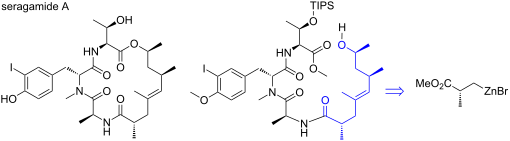
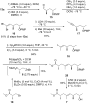
- ). For the synthesis of organozinc homoenolate 8, the MnBr2/CuCl-catalyzed reaction of diethylzinc with β-bromopropionic acid ester 19 in DMPU proved to be the best choice [42]. Racemization was avoided. The PMP protecting group was removed (CAN) affording methyl ester 7 (82%, Scheme 3). For comparison
- . Boc protection yielded N-Boc-D-3-iodotyrosine (21), which underwent three-fold methylation to N-methyl-O-methyliodotyrosine methyl ester 22 (82% yield, er 4:1, CHIRALPAK® IA, hexane/iPrOH 9:1). Partial racemization of 21 could not be suppressed since a slight excess of base was always necessary




Synthesis of nonracemic hydroxyglutamic acids
Beilstein J. Org. Chem. 2019, 15, 236–255, doi:10.3762/bjoc.15.22
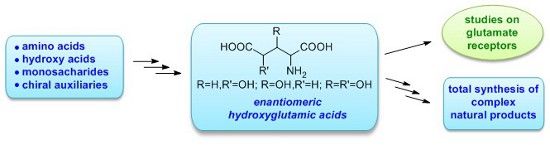
- )-2 and (2S,3S)-2 in several steps including hydroxymethyl to carboxyl oxidations (Scheme 2) [50]. N-Fmoc protection of the amino group in L-serine together with transformation of the carboxylic function into an orthoester allow for the racemization-free oxidation to aldehyde 10, which was immediately
- acid [(2S,3S,4R)-4] was obtained as the hydrochloride. To avoid racemization at Cα in sensitive amino acids the carboxy group was frequently masked as an orthoester. To illustrate this strategy dihydroxylation of the orthoester 92 (derived from L-pyroglutamic acid [97]) was performed to afford a single
- decomposition of this stereoisomer including racemization at Cα. From pentose via 2,3-aziridino-γ-lactone In the so called “2,3-aziridino-γ-lactone methodology” [18][99][100] ribose (or lyxose) is used as a starting material [101][102] which is transformed into the lactone 95 in several steps [99]. Boron


Anomeric modification of carbohydrates using the Mitsunobu reaction
Beilstein J. Org. Chem. 2018, 14, 1619–1636, doi:10.3762/bjoc.14.138
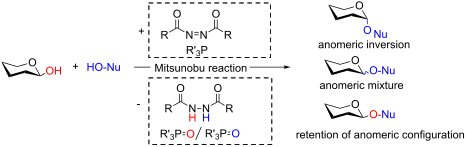
- and phosphine oxide. The oxocarbenium ion would then react with the NuO− anion in a SN1 mechanism. While this would lead to racemization under normal circumstances, in most carbohydrates, participation effects of neighboring groups in the vicinity (typically at the 2-position of the sugar ring) affect


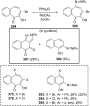
One hundred years of benzotropone chemistry
Beilstein J. Org. Chem. 2018, 14, 1120–1180, doi:10.3762/bjoc.14.98








Recyclable hypervalent-iodine-mediated solid-phase peptide synthesis and cyclic peptide synthesis
Beilstein J. Org. Chem. 2018, 14, 1112–1119, doi:10.3762/bjoc.14.97
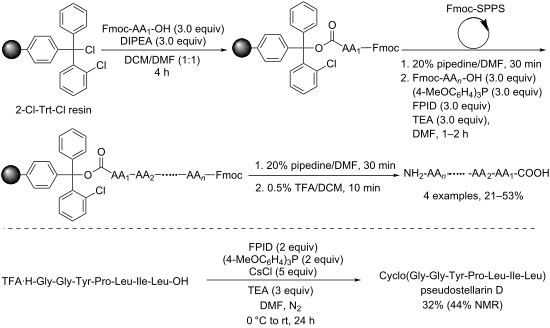
- presence of PPh3 [28]. In addition, the peptide coupling reaction proceeds without racemization in the absence of a racemization suppressant and iodosodilactone can be readily regenerated after the reaction. In order to further enhance the reactivity of iodosodilactone, we designed and synthesized a new
- ]. Compared with classical solution-phase peptide synthesis, the fast development of SPPS is mainly due to its short reaction time, high efficiency, low racemization, simple work-up and automation. In recent decades, various strategies, for example, native chemical ligation (NCL) [32] and serine/threonine
- ligation (STL) [33], have been reported to solve the problems occurred during the development of SPPS. Peptide synthesis in solution mediated by FPID/(4-MeOC6H4)3P is rapid (within 30 min) and efficient, at the same time the reactions proceed without racemization. Thus, it is possible and significant to


Diastereoselective auxiliary- and catalyst-controlled intramolecular aza-Michael reaction for the elaboration of enantioenriched 3-substituted isoindolinones. Application to the synthesis of a new pazinaclone analogue
Beilstein J. Org. Chem. 2018, 14, 593–602, doi:10.3762/bjoc.14.46
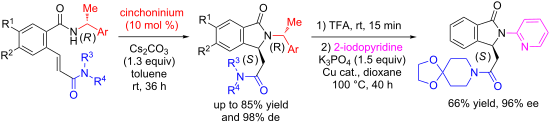
- bearing an acrylamide group at the ortho-position of the benzene ring. Synthesis of parent chiral benzamides 6–8 The use of a stereoselective chiral auxiliary which could be incorporated and removed easily without racemization was crucial for the success of our strategy. These requirements prompted us to
- selective cleavage in mild acidic conditions without racemization (Scheme 4). Indeed, further cleavage of the α-methyl-para-methoxyphenyl chiral auxiliary in protected isoindolinones 4a–c, 4e and 5 resulted in the corresponding NH-free lactams 1a–c, 1e and 2 without any racemization (Scheme 4). A subsequent


Stereochemical outcomes of C–F activation reactions of benzyl fluoride
Beilstein J. Org. Chem. 2018, 14, 106–113, doi:10.3762/bjoc.14.6
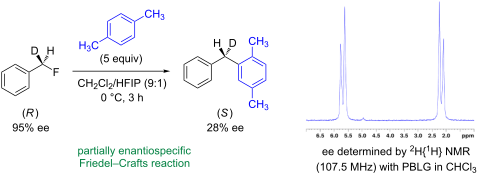
- , allowing a nucelophilic attack to occur from more trajectories, leading to a mixture of inversion (predominant) and retention products. (D) Fully solvated cation, where attack of the nucleophile can freely occur from either face, leading to racemization of the product in an SN1 reaction. We propose that
- (C) ion pairs. The partial racemization observed in Table 3 suggests that the solvent-separated ion-pair intermediate (C) is most likely the reactive species, as it would naturally lead to a partial racemization of the substrate stereocenter. When the activator was changed from HFIP to a mixed system


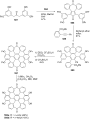
Binding abilities of a chiral calix[4]resorcinarene: a polarimetric investigation on a complex case of study
Beilstein J. Org. Chem. 2017, 13, 2698–2709, doi:10.3762/bjoc.13.268
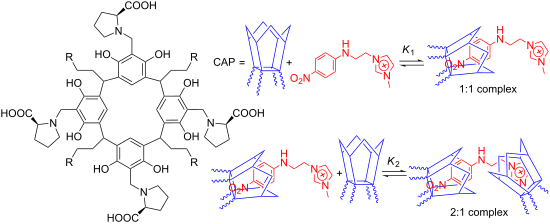
- within a couple of days, even if stored at low temperature (4 °C). Therefore, the proline subunits easily undergo racemization under alkaline conditions. Binding properties of CAP Based on the previous results, we preliminarily tested the interaction of guests 1–12 with CAP−2. We observed that anions 1
- standard 1 M NaOH solution was added (i.e., 0.75 mL, 1.50 mL, 2.25 mL or 3.00 mL for CAP−1, CAP−2, CAP−3 and CAP−4, respectively). The suspension quickly turned into a clear solution, the volume of which was finally adjusted to 30 mL. The solution was used within few hours to avoid racemization of the L




Asymmetric synthesis of propargylamines as amino acid surrogates in peptidomimetics
Beilstein J. Org. Chem. 2017, 13, 2428–2441, doi:10.3762/bjoc.13.240
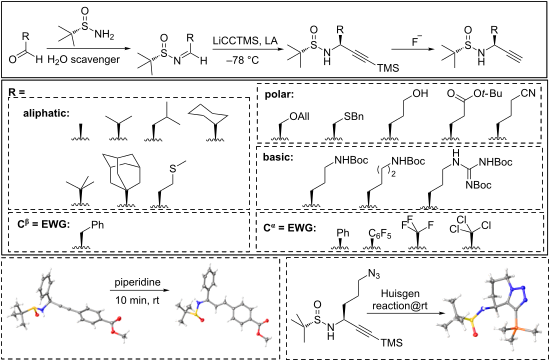
- -unsaturated imine are not reversible. Reversibility of the rearrangement would be fundamental for racemization of propargylamines, which is consequently improbable. However, even in the presence of strong bases like KOt-Bu or LDA, the propargylamide–allenylamide rearrangement could never be observed for
- approach. Electron-withdrawing substituents in the Cα-position induced an irreversible alkyne–allene-α,β-unsaturated imine rearrangement under mild basic conditions, which makes an alkaline racemization of propargylamines improbable. Altogether, a large set of propargylamines with various amino acid


Bifunctional organocatalysts for the asymmetric synthesis of axially chiral benzamides
Beilstein J. Org. Chem. 2017, 13, 1518–1523, doi:10.3762/bjoc.13.151
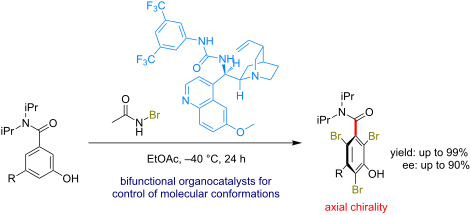
- , racemization through bond rotation is negligible during further brominations [65]. Indeed, the rotational barrier of substrate 1a, calculated at the B3YLP/6-31G(d) level of theory, is only 7.6 kcal/mol; on the other hand, that of the monobrominated intermediate 1m is 19.0 kcal/mol (Scheme 5). However, this
- barriers of monobrominated compounds 1p and 1q (bearing methyl and isobutyl groups, respectively, on the amide moiety) are lower than that of 1m. Although racemization of 2b, the rotational barrier of which is 22.9 kcal/mol, was observed after a lot of months, it is enough slow to enable the immediate




Synthesis of the heterocyclic core of the D-series GE2270
Beilstein J. Org. Chem. 2017, 13, 1407–1412, doi:10.3762/bjoc.13.137
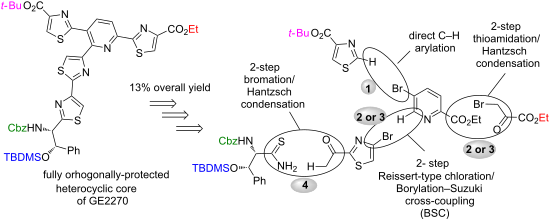
- an additional bromination reaction followed by Bagley’s modified Hantzsch condensation with the adequate thioamide to deliver the fully orthogonally-protected heterocyclic core of GE2270 along with avoiding racemization of stereogenic centers (Figure 1). Successfully applied last year by Yamagushi's



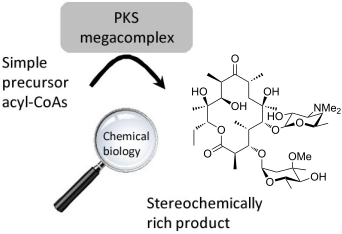
Polyketide stereocontrol: a study in chemical biology
Beilstein J. Org. Chem. 2017, 13, 348–371, doi:10.3762/bjoc.13.39




Versatile synthesis of the signaling peptide glorin
Beilstein J. Org. Chem. 2017, 13, 247–250, doi:10.3762/bjoc.13.27
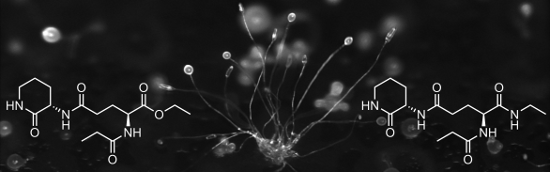
- methanol [17] and cyclization was achieved under basic conditions using sodium ethoxide; the lactam was prone to racemization under strongly basic conditions, this was avoided by short reaction times with sodium ethoxide, and by avoiding strongly basic reaction conditions in subsequent steps. A key


Characterization of the synthetic cannabinoid MDMB-CHMCZCA
Beilstein J. Org. Chem. 2016, 12, 2808–2815, doi:10.3762/bjoc.12.279
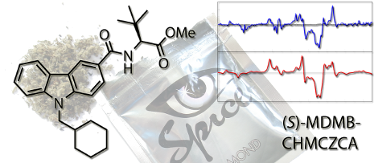
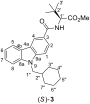
- saturated solution of (S)-3 in cyclohexane (Figure 6, see also CCDC 1521512 for details). To assess the enantiomeric purity of the material, racemization of a small sample of (S)-3 was attempted by treatment with sodium methoxide in methanol at 80 °C for 12 h under rigorous exclusion of moisture, yielding
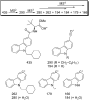
- (pure substances as well as designer drug products) was assessed by chiral HPLC after base-induced racemization of a sample of (S)-3. Experimental Isolation of MDMB-CHMCZCA from Spice products In analogy to the procedure described in [9], hashish-like resin (20 mg) was cut in small pieces, soaked in
- shift value s; the experimental and calculated ECD spectra were then compared using these optimized parameters. Racemization Analogously as described in [9], (S)-3 (2.5 mg) was added to a freshly prepared solution of sodium (10 mg) in dry methanol (3 mL) under nitrogen and stirred at 80 °C for 12 h. The




Selective synthesis of thioethers in the presence of a transition-metal-free solid Lewis acid
Beilstein J. Org. Chem. 2016, 12, 2627–2635, doi:10.3762/bjoc.12.259
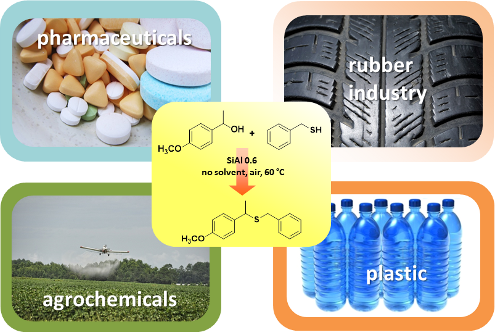
- of thioethers 3a–p synthesized. Product distribution during reaction of 5b and 2a over a solid acid catalyst. Product distribution during reaction of 1c and 2e. Recyclability test of SiAl 0.6 catalyst in the reaction of 1a and 2a. Racemization of (R)-1-phenylethanol during the reaction with


Enantioconvergent catalysis
Beilstein J. Org. Chem. 2016, 12, 2038–2045, doi:10.3762/bjoc.12.192
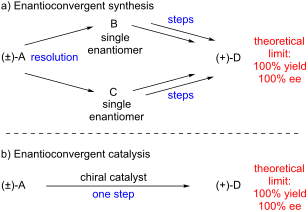
- one enantiomer to product (Figure 2). Additionally, the rate of starting material racemization must be significantly faster than the rate of kinetic resolution in order to achieve maximum yield and selectivity. Perhaps the most well-developed class of type I enantioconvergent catalysis is dynamic


Conjugate addition–enantioselective protonation reactions
Beilstein J. Org. Chem. 2016, 12, 1203–1228, doi:10.3762/bjoc.12.116
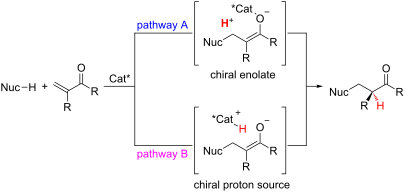
- stabilize the carbanion intermediate, also increases the stereocenter’s susceptibility to racemization under the reaction conditions. Moreover, enolate intermediates can adopt E- or Z-geometries that, upon protonation, generally lead to opposite stereoisomers. Because enantioselective protonation is a
- using enamine catalysis [60]. Two challenges to using enamine catalysis for enantioselective protonation are the many conformations the reactive iminium intermediates can adopt and the potential for racemization of the enantioenriched product by the basic catalyst. Using the triflate salt of diamine 119


Catalytic asymmetric synthesis of biologically important 3-hydroxyoxindoles: an update
Beilstein J. Org. Chem. 2016, 12, 1000–1039, doi:10.3762/bjoc.12.98
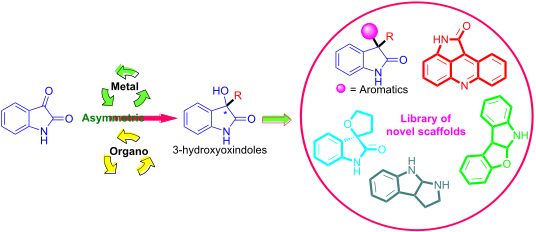
- phenylalanine and LiOH and the ratios of phenylalanine and LiOH were found to be crucial in determining the enantioselectivity; an excess of LiOH caused racemization of the final products. Besides, the solvent, catalyst loading, the reaction time and temperature were also important for the reaction
- designed the bifunctional bisurea catalysts (cat. 27 and 28) that promoted the reactions of isatins with tert-butylhydrazones through hydrogen bond interactions, affording the functionalized 3-hydroxy-2-oxindoles in low enantioselectivity because of the racemization of the adduct products, albeit with high




One-pot synthesis of enantiomerically pure N-protected allylic amines from N-protected α-amino esters
Beilstein J. Org. Chem. 2016, 12, 957–962, doi:10.3762/bjoc.12.94
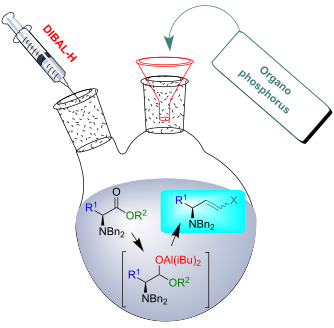
- (dia)stereoselectivity (within limits of 1H NMR detection in the crude reaction mixture) of the process was affected neither by the reaction solvent nor by the amount of DIBAL-H employed. It is known from the literature that some racemization of enantiomerically pure aldehydes occurs during the DIBAL-H


Diastereoselective Ugi reaction of chiral 1,3-aminoalcohols derived from an organocatalytic Mannich reaction
Beilstein J. Org. Chem. 2016, 12, 139–143, doi:10.3762/bjoc.12.15

- , no report of valuable diastereocontrol by them has appeared so far. Successful examples of diastereoselective Ugi reactions have been reported only with chiral amines [15][16][17][18][19] or with chiral cyclic imines (Ugi–Joullié reaction) [20][21][22][23], although in the latter case, racemization


Bifunctional phase-transfer catalysis in the asymmetric synthesis of biologically active isoindolinones
Beilstein J. Org. Chem. 2015, 11, 2591–2599, doi:10.3762/bjoc.11.279
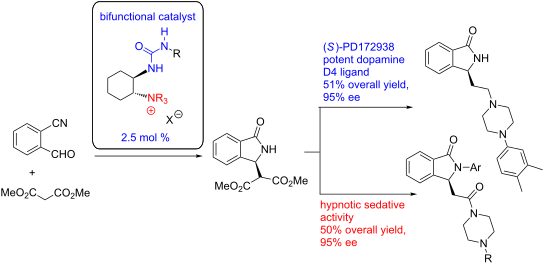
- )malonate ((S)-7), according to Scheme 2. We firstly focused on two well-known mild procedures in order to avoid the classical harsh acidic conditions. Disappointingly, modifications of the Krapcho decarboxylation performed with a LiCl/H2O/DMF mixture under reflux [36][37] led to partial racemization of the
- in ee (Table 3, entries 4 and 8). On the other hand, partial racemization was detected at longer reaction times (Table 3, entries 2, 3 and 7). This somewhat matched the time-dependent loss in ee observed by Allin et al. in the N-deprotection with H2SO4 of other chiral 3-substituted isoindolinones [39
- ]. The racemization probably occurs on the product 9, via the mechanism reported in Scheme 3, as a slower process than the decarboxylation itself. The cleavage of the C–N bond and the formation of the acyclic intermediates 11 with the consequent loss of chirality is probably favored by the protonation of


Stereoselective synthesis of hernandulcin, peroxylippidulcine A, lippidulcines A, B and C and taste evaluation
Beilstein J. Org. Chem. 2015, 11, 2117–2124, doi:10.3762/bjoc.11.228
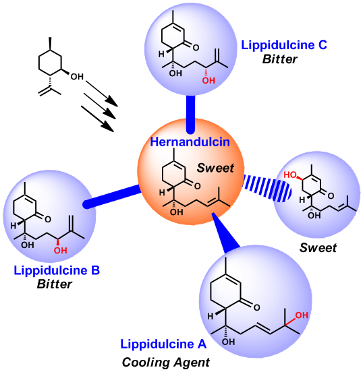
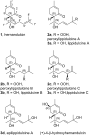
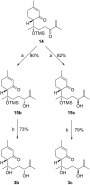
- (+)-β-hydroxyhernadulcin isomer (Figure 1), which has been described as a sweetener [39]. Intrigued by the behavior of 3a we prepared the epimer 3d ([α]D −107° (c 1.2, CHCl3) vs lit. [8] [α]D −118.4° (c 0.5, CHCl3)) by the acid catalyzed racemization of C(6) stereogenic center. Remarkably, the absolute



Radical-mediated dehydrative preparation of cyclic imides using (NH4)2S2O8–DMSO: application to the synthesis of vernakalant
Beilstein J. Org. Chem. 2015, 11, 1008–1016, doi:10.3762/bjoc.11.113
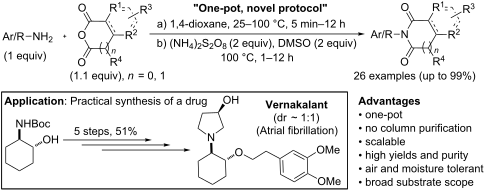
- succinimide 10 without any racemization at the C-3 centre. Finally, reduction of the imide and deprotection of the acetyl moiety was done in a single step by LiAlH4 to obtain vernakalant (11) as the free base. The synthesis was completed in 5 steps with 51% overall yield. A preliminary mechanistic study


Chiroptical properties of 1,3-diphenylallene-anchored tetrathiafulvalene and its polymer synthesis
Beilstein J. Org. Chem. 2015, 11, 972–979, doi:10.3762/bjoc.11.109
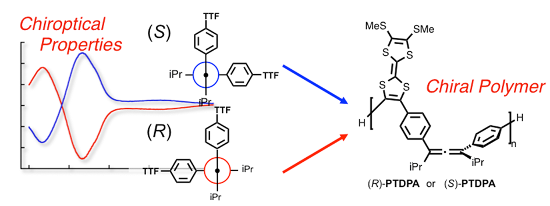
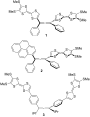
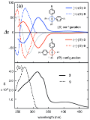
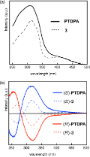
- switchable by tuning the electronic structure of the tetrathiafulvalene (TTF) moieties. However, compound 1 exhibited slow racemization in solution under daylight. The chirality of an allene is configurationally firm in general, because the barrier of the rotation of the allenic double bonds is quite high
- (ΔG‡ = 180 kJ mol−1 for CH3CH=C=CHCH3) [11]. In contrast, several allenes directly connected with electron-donating groups occasionally underwent photoracemization [12][13]. Although the mechanism of the photoracemization is not clear, a comparative examination of the racemization rate in 1 and 2, the
- latter of which is a dissymmetric allene having a TTF and a pyrenyl group at 1,3-position, suggests that the direct connection of the TTF units may strongly affect the fast racemization [14]. From this point of view, we decided to employ a 1,3-diphenylallene derivative (3) as a stable chiral framework




Chemoselective O-acylation of hydroxyamino acids and amino alcohols under acidic reaction conditions: History, scope and applications
Beilstein J. Org. Chem. 2015, 11, 446–468, doi:10.3762/bjoc.11.51
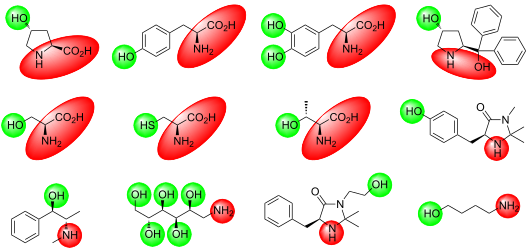
- Previero, Barry and Coletti-Previero, detailed previously, regarding the stability of most of the common amino acids under acidic, non-hydrolytic reaction conditions (Table 1). The acidic conditions also guard the unprotected amino acid moiety against racemization through protonation close to the chiral