


Search results
Search for "thermodynamics" in Full Text gives 84 result(s) in Beilstein Journal of Organic Chemistry.
Versatile deprotonated NHC: C,N-bridged dinuclear iridium and rhodium complexes
Beilstein J. Org. Chem. 2016, 12, 117–124, doi:10.3762/bjoc.12.13
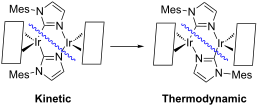
- 3H-H and 3H-T (where H-H = head-to-head and H-T = head-to-tail). By DFT calculations here we contribute in the understanding of the thermodynamics of the subsequent C,N-bridged dinuclear iridium and rhodium complexes [59], and the facility for the interconversion between these latter dimeric species
- the H-H coordination was not locate for 5, and further thermodynamics do not support the H-H coordination for 5, with an energy endergonicity of 6.7 kcal/mol with respect the previous corresponding complex 4. Oxidative addition of MeI to 5 affords complex 6, in an exergonic release of 16.5 kcal/mol
- NHC here have been studied in detail by DFT calculations. This is a contribution in the understanding of the thermodynamics of the subsequent C,N-bridged dinuclear iridium and rhodium complexes defined by Braunstein et al. [59] and the facility for the interconversion between these latter dimeric


Supramolecular polymer assembly in aqueous solution arising from cyclodextrin host–guest complexation
Beilstein J. Org. Chem. 2016, 12, 50–72, doi:10.3762/bjoc.12.7
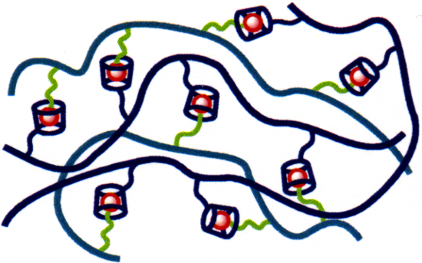
- the thermodynamics of the process [66]. As a result, the guest often exhibits a substantial change in its UV–vis, fluorescence and 1H NMR spectra upon complexation, and there is usually a significant enthalpy change. Consequently, UV–vis [67], fluorescence [68] and 1H NMR [69] spectroscopy and


Bright molecules for sensing, computing and imaging: a tale of two once-troubled cities
Beilstein J. Org. Chem. 2015, 11, 2774–2784, doi:10.3762/bjoc.11.298
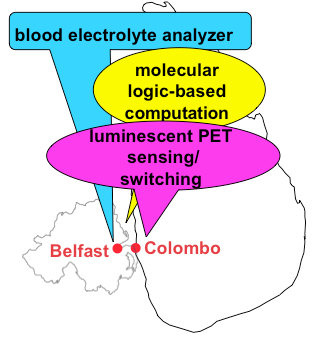
- needed to have a binding strength (βNa) of 10 M−1 in neutral water. An N-(2-methoxy)phenylaza-15-crown-5 ether [37] fitted the bill, besides having good selectivity characteristics. PET thermodynamics were matched by the use of a 4-aminonaphthalimide fluorophore [38][39][40], which, in the presence of







Learning from the unexpected in life and DNA self-assembly
Beilstein J. Org. Chem. 2015, 11, 2713–2720, doi:10.3762/bjoc.11.292
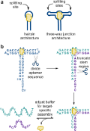
- validation of our hypothesis regarding the thermodynamics of split aptamer assembly. In the short term, this allowed us to overcome the challenge of background signal by reducing the ionic strength, and we were delighted to observe dose-dependent ligation of the split aptamer fragments with increasing
- concentrations of cocaine [11]. While the insight we gained into balancing the thermodynamics of split aptamer assembly seemed fairly straightforward, the lessons we learned from this unexpected experimental result played a critical role in our success with many of the experiments that soon followed. Having
- structurally biased library to generate aptamers having the necessary three-way junction architecture [15]. Using our insights regarding the thermodynamics of split aptamer assembly, we developed a method for rapidly and reliably converting these three-way junction aptamers into split aptamers (Figure 4b). We




Smart molecules for imaging, sensing and health (SMITH)
Beilstein J. Org. Chem. 2015, 11, 2540–2548, doi:10.3762/bjoc.11.274
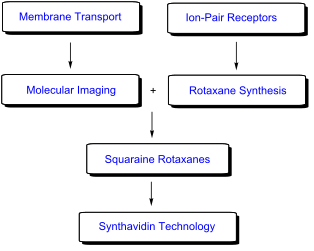
- ) Two views of the threaded complex highlighting the structural features controlling the threading kinetics and thermodynamics. Acknowledgements First and foremost, I am extremely grateful to all of the students who have worked in my lab over years, and the names of many are listed in the references


Biocatalysis for the application of CO2 as a chemical feedstock
Beilstein J. Org. Chem. 2015, 11, 2370–2387, doi:10.3762/bjoc.11.259
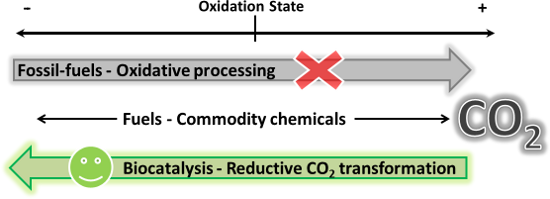
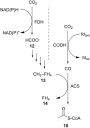
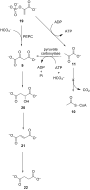
- the reductive TCA cycle (Scheme 2) isocitrate dehydrogenase catalyses the carboxylation of 2-oxoglutarate (6) to produce isocitrate (7). Exploitation in biotechnological applications has been challenging due to the unfavourable thermodynamics of the carboxylation. Recently, the use of purified






Co-solvation effect on the binding mode of the α-mangostin/β-cyclodextrin inclusion complex
Beilstein J. Org. Chem. 2015, 11, 2306–2317, doi:10.3762/bjoc.11.251
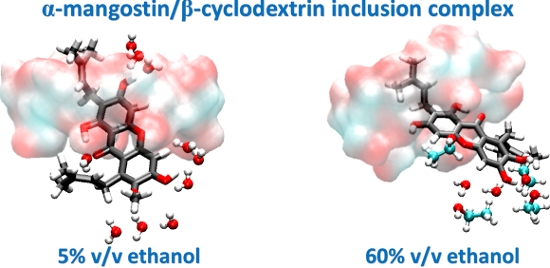
- addition with complexation [2][3][6] have demonstrated that the thermodynamics underlying the interactions between host–guest molecules can be significantly changed in these instances. In these cases, the co-solvent can also occupy the CD cavity in conjunction with the guest (drug) molecules to form CD



A comprehensive study of olefin metathesis catalyzed by Ru-based catalysts
Beilstein J. Org. Chem. 2015, 11, 1767–1780, doi:10.3762/bjoc.11.192
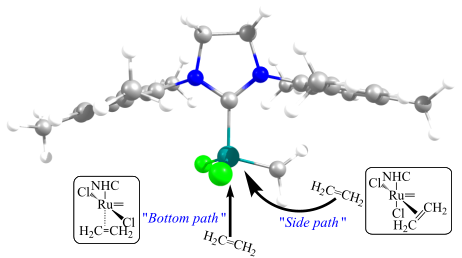
- metallacycles are 7.7 kcal/mol above and 12.1 kcal/mol above the 14e species. To better understand the different stability of the metallacycle relative to the coordination intermediate of the 1st and 2nd generation catalysts we investigated the thermodynamics of the reaction shown in Figure 8. E1 is the energy




Is organic chemistry science – and does this question make any sense at all?
Beilstein J. Org. Chem. 2015, 11, 893–896, doi:10.3762/bjoc.11.100

- fundamental science. A well-known example is the reduction of thermodynamics to statistical mechanics [15][17], in which a bridge law would identify temperature with the mean kinetic energy of the constituent molecules of a gas. The science that is reduced is then explained by the science to which it is
Peptide–polymer ligands for a tandem WW-domain, an adaptive multivalent protein–protein interaction: lessons on the thermodynamic fitness of flexible ligands
Beilstein J. Org. Chem. 2015, 11, 837–847, doi:10.3762/bjoc.11.93
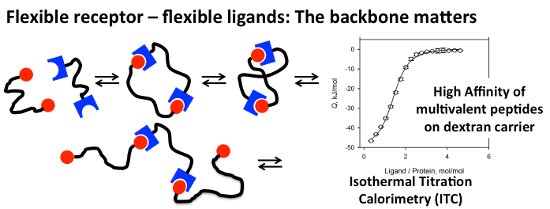
- understanding of structure–activity relationships of polymeric ligands. For this purpose, the thermodynamics and the stoichiometry of protein binding events were determined experimentally for all multivalent ligands. Finally, atomistic molecular dynamics simulations were conducted in order to rationalize the





Impact of multivalent charge presentation on peptide–nanoparticle aggregation
Beilstein J. Org. Chem. 2015, 11, 792–803, doi:10.3762/bjoc.11.89

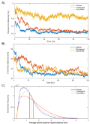
- size of the peptide and finally the charge density plays an important role for its aggregation efficiency. Furthermore, we could show that the quaternary structure of the peptide has important consequences for the formed nanoparticle assemblies, as well as for the thermodynamics of aggregation. First


Discrete multiporphyrin pseudorotaxane assemblies from di- and tetravalent porphyrin building blocks
Beilstein J. Org. Chem. 2015, 11, 748–762, doi:10.3762/bjoc.11.85
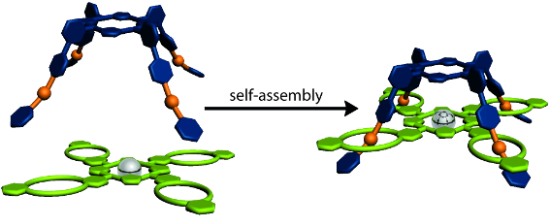
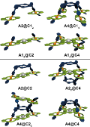
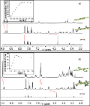
- dealing with the daunting task to quantify the binding constants for the di- and tetravalent multiporphyrin complexes for example using isothermal calorimetry (ITC), in order to analyze the thermodynamics and kinetics of multivalent binding in these architectures in detail. In the future, we will continue





First principle investigation of the linker length effects on the thermodynamics of divalent pseudorotaxanes
Beilstein J. Org. Chem. 2015, 11, 687–692, doi:10.3762/bjoc.11.78
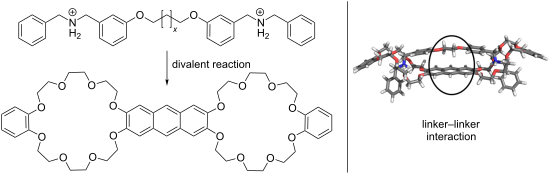
- the crown/ammonium binding motif. In this motif ammonium can bind on top of small crown ethers, e.g., crown-6, or can pass through larger crown ethers, e.g., crown-8. Jiang et al. [16] have investigated the assembly thermodynamics and kinetics of divalent crown-8/ammonium pseudorotaxanes with


Anionic sigmatropic-electrocyclic-Chugaev cascades: accessing 12-aryl-5-(methylthiocarbonylthio)tetracenes and a related anthra[2,3-b]thiophene
Beilstein J. Org. Chem. 2015, 11, 273–279, doi:10.3762/bjoc.11.31
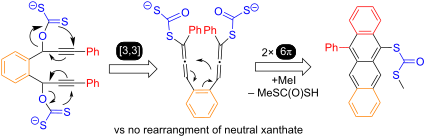
- NSCCS Computational Service. We thank Dr. Darren Walsh (University of Nottingham) for the help with the electrochemical studies. We thank European Thermodynamics for their involvement in the programme (JR) and use of the I19 Diamond Facility [31] is acknowledged.


Come-back of phenanthridine and phenanthridinium derivatives in the 21st century
Beilstein J. Org. Chem. 2014, 10, 2930–2954, doi:10.3762/bjoc.10.312

- requires a detailed knowledge of the energetics, thermodynamics and structural equilibrium – surprisingly few studies endeavoured to determine important parameters for such classical intercalator as ethidium bromide [49]. The most recent and very extensive theoretical study compared positively charged


Improving ITC studies of cyclodextrin inclusion compounds by global analysis of conventional and non-conventional experiments
Beilstein J. Org. Chem. 2014, 10, 2630–2641, doi:10.3762/bjoc.10.275
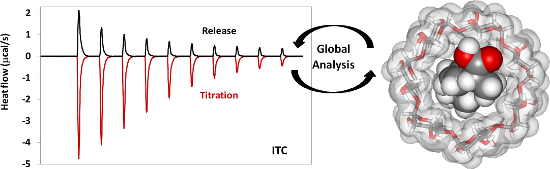
- stability, enthalpy, or solubility. Keywords: cyclodextrins; global analysis; inclusion compounds; isothermal titration calorimetry; non-conventional experiments; Introduction The stability and thermodynamics of cyclodextrin inclusion compounds in solutions may be investigated with various analytical


Reversibly locked thionucleobase pairs in DNA to study base flipping enzymes
Beilstein J. Org. Chem. 2014, 10, 2293–2306, doi:10.3762/bjoc.10.239
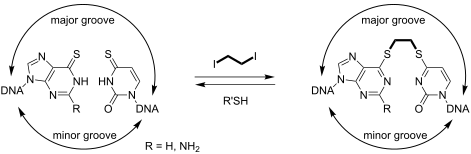
- helicases, which locally separate the two DNA strands, are important to enable vital cellular processes like DNA replication, DNA repair, chromatin remodeling and telomere maintenance [78][79][80][81]. Cross-linked DNA will not only provide a useful tool to study DNA binding and base flipping thermodynamics


Organic synthesis using photoredox catalysis
Beilstein J. Org. Chem. 2014, 10, 1097–1098, doi:10.3762/bjoc.10.107
- synthesis, the principles of photoredox chemistry serve as guidelines, i.e., photoinduced electron transfer (PET) kinetics and thermodynamics as expressed in the Rehm–Weller and Marcus equations. For catalytic versions, the photoinduced redox processes require efficient and robust photocatalysts, and in
Tailoring of organic dyes with oxidoreductive compounds to obtain photocyclic radical generator systems exhibiting photocatalytic behavior
Beilstein J. Org. Chem. 2014, 10, 936–947, doi:10.3762/bjoc.10.92
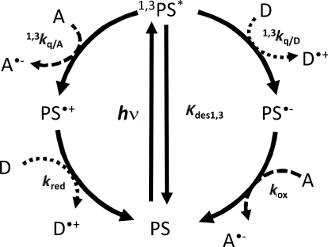
- thermodynamics and the kinetics is necessary. Thermodynamics of the PCIS Obviously, every mixture of an acceptor, a donor and a dye, would not give rise to a photocatalytic behavior. The components should be selected with care in order to get a cyclic behavior instead of competitive parallel reactions [54] where
- electron acceptor. Photocatalytic behavior occurring in three component PIS. PS: photosensitizer; 1,3PS*: singlet and triplet PS excited states; A: electron acceptor; A•−: reduced form of acceptor; D: electron donor and D•+: oxidized donor. Thermodynamics of an oxidative three components PCIS, a) ground


![[Graphic 1]](/bjoc/content/inline/1860-5397-10-92-i10.png?max-width=637&scale=1.18182) ), b) excited state...
), b) excited state...


Chromatographically separable rotamers of an unhindered amide
Beilstein J. Org. Chem. 2014, 10, 701–706, doi:10.3762/bjoc.10.63
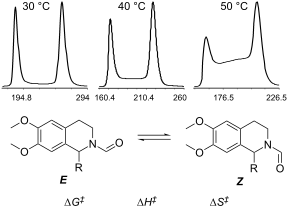
- the rotamers which can readily be separated by HPLC as well as TLC. The experimental results of the different methods were compared to each other as well as to results obtained by DFT calculations. Keywords: amides; density functional calculations; dynamic HPLC; rotamers; thermodynamics


![[Graphic 2]](/bjoc/content/inline/1860-5397-10-63-i3.png?max-width=637&scale=1.18182) ) in 4 (BP-D3/def2-SVP).
) in 4 (BP-D3/def2-SVP).

Continuous flow nitration in miniaturized devices
Beilstein J. Org. Chem. 2014, 10, 405–424, doi:10.3762/bjoc.10.38


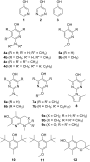
3-Pyridinols and 5-pyrimidinols: Tailor-made for use in synergistic radical-trapping co-antioxidant systems
Beilstein J. Org. Chem. 2013, 9, 2781–2792, doi:10.3762/bjoc.9.313
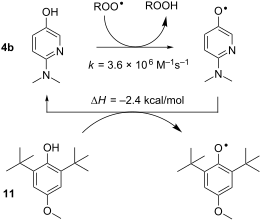
- same HBA ability as water [31], which is attributed a reliable = 0.38 [29][30]. As such, we recommend a value of of 0.39 for acetonitrile. Computational thermodynamics. The rational design of synergistic co-antioxidant mixtures requires knowledge of not only the kinetics of the reactions of the




Electron self-exchange activation parameters of diethyl sulfide and tetrahydrothiophene
Beilstein J. Org. Chem. 2013, 9, 1448–1454, doi:10.3762/bjoc.9.164
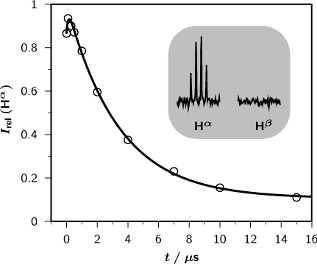
- in intensity of the individual peaks. For tetrahydrothiophene THTP, the same polarization pattern (polarizations for Hα only, i.e., CIDNP originating from radical pairs ) and kinetic behavior of the polarizations was found, which is not surprising given the very similar thermodynamics (ionization


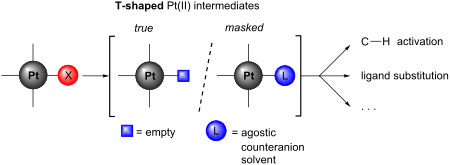
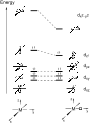
True and masked three-coordinate T-shaped platinum(II) intermediates
Beilstein J. Org. Chem. 2013, 9, 1352–1382, doi:10.3762/bjoc.9.153





Establishing the concept of aza-[3 + 3] annulations using enones as a key expansion of this unified strategy in alkaloid synthesis
Beilstein J. Org. Chem. 2013, 9, 1170–1178, doi:10.3762/bjoc.9.131
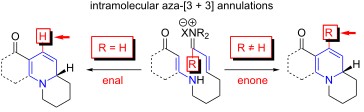
- study was likely determined by the kinetics (kB versus kR) in the deprotonation step or the tautormerization process from the iminium salt 13, and not by thermodynamics as originally proposed. Resolving this interesting literature controversy added extra incentive for us to pursue propyleine





