


Search results
Search for "transformations" in Full Text gives 1184 result(s) in Beilstein Journal of Organic Chemistry. Showing first 200.
C2 to C6 biobased carbonyl platforms for fine chemistry
Beilstein J. Org. Chem. 2025, 21, 2103–2172, doi:10.3762/bjoc.21.165
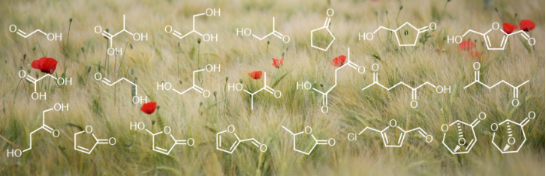
- of Science and Technology, 1037 Luoyu road, Wuhan 430074, China 10.3762/bjoc.21.165 Abstract The carbonyl group is central in organic synthesis, thanks to its ability to undergo a vast range of different chemical transformations on its carbon center or at the neighboring positions. Due to the high
- rate is due to the formation of an intermediate choline xyloside which undergoes easier dehydration than xylose itself [166]. The examples given in the following sections illustrate the extremely vast range of reported transformations [160][167][168][169][170][171][172][173][174][175][176] of furfural
- toward useful biobased functional compounds or intermediates with applications in fuels, polymer chemistry and fine organic synthesis (CH activation, Piancatelli rearrangement, etc.). Conversion of furfural to alcohols, aldehydes and ketones: One of the most important transformations of furfural is its


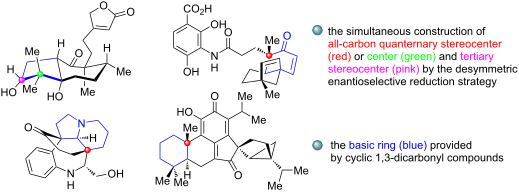
The application of desymmetric enantioselective reduction of cyclic 1,3-dicarbonyl compounds in the total synthesis of terpenoid and alkaloid natural products
Beilstein J. Org. Chem. 2025, 21, 2085–2102, doi:10.3762/bjoc.21.164
- and transformations of 43 produced hydroxyketone 44. Due to the steric hindrance of this substrate, the subsequent Suzuki cross coupling reaction with 3-boronophenol proceeded in low yield. To address this issue, Han′s group employed a novel palladacycle catalyst 45, previously developed by their
- ], the enzyme-catalyzed desymmetric enantioselective reduction of 28, afforded hydroxyketone 54 in 65% yield with >99% ee and 8–9:1 dr on multigram scale [34]. Functional group transformations of 54 in four steps produced sterically hindered allyl triflate 55. By employing the palladacycle catalyst 45
- reduction of 72, affording the hydroxyketone 74 in 57% yield with 91% ee. Protection of the secondary alcohol in 74 followed by Beckmann rearrangement led to lactam 75. Oxidation state modifications and functional group transformations of 75 afforded ketone 76. Next, the 1,2-addition of 76 with vinyl iodine







Multicomponent reactions IV
Beilstein J. Org. Chem. 2025, 21, 2082–2084, doi:10.3762/bjoc.21.163

- between an aldehyde, an amine, a carboxylic acid, and an isonitrile in 1959 [8], which marked the beginning of modern MCR chemistry, continues to attract undiminished attention. It has since been applied in manifold ways, from breathtaking reaction sequences and post-Ugi transformations to the generation

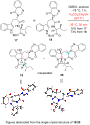
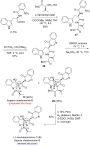
Further elaboration of the stereodivergent approach to chaetominine-type alkaloids: synthesis of the reported structures of aspera chaetominines A and B and revised structure of aspera chaetominine B
Beilstein J. Org. Chem. 2025, 21, 2072–2081, doi:10.3762/bjoc.21.162
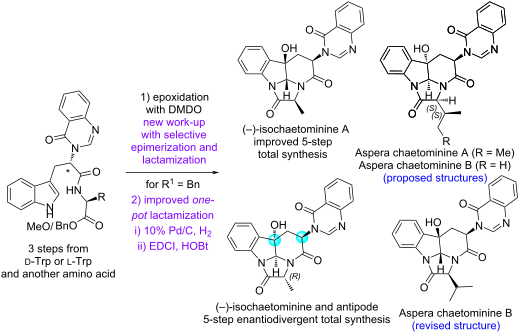
- revised structures via our total syntheses. Improved total synthesis of (–)-isochaetominine A (4) and diastereomer 16. Diastereoconvergent transformations of 17 and 18 into two diastereomers of versiquinazoline H. Mono- and double epimerization-based enantiodivergent syntheses of chaetominine-type




Bioinspired total syntheses of natural products: a personal adventure
Beilstein J. Org. Chem. 2025, 21, 2048–2061, doi:10.3762/bjoc.21.160
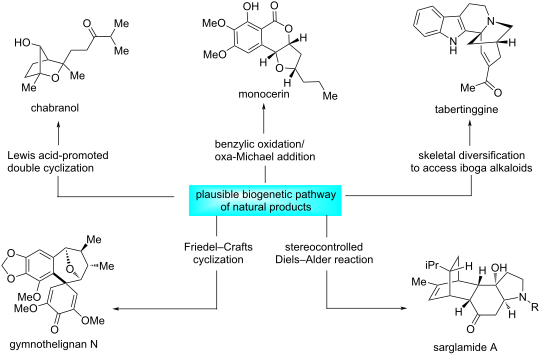
- biotic evolution in which live survives from changes of Earth environment by changing themselves. Natural products play a pivotal role in biological transformations within organisms, and moreover, are of great value for human life by serving as food, cloth and medicine. It represents a longstanding goal
- assembly of a complex natural product with a three-dimensional framework in a cascade way. Later, this was regarded as an artificial mimic in laboratory of the biochemical transformations in nature. In the 20th century, Woodward elevated the field of natural product total synthesis to the artistic status
- reported. A bioinspired approach represents many advantages to bring benefits to total synthesis. It could rapidly achieve complexity of the target molecule from a much simpler precursor in diverse forms of transformations such as cascade reaction, cycloaddition, and C–H functionalization, thereby, shorten




Switchable pathways of multicomponent heterocyclizations of 5-amino-1,2,4-triazoles with salicylaldehydes and pyruvic acid
Beilstein J. Org. Chem. 2025, 21, 2030–2035, doi:10.3762/bjoc.21.158
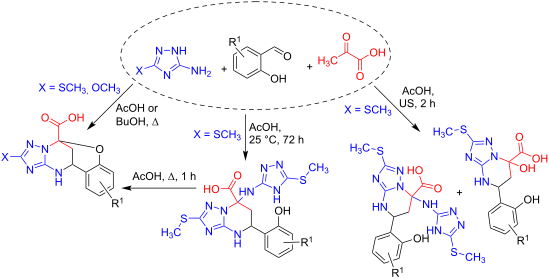
- similar compounds based on 5-amino-1H-pyrazole-4-carbonitrile [22]. It should be noted that diazocines 4 were stable and did not undergo transformations when heated or irradiated with ultrasound. This may indicate that pyrimidine-7-carboxylic acids 5 and 6 are formed in parallel processes under kinetic


Measuring the stereogenic remoteness in non-central chirality: a stereocontrol connectivity index for asymmetric reactions
Beilstein J. Org. Chem. 2025, 21, 1995–2006, doi:10.3762/bjoc.21.155
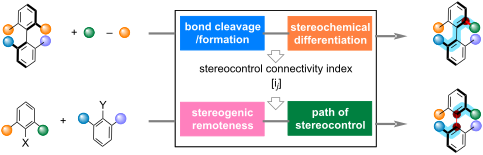
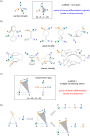
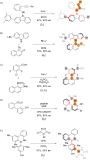
- intermediate, respectively) are neglected to simplify the assignment, considering such information is inexplicit based on the chemical transformations alone and is not available in commonly used chemical databases. Therefore, the index is a denotation of the overall transformation, which is not always
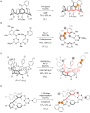
- and restored in the course of the transformations (e.g., Scheme 4A and 4C). Such limitations become obvious in the cases of multistep, multi-intermediate reactions [32][33], particularly in the case of helical chirality where chirality transfer of intermediates is common [34][35][36][37][38][39]. In
- is relevant to the minimal dimension of an effective chiral catalyst for a given asymmetric transformation. We surveyed the relationship between the numbers of non-hydrogen atoms (N) in the chiral catalysts and the value of i (or sum of i) in [ij] for the 21 non-enzymatic transformations analyzed




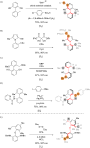

Aryl iodane-induced cascade arylation–1,2-silyl shift–heterocyclization of propargylsilanes under copper catalysis
Beilstein J. Org. Chem. 2025, 21, 1984–1994, doi:10.3762/bjoc.21.154
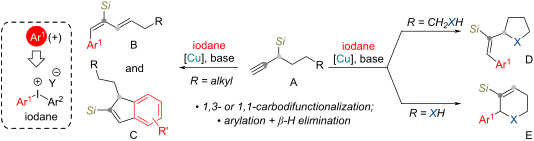
- described by us recently, among other possible transformations [21][22]. Interestingly, the addition of O-nucleophiles to form 1,3-carbofunctionalization products, can only be achieved in an intramolecular fashion. In the presence of an excess (5 equiv) of external an O-nucleophile R–OX (alcohol, carboxylic


Photochemical reduction of acylimidazolium salts
Beilstein J. Org. Chem. 2025, 21, 1973–1983, doi:10.3762/bjoc.21.153
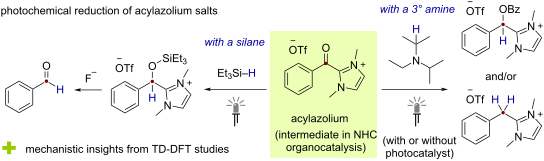
- transformations of carbonyl substrates with umpolung processes of aldehydes such as the benzoin condensation and Stetter reaction being particularly well studied [4][5][6][7][8][9][10][11]. In these processes, addition of the NHC to the aldehyde followed by proton transfer generates the enamine-like Breslow
- acid derivative substrates [16]. Over the last few years, a wide range of valuable NHC-catalyzed transformations have also been developed that incorporate redox steps. As an enamine species, single-electron oxidation of a Breslow intermediate is comparatively favored with the resulting open shell
- yield (Scheme 3c). The successful generation of the aldehyde from the azolium species derived from the corresponding carboxylic acid highlights the potential of this two-step sequence as a method for the partial reduction of carboxyl compounds. Such transformations can be challenging in organic


Enantioselective desymmetrization strategy of prochiral 1,3-diols in natural product synthesis
Beilstein J. Org. Chem. 2025, 21, 1932–1963, doi:10.3762/bjoc.21.151
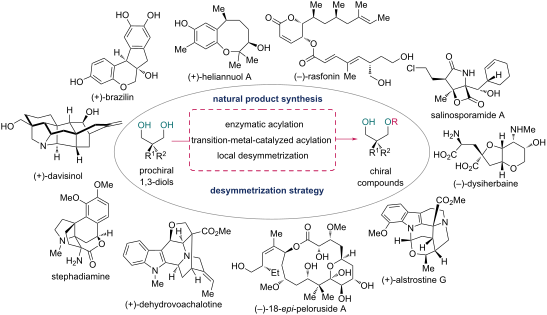
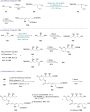
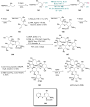
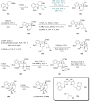
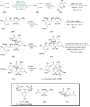
- enantioselective manner) can be utilized for a series of transformations, including functionalization, chain elongation, ring formation, etc. Therefore, the enantioselective desymmetrization of diols has drawn considerable interest among synthetic chemists. Several comprehensive reviews [14][15][16][17][18] on the
- reactions of prochiral 1,3-diols via metal-catalyzed and enzymatic methods have been reported, these transformations are mostly limited to the acylation of hydroxy groups. Other reaction types, such as sulfonylation, oxidation, and coupling, remain underdeveloped in this context, suggesting significant










Chiral phosphoric acid-catalyzed asymmetric synthesis of helically chiral, planarly chiral and inherently chiral molecules
Beilstein J. Org. Chem. 2025, 21, 1864–1889, doi:10.3762/bjoc.21.145
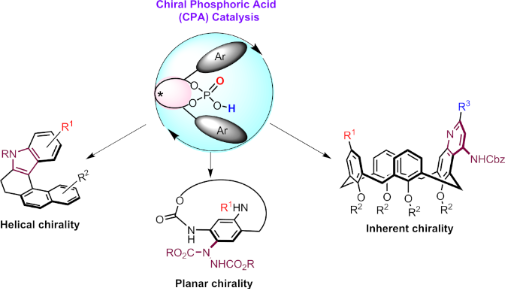
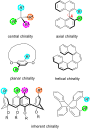
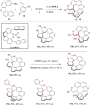
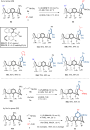
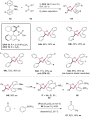
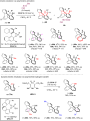
- asymmetric Mannich reactions, the past two decades have witnessed the remarkable evolution of CPA catalysis into one of the most versatile platforms for achieving diverse enantioselective transformations [3][4][5][6][7][8]. CPA catalysts are generally recognized as bifunctional catalysts with two distinct










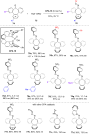
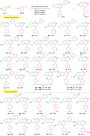
Fe-catalyzed efficient synthesis of 2,4- and 4-substituted quinolines via C(sp2)–C(sp2) bond scission of styrenes
Beilstein J. Org. Chem. 2025, 21, 1799–1807, doi:10.3762/bjoc.21.142
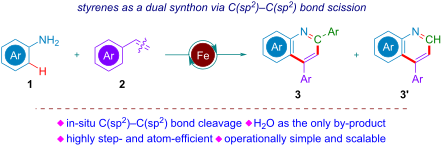
- promising industrial relevance. Oxidative cleavage of alkenes to yield carbonyl compounds is one of the key transformations in synthetic organic chemistry [41][42]. Over the past two decades, this field has witnessed significant advancements, primarily through the use of organic oxidants and transition
- -metal catalysts. One of the key transformations in organic synthesis is the selective oxidative cleavage of alkenes to yield ketones or aldehydes [43][44][45][46][47]. Traditionally, such transformations have been achieved using various oxidizing agents, transition-metal-based systems, organo- and




[3 + 2] Cycloaddition of thioformylium methylide with various arylidene-azolones in the synthesis of 7-thia-3-azaspiro[4.4]nonan-4-ones
Beilstein J. Org. Chem. 2025, 21, 1791–1798, doi:10.3762/bjoc.21.141
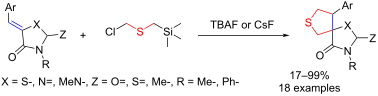
- authors have shown that arylidene-azolones are very promising substrates for these transformations, since their exo-cyclic double bond easily reacts with various 1,3-dipoles [16][17][18][19][20]. Thioformylium methylide is a well known 1,3-dipole, which is readily generated from chloromethyl
- transformations. For example, compound 7e underwent both sulfone formation and S/O atoms exchange in the heterocyclic core. For derivatives 6 and 8, any oxidation conditions resulted in even more complex product mixtures (presumably due to the additional sulfur atom in the second ring), whose structures could not



Synthesis of chiral cyclohexane-linked bisimidazolines
Beilstein J. Org. Chem. 2025, 21, 1786–1790, doi:10.3762/bjoc.21.140
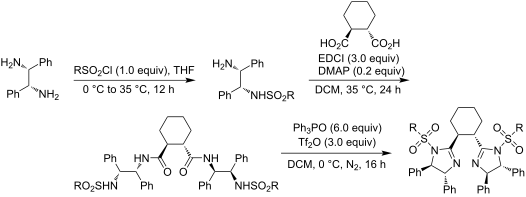
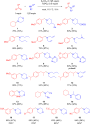
- bisimidazolines are efficient chiral ligands in metal-catalyzed asymmetric organic transformations. Chiral cyclohexane-linked bisimidazolines were prepared from optically active cyclohexane-1,2-dicarboxylic acid and 1,2-diphenylethane-1,2-diamines via the monosulfonylation of 1,2-diphenylethane-1,2-diamines
- bisoxazolines [1][2][3][4][5][6][7][8][9] and bisimidazolines [10][11][12][13][14][15] are efficient chiral ligands and have been widely applied in various metal-catalyzed asymmetric organic transformations. Various chiral bisoxazoline ligands have been prepared from diacids and enantiopure vicinal amino


Continuous-flow-enabled intensification in nitration processes: a review of technological developments and practical applications over the past decade
Beilstein J. Org. Chem. 2025, 21, 1678–1699, doi:10.3762/bjoc.21.132
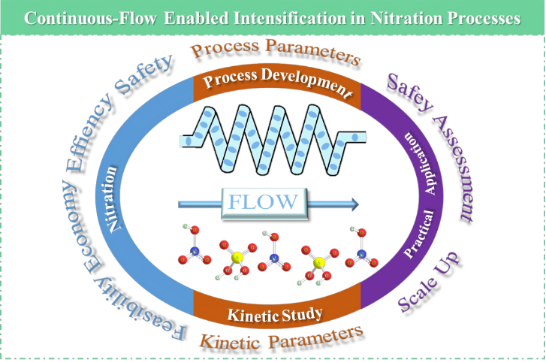
- generated during the dilution process. While many nitration processes usually exhibit rapid kinetics, specific transformations like partial dinitration reactions demonstrate notably slower reaction rates, substantially compromising process throughput. Although thermal activation via temperature elevation




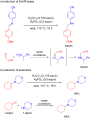
Influence of the cation in hypophosphite-mediated catalyst-free reductive amination
Beilstein J. Org. Chem. 2025, 21, 1661–1670, doi:10.3762/bjoc.21.130
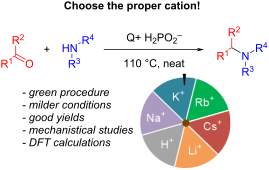
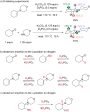
- metals other than sodium have been severely understudied in reductive transformations. While at least the structure of LiH2PO2 is known [30][31], rubidium hypophosphite is not described in the literature. There is only a very limited number of KH2PO2 utilization examples in copolymerization [32] and
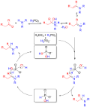
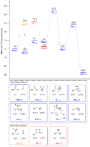
- confirmed by D-experiments. The whole sequence of transformations was finished by the reduction of the charged iminium cation with the hypophosphite anion forming N,N,N-dimethylbenzylammonium phosphite in exergonic manner with a total Gibbs free energy gain of −26.8 kcal/mol (Step_5). Noteworthy, the target


Catalytic asymmetric reactions of isocyanides for constructing non-central chirality
Beilstein J. Org. Chem. 2025, 21, 1648–1660, doi:10.3762/bjoc.21.129
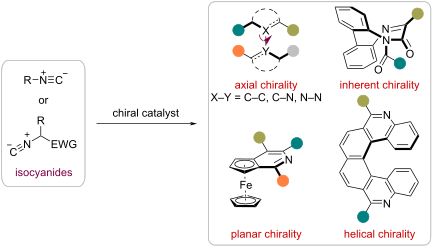
- Jia-Yu Liao College of Pharmaceutical Sciences, Zhejiang University, Hangzhou, 310058, China 10.3762/bjoc.21.129 Abstract Beyond the conventional carbon-centered chirality, catalytic asymmetric transformations of isocyanides have recently emerged as a powerful strategy for the efficient synthesis
- become a hot topic in synthetic organic chemistry. Isocyanides (also termed isonitriles) are a class of highly versatile building blocks in organic synthesis, participating in a wide range of transformations including multicomponent reactions (e.g., the well-known Passerini and Ugi reactions) [13][14][15
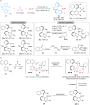
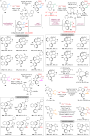
- reaction type and the chirality type of resulting products. Perspective Isocyanide-based transformations Palladium-catalyzed isocyanide insertion reactions In 2018, Luo, Zhu, and co-workers developed a palladium-catalyzed enantioselective reaction between ferrocene-derived vinyl isocyanides 1 and aryl




Photocatalysis and photochemistry in organic synthesis
Beilstein J. Org. Chem. 2025, 21, 1645–1647, doi:10.3762/bjoc.21.128
- demonstrate its broad applicability [11]. This renewed momentum was driven by contributions from numerous groups across the field. At the same time, advances in technology – particularly the accessibility of various light sources (most notably LEDs) – made photochemical transformations much more practical to
- catalysis, and this arsenal of catalysts is constantly expanding. In this thematic issue, the Dell’Amico group describes the development of a new class of organic donor–acceptor photocatalysts that show promising activity for several transformations [18]. Additionally, Hoffmann and co-workers contributed a

On the aromaticity and photophysics of 1-arylbenzo[a]imidazo[5,1,2-cd]indolizines as bicolor fluorescent molecules for barium tagging in the study of double-beta decay of 136Xe
Beilstein J. Org. Chem. 2025, 21, 1627–1638, doi:10.3762/bjoc.21.126
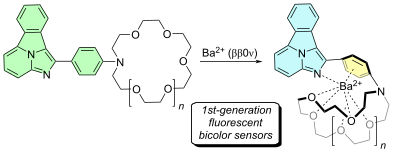
- , the reaction is 136Xe → 136Ba2+ + 2e− + 2. The ββ0ν analog would consist of simply 136Xe → 136Ba2+ + 2e−. Both transformations are extraordinarily rare events. For instance, the estimated half-life for the ββ0ν decay is at least higher than 2.3·1026 years, whereas the current best estimate of the age


Transition-state aromaticity and its relationship with reactivity in pericyclic reactions
Beilstein J. Org. Chem. 2025, 21, 1613–1626, doi:10.3762/bjoc.21.125
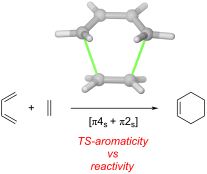
- concerted mechanisms has not been considered. For instance, very little is known about the influence of TS-aromaticity (if any) on the barrier heights of catalyzed pericyclic reactions and related transformations. Our group has been focused on this aspect in recent years by exploring the interplay between
- the aromaticity of the transition state and the activation barriers of different pericyclic reactions spanning from the parent Diels–Alder reactions to higher-order cycloadditions or even transition-metal-mediated transformations [22][23][24][25][26][27][28][29]. By selecting illustrative examples, in
- reactions [74][75] constitute representative DGTRs. In general, concerted DGRTs are thermally allowed [σ2s + σ2s + π2s] transformations according to the Woodward–Hoffmann rules [15], and therefore proceed through a highly synchronous six-membered transition state. Not surprisingly and similar to the ene


3-Aryl-2H-azirines as annulation reagents in the Ni(II)-catalyzed synthesis of 1H-benzo[4,5]thieno[3,2-b]pyrroles
Beilstein J. Org. Chem. 2025, 21, 1595–1602, doi:10.3762/bjoc.21.123
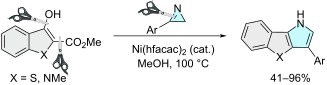
- methanol. The driving force of this process is the formation of an aromatic thiophene system. To demonstrate the practicability and synthetic utility of this method for the synthesis of benzo[4,5]thieno[3,2-b]pyrrole derivatives, several transformations of compound 3b were carried out (Scheme 4



Azide–alkyne cycloaddition (click) reaction in biomass-derived solvent CyreneTM under one-pot conditions
Beilstein J. Org. Chem. 2025, 21, 1544–1551, doi:10.3762/bjoc.21.117
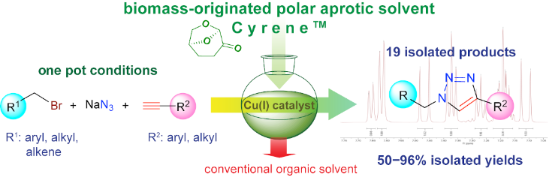
- been characterized as an ideal solvent for click reactions, the limited solubility of most organic substrates could limit its application. Thus, the transformations of either water-insoluble or solid compounds require a solvent to establish high reaction performance, i.e. homogeneous solutions with low


General method for the synthesis of enaminones via photocatalysis
Beilstein J. Org. Chem. 2025, 21, 1535–1543, doi:10.3762/bjoc.21.116
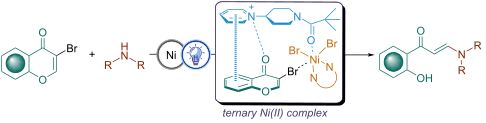
- ]. Thus, the use of visible light as an energy source provides more efficient chemical transformations and minimize the use of harmful reagents, the generation of waste and the consumption of energy, fulfilling several principles of Green Chemistry and promoting greener opportunities for organic synthesis
- moieties, respectively, since they could enable further chemical transformations. Unfortunately, when 2-methyl-3-bromochromone was employed as the substrate, the process failed to afford the desired enaminone product, which was possibly caused by a combination of increased steric hindrance and decreased




Azobenzene protonation as a tool for temperature sensing
Beilstein J. Org. Chem. 2025, 21, 1528–1534, doi:10.3762/bjoc.21.115
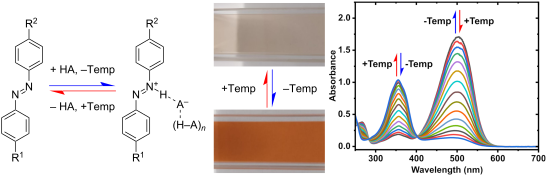
- other transformations that can offer useful functionalities. These include ionization via protonation of one of the nitrogens forming the azo bond [12][13], azo–hydrazone tautomerization [14][15], and binding of analytes to side groups [16]. Such transformations depend on the azobenzene structure but


Photoredox-catalyzed arylation of isonitriles by diaryliodonium salts towards benzamides
Beilstein J. Org. Chem. 2025, 21, 1480–1488, doi:10.3762/bjoc.21.110
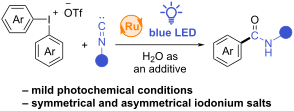
- of benzamides (Scheme 1A) [6]. Over the years, the basic reaction has been modified to imply various metal-containing catalysts [7][8][9][10][11][12][13][14][15][16][17][18], metal-free transformations that employ heteroarenes under harsh conditions [19], or using diazonium salts as arylating agents
- [20][21]. However, diazonium salts are distinguished by their inherent instability complicating their use in such transformations. Moreover, among the various arylation strategies, photochemical methods remain relatively underexplored, with only a few examples reported [22][23]. These methods often





