Search results
Search for "azobenzene" in Full Text gives 109 result(s) in Beilstein Journal of Organic Chemistry.
Mannich base-connected syntheses mediated by ortho-quinone methides
Beilstein J. Org. Chem. 2018, 14, 560–575, doi:10.3762/bjoc.14.43
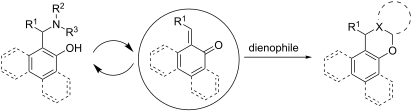
- active zwitterionic species via an o-QM intermediate. Dimmock et al. subsequently examined the cytotoxic activity of phenolic azobenzene Mannich bases [92]. Correlations were found between structures and activities against murine P388DI and L1210 cells, human T-lymphocyte cell lines and, in some cases


Mechanochemical synthesis of small organic molecules
Beilstein J. Org. Chem. 2017, 13, 1907–1931, doi:10.3762/bjoc.13.186
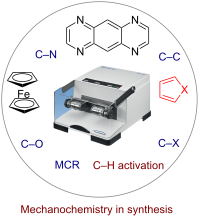
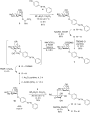
- mechanosynthesis of organometallic complexes are shown. Ćurić and co-workers reported the first mechanochemical activation of a C–H bond of unsymmetrical azobenzene with Pd(OAc)2 [178]. The cyclopalladation process was highly regioselective and the rate of palladation was also faster than traditional solution
- phase processes. 4'-(N,N-dimethylamino)-4-nitroazobenzene with an equimolar amount of Pd(OAc)2 and 25 μL of glacial acetic acid (for LAG) resulted in regioselective C–H activation to give cyclopalladated complex E in 4.5 h where two Pd- and two azobenzene groups were involved. Treating this complex with
- ]. b) Multistep and multicomponent synthesis of Re-complexes [176]. c) Mechano-synthesis of NHC-Au complex [177]. Mechanochemical activation of C–H bond of unsymmetrical azobenzene [178]. Mechanochemical synthesis of organometallic pincer complex [179]. Mechanochemical synthesis of tris(allyl)aluminum


Syntheses of 3,4- and 1,4-dihydroquinazolines from 2-aminobenzylamine
Beilstein J. Org. Chem. 2017, 13, 1470–1477, doi:10.3762/bjoc.13.145
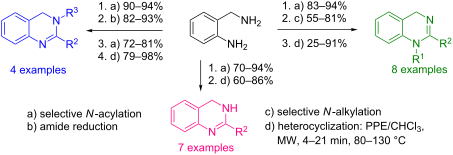
- , the selective acylation of the aliphatic amino group was achieved by the treatment of the diamine with benzoic acid in the presence of Zr(azobenzene-4,4´-dicarboxylate) [43], with tert-butylperoxybenzoate [44] and with isopropenyl acetate [45], or by a DCC-mediated coupling with a carboxylic acid [38


Determination of the absolute stereostructure of a cyclic azobenzene from the crystal structure of the precursor containing a heavy element
Beilstein J. Org. Chem. 2016, 12, 2211–2215, doi:10.3762/bjoc.12.212
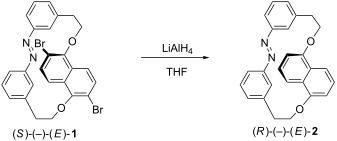
- substitution (S-(−)-(E)-1). A reductive debromination of S-(−)-(E)-1 results in formation of one of the enantiomers of (E)-2. Using a combination of HPLC and CD spectroscopy we could safely assign the stereostructure of one of the enantiomers of (E)-2, the reduced product R-(−)-(E)-1. Keywords: azobenzene
- alternative method for the determination of the absolute stereostructure of a molecule without the possibility of functionalization. Recently our group reported the synthesis of several cyclic azobenzene molecules and their properties [45][46][47][48][49][50]. All these molecules share a comparable cyclic
- structure, with a photoisomerizable azobenzene unit linked to a substituted or unsubstituted aromatic unit such as naphthalene or benzene. Generally the molecules are of three categories (i) achiral (irrespective of the isomerized state of the azobenzene, i.e., E or Z), (ii) chiral in E-state and achiral in


Supramolecular polymer assembly in aqueous solution arising from cyclodextrin host–guest complexation
Beilstein J. Org. Chem. 2016, 12, 50–72, doi:10.3762/bjoc.12.7
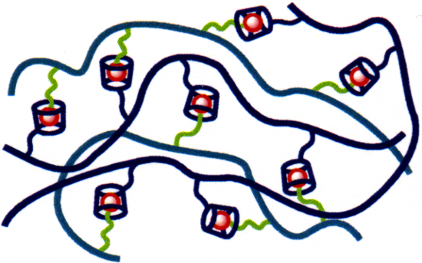
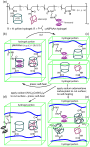
- photo-responsive small molecules are azobenzene and its derivatives which isomerize from trans to cis and from cis to trans under irradiation with UV and visible light, respectively, and are potentially components of photo-responsive materials. In 2005, Harada et al. constructed a photo-responsive
- of α-CD the dodecyl substituents are complexed and the hydrogel is disrupted to give a free-flowing solution. The addition of trans-4,4’-azobenzene carboxylate to this solution results in the preferential formation of the α-CD·trans-4,4’-azobenzene carboxylate host–guest complex and the PAAddn
- hydrogel reforms. Irradiation at 335 nm causes trans-4,4’-azobenzene carboxylate to photo-isomerize to the cis isomer which is too sterically hindered to form a stable α-CD complex, and the dodecyl substituents of PAAddn are once again complexed by α-CD and the hydrogel disaggregates. This last step is


Azobenzene-based inhibitors of human carbonic anhydrase II
Beilstein J. Org. Chem. 2015, 11, 1129–1135, doi:10.3762/bjoc.11.127
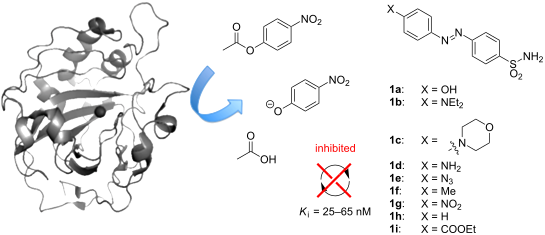
- interested in the exploration of azobenzene-containing sulfonamides to block the catalytic activity of human carbonic anhydrase II (hCAII). Herein, we report the synthesis and in vitro evaluation of a small library of nine photochromic sulfonamides towards hCAII. All molecules are azobenzene-4-sulfonamides
- kinetics. Keywords: azobenzene chemistry; enzyme inhibitors; human carbonic anhydrase II; sulfonamide; X-ray crystallography; Introduction Carbonic anhydrase (CA) is an ubiquitously found zinc-containing metalloenzyme with many isoforms, which all catalyze the conversion of carbon dioxide and water to
- (Figure 1b) [5]. Furthermore, sulfonamide-containing azobenzenes exhibit affinity and blocking ability for hCAII (Figure 1c) [6]. With our knowledge in azobenzene chemistry and photopharmacology, we aimed to further understand how electronic substitution patterns on azobenzenes correlate to changes in


Synthesis of photoresponsive cholesterol-based azobenzene organogels: dependence on different spacer lengths
Beilstein J. Org. Chem. 2015, 11, 1089–1095, doi:10.3762/bjoc.11.122
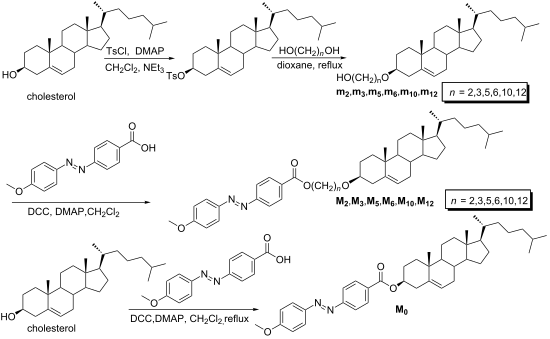
- Yuchun Ren Bin Wang Xiuqing Zhang Chemical Synthesis and Pollution Control Key Laboratory of Sichuan Province of China, China West Normal University, Nanchong 637009, China 10.3762/bjoc.11.122 Abstract A series of azobenzene–cholesterol organogel compounds (M0–M12) with different spacers were
- the aggregates change from flower-like, network and rod with different sizes. By using IR and XRD characterization, it is found that intermolecular H-bonding, the solvents and van der Waals interaction are the main contributions to the specific superstructure. Keywords: azobenzene; cholesterol
- can bring about new predictable gelation abilities for the construction of novel cholesterol-based gelators. Azobenzene is one of the smartest molecules among all known photochromic compounds because of its E/Z isomerization [18]. Based on this, photomechanical soft materials containing azobenzene


Synthesis of multivalent carbohydrate mimetics with aminopolyol end groups and their evaluation as L-selectin inhibitors
Beilstein J. Org. Chem. 2015, 11, 638–646, doi:10.3762/bjoc.11.72
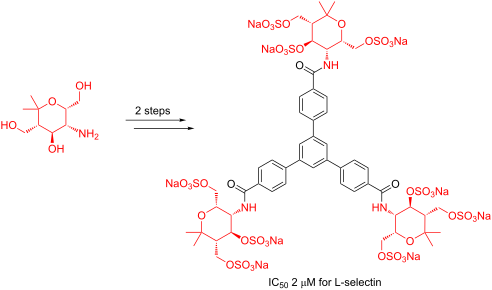
- desired protected divalent compound 10 in excellent yield. Using the aliphatic sebacoyl dichloride (8) as linker (Table 1, entry 2), the expected product 11 could be isolated in 58% yield. The interesting trans-azobenzene derivative 9 [30] was also employed as precursor and the divalent compound 12 was


Cross-dehydrogenative coupling for the intermolecular C–O bond formation
Beilstein J. Org. Chem. 2015, 11, 92–146, doi:10.3762/bjoc.11.13
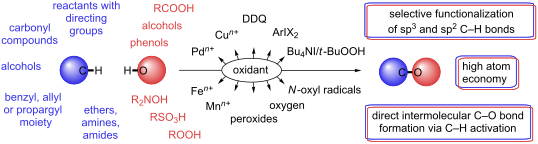
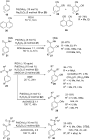
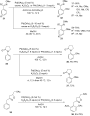
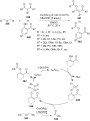
- [25][26][27][28][29][30][31][32]. 1.1 Reactions involving C(sp2)–H bonds of aromatic C-reagents In one of the first publications on the preparative introduction of the –OR group into CH-reagents containing directing groups, 8-methylquinoline, 2-arylpyridines, N-phenylpyrazole, azobenzene, and
- salt 109 combined with triethylamine acted as the catalyst, and azobenzene 110 served as the oxidizing agent. Esters 111 were prepared in 16–97% yield. The selective oxidative coupling of aldehydes 112 and alcohols 113 in the presence of amines 114 using 1,4-dimethyltriazolium iodide (115), DBU and






Synthesis and characterization of a new photoinduced switchable β-cyclodextrin dimer
Beilstein J. Org. Chem. 2014, 10, 2874–2885, doi:10.3762/bjoc.10.304
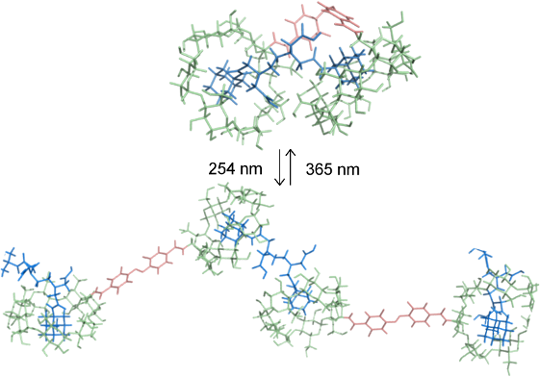
- Université Paris 06, CNRS, UMR 8232, IPCM, Chimie des Polymères, F-75005, Paris, France CNRS, UMR 8232, IPCM, Chimie des Polymères, F-75005, Paris, France 10.3762/bjoc.10.304 Abstract This paper reports an efficient preparation of bridged bis-β-CD AZO-CDim 1 bearing azobenzene as a linker and exhibiting
- cavities of cis-AZO-CDim 1 are complexed simultaneously by two adamantyl units of the guest forming a 1:1 complex while trans-AZO-CDim 1 seems to lead to the formation of supramolecular polymers with an n:n stoichiometry. Keywords: azobenzene; cyclodextrins; inclusion complex; photoisomerization
- cis (Z) and trans (E) isomers, which can be interconverted by both photochemical and thermal means [21]. This transformation by external stimuli induces a molecular movement and a significant geometric change [22][23]. CDs and azobenzene derivatives can form inclusion complexes controlled by



Photoswitchable precision glycooligomers and their lectin binding
Beilstein J. Org. Chem. 2014, 10, 1603–1612, doi:10.3762/bjoc.10.166
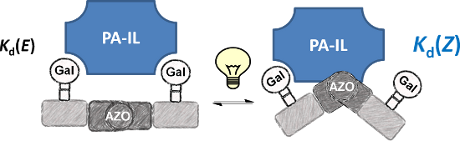
- building blocks. The obtained glycoligands are monodisperse and present azobenzene moieties as well as sugar ligands at defined positions within the oligomeric backbone and side chains, respectively. We show that the combination of molecular precision together with the photoswitchable properties of the
- azobenzene unit allows for the photosensitive control of glycoligand binding to protein receptors. These stimuli-sensitive glycoligands promote the understanding of multivalent binding and will be further developed as novel biosensors. Keywords: azobenzene; glycopolymer; lectin binding; multivalency
- potential perspectives for the sensing and adhesion of bacteriological targets on various substrates. The examples reported so far make use of azobenzene [16], a well-known photochromic compound offering robustness and straightforward preparation. It is able to reversibly isomerize between an extended and


4-Pyridylnitrene and 2-pyrazinylcarbene
Beilstein J. Org. Chem. 2013, 9, 754–760, doi:10.3762/bjoc.9.85
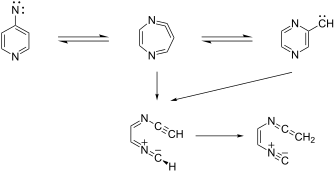
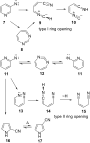
- phenylnitrene (1) and 2-pyridylcarbene (3) has been described in considerable detail [1][2][3]. The three species 1–3 have all been observed directly by IR or ESR spectroscopy in low-temperature matrices. The normal reaction products of phenylnitrene are azobenzene (4) and aniline (5), but under forcing flash
- described below. Since nitrenes are intrinsically more stable than the isomeric carbenes [3][12][13], a rearrangement of 21 to 19 is perfectly reasonable. In the case of phenylazide, mild FVT results in the formation of azobenzene (4) (Scheme 1), but violent FVT, where the pressure is allowed to rise to ca







NHC-catalysed highly selective aerobic oxidation of nonactivated aldehydes
Beilstein J. Org. Chem. 2013, 9, 602–607, doi:10.3762/bjoc.9.65
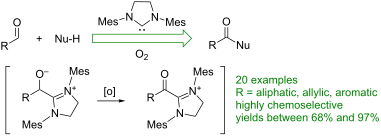
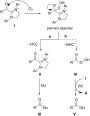
- azobenzene [8][9][10][11][12][13][14][15][16][17][18] were described. The use of mpg-C3N4 should lead to a new process containing two subsequent organocatalytic reactions (Scheme 1). Results and Discussion In initial experiments we used 4-nitrobenzaldehyde as a model substrate. As NHC-salt we selected A


Thermotropic and lyotropic behaviour of new liquid-crystalline materials with different hydrophilic groups: synthesis and mesomorphic properties
Beilstein J. Org. Chem. 2013, 9, 425–436, doi:10.3762/bjoc.9.45
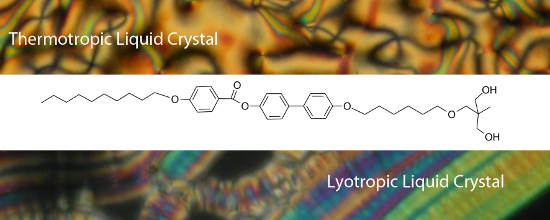
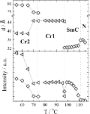
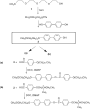
- -alkoxyphenyl β-D-glucopyranosides [5]. LC compounds in which a hydrophilic polyethyleneimine chain with hydroxy side-groups is attached to the azobenzene mesogenic core through the alkylene chain have showed a thermotropic SmA phase, lyotropic lamellar phase, and a lyotropic analogue of the tilted smectic C






Synthesis and testing of the first azobenzene mannobioside as photoswitchable ligand for the bacterial lectin FimH
Beilstein J. Org. Chem. 2013, 9, 223–233, doi:10.3762/bjoc.9.26
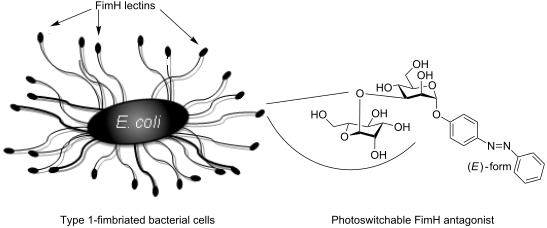
- control of carbohydrate-specific bacterial adhesion, it has become our goal to synthesise azobenzene mannosides as photoswitchable inhibitors of type 1 fimbriae-mediated adhesion of E. coli. An azobenzene mannobioside 2 was prepared and its photochromic properties were investigated. The E→Z isomerisation
- that of the standard inhibitor methyl mannoside. These findings could be rationalised on the basis of computer-aided docking studies. The properties of the new azobenzene mannobioside have qualified this glycoside to be eventually employed on solid support, in order to fabricate photoswitchable
- adhesive surfaces. Keywords: azobenzene glycosides; bacterial adhesion; E/Z photoisomerisation; FimH antagonists; mannobiosides; molecular switches; sweet switches; Introduction Adhesion of bacteria to surfaces can be a severe problem both in vivo and in vitro. Hence, inhibition of bacterial adhesion by



A new family of four-ring bent-core nematic liquid crystals with highly polar transverse and end groups
Beilstein J. Org. Chem. 2013, 9, 26–35, doi:10.3762/bjoc.9.4
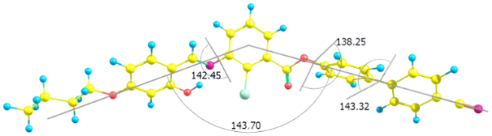
- azobenzene or salicylideneimine or phenylbenzoate unit in one of the arms of the bent molecule by a polar cyanobiphenyl moiety lends stiffness to the molecule with a strong dipole moment in the lateral direction. The realization of such a molecular architecture leads to a reduction in rotational disorder as


Amino-substituted diazocines as pincer-type photochromic switches
Beilstein J. Org. Chem. 2013, 9, 1–7, doi:10.3762/bjoc.9.1
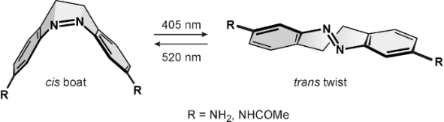
- the thermodynamically more stable cis isomer the lone pairs of the amino nitrogen atoms point towards each other, and in the trans form they point in opposite directions. The distance between the amino nitrogen atoms changes between 8 Å (cis) and 11 Å (trans isomer). Keywords: azobenzene; diazocine
- as directed motion at the molecular level [2][3], the geometry change and the force induced during cis–trans isomerization has to be coupled to the environment. In the macroscopic world, therefore, machines are made from stiff materials. Azobenzene, however, is a rather floppy molecule. Both phenyl
- conformational motion. The first and probably most simple measure to make azobenzene stiffer would be to prevent the phenyl groups from rotating. Connecting both rings with each other via an alkane bridge is probably the most straightforward way to achieve that. Such a molecule, 5,6-dihydrodibenzo[c,g][1,2





A bisazobenzene crosslinker that isomerizes with visible light
Beilstein J. Org. Chem. 2012, 8, 2184–2190, doi:10.3762/bjoc.8.246
- Subhas Samanta Harris I. Qureshi G. Andrew Woolley Department of Chemistry, University of Toronto, 80 St. George St., Toronto, ON, M5S 3H6, Canada; telephone: (416) 978-0675, fax: (416) 978-8775 10.3762/bjoc.8.246 Abstract Background: Large conformational and functional changes of azobenzene
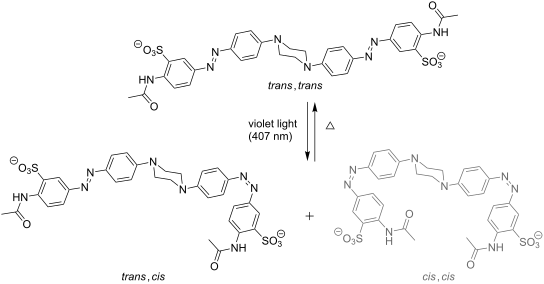
- -modified biomolecules require longer azobenzene derivatives that undergo large end-to-end distance changes upon photoisomerization. In addition, isomerization that occurs with visible rather than UV irradiation is preferred for biological applications. Results: We report the synthesis and characterization
- of a new crosslinker in which a central piperazine unit links two azobenzene chromophores. Molecular modeling indicates that this crosslinker can undergo a large change in end-to-end distance upon trans,trans to cis,cis isomerization. Photochemical characterization indicates that it does isomerize


Cyclodextrin-induced host–guest effects of classically prepared poly(NIPAM) bearing azo-dye end groups
Beilstein J. Org. Chem. 2012, 8, 1929–1935, doi:10.3762/bjoc.8.224
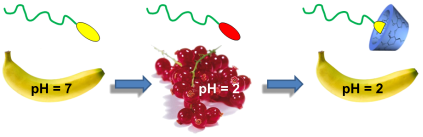
- ]. Several reports are available on the preparation and properties of thermally responsive polyacrylamides containing azobenzene or stilbene dyes in the side chain [3][14]. Furthermore, the interaction of dye-containing polymers with CD in water is of some interest, because of their external, light-induced


Design and synthesis of a photoswitchable guanidine catalyst
Beilstein J. Org. Chem. 2012, 8, 1825–1830, doi:10.3762/bjoc.8.209
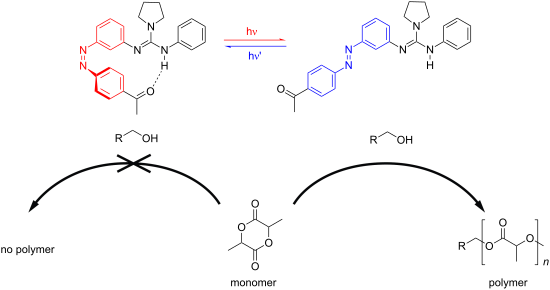
- photochromic properties demonstrated the reversible switchability of its photosensitive azobenzene moiety. Its activity in the ring-opening polymerization (ROP) of rac-lactide was investigated as well. The obtained results are discussed, and an additional guanidine was synthesized and utilized in the ROP of
- hydrogen bonds to an acceptor (A) and activated by light-triggered dissociation of such intramolecular hydrogen bonds (Scheme 2). Herein, we report the synthesis of the first photoswitchable guanidine, as well as its photochromic behavior. Upon irradiation, the incorporated azobenzene is supposed to
- was converted by known procedures into its corresponding nitroso derivative 7 [19], followed by a Mills coupling with 4-aminoacetophenone (8) to give azobenzene 9 in 93% yield over two steps. Nitroazobenzene 9 was transformed into its amino derivative 10 by catalytic hydrogenation. Note that under the


Metal–ligand multiple bonds as frustrated Lewis pairs for C–H functionalization
Beilstein J. Org. Chem. 2012, 8, 1554–1563, doi:10.3762/bjoc.8.177
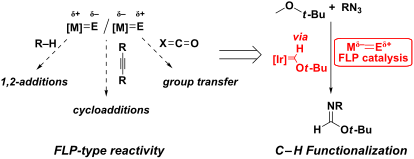
- of isocyanates to ruthenium(II) silylenes [58] (Scheme 8). These complexes do not react with nonpolar substrates (although a possible cycloaddition with azobenzene was reported), and the overall cycloaddition was found to proceed through initial nucleophilic attack at an electrophilic silylene




Mannose-decorated cyclodextrin vesicles: The interplay of multivalency and surface density in lectin–carbohydrate recognition
Beilstein J. Org. Chem. 2012, 8, 1543–1551, doi:10.3762/bjoc.8.175
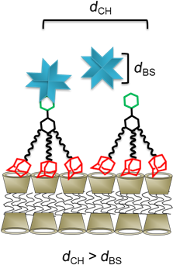
- (intervesicular binding) and hence cause vesicle aggregation. We have previously observed this effect for homobifunctional guest molecules equipped with two azobenzene, methylbenzoyl, or tert-butylbenzyl groups [32][33][34]. It should be noted that in the case of guest 3 the aggregation due to cross-linking is


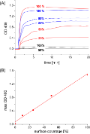




Cation affinity numbers of Lewis bases
Beilstein J. Org. Chem. 2012, 8, 1406–1442, doi:10.3762/bjoc.8.163
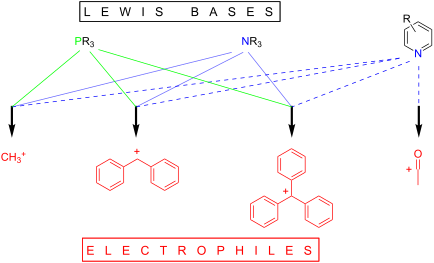
- -position are significantly more effective than aryl substituents in stabilizing the pyridinium ions formed through acetyl cation addition. Photo-switchable 3,4-diaminopyridines including a diazo moiety are potentially useful as special-purpose catalysts. The azobenzene substituent itself is electron


Control over molecular motion using the cis–trans photoisomerization of the azo group
Beilstein J. Org. Chem. 2012, 8, 1071–1090, doi:10.3762/bjoc.8.119
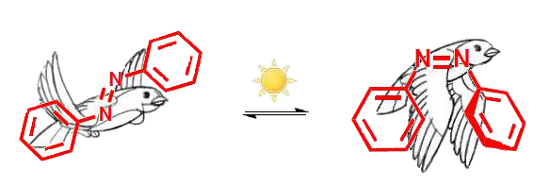
- . This transformation induces a molecular movement and a significant geometric change, therefore the azobenzene unit is an excellent candidate to build dynamic molecular devices. We describe selected examples of systems containing an azobenzene moiety and their motions and geometrical changes caused by
- external stimuli. Keywords: azobenzenes; molecular switches; nanomachines; photoisomerization; Review This review is based on an article published in 2009 in Anales de Química (Real Sociedad Española de Química) [1]. Azobenzene was described for the first time in 1834 [2] and one century later, in 1937
- , G. S. Hartley published a study of the influence of light on the configuration of N=N double bonds [3]. The exposure of a solution of azobenzene in acetone to light allowed the discovery of the cis isomer. This finding was the starting point of the development of one of the best organic molecular


Recent advances towards azobenzene-based light-driven real-time information-transmitting materials
Beilstein J. Org. Chem. 2012, 8, 1003–1017, doi:10.3762/bjoc.8.113
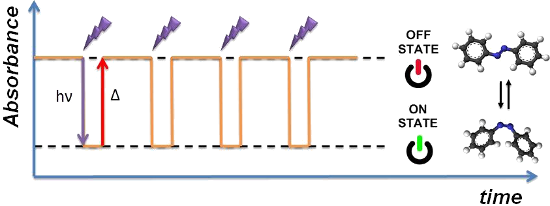
- fast relaxation times for azobenzene-based photochromic molecular switches is still a challenge. This review focuses on the most recent achievements on azobenzene-based light-driven real-time information-transmitting systems. Besides, the main relationships between the structural features of the azo
- applications are certainly azobenzenes. Azobenzene, a photochromic T-type system, exhibits a reversible isomerisation process between its trans and cis isomers of different stability. In this process, the photoreaction simply causes the rearrangement of the electronic and nuclear structure of the molecule
- radicals may occur and dediazotation can be observed [19][20]. Azobenzene-based photochromic systems are under kinetic control; that is, after a photochemical conversion, whose rate depends mainly on the intensity of the excitation beam, the spontaneous thermal back reaction occurs. While the photo-induced