


Search results
Search for "drug design" in Full Text gives 107 result(s) in Beilstein Journal of Organic Chemistry.
Exploring endoperoxides as a new entry for the synthesis of branched azasugars
Beilstein J. Org. Chem. 2017, 13, 644–647, doi:10.3762/bjoc.13.63
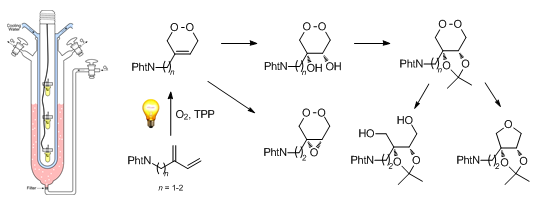
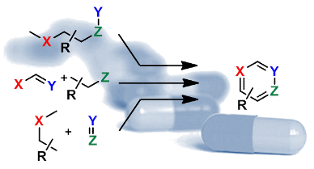
- Svenja Domeyer Mark Bjerregaard Henrik Johansson Daniel Sejer Pedersen Department of Drug Design and Pharmacology, University of Copenhagen, Jagtvej 162, 2100 Copenhagen, Denmark 10.3762/bjoc.13.63 Abstract A new class of nitrogen-containing endoperoxides were synthesised by a photochemical [4

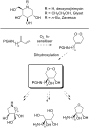


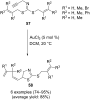
N-Propargylamines: versatile building blocks in the construction of thiazole cores
Beilstein J. Org. Chem. 2017, 13, 625–638, doi:10.3762/bjoc.13.61
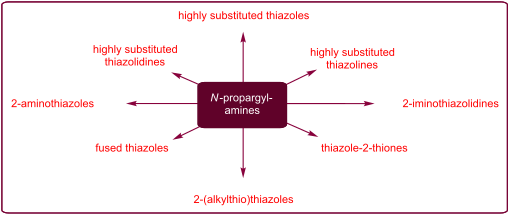
- ], antimicrobial [57][58][59], and specially antibiotic [60][61][62][63][64] agents. Despite their great relevance in drug design, only very few synthetic methods towards these compounds have been reported to date [44]. N-Propargylamines are one of the most specific class of alkynes having diverse reaction




Computational methods in drug discovery
Beilstein J. Org. Chem. 2016, 12, 2694–2718, doi:10.3762/bjoc.12.267
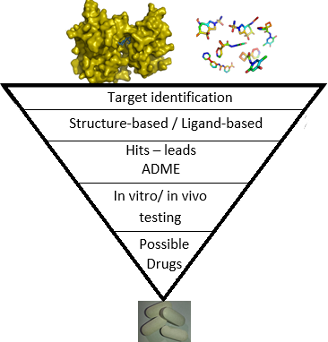
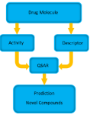
- methods are discussed. Advances in virtual high-throughput screening, protein structure prediction methods, protein–ligand docking, pharmacophore modeling and QSAR techniques are reviewed. Keywords: ADME; computer-aided drug design; docking; free energy; high-throughput screening; LBDD; lead optimization
- -based de novo ligand design it is possible to assemble molecules that are drug-like with much less search space having to be explored. In some cases, de novo drug design is less successful in generating drug candidates compared to other methods such as high-throughput virtual screening methods for large
- ][156]. Using BOMB it is possible to grow molecules by adding substituents into a core structure. It has been possible to design inhibitors for Escherichia coli RNS polymerase using the de novo drug design program SPROUTS [157]. In another study that used the SPROUT program, novel inhibitors were



Bridgehead vicinal diallylation of norbornene derivatives and extension to propellane derivatives via ring-closing metathesis
Beilstein J. Org. Chem. 2016, 12, 1877–1883, doi:10.3762/bjoc.12.177
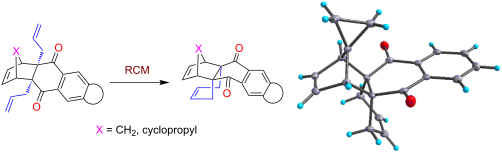
- allyl groups and oxa-bowl/propellane hybrids. Since non-flattened molecules are implicated in biological systems, our results would be useful in drug design [42]. Retrosynthetic approach to propellane derivatives. The molecular structure of 1a, with displacement ellipsoids drawn at the 50% probability


Synergistic chiral iminium and palladium catalysis: Highly regio- and enantioselective [3 + 2] annulation reaction of 2-vinylcyclopropanes with enals
Beilstein J. Org. Chem. 2016, 12, 1340–1347, doi:10.3762/bjoc.12.127
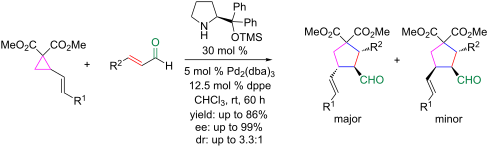
- Haipan Zhu Peile Du Jianjun Li Ziyang Liao Guohua Liu Hao Li Wei Wang State Key Laboratory of Bioengineering Reactor, Shanghai Key Laboratory of New Drug Design and School of Pharmacy, East China University of Science and Technology, 130 Mei-long Road, Shanghai 200237, China Department of


Chiral cyclopentadienylruthenium sulfoxide catalysts for asymmetric redox bicycloisomerization
Beilstein J. Org. Chem. 2016, 12, 1136–1152, doi:10.3762/bjoc.12.110
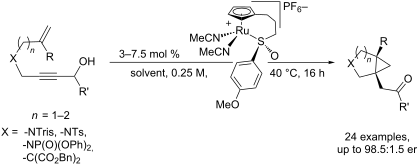
- molecular architectures hold a particular interest to the chemical community, especially in the fields of natural product synthesis and drug design, researchers have made a significant effort to discover asymmetric variations of enyne cycloisomerization reactions [11][12]. Researchers have used a variety of


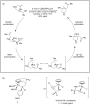


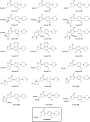
Correction: Effective in silico prediction of new oxazolidinone antibiotics: force field simulations of the antibiotic–ribosome complex supervised by experiment and electronic structure methods
Beilstein J. Org. Chem. 2016, 12, 608–610, doi:10.3762/bjoc.12.59
- ; computational chemistry; drug design; molecular recognition; relaxed force constants; Our original publication contains an erratic number of predicted antibiotic structures in Scheme 2. With this Erratum we provide the corrected Scheme 2. Scheme 2 in the original article: Predicted new linezolid-like
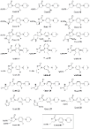
Effective in silico prediction of new oxazolidinone antibiotics: force field simulations of the antibiotic–ribosome complex supervised by experiment and electronic structure methods
Beilstein J. Org. Chem. 2016, 12, 415–428, doi:10.3762/bjoc.12.45
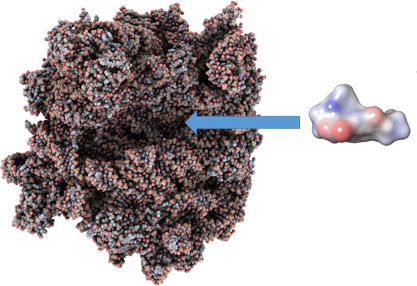
- : compliance constants; computational chemistry; drug design; molecular recognition; relaxed force constants; Introduction Antibiotic resistance is one of the major health problems in modern societies, causing millions of deaths per year [1][2][3]. Although Alexander Fleming recognized the importance of the
- computer-based drug design was one of the big scientific promises. New drugs are nowadays produced at the same rate as they were 60 years ago [27], notwithstanding enormous investments and undeniable achievements both, in computer soft- and hardware. Modern computational drug design strategies range from A


Diversity-oriented synthesis of analogues of the novel macrocyclic peptide FR-225497 through late stage functionalization
Beilstein J. Org. Chem. 2015, 11, 2487–2492, doi:10.3762/bjoc.11.270
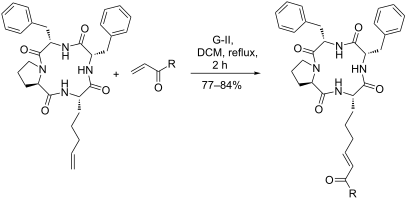
- peptides of the general structure 1 (Figure 1) displays important histone deacetylase inhibition property relevant to drug design against a number of diseases ranging from antifungal, antimicrobial to arrest of proliferation of several cell types of epithelial and hematological origin [13]. The compounds


Influence of length and flexibility of spacers on the binding affinity of divalent ligands
Beilstein J. Org. Chem. 2015, 11, 804–816, doi:10.3762/bjoc.11.90
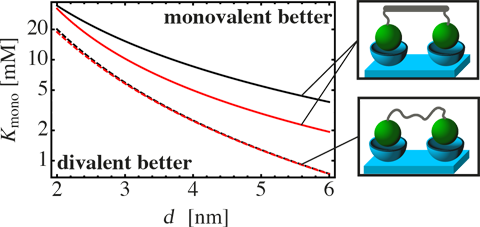
- ]. Also in drug design, the synthesis of artificial multivalent ligands is a promising route to increase the binding affinity or to reduce the amount of substance required for treatment [4][5][6][7]. The term multivalency is used for systems that consist of several identical binding partners. Thereby, the


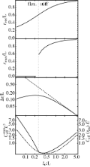

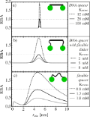

![[Graphic 33]](/bjoc/content/inline/1860-5397-11-90-i83.png?max-width=637&scale=1.18182) is shown for different ligand–spacer constructs. If the monovalent dissociatio...
is shown for different ligand–spacer constructs. If the monovalent dissociatio...
Potential of acylated peptides to target the influenza A virus
Beilstein J. Org. Chem. 2015, 11, 589–595, doi:10.3762/bjoc.11.65
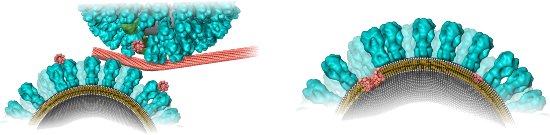
- , Germany 10.3762/bjoc.11.65 Abstract For antiviral drug design, especially in the field of influenza virus research, potent multivalent inhibitors raise high expectations for combating epidemics and pandemics. Among a large variety of covalent and non-covalent scaffold systems for a multivalent display of


Morita–Baylis–Hillman reaction of acrylamide with isatin derivatives
Beilstein J. Org. Chem. 2014, 10, 2975–2980, doi:10.3762/bjoc.10.315
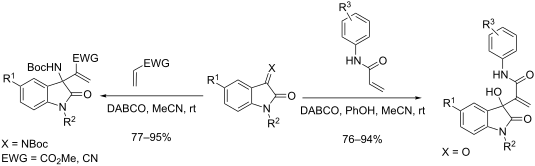
- . This is especially relevant given the fact that they have been extensively used in drug design [23][24], polymer chemistry [25][26] and are popular synthetic templates [27][28]. For further comparison to other acryl systems, acrylamide also offers extra valencies at nitrogen, which can be used for


Automated solid-phase peptide synthesis to obtain therapeutic peptides
Beilstein J. Org. Chem. 2014, 10, 1197–1212, doi:10.3762/bjoc.10.118
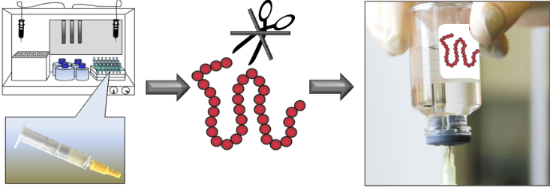
- significantly smaller in size and hence, easier and cheaper to synthesize using chemical strategies [5]. Thereby, they provide a vast perspective for novel drug design. Table 1 summarizes valuable virtues and pivotal shortcomings of therapeutic peptides compared to traditional small organic molecules. The high
- SPPS for drug development The described method of chemical synthesis of peptides on the solid phase and particularly, its outstanding potential for automation, have led to routine methods in the development of novel pharmaceuticals. In principle, there are two approaches for drug design: rational and


Stereocontrolled synthesis of 5-azaspiro[2.3]hexane derivatives as conformationally “frozen” analogues of L-glutamic acid
Beilstein J. Org. Chem. 2014, 10, 1114–1120, doi:10.3762/bjoc.10.110
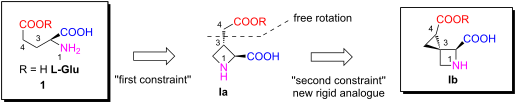
- Road, Manchester, M13 9PL, UK Neurosciences Centre of Excellence for Drug Discovery, GlaxoSmithKline Medicines Research Centre, Via A. Fleming 4, 37135, Verona, Italy Present address: Galapagos SASU, 102 avenue Gaston Roussel, 93230 Romainville, France Present address: Drug Design and Discovery, Aptuit


The total synthesis of D-chalcose and its C-3 epimer
Beilstein J. Org. Chem. 2013, 9, 2620–2624, doi:10.3762/bjoc.9.296
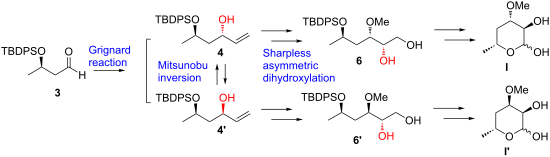
- Jun Sun Song Fan Zhan Wang Guoning Zhang Kai Bao Weige Zhang Key Laboratory of Structure-Based Drug Design & Discovery, Ministry of Education, Shenyang Pharmaceutical University, Shenyang 110016, China Center for Molecular Imaging, Beth Israel Deaconess Medical Center, Harvard Medical School


An overview of the synthetic routes to the best selling drugs containing 6-membered heterocycles
Beilstein J. Org. Chem. 2013, 9, 2265–2319, doi:10.3762/bjoc.9.265


The chemistry of isoindole natural products
Beilstein J. Org. Chem. 2013, 9, 2048–2078, doi:10.3762/bjoc.9.243
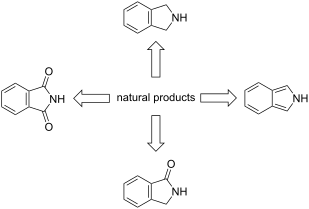
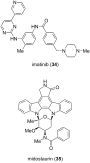
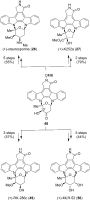
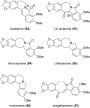
- cellular signaling and their association with cancer, a tremendous effort in the development of selective protein kinase inhibitors was undertaken. This resulted in the discovery of the anticancer agent imatinib (Gleevec, 34) by rational drug design (Figure 4). Midostaurin (35), a semisynthetic derivative












Synthesis of the calcilytic ligand NPS 2143
Beilstein J. Org. Chem. 2013, 9, 1383–1387, doi:10.3762/bjoc.9.154
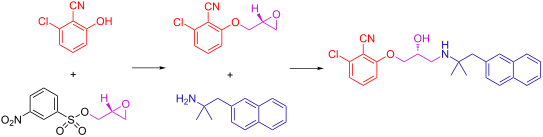
- Henrik Johansson Thomas Cailly Alex Rojas Bie Thomsen Hans Brauner-Osborne Daniel Sejer Pedersen Department of Drug Design and Pharmacology, University of Copenhagen, Universitetsparken 2, DK-2100 Copenhagen, Denmark Université de Caen Basse-Normandie, CERMN (EA 4258 - FR CNRS 3038 INC3M - SF 4206


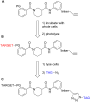
Design and synthesis of tag-free photoprobes for the identification of the molecular target for CCG-1423, a novel inhibitor of the Rho/MKL1/SRF signaling pathway
Beilstein J. Org. Chem. 2013, 9, 966–973, doi:10.3762/bjoc.9.111
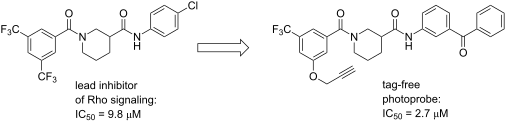
- the macromolecular target(s) of 1 would allow us to employ rational and structure-based drug design to create more potent and selective therapeutics for the treatment of RhoA-related disorders. Early efforts at optimization in our laboratory led to nipecotic (bis)amide analogue 2 (CCG-100602, Figure 1




Recent progress in the discovery of small molecules for the treatment of amyotrophic lateral sclerosis (ALS)
Beilstein J. Org. Chem. 2013, 9, 717–732, doi:10.3762/bjoc.9.82
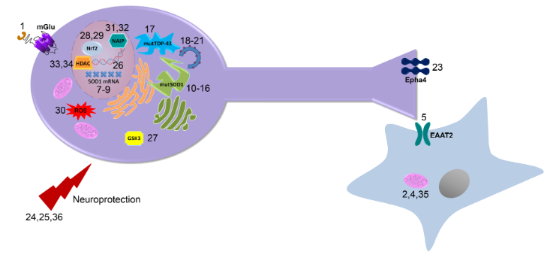
- prove to be efficacious in ALS patients. Various screening approaches and targeted drug design, as outlined in this review, have identified a number of small molecules that will prove useful in the discovery and validation of novel cellular targets for the treatment of ALS (Figure 15). Figure 15


Synthesis and stability study of a new major metabolite of γ-hydroxybutyric acid
Beilstein J. Org. Chem. 2013, 9, 641–646, doi:10.3762/bjoc.9.72

- Ida Nymann Petersen Jesper Langgaard Kristensen Christian Tortzen Torben Breindahl Daniel Sejer Pedersen Department of Drug Design and Pharmacology, University of Copenhagen, Universitetsparken 2, DK-2100 Copenhagen, Denmark Department of Chemistry, University of Copenhagen, Universitetsparken 5


An efficient access to the synthesis of novel 12-phenylbenzo[6,7]oxepino[3,4-b]quinolin-13(6H)-one derivatives
Beilstein J. Org. Chem. 2012, 8, 1849–1857, doi:10.3762/bjoc.8.213
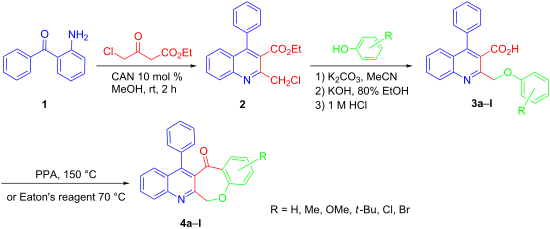
- of the above findings as well as the combination principles for drug design [31], we were intrigued to explore the incorporation of a quinoline ring fused together with a benzoxepine nucleus, which would be much more attractive and valuable for medicinal chemistry and drug discovery. In recent years


Similarity analysis, synthesis, and bioassay of antibacterial cyclic peptidomimetics
Beilstein J. Org. Chem. 2012, 8, 1146–1160, doi:10.3762/bjoc.8.128
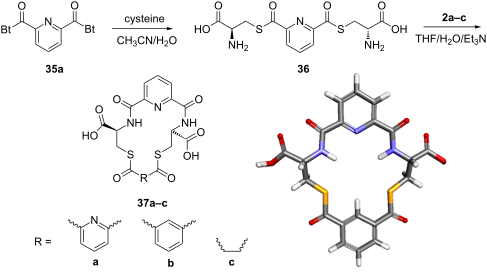
- affording opportunities for drug design and development. One strategy to create peptidomimetics couples a small-molecule scaffold with a peptide. Such scaffolds include aromatic rings or heterocycles, which may be positioned in the interior of the peptide chain [4][5] or at the C- [6][7][8] or N-terminus [9
- economic synthetic route, renders scaffold 37 as a promising platform for further rational drug design. Synthesis Treatment of dicarboxylic acids 34a–c by a standard method [36] using thionyl chloride and 1H-benzotriazole gave the corresponding benzotriazole derivatives in 37–54% yield (Scheme 1, see


Antibiotic and cytotoxic peptides
Beilstein J. Org. Chem. 2012, 8, 1144–1145, doi:10.3762/bjoc.8.127
- in Medicinal Chemistry [2]. This Thematic Series on “Antibiotic and cytotoxic peptides” presents contributions from synthetic chemists active in the fields of peptides, peptidomimetics, drug design, and method development, in order to promote the research area further and to disseminate the
The use of glycoinformatics in glycochemistry
Beilstein J. Org. Chem. 2012, 8, 915–929, doi:10.3762/bjoc.8.104
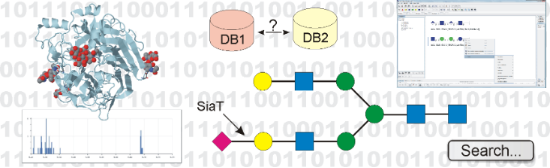
- structures for synthesis, or on glyco-enzymes that can be used to synthesize carbohydrates. Statistical analyses of glycan databases help to plan glycan synthesis experiments. 3D-Structural data of protein–carbohydrate complexes are used in targeted drug design, and tools to support glycan structure analysis
- DrawRings are used by some databases to enable graphical input of glycan (sub-)structure queries using icons to describe monosaccharides. Atomic pictograms as frequently used by chemists, however, are not supported by these tools. 3D Structure information for targeted drug design Knowledge of the 3D




