Search results
Search for "polymerization" in Full Text gives 371 result(s) in Beilstein Journal of Organic Chemistry. Showing first 200.
Natural products in the predatory defence of the filamentous fungal pathogen Aspergillus fumigatus
Beilstein J. Org. Chem. 2021, 17, 1814–1827, doi:10.3762/bjoc.17.124

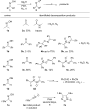
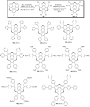
- on its own SM-gene-cluster [146][147][148]. The DHN-melanin of A. fumigatus is a heteropolymer formed through the polymerization of 1,8-dihydroxynaphtalene (1,8-DHN) monomers (10) and is responsible for the unique greyish-green colour of A. fumigatus conidia (Figure 5). The genetics and biochemistry
- to 1,8-dihydroxynaphthalene (1,8-DHN) (10) by Abr1, a multi-copper reductase. In a last step polymerization of 1,8-DHN monomers is facilitated by the laccase Abr2 [45][149][150][151][152]. Knock out mutants of either ayg1, arp2, or abr2 lead to different coloured conidia while loss of pksP aborts DHN
- predictions or artificial oxidative polymerization studies of 1,8-DHN monomers [144][153]. Next to offering the conidia protection from UV radiation, DHN-melanin was shown to be a key factor to survival during both predation and virulence. When preyed upon by fungivorous amoeba like P. aurantium melanised


A systems-based framework to computationally describe putative transcription factors and signaling pathways regulating glycan biosynthesis
Beilstein J. Org. Chem. 2021, 17, 1712–1724, doi:10.3762/bjoc.17.119
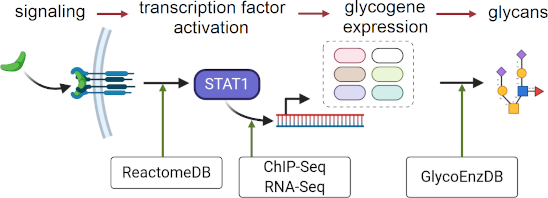
- dermatan sulfates. 10) Heparan sulfate extension: EXT1 and EXT2 both have GlcUA and GlcNAc transferase activities and are together responsible for HS chain polymerization. EXTL1–3 are additional enzymes with GlcNAc transferase activity that facilitate heparin sulfate biosynthesis. Additional enzymes that




Electron-rich triarylphosphines as nucleophilic catalysts for oxa-Michael reactions
Beilstein J. Org. Chem. 2021, 17, 1689–1697, doi:10.3762/bjoc.17.117
- Susanne M. Fischer Simon Renner A. Daniel Boese Christian Slugovc Institute for Chemistry and Technology of Materials, Graz University of Technology, Stremayrgasse 9, 8010 Graz, Austria Christian Doppler Laboratory for Organocatalysis in Polymerization, Stremayrgasse 9, 8010 Graz, Austria
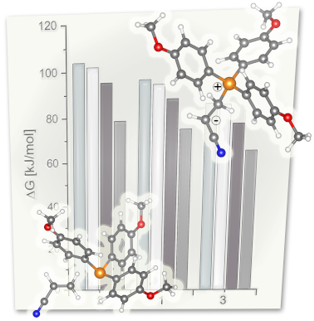
- stability of the phosphines was also evaluated and the most electron-rich TMTPP was found to be only slightly more sensitive to oxidation than TPP. Finally, the catalysts were employed in the oxa-Michael polymerization of 2-hydroxyethyl acrylate. With TMTPP polymers characterized by number average molar
- slightly lower than the activity of the methoxy-substituted congeners. As an example for acrylates as Michael acceptors, the performance of the catalysts in the oxa-Michael addition polymerization of 2-hydroxyethyl acrylate (HEA, 4) was investigated [27][28][29]. The catalyst loading was increased to 5 mol


Breaking paracyclophane: the unexpected formation of non-symmetric disubstituted nitro[2.2]metaparacyclophanes
Beilstein J. Org. Chem. 2021, 17, 1518–1526, doi:10.3762/bjoc.17.109
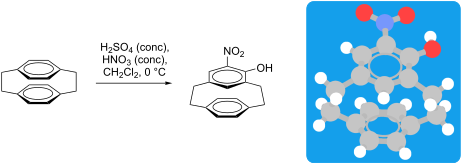
- polymerization. Extensive optimization led us to a set of conditions that routinely provided 4-nitro[2.2]paracyclophane (4) in good yields regardless of the scale of reaction (nitration has been performed on scales ranging from 0.5 g to 30 g). The 1H NMR of the crude reaction mixture invariably shows two other
- . Reaction of 1 with nitric acid alone led to a surprisingly clean, nitration, albeit by a very slow reaction. As stated earlier, nitration is normally a messy reaction. Presumably, the low concentration of nitronium ion present in equilibrium with the acid promotes a clean reaction without polymerization or




Photoinduced post-modification of graphitic carbon nitride-embedded hydrogels: synthesis of 'hydrophobic hydrogels' and pore substructuring
Beilstein J. Org. Chem. 2021, 17, 1323–1334, doi:10.3762/bjoc.17.92
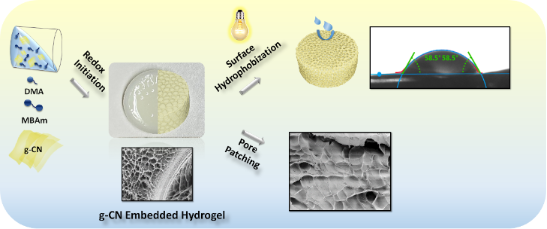
- , ascorbic acid/hydrogen peroxide, respectively. The mixture was immediately placed in a Petri dish to complete the gelation via free radical polymerization under dark conditions. After 3 hours, the resulting hydrogel was purified with water to remove the unreacted species (monomers and redox mediators
- modification platform [49]. The as-prepared hydrogel network (HGCM) was immersed in various acrylic monomers. Following that, photoinduced free radical polymerization of employed monomers performed under visible light irradiation by taking advantage of embedded g-CN nanosheets in HGCM. According to literature
- , g-CN as an organic semiconductor is utilized in polymerization processes as a photoinitiator by generation of reactive radical species (O2−•, HO•, HO2•) under convenient light illumination. The ability of g-CN to initiate polymerization and act as a polymerization locus for a covalent polymer growth


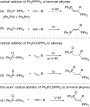
Highly regio- and stereoselective phosphinylphosphination of terminal alkynes with tetraphenyldiphosphine monoxide under radical conditions
Beilstein J. Org. Chem. 2021, 17, 866–872, doi:10.3762/bjoc.17.72
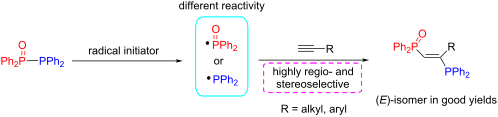
- [38][42]. The ratio of V-40/2a was important to depress the formation of self-polymerization of 2a (Table 1, entries 5–7). The results showed that the best amount of V-40 toward 2a was 10 mol %. Besides, the side product 3a’ is found up to 8% yield under photoirradiation. Considering that in our



Biochemistry of fluoroprolines: the prospect of making fluorine a bioelement
Beilstein J. Org. Chem. 2021, 17, 439–460, doi:10.3762/bjoc.17.40


1,2,3-Triazoles as leaving groups: SNAr reactions of 2,6-bistriazolylpurines with O- and C-nucleophiles
Beilstein J. Org. Chem. 2021, 17, 410–419, doi:10.3762/bjoc.17.37
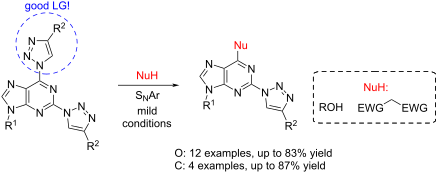
- deprotonated acetylacetone and diphenylmethane. Even there are reports on SNAr reactions of acetylacetone with purines and pyrimidines [56][80], in our hands only polymerization of acetylacetone was observed. On the other hand, the diphenylmethane anion (pKa 32; DMSO [81]) apparently is too basic and


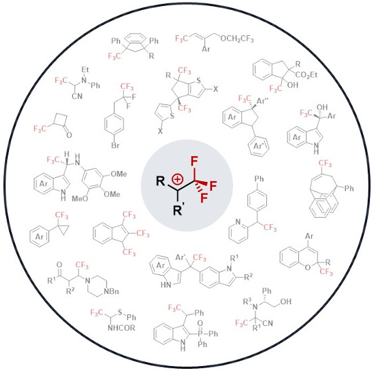
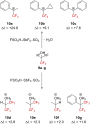
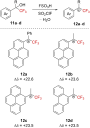
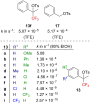
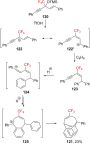
CF3-substituted carbocations: underexploited intermediates with great potential in modern synthetic chemistry
Beilstein J. Org. Chem. 2021, 17, 343–378, doi:10.3762/bjoc.17.32






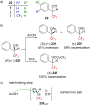


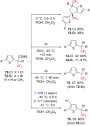


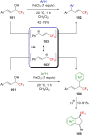
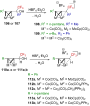







The preparation and properties of 1,1-difluorocyclopropane derivatives
Beilstein J. Org. Chem. 2021, 17, 245–272, doi:10.3762/bjoc.17.25
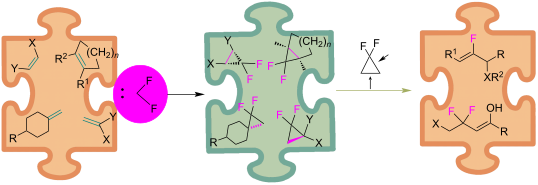
- ]. The radical ring-opening polymerization (RROP) provides a synthetic route to fluoropolymers, which are useful materials [91]. The RROP of gem-difluorovinylcyclopropane (90) gave mainly the polymer with an unsymmetrical repeating unit, by the cleavage of the C2–C3 bond in the ring (Scheme 44, path a




A sustainable strategy for the straightforward preparation of 2H-azirines and highly functionalized NH-aziridines from vinyl azides using a single solvent flow-batch approach
Beilstein J. Org. Chem. 2021, 17, 203–209, doi:10.3762/bjoc.17.20

- isolate 3-(perfluorophenyl)-2H-azirine (2k) due to its rapid polymerization in the crude mixture. Interestingly, aliphatic vinyl azides 1h–j were found less reactive, and the corresponding azirines 2h–j were obtained in just 74–77% yield, in mixtures with unreacted starting materials. However, when the


Insight into functionalized-macrocycles-guided supramolecular photocatalysis
Beilstein J. Org. Chem. 2021, 17, 139–155, doi:10.3762/bjoc.17.15
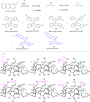
- ultrahigh molecular weight (≈106 g⋅mol−1) and a reasonably low dispersity (Đ ≥ 1.33) by using various monomers. Triethanolamine (TEOA) was used as an electron donor to initiate the photoinduced electron transfer to the PDI–CB[7] system, and thus to start the polymerization reaction. In addition, the rate of
- macrocycle has inherent chromophores that can function as photosensitizers, the efficiency of the energy transfer will be higher and the systems will be simplified. 3) Other kinds of macrocycle-based catalysis need to be explored, such as esterification, polymerization, redox reaction, etc. 4) Hyperbranched
- supramolecular PDI–CB[7] complex and structures of monomers and the chain transfer agent. Republished with permission of The Royal Society of Chemistry from [48] (“Visible light induced aqueous RAFT polymerization using a supramolecular perylene diimide/cucurbit[7]uril complex” by Y. Yang et al., Polym. Chem






Supramolecular polymers with reversed viscosity/temperature profile for application in motor oils
Beilstein J. Org. Chem. 2021, 17, 105–114, doi:10.3762/bjoc.17.11
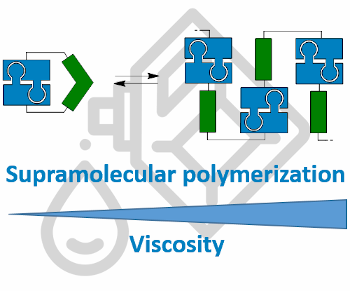
- develop such novel VIIs, we envisaged the use of ditopic building blocks, which are able to reversibly form supramolecular polymers at higher temperatures. Supramolecular polymerization should increase the hydrodynamic radius and thus was expected to lead to increased viscosities [9]. There are different
- mechanisms for the formation of supramolecular polymers from molecular building blocks: The isodesmic, the cooperative and the ring–chain-mediated supramolecular polymerization [10]. For an application in viscosity improvement, a higher degree of polymerization is desired at elevated temperatures, which can
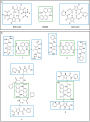
- be achieved by a ring–chain-based polymerization [11]. In this context, Sijbesma and Meijer reported an early example of a low-molecular weight VII using a ditopic monomer which undergoes supramolecular polymerization at elevated temperatures (Figure 1) [12][13]. The system consists of two self




Supramolecular polymerization of sulfated dendritic peptide amphiphiles into multivalent L-selectin binders
Beilstein J. Org. Chem. 2021, 17, 97–104, doi:10.3762/bjoc.17.10
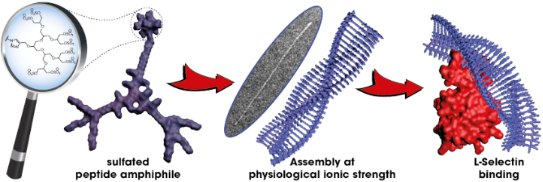
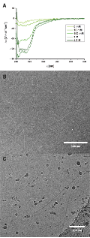
- ionic strength on the supramolecular polymerization was probed via circular dichroism spectroscopy and cryogenic transmission electron microscopy. Physiological salt concentrations efficiently screen the charges of the dendritic building block equipped with eight sulfate groups and trigger the formation
- , post-functionalization using a subsequent copper-catalyzed azide–alkyne cycloaddition reaction became accessible [35][36]. At the same time the other two unmodified side arms of the dendritic amphiphile make sure that the fidelity of the β-sheet motifs and directed supramolecular polymerization remains
- polymerization strongly relies on the formation of secondary structure elements, leading to ordered domains that lead to characteristic CD band spectra. By probing aqueous solutions of I at different concentrations in H2O, a strongly negative CD band at around λ ≈ 220 nm became apparent (Figure 1A). In the past



Synthesis, crystal structures and properties of carbazole-based [6]helicenes fused with an azine ring
Beilstein J. Org. Chem. 2021, 17, 11–21, doi:10.3762/bjoc.17.2
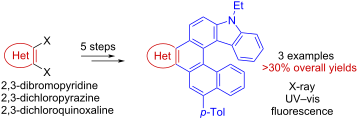
- electroactive materials [52][53][54]. Carbazole-based [6]helicenes [42] and [7]helicenes [50] showed deep blue electroluminescence and have been investigated in OLED devices. Some carbazole-based [5]- and [6]helicenes have been used as visible light photoinitiators for cationic and radical polymerization [41



Amine–borane complex-initiated SF5Cl radical addition on alkenes and alkynes
Beilstein J. Org. Chem. 2020, 16, 3069–3077, doi:10.3762/bjoc.16.256
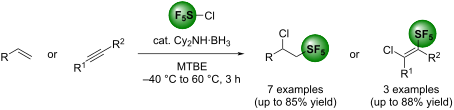
- recently, it has been shown that some of these common amine–borane complexes can also be used as radical initiators for atom transfer radical addition of alkyl halides to alkenes [48]. They were also used in the free-radical polymerization of alkene-containing monomers such as methyl methacrylate or


Selected peptide-based fluorescent probes for biological applications
Beilstein J. Org. Chem. 2020, 16, 2971–2982, doi:10.3762/bjoc.16.247

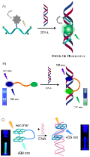
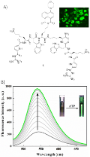
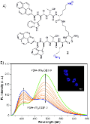
- polymerization reaction between polydiacetylene. PDA liposomes turn colorless to red upon formation of cross-linked liposomes. The fluorescence of the naphthimide is completely quenched due to the energy transfer from the fluorophore to the cross-linked polymer. However, addition of LPS restores the fluorescence



Ring-closing metathesis of prochiral oxaenediynes to racemic 4-alkenyl-2-alkynyl-3,6-dihydro-2H-pyrans
Beilstein J. Org. Chem. 2020, 16, 2757–2768, doi:10.3762/bjoc.16.226
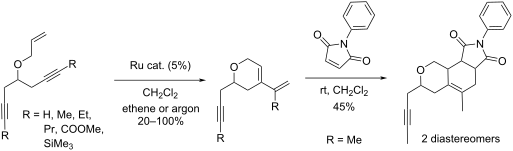
- reactions of unsaturated compounds, e.g., alkene and enyne cross metathesis (CM [1] and EYCM [2][3][4]), alkene and enyne ring-closing metathesis (RCM and RCEYM) [5][6], ring-opening metathetic polymerization (ROMP) [7], etc., the CM and RCM are the most popular in organic synthesis [8]. Furthermore, the
- be too unstable and prone to polymerization. On the other hand, the reactivity of oxaenediyne 3 was too sluggish. Hence, 4-(allyloxy)hepta-1,6-diyne (2a) and its derivatives became the framework of choice. The key starting compound for the synthesis of oxaenediyne 2a and its derivatives was hepta-1,6




Synthetic approaches to bowl-shaped π-conjugated sumanene and its congeners
Beilstein J. Org. Chem. 2020, 16, 2212–2259, doi:10.3762/bjoc.16.186

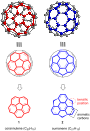
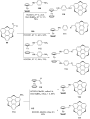
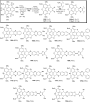
- 27 in a single step. They also pointed out that when ethylene gas was used as an alkene source for the ring-opening step, diluted reaction conditions were necessary to dissolve the ethylene in dichloromethane to avoid polymerization. Therefore, after several experimentations, they noticed that liquid











Reactions of 3-aryl-1-(trifluoromethyl)prop-2-yn-1-iminium salts with 1,3-dienes and styrenes
Beilstein J. Org. Chem. 2020, 16, 2064–2072, doi:10.3762/bjoc.16.173
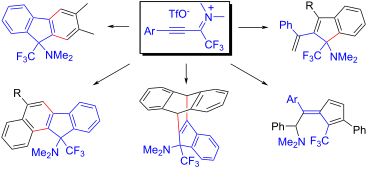
- sequence. On the other hand, the successful thermal iminium-ion induced SE(Ar) reactions shown in Scheme 2 were not applicable to the iminium-substituted norbornadiene 2, which suffered undefined polymerization on moderate heating in various solvents. In contrast to so far unknown 9‑amino-9


Three new O-isocrotonyl-3-hydroxybutyric acid congeners produced by a sea anemone-derived marine bacterium of the genus Vibrio
Beilstein J. Org. Chem. 2020, 16, 1869–1874, doi:10.3762/bjoc.16.154
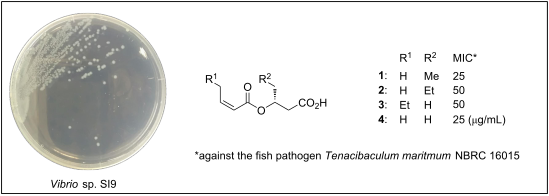
- )-configured 3-hydroxy fatty acids [13], and 3-hydroxybutyric acid in 3 and 4 and 3-hydroxyhexanoic acid in 2 are the most common two building blocks for PHAs [14]. However, degrees of polymerization as low as for 1–4 and the dehydrative modifications are unprecedented, besides for 5 [9]. Because PHAs are by


Synthesis, docking study and biological evaluation of ᴅ-fructofuranosyl and ᴅ-tagatofuranosyl sulfones as potential inhibitors of the mycobacterial galactan synthesis targeting the galactofuranosyltransferase GlfT2
Beilstein J. Org. Chem. 2020, 16, 1853–1862, doi:10.3762/bjoc.16.152
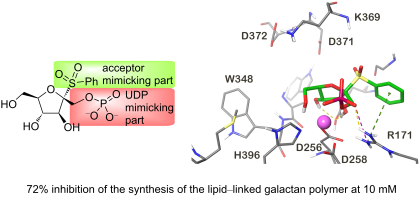
- decaprenyl-P-P-GlcNAc-Rha, (glycolipid 2, GL2), which serves as a lipid carrier for arabinogalactan polymerization [7][8]. The latter enzyme, GlfT2, extends the product of GlfT1-catalyzed reaction, decaprenyl-P-P-GlcNAc-Rha-Galf2 (glycolipid 4, GL4), producing the lipid-linked galactan polymer [8]. Both
- -up of lipid-linked galactan precursors. The crude enzymes used in the assay allow for in situ synthesis of the acceptor for galactan polymerization, decaprenyl-P-P-GlcNAc-Rha (GL2), from endogenous decaprenyl phosphate and sugar nucleotides UDP-GlcNAc and TDP-Rha supplied in the reaction mixture


One-pot synthesis of oxazolidinones and five-membered cyclic carbonates from epoxides and chlorosulfonyl isocyanate: theoretical evidence for an asynchronous concerted pathway
Beilstein J. Org. Chem. 2020, 16, 1805–1819, doi:10.3762/bjoc.16.148
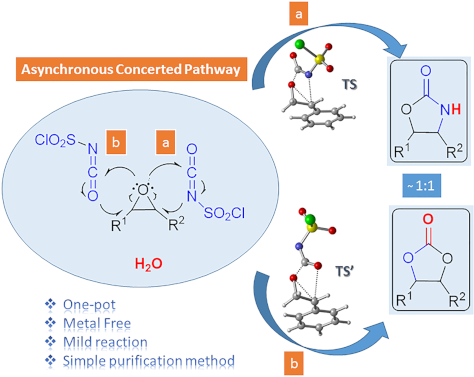
- polymerization of the compounds containing cyclic carbonates such as methyl 4,6-O-benzylidene-2,3-O-carbonyl-α-ᴅ-glucopyranoside (MBCG) (5) [19][20] and glycerol carbonate (6) [21] were also reported (Scheme 1). Therefore, numerous synthetic approaches have been developed to date for the preparation of


Mechanochemical green synthesis of hyper-crosslinked cyclodextrin polymers
Beilstein J. Org. Chem. 2020, 16, 1554–1563, doi:10.3762/bjoc.16.127
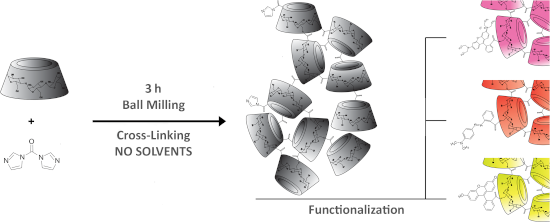
- catalyst, if necessary. The solvents of choice were usually organic polar aprotic liquids, for example, N,N-dimethylformamide or dimethyl sulfoxide (DMSO). An alternative synthetic route relied on interfacial polymerization, where two immiscible solutions, one consisting of CDs dissolved in an alkaline




Oxime radicals: generation, properties and application in organic synthesis
Beilstein J. Org. Chem. 2020, 16, 1234–1276, doi:10.3762/bjoc.16.107
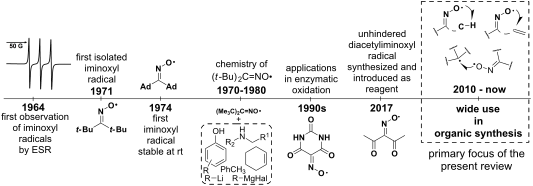
- used in the development of organic magnetic materials [1], organic batteries [2][3][4], in the preparation of polymers by living polymerization [5][6], in the studies of biomolecules and living systems by EPR [7] and NMR [8] techniques. Stable N-oxyl radicals occupy a central place in organic chemistry