Search results
Search for "steric effects" in Full Text gives 180 result(s) in Beilstein Journal of Organic Chemistry.
Synthesis of 3-alkenylindoles through regioselective C–H alkenylation of indoles by a ruthenium nanocatalyst
Beilstein J. Org. Chem. 2020, 16, 140–148, doi:10.3762/bjoc.16.16
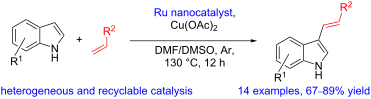
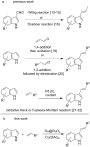
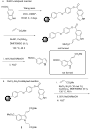
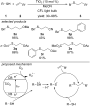
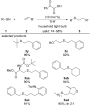
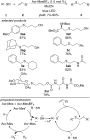
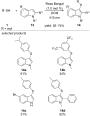
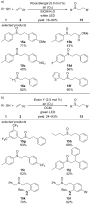
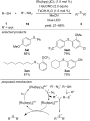
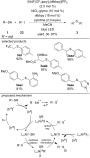
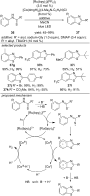
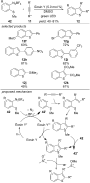
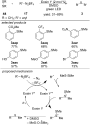
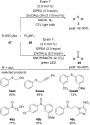
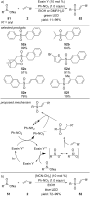
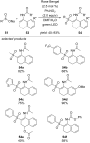
- successful with a bromo-substituted substrates 3e and 3f, demonstrating that the methodology was suitable for substrates with the potential for further late-stage modification. Steric effects were also explored with C2-substituted substrate 3i and 3j, and no significant decline in product formation was




Understanding the role of active site residues in CotB2 catalysis using a cluster model
Beilstein J. Org. Chem. 2020, 16, 50–59, doi:10.3762/bjoc.16.7
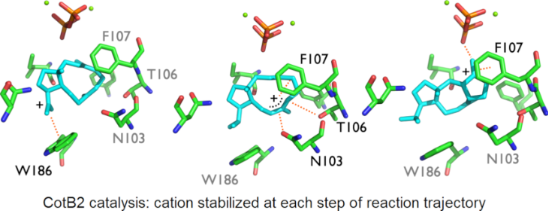
- formed interactions with N103, W186, and especially with I181. The relative energy difference between H and I was also similar in the gas phase and in the enzyme model. However, the activation energy was higher by 3.0 kcal/mol in the active site model, possibly due to steric effects. I was stabilized via


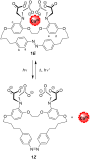
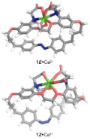
Photoreversible stretching of a BAPTA chelator marshalling Ca2+-binding in aqueous media
Beilstein J. Org. Chem. 2019, 15, 2801–2811, doi:10.3762/bjoc.15.273
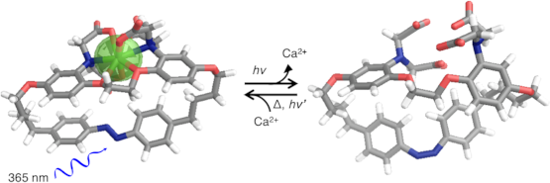
- integrating a spiroamidorhodamine with a BAPTA, whose anticipated switching remains to be proven [27]. Further, interesting approaches are currently being developed on interfacing calmodulin, a messenger protein ionophore, with photochromes [28]. The use of steric effects to decrease binding offers an




Functional panchromatic BODIPY dyes with near-infrared absorption: design, synthesis, characterization and use in dye-sensitized solar cells
Beilstein J. Org. Chem. 2019, 15, 1758–1768, doi:10.3762/bjoc.15.169
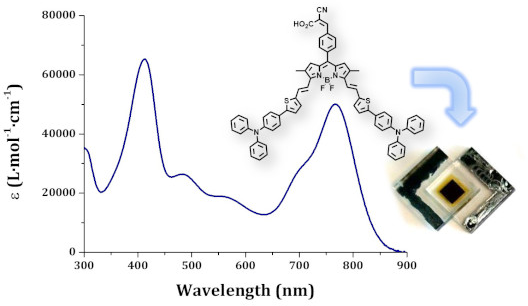
- the close to orthogonal orientation of the anchoring groups induced by steric effects in 2 and 4. As a result, while the LUMO orbital largely extends through the BODIPY unit towards the cyanoacrylic acid anchors in the case of 1 and 3, it is completely confined to the BODIPY-vinylthiophene core in 2


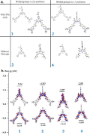


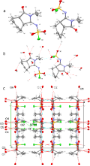
An anomalous addition of chlorosulfonyl isocyanate to a carbonyl group: the synthesis of ((3aS,7aR,E)-2-ethyl-3-oxo-2,3,3a,4,7,7a-hexahydro-1H-isoindol-1-ylidene)sulfamoyl chloride
Beilstein J. Org. Chem. 2019, 15, 931–936, doi:10.3762/bjoc.15.89
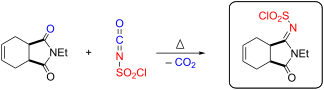
- ]. The C=C double bonds are in the cyclohexene units range between 1.307–1.316(3) Å and the S=O bonds are between 1.417–1.414(3) Å. The conformation is defined by steric effects, which force a fold of the cyclohexene rings relative to the mean plane through the pyrrolidine group. For both enantiomers




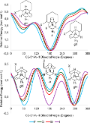
Strong hyperconjugative interactions limit solvent and substituent influence on conformational equilibrium: the case of cis-2-halocyclohexylamines
Beilstein J. Org. Chem. 2019, 15, 818–829, doi:10.3762/bjoc.15.79
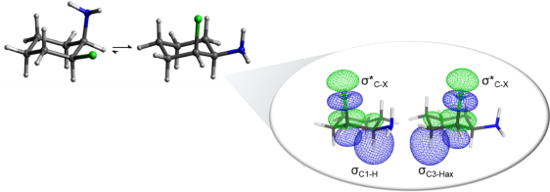
- expected, due to classical steric effects (syn-1,3-diaxial repulsion). On the other hand, the amine group is usually very sensitive to the solvent effect. In addition, the increase in the halogen size could lead to a shift toward the ae conformer (equatorial halogen). In the studied system, no change was




Tuning the stability of alkoxyisopropyl protection groups
Beilstein J. Org. Chem. 2019, 15, 746–751, doi:10.3762/bjoc.15.70
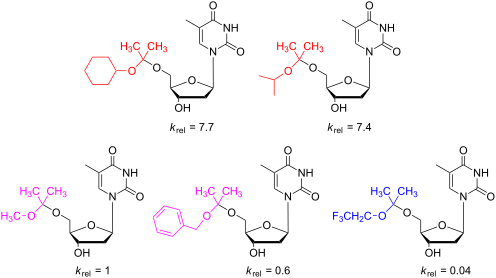
- the secondary 3’-hydroxy functions. Steric effects on the hydrolysis rate are supposed not to be important, because the rate-controlling step of the hydrolysis is suggested to be the unimolecular degradation of the protonated substrate. This releases the stabilized oxocarbenium ion as an intermediate



Catalysis of linear alkene metathesis by Grubbs-type ruthenium alkylidene complexes containing hemilabile α,α-diphenyl-(monosubstituted-pyridin-2-yl)methanolato ligands
Beilstein J. Org. Chem. 2019, 15, 194–209, doi:10.3762/bjoc.15.19
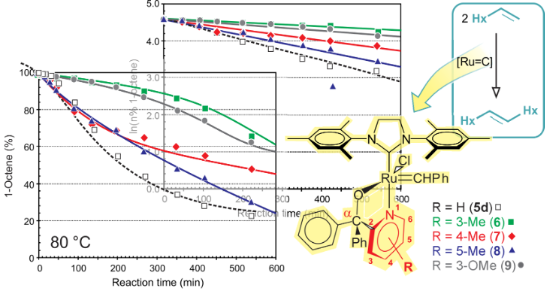
- precatalysts can be attributed to electronic and steric effects associated with the adjacent bulky phenyl groups. Keywords: Grubbs-type precatalyst; hemilabile; 1-octene metathesis; pyridinyl-alcoholato ligand; Introduction The alkene metathesis reaction is now well established as a powerful synthetic tool


Ruthenium-based olefin metathesis catalysts with monodentate unsymmetrical NHC ligands
Beilstein J. Org. Chem. 2018, 14, 3122–3149, doi:10.3762/bjoc.14.292
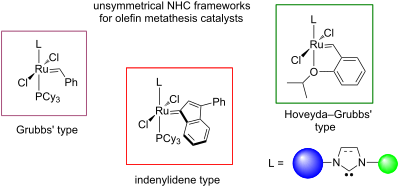
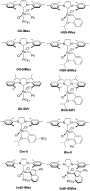
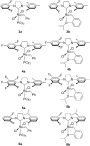
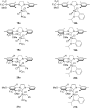
- . Nevertheless, complexes 136–138 were more active than 139–142 in the RCM of 7, conducted at 50 °C and none of those catalysts outperformed HGII-SIMes and HGII-SIPr. Analogous results were observed in the RCM of more crowded substrates. The similar behavior of 141 and 142 indicated that steric effects are more











Synthesis of α-D-GalpN3-(1-3)-D-GalpN3: α- and 3-O-selectivity using 3,4-diol acceptors
Beilstein J. Org. Chem. 2018, 14, 2805–2811, doi:10.3762/bjoc.14.258
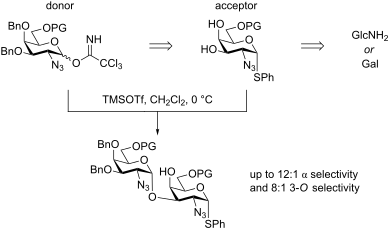
- % yield. Conclusion In conclusion we have shown, how the difference in nucleophilicity along with steric effects can be utilized to employ an unprecedented regioselective glycosylation on a 3,4-diol, resulting in up to 67% isolated yield. Following general guidelines can be given: With bulky 6-O


Water-soluble SNS cationic palladium(II) complexes and their Suzuki–Miyaura cross-coupling reactions in aqueous medium
Beilstein J. Org. Chem. 2018, 14, 1859–1870, doi:10.3762/bjoc.14.160
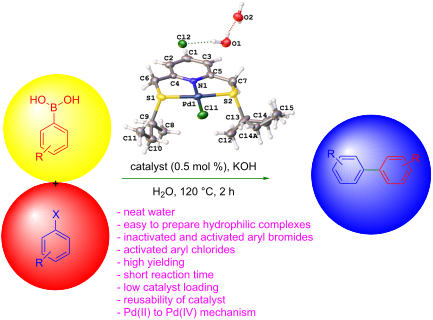
- sterically demanding 4-bromophenyl thioether (Table 1, entry 28) possessing SNS pincer complexes. These results suggest that in the presence of TBAB the mechanism of the reaction changes and the catalytic activity seems to be under the influence of electronic as opposed to steric effects. When the reaction


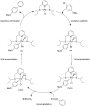


Synthesis of new tricyclic 5,6-dihydro-4H-benzo[b][1,2,4]triazolo[1,5-d][1,4]diazepine derivatives by [3+ + 2]-cycloaddition/rearrangement reactions
Beilstein J. Org. Chem. 2018, 14, 1826–1833, doi:10.3762/bjoc.14.155
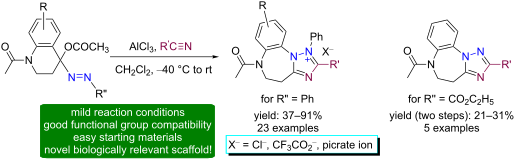
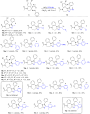
- that interferes with the action of the Lewis acid. By employment of 8a as a model substrate, we next turned our attention to determine possible steric effects with o-, m- and p-methyl-substituted benzonitriles. The tested reactions proceeded well to give the products 10t–v with comparable good yields




Hyper-reticulated calixarene polymers: a new example of entirely synthetic nanosponge materials
Beilstein J. Org. Chem. 2018, 14, 1498–1507, doi:10.3762/bjoc.14.127
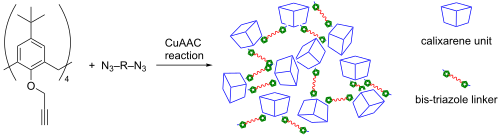
- is confirmed to depend on a fine balance between different factors, namely Coulomb and π···π interactions, and steric effects. The importance of a compromise between these factors for the complexation into calixresorcinarenes has been recently assessed [42]. Moreover, in analogy with the bahavior


[3 + 2]-Cycloaddition reaction of sydnones with alkynes
Beilstein J. Org. Chem. 2018, 14, 1317–1348, doi:10.3762/bjoc.14.113
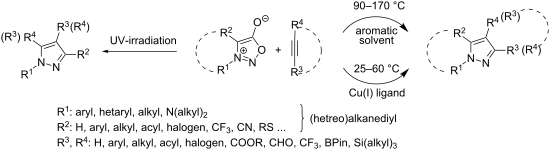
- quantum chemical calculations (DFT/B3LYP-6-31G*) [81] steric effects were identified as the main factor influencing the ratio of both regioisomers. These calculations clearly proved the almost apolar character of both possible transition states giving 3- and 4-BPin substituted pyrazoles through bicyclic


A survey of chiral hypervalent iodine reagents in asymmetric synthesis
Beilstein J. Org. Chem. 2018, 14, 1244–1262, doi:10.3762/bjoc.14.107
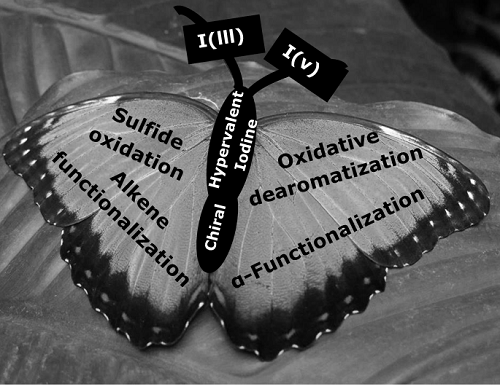
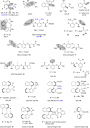
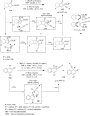
- solvents. Further, they were able to improve the enantioselectivity by implying steric effects at the ortho/ortho′ (R = Et in 7) positions of the aromatics (Scheme 3) [33]. The regeneration of the catalyst was achieved by m-CPBA converting iodine compound 7′ to chiral catalyst 7. The authors predicted a



Imide arylation with aryl(TMP)iodonium tosylates
Beilstein J. Org. Chem. 2018, 14, 1034–1038, doi:10.3762/bjoc.14.90
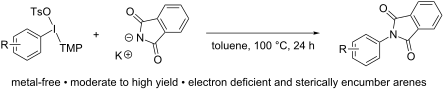
- coupled to phthalimide in moderate yield (42%). Additionally, we have observed that electronic and steric effects operate in concert to couple an o-tolyl (2f) moiety to phthalimide in high yield (67%). In this case, 2,6-disubstituted aryl groups are not required for a sterically controlled coupling


Recent advances on organic blue thermally activated delayed fluorescence (TADF) emitters for organic light-emitting diodes (OLEDs)
Beilstein J. Org. Chem. 2018, 14, 282–308, doi:10.3762/bjoc.14.18
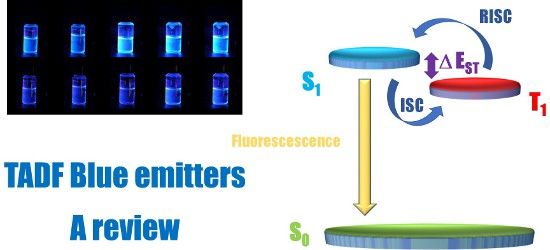
- . As a result, carbazole is not capable to induce the same encumbrance as that of azasiline by inducing smaller steric effects and the substitution of the 1,8-positions is often required to maintain a large dihedral angle. As interesting design rules, Adachi determined that the extension of the




Photocatalytic formation of carbon–sulfur bonds
Beilstein J. Org. Chem. 2018, 14, 54–83, doi:10.3762/bjoc.14.4
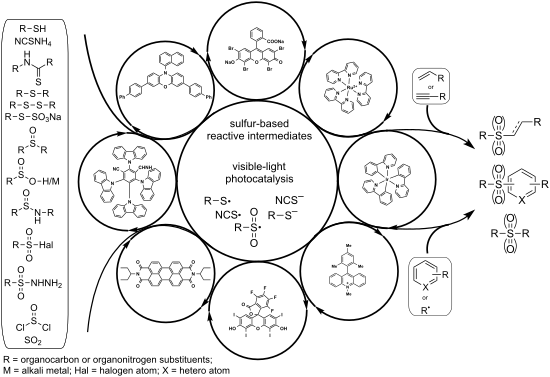
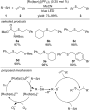
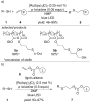
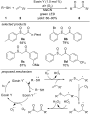
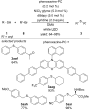
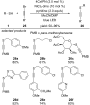
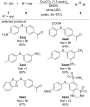
- steric effects. In 2017, the group of Kokotos described a organocatalytic photoinitiated thiol–ene coupling reaction, applying phenylglyoxylic acid as photoorganocatalyst (Scheme 10) [40]. They have shown that the reaction mainly proceeds via a radical chain propagation mechanism, which is initiated by





























Nucleophilic dearomatization of 4-aza-6-nitrobenzofuroxan by CH acids in the synthesis of pharmacology-oriented compounds
Beilstein J. Org. Chem. 2017, 13, 2854–2861, doi:10.3762/bjoc.13.277
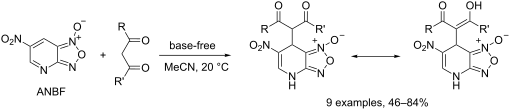
- 12·DMF. Due to significant steric effects, the single bond C4–C11 is significantly elongated (1.567(2) Å), and two nitro groups in ortho-positions of the connected picryl fragment are rotated out of the plane of the benzene ring. Thus, reactions of ANBF with strong CH acids (pKa(H2O) 4–11) proceed


CF3SO2X (X = Na, Cl) as reagents for trifluoromethylation, trifluoromethylsulfenyl-, -sulfinyl- and -sulfonylation and chlorination. Part 2: Use of CF3SO2Cl
Beilstein J. Org. Chem. 2017, 13, 2800–2818, doi:10.3762/bjoc.13.273
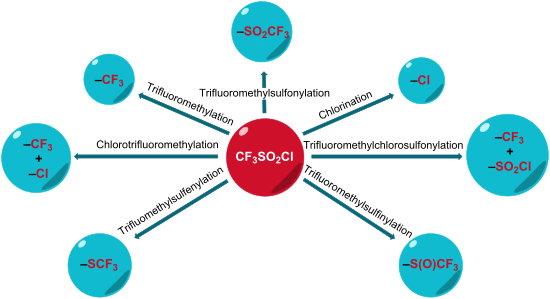
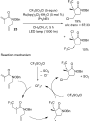
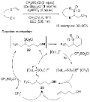
- other hand, proved to be more difficult to obtain. The first step appeared to be the trickiest one, as it could be anticipated considering Reiser’s previous reports. Once again, the results were strongly substrate-dependant; indeed the reaction was particularly sensitive to steric effects. The use of








Binding abilities of a chiral calix[4]resorcinarene: a polarimetric investigation on a complex case of study
Beilstein J. Org. Chem. 2017, 13, 2698–2709, doi:10.3762/bjoc.13.268
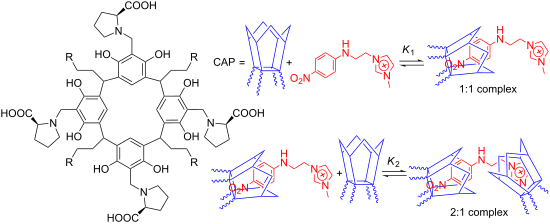
- prolinylmethyl units at the rim. Nevertheless, polarimetric results positively indicate that the conformational dynamic changes of the host structure are not simply due to mere steric effects. The results presented in this work provide a contribution to a deeper understanding of the microscopic interactions




A Brønsted base-promoted diastereoselective dimerization of azlactones
Beilstein J. Org. Chem. 2017, 13, 2663–2670, doi:10.3762/bjoc.13.264
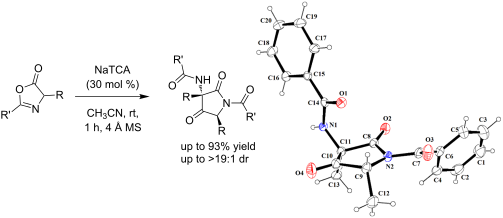
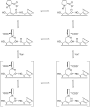
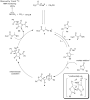
- 1a’ attacks the carbonyl carbon of azlactone 1a forming intermediate 4 [27]. The diastereoselectivity is installed at this stage and kept the same until to the end of the reaction. Steric effects might be involved in this process and the biggest substituents positioned far away from each other, as





![[Graphic 5]](/bjoc/content/inline/1860-5397-13-264-i10.svg?max-width=637&scale=1.18182) vs time for the dimerization of azlactone 1a.
vs time for the dimerization of azlactone 1a.

Comparative profiling of well-defined copper reagents and precursors for the trifluoromethylation of aryl iodides
Beilstein J. Org. Chem. 2017, 13, 2297–2303, doi:10.3762/bjoc.13.225
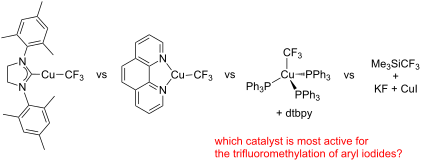
- analytical method used for determining yields for Figure 2 and Figure 3. Why an induction period is observed for the iodotoluenes but not for the iodobiphenyl substrate is still not well-understood and is currently under investigation. Reactions were then run with 2-iodotoluene in order to gauge steric
- effects in the trifluoromethylation reactions. It should be noted here that the promoting effect of ortho substituents in trifluoromethylation reactions is well-known. For example, the rate of trifluoromethylation of o-MeC6H4Br was found to be 3.5 times faster than that for bromobenzene by CuCF3 in DMF


Regiodivergent condensation of 5-alkoxycarbonyl-1H-pyrrol-2,3-diones with cyclic ketazinones en route to spirocyclic scaffolds
Beilstein J. Org. Chem. 2017, 13, 2179–2185, doi:10.3762/bjoc.13.218
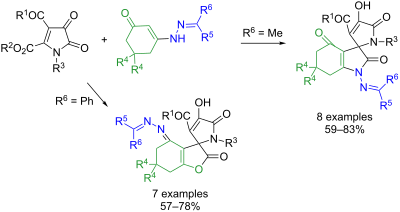
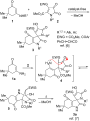
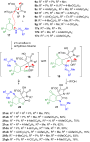
- between two alternative directions affording derivatives of partially hydrogenated indole or benzofurane. The control of this regioselectivity is efficiently governed by steric effects at the hydrazone moiety of the ketazinone reagent. Keywords: nitrogen heterocycles; oxygen heterocycles; pyrrolediones





Preactivation-based chemoselective glycosylations: A powerful strategy for oligosaccharide assembly
Beilstein J. Org. Chem. 2017, 13, 2094–2114, doi:10.3762/bjoc.13.207
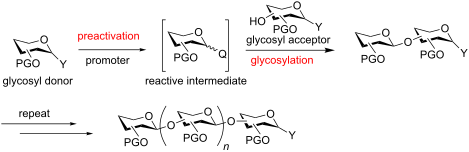
- amounts of aglycon transfer products can be reduced by decreasing the nucleophilicity of the acceptor aglycon through steric effects [87] or tuning protective groups of acceptors [84][86], in some cases by lowering the reaction temperature [85]. Conclusion While conceptually simple, the temporal