


Search results
Search for "titanium" in Full Text gives 125 result(s) in Beilstein Journal of Organic Chemistry.
Adsorption mechanism and valency of catechol-functionalized hyperbranched polyglycerols
Beilstein J. Org. Chem. 2015, 11, 828–836, doi:10.3762/bjoc.11.92
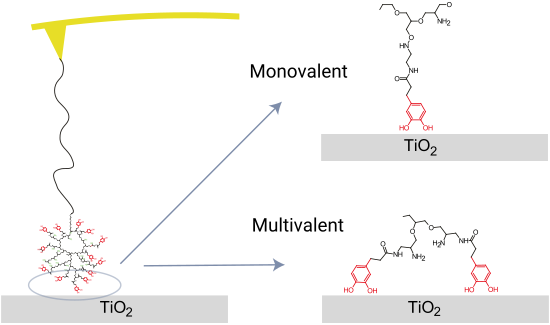
- hyperbranched polyglycerol as a hydrophilic core with numerous DOPA (catechol) groups attached. A similar system has already proven to be advantageous for an antifouling coating on titanium oxide surfaces [21][22]. An added benefit of this system is that the oxidation of catechol to quinones makes crosslinking
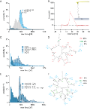
- unclear, which underscores how little is known about the nature of the interaction between the catechol group of DOPA and metal oxide surfaces. To determine the force of a single catechol group on titanium dioxide, we performed AFM single molecule force spectroscopy measurements with tips functionalized
- pN peak to the catechol/titanium dioxide interaction and the shoulder at 700 pN to the interaction of multiple catechols. In a next step, the hyperbranched polyglycerols (hPGs) with different amounts of catechol end groups were desorbed from TiO2. The measurements were again performed with a pulling



Synthesis of tripodal catecholates and their immobilization on zinc oxide nanoparticles
Beilstein J. Org. Chem. 2015, 11, 678–686, doi:10.3762/bjoc.11.77
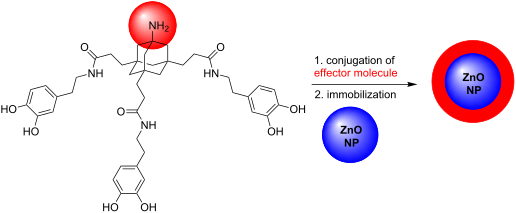
- ], carboxylates [5] and phosphates [6] as well as phosphonates [7] for metal and metal oxide surfaces. In addition, bifunctional catechols like dopamine or DOPA (L-3,4-dihydroxyphenylalanine, Figure 1B), have received considerable interest as anchor groups for important metal surfaces such as titanium oxide, iron


Hydrogenation of unactivated enamines to tertiary amines: rhodium complexes of fluorinated phosphines give marked improvements in catalytic activity
Beilstein J. Org. Chem. 2015, 11, 622–627, doi:10.3762/bjoc.11.70
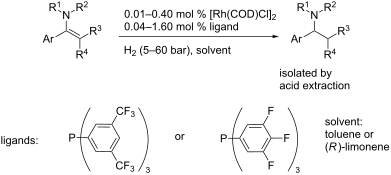
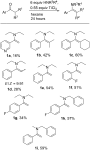
- purification of enamines 1a–i. One of the main modifications made to the synthetic procedure is at the end of the reaction, wet diethyl ether was added in order to precipitate all titanium salts (this strategy was previously used after formation of imine bonds using TiCl4) [16]. Enamine 1g was more stable than



Matsuda–Heck reaction with arenediazonium tosylates in water
Beilstein J. Org. Chem. 2015, 11, 358–362, doi:10.3762/bjoc.11.41
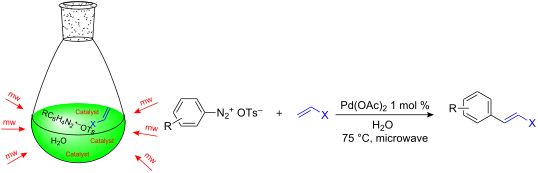
- cinnamates were synthesized by the O-alkylation of cinnamic acids with dihaloalkanes or haloalkyl alcohols [14][16][18] or by the ring opening of tetrahydrofuran with cinnamic acid anhydrides or haloanhydrides, catalyzed by yttrium trichloride [19], titanium chloride, stannic chloride or allylsamarium


Multicomponent versus domino reactions: One-pot free-radical synthesis of β-amino-ethers and β-amino-alcohols
Beilstein J. Org. Chem. 2015, 11, 66–73, doi:10.3762/bjoc.11.10
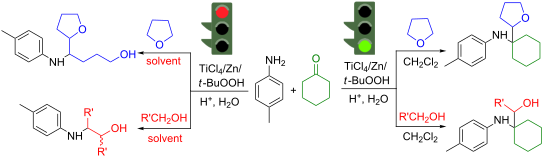
- : aminoalcohols; free-radical addition; imine; multicomponent reaction; titanium salts; Introduction Multicomponent reactions (MCRs) represent a green approach towards the synthesis of polyfunctionalized molecules by promoting multiple bond-forming mechanisms in a one-pot synthesis [1][2][3][4][5][6][7
- our ongoing investigation of the role of titanium salts in mediating selective radical transformations [13][14], we have developed new, simple protocols for the synthesis of complex organic compounds through nucleophilic radical addition to imines generated in situ [15]. Several recent contributions
- approach. In fact, our procedure requires neither the preformation of imines nor anhydrous media, due to the coordinating effect of titanium salts, which promote the one-pot synthesis of amino derivatives according to a classical MCR. The basic approach consists of the simple mixing of an aniline, an


The Shono-type electroorganic oxidation of unfunctionalised amides. Carbon–carbon bond formation via electrogenerated N-acyliminium ions
Beilstein J. Org. Chem. 2014, 10, 3056–3072, doi:10.3762/bjoc.10.323
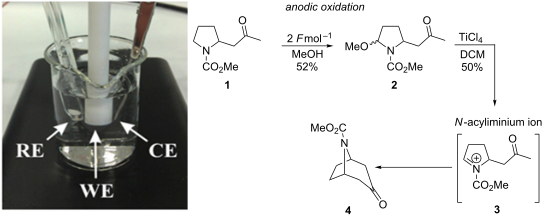
- -acyliminium ion cyclisation strategy in the presence of a disubstituted acetylene nucleophile. Anodic oxidation proceeded in high yield and a smooth cyclisation of the pendant acetylene nucleophile was triggered by treatment with titanium tetrachloride. Ozonolysis of the chloromethyl alkene intermediate


Detonation nanodiamonds biofunctionalization and immobilization to titanium alloy surfaces as first steps towards medical application
Beilstein J. Org. Chem. 2014, 10, 2765–2773, doi:10.3762/bjoc.10.293
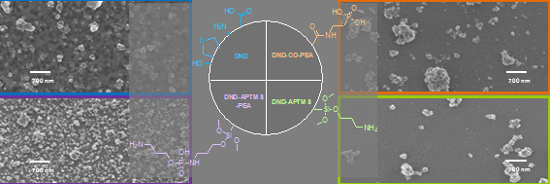
- on chemical modification of the nanodiamond surface with phosphate groups and their electrochemically assisted immobilization on titanium-based materials to increase adhesion at biomaterial surfaces. The starting material is detonation nanodiamond, which exhibits a heterogeneous surface due to the
- functional groups resulting from the nitrogen-rich explosives and the subsequent purification steps after detonation synthesis. Nanodiamond surfaces are chemically homogenized before proceeding with further functionalization. Suspensions of resulting surface-modified nanodiamonds are applied to the titanium
- alloy surfaces and the nanodiamonds subsequently fixed by electrochemical immobilization. Titanium and its alloys have been widely used in bone and dental implants for being a metal that is biocompatible with body tissues and able to bind with adjacent bone during healing. In order to improve titanium



Encapsulation of biocides by cyclodextrins: toward synergistic effects against pathogens
Beilstein J. Org. Chem. 2014, 10, 2603–2622, doi:10.3762/bjoc.10.273
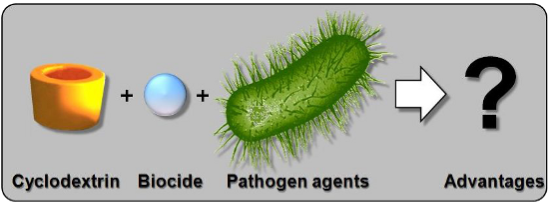
- nanoparticles Various nanoparticles have been successfully developed as antimicrobial agents. As an example, zinc oxide and titanium dioxide nanoparticles have been prepared by chemical and sol–gel methods [91]. Biocidal applications of these nanoparticles may lead to valuable discoveries in various fields such


An integrated photocatalytic/enzymatic system for the reduction of CO2 to methanol in bioglycerol–water
Beilstein J. Org. Chem. 2014, 10, 2556–2565, doi:10.3762/bjoc.10.267
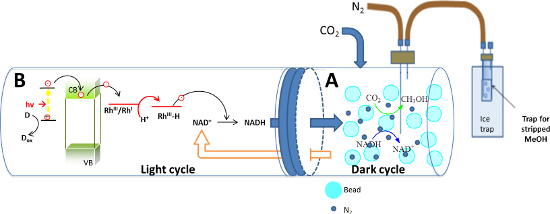
- rutin (rutin@TiO2) shows an electron injection into the conduction band of TiO2 as the result of a direct molecule-to-band charge transfer (MBCT) within the surface-formed, colored, charge-transfer complex of titanium(IV) [21]. TiO2 with an adsorbed chromium(III) anionic complex [CrF5(H2O)]2– acts as a
- the chemical stability and photostability of photocatalysts, are also under continuous investigation for their further improvement and bring the whole reaction closer to a potential application. Conclusion Titanium dioxide modified with chromium(III) complex, [CrF5(H2O)]2−@TiO2, exhibits great ability
- Synthesis of photosensitized TiO2 The modification of TiO2 with rutin was carried out as reported in the literature [27]. A titanium dioxide powder, P25 Evonik (500 mg), was added to 10 cm3 of aqueous rutin solution (10−2 mol dm−3). The suspension was sonicated (10 minutes) and the colored precipitate was


Multicomponent reactions in nucleoside chemistry
Beilstein J. Org. Chem. 2014, 10, 1706–1732, doi:10.3762/bjoc.10.179
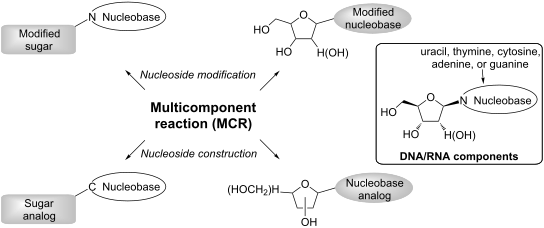
- opinion the method is worth noting since it represents an interesting extension of the Vorbrüggen N-glycosylation process. Thus, the reaction sequence leading to nucleosides 119 was initiated by the titanium(IV) chloride-promoted alkylation of 2,3-dihydrofurane 117 with ethyl pyruvate at −78 °C (1 hour


Triazol-substituted titanocenes by strain-driven 1,3-dipolar cycloadditions
Beilstein J. Org. Chem. 2014, 10, 1630–1637, doi:10.3762/bjoc.10.169

- functional groups is difficult due to the nucleophilicity of the cyclopentadienyl anions before metalation and the electrophilicity of titanium after metalation [21][22]. We have devised a conceptually different approach addressing these issues. It relies on the use of carboxylate-containing titanocene


Homogeneous and heterogeneous photoredox-catalyzed hydroxymethylation of ketones and keto esters: catalyst screening, chemoselectivity and dilution effects
Beilstein J. Org. Chem. 2014, 10, 1143–1150, doi:10.3762/bjoc.10.114
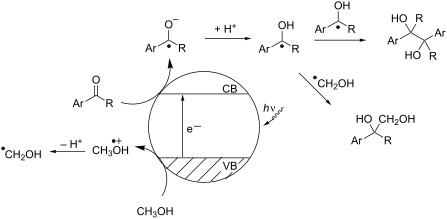
- Axel G. Griesbeck Melissa Reckenthaler University of Cologne, Department of Chemistry, Organic Chemistry, Greinstr. 4, D-50939 Köln, Germany; Fax: +49(221)470 5057 10.3762/bjoc.10.114 Abstract The homogeneous titanium- and dye-catalyzed as well as the heterogeneous semiconductor particle
- contrast to that, photochemical redox activation is possible in the presence of titanium(IV) catalysts [19][20][21][22]. As shown in a series of papers by Sato and coworkers, carbonyl compounds 1 as well as imines couple with methanol to give the 1,2-diols or 1,2-amino alcohols, respectively, when
- irradiated in the presence of stoichiometric or sub-stoichiometric amounts of titanium tetrachloride (Scheme 1). In order to run these reactions to completion, not less than 0.5 equivalents of TiCl4 were necessary which accounts for severe catalyst consumption. Furthermore, the addition of TiCl4 to methanol


On the mechanism of photocatalytic reactions with eosin Y
Beilstein J. Org. Chem. 2014, 10, 981–989, doi:10.3762/bjoc.10.97
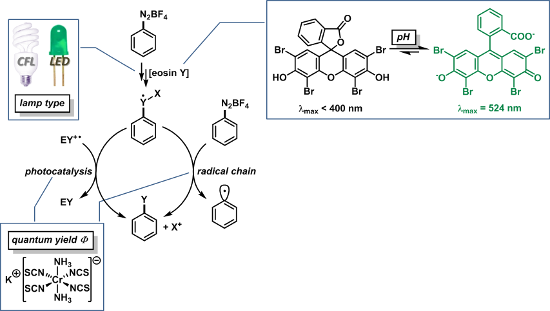
- with arenediazonium salts are often more selective than traditional methods such as copper(II)-mediated Meerwein arylations [11] or protocols employing stoichiometric iron(II) or titanium(III) reductants in aqueous media [12][13][14]. This renaissance of arene diazonium chemistry has recently led to


Synthesis of chiral N-phosphinyl α-imino esters and their application in asymmetric synthesis of α-amino esters by reduction
Beilstein J. Org. Chem. 2014, 10, 653–659, doi:10.3762/bjoc.10.57
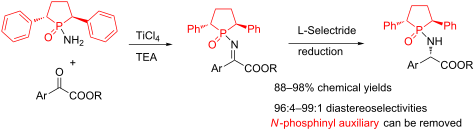
- tetraisopropoxytitanium was used as condensing reagent (Table 1, entries 5–8). Further treatment with titanium tetrachloride/triethyl amine gave a positive result and 46% chemical yield was obtained (Table 1, entry 9). Then, further investigation revealed that the best yield (47%) was observed when the reaction was


Silica: An efficient catalyst for one-pot regioselective synthesis of dithioethers
Beilstein J. Org. Chem. 2014, 10, 26–33, doi:10.3762/bjoc.10.5
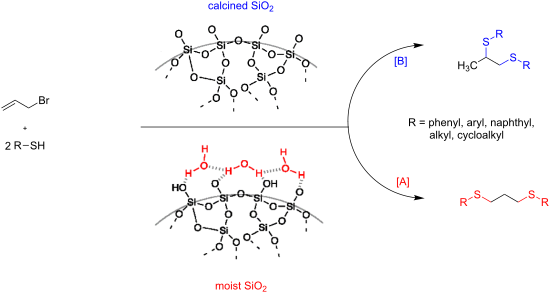
- and also as spacers in metal-organic frameworks [9][10][11][12][13][14]. For example, vicinal dithioether-based zirconium and titanium complexes have been used for alkene polymerization and hydroamination [15][16][17][18]. Chiral dithioethers have been prepared and their iridium complexes have been


Recent advances in transition metal-catalyzed Csp2-monofluoro-, difluoro-, perfluoromethylation and trifluoromethylthiolation
Beilstein J. Org. Chem. 2013, 9, 2476–2536, doi:10.3762/bjoc.9.287
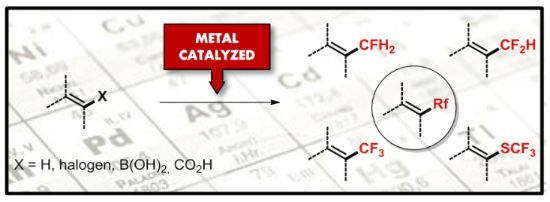
- iodide and generate the corresponding radical (Scheme 13). Titanium dioxide was used as heterogeneous photocatalyst in the perfluoroalkylation of α-methylstyrene with perfluorohexyl iodide by M. Yoshida et al. [120]. While the main product arose from the formal perfluoroalkylation of a methyl sp3-C–H


An overview of the synthetic routes to the best selling drugs containing 6-membered heterocycles
Beilstein J. Org. Chem. 2013, 9, 2265–2319, doi:10.3762/bjoc.9.265
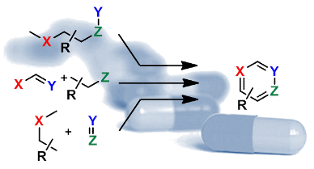
- -picoline can be readily oxidised via another gas-phase protocol using a fixed-bed reactor charged with vanadium pentoxide on high surface titanium dioxide (5–50 wt % vanadium). A modification of the sequence utilises a dehydrative amminolysis (ammoxidation) to furnish the corresponding 3-cyanopyridine


A reductive coupling strategy towards ripostatin A
Beilstein J. Org. Chem. 2013, 9, 1533–1550, doi:10.3762/bjoc.9.175
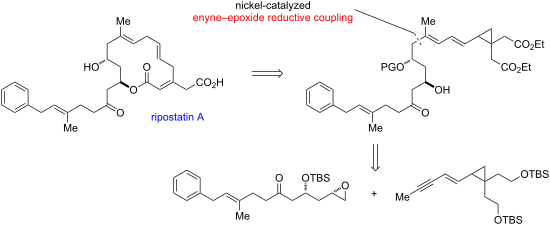
- titanium-mediated, alkoxide-directed fragment coupling reaction between vinylcylopropanes and vinyldimethylchlorosilane (Scheme 3, reaction 4) in which the stereochemical outcome of the rearrangement is orchestrated by the adjacent alkoxide, which is believed to direct formation of a tricyclic


Homolytic substitution at phosphorus for C–P bond formation in organic synthesis
Beilstein J. Org. Chem. 2013, 9, 1269–1277, doi:10.3762/bjoc.9.143

- titanium complex (Scheme 23) [49]. This represents a unique direct method for preparing triorganophosphine without recourse to any trivalent phosphorus sources such as PCl3. Conclusion Introduction of a phosphorus atom by a radical process has offered an intriguing tool for the synthesis of


Simple and rapid hydrogenation of p-nitrophenol with aqueous formic acid in catalytic flow reactors
Beilstein J. Org. Chem. 2013, 9, 1156–1163, doi:10.3762/bjoc.9.129
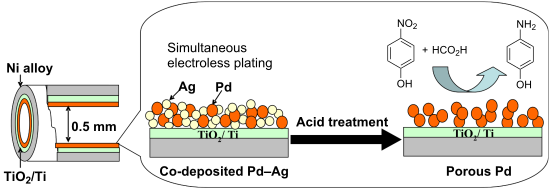
- acid (HNO3, 60%) and hydrogen peroxide (H2O2, 30%) were purchased from Wako Pure Chemical Industries Ltd. and were used without further purification. Fabrication of tubular reactors A double-layered tube (o.d. 1.6 mm, i.d. 0.5 mm, length 100 cm) composed of Inconel 625 and titanium (Ti) inner layer
- (thickness 120 μm) was fabricated by E.S.Q. Co., Japan, by elongation of the titanium inlaid Inconel 625 piece by stretch-draw process, and used as the reactor support [11]. The Ti inner surface was oxidized to TiO2 with H2O2 under supercritical water conditions (450 °C, 30 MPa). The TiO2 surface, which is


Titanium-mediated reductive cross-coupling reactions of imines with terminal alkynes: An efficient route for the synthesis of stereodefined allylic amines
Beilstein J. Org. Chem. 2013, 9, 621–627, doi:10.3762/bjoc.9.69
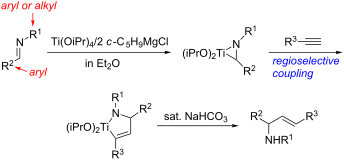
- Chemical Technology, Shenyang 110142, People’s Republic of China 10.3762/bjoc.9.69 Abstract Low-valency titanium species, generated in situ by using Ti(OiPr)4/2 c-C5H9MgCl reagent, react with imines to give a titanium-imine complex that can couple with terminal alkynes to provide azatitanacyclopentenes
- undergoes an unexpected 1,3-amino migration on silica gel during the column chromatography. Keywords: allylic amine; azatitanacyclopentene; reductive cross-coupling; regioselectivity; terminal alkyne; titanium-imine complex; Introduction Allylic amines are fundamental three-carbon building blocks in
- alkynes produced an inseparable mixture of two regioisomers in some cases [33] or could not give the desired products [34]. Sato et al. reported that a divalent titanium reagent generated by the Ti(OiPr)4/2 iPrMgX system reacted with arylaldimines to provide the corresponding (η2-imine)Ti(OiPr)2 complex



Recent advances in transition-metal-catalyzed intermolecular carbomagnesiation and carbozincation
Beilstein J. Org. Chem. 2013, 9, 278–302, doi:10.3762/bjoc.9.34
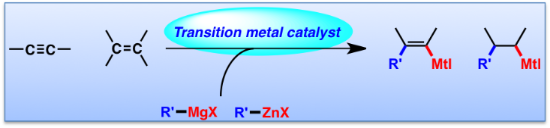
- ]. As a result, Hoveyda’s zirconium-catalyzed reactions provided homobenzylmagnesium intermediates 4j, while Kambe’s titanium-catalyzed reactions afforded benzylmagnesium intermediates 4k. Kambe applied the titanocene-catalyzed reaction to a three-component coupling reaction involving a radical
- titanium-catalyzed allylmagnesiation of isoprene was reported in the 1970s, the scope of the reagents was limited to the allylic magnesium reagents [145][146]. Recently, Terao and Kambe reported copper-catalyzed regioselective carbomagnesiation of dienes and enynes using sec- or tert-alkylmagnesium
- . Zirconium-catalyzed alkylmagnesiation. Titanium-catalyzed carbomagnesiation. Three-component coupling reaction. Iron-catalyzed arylzincation reaction of oxabicyclic alkenes. Reaction of allenyl ketones with organomagnesium reagent. Regio- and stereoselective reaction of a 2,3-allenoate. Three-component


Towards a biocompatible artificial lung: Covalent functionalization of poly(4-methylpent-1-ene) (TPX) with cRGD pentapeptide
Beilstein J. Org. Chem. 2013, 9, 270–277, doi:10.3762/bjoc.9.33
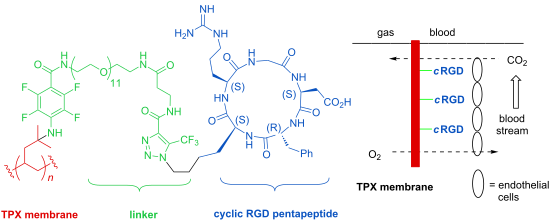
- by the Lahann group [35]. We believe that the copper-free approach described is of general importance and should be transferrable to (bio)polymers, inorganic materials or to metals such as titanium used in biomedical devices [36]. Schematic presentation of the artificial lung (A) and concept of


Intramolecular carbolithiation of N-allyl-ynamides: an efficient entry to 1,4-dihydropyridines and pyridines – application to a formal synthesis of sarizotan
Beilstein J. Org. Chem. 2012, 8, 2214–2222, doi:10.3762/bjoc.8.250
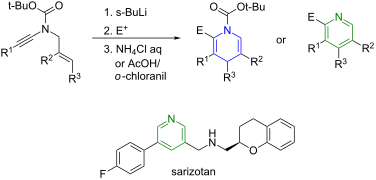
- the carbometallation of various carbon–carbon multiple bonds. Lithium, copper, zinc, magnesium, zirconium, titanium, palladium and other metals are suitable for this transformation and considerable progress has recently been made in this area. Among these systems, the carbometallation of alkynes




Flow photochemistry: Old light through new windows
Beilstein J. Org. Chem. 2012, 8, 2025–2052, doi:10.3762/bjoc.8.229
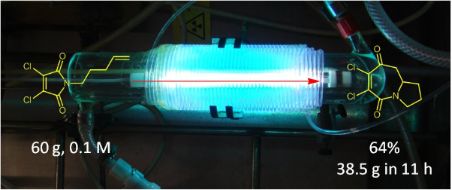
- efficient irradiation of the whole reaction media; this is especially useful if the photocatalyst is solid supported. The immobilised catalyst of choice is titanium dioxide, both with and without Pt doping, due to its photochemical stability. The photocatalyst can be effectively deposited onto a
- [44], perchloroethylene [45] and 4-chlorophenol [46], mainly with a view to air and water purification [47]. The following section will focus only on synthetic applications of such reactors. Photoexcitation of titanium dioxide semiconductors leads to the promotion of an electron to the conduction band
- , leaving behind a positive hole in the valence band. Thus titanium dioxide can function either as an oxidant by donation of an electron of a reacting molecule into an electron hole, or as a reductant by the donation of an electron in the conduction band of titanium dioxide to another molecule. One





