


Search results
Search for "aromatic rings" in Full Text gives 256 result(s) in Beilstein Journal of Organic Chemistry. Showing first 200.
Click chemistry towards thermally reversible photochromic 4,5-bisthiazolyl-1,2,3-triazoles
Beilstein J. Org. Chem. 2019, 15, 2161–2169, doi:10.3762/bjoc.15.213
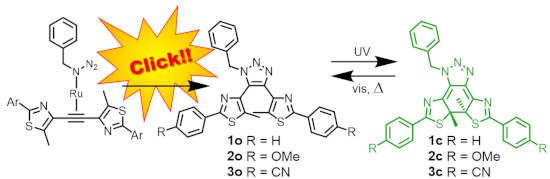
- among the photochromic families [1][2][3]. They are known to show thermally irreversible photochromism. However, some of them are thermally reversible [4]: (1) when the aromatic stabilization energy of the aromatic rings is large [5]; (2) when the substituent groups on the ring-closing carbon atoms are
- related families of diarylethenes, are largely thermally reversible [10][12] although some are irreversible when the aromatic stabilization energy of the aromatic rings is small [11]. Their syntheses are usually carried out by the sequential construction of the central aromatic ring at the final stage [10
- ] or the introduction of two aromatic rings to the central aromatic ring [11]. If the construction of three contiguous aromatic-ring arrays can be easily achieved, a new and facile synthesis method for the photochromic family which undergoes 6π-electrocyclization can be realized [13]. Early in the 21st



Multiple threading of a triple-calix[6]arene host
Beilstein J. Org. Chem. 2019, 15, 2092–2104, doi:10.3762/bjoc.15.207
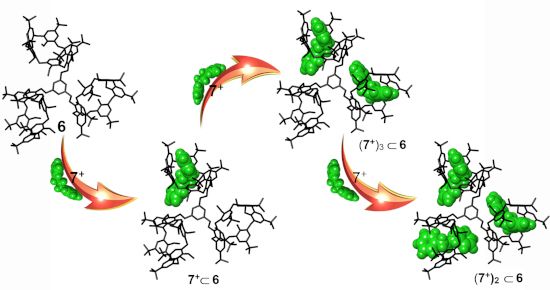
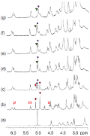
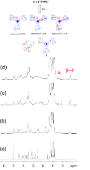
- at 3.44/4.32, 3.39/4.22, and 3.58/4.66 ppm which were 1J correlated with carbon resonances at 27.7, 27.9, and 29.1 ppm, respectively, attributable to ArCH2Ar groups of calix[6]-wheels between syn oriented aromatic rings. Consequently, the three calix[6]-wheels in (7+)36 adopt a cone conformation
- evidences for the formation of the (4+)36 pseudo[4]rotaxanes was obtained by a 1H NMR study (Figure 8d). A careful analysis of the ArCH2Ar region of these spectra evidenced again a syn orientation of the aromatic rings of calix[6]-wheels corresponding to a cone conformation, which was also confirmed by the


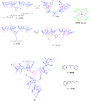


![[Graphic 2]](/bjoc/content/inline/1860-5397-15-207-i6.svg?max-width=637&scale=1.18182) 6, (7+)2
6, (7+)2


Characterization of two new degradation products of atorvastatin calcium formed upon treatment with strong acids
Beilstein J. Org. Chem. 2019, 15, 2085–2091, doi:10.3762/bjoc.15.206
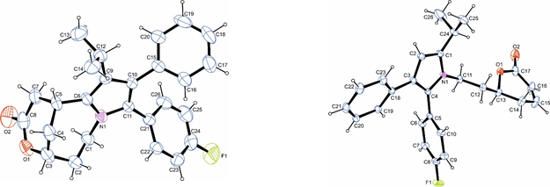
- concentrated sulfuric acid, lactonization/dehydration is accompanied by complete loss of the carboxanilide residue to give pyrrole 7. Complete one-step removal of carboxamide residues from aromatic rings has been observed before in investigations of fragmentations of protonated species in mass spectrometry [21




Synthesis and anion binding properties of phthalimide-containing corona[6]arenes
Beilstein J. Org. Chem. 2019, 15, 1976–1983, doi:10.3762/bjoc.15.193
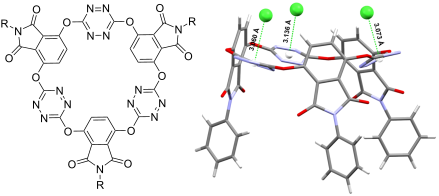
- heteroatoms and meta-(het)arenes in an alternative manner. Because of the interplay between heteroatoms and aromatic rings, heteracalixaromatics possess versatile molecular recognition properties and have found wide supramolecular applications. Very recently, we have devised coronarenes [22] simply through
- electrochemical result indicated the occurrence of electronic communication between aromatic rings. The potential for the first redox process (−811 mV) obtained from CV and DPV revealed the electron deficiency of the macrocycle. The resulting electron-deficient O6-corona[3]arene[3]tetrazines prompted us to


Installation of -SO2F groups onto primary amides
Beilstein J. Org. Chem. 2019, 15, 1907–1912, doi:10.3762/bjoc.15.186
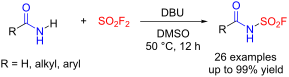
- excellent isolated yields. Both electron-withdrawing groups, such as halogen atoms (1b–d, 1j, 1m, and 1n), NO2 (1e, 1k) and CF3 (1f), and electron-donating groups, such as Me (1g, 1l, and 1o), tert-butyl (1h) and 2-naphthyl (1i) on the aromatic rings, were well tolerated under the optimized conditions. It


Complexation of 2,6-helic[6]arene and its derivatives with 1,1′-dimethyl-4,4′-bipyridinium salts and protonated 4,4'-bipyridinium salts: an acid–base controllable complexation
Beilstein J. Org. Chem. 2019, 15, 1795–1804, doi:10.3762/bjoc.15.173
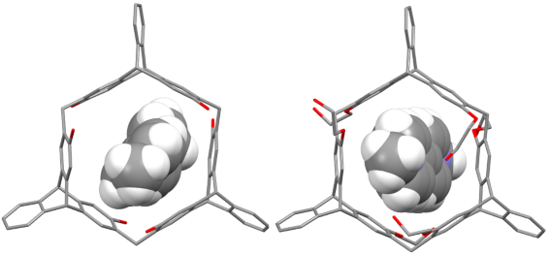
- are also the epitome of complex-binding pockets of enzymes [3]. Macrocyclic arenes including calixarenes [4][5], resorcinarenes [6], cyclotriveratrylenes [7][8], pillararenes [9], biphen[n]arenes [10] and others [11][12] are all composed of hydroxy-substituted aromatic rings bridged by methylene or
- the signal for protons b completely disappeared due to the shielding effect of the aromatic rings in hosts H1 or H4. The signals for the protons 2, 3, and 4 of H1 and 2, 3, 4, and 13 of H4 all showed downfield shifts, which might be attributed to the deshielding effect of guest G1. Other helic[6]arene
- time scale as well. The signal for protons d of the 4,4'-bipyridinium ring showed an upfield shift and that for protons e completely disappeared possibly due to the shielding effect of the aromatic rings in H1 or H4. The proton signals of 2 and 3 of H1 and 3 of H4 all showed upfield shifts with


Synthesis of 9-O-arylated berberines via copper-catalyzed CAr–O coupling reactions
Beilstein J. Org. Chem. 2019, 15, 1575–1580, doi:10.3762/bjoc.15.161
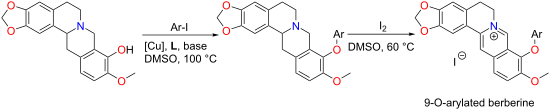
- elaborate motifs such as heterocycles [10][11][12], glucose [13], nitric oxide [14], and the multidrug-resistance pump inhibitor 5-nitro-2-phenylindole (INF55) [15] have been covalently attached to BBR, further widening its pharmacological spectrum. Aromatic rings are another family of substituents having



Self-assembly behaviors of perylene- and naphthalene-crown macrocycle conjugates in aqueous medium
Beilstein J. Org. Chem. 2019, 15, 1203–1209, doi:10.3762/bjoc.15.117
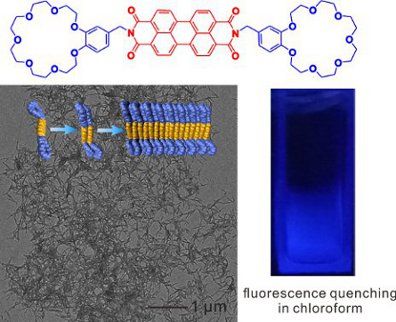
- through hydrogen bonding and metal ion coordination in nonpolar solvents [66][67][68]. Compared with NDI, PDI has more aromatic rings to generate stronger intermolecular π−π stacking, leading to molecular aggregates more easily, and these aggregates or supramolecular assemblies can give rise to desirable


Halogen bonding and host–guest chemistry between N-alkylammonium resorcinarene halides, diiodoperfluorobutane and neutral guests
Beilstein J. Org. Chem. 2019, 15, 947–954, doi:10.3762/bjoc.15.91
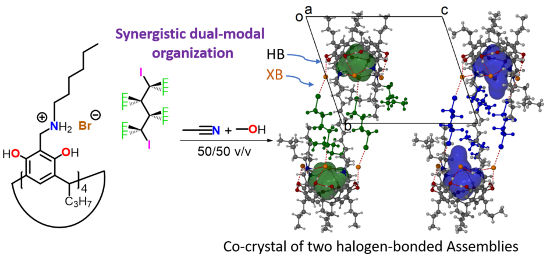
- anisotropy influence from the host’s aromatic rings, increasing the shielding. Conclusion In conclusion, we present XB assemblies between Hex-NARBr and Cy-NARCl as tetravalent XB acceptors, a divalent XB donor DIOFB, and small organic guest solvents (MeOH, MeCN and water). In the assemblies, both XB and HB


Coordination chemistry and photoswitching of dinuclear macrocyclic cadmium-, nickel-, and zinc complexes containing azobenzene carboxylato co-ligands
Beilstein J. Org. Chem. 2019, 15, 840–851, doi:10.3762/bjoc.15.81
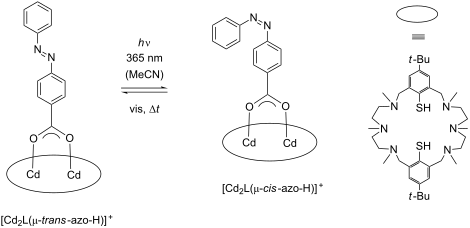
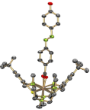
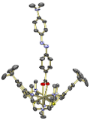
- [Cd2L]2+ fragment. The switch from the trans to the cis form induces significant change of the π–π transitions of the supporting N6S2 macrocycle, which may be indicative of some increased π–π- (or charge transfer) interactions between the aromatic rings of the electron rich amino thiophenolato





Synthesis of the aglycon of scorzodihydrostilbenes B and D
Beilstein J. Org. Chem. 2019, 15, 610–616, doi:10.3762/bjoc.15.56
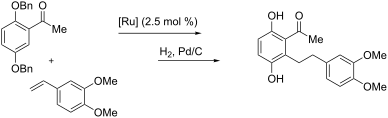
- , partial hydrogenation of the aromatic rings had to be suppressed. Nevertheless, the aglycon 9 of scorzodihydrostilbenes B and D (2 and 4) was obtained in good yield from 8a. Hydrogenolysis of ketone 8b led to hydroquinone 10, however, along with a minor amount of mono-deprotected phenol 11. The main


Unexpected loss of stereoselectivity in glycosylation reactions during the synthesis of chondroitin sulfate oligosaccharides
Beilstein J. Org. Chem. 2019, 15, 137–144, doi:10.3762/bjoc.15.14
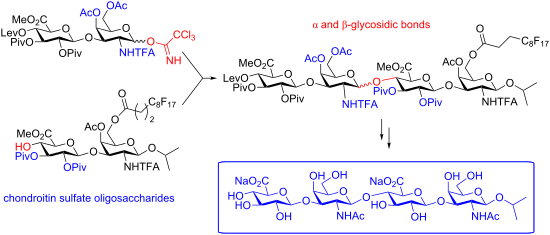
- biosynthesis of this polymer. The presence of aromatic rings, such as the 4-methoxyphenyl group at the anomeric position, should be avoided because these groups can significantly modify the binding mode between the CS and the enzymes. For this reason, we introduced an isopropyl group in β-position of the


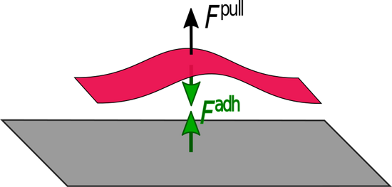
Adhesion, forces and the stability of interfaces
Beilstein J. Org. Chem. 2019, 15, 106–129, doi:10.3762/bjoc.15.12


Microfluidic light-driven synthesis of tetracyclic molecular architectures
Beilstein J. Org. Chem. 2018, 14, 2418–2424, doi:10.3762/bjoc.14.219
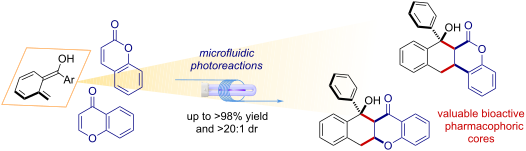
- (Figure 2). First, different substitutions on the 2-MBP scaffold were evaluated. Electron-donating substituents on both aromatic rings gave excellent results, furnishing the corresponding naphthochromenones 4b and 4c as single detectable diastereoisomers (>20:1 dr), with yields spanning from 53% to 83


A challenging redox neutral Cp*Co(III)-catalysed alkylation of acetanilides with 3-buten-2-one: synthesis and key insights into the mechanism through DFT calculations
Beilstein J. Org. Chem. 2018, 14, 2366–2374, doi:10.3762/bjoc.14.212
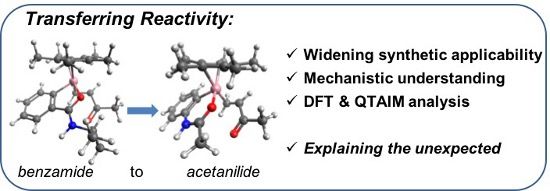
- , the acetanilide containing two aromatic moieties (1q) was subjected to the optimised reaction conditions (Scheme 4). The DFT studies suggested that selectivity should be observed between the two aromatic rings, in favour of the benzamide-type C–H functionalisation. In agreement with this proposal the


Synthesis and post-functionalization of alternate-linked-meta-para-[2n.1n]thiacyclophanes
Beilstein J. Org. Chem. 2018, 14, 2190–2197, doi:10.3762/bjoc.14.192
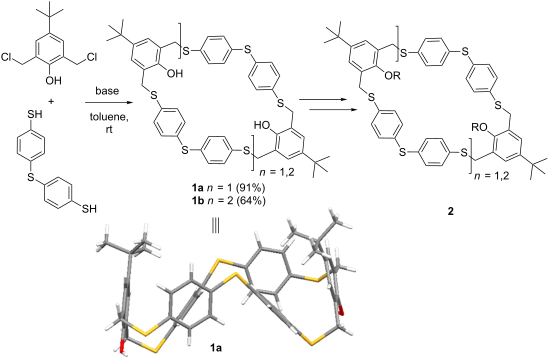
- yield of 91%. The 3D structure of macrocycle 6 was confirmed by single crystal X-ray diffraction and shows approximate twofold rotational symmetry (point group C2, Figure 1). The dihedral angles between the aromatic rings are given in Table S2 (Supporting Information File 1, ring numbering as shown in


Calix[6]arene-based atropoisomeric pseudo[2]rotaxanes
Beilstein J. Org. Chem. 2018, 14, 2112–2124, doi:10.3762/bjoc.14.186
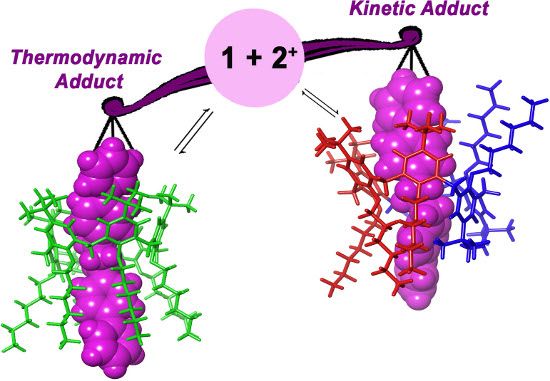
- two respective proximal aromatic rings are oriented syn, as in the cone conformation. In contrast, a Δδ value of 0.3 or less is attributable to an anti-orientation between the phenol rings, as in alternate conformations. The de Mendoza’s “13C NMR single rule” [30][31], is focused on the 13C NMR
- ···O distance = 3.10 Å; average N–H···O angle = 157°). In addition, C–H···π interactions were detected among the methylene groups of the axle 2+ inside the calix cavity, and the aromatic rings of 1 [42], ( average C–H···πcentroid distance = 3.17 Å [42]; average C–H···πcentroid angle = 160° [43]). In


![[Graphic 2]](/bjoc/content/inline/1860-5397-14-186-i3.svg?max-width=637&scale=1.18182) 1cone and 2+
1cone and 2+


Revisiting ring-degenerate rearrangements of 1-substituted-4-imino-1,2,3-triazoles
Beilstein J. Org. Chem. 2018, 14, 2098–2105, doi:10.3762/bjoc.14.184
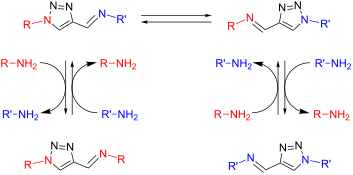
- pairings of reactants. Crystals of 2cc’ suitable for XRD analysis were grown from slow evaporation of a methylene chloride solution. As shown in Figure 2, each of the three aromatic rings in this molecule’s fully conjugated π-system adopts a largely coplanar configuration. The dihedral angle between the 1


Applications of organocatalysed visible-light photoredox reactions for medicinal chemistry
Beilstein J. Org. Chem. 2018, 14, 2035–2064, doi:10.3762/bjoc.14.179
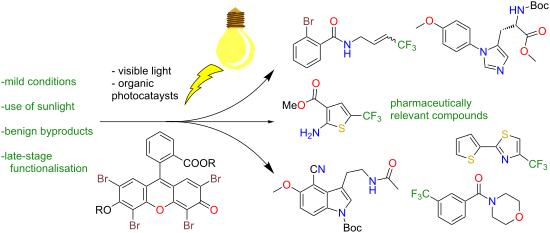
- of substrates make this an ideal method for introducing nucleophilic ligands onto aromatic rings. Another publication from the Nicewicz group demonstrates the C–H direct cyanation of a variety of aromatic and heteroaromatic substrates. TMSCN is employed as the cyanide source, acridinium salts as the


Synthesis of new p-tert-butylcalix[4]arene-based polyammonium triazolyl amphiphiles and their binding with nucleoside phosphates
Beilstein J. Org. Chem. 2018, 14, 1980–1993, doi:10.3762/bjoc.14.173
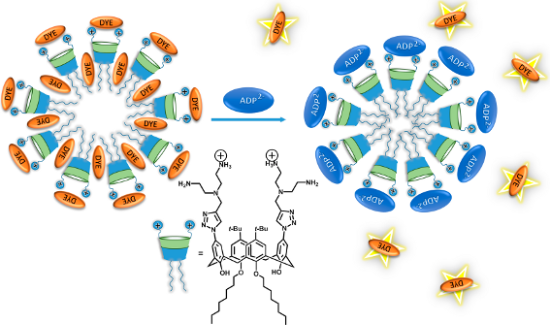
- macrocycles’ aromatic rings have been synthesized and used for the preparation of water-soluble triazolyl amphiphilic receptors with two or four polyammonium headgroups by CuAAC reaction with 3-bis[2-(tert-butoxycarbonylamino)ethyl]propargylamine. These macrocycles form stable aggregates in aqueous solutions


A pyridinium/anilinium [2]catenane that operates as an acid–base driven optical switch
Beilstein J. Org. Chem. 2018, 14, 1908–1916, doi:10.3762/bjoc.14.165
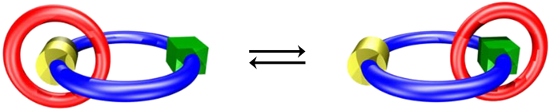
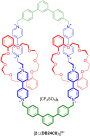
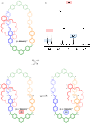
- ]rotaxane molecular shuttles outlined in Figure 1. This should be possible because of the structural similarities (size and shape) between the bis(pyridinium)ethane and benzylanilinium recognition sites. Each has a two-atom chain in a low energy, anti-conformation linking aromatic rings and the distance



![[Graphic 3]](/bjoc/content/inline/1860-5397-14-165-i4.svg?max-width=637&scale=0.827274) DB24C8]6+ containing benzylanilinium and bis(pyridinium)ethane...
DB24C8]6+ containing benzylanilinium and bis(pyridinium)ethane...


A hemicryptophane with a triple-stranded helical structure
Beilstein J. Org. Chem. 2018, 14, 1885–1889, doi:10.3762/bjoc.14.162
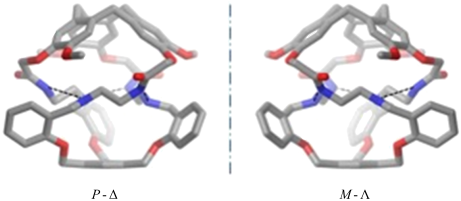
- helical arrangement of the linkers stabilized by intramolecular hydrogen bonds between amide and amine groups. The chirality of the cyclotriveratrylene unit controls the propeller arrangement of the three aromatic rings in the opposite part of the cage. 1H NMR studies suggest that this structure is
- the molecule (Figure 2). This also underlines how the chirality of the CTV unit propagates along the linkers to induce the propeller shape of the three aromatic rings in the south part of the hemicryptophane. This remote control of the helicity of the southern part by that of the northern CTV unit


Water-soluble SNS cationic palladium(II) complexes and their Suzuki–Miyaura cross-coupling reactions in aqueous medium
Beilstein J. Org. Chem. 2018, 14, 1859–1870, doi:10.3762/bjoc.14.160
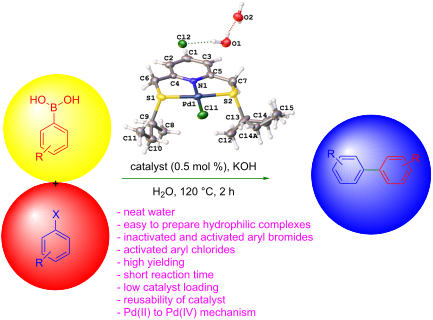
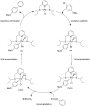
- different substituents on the aromatic rings of the bromobenzene and phenylboronic acid. The results are summarised in Table 3 and the scope and yields compare favourably well with reported methods. First, the substrate scope of the phenylboronic acid coupling partner was investigated. Under the optimised




Host–guest complexes of conformationally flexible C-hexyl-2-bromoresorcinarene and aromatic N-oxides: solid-state, solution and computational studies
Beilstein J. Org. Chem. 2018, 14, 1723–1733, doi:10.3762/bjoc.14.146
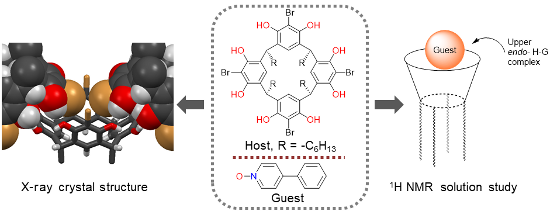
- , 1+BrC6 indicates either from combination of guest 1 and BrC6 or exo complex while 1@BrC6 denotes the endo complexation process. However, considering the host flexibility, ‘Δ’ (Table 1), which is the measure of difference between centroid-to-centroid distances of opposite host aromatic rings, guests
- cavity is represented as ‘h’, defined as the measured distance from the centroid of the lower-rim host carbon atoms to the nearest endo guest non-hydrogen atom. In the X-ray structure of 3@BrC6 (Figure 2a), guest 3, oriented parallel to the host aromatic rings (h = 3.43 Å) is positioned in one corner of
- the cavity with only the proton meta- to the N–O group interacting with a host aromatic ring. This short contact C–H···π(host) interaction is about 2.65–2.85 Å long. In 4@BrC6 (Figure 2b), once again guest 4 is oriented parallel to the host aromatic rings (h = 3.38 Å) and the H–G recognition occurs by


Synthesis of diamido-bridged bis-pillar[5]arenes and tris-pillar[5]arenes for construction of unique [1]rotaxanes and bis-[1]rotaxanes
Beilstein J. Org. Chem. 2018, 14, 1660–1667, doi:10.3762/bjoc.14.142

- ], cyclodextrin [24][25][26], calixarene [27][28][29] and pillararene have been successfully employed as the wheel subcomponent. Pillararenes are new star macrocyclic compounds with aromatic rings para-bridged by methylene units and have unique tubular shape rather than cone [30][31][32]. In recent years, an





