


Search results
Search for "carbon dioxide" in Full Text gives 132 result(s) in Beilstein Journal of Organic Chemistry.
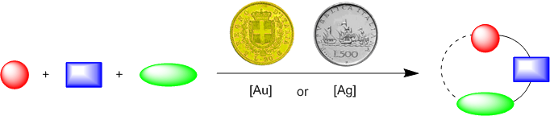
Silver and gold-catalyzed multicomponent reactions
- Giorgio Abbiati and
- Elisabetta Rossi
Beilstein J. Org. Chem. 2014, 10, 481–513, doi:10.3762/bjoc.10.46
- arylacetylenes 87, carbon dioxide and 3-bromo-1-aryl-1-propynes 88 (Scheme 40) [104]. In the reaction sequence a 1,6-diyne was generated in situ and cyclized to afford the two possible regioisomeric compounds. The level of regioselectivity can be enhanced by the tuning of electronic properties of the reactant

Graphical Abstract

Scheme 1: General reaction mechanism for Ag(I)-catalyzed A3-coupling reactions.

Scheme 2: A3-coupling reaction catalyzed by polystyrene-supported NHC–silver halides.

Figure 1: Various NHC–Ag(I) complexes used as catalysts for A3-coupling.

Scheme 3: Proposed reaction mechanism for NHC–AgCl catalyzed A3-coupling reactions.

Scheme 4: Liu’s synthesis of pyrrole-2-carboxaldehydes 4.

Scheme 5: Proposed reaction mechanism for Liu’s synthesis of pyrrole-2-carboxaldehydes 4.

Scheme 6: Gold-catalyzed synthesis of propargylamines 1.

Scheme 7: A3-coupling catalyzed by phosphinamidic Au(III) metallacycle 6.

Scheme 8: Gold-catalyzed KA2-coupling.

Scheme 9: A3-coupling applied to aldehyde-containing oligosaccharides 8.

Scheme 10: A3-MCR for the preparation of propargylamine-substituted indoles 9.

Scheme 11: A3-coupling interceded synthesis of furans 12.

Scheme 12: A3/KA2-coupling mediated synthesis of functionalized dihydropyrazoles 13 and polycyclic dihydropyra...

Scheme 13: Au(I)-catalyzed entry to cyclic carbamimidates 17 via an A3-coupling-type approach.

Scheme 14: Proposed reaction mechanism for the Au(I)-catalyzed synthesis of cyclic carbamimidates 17.

Figure 2: Chiral trans-1-diphenylphosphino-2-aminocyclohexane–Au(I) complex 20.

Scheme 15: A3-coupling-type synthesis of oxazoles 21 catalyzed by Au(III)–salen complex.

Scheme 16: Proposed reaction mechanism for the synthesis of oxazoles 21.

Scheme 17: Synthesis of propargyl ethyl ethers 24 by an A3-coupling-type reaction.

Scheme 18: General mechanism of Ag(I)-catalyzed MCRs of 2-alkynylbenzaldehydes, amines and nucleophiles.

Scheme 19: General synthetic pathway to 1,3-disubstituted-1,2-dihydroisoquinolines.

Scheme 20: Synthesis of 1,3-disubstituted-1,2-dihydroisoquinolines 29.

Scheme 21: Synthesis of 1,3-disubstituted-1,2-dihydroisoquinolines 35 and 36.

Scheme 22: Rh(II)/Ag(I) co-catalyzed synthesis of 1,3-disubstituted-1,2-dihydroisoquinolines 40.

Scheme 23: General synthetic pathway to 2-amino-1,2-dihydroquinolines.

Scheme 24: Synthesis of 2-amino-1,2-dihydroquinolines 47.

Scheme 25: Synthesis of tricyclic H-pyrazolo[5,1-a]isoquinoline 48.

Scheme 26: Synthesis of tricyclic H-pyrazolo[5,1-a]isoquinolines 48.

Scheme 27: Cu(II)/Ag(I) catalyzed synthesis of H-pyrazolo[5,1-a]isoquinolines 48.

Scheme 28: Synthesis of 2-aminopyrazolo[5,1-a]isoquinolines 53.

Scheme 29: Synthesis of 1-(isoquinolin-1-yl)guanidines 55.

Scheme 30: Ag(I)/Cu(I) catalyzed synthesis of 2-amino-H-pyrazolo[5,1-a]isoquinolines 58.

Scheme 31: Ag(I)/Ni(II) co-catalyzed synthesis of 3,4-dihydro-1H-pyridazino[6,1-a]isoquinoline-1,1-dicarboxyla...

Scheme 32: Ag(I) promoted activation of the α-carbon atom of the isocyanide group.

Scheme 33: Synthesis of dihydroimidazoles 65.

Scheme 34: Synthesis of oxazoles 68.

Scheme 35: Stereoselective synthesis of chiral butenolides 71.

Scheme 36: Proposed reaction mechanism for the synthesis of butenolides 71.

Scheme 37: Stereoselective three-component approach to pirrolidines 77 by means of a chiral auxiliary.

Scheme 38: Stereoselective three-component approach to pyrrolidines 81 and 82 by means of a chiral catalyst.

Scheme 39: Synthesis of substituted five-membered carbocyles 86.

Scheme 40: Synthesis of regioisomeric arylnaphthalene lactones.

Scheme 41: Enantioselective synthesis of spiroacetals 96 by Fañanás and Rodríguez [105].

Scheme 42: Enantioselective synthesis of spiroacetals 101 by Gong [106].

Scheme 43: Synthesis of polyfunctionalized fused bicyclic ketals 103 and bridged tricyclic ketals 104.

Scheme 44: Proposed reaction mechanism for the synthesis of ketals 103 and 104.

Scheme 45: Synthesis of β-alkoxyketones 108.

Scheme 46: Synthesis of N-methyl-1,4-dihydropyridines 112.

Scheme 47: Synthesis of tetrahydrocarbazoles 115–117.

Scheme 48: Plausible reaction mechanism for the synthesis of tetrahydrocarbazoles 115–117.

Scheme 49: Carboamination, carboalkoxylation and carbolactonization of terminal alkenes.

Scheme 50: Oxyarylation of alkenes with arylboronic acids and Selectfluor as reoxidant.

Scheme 51: Proposed reaction mechanism for oxyarylation of alkenes.

Scheme 52: Oxyarylation of alkenes with arylsilanes and Selectfluor as reoxidant.

Scheme 53: Oxyarylation of alkenes with arylsilanes and IBA as reoxidant.
Recent applications of the divinylcyclopropane–cycloheptadiene rearrangement in organic synthesis
- Sebastian Krüger and
- Tanja Gaich
Beilstein J. Org. Chem. 2014, 10, 163–193, doi:10.3762/bjoc.10.14
- carbon dioxide [74][75] resulted in the formation of carboxylic acid 75. Birch reduction with concomitant methylation [76][77] followed by selective hydrogenation and reduction of the carboxylic acid resulted in the formation of alcohol 76. Installation of the remaining quarternary carbon center was

Graphical Abstract

Scheme 1: Vogel’s first approach towards the divinylcyclopropane rearrangement [4] and characterization of cis-d...

Scheme 2: Transition states for the Cope rearrangement and the related DVCPR. Ts = transition state.

Scheme 3: Two possible mechanisms of trans-cis isomerizations of divinylcyclopropanes.

Scheme 4: Proposed biosynthesic pathway to ectocarpene (21), an inactive degradation product of a sexual pher...

Scheme 5: Proposed biosynthesis of occidenol (25) and related natural compounds.

Scheme 6: Gaich’s bioinspired system using the DVCPR to mimick the dimethylallyltryptophan synthase. DMAPP = ...

Scheme 7: Iguchi’s total synthesis of clavubicyclone, part 1.

Scheme 8: Iguchi’s total synthesis of clavubicyclone, part 2.

Scheme 9: Wender’s syntheses of the two pseudoguainanes confertin (50) and damsinic acid (51) and Pier’s appr...
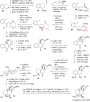
Scheme 10: Overman’s total synthesis of scopadulcic acid B.

Scheme 11: Davies’ total syntheses of tremulenolide A and tremulenediol A.

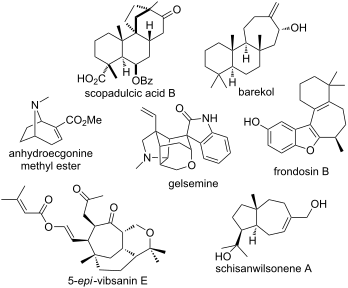
Scheme 12: Davies formal [4 + 3] cycloaddition approach towards the formal synthesis of frondosin B.

Scheme 13: Davies and Sarpongs formal [4 + 3]-cycloaddition approach towards barekoxide (106) and barekol (107...

Scheme 14: Davies formal [4 + 3]-cycloaddition approach to 5-epi-vibsanin E (115) containing an intermediate c...

Scheme 15: Echavarren’s total synthesis of schisanwilsonene A (126) featuring an impressive gold-catalzed casc...

Scheme 16: Davies early example of a formal [4 + 3]-cycloaddition in alkaloids synthesis.

Scheme 17: Fukuyama’s total synthesis of gelsemine, part 1.

Scheme 18: Fukuyama’s total synthesis of gelsemine, featuring a divinylcyclopropane rearrangement, part 2.

Scheme 19: Kende’s total synthesis of isostemofoline, using a formal [4 + 3]-cycloaddition, including an inter...

Scheme 20: Danishefsky’s total synthesis of gelsemine, part 1.

Scheme 21: Danishefsky’s total synthesis of gelsemine, part 2.

Scheme 22: Fukuyama’s total synthesis of gelsemoxonine.

Scheme 23: Wender’s synthetic access to the core skeleton of tiglianes, daphnanes and ingenanes.

Scheme 24: Davies’ approach towards the core skeleton of CP-263,114 (212).

Scheme 25: Wood’s approach towards actinophyllic acid.

Scheme 26: Takeda’s approach towards the skeleton of the cyanthins, utilitizing the divinylcyclopropane rearra...

Scheme 27: Donaldson’s organoiron route towards the guianolide skeleton.

Scheme 28: Stoltz’s tandem Wolff/DVCPR rearrangement.

Scheme 29: Stephenson’s tandem photocatalysis/arylvinylcyclopropane rearrangement.

Scheme 30: Padwa’s rhodium cascade involving a DVCPR.

Scheme 31: Matsubara’s version of a DVCPR.

Scheme 32: Toste’s tandem gold-catalyzed Claisen-rearrangement/DVCPR.

Scheme 33: Ruthenium- and gold-catalyzed versions of tandem reactions involving a DVCPR.

Scheme 34: Tungsten, platinum and gold catalysed cycloisomerizations leading to a DVCPR.

Scheme 35: Reisman’s total synthesis of salvileucalin B, featuring an (undesired) vinylcyclopropyl carbaldehyd...

Scheme 36: Studies on the divinylepoxide rearrangement.

Scheme 37: Studies on the vinylcyclopropanecarbonyl rearrangement.

Scheme 38: Nitrogen-substituted variants of the divinylcyclopropane rearrangement.
Continuous-flow Heck synthesis of 4-methoxybiphenyl and methyl 4-methoxycinnamate in supercritical carbon dioxide expanded solvent solutions
- Phei Li Lau,
- Ray W. K. Allen and
- Peter Styring
Beilstein J. Org. Chem. 2013, 9, 2886–2897, doi:10.3762/bjoc.9.325
- , 43500 Semenyih, Selangor Darul Shsan, Malaysia 10.3762/bjoc.9.325 Abstract The palladium metal catalysed Heck reaction of 4-iodoanisole with styrene or methyl acrylate has been studied in a continuous plug flow reactor (PFR) using supercritical carbon dioxide (scCO2) as the solvent, with THF and
- ; flow chemistry; Heck; palladium; supercritical carbon dioxide; Introduction The use of cross-coupling reactions between organometallic reagents and organic halides as a straightforward method of carbon–carbon bond formation has gained much popularity over the past three decades. The development of
- the more reactive nature of the methyl acrylate as a substrate. Indeed the methyl acrylate is almost four times more reactive than styrene under identical conditions of temperature and pressure. Conclusion Supercritical carbon dioxide (scCO2) can be effectively used as a reaction solvent for the

Graphical Abstract

Scheme 1: General Heck reaction showing the possible isomers that can be produced.

Figure 1: Schematic diagram of the stirred autoclave reactor. Pickel’s pump NWA PM101 was used to achieve sup...

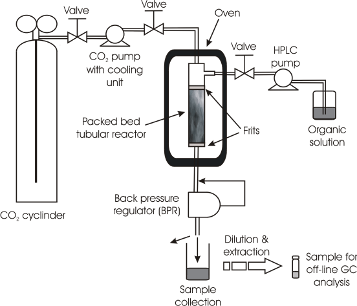
Figure 2: Schematic diagram of the continuous flow system. The reactor shown is the 3.9 mm i.d. PFR. For the ...

Figure 3: Total conversion of 4-iodoanisole as a function of reactor run time for three reaction temperatures....

Figure 4: Total conversion of 4-iodoanisole at 155 °C and 200 bar as a function of reactor run time for diffe...

Figure 5: Total conversion of 4-iodoanisole as a function of reactor run time at 145 °C and at 200 (●) and 25...

Figure 6: Conversion of 4-iodoanisole to methyl 4-methoxycinnamate (●) at 155 °C and 200 bar as a function of...

Figure 7: Comparison of conversion as a function of reactor run time for the reaction of methyl acrylate in t...

Figure 8: TOF values for the 1 mm (ο) and 3.9 mm (●) PFRs at a total flow rate of 0.12 mL min−1, 155 °C and 2...

Figure 9: Turnover frequencies of the Heck reactions at 155 °C using styrene (ο) as combined isomeric product...
Recent advances in transition metal-catalyzed Csp2-monofluoro-, difluoro-, perfluoromethylation and trifluoromethylthiolation
- Grégory Landelle,
- Armen Panossian,
- Sergiy Pazenok,
- Jean-Pierre Vors and
- Frédéric R. Leroux
Beilstein J. Org. Chem. 2013, 9, 2476–2536, doi:10.3762/bjoc.9.287
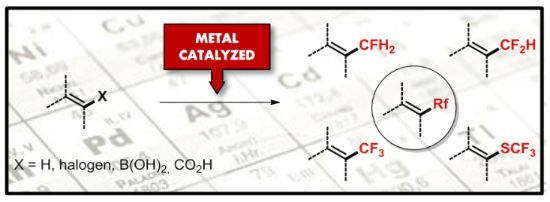
- radical to the double bond. The CF3-substituted alkene is finally obtained after elimination of carbon dioxide and Cu(I) (Figure 13). 3.3 Catalysis by other metals than Pd and Cu 3.3.1 Ru-catalyzed perfluoroalkylation of Csp2–H bonds. More than two decades ago, the group of N. Kamigata pursued extensive

Graphical Abstract

Scheme 1: Pd-catalyzed monofluoromethylation of pinacol phenylboronate [44].

Scheme 2: Cu-catalyzed monofluoromethylation with 2-PySO2CHFCOR followed by desulfonylation [49].

Scheme 3: Cu-catalyzed difluoromethylation with α-silyldifluoroacetates [57].

Figure 1: Mechanism of the Cu-catalyzed C–CHF2 bond formation of α,β-unsaturated carboxylic acids through dec...

Scheme 4: Fe-catalyzed decarboxylative difluoromethylation of cinnamic acids [62].

Scheme 5: Preliminary experiments for investigation of the mechanism of the C–H trifluoromethylation of N-ary...

Figure 2: Plausible catalytic cycle proposed by Z.-J. Shi et al. for the trifluoromethylation of acetanilides ...

Figure 3: Plausible catalytic cycle proposed by M. S. Sanford et al. for the perfluoroalkylation of simple ar...

Figure 4: Postulated reaction pathway for the Ag/Cu-catalyzed trifluoromethylation of aryl iodides by Z. Q. W...

Figure 5: Postulated reaction mechanism for Cu-catalyzed trifluoromethylation reaction using MTFA as trifluor...

Scheme 6: Formal Heck-type trifluoromethylation of vinyl(het)arenes by M. Sodeoka et al. [83].

Figure 6: Proposed catalytic cycle for the copper-catalyzed trifluoromethylation of (het)arenes in presence o...

Figure 7: Proposed catalytic cycle for the copper-catalyzed trifluoromethylation of N,N-disubstituted (hetero...

Figure 8: Proposed catalytic cycle by Y. Zhang and J. Wang et al. for the copper-catalyzed trifluoromethylati...

Figure 9: Mechanistic rationale for the trifluoromethylation of arenes in presence of Langlois’s reagent and ...

Scheme 7: Trifluoromethylation of 4-acetylpyridine with Langlois’s reagent by P. S. Baran et al. (* Stirring ...

Scheme 8: Catalytic copper-facilitated perfluorobutylation of benzene with C4F9I and benzoyl peroxide [90].

Figure 10: F.-L. Qing et al.’s proposed mechanism for the copper-catalyzed trifluoromethylation of (hetero)are...

Figure 11: Mechanism of the Cu-catalyzed/Ru-photocatalyzed trifluoromethylation and perfluoroalkylation of ary...

Figure 12: Proposed mechanism for the Cu-catalyzed trifluoromethylation of aryl- and vinyl boronic acids with ...

Figure 13: Possible mechanism for the Cu-catalyzed decarboxylative trifluoromethylation of cinnamic acids [62].

Scheme 9: Ruthenium-catalyzed perfluoroalkylation of alkenes and (hetero)arenes with perfluoroalkylsulfonyl c...

Figure 14: N. Kamigata et al.’s proposed mechanism for the Ru-catalyzed perfluoroalkylation of alkenes and (he...

Figure 15: Proposed mechanism for the Ru-catalyzed photoredox trifluoromethylation of (hetero)arenes with trif...

Figure 16: Late-stage trifluoromethylation of pharmaceutically relevant molecules with trifluoromethanesulfony...

Figure 17: Proposed mechanism for the trifluoromethylation of alkenes with trifluoromethyl iodide under Ru-bas...

Scheme 10: Formal perfluoroakylation of terminal alkenes by Ru-catalyzed cross-metathesis with perfluoroalkyle...

Figure 18: One-pot Ir-catalyzed borylation/Cu-catalyzed trifluoromethylation of complex small molecules by Q. ...

Figure 19: Mechanistic proposal for the Ni-catalyzed perfluoroalkylation of arenes and heteroarenes with perfl...

Scheme 11: Electrochemical Ni-catalyzed perfluoroalkylation of 2-phenylpyridine (Y. H. Budnikova et al.) [71].

Scheme 12: Fe(II)-catalyzed trifluoromethylation of arenes and heteroarenes with trifluoromethyl iodide (T. Ya...

Figure 20: Mechanistic proposal by T. Yamakawa et al. for the Fe(II)-catalyzed trifluoromethylation of arenes ...

Scheme 13: Ytterbium-catalyzed perfluoroalkylation of dihydropyran with perfluoroalkyl iodide (Y. Ding et al.) ...

Figure 21: Mechanistic proposal by A. Togni et al. for the rhenium-catalyzed trifluoromethylation of arenes an...

Figure 22: Mechanism of the Cu-catalyzed oxidative trifluoromethylthiolation of arylboronic acids with TMSCF3 ...

Scheme 14: Removal of the 8-aminoquinoline auxiliary [136].

Figure 23: Mechanism of the Cu-catalyzed trifluoromethylthiolation of C–H bonds with a trifluoromethanesulfony...
One-pot sequential synthesis of isocyanates and urea derivatives via a microwave-assisted Staudinger–aza-Wittig reaction
- Diego Carnaroglio,
- Katia Martina,
- Giovanni Palmisano,
- Andrea Penoni,
- Claudia Domini and
- Giancarlo Cravotto
Beilstein J. Org. Chem. 2013, 9, 2378–2386, doi:10.3762/bjoc.9.274
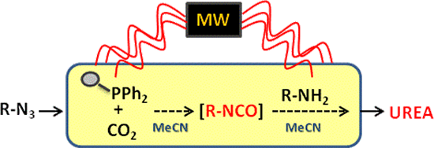
- by carbon dioxide (CO2), which is nontoxic, abundant, and economical, is the main advantage of this reaction. The mechanism of this transformation passes through iminophosphoranes that are versatile intermediates and can react with CO2 to generate isocyanates [20]. This reaction is compatible with a


An overview of the synthetic routes to the best selling drugs containing 6-membered heterocycles
- Marcus Baumann and
- Ian R. Baxendale
Beilstein J. Org. Chem. 2013, 9, 2265–2319, doi:10.3762/bjoc.9.265
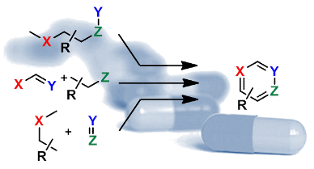
- combined with the liberation of large amounts of gases such as nitric oxides and carbon dioxide which must be scrubbed from the system (Scheme 2). Interestingly, despite these considerations this method of synthesis is currently still run by the speciality chemicals company Lonza but now as a continuous

Graphical Abstract

Scheme 1: Scaled industrial processes for the synthesis of simple pyridines.

Scheme 2: Synthesis of nicotinic acid from 2-methyl-5-ethylpyridine (1.11).

Scheme 3: Synthesis of 3-picoline and nicotinic acid.

Scheme 4: Synthesis of 3-picoline from 2-methylglutarodinitrile 1.19.

Scheme 5: Picoline-based synthesis of clarinex (no yields reported).

Scheme 6: Mode of action of proton-pump inhibitors and structures of the API’s.

Scheme 7: Hantzsch-like route towards the pyridine rings in common proton pump inhibitors.

Figure 1: Structures of rosiglitazone (1.40) and pioglitazone (1.41).

Scheme 8: Synthesis of rosiglitazone.

Scheme 9: Syntheses of 2-pyridones.

Scheme 10: Synthesis and mechanism of 2-pyrone from malic acid.

Scheme 11: Polymer-assisted synthesis of rosiglitazone.

Scheme 12: Synthesis of pioglitazone.

Scheme 13: Meerwein arylation reaction towards pioglitazone.

Scheme 14: Route towards pioglitazone utilising tyrosine.

Scheme 15: Route towards pioglitazone via Darzens ester formation.

Scheme 16: Syntheses of the thiazolidinedione moiety.

Scheme 17: Synthesis of etoricoxib utilising Negishi and Stille cross-coupling reactions.

Scheme 18: Synthesis of etoricoxib via vinamidinium condensation.

Figure 2: Structures of nalidixic acid, levofloxacin and moxifloxacin.

Scheme 19: Synthesis of moxifloxacin.

Scheme 20: Synthesis of (S,S)-2,8-diazabicyclo[4.3.0]nonane 1.105.

Scheme 21: Synthesis of levofloxacin.

Scheme 22: Alternative approach to the levofloxacin core 1.125.

Figure 3: Structures of nifedipine, amlodipine and clevidipine.

Scheme 23: Mg3N2-mediated synthesis of nifedipine.

Scheme 24: Synthesis of rac-amlodipine as besylate salt.

Scheme 25: Aza Diels–Alder approach towards amlodipine.

Scheme 26: Routes towards clevidipine.

Figure 4: Examples of piperidine containing drugs.

Figure 5: Discovery of tiagabine based on early leads.

Scheme 27: Synthetic sequences to tiagabine.

Figure 6: Structures of solifenacin (2.57) and muscarine (2.58).

Scheme 28: Enantioselective synthesis of solifenacin.

Figure 7: Structures of DPP-4 inhibitors of the gliptin-type.

Scheme 29: Formation of inactive diketopiperazines from cis-rotameric precursors.

Figure 8: Co-crystal structure of carmegliptin bound in the human DPP-4 active site (PDB 3kwf).

Scheme 30: Improved route to carmegliptin.

Figure 9: Structures of lamivudine and zidovudine.

Scheme 31: Typical routes accessing uracil, thymine and cytosine.

Scheme 32: Coupling between pyrimidones and riboses via the Vorbrüggen nucleosidation.

Scheme 33: Synthesis of lamivudine.

Scheme 34: Synthesis of raltegravir.

Scheme 35: Mechanistic studies on the formation of 3.22.

Figure 10: Structures of selected pyrimidine containing drugs.

Scheme 36: General preparation of pyrimidines and dihydropyrimidones.

Scheme 37: Synthesis of imatinib.

Scheme 38: Flow synthesis of imatinib.

Scheme 39: Syntheses of erlotinib.

Scheme 40: Synthesis of erlotinib proceeding via Dimroth rearrangement.

Scheme 41: Synthesis of lapatinib.

Scheme 42: Synthesis of rosuvastatin.

Scheme 43: Alternative preparation of the key aldehyde towards rosuvastatin.

Figure 11: Structure comparison between nicotinic acetylcholine receptor agonists.

Scheme 44: Syntheses of varenicline and its key building block 4.5.

Scheme 45: Synthetic access to eszopiclone and brimonidine via quinoxaline intermediates.

Figure 12: Bortezomib bound in an active site of the yeast 20S proteasome ([114], pdb 2F16).

Scheme 46: Asymmetric synthesis of bortezomib.

Figure 13: Structures of some prominent piperazine containing drugs.

Figure 14: Structural comparison between the core of aplaviroc (4.35) and a type-1 β-turn (4.36).

Scheme 47: Examplary synthesis of an aplaviroc analogue via the Ugi-MCR.

Scheme 48: Syntheses of azelastine (5.1).

Figure 15: Structures of captopril, enalapril and cilazapril.

Scheme 49: Synthesis of cilazapril.

Figure 16: Structures of lamotrigine, ceftriaxone and azapropazone.

Scheme 50: Synthesis of lamotrigine.

Scheme 51: Alternative synthesis of lamotrigine (no yields reported).

Figure 17: Structural comparison between imiquimod and the related adenosine nucleoside.

Scheme 52: Conventional synthesis of imiquimod (no yields reported).

Scheme 53: Synthesis of imiquimod.

Scheme 54: Synthesis of imiquimod via tetrazole formation (not all yields reported).

Figure 18: Structures of various anti HIV-medications.

Scheme 55: Synthesis of abacavir.

Figure 19: Structures of diazepam compared to modern replacements.

Scheme 56: Synthesis of ocinaplon.

Scheme 57: Access to zaleplon and indiplon.

Scheme 58: Different routes towards the required N-methylpyrazole 6.65 of sildenafil.

Scheme 59: Polymer-supported reagents in the synthesis of key aminopyrazole 6.72.

Scheme 60: Early synthetic route to sildenafil.

Scheme 61: Convergent preparations of sildenafil.

Figure 20: Comparison of the structures of sildenafil, tadalafil and vardenafil.

Scheme 62: Short route to imidazotriazinones.

Scheme 63: Alternative route towards vardenafils core imidazotriazinone (6.95).

Scheme 64: Bayer’s approach to the vardenafil core.

Scheme 65: Large scale synthesis of vardenafil.

Scheme 66: Mode of action of temozolomide (6.105) as methylating agent.

Scheme 67: Different routes to temozolomide.

Scheme 68: Safer route towards temozolomide.

Figure 21: Some unreported heterocyclic scaffolds in top market drugs.
The chemistry of amine radical cations produced by visible light photoredox catalysis
- Jie Hu,
- Jiang Wang,
- Theresa H. Nguyen and
- Nan Zheng
Beilstein J. Org. Chem. 2013, 9, 1977–2001, doi:10.3762/bjoc.9.234
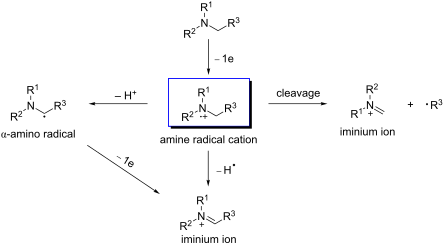
- to reductively quench the photoexcited state while they are oxidized to amine radical cations. This single-electron transfer process was investigated intensively in the late 1970s and early 1980s because amines were used as a sacrificial electron donor in water splitting [31][32] and carbon dioxide

Graphical Abstract

Scheme 1: Amine radical cations’ mode of reactivity.

Scheme 2: Reductive quenching of photoexcited Ru complexes by Et3N.

Scheme 3: Photoredox aza-Henry reaction.

Scheme 4: Formation of iminium ions using BrCCl3 as stoichiometric oxidant.

Scheme 5: Oxidative functionalization of N-aryltetrahydroisoquinolines using Eosin Y.

Scheme 6: Synthetic and mechanistic studies of Eosin Y-catalyzed aza-Henry reaction.

Scheme 7: Oxidative functionalization of N-aryltetrahydroisoquinolines using RB and GO.

Scheme 8: Merging Ru-based photoredox catalysis and Lewis base catalysis for the Mannich reaction.

Scheme 9: Merging Au-based photoredox catalysis and Lewis base catalysis for the Mannich reaction.

Scheme 10: Merging Ru-based photoredox catalysis and Cu-catalyzed alkynylation reaction.

Scheme 11: Merging Ru-based photoredox catalysis and NHC catalysis.

Scheme 12: 1,3-Dipolar cycloaddition of photogenically formed azomethine ylides.

Scheme 13: Plausible mechanism for photoredox 1,3-dipolar cycloaddition.

Scheme 14: Photoredox-catalyzed cascade reaction for the synthesis of fused isoxazolidines.

Scheme 15: Plausible mechanism for the photoredox-catalyzed cascade reaction.

Scheme 16: Photoredox-catalyzed α-arylation of glycine derivatives.

Scheme 17: Photoredox-catalyzed α-arylation of amides.

Scheme 18: Intramolecular interception of iminium ions by sulfonamides.

Scheme 19: Intramolecular interception of iminium ions by alcohols and sulfonamides.

Scheme 20: Intermolecular interception of iminium ions by phosphites.

Scheme 21: Photoredox-catalyzed oxidative phosphonylation by Eosin Y.
Scheme 22: Conjugated addition of α-amino radicals to Michael acceptors.

Scheme 23: Conjugated addition of α-amino radicals to Michael acceptors assisted by a Brønsted acid.

Scheme 24: Conjugated addition of α-amino radicals derived from anilines to Michael acceptors.

Scheme 25: Oxygen switch between two pathways involving α-amino radicals.

Scheme 26: Interception of α-amino radicals by azodicarboxylates.

Scheme 27: α-Arylation of amines.

Scheme 28: Plausible mechanism for α-arylation of amines.

Scheme 29: Photoinduced C–C bond cleavage of tertiary amines.

Scheme 30: Photoredox cleavage of C–C bonds of 1,2-diamines.

Scheme 31: Proposed mechanism photoredox cleavage of C–C bonds.

Scheme 32: Intermolecular [3 + 2] annulation of cyclopropylamines with olefins.

Scheme 33: Proposed mechanism for intermolecular [3 + 2] annulation.

Scheme 34: Photoinduced clevage of N–N bonds of aromatic hydrazines and hydrazides.
Integrating reaction and analysis: investigation of higher-order reactions by cryogenic trapping
- Skrollan Stockinger and
- Oliver Trapp
Beilstein J. Org. Chem. 2013, 9, 1837–1842, doi:10.3762/bjoc.9.214
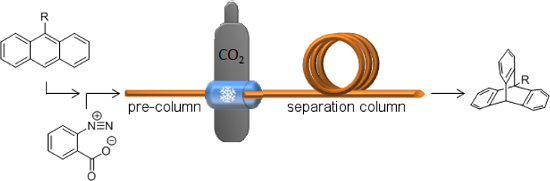
- ][26], an oxidizing agent [27] or by physical decomposition by radiation [28] or heating [29][30][31] of a precursor system. Here, we used benzenediazonium-2-carboxylate as a benzyne precursor, which thermally decomposes by elimination of nitrogen and carbon dioxide. Results and Discussion Initially

Graphical Abstract

Figure 1: Overview of some capabilities of an immobilized or in an inert stationary phase dissolved catalyst....

Scheme 1: Diels–Alder reaction of benzenediazonium-2-carboxylate with anthracene-9-derivatives toward triptyc...

Figure 2: The experimental setup and a) the injection sequence protocol of the cryogenic ocRGC measurements b...

Figure 3: Experimental ocRGC chromatogram of 9-anthracenemethanol with benzenediazonium-2-carboxylate. Condit...
Iron-catalyzed decarboxylative alkenylation of cycloalkanes with arylvinyl carboxylic acids via a radical process
- Jincan Zhao,
- Hong Fang,
- Jianlin Han and
- Yi Pan
Beilstein J. Org. Chem. 2013, 9, 1718–1723, doi:10.3762/bjoc.9.197
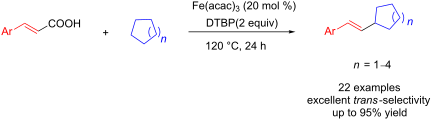
- product 3, Fe(II) and carbon dioxide. The Fe(III) catalyst is then reformed via DTBP oxidation [71]. Conclusion In conclusion, an efficient procedure for the Fe(acac)3-catalyzed direct alkenylation of sp3 C–H bonds of cycloalkanes with DTBP as an oxidant has been reported. This method provides a useful

Graphical Abstract

Scheme 1: Fe(acac)3-catalyzed alkenylation of cyclohexane. Catalytic conditions: cinnamic acid (1) (0.3 mmol)...

Scheme 2: Fe(acac)3-catalyzed alkenylation of cyclopentan, cycloheptane and cyclooctane. Catalytic conditions...

Scheme 3: A plausible pathway for the reaction.
Thermochemistry and photochemistry of spiroketals derived from indan-2-one: Stepwise processes versus coarctate fragmentations
- Götz Bucher,
- Gernot Heitmann and
- Rainer Herges
Beilstein J. Org. Chem. 2013, 9, 1668–1676, doi:10.3762/bjoc.9.191
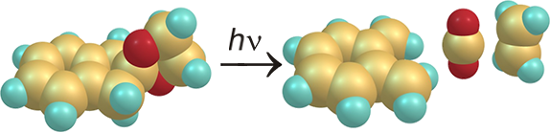
- we investigate the fragmentation reactions of cyclic ketals. Three ketals with different ring sizes derived from indan-2-one were decomposed by photolysis and pyrolysis. Particularly clean is the photolysis of the indan-2-one ketal 1, which gives o-quinodimethane, carbon dioxide and ethylene. The
- spectroscopy. Unfortunately no product could be unambiguously identified. The FVP of 2 yielded the product spectrum shown in Figure 5. Again, both carbon monoxide and carbon dioxide were formed along with the organic products. Carbon monoxide was formed in large excess over carbon dioxide (CO/CO2 = 13.5:1
- spiroketal linkage. The relative ratio of carbon dioxide and carbon monoxide being formed (CO2/CO = 1:27) indicates that a coarctate fragmentation of 1 can play a minor role only, if any. The composition of the product mixture is best rationalized by a series of stepwise processes, which starts with either a

Graphical Abstract

Figure 1: Formal, topological approach to derive coarctate reactions from pericyclic reactions; p, q: number ...

Figure 2: Stereochemistry of coarctate reactions derived from a Hückel (top) and a Möbius band (bottom). The ...

Scheme 1: Coarctate fragmentation of the spiroozonide derived from methylenecyclopropane.

Scheme 2: Photochemically and thermally allowed coarctate fragmentations of spiroketals.

Scheme 3: Precursors used in this study.

Figure 3: Difference infrared spectrum, showing the changes in the IR spectrum after photolysis (λexc = 254 n...

Figure 4: Infrared spectrum obtained upon FVP of 1 at T = 1143 K and trapping the pyrolysate in solid argon a...

Figure 5: Infrared spectrum obtained upon FVP of 2 at T = 963 K and trapping the pyrolysate in solid argon at ...

Figure 6: Infrared spectrum obtained upon FVP of 3 at T = 1043 K and trapping the pyrolysate in solid argon a...

Scheme 4: Possible fragmentation pathways in the FVP of 1.

Scheme 5: Possible fragmentation pathways in the FVP of 2.

Scheme 6: Possible fragmentation pathways in the FVP of 3.
Simple and rapid hydrogenation of p-nitrophenol with aqueous formic acid in catalytic flow reactors
- Rahat Javaid,
- Shin-ichiro Kawasaki,
- Akira Suzuki and
- Toshishige M. Suzuki
Beilstein J. Org. Chem. 2013, 9, 1156–1163, doi:10.3762/bjoc.9.129
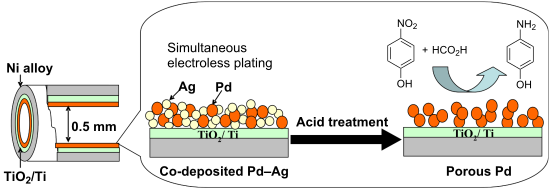
- residence time in the porous PdO reactor at 40 °C. Evolution of carbon dioxide (CO2) was observed during the reaction, although hydrogen (H2) was not found in the gas phase. Dehydrogenation of formic acid did not occur to any practical degree in the absence of p-nitrophenol. Consequently, the nitro group
- have studied flow reactions, including the decomposition of hydrogen peroxide, oxidation of organic dyes, carbon–carbon coupling, and conversion of formic acid to hydrogen (H2) and carbon dioxide (CO2), using catalytic tubular reactors [10][11][12][13]. p-Aminophenol is an important intermediate

Graphical Abstract

Figure 1: (a) Graphical presentation of Pd–Ag co-plating and sequential removal of Ag to give a porous Pd sur...

Figure 2: Schematic diagram of experimental setup used for the catalytic hydrogenation of p-nitrophenol.

Scheme 1: Hydrogenation of p-nitrophenol with formic acid.

Figure 3: Influence of temperature on the conversion of 0.01 M p-nitrophenol with 0.1 M formic acid at 30 °C ...

Figure 4: Effect of residence time on the conversion of 0.01 M p-nitrophenol with 0.1 M formic acid at 30 °C ...

Figure 5: Effect of the concentration of formic acid on the conversion of 0.01 M p-nitrophenol. The formic ac...

Figure 6: Effect of pH on the conversion of 0.01 M p-nitrophenol by using 0.05 M formic acid. The porous PdO ...

Figure 7: Long-term testing for continuous hydrogenation of 0.01 M p-nitrophenol with 0.05 M formic acid in t...
Camera-enabled techniques for organic synthesis
- Steven V. Ley,
- Richard J. Ingham,
- Matthew O’Brien and
- Duncan L. Browne
Beilstein J. Org. Chem. 2013, 9, 1051–1072, doi:10.3762/bjoc.9.118
- with various solid-phase Brønsted acid catalysts in supercritical carbon dioxide (Figure 7), Poliakoff and co-workers studied the effect of varying the concentration of the organic reagent in the liquid CO2 solvent [46]. The high pressures required (100–400 bar) stipulated the use of a sealed reaction

Graphical Abstract

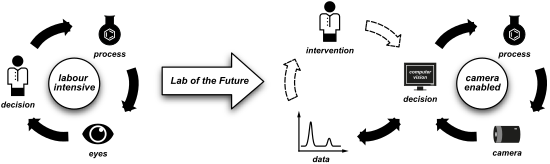
Figure 1: The evolution of computer-based monitoring and control within the laboratory of the future. (a) In ...

Figure 2: A selection of the wide range of digital camera devices available, focusing on those that can be at...

Figure 3: (a) Network cameras (Linksys WVC54GC) in operation in the Innovative Technology Centre laboratory. ...

Figure 4: Remote transmission of video imagery and reaction monitoring data.

Figure 5: A camera can assist the chemist in a number of ways. Digital video recordings of reactions can be u...

Figure 6: Suzuki–Miyaura reaction performed within a microfluidic system. The product is observed by high-spe...

Figure 7: Friedel–Crafts reactions performed by using solid-acid catalysis at high pressures. A camera allowe...

Figure 8: (a) The video camera setup providing a view of the reaction within the microwave cavity; (b) a pall...

Figure 9: (a) Buchwald–Hartwig coupling within a microchannel reactor. (b) Camera view of aggregate deposits ...

Figure 10: The key diprotected piperazic acid precursor in the synthesis of chloptosin.

Figure 11: (a) Piperazic acid mixture, and (b) apparatus for enantiomeric upgrading by recorded crystallisatio...

Figure 12: (a) Crystallisation of a Mn(II) polyoxometalate. (b) A bespoke reactor produced using additive fabr...

Figure 13: Computer processing of digital imagery produces numerical data for later processing.

Figure 14: (a) The Morphologi G3 particle image analyser, which uses images captured with a camera microscope ...

Figure 15: Use of the Python Imaging Library to analyse the proportion of an image consisting of red pixels. A...

Figure 16: (a) Arduino [73,75], a flexible open-source platform for rapidly prototyping electronic applications. (b) ...

Figure 17: Patented device incorporating a standard 96-well plate illuminated by a white-light source. The pla...

Figure 18: Simple colour-change experiments to assess a new AF-2400 gas permeable flow reactor. The reactor co...

Figure 19: (a) Ozonolysis of a series of alkenes using ozone in a bottle-reactor; (b) Glaser–Hay coupling usin...

Figure 20: (a) Camera-assisted titration of ammonia using bromocresol green. NH3 is dissolved in the gas-flow ...

Figure 21: (a) Bubble-counting setup. As the output of the gas-flow reactor (hydrogen dissolved in dichloromet...

Figure 22: Usage of digital cameras to enable remote control of reactions.

Figure 23: In-line solvent switching apparatus. The reactor output is directed into a bottle positioned on a h...

Figure 24: Catch and Release apparatus. (1) The amide intermediate is sequestered onto the central sulfonic ac...

Figure 25: Clips from video footage showing the silica reagent changing appearance; the arrows indicate the ed...

Figure 26: Combination of computer vision and automation to enable machine-assisted synthetic processes.

Figure 27: A coloured float at the interface between heavy and light solvents allows a camera to recognise the...

Figure 28: Graphical demonstration of the image-recognition process. At the start of the experiment, the colou...

Figure 29: Application of the computer-vision-enabled liquid–liquid extractor. The product mixture of a hydraz...

Figure 30: Application of a computer-vision technique to measure the dispersion of a plug of material passing ...

Figure 31: Multiple extractors in series controlled by a single camera.

Figure 32: Two-step synthesis of branched aldehydes from aryl iodides using two reactive gases. A liquid–liqui...
Isotopically labeled sulfur compounds and synthetic selenium and tellurium analogues to study sulfur metabolism in marine bacteria
- Nelson L. Brock,
- Christian A. Citron,
- Claudia Zell,
- Martine Berger,
- Irene Wagner-Döbler,
- Jörn Petersen,
- Thorsten Brinkhoff,
- Meinhard Simon and
- Jeroen S. Dickschat
Beilstein J. Org. Chem. 2013, 9, 942–950, doi:10.3762/bjoc.9.108
- ][15] followed by its conversion into its CoA-thioester by DmdB and oxidation by the FAD-dependent dehydrogenase DmdC. The addition of water to 3-(methylthio)acryloyl-CoA by the enoyl-CoA hydratase DmdD results in a hemithioacetal, which collapses under release of acetaldehyde, carbon dioxide and MeSH

Graphical Abstract

Figure 1: Roseobacter clade metabolites.

Scheme 1: Degradation of DMSP via (A) demethylation pathway and (B) cleavage pathways. FH4: tetrahydrofolate.

Scheme 2: Sulfate reduction pathway and incorporation of sulfur into the amino acid pool. PAP: adenosine 3’,5...

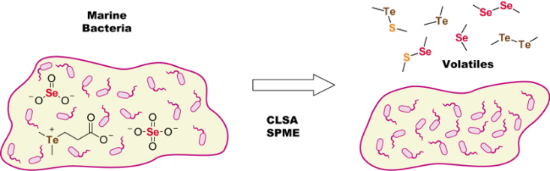
Figure 2: Volatiles from P. gallaeciensis DSM 17395 and R. pomeroyi DSS-3. Feeding of [2H6]DMSP results in de...

Figure 3: Chromatograms of headspace extracts from P. gallaeciensis DSM 17395 after feeding of DMTeP by the u...

Figure 4: Chromatograms of headspace extracts obtained after feeding of [2H6]DMSP by the use of SPME from (A) ...

Figure 5: Chromatograms of headspace extracts from (A) R. pomeroyi DSS-3 wild type, (B) R. pomeroyi DSS-3 dmdA...

Scheme 3: Synthesis of 34S-labeled thiosulfate and sulfate.
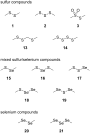
Figure 6: Volatiles from P. gallaeciensis after feeding of selenate and selenite.
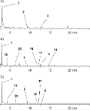
Figure 7: Chromatograms of headspace extracts from P. gallaeciensis grown on (A) 50% MB2216, (B) 50% MB2216 +...

Figure 8: Additional sulfur volatiles.
Direct alkenylation of indolin-2-ones by 6-aryl-4-methylthio-2H-pyran-2-one-3-carbonitriles: a novel approach
- Sandeep Kumar,
- Ramendra Pratap,
- Abhinav Kumar,
- Brijesh Kumar,
- Vishnu K. Tandon and
- Vishnu Ji Ram
Beilstein J. Org. Chem. 2013, 9, 809–817, doi:10.3762/bjoc.9.92
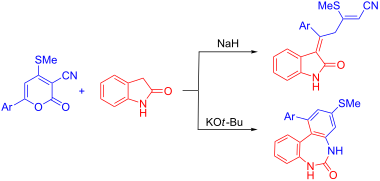
- carbon dioxide to deliver product 8 without undergoing further cyclization to yield either 6 or 7, possibly due to the lower dielectric constant of THF (7.42) compared to methanol (32.7) (Scheme 3). As is evident from Scheme 3, there are three possible tautomeric forms for 8, viz. 8x, 8y, 8z for the

Graphical Abstract

Scheme 1: Syntheses of 6-aryl-4-methylthio-2H-pyran-2-one-3-carbonitriles 3.

Figure 1: ORTEP view with atom numbering scheme of compound 5 with displacement ellipsoids at the 30% probabi...
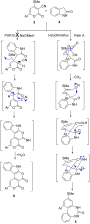
Scheme 2: A plausible mechanism for the formation of 1-aryl-3-methylthio-5H-dibenzo[d,f][1,3]diazepin-6(7H)-o...

Scheme 3: Synthesis of 3-alkenylindolin-2-ones.

Figure 2: ORTEP view with atom numbering scheme of compound 8yc with displacement ellipsoids at the 30% proba...

Scheme 4: Synthesis of 1-aryl-3-sec-amino-5H-dibenzo[d,f][1,3]diazepin-6(7H)-ones 10.

Figure 3: Centrosymmetric dimer of 8yc bound by a pair of weak C−H…π intermolecular interactions (symm. op. 2...

Figure 4: Supramolecular chain of 8yc bound by weak C−H…O intermolecular interactions (symm. op. x,1 + y, z).

Figure 5: Supramolecular chain of 8yc bound by weak C−H…O and Ar-H…π intermolecular interactions (symm. op. 2...
1-n-Butyl-3-methylimidazolium-2-carboxylate: a versatile precatalyst for the ring-opening polymerization of ε-caprolactone and rac-lactide under solvent-free conditions
- Astrid Hoppe,
- Faten Sadaka,
- Claire-Hélène Brachais,
- Gilles Boni,
- Jean-Pierre Couvercelle and
- Laurent Plasseraud
Beilstein J. Org. Chem. 2013, 9, 647–654, doi:10.3762/bjoc.9.73
- carbon dioxide transfer in the formation of ketoacetates [46][47] and carboxylation of epoxides [48]. Some of us have recently reported a green application of BMIM-2-CO2, highlighting its efficiency for the conversion of raw glycerol to glycerol carbonate by transesterification [49]. More recently, this
- previous study reported by Tommasi et al. [47], we suggest that the liberated carbon dioxide reacts with the alcohol initiator ROH, leading to the formation of a ROC(O)O− anion (monobenzylcarbonate if benzyl alcohol is used as initiator, Scheme 3). The expelled proton reacts with the carbene species and

Graphical Abstract

Figure 1: Molecular representations of N-heterocyclic carbenes and BMIM-2-CO2.
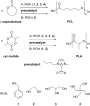
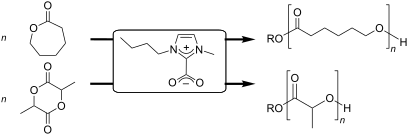
Scheme 1: Ring-opening polymerization of ε-caprolactone and rac-lactide by using BMIM-2-CO2 as precatalyst (1...
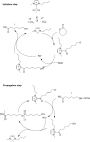
Scheme 2: Possible mechanism for the synthesis of PCL and PLA by ROP using BMIM-2-CO2 as precatalyst.
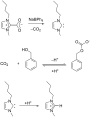
Scheme 3: In situ formation of monobenzylcarbonate and deactivation of N-heterocyclic carbene.
S-Fluorenylmethyl protection of the cysteine side chain upon Nα-Fmoc deprotection
- Johannes W. Wehner and
- Thisbe K. Lindhorst
Beilstein J. Org. Chem. 2012, 8, 2149–2155, doi:10.3762/bjoc.8.242
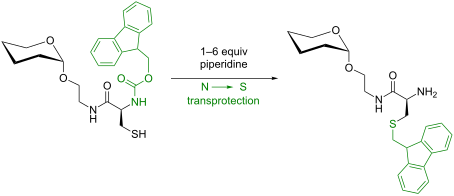
- reaction of the E1cb type, in which Nα is deprotected with the release of carbon dioxide and formation of dibenzofulvene (Scheme 3). Then, presumably, the cysteine thiol is deprotonated by morpholine. Since the nucleophilicity of the so formed thiolate is higher than that of morpholine or the generated

Graphical Abstract

Scheme 1: Synthesis of glycoamino acid derivative 3 and its dimer, from the known mannopyranoside 1.

Scheme 2: To obtain the glycocystine derivative 3-dimer from the protected cysteine mannopyranoside precursor ...

Figure 1: In the 1H/13C HMBC NMR spectrum of the S-Fm-protected glycoamino acid derivative 8, protecting-grou...

Scheme 3: Proposed mechanism for the formation of S-Fm-protected 8 from N-Fmoc-protected 7 according to Rich ...
Cyclodextrin-based nanosponges as drug carriers
- Francesco Trotta,
- Marco Zanetti and
- Roberta Cavalli
Beilstein J. Org. Chem. 2012, 8, 2091–2099, doi:10.3762/bjoc.8.235
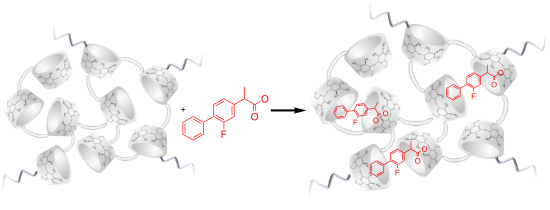
- nanosponges have shown an ability to store large amounts of carbon dioxide, 1-methylcyclopropene and oxygen [8]. Three different cyclodextrin nanosponges were synthesised cross-linking α-, β- or γ-cyclodextrin with carbonyldiimidazole as oxygen-encapsulating formulations [50]. The nanosponges were able to

Graphical Abstract

Scheme 1: Synthetic routes to cyclodextrin nanosponges. (a) Cyclodextrin carbonate nanosponges. (b) Cyclodext...

Figure 1: Molecular structure of cyclodextrin carbonate nanosponges.

Figure 2: TEM microphotograph of cyclodextrin carbonate nanosponge (magnification 46,000×).
Flow photochemistry: Old light through new windows
- Jonathan P. Knowles,
- Luke D. Elliott and
- Kevin I. Booker-Milburn
Beilstein J. Org. Chem. 2012, 8, 2025–2052, doi:10.3762/bjoc.8.229

Graphical Abstract

Figure 1: An immersion-well batch reactor with 125 W medium pressure Hg lamp.

Figure 2: Transmission profile of a 0.05 M solution, ε = 200 M−1 cm−1.

Figure 3: Schematic of a typical microflow photochemical reactor (above) and detail of a triple-channel micro...

Figure 4: Schematic of a typical macroflow photochemical reactor (above) and images of the FEP photochemical ...

Scheme 1: [2 + 2] photocycloadditions of enones with enol derivatives.

Scheme 2: Competing reactions in an intramolecular [2 + 2] photocycloaddition.

Scheme 3: Diastereocontrolled cycloaddition of a cyclic enone with cyclopentene.

Scheme 4: Comparison of yields and reaction times for a batch reactor with a microflow system.

Scheme 5: Intramolecular [2 + 2] photocycloaddition.

Scheme 6: Paterno–Büchi reaction of benzophenone with an allylic alcohol.

Scheme 7: Photooxygenation of cyclopentadiene.

Scheme 8: Preparation of the anthelmintic ascaridole 23.

Scheme 9: Production of rose oxide 27 from (−)-β-citronellol (24).

Scheme 10: Photocatalytic alkylation of benzylamine.

Scheme 11: Photocatalytic reduction of 4-nitroacetophenone.

Scheme 12: Conversion of L-lysine to L-pipecolinic acid.

Scheme 13: Photocatalytic hydrodehalogenation.

Scheme 14: Photocatalytic aza-Henry reactions.

Scheme 15: Photocatalytic α-alkylation of aliphatic ketones.

Scheme 16: Decarboxylative photochemical additions.

Scheme 17: Photochemical addition of isopropanol to furanones.

Scheme 18: Photochemical addition of methanol to limonene.

Scheme 19: Light-promoted reduction of flavone.

Scheme 20: Photoreduction of benzophenone with benzhydrol.

Scheme 21: Barton reaction in a microflow system.

Scheme 22: Microflow synthesis of vitamin D3.

Scheme 23: photochemical chlorination of cyclohexane.

Scheme 24: photochemical cyanation of pyrene.

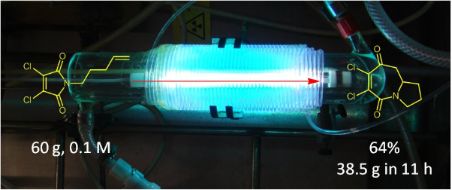
Scheme 25: Intermolecular [2 + 2] cycloaddition of maleimide (76) and intramolecular [2 + 2] cycloaddition of ...

Scheme 26: Intramolecular [5 + 2] cycloaddition of maleimide under flow conditions.

Scheme 27: Intramolecular [5 + 2] cycloaddition as a key step in the synthesis of (±)-neostenine.

Scheme 28: In situ generation of a thioaldehyde by photolysis of a phenacyl sulfide.

Scheme 29: Photodimerisation of maleic anhydride.

Scheme 30: [2 + 2] cycloaddition of a chiral enone with ethylene.

Scheme 31: Intramolecular [2 + 2] cycloaddition of a cyclopentenone.

Scheme 32: Photochemical Wolff rearrangement and cyclisation to β-lactams.

Scheme 33: Photochemical rearrangement of aryl azides.

Scheme 34: Rearrangement of quinoline N-oxides to quinolones.

Scheme 35: Photochemical rearrangement of cyclobutenones.

Scheme 36: Photoisomerisation en route to a vitamin-D derivative.

Scheme 37: Schematic of the Seeberger photooxygenation apparatus and sensitised photooxygenation of citronello...

Scheme 38: Sensitised photooxygenation of dihydroartemisinic acid.

Scheme 39: Photochemical preparation of CpRu(MeCN)3PF6.

Scheme 40: In situ photochemical generation and reaction of a [CpRu]+ catalyst.

Scheme 41: Intermolecular alkene–alkyne coupling with photogenerated catalyst.

Scheme 42: PET deoxygenation of nucleosides.

Scheme 43: Photochemical defluorination of DABFT.

Scheme 44: Aromatic azide reduction by visible-light-mediated photocatalysis.

Scheme 45: Examples of visible-light-mediated reactions.

Scheme 46: Visible-light-mediated formation of iminium ions.

Scheme 47: Examples of visible-light-mediated photocatalytic reactions.

Scheme 48: Anhydride formation from a visible-light-mediated process.

Scheme 49: Light-mediated conjugate addition of glycosyl bromide 141 to acrolein.

Scheme 50: Visible-light-mediated photocyclisation to [5]helicene.
The chemistry of bisallenes
- Henning Hopf and
- Georgios Markopoulos
Beilstein J. Org. Chem. 2012, 8, 1936–1998, doi:10.3762/bjoc.8.225
- 1.2) [74][75][76] can probably also be exploited to introduce other substituents than TMS. Thus the quenching of the corresponding carbanions with, e.g., carbon dioxide to produce carboxylic acid derivatives of conjugated bisallenes could be tried [83][138][144]. 2. Acyclic nonconjugated bisallenes

Graphical Abstract

Figure 1: Loschmidt’s structure proposal for benzene (1) (Scheme 181 from [3]) and the corresponding modern stru...

Figure 2: The first isolated bisallenes.

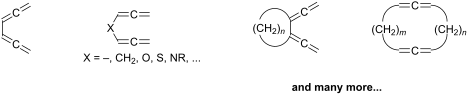
Figure 3: Carbon skeletons of selected bisallenes discussed in this review.

Scheme 1: The preparation of 1,2,4,5-hexatetraene (2).

Scheme 2: The preparation of a conjugated bisallene by the DMS-protocol.

Scheme 3: Preparation of the 3-deuterio- and 3,4-dideuterio derivatives of 24.

Scheme 4: A versatile method to prepare alkylated conjugated bisallenes and other allenes.

Scheme 5: A preparation of 3,4-dimethyl-1,2,4,5-hexatetraene (38).

Scheme 6: A (C6 + 0)-approach to 1,2,4,5-hexatetraene (2).

Scheme 7: The preparation of a fully alkylated bisallenes from a 2,4-hexadiyne-1,6-diol diacetate.

Scheme 8: The preparation of the first phenyl-substituted conjugated bisallenes 3 and 4.

Scheme 9: Selective hydrogenation of [5]cumulenes to conjugated bisallenes: another (C6 + 0)-route.

Scheme 10: Aryl-substituted conjugated bisallenes by a (C3 + C3)-approach.

Scheme 11: Hexaphenyl-1,2,4,5-hexatetraene (59) by a (C3 + C3)-approach.

Scheme 12: An allenation route to conjugated bisallenes.

Scheme 13: The preparation of 3,4-difunctionalized conjugated bisallenes.

Scheme 14: Problems during the preparation of sulfur-substituted conjugated bisallenes.

Scheme 15: The preparation of 3,4-dibromo bisallenes.

Scheme 16: Generation of allenolates by an oxy-Cope rearrangement.

Scheme 17: A linear trimerization of alkynes to conjugated bisallenes: a (C2 + C2 + C2)-protocol.

Scheme 18: Preparation of a TMS-substituted conjugated bisallene by a C3-dimerization route.

Scheme 19: A bis(trimethylsilyl)bisallene by a C3-coupling protocol.

Scheme 20: The rearrangement of highly substituted benzene derivatives into their conjugated bisallenic isomer...

Scheme 21: From fully substituted benzene derivatives to fully substituted bisallenes.

Scheme 22: From a bicyclopropenyl to a conjugated bisallene derivative.

Scheme 23: The conversion of a bismethylenecyclobutene into a conjugated bisallene.

Scheme 24: The preparation of monofunctionalized bisallenes.

Scheme 25: Preparation of bisallene diols and their cyclization to dihydrofurans.

Scheme 26: A 3,4-difunctionalized conjugated bisallene by a C3-coupling process.

Scheme 27: Preparation of a bisallenic diketone by a coupling reaction.

Scheme 28: Sulfur and selenium-substituted bisallenes by a [2.3]sigmatropic rearrangement.

Scheme 29: The biallenylation of azetidinones.

Scheme 30: The preparation of a fully ferrocenylated conjugated bisallene.

Scheme 31: The first isomerization of a 1,5-hexadiyne to a 1,2,4,5-hexatetraene.

Scheme 32: The preparation of alkynyl-substituted bisallenes by a C3-dimerization protocol.

Scheme 33: Preparation of another completely ferrocenylated bisallene.

Scheme 34: The cyclization of 1,5-hexadiyne (129) to 3,4-bismethylenecyclobutene (130) via 1,2,4,5-hexatetraen...
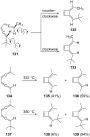
Scheme 35: Stereochemistry of the thermal cyclization of bisallenes to bismethylenecyclobutenes.

Scheme 36: Bisallene→bismethylenecyclobutene ring closures in the solid state.

Scheme 37: A bisallene cyclization/dimerization reaction.

Scheme 38: A selection of Diels–Alder additions of 1,2,4,5-hexatetraene with various double-bond dienophiles.

Scheme 39: The stereochemistry of the [2 + 4] cycloaddition to conjugated bisallenes.

Scheme 40: Preparation of azetidinone derivatives from conjugated bisallenes.

Scheme 41: Cycloaddition of heterodienophiles to a conjugated bisallene.

Scheme 42: Addition of triple-bond dienophiles to conjugated bisallenes.

Scheme 43: Sulfur dioxide addition to conjugated bisallenes.

Scheme 44: The addition of a germylene to a conjugated bisallene.

Scheme 45: Trapping of conjugated bisallenes with phosphinidenes.

Scheme 46: The cyclopropanantion of 1,2,4,5-hexatetraene (2).

Scheme 47: Photochemical reactions involving conjugated bisallenes.

Scheme 48: Base-catalyzed isomerizations of conjugated bisallenes.

Scheme 49: Ionic additions to a conjugated bisallene.

Scheme 50: Oxidation reactions of a conjugated bisallene.
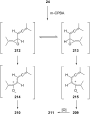
Scheme 51: The mechanism of oxidation of the bisallene 24.

Scheme 52: CuCl-catalyzed cyclization of 1,2,4,5-hexatetraene (2).

Scheme 53: The conversion of conjugated bisallenes into cyclopentenones.

Scheme 54: Oligomerization of a conjugated bisallene by nickel catalysts.
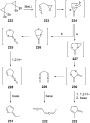
Scheme 55: Generation of 1,2,5,6-heptatetraene (229) as a reaction intermediate.

Scheme 56: The preparation of a stable derivative of 1,2,5,6-heptatetraene.

Scheme 57: A bisallene with a carbonyl group as a spacer element.

Scheme 58: The first preparation of 1,2,6,7-octatetraene (242).

Scheme 59: Preparation of 1,2,6,7-octatetraenes by (C4 + C4)-coupling of enynes.

Scheme 60: Preparation of 1,2,6,7-octatetraenes by (C4 + C4)-coupling of homoallenyl bromides.

Scheme 61: Preparation of 1,2,6,7-octatetraenes by alkylation of propargylic substrates.

Scheme 62: Preparation of two highly functionalized 1,2,6,7-octatetraenes.

Scheme 63: Preparation of several higher α,ω-bisallenes.

Scheme 64: Preparation of different alkyl derivatives of α,ω-bisallenes.

Scheme 65: The preparation of functionalized 1,2,7,8-nonatetraene derivatives.

Scheme 66: Preparation of functionalized α,ω-bisallenes.

Scheme 67: The preparation of an α,ω-bisallene by direct homologation of an α,ω-bisalkyne.

Scheme 68: The gas-phase pyrolysis of 4,4-dimethyl-1,2,5,6-heptatetraene (237).
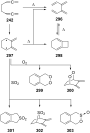
Scheme 69: Gas-phase pyrolysis of 1,2,6,7-octatetraene (242).

Scheme 70: The cyclopropanation of 1,2,6,7-octatetraene (242).

Scheme 71: Intramolecular cyclization of 1,2,6,7-octatetraene derivatives.

Scheme 72: The gas-phase pyrolysis of 1,2,7,8-nonatetraene (265) and 1,2,8,9-decatetraene (266).

Scheme 73: Rh-catalyzed cyclization of a functionalized 1,2,7,8-nonatetraene.

Scheme 74: A triple cyclization involving two different allenic substrates.

Scheme 75: Bicyclization of keto derivatives of 1,2,7,8-nonatetraene.

Scheme 76: The preparation of complex organic compounds from functionalized bisallenes.

Scheme 77: Cycloisomerization of an α,ω-bisallene containing a C9 tether.

Scheme 78: Organoborane polymers from α,ω-bisallenes.

Scheme 79: Preparation of trans- (337) and cis-1,2,4,6,7-octapentaene (341).

Scheme 80: The preparation of 4-methylene-1,2,5,6-heptatetraene (349).

Scheme 81: The preparation of acetylenic bisallenes.

Scheme 82: The preparation of derivatives of hydrocarbon 351.

Scheme 83: The construction of macrocyclic alleno-acetylenes.

Scheme 84: Preparation and reactions of 4,5-bismethylene-1,2,6,7-octatetraene (365).

Scheme 85: Preparation of 1,2-bis(propadienyl)benzene (370).

Scheme 86: The preparation of 1,4-bis(propadienyl)benzene (376).

Scheme 87: The preparation of aromatic and heteroaromatic bisallenes by metal-mediated coupling reactions.

Scheme 88: Double cyclization of an aromatic bisallene.

Scheme 89: Preparation of an allenic [15]paracyclophane by a ring-closing metathesis reaction of an aromatic α...

Scheme 90: Preparation of a macrocyclic ring system containing 1,4-bis(propadienyl)benzene units.

Scheme 91: Preparation of copolymers from 1,4-bis(propadienyl)benzene (376).

Scheme 92: A boration/copolymerization sequence of an aromatic bisallene and an aromatic bisacetylene.

Scheme 93: Formation of a layered aromatic bisallene.

Figure 4: The first members of the semicyclic bisallene series.

Scheme 94: Preparation of the first bis(vinylidene)cyclobutane derivative.
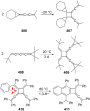
Scheme 95: Dimerization of strain-activated cumulenes to bis(vinylidene)cyclobutanes.

Scheme 96: Photodimerization of two fully substituted butatrienes in the solid state.

Scheme 97: Preparation of the two parent bis(vinylidene)cyclobutanes.

Scheme 98: The preparation of 1,3-bis(vinylidene)cyclopentane and its thermal isomerization.

Scheme 99: The preparation of the isomeric bis(vinylidene)cyclohexanes.

Scheme 100: Bi- and tricyclic conjugated bisallenes.
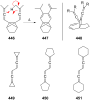
Scheme 101: A selection of polycyclic bisallenes.

Scheme 102: The first endocyclic bisallenes.

Figure 5: The stereochemistry of 1,2,6,7-cyclodecatetraene.

Scheme 103: The preparation of several endocyclic bisallenes.

Scheme 104: Synthesis of diastereomeric derivatives of 1,2,6,7-cyclodecatetraene.

Scheme 105: Preparation of a derivative of 1,2,8,9-cyclotetradecatetraene.

Scheme 106: The preparation of keto derivatives of cyclic bisallenes.

Scheme 107: The preparation of cyclic biscumulenic ring systems.

Scheme 108: Cyclic bisallenes in natural- and non-natural-product chemistry.

Scheme 109: The preparation of iron carbonyl complexes from cyclic bisallenes.

Figure 6: A selection of unknown exocyclic bisallenes that should have interesting chemical properties.

Scheme 110: The thermal isomerization of 1,2-diethynylcyclopropanes and -cyclobutanes.

Scheme 111: Intermediate generation of a cyclooctapentaene.

Scheme 112: Attempted preparation of a cyclodecahexaene.

Scheme 113: The thermal isomerization of 1,5,9-cyclododecatriyne (511) into [6]radialene (514).

Scheme 114: An isomerization involving a diketone derived from a conjugated bisallene.

Scheme 115: Typical reaction modes of heteroorganic bisallenes.

Scheme 116: Generation and thermal behavior of acyclic hetero-organic bisallenes.

Scheme 117: Generation of bis(propadienyl)thioether.

Scheme 118: The preparation of a bisallenic sulfone and its thermal isomerization.

Scheme 119: Bromination of the bisallenic sulfone 535.

Scheme 120: Metalation/hydrolysis of the bisallenic sulfone 535.

Scheme 121: Aromatic compounds from hetero bisallenes.

Scheme 122: Isomerization/cyclization of bispropargylic ethers.

Scheme 123: The preparation of novel aromatic systems by base-catalyzed isomerization of bispropargyl ethers.

Scheme 124: The isomerization of bisacetylenic thioethers to bicyclic thiophenes.

Scheme 125: Aromatization of macrocyclic bispropargylic sulfides.

Scheme 126: Preparation of ansa-compounds from macrocyclic bispropargyl thioethers.

Scheme 127: Alternate route for cyclization of a heterorganic bisallene.
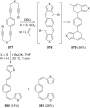
Scheme 128: Multiple isomerization/cyclization of “double” bispropargylic thioethers.

Scheme 129: Preparation of a bisallenyl disulfide and its subsequent bicyclization.

Scheme 130: Thermal cyclization of a bisallenyl thiosulfonate.

Scheme 131: Some reactions of heteroorganic bisallenes with two sulfur atoms.

Scheme 132: Further methods for the preparation of heteroorganic bisallenes.

Scheme 133: Cyclization reactions of heteroorganic bisallenes.

Scheme 134: Thermal cycloadditions of bisallenic tertiary amines.

Scheme 135: Cyclization of a bisallenic tertiary amine in the presence of a transition-metal catalyst.

Scheme 136: A Pauson–Khand reaction of a bisallenic ether.

Scheme 137: Formation of a 2:1adduct from two allenic substrates.

Scheme 138: A ring-forming silastannylation of a bisallenic tertiary amine.

Scheme 139: A three-component cyclization involving a heterorganic bisallene.

Scheme 140: Atom-economic construction of a complex organic framework from a heterorganic α,ω-bisallene.
Metal–ligand multiple bonds as frustrated Lewis pairs for C–H functionalization
- Matthew T. Whited
Beilstein J. Org. Chem. 2012, 8, 1554–1563, doi:10.3762/bjoc.8.177
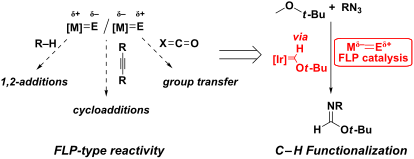
- were observed when carbon dioxide, carbonyl sulfide, and isocyanates were utilized, cleanly generating the Ir(I) carbonyl as a byproduct (Scheme 11) [71]. The nucleophilicity of the iridium center was demonstrated through a series of experiments. First, it was noted that the carbene complex does not
- ]. Single-crystal X-ray structure of a silver(I) triflate adduct of (PNP)Ir═C(H)Ot-Bu with most H atoms and phosphine substituents (except ipso carbon atoms) omitted for clarity. Heterolytic cleavage of H2 by a phosphine/borane FLP by H2 polarization in the P–B cavity [5][11]. Insertion of carbon dioxide

Graphical Abstract

Scheme 1: Heterolytic cleavage of H2 by a phosphine/borane FLP by H2 polarization in the P–B cavity [5,11].

Scheme 2: Insertion of carbon dioxide into a phosphine/borane FLP [14].

Figure 1: Simplified frontier-molecular-orbital diagrams for (a) Mδ+═Eδ− and (b) Mδ−═Eδ+ FLPs (n = 1 for line...

Figure 2: Quenching of M═E FLPs by dimerization: (a) generic Mδ+═Eδ− case, and (b) Bergman's arylimido zircon...

Scheme 3: Oxygen-atom extrusion from CO2 by a Ta(V) neopentylidene [27].

Scheme 4: Oxygen-atom transfer from acetone at a Zr(IV) imide [28].

Scheme 5: Alkyne cycloaddition at a Zr(IV) imide [38].

Scheme 6: Nitrile-alkyne cross metathesis at a W(VI) nitride [40,41].

Scheme 7: C–H and H–H addition across a zirconium(IV) imide [42].

Scheme 8: Formal [2 + 2] cycloaddition of methyl isocyanate at a ruthenium silylene [58].

Scheme 9: Oxygen-atom transfer from phenyl isocyanate to a cationic terminal borylene [60].

Scheme 10: Coupling of a phosphorus ylide with an iridium methylene [62].

Scheme 11: Reactions of (PNP)Ir═C(H)Ot-Bu with oxygen-containing heterocumulenes [71].

Scheme 12: Reductive coupling of two CS2 units at (PNP)Ir═C(H)Ot-Bu [73].
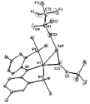
Figure 3: Single-crystal X-ray structure of a silver(I) triflate adduct of (PNP)Ir═C(H)Ot-Bu with most H atom...

Scheme 13: Possible routes to C–H functionalization by 1,2-addition across a polarized metal–element multiple ...

Scheme 14: Alkoxycarbene formation by double C–H activation at (PNP)Ir [88].

Scheme 15: Catalytic oxidation of MTBE by multiple C–H activations and nitrene-group transfer to a Mδ−═Eδ+ FLP ...
Photoreactions of cyclic sulfite esters: Evidence for diradical intermediates
- Rick C. White,
- Benny E. Arney Jr. and
- Heiko Ihmels
Beilstein J. Org. Chem. 2012, 8, 1208–1212, doi:10.3762/bjoc.8.134
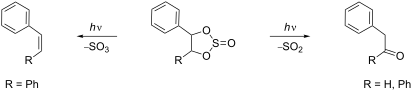
- in the photochemistry of vicinal diaryloxiranes based on the photochemical formation of methyl ethers in methanol solution [8]. Mechanistically, stereoselective oxygen scrambling was found in the photoextrusion of carbon dioxide from benzyl benzoate esters [9]. Furthermore, photodecarboxylation

Graphical Abstract

Scheme 1: Photolysis of cyclic carbonate esters 1a and 1b in acetonitrile.

Scheme 2: Photoreactivity of styrene glycol sulfite (8).

Scheme 3: Photochemical pathway for photoextrusion of SO2 from cyclic sulfites.

Scheme 4: Photoreactivity of meso-hydrobenzoin sulfite (9).
Chiral multifunctional thiourea-phosphine catalyzed asymmetric [3 + 2] annulation of Morita–Baylis–Hillman carbonates with maleimides
- Hong-Ping Deng,
- De Wang,
- Yin Wei and
- Min Shi
Beilstein J. Org. Chem. 2012, 8, 1098–1104, doi:10.3762/bjoc.8.121
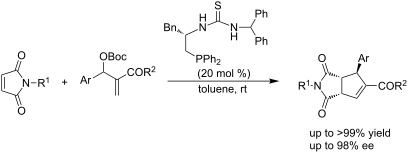
- : phosphines attack the middle carbon atom of allenes to produce the 1,3-dipolar synthon (Scheme 1, reaction 1), and phosphines add to the β-position of MBH carbonate to remove carbon dioxide and tert-butanol, affording the 1,3-dipolar synthon (Scheme 1, reaction 2). Concerning the asymmetric [3 + 2

Graphical Abstract

Scheme 1: Paths to the formation of 1,3-dipolar synthons by using a catalytic amount of phosphines.
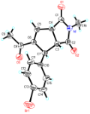
Figure 1: The ORTEP plot of compound 3r.

Figure 2: 31P NMR spectra (161.9 MHz, CDCl3) of control experiments.

Scheme 2: Proposed transition models.

Scheme 3: Dihydroxylation of 3c.
Functionalization of heterocyclic compounds using polyfunctional magnesium and zinc reagents
- Paul Knochel,
- Matthias A. Schade,
- Sebastian Bernhardt,
- Georg Manolikakes,
- Albrecht Metzger,
- Fabian M. Piller,
- Christoph J. Rohbogner and
- Marc Mosrin
Beilstein J. Org. Chem. 2011, 7, 1261–1277, doi:10.3762/bjoc.7.147
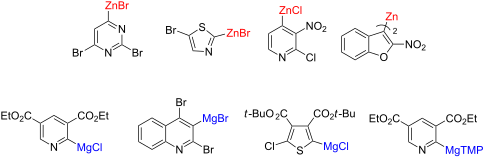
- has been shown to be of radical nature, and it affords the cross-coupling products in very short reaction times, often less than 5 min. 4 MgCl2-Enhanced reactivity of functionalized organozincs towards their addition to aldehydes, ketones and carbon dioxide The addition reactions of organometallic
- reagents to ketones, aldehydes and carbon dioxide are essential transformations in organic synthesis as they provide a convenient access to various types of alcohols or carboxylic acids. Usually, organozinc reagents only react with these types of electrophiles in the presence of catalytic amounts of
- transition metal salts and in a very limited scope. Recently, we showed that the cheap and non-toxic main group Lewis acid MgCl2 allows smooth addition reactions of different aromatic, heteroaromatic, alkyl and benzylic zinc reagents to various carbonyl derivatives and carbon dioxide without the use of polar

Graphical Abstract

Scheme 1: Preparation of polyfunctional heteroarylzinc reagents.

Scheme 2: LiCl-mediated insertion of zinc dust to aryl and heteroaryl iodides.

Scheme 3: Selective insertions of Zn in the presence of LiCl.

Scheme 4: Chemoselective insertion of zinc in the presence of LiCl.

Scheme 5: Preparation and reactions of benzylic zinc reagents.

Scheme 6: Ni-catalyzed cross-coupling of benzylic zinc reagent 34 with ethyl 2-chloronicotinate.

Scheme 7: In situ generation of arylzinc reagents using Mg in the presence of LiCl and ZnCl2.

Scheme 8: Zincation of heterocycles with TMP2Zn (42).

Scheme 9: Preparation of highly functionalized zincated heterocycles using TMP2Zn·2MgCl2·2LiCl (42).

Scheme 10: Microwave-accelerated zincation of heterocycles using TMP2Zn·2MgCl2·2LiCl (42).

Scheme 11: The I/Mg-exchange as a metal-metathesis reaction.

Scheme 12: Regioselective Br/Mg-exchange of dibromoquinolines 65 and 68.

Scheme 13: Improved reagents for the regioselective Br/Mg-exchange on bromoquinolines.

Scheme 14: Synthesis of ellipticine (83) using an I/Mg-exchange reaction.

Scheme 15: An oxidative amination leading to the biologically active adenine, purvalanol A (84).

Scheme 16: Preparation of polyfunctional arylmagnesium reagents using Mg in the presence of LiCl.

Scheme 17: Preparation of polyfunctional magnesium reagents starting from organic chlorides.

Scheme 18: Selective multiple magnesiation of the pyrimidine ring.

Scheme 19: Synthesis of a p38 kinase inhibitor 119 and of a sPLA2 inhibitor 123.

Scheme 20: Synthesis of highly substituted indoles of type 128.

Scheme 21: Efficient magnesiations of polyfunctional aromatics and heterocycles using TMP2Mg·2LiCl (129).

Scheme 22: Negishi cross-coupling in the presence of substrates bearing an NH- or an OH-group.

Scheme 23: Negishi cross-coupling in the presence of a serine moiety.

Scheme 24: Radical catalysis for the performance of very fast Kumada reactions.

Scheme 25: MgCl2-mediated addition of functionalized aromatic, heteroaromatic, alkyl and benzylic organozincs ...
A practical microreactor for electrochemistry in flow
- Kevin Watts,
- William Gattrell and
- Thomas Wirth
Beilstein J. Org. Chem. 2011, 7, 1108–1114, doi:10.3762/bjoc.7.127

- 1,2-diphenylethane (7a) were obtained with the device depicted in Figure 1; the reactions are shown in Scheme 3. The Kolbe reaction did not seem to be a very suitable reaction for a flow reactor due to the large amount of carbon dioxide and hydrogen that is formed at the anode during the
- decarboxylation reaction. This was partially overcome by neutralising the solution with triethylamine as base, hence carbon dioxide gas was not liberated during the reaction [18]. The reactions were carried out in acetonitrile instead of methanol to reduce the amount of side-products that could be formed due to

Graphical Abstract

Scheme 1: Electrochemically generated N-acyliminium ions 1 and subsequent reactions.

Figure 1: Electrochemical microreactor.

Scheme 2: Electrolysis of furan.

Scheme 3: Kolbe electrolysis of phenylacetic acids 6 in flow.

Scheme 4: Synthesis of diaryliodonium salts 11 in flow.
Kinetic evaluation of the solvolysis of isobutyl chloro- and chlorothioformate esters
- Malcolm J. D’Souza,
- Matthew J. McAneny,
- Dennis N. Kevill,
- Jin Burm Kyong and
- Song Hee Choi
Beilstein J. Org. Chem. 2011, 7, 543–552, doi:10.3762/bjoc.7.62
- included a unimolecular fragmentation–ionization process with loss of carbon dioxide [5][6][11][12]. For 5, in nine of the more nucleophilic solvents the l/m ratio of 3.38 (Table 3) was a typical value for an addition–elimination (association–dissociation) mechanism [12]. We have proposed that neopentyl

Graphical Abstract

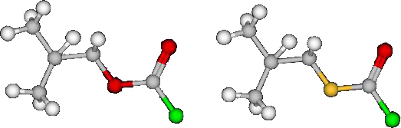
Figure 1: Molecular structures of syn-isobutyl chloroformate (1), syn-isobutyl chlorothioformate (2), phenyl ...

Scheme 1: Stepwise addition–elimination mechanism through a tetrahedral intermediate for solvolysis of chloro...

Scheme 2: Unimolecular solvolytic pathway for the dithioformate esters.

Figure 2: The plot of log (k/k0) for iBuOCOCl (1) against log (k/k0) for PhOCOCl (3).

Figure 3: The plot of log (k/k0) for isobutyl chloroformate (1) against 1.82 NT + 0.53 YCl in eighteen pure a...

Figure 4: The plot of log (k/k0) for isobutyl chlorothioformate (2) against 0.42 NT + 0.73 YCl in 15 pure and...



