Search results
Search for "cyclisation" in Full Text gives 189 result(s) in Beilstein Journal of Organic Chemistry.
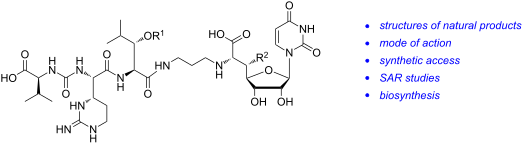
Muraymycin nucleoside-peptide antibiotics: uridine-derived natural products as lead structures for the development of novel antibacterial agents
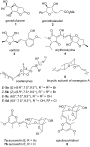
Beilstein J. Org. Chem. 2016, 12, 769–795, doi:10.3762/bjoc.12.77
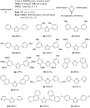
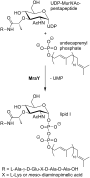
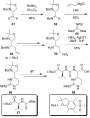
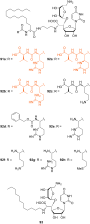
- diastereoselectively converted with a Grignard reagent into the amine 53 as a key step of the synthesis [78]. Cbz protection followed by ozonolysis with subsequent reductive amination and hydrogenolysis led to the 1,3-diamine 54. The cyclisation to the guanidine functionality was achieved with the novel









A practical way to synthesize chiral fluoro-containing polyhydro-2H-chromenes from monoterpenoids
Beilstein J. Org. Chem. 2016, 12, 648–653, doi:10.3762/bjoc.12.64
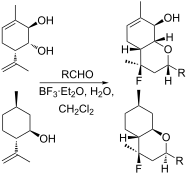
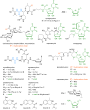
- was 7% (Table 2). Thus, we found for the first time the conditions enabling production of chiral fluoro-containing heterocyclic compounds from a monoterpenoid using the halo-Prins cyclisation. It should also be noted that preparative isolation of compounds of type 7a is complicated by the presence of
- as fluorine sources. Presumably, the reaction starts with the Prins cyclisation resulting in the formation of cation 10. There are then several mechanistic pathways, some or all of them may be in operation: a) cation 10 may undergo stereoselective trap by [F−] to form fluoride epimers 8; b) cation 10


Recent advances in N-heterocyclic carbene (NHC)-catalysed benzoin reactions
Beilstein J. Org. Chem. 2016, 12, 444–461, doi:10.3762/bjoc.12.47
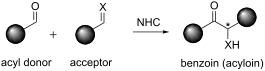
- reaction conditions. An intramolecular cross-benzoin condensation between aldehyde and ketone moieties was developed by Suzuki in 2003. The isoxazole-fused cyclohexanone 51 endowed with an aryl aldehyde underwent a smooth cross-benzoin cyclisation in the presence of the thiazolium catalyst 19 and DBU
- -derived triazolium precatalyst 54 promoted enantioselective intramolecular benzoin reactions of N-tethered keto-aldehydes effectively. The substrates for the cyclisation are easily accessible and dihydroquinolinone systems possessing a quaternary stereocentre are produced in high yields and



Investigation on the reactivity of α-azidochalcones with carboxylic acids: Formation of α-amido-1,3-diketones and highly substituted 2-(trifluoromethyl)oxazoles
Beilstein J. Org. Chem. 2015, 11, 2021–2028, doi:10.3762/bjoc.11.219
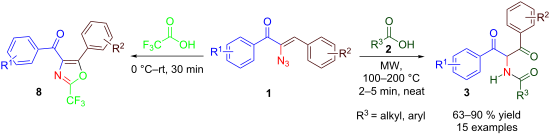
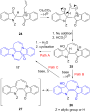
- to excellent yield. Compounds 7a and 7b have been characterized by one and two-dimensional NMR spectroscopy (see Supporting Information File 1). It can be noticed that the cyclisation could have happened in two different ways yielding either 7 or 7' (Figure 4). The fact that the compound formed is 7


Total synthesis of panicein A2
Beilstein J. Org. Chem. 2015, 11, 1991–1996, doi:10.3762/bjoc.11.215
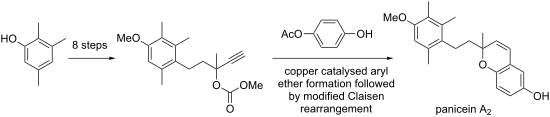
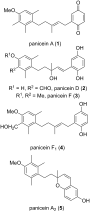
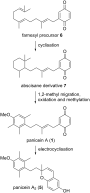
- isolated from Reniera fulva and R. mucosa [2][3]. It has been postulated that the biosynthesis of paniceins centres around the cyclisation of a farnesyl precursor 6 [4] to an abscisane derivative 7 followed by a 1,2-methyl migration and subsequent oxidation to give panicein A (1) [1][3]. Subsequent
- proposed that panicein A2 (5) could be synthesised from the cyclisation and subsequent deprotection of propargyl ether 8. Ether 8 could be formed through the addition of the appropriate phenol to acetylenic alcohol 9, which itself can be derived from aldehyde 10 (Figure 3). Results and Discussion Synthesis
- produced (Scheme 4). The reaction was then attempted with the acetyl-protected propargyl ether 8. Gratifyingly, cyclised product 21 was obtained in a 46% yield, based on returned starting material. To investigate the effect of an alternative protecting group on the cyclisation reaction, TBDMS ether 22 was



Polythiophene and oligothiophene systems modified by TTF electroactive units for organic electronics
Beilstein J. Org. Chem. 2015, 11, 1749–1766, doi:10.3762/bjoc.11.191
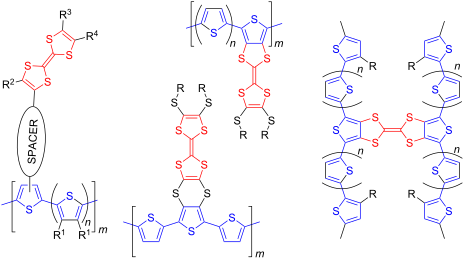
- ) can be constructed by building up either of its two rings, involving cyclisation of a suitable precursor already containing one existing heterocycle. The construction of the 1,3-dithiole-2-thione unit of 17 can be completed using 3,4-dibromothiophene (18) as a starting material [56], or by oxidation
- of dihydroderivative 19 obtained from 4,6-dihydrothieno[3,4-d][1,2,3]thiadiazole (20) [57][58]. However, the most reliable method for the synthesis of 4,6-dihydrothieno[3,4-d][1,3]dithiole-2-thione (19) is cyclisation of 4,5-bis(bromomethyl)-1,3-dithiole-2-thione (21) [59] (synthetic pathway A). For
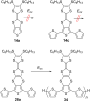
- 4,6-diaryl substituted thienodithiole-2-ones, e.g., 4,6-di(thiophen-2-yl)thieno[3,4-d][1,3]dithiol-2-one (15c), construction of the thiophene directly onto the dithiole ring seems to be the only strategy, which can be readily achieved by reductive cyclisation of diketone 22 [60] (synthetic pathway B




Pyridinoacridine alkaloids of marine origin: NMR and MS spectral data, synthesis, biosynthesis and biological activity
Beilstein J. Org. Chem. 2015, 11, 1667–1699, doi:10.3762/bjoc.11.183
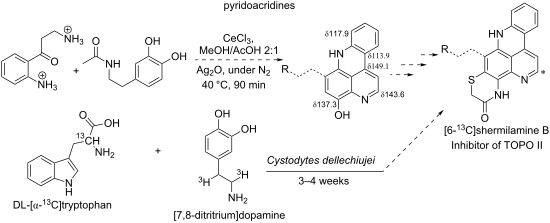
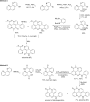
- conditions to give the natural product and its regioisomer (Scheme 2) [59]. The Diels–Alder cyclisation seems to be the key step for sebastianine A synthesis with a very low yield. Recently, the same cycloaddition was successfully performed on related compounds by attaching a bromine atom on the
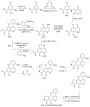
- , while in method B, the cyclisation was performed in a radical mechanism manner. Whereas the radical condition afforded a low yield of the expected product, the Stille coupling seems to be a better solution. Synthesis of demethyldeoxyamphimedine (9) The synthesis of demethyldeoxyamphimedine was
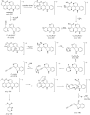
- using phosphoryl bromide. Another organozinc substrate was coupled to the obtained intermediate by a Negishi cross-coupling and cyclisation occurred to give the expected secondary metabolite (Scheme 8) [68]. The yield of the last step in the preparation of 9 could be improved by using the synthetic










Intermolecular addition reactions of N-alkyl-N-chlorosulfonamides to unsaturated compounds
Beilstein J. Org. Chem. 2015, 11, 1226–1234, doi:10.3762/bjoc.11.136

- cyclisation of various unsaturated N-hetero-substituted amines and amides via radicals [1][2][3] and other mechanistic pathways [4][5][6][7][8]. Although reported by other groups [9][10][11] in our hands an efficient intermolecular addition reaction of N-hetero substituted amines via radicals was not possible
- has been achieved by Zhang [22] using copper or palladium catalysts and proceeds via radicals and fluoropalladation, respectively. Cyclisation reactions of unsaturated sulfonamides which proceed via amidyl radicals have been described by Li [23] and by Oshima [24]. Chemler [25][26] discusses radical


The synthesis of active pharmaceutical ingredients (APIs) using continuous flow chemistry
Beilstein J. Org. Chem. 2015, 11, 1194–1219, doi:10.3762/bjoc.11.134
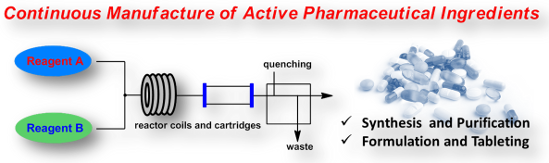
- syntheses of two lead compounds reported earlier by AstraZeneca. The first one details the flow synthesis of a potent 5HT1B antagonist (28) that was assembled through a five step continuous synthesis including a SNAr reaction, heterogeneous hydrogenation, Michael addition–cyclisation and final amide
- intermediate passes into a tube-in-tube reactor, where carboxylation takes place furnishing the lithium carboxylate 129. Excess carbon dioxide is subsequently removed using a degassing tube before reacting species 129 with a further stream of n-BuLi to induce cyclisation to dibenzosuberone (130) in a short


Hydrogenation of unactivated enamines to tertiary amines: rhodium complexes of fluorinated phosphines give marked improvements in catalytic activity
Beilstein J. Org. Chem. 2015, 11, 622–627, doi:10.3762/bjoc.11.70
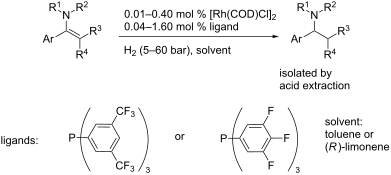
- regioselectivity in enantioselective hydroformylation of alkyl- and arylalkenes [23][24], we reconsidered this cyclisation reaction using the new catalyst (Scheme 2). We were pleased to find that the selectivity is increased to 78%. Since the desired product is achiral, there is no need to use enantiopure BOBPHOS



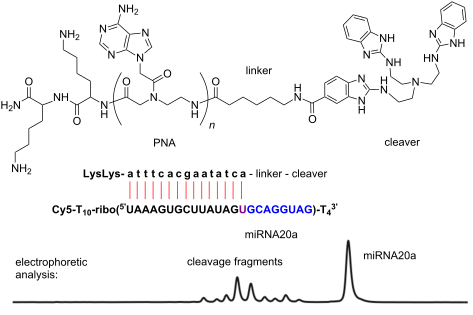
Sequence-specific RNA cleavage by PNA conjugates of the metal-free artificial ribonuclease tris(2-aminobenzimidazole)
Beilstein J. Org. Chem. 2015, 11, 493–498, doi:10.3762/bjoc.11.55
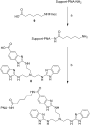
- thiocarbonyldiimidazole and methyl 3,4-diaminobenzoate (Scheme 2). The cyclisation to form the first benzimidazole unit was then achieved by reacting thiourea 3 with Mukaiyama’s reagent in the presence of NEt3 at rt yielding 88% of 4. Although the yield is slightly lower compared to the cyclisation with HgO (97% yield




Further exploration of the heterocyclic diversity accessible from the allylation chemistry of indigo
Beilstein J. Org. Chem. 2015, 11, 481–492, doi:10.3762/bjoc.11.54
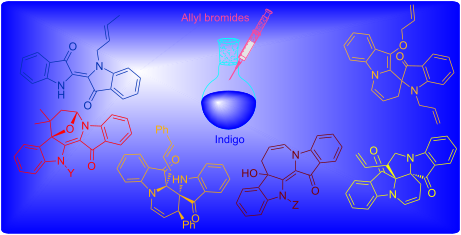
- 9 and 10, while no such product was evident from the reaction with the larger cinnamyl bromide. Minor byproducts isolated were the corresponding N-monoallylated indigos (7–15%). These heterocycles arise from the cyclisation of one allyl unit onto a carbonyl, leading to the tertiary alcohol. They are
- derivatives of the azepino[1,2-a:3,4-b']diindolone skeleton have been reported previously, albeit in a different oxidation state and with notably different substitution patterns [5] (Figure 2), they were only obtained as very minor diastereomeric products (ca 1% yields) from acid-catalysed cyclisation studies
- and moisture. This is the first example of the synthesis of this bridged heterocyclic skeleton. The formation of 22 is an excellent example of the ‘gem-dimethyl effect’ [9] whereby the presence of that moiety enhances cyclisation [10]. This explains the formation of 22 and the lack analogous cyclised




The reactions of 2-ethoxymethylidene-3-oxo esters and their analogues with 5-aminotetrazole as a way to novel azaheterocycles
Beilstein J. Org. Chem. 2015, 11, 385–391, doi:10.3762/bjoc.11.44
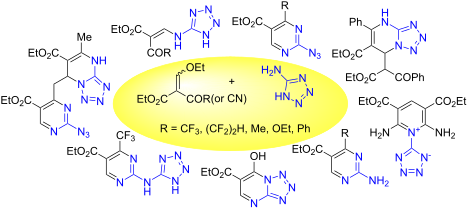
- -benzoyl-3-ethoxyprop-2-enoate reacted with 5-aminotetrazole by two reaction routes to form ethyl 2-benzoyl-3-(1H-tetrazol-5-ylamino)prop-2-enoate and ethyl 7-(1-ethoxy-1,3-dioxo-3-phenylpropan-2-yl)-5-phenyl-4,7-dihydrotetrazolo[1,5-a]pyrimidine-6-carboxylate. Keywords: 5-aminotetrazole; cyclisation


Anionic sigmatropic-electrocyclic-Chugaev cascades: accessing 12-aryl-5-(methylthiocarbonylthio)tetracenes and a related anthra[2,3-b]thiophene
Beilstein J. Org. Chem. 2015, 11, 273–279, doi:10.3762/bjoc.11.31
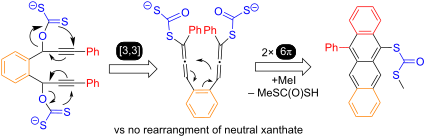
- (47%), 7c (56%), 7f (44%) and 7g (38%). The decreasing yields suggest that meta substitution promotes the 6π cyclisation while para electronic affects are minor and unhelpful according to the observed trend. Increasing the reaction temperature, in attempts to facilitate E2 elimination, was generally


Synthesis of the furo[2,3-b]chromene ring system of hyperaspindols A and B
Beilstein J. Org. Chem. 2015, 11, 265–270, doi:10.3762/bjoc.11.29
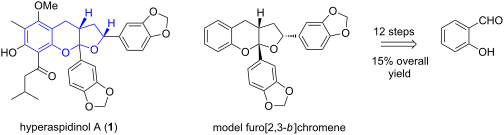
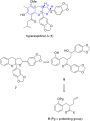
- it to determine the complete relative stereochemistry of the natural products. Results and Discussion The proposed route to furo[2,3-b]chromene 7 was based around the preparation of benzylic ketone 8 which was hoped to under acidic conditions would undergo cyclisation to give 7 (Figure 2). We have




Electrochemical selenium- and iodonium-initiated cyclisation of hydroxy-functionalised 1,4-dienes
Beilstein J. Org. Chem. 2015, 11, 174–183, doi:10.3762/bjoc.11.18

- and pyran derivatives under indirect electrochemical conditions generating selenium or iodonium cations. The reactions proceed in good yields and regioselectivities for the formation of single diastereomers. Keywords: cyclic ethers; cyclisation; 1,4-dienes; electrochemistry; iodonium; selenium
- -dienols were transformed into cyclic phenylselenoethers by intramolecular cyclisation using selenium cations generated by indirect electrolysis. The reaction was carried out by electrolysing a mixture of the 1,4-dienol, diphenyl diselenide and tetraethylammonium bromide in CH3CN at room temperature in an
- undivided cell, using platinum foil electrodes (constant current 10 mA). In this investigation only diphenyl diselenide was used as selenium source. These reaction conditions led to the formation of products of type 3 as exclusive diastereomers (Scheme 2). The cyclisation of 2 could lead to a number of


The Shono-type electroorganic oxidation of unfunctionalised amides. Carbon–carbon bond formation via electrogenerated N-acyliminium ions
Beilstein J. Org. Chem. 2014, 10, 3056–3072, doi:10.3762/bjoc.10.323
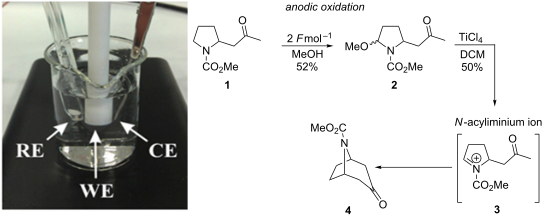
- are useful reactive synthetic intermediates in a variety of important carbon–carbon bond forming and cyclisation strategies in organic chemistry. The advent of an electrochemical anodic oxidation of unfunctionalised amides, more commonly known as the Shono oxidation, has provided a complementary route
- -acyliminium ion cyclisation strategy in the presence of a disubstituted acetylene nucleophile. Anodic oxidation proceeded in high yield and a smooth cyclisation of the pendant acetylene nucleophile was triggered by treatment with titanium tetrachloride. Ozonolysis of the chloromethyl alkene intermediate


Come-back of phenanthridine and phenanthridinium derivatives in the 21st century
Beilstein J. Org. Chem. 2014, 10, 2930–2954, doi:10.3762/bjoc.10.312

- from aminobiphenyl and arylaldehyde in dichloromethane in the presence of molecular sieves at room temperature. Radical cyclisation in the presence of (tert-butyl)peroxide in chlorobenzene at 140–150 °C for 48 h, yielded the corresponding phenanthridines in moderate yields. The t-BuO• radical
- second step under the catalysis of Pd(OAc)2 comprised both cyclisation and oxidation in a single step: a dehydrogenative C–H amination with PhI(OAc)2 as oxidant and removal of the picolinamide group followed by oxidation with Cu(OAc)2. This strategy afforded phenanthridines in moderate to good yields (up
- to 65% for the second step). Bowman et al. reported a palladium-mediated route using imidoyl-selenides as precursors besides the radical route. Comparison of the cyclisation yields for the same set of phenanthridine derivatives revealed an overall better efficiency of the t-BuO• radical-assisted


Gold(I)-catalysed synthesis of a furan analogue of thiamine pyrophosphate
Beilstein J. Org. Chem. 2014, 10, 2580–2585, doi:10.3762/bjoc.10.270
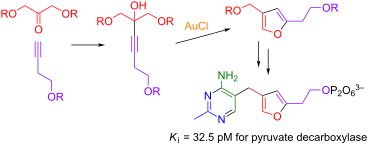
- , involving gold(I)-catalysed cyclisation of an alkynyl alcohol to form the furan ring. The furan analogue of thiamine diphosphate (ThDP) was also made and tested for binding to and inhibition of pyruvate decarboxylase (PDC) from Zymomonas mobilis (overexpressed in E. coli with a N-terminal His-tag). It is a
- very strong inhibitor, with a Ki value of 32.5 pM. It was also shown that the furan analogue of thiamine can be functionalised at the C-2 position, which will allow access to mimics of reaction intermediates of various ThDP-dependent enzymes. Keywords: furan synthesis; gold-catalysed cyclisation
- dehydrative cyclisation reaction of alkynyl alcohols catalysed by simple gold(I) salts [31]. The reaction proceeds rapidly under mild, open flask conditions to provide aromatic heterocycles such as furans, pyrroles and thiophenes in high yield with low catalyst loadings (Scheme 2). Following this synthetic


Palladium-catalysed cyclisation of alkenols: Synthesis of oxaheterocycles as core intermediates of natural compounds
Beilstein J. Org. Chem. 2014, 10, 2077–2086, doi:10.3762/bjoc.10.216
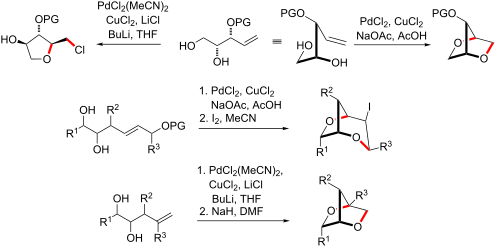
- ., Koreničova 1, SK-811 03 Bratislava, Slovakia 10.3762/bjoc.10.216 Abstract The study of Pd-catalysed cyclisation reactions of alkenols using different catalytic systems is reported. These transformations affect the stereoselective construction of mono- and/or bicyclic oxaheterocyclic derivatives depending on
- a starting alkenol. The substrate scope and proposed mechanism of Pd-catalysed cyclisation reactions are also discussed. Moreover, the diastereoselective Pd-catalysed cyclisation of appropriate alkenols to tetrahydrofurans and subsequent cyclisation provided properly substituted 2,5-dioxabicyclo
- process, the terminal carbon–carbon double bond is bis-O-functionalised with two hydroxy groups by sequential intramolecular–intramolecular reaction. Based on our continuous interest in the palladium-catalysed cyclisation reactions and their applications in natural product syntheses [24][25], we have



Comparing kinetic profiles between bifunctional and binary type of Zn(salen)-based catalysts for organic carbonate formation
Beilstein J. Org. Chem. 2014, 10, 1817–1825, doi:10.3762/bjoc.10.191
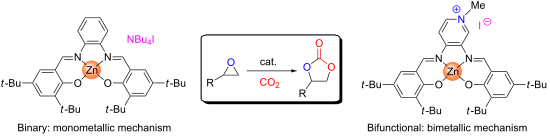
- Scheme 2 first the epoxide coordinates to the Zn center allowing Lewis acid activation following the ring opening by nucleophilic attack of X. Then, carbon dioxide insertion into the metal–oxygen bond takes place and a consecutive cyclisation step (ring closure) occurs to give the cyclic carbonate and


Synthesis of trifluoromethyl-substituted pyrazolo[4,3-c]pyridines – sequential versus multicomponent reaction approach
Beilstein J. Org. Chem. 2014, 10, 1759–1764, doi:10.3762/bjoc.10.183

- afforded the corresponding pyrazolo[4,3-c]pyridine 5-oxides 7a–c by a regioselective 6-endo-dig cyclisation [30] in high yields. Moreover, we tested an alternative approach to access compounds 7 through multicomponent reactions (MCR). Attempts to react chloroaldehyde 2 with hydroxylamine hydrochloride and


Multichromophoric sugar for fluorescence photoswitching
Beilstein J. Org. Chem. 2014, 10, 1471–1481, doi:10.3762/bjoc.10.151
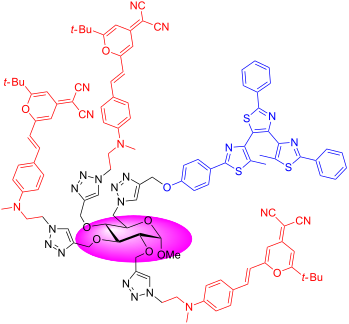
- , 9-OF undergoes a cyclisation photoreaction yielding the molecule in its colored and non-fluorescent closed form (9-CF), as revealed by the appearance of a large absorption band peaking in the 500–700 nm range (Figure 3c, full blue line). The photostationary state (PSS) reached under 335 nm




Syntheses of fluorooxindole and 2-fluoro-2-arylacetic acid derivatives from diethyl 2-fluoromalonate ester
Beilstein J. Org. Chem. 2014, 10, 1213–1219, doi:10.3762/bjoc.10.119
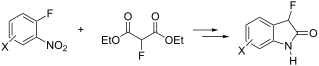
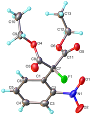
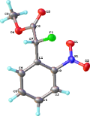
- ester is utilised as a building block for the synthesis of 2-fluoro-2-arylacetic acid and fluorooxindole derivatives by a strategy involving nucleophilic aromatic substitution reactions with ortho-fluoronitrobenzene substrates followed by decarboxylation, esterification and reductive cyclisation
- , presumably because of the high solubility of the amino acid intermediate in the aqueous reaction mixture and the well-established difficulty of direct amide bond formation processes. Consequently, before carrying out the nitro group reduction and amide forming cyclisation reactions, the acids 4a–e were





Rapid pseudo five-component synthesis of intensively blue luminescent 2,5-di(hetero)arylfurans via a Sonogashira–Glaser cyclization sequence
Beilstein J. Org. Chem. 2014, 10, 672–679, doi:10.3762/bjoc.10.60
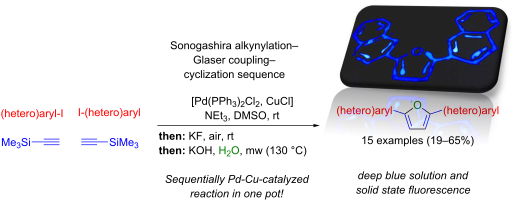
- solvent. Pseudo five-component Sonogashira–Glaser cyclisation synthesis of 2,5-di(hetero)arylfurans 2 (aobtained from the THP-protected precursor). Evaluation of different reaction conditions. Selected absorption and emission data (recorded in dichloromethane at T = 293 K). Selected cyclovoltammetrica