


Search results
Search for "diols" in Full Text gives 199 result(s) in Beilstein Journal of Organic Chemistry.
The direct oxidative diene cyclization and related reactions in natural product synthesis
- Juliane Adrian,
- Leona J. Gross and
- Christian B. W. Stark
Beilstein J. Org. Chem. 2016, 12, 2104–2123, doi:10.3762/bjoc.12.200
- prepared from commercially available neryl acetate (15). The auxiliary-controlled, permanganate-promoted oxidation of diene 16 proceeded selectively at low temperatures, affording the corresponding diastereomeric THF diols as an inseparable mixture (dr 7:1, major stereoisomer shown in Scheme 6). Compound
- [84]. Thus, the corresponding THF diols were obtained in 55% yield. In addition to the desired THF diol 28a for the total synthesis of cis-solamin A (29), small amounts of its diastereoisomer 28b were isolated (dr 10:1, Scheme 8 left). Similar permanganate-mediated oxidative cyclizations were also
- [92][97]. In this case, two permanganate-promoted type A oxidative cyclization reactions were used to establish the two THF rings of this acetogenin (Scheme 11). Both THF diols 43 and 47 were isolated as pure diastereoisomers with high diastereocontrol (dr 9:1 for 43 and dr 8.7:1 for 47, respectively

Graphical Abstract

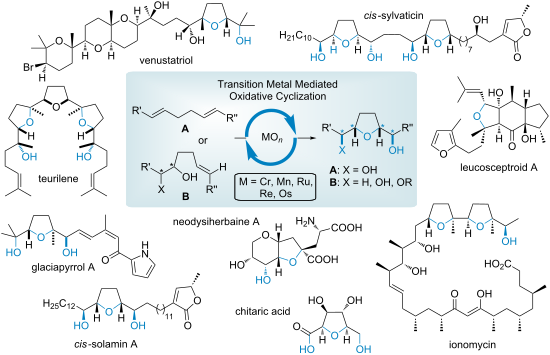
Scheme 1: Putative structures of geraniol 1a (R = H) or 1b (R = H) (in 1924), their expected dihydroxylation ...

Scheme 2: Correlation between the substrate double bond geometry and relative stereochemistry of the correspo...

Scheme 3: Mechanisms and classification for the metal-mediated oxidative cyclizations to form 2,5-disubstitut...

Scheme 4: Synthesis of (+)-anhydro-D-glucitol and (+)-D-chitaric acid using an OsO4-mediated oxidative cycliz...

Scheme 5: Total synthesis of neodysiherbaine A via a Ru(VIII)- and an Os(VI)-catalyzed oxidative cyclization,...

Scheme 6: Formal synthesis of ionomycin by Kocienski and co-workers.

Scheme 7: Total synthesis of amphidinolide F by Fürstner and co-workers.

Scheme 8: Brown`s and Donohoe`s oxidative cyclization approach to cis-solamin A.
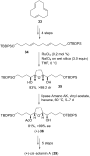
Scheme 9: Total synthesis of cis-solamin A using a Ru(VIII)-catalyzed oxidative cyclization and enzymatic des...
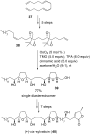
Scheme 10: Donohoe´s double oxidative cyclization approach to cis-sylvaticin.

Scheme 11: Permanganate-mediated approach to cis-sylvaticin by Brown and co-workers.

Scheme 12: Total synthesis of membranacin using a KMnO4-mediated oxidative cyclization.

Scheme 13: Total synthesis of membrarollin and its analogue 21,22-diepi-membrarollin.

Scheme 14: Total synthesis of rollidecin C and D using a late stage Re(VII)-catalyzed oxidative polycyclizatio...

Scheme 15: Co(II)-catalyzed oxidative cyclization in the total synthesis of asimilobin and gigantetrocin A.

Scheme 16: Mn(VII)-catalyzed oxidative cyclization of a 1,5-diene in the synthesis of trans-(+)-linalool oxide....

Scheme 17: Re(VII)-catalyzed oxidative cyclization in the total synthesis of teurilene.
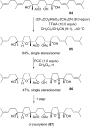
Scheme 18: Total synthesis of (+)-eurylene via Re(VII)- and Cr(VI)-mediated oxidative cyclizations.

Scheme 19: Synthesis of cis- and trans-THF Rings of eurylene via Mn(VII)-mediated oxidative cyclizations.

Scheme 20: Cr(VI)-catalyzed oxidative cyclization in the total synthesis of venustatriol by Corey et al.

Scheme 21: Ru(VIII)-catalyzed oxidative cyclization of a 1,5-diene in the synthesis and evaluation of its ster...

Scheme 22: Ru(VII)-catalyzed oxidative cyclization of a 5,6-dihydroxy alkene in the synthesis of the core stru...
Ionic liquids as transesterification catalysts: applications for the synthesis of linear and cyclic organic carbonates
- Maurizio Selva,
- Alvise Perosa,
- Sandro Guidi and
- Lisa Cattelan
Beilstein J. Org. Chem. 2016, 12, 1911–1924, doi:10.3762/bjoc.12.181
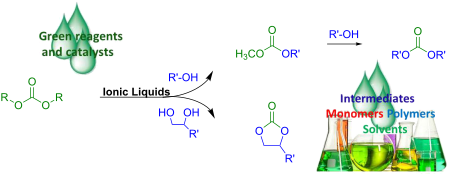
- should therefore implement greener reactions, such as the direct carboxylation of diols by CO2, for which however, effective catalysts are currently not available. The Asahi Kasei process also highlights that the synthesis of DMC by transesterification of ethylene carbonate with methanol does not
- synthesize organic carbonates consists in the acid or base-catalyzed transesterification of dimethyl carbonate (DMC), the simplest organic carbonate, with alcohols R–OH or diols to yield either acyclic organic carbonates or cyclic carbonates, respectively (Scheme 8). A literature survey on the synthesis of
- diols can be carried out in the presence of basic (e.g., tertiary phosphines and amines, alkali metal hydroxides, alkoxides, halides, carbonates, alkali metal exchanged faujasites and hydrotalcites) or acidic catalysts or co-catalysts, and under thermal (non-catalytic) conditions. All applicable

Graphical Abstract

Scheme 1: The transesterification of diethyl oxalate (DEO) with phenol catalyzed by MoO3/SiO2.

Scheme 2: Transesterification of a triglyceride (TG) with DMC for biodiesel production using KOH as the base ...

Scheme 3: Top: Green methylation of phosphines and amines by dimethyl carbonate (Q = N, P). Bottom: anion met...

Figure 1: Structures of some representative SILs and PILs systems. MCF is a silica-based mesostructured mater...

Scheme 4: Synthesis of the acid polymeric IL. EGDMA: ethylene glycol dimethacrylate.

Scheme 5: The transesterification of sec-butyl acetate with MeOH catalyzed by some acidic imidazolium ILs.

Figure 2: Representative examples of ionic liquids for biodiesel production.

Scheme 6: Top: phosgenation of methanol; middle: EniChem and Ube processes; bottom: Asahi process for the pro...

Scheme 7: The transesterification in the synthesis of organic carbonates.

Scheme 8: The transesterification of DMC with alcohols and diols.

Scheme 9: Transesterification of glycerol with DMC in the presence of 1-n-butyl-3-methylimidazolium-2-carboxy...

Scheme 10: Synthesis of the BMIM-2-CO2 catalyst from butylimidazole and DMC.

Scheme 11: Plausible cooperative (nucleophilic–electrophilic) mechanism for the transesterification of glycero...

Scheme 12: Synthesis of diazabicyclo[5.4.0]undec-7-ene-based ionic liquids.

Scheme 13: Synthesis of the DABCO–DMC ionic liquid.

Scheme 14: Cooperative mechanism of ionic liquid-catalyzed glycidol production.

Scheme 15: [TMA][OH]-catalyzed synthesis of glycidol (GD) from glycerol and dimethyl carbonate [46].

Scheme 16: [BMIM]OH-catalyzed synthesis of DPC from DMC and 1-pentanol.

Figure 3: Representative examples of ionic liquids for biodiesel production.

Figure 4: Acyclic non-symmetrical organic carbonates synthetized with 1-(trimethoxysilyl)propyl-3-methylimida...

Scheme 17: A simplified reaction mechanism for DMC production.

Scheme 18: [P8881][MeOCO2] metathesis with acetic acid and phenol.

Figure 5: Examples of carbonates obtained through transesterification using phosphonium salts as catalysts.

Scheme 19: Examples of carbonates obtained from different bio-based diols using [P8881][CH3OCO2] as catalyst.

Scheme 20: Ambiphilic catalysis for transesterification reactions in the presence of carbonate phosphonium sal...
Rearrangements of organic peroxides and related processes
- Ivan A. Yaremenko,
- Vera A. Vil’,
- Dmitry V. Demchuk and
- Alexander O. Terent’ev
Beilstein J. Org. Chem. 2016, 12, 1647–1748, doi:10.3762/bjoc.12.162
- treatment of unsubstituted bicyclic endoperoxides 229 by bases affords 4-hydroxyenones 230 [344] which are useful precursors in asymmetric organic syntheses. Alternative synthetic methods towards this class of compounds normally require a metal-catalyzed or biocatalyzed oxidation of diols 231 in an

Graphical Abstract
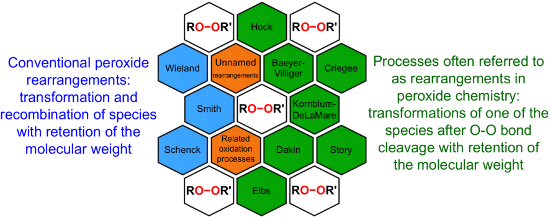
Figure 1: The named transformations considered in this review.

Scheme 1: The Baeyer–Villiger oxidation.

Scheme 2: The general mechanism of the peracid-promoted Baeyer–Villiger oxidation.

Scheme 3: General mechanism of the Lewis acid-catalyzed Baeyer–Villiger rearrangement.

Scheme 4: The theoretically studied mechanism of the BV oxidation reaction promoted by H2O2 and the Lewis aci...

Scheme 5: Proton movements in the transition states of the Baeyer–Villiger oxidation.

Scheme 6: The dependence of the course of the Baeyer–Villiger oxidation on the type of O–O-bond cleavage in t...
Scheme 7: The acid-catalyzed Baeyer–Villiger oxidation of cyclic epoxy ketones 22.

Scheme 8: Oxidation of isophorone oxide 29.

Scheme 9: Synthesis of acyl phosphate 32 from acyl phosphonate 31.

Scheme 10: Synthesis of aflatoxin B2 (36).

Scheme 11: The Baeyer–Villiger rearrangement of ketones 37 to lactones 38.

Scheme 12: Synthesis of 3,4-dimethoxybenzoic acid (40) via Baeyer–Villiger oxidation.

Scheme 13: Oxone transforms α,β-unsaturated ketones 43 into vinyl acetates 44.

Scheme 14: The Baeyer–Villiger oxidation of ketones 45 using diaryl diselenide and hydrogen peroxide.

Scheme 15: Baeyer–Villiger oxidation of (E)-2-methylenecyclobutanones.

Scheme 16: Oxidation of β-ionone (56) by H2O2/(BnSe)2 with formation of (E)-2-(2,6,6-trimethylcyclohex-1-en-1-...

Scheme 17: The mechanism of oxidation of ketones 58a–f by hydrogen peroxide in the presence of arsonated polys...

Scheme 18: Oxidation of ketone (58b) by H2O2 to 6-methylcaprolactone (59b) catalyzed by Pt complex 66·BF4.

Scheme 19: Oxidation of ketones 67 with H2O2 in the presence of [(dppb}Pt(µ-OH)]22+.

Scheme 20: The mechanism of oxidation of ketones 67 in the presence of [(dppb}Pt(µ-OH)]22+ and H2O2.

Scheme 21: Oxidation of benzaldehydes 69 in the presence of the H2O2/MeReO3 system.

Scheme 22: Oxidation of acetophenones 72 in the presence of the H2O2/MeReO3 system.

Scheme 23: Baeyer–Villiger oxidation of 2-adamantanone (45c) in the presence of Sn-containing mesoporous silic...

Scheme 24: Aerobic Baeyer–Villiger oxidation of ketones 76 using metal-free carbon.

Scheme 25: A regioselective Baeyer-Villiger oxidation of functionalized cyclohexenones 78 into a dihydrooxepin...

Scheme 26: The oxidation of aldehydes and ketones 80 by H2O2 catalyzed by Co4HP2Mo15V3O62.

Scheme 27: The cleavage of ketones 82 with hydrogen peroxide in alkaline solution.

Scheme 28: Oxidation of ketones 85 to esters 86 with H2O2–urea in the presence of KHCO3.

Scheme 29: Mechanism of the asymmetric oxidation of cyclopentane-1,2-dione 87a with the Ti(OiPr)4/(+)DET/t-BuO...

Scheme 30: The oxidation of cis-4-tert-butyl-2-fluorocyclohexanone (93) with m-chloroperbenzoic acid.

Scheme 31: The mechanism of the asymmetric oxidation of 3-substituted cyclobutanone 96a in the presence of chi...

Scheme 32: Enantioselective Baeyer–Villiger oxidation of cyclic ketones 98.

Scheme 33: Regio- and enantioselective Baeyer–Villiger oxidation of cyclic ketones 101.

Scheme 34: The proposed mechanism of the Baeyer–Villiger oxidation of acetal 105f.

Scheme 35: Synthesis of hydroxy-10H-acridin-9-one 117 from tetramethoxyanthracene 114.

Scheme 36: The Baeyer–Villiger oxidation of the fully substituted pyrrole 120.

Scheme 37: The Criegee rearrangement.

Scheme 38: The mechanism of the Criegee reaction of a peracid with a tertiary alcohol 122.

Scheme 39: Criegee rearrangement of decaline ethylperoxoate 127 into ketal 128.

Scheme 40: The ionic cleavage of 2-methoxy-2-propyl perester 129.

Scheme 41: The Criegee rearrangement of α-methoxy hydroperoxide 136.
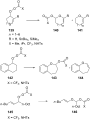
Scheme 42: Synthesis of enol esters and acetals via the Criegee rearrangement.

Scheme 43: Proposed mechanism of the transformation of 1-hydroperoxy-2-oxabicycloalkanones 147a–d.

Scheme 44: Transformation of 3-hydroxy-1,2-dioxolanes 151 into diketone derivatives 152.

Scheme 45: Criegee rearrangement of peroxide 153 with the mono-, di-, and tri-O-insertion.

Scheme 46: The sequential Criegee rearrangements of adamantanes 157a,b.

Scheme 47: Synthesis of diaryl carbonates 160a–d from triarylmethanols 159a–d through successive oxygen insert...

Scheme 48: The synthesis of sesquiterpenes 162 from ketone 161 with a Criegee rearrangement as one key step.

Scheme 49: Synthesis of trans-hydrindan derivatives 164, 165.

Scheme 50: The Hock rearrangement.

Scheme 51: The general scheme of the cumene process.

Scheme 52: The Hock rearrangement of aliphatic hydroperoxides.
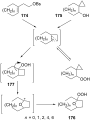
Scheme 53: The mechanism of solvolysis of brosylates 174a–c and spiro cyclopropyl carbinols 175a–c in THF/H2O2....

Scheme 54: The fragmentation mechanism of hydroperoxy acetals 178 to esters 179.

Scheme 55: The acid-catalyzed rearrangement of phenylcyclopentyl hydroperoxide 181.

Scheme 56: The peroxidation of tertiary alcohols in the presence of a catalytic amount of acid.

Scheme 57: The acid-catalyzed reaction of bicyclic secondary alcohols 192 with hydrogen peroxide.

Scheme 58: The photooxidation of 5,6-disubstituted 3,4-dihydro-2H-pyrans 196.

Scheme 59: The oxidation of tertiary alcohols 200a–g, 203a,b, and 206.

Scheme 60: Transformation of functional peroxide 209 leading to 2,3-disubstitued furans 210 in one step.

Scheme 61: The synthesis of carbazoles 213 via peroxide rearrangement.

Scheme 62: The construction of C–N bonds using the Hock rearrangement.

Scheme 63: The synthesis of moiety 218 from 217 which is a structural motif in the antitumor–antibiotic of CC-...

Scheme 64: The in vivo oxidation steps of cholesterol (219) by singlet oxygen.

Scheme 65: The proposed mechanism of the rearrangement of cholesterol-5α-OOH 220.

Scheme 66: Photochemical route to artemisinin via Hock rearrangement of 223.

Scheme 67: The Kornblum–DeLaMare rearrangement.

Scheme 68: Kornblum–DeLaMare transformation of 1-phenylethyl tert-butyl peroxide (225).

Scheme 69: The synthesis 4-hydroxyenones 230 from peroxide 229.

Scheme 70: The Kornblum–DeLaMare rearrangement of peroxide 232.

Scheme 71: The reduction of peroxide 234.

Scheme 72: The Kornblum–DeLaMare rearrangement of endoperoxide 236.

Scheme 73: The rearrangement of peroxide 238 under Kornblum–DeLaMare conditions.

Scheme 74: The proposed mechanism of rearrangement of peroxide 238.

Scheme 75: The Kornblum–DeLaMare rearrangement of peroxides 242a,b.

Scheme 76: The base-catalyzed rearrangements of bicyclic endoperoxides having electron-withdrawing substituent...

Scheme 77: The base-catalyzed rearrangements of bicyclic endoperoxides 249a,b having electron-donating substit...

Scheme 78: The base-catalyzed rearrangements of bridge-head substituted bicyclic endoperoxides 251a,b.

Scheme 79: The Kornblum–DeLaMare rearrangement of hydroperoxide 253.

Scheme 80: Synthesis of β-hydroxy hydroperoxide 254 from endoperoxide 253.

Scheme 81: The amine-catalyzed rearrangement of bicyclic endoperoxide 263.

Scheme 82: The base-catalyzed rearrangement of meso-endoperoxide 268 into 269.

Scheme 83: The photooxidation of 271 and subsequent Kornblum–DeLaMare reaction.

Scheme 84: The Kornblum–DeLaMare rearrangement as one step in the oxidation reaction of enamines.

Scheme 85: The Kornblum–DeLaMare rearrangement of 3,5-dihydro-1,2-dioxenes 284, 1,2-dioxanes 286, and tert-but...

Scheme 86: The Kornblum–DeLaMare rearrangement of epoxy dioxanes 290a–d.

Scheme 87: Rearrangement of prostaglandin H2 292.

Scheme 88: The synthesis of epicoccin G (297).

Scheme 89: The Kornblum–DeLaMare rearrangement used in the synthesis of phomactin A.

Scheme 90: The Kornblum–DeLaMare rearrangement in the synthesis of 3H-quinazolin-4-one 303.

Scheme 91: The Kornblum–DeLaMare rearrangement in the synthesis of dolabriferol (308).

Scheme 92: Sequential transformation of 3-substituted 2-pyridones 309 into 3-hydroxypyridine-2,6-diones 311 in...

Scheme 93: The Kornblum–DeLaMare rearrangement of peroxide 312 into hydroxy enone 313.

Scheme 94: The Kornblum–DeLaMare rearrangement in the synthesis of polyfunctionalized carbonyl compounds 317.

Scheme 95: The Kornblum–DeLaMare rearrangement in the synthesis of (Z)-β-perfluoroalkylenaminones 320.

Scheme 96: The Kornblum–DeLaMare rearrangement in the synthesis of γ-ketoester 322.

Scheme 97: The Kornblum–DeLaMare rearrangement in the synthesis of diterpenoids 326 and 328.

Scheme 98: The synthesis of natural products hainanolidol (331) and harringtonolide (332) from peroxide 329.

Scheme 99: The synthesis of trans-fused butyrolactones 339 and 340.

Scheme 100: The synthesis of leucosceptroid C (343) and leucosceptroid P (344) via the Kornblum–DeLaMare rearra...

Scheme 101: The Dakin oxidation of arylaldehydes or acetophenones.

Scheme 102: The mechanism of the Dakin oxidation.

Scheme 103: A solvent-free Dakin reaction of aromatic aldehydes 356.

Scheme 104: The organocatalytic Dakin oxidation of electron-rich arylaldehydes 358.

Scheme 105: The Dakin oxidation of electron-rich arylaldehydes 361.

Scheme 106: The Dakin oxidation of arylaldehydes 358 in water extract of banana (WEB).

Scheme 107: A one-pot approach towards indolo[2,1-b]quinazolines 364 from indole-3-carbaldehydes 363 through th...

Scheme 108: The synthesis of phenols 367a–c from benzaldehydes 366a-c via acid-catalyzed Dakin oxidation.

Scheme 109: Possible transformation paths of the highly polarized boric acid coordinated H2O2–aldehyde adduct 3...

Scheme 110: The Elbs oxidation of phenols 375 to hydroquinones.

Scheme 111: The mechanism of the Elbs persulfate oxidation of phenols 375 affording p-hydroquinones 376.

Scheme 112: Oxidation of 2-pyridones 380 under Elbs persulfate oxidation conditions.

Scheme 113: Synthesis of 3-hydroxy-4-pyridone (384) via an Elbs oxidation of 4-pyridone (382).

Scheme 114: The Schenck rearrangement.

Scheme 115: The Smith rearrangement.

Scheme 116: Three main pathways of the Schenck rearrangement.

Scheme 117: The isomerization of hydroperoxides 388 and 389.

Scheme 118: Trapping of dioxacyclopentyl radical 392 by oxygen.

Scheme 119: The hypothetical mechanism of the Schenck rearrangement of peroxide 394.

Scheme 120: The autoxidation of oleic acid (397) with the use of labeled isotope 18O2.

Scheme 121: The rearrangement of 18O-labeled hydroperoxide 400 under an atmosphere of 16O2.

Scheme 122: The rearrangement of the oleate-derived allylic hydroperoxides (S)-421 and (R)-425.

Scheme 123: Mechanisms of Schenck and Smith rearrangements.

Scheme 124: The rearrangement and cyclization of 433.

Scheme 125: The Wieland rearrangement.

Scheme 126: The rearrangement of bis(triphenylsilyl) 439 or bis(triphenylgermyl) 441 peroxides.

Scheme 127: The oxidative transformation of cyclic ketones.

Scheme 128: The hydroxylation of cyclohexene (447) in the presence of tungstic acid.

Scheme 129: The oxidation of cyclohexene (447) under the action of hydrogen peroxide.

Scheme 130: The reaction of butenylacetylacetone 455 with hydrogen peroxide.

Scheme 131: The oxidation of bridged 1,2,4,5-tetraoxanes.

Scheme 132: The proposed mechanism for the oxidation of bridged 1,2,4,5-tetraoxanes.

Scheme 133: The rearrangement of ozonides.

Scheme 134: The acid-catalyzed oxidative rearrangement of malondialdehydes 462 under the action of H2O2.

Scheme 135: Pathways of the Lewis acid-catalyzed cleavage of dialkyl peroxides 465 and ozonides 466.

Scheme 136: The mechanism of the transformation of (tert-butyldioxy)cyclohexanedienones 472.

Scheme 137: The synthesis of Vitamin K3 from 472a.

Scheme 138: Proposed mechanism for the transformation of 478d into silylated endoperoxide 479d.

Scheme 139: The rearrangement of hydroperoxide 485 to form diketone 486.

Scheme 140: The base-catalyzed rearrangement of cyclic peroxides 488a–g.

Scheme 141: Synthesis of chiral epoxides and aldols from peroxy hemiketals 491.

Scheme 142: The multistep transformation of (R)-carvone (494) to endoperoxides 496a–e.

Scheme 143: The decomposition of anthracene endoperoxide 499.

Scheme 144: Synthesis of esters 503 from aldehydes 501 via rearrangement of peroxides 502.

Scheme 145: Two possible paths for the base-promoted decomposition of α-azidoperoxides 502.

Scheme 146: The Story decomposition of cyclic diperoxide 506a.

Scheme 147: The Story decomposition of cyclic triperoxide 506b.

Scheme 148: The thermal rearrangement of endoperoxides A into diepoxides B.

Scheme 149: The transformation of peroxide 510 in the synthesis of stemolide (511).

Scheme 150: The possible mechanism of the rearrangement of endoperoxide 261g.

Scheme 151: The photooxidation of indene 517.

Scheme 152: The isomerization of ascaridole (523).

Scheme 153: The isomerization of peroxide 525.

Scheme 154: The thermal transformation of endoperoxide 355.

Scheme 155: The photooxidation of cyclopentadiene (529) at a temperature higher than 0 °C.

Scheme 156: The thermal rearrangement of endoperoxides 538a,b.

Scheme 157: The transformation of peroxides 541.

Scheme 158: The thermal rearrangements of strained cyclic peroxides.

Scheme 159: The thermal rearrangement of diacyl peroxide 551 in the synthesis of C4-epi-lomaiviticin B core 553....

Scheme 160: The 1O2 oxidation of tryptophan (554) and rearrangement of dioxetane intermediate 555.

Scheme 161: The Fe(II)-promoted cleavage of aryl-substituted bicyclic peroxides.

Scheme 162: The proposed mechanism of the Fe(II)-promoted rearrangement of 557a–c.

Scheme 163: The reaction of dioxolane 563 with Fe(II) sulfate.

Scheme 164: Fe(II)-promoted rearrangement of 1,2-dioxane 565.

Scheme 165: Fe(II) cysteinate-promoted rearrangement of 1,2-dioxolane 568.

Scheme 166: The transformation of 1,2-dioxanes 572a–c under the action of FeCl2.

Scheme 167: Fe(II) cysteinate-promoted transformation of tetraoxane 574.

Scheme 168: The CoTPP-catalyzed transformation of bicyclic endoperoxides 600a–d.

Scheme 169: The CoTPP-catalyzed transformation of epoxy-1,2-dioxanes.

Scheme 170: The Ru(II)-catalyzed reactions of 1,4-endoperoxide 261g.

Scheme 171: The Ru(II)-catalyzed transformation as a key step in the synthesis of elyiapyrone A (610) from 1,4-...

Scheme 172: Peroxides with antimalarial activity.

Scheme 173: The interaction of iron ions with artemisinin (616).

Scheme 174: The interaction of FeCl2 with 1,2-dioxanes 623, 624.

Scheme 175: The mechanism of reaction 623 and 624 with Fe(II)Cl2.

Scheme 176: The reaction of bicyclic natural endoperoxides G3-factors 631–633 with FeSO4.

Scheme 177: The transformation of terpene cardamom peroxide 639.
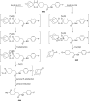
Scheme 178: The different ways of the cleavage of tetraoxane 643.

Scheme 179: The LC–MS analysis of interaction of tetraoxane 646 with iron(II)heme 647.

Scheme 180: The rearrangement of 3,6-epidioxy-1,10-bisaboladiene (EDBD, 649).

Scheme 181: Easily oxidized substrates.

Scheme 182: Biopathway of synthesis of prostaglandins.

Scheme 183: The reduction and rearrangements of isoprostanes.

Scheme 184: The partial mechanism for linoleate 658 oxidation.

Scheme 185: The transformation of lipid hydroperoxide.

Scheme 186: The acid-catalyzed cleavage of the product from free-radical oxidation of cholesterol (667).

Scheme 187: Two pathways of catechols oxidation.

Scheme 188: Criegee-like or Hock-like rearrangement of the intermediate hydroperoxide 675 in dioxygenase enzyme...

Scheme 189: Carotinoides 679 cleavage by carotenoid cleavage dioxygenases.
Efficient syntheses of climate relevant isoprene nitrates and (1R,5S)-(−)-myrtenol nitrate
- Sean P. Bew,
- Glyn D. Hiatt-Gipson,
- Graham P. Mills and
- Claire E. Reeves
Beilstein J. Org. Chem. 2016, 12, 1081–1095, doi:10.3762/bjoc.12.103
- application to the synthesis of high-boiling diols is more difficult due to their low-vapour pressures. Recently Cohen et al. synthesised mixtures of IPNs via the reaction of (±)-isoprene epoxide with pre-ground bismuth(III) nitrate [19]. Using a preliminary ’flash’ purification (silica gel) afforded an
- the diols or execute a regioselective 1° or 2° mono-O-nitration was not. Eliminating the former problem Hodgson et al. [26] reported rac-17 could be generated from cheap, commercially available 2,5-dihydrofuran which, after epoxidation with meta-chloroperbenzoic acid (mCPBA), afforded epoxide 21 in a

Graphical Abstract

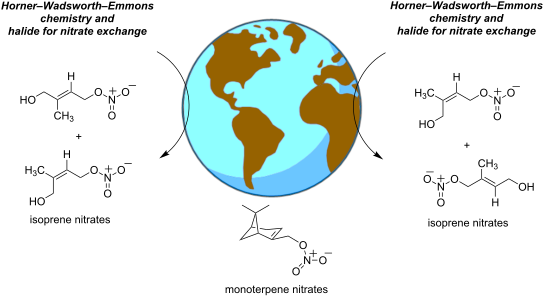
Scheme 1: Simplified overview outlining how a small number of different IPNs are synthesised and are able to ...

Scheme 2: Protocols for the synthesis of O-nitrated alcohols using (±)-isoprene epoxide and 2° alcohols as st...

Scheme 3: Attempted synthesis of O-nitrate ester rac-19 and rac-20 synthesis.

Scheme 4: Olah et al. O-nitrated alcohol syntheses of 23–33 using N-nitro-2,4-6-trimethylpyridinium tetrafluo...

Scheme 5: O-nitration study using 22 and the alcohols 34–37.

Scheme 6: Silver nitrate mediated synthesis of 2-oxopropyl nitrate 43.

Scheme 7: Application of isoprene for the synthesis of precursors to IPNs and synthesis via ‘halide for nitra...

Scheme 8: Synthesis of (E)-3-methyl-4-chlorobut-2-en-1-ol ((E)-60) and (Z)-3-methyl-4-chlorobut-2-en-1-ol ((Z...

Scheme 9: Using NOESY interactions to establish the conformations of the C=C bonds within (E)-10 and (Z)-9.

Scheme 10: Synthesis of isoprene nitrates (E)-11 and (Z)-12 from ketone 63.

Scheme 11: Attempted synthesis of rac-8 from O-mesylate rac-71.

Scheme 12: Synthesis of O-nitrate 73 from O-mesylate 72.

Scheme 13: Attempted synthesis of 2° alcohol containing 1° nitrate ester rac-19 and the unexpected synthesis o...

Scheme 14: Synthesis of monoterpene derived (1R,5S)-(−)-myrtenol nitrate 86.
Catalytic asymmetric synthesis of biologically important 3-hydroxyoxindoles: an update
- Bin Yu,
- Hui Xing,
- De-Quan Yu and
- Hong-Min Liu
Beilstein J. Org. Chem. 2016, 12, 1000–1039, doi:10.3762/bjoc.12.98
- asymmetric aldol reaction of trifluoromethyl α-fluorinated β-keto gem-diols with isatins, generating 3-hydroxyoxindoles in high yields (up to 99%) and with excellent enantioselectivities (up to 98% ee, Scheme 28) [45]. The reaction was performed at room temperature using AcOH as the additive in the presence
- of 10% of catalyst loading. Interestingly, the protocol employed gem-diols as equivalents of fluorinated aryl/alkyl methyl ketone enolates for the C–C bond formation accompanied the release of trifluoroacetate. This method showed a broad substrate scope including gem-diols with phenyl rings
- , heterocyclic groups and aliphatic groups. A plausible mechanism was proposed as shown in Scheme 29. The thiourea NH moieties and the tertiary amino group of the catalyst activated the carbonyl groups of isatin and the α-protons of gem-diols, respectively through hydrogen bond interactions. The α-proton of gem

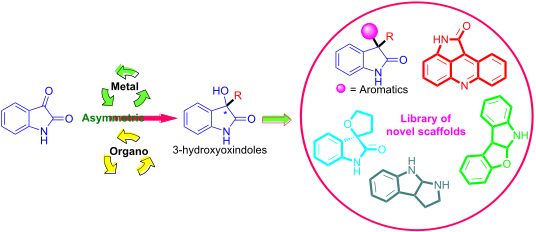
Graphical Abstract

Figure 1: 3-Hydroxyoxindole-containing natural products and biologically active molecules.

Scheme 1: Chiral CNN pincer Pd(II) complex 1 catalyzed asymmetric allylation of isatins.

Scheme 2: Asymmetric allylation of ketimine catalyzed by the chiral CNN pincer Pd(II) complex 2.

Scheme 3: Pd/L1 complex-catalyzed asymmetric allylation of 3-O-Boc-oxindoles.

Scheme 4: Cu(OTf)2-catalyzed asymmetric direct addition of acetonitrile to isatins.

Scheme 5: Chiral tridentate Schiff base/Cu complex catalyzed asymmetric Friedel–Crafts alkylation of isatins ...

Scheme 6: Guanidine/CuI-catalyzed asymmetric alkynylation of isatins with terminal alkynes.

Scheme 7: Asymmetric intramolecular direct hydroarylation of α-ketoamides.

Scheme 8: Plausible catalytic cycle for the direct hydroarylation of α-ketoamides.

Scheme 9: Ir-catalyzed asymmetric arylation of isatins with arylboronic acids.

Scheme 10: Enantioselective decarboxylative addition of β-ketoacids to isatins.

Scheme 11: Ruthenium-catalyzed hydrohydroxyalkylation of olefins and 3-hydroxy-2-oxindoles.

Scheme 12: Proposed catalytic mechanism and stereochemical model.

Scheme 13: In-catalyzed allylation of isatins with stannylated reagents.

Scheme 14: Modified protocol for the synthesis of allylated 3-hydroxyoxindoles.

Scheme 15: Hg-catalyzed asymmetric allylation of isatins with allyltrimethylsilanes.

Scheme 16: Enantioselective additions of organoborons to isatins.

Scheme 17: Asymmetric aldol reaction of isatins with cyclohexanone.

Scheme 18: Enantioselective aldol reactions of aliphatic aldehydes with isatin derivatives and the plausible t...

Scheme 19: Enantioselective aldol reaction of isatins and 2,2-dimethyl-1,3-dioxan-5-one.

Scheme 20: Asymmetric aldol reactions between ketones and isatins.

Scheme 21: Phenylalanine lithium salt-catalyzed asymmetric synthesis of 3-alkyl-3-hydroxyoxindoles.

Scheme 22: Aldolization between isatins and dihydroxyacetone derivatives.

Scheme 23: One-pot asymmetric synthesis of convolutamydine A.

Scheme 24: Asymmetric aldol reactions of cyclohexanone and acetone with isatins.

Scheme 25: Aldol reactions of acetone with isatins.

Scheme 26: Aldol reactions of ketones with isatins.

Scheme 27: Enantioselective allylation of isatins.

Scheme 28: Asymmetric aldol reaction of trifluoromethyl α-fluorinated β-keto gem-diols with isatins.

Scheme 29: Plausible mechanism proposed for the asymmetric aldol reaction.
Scheme 30: Asymmetric aldol reaction of 1,1-dimethoxyacetone with isatins.

Scheme 31: Enantioselective Friedel-Crafts reaction of phenols with isatins.

Scheme 32: Enantioselective addition of 1-naphthols with isatins.

Scheme 33: Enantioselective aldol reaction between 3-acetyl-2H-chromen-2-ones and isatins.

Scheme 34: Stereoselective Mukaiyama–aldol reaction of fluorinated silyl enol ethers with isatins.

Scheme 35: Asymmetric vinylogous Mukaiyama–aldol reaction between 2-(trimethylsilyloxy)furan and isatins.

Scheme 36: β-ICD-catalyzed MBH reactions of isatins with maleimides.

Scheme 37: β-ICD-catalyzed MBH reactions of 7-azaisatins with maleimides and activated alkenes.

Scheme 38: Enantioselective aldol reaction of isatins with ketones.

Scheme 39: Direct asymmetric vinylogous aldol reactions of allyl ketones with isatins.

Scheme 40: Enantioselective aldol reactions of ketones with isatins.

Scheme 41: The MBH reaction of isatins with α,β-unsaturated γ-butyrolactam.

Scheme 42: Reactions of tert-butyl hydrazones with isatins followed by oxidation.

Scheme 43: Aldol reactions of isatin derivatives with ketones.

Scheme 44: Enantioselective decarboxylative cyanomethylation of isatins.

Scheme 45: Catalytic kinetic resolution of 3-hydroxy-3-substituted oxindoles.

Scheme 46: Lewis acid catalyzed Friedel–Crafts alkylation of 3-hydroxy-2-oxindoles with electron-rich phenols.

Scheme 47: Lewis acid catalyzed arylation of 3-hydroxyoxindoles with aromatics.

Scheme 48: Synthetic application of 3-arylated disubstituted oxindoles in the construction of core structures ...

Scheme 49: CPA-catalyzed dearomatization and arylation of 3-indolyl-3-hydroxyoxindoles with tryptamines and 3-...

Scheme 50: CPA-catalyzed enantioselective decarboxylative alkylation of β-keto acids with 3-hydroxy-3-indolylo...

Scheme 51: BINOL-derived imidodiphosphoric acid-catalyzed enantioselective Friedel–Crafts reactions of indoles...

Scheme 52: CPA-catalyzed enantioselective allylation of 3-indolylmethanols.

Scheme 53: 3-Indolylmethanol-based substitution and cycloaddition reactions.

Scheme 54: CPA-catalyzed asymmetric [3 + 3] cycloaddtion reactions of 3-indolylmethanols with azomethine ylide...

Scheme 55: CPA-catalyzed three-component cascade Michael/Pictet–Spengler reactions of 3-indolylmethanols and a...

Scheme 56: Acid-promoted chemodivergent and stereoselective synthesis of diverse indole derivatives.

Scheme 57: CPA-catalyzed asymmetric formal [3 + 2] cycloadditions.

Scheme 58: CPA-catalyzed enantioselective cascade reactions for the synthesis of C7-functionlized indoles.

Scheme 59: Lewis acid-promoted Prins cyclization of 3-allyl-3-hydroxyoxindoles with aldehydes.

Scheme 60: Ga(OTf)3-catalyzed reactions of allenols and phenols.

Scheme 61: I2-catalyzed construction of pyrrolo[2.3.4-kl]acridines from enaminones and 3-indolyl-3-hydroxyoxin...

Scheme 62: CPA-catalyzed asymmetric aza-ene reaction of 3-indolylmethanols with cyclic enaminones.

Scheme 63: Asymmetric α-alkylation of aldehydes with 3-indolyl-3-hydroxyoxindoles.

Scheme 64: Organocatalytic asymmetric α-alkylation of enolizable aldehydes with 3-indolyl-3-hydroxyoxindoles a...
One-pot synthesis of enantiomerically pure N-protected allylic amines from N-protected α-amino esters
- Gastón Silveira-Dorta,
- Sergio J. Álvarez-Méndez,
- Víctor S. Martín and
- José M. Padrón
Beilstein J. Org. Chem. 2016, 12, 957–962, doi:10.3762/bjoc.12.94
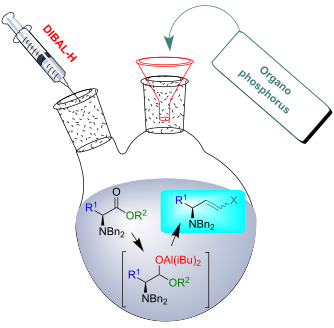
- . Disappointingly, the product (E)-4a was obtained in low yield although in excellent (dia)stereoselectivity. In the synthesis of anti-2-amino-1,3-diols, we reported earlier that the addition of DIBAL-H must be done necessarily in two portions [16]. Thus, fine-tuning of the reduction conditions was required in

Graphical Abstract

Figure 1: Strategies for the synthesis of N-protected allylic amines. [Red], reduction; [Ox], oxidation; [Ole...
Scope and mechanism of the highly stereoselective metal-mediated domino aldol reactions of enolates with aldehydes
- M. Emin Cinar,
- Bernward Engelen,
- Martin Panthöfer,
- Hans-Jörg Deiseroth,
- Jens Schlirf and
- Michael Schmittel
Beilstein J. Org. Chem. 2016, 12, 813–824, doi:10.3762/bjoc.12.80
- aldehydes in the presence of metal halides to furnish tetrahydro-2H-pyran-2,4-diols in a highly diastereoselective manner, is investigated thoroughly by experiments and computations. The reaction was also successfully implemented on a flow micro reactor system. Keywords: DFT; diastereoselective reaction
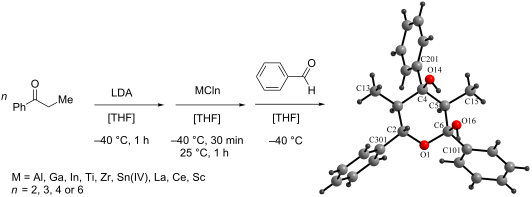
- the years [31]. We have already reported a domino aldol–aldol–hemiacetal process that furnishes racemic tetrahydro-2H-pyran-2,4-diols in a highly stereoselective manner (Scheme 1) [30][31][32][33][34][35][36][37]. In this paper, the domino aldol–aldol–hemiacetal reaction involving several metals (Al
- . The larger the amount of aldehyde in the reaction, the higher is the yield of monoaldol product 6a, which supports a thermodynamically controlled equilibrium as further confirmed by the following observations: (1) with gallium(III) two diastereomeric tetrahydro-2H-pyran-2,4-diols are formed at 0 °C

Graphical Abstract

Scheme 1: Synthesis of racemic tetrahydro-2H-pyran-2,4-diols rac-5 from enolates 2 and aldehydes 3.

Scheme 2: Synthesis of rac-5a–j and monoaldol products 6a–i and 6ac–ic as obtained from propiophenone (1a) in...

Figure 1: Crystal structure of enantiopure 5a [40].

Scheme 3: Reaction of various ketones (1b−i) with benzaldehyde (3a) in the presence of InCl3 and ZrCl4.

Figure 2: (a) Crystal structure of 7h and (b) its arrangement in the crystal [43].

Scheme 4: Reaction of n-butyrophenone (1f) with various aldehydes (3b−d) in presence of InCl3 (reaction time:...

Scheme 5: Domino aldol reactions of different aldehydes and ketones possessing p-H, p-F and p-MeO substituent...

Scheme 6: DFT calculations on the formation of A3, hydrolysis of which provides 5a, at M06/6-31G(d)/LANL2DZ//...

Scheme 7: The follow-up reactions of A2OH and 6a at M06/6-31G(d)//B3LYP/6-31G(d) level (ΔGrel with unscaled z...

Scheme 8: Proposed mechanism for the formation of benzaldehyde in the reaction of 9-anthracenylaldehyde (3f) ...
Iridium/N-heterocyclic carbene-catalyzed C–H borylation of arenes by diisopropylaminoborane
- Mamoru Tobisu,
- Takuya Igarashi and
- Naoto Chatani
Beilstein J. Org. Chem. 2016, 12, 654–661, doi:10.3762/bjoc.12.65

- ) complex with 1,3-dicyclohexylimidazol-2-ylidene is found to efficiently catalyze the borylation of arenes and heteroarenes. The resulting aminoborylated products can be converted to the corresponding boronic acid derivatives simply by treatment with suitable diols or diamines. Keywords: boronic acid; C–H
- the synthetic advantage of allowing various substituents to be introduced onto the boron atom during the work-up stage simply by changing the reagents added. For example, addition of different diols delivered the corresponding boronic esters 10-Bnep and 10-Bmep (Scheme 2, bottom). It was also possible

Graphical Abstract

Scheme 1: Catalytic C–H borylation of arenes and related reported boron sources.

Scheme 2: Scalability and derivatization.
Self and directed assembly: people and molecules
- Tony D. James
Beilstein J. Org. Chem. 2016, 12, 391–405, doi:10.3762/bjoc.12.42
- elements and developed an AND logic system for “cations” and “diols” (Figure 6) [51][52]. In 1998 Michael Bell from Beckman Coulter approached me about working together on a fluorescent glucose sensor system. Therefore, in July and few weeks after the birth of my son Joseph “Joey” Hiro Furukawa James, I
- the enantiomeric excess of the original scalemic mixture of binol (diol) or amine (Figure 15). The three-component system was very versatile and we could use the complexes to determine the enantiomeric excess (ee) of amines [69][70], diamines [71], amino alcohols [72], hydroxylamines [73] and diols

Graphical Abstract

Scheme 1: Reaction of trimethylsilyl cyanide with tricarbonyl (η5-cyclohexadienyl)iron(1+) salts. Reproduced ...

Figure 1: (a) Supramolecular pore formers. Reproduced with permission from [6]. Copyright 1990 Elsevier. (b) Uni...

Figure 2: An intelligent liquid crystal to read out saccharide structure as a color-change. Picture provided ...

Scheme 2: Polymeric boronic acid receptor units developed by Wulff. Reproduced from [16]. Copyright 1982 Internat...
Figure 3: Fluorescence photoinduced electron transfer (PET) pH sensor developed by A. P. De Silva.

Figure 4: Fluorescence PET sensor for saccharides.

Figure 5: (a) Glucose selective PET system. (b) Chiral discriminating PET system.

Figure 6: (a) Fluorescence photoinduced electron transfer (PET) cation sensors developed by A. P. De Silva. (...

Figure 7: (a) Pyrene diboronic acids (n = 3–8). (b) Pyrene monoboronic acid. (c) Block chart showing the rela...

Figure 8: Glysure Continuous Intravascular Glucose Monitoring (CIGM) System. Image provided by Nicholas P. Ba...

Figure 9: Chiral discrimination of D- and L-tartaric acid by (R)-8 at pH 5.6. [(R)-8] = 5.0 × 10⁻⁶ mol dm−3, ...
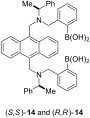
Figure 10: Chiral discriminating sensor (relative stereochemistry shown) constructed using a good fluorophore ...

Figure 11: Fluorescence emission intensity-pH profile of: (a) Sensor 15: 1.0 × 10⁻⁶ mol dm−3 (λex 370 nm, λem ...

Figure 12: Modular chiral discriminating d-PET systems (relative stereochemistry shown).

Figure 13: With Matthew Davidson and Steven Bull during “World Cup” lecture tour of Japan in 2002. (Left) Priv...

Figure 14: Preparation of chiral boron reagent and use as catalyst for aza-Diels–Alder reactions.

Figure 15: Chiral three component self-assembling system.
Highly stable and reusable immobilized formate dehydrogenases: Promising biocatalysts for in situ regeneration of NADH
- Barış Binay,
- Dilek Alagöz,
- Deniz Yildirim,
- Ayhan Çelik and
- S. Seyhan Tükel
Beilstein J. Org. Chem. 2016, 12, 271–277, doi:10.3762/bjoc.12.29
- [30]. In this study, Immobead 150 support was kept in 1 M acetic acid solution to produce vicinal diols and then the formed diols were oxidatively cleaved with NaIO4 to produce aldehyde groups onto the support (Figure 1c). The amount of bound protein was determined as 90% of the initial loading

Graphical Abstract

Figure 1: The immobilization scheme of FDH onto Immobead 150 and modified Immobead 150 supports.

Figure 2: The effect of pH on the activities of free and immobilized FDH preparations. The FDH activity at pH...

Figure 3: The effect of temperature on the activities of free and immobilized FDH preparations. The enzyme ac...

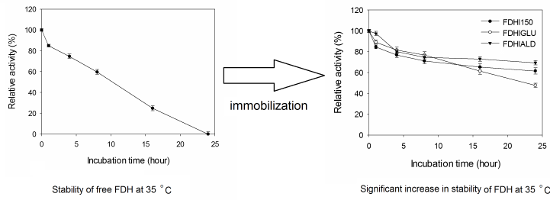
Figure 4: Thermal stability of free and immobilized FDH preparations at 35 °C.

Figure 5: Thermal stability of free and immobilized FDH preparations at 50 °C.

Figure 6: The reusability of immobilized FDHs.
Spiro-fused carbohydrate oxazoline ligands: Synthesis and application as enantio-discrimination agents in asymmetric allylic alkylation
- Jochen Kraft,
- Martin Golkowski and
- Thomas Ziegler
Beilstein J. Org. Chem. 2016, 12, 166–171, doi:10.3762/bjoc.12.18
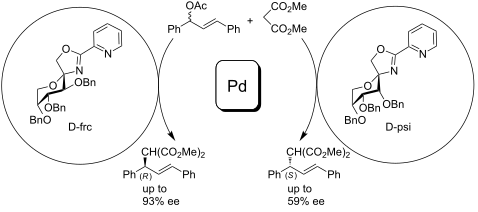
- acidic conditions gave the corresponding diols 3 [20] and 4 as anomeric mixtures. Condensation of the latter with thiocyanic acid in a Ritter-type reaction according to a slightly modified procedure described by Tatibouët et al. [21] gave an anomeric mixture of 1,3-oxazolidin-2-thiones 5 and 6

Graphical Abstract

Figure 1: Pd-catalyzed cleavage of spiro-bis(isooxazoline) ligand A to isoxazole B and Pd-complex D prepared ...

Scheme 1: Synthesis of 2-benzylsulfanyl-1,3-oxazolines 7 and 8.
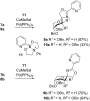
Scheme 2: Pd-catalyzed cross coupling of benzylsulfanyloxazolines 7 and 8.

Scheme 3: Palladium catalyzed allylic substitution.

Scheme 4: Proposed transition state of allylic substitution.
Assembly of synthetic Aβ miniamyloids on polyol templates
- Sebastian Nils Fischer and
- Armin Geyer
Beilstein J. Org. Chem. 2015, 11, 2646–2653, doi:10.3762/bjoc.11.284
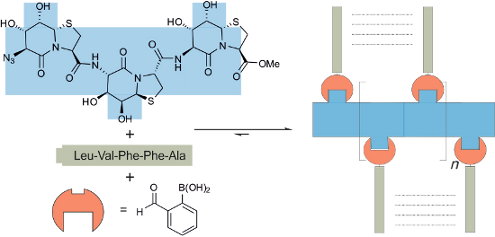
- avoided only when two different reactive groups are employed; that is why the reversible esterification between boronic acids and diols appeared an attractive solution to us. In a first approach, we planned to condense short peptide boronic acids with polyol templates for the assembly of an Aβ-dimer. The
- diols on the template must be separated from each other far enough to exclude the simultaneous formation of mixtures of 5- and 6-membered boronic esters. However, the oligosaccharides, which are available with a consistent oligomerization degree of dimer, trimer, tetramer and higher, are known to have

Graphical Abstract

Figure 1: a) Schematic representation of the Aβ fibril formation. The monomeric peptide is shown as a colored...

Figure 2: a) Peptide boronic acids 1 and 2 are schematically shown as green sticks (peptide) with a red gripp...

Figure 3: Meso-erythritol is a promiscuous polyol which forms mixtures of esters due to the formation of 5-me...

Figure 4: Diol 5 (6.08 mg, 20.0 μmol, 1.0 equiv) and 3-(acetylamino)phenylboronic acid (6, 3.56 mg, 20.0 μmol...

Figure 5: Fmoc-Hot=Tap-OH (8).

Figure 6: Template 9 and boronic acid 6 can form the monoesters 10 and 11, or the diester 12. The signal assi...

Figure 7: Template 9 (2.30 mg, 4.40 µmol, 1.0 equiv) and peptide boronic acid 1 (7.35 mg, 8.80 µmol, 2.0 equi...

Figure 8: Template 5 (1H NMR expansion shown for reference DMSO-d6, 300 K) and peptide Leu-Val-Phe-Phe-Ala ar...

Figure 9: The trimeric template 16 together with 3 equivalents of pentapeptide LVFFA and 2-formylphenylboroni...
Recent advances in copper-catalyzed asymmetric coupling reactions
- Fengtao Zhou and
- Qian Cai
Beilstein J. Org. Chem. 2015, 11, 2600–2615, doi:10.3762/bjoc.11.280
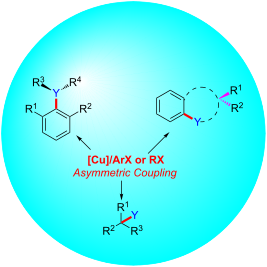
- -halophenoxyl)-1,3-diols by the same group [54]. However, the palladium catalytic systems suffered from limited substrate scope and poor efficiency and enantioselectivity for the formation of quaternary stereocenters. Recently, Cai et al. carried out such couplings using a CuI/cyclized diamine catalytic system

Graphical Abstract

Scheme 1: Copper-catalyzed asymmetric preparation of biaryl diacids by Ullmann coupling.

Scheme 2: Intramolecular biaryl coupling of bis(iodotrimethoxybenzoyl)hexopyranose derivatives.

Scheme 3: Preparation of 3,3’-disubstituted MeO-BIPHEP derivatives.

Scheme 4: Enantioselective synthesis of trans-4,5,9,10-tetrahydroxy-9,10-dihydrophenanthrene.

Scheme 5: Copper-catalyzed coupling of oxazoline-substituted aromatics to afford biaryl products with high di...

Scheme 6: Total synthesis of O-permethyl-tellimagrandin I.

Scheme 7: Total synthesis of (+)-gossypol.

Scheme 8: Total synthesis of (−)-mastigophorene A.

Scheme 9: Total synthesis of isokotanin.

Scheme 10: Synthesis of dimethyl[7]thiaheterohelicenes.

Scheme 11: Intramolecular coupling with chiral ortho-substituents.

Scheme 12: Chiral 1,3-diol-derived tethers in the diastereoselective synthesis of biaryl compounds.

Scheme 13: Synthesis of chiral unsymmetrically substituted biaryl compounds.

Scheme 14: Atroposelective synthesis of biaryl ligands and natural products by using a chiral diether linker.

Scheme 15: Enantioselective arylation reactions of 2-methylacetoacetates.

Scheme 16: Asymmetric aryl C–N coupling reactions following a desymmetrization strategy.

Scheme 17: Construction of cyano-bearing all-carbon quaternary stereocenters.

Scheme 18: An unexpected inversion of the enantioselectivity in the asymmetric C–N coupling reactions using ch...

Scheme 19: Differentiation of two nucleophilic amide groups.

Scheme 20: Synthesis of spirobilactams through a double N-arylation reaction.

Scheme 21: Asymmetric N-arylation through kinetic resolution.

Scheme 22: Formation of cyano-substituted quaternary stereocenters through kinetic resolution.

Scheme 23: Copper-catalyzed intramolecular desymmetric aryl C–O coupling.

Scheme 24: Transition metal-catalyzed allylic substitutions.

Scheme 25: Copper-catalyzed asymmetric allylic substitution of allyl phosphates.

Scheme 26: Allylic substitution of allyl phosphates with allenylboronates.

Scheme 27: Allylic substitution of allyl phosphates with vinylboron.

Scheme 28: Allylic substitution of allyl phosphates with vinylboron.

Scheme 29: Construction of quaternary stereogenic carbon centers through enantioselective allylic cross-coupli...

Scheme 30: Cu-catalyzed enantioselective allyl–allyl cross-coupling.

Scheme 31: Cu-catalyzed enantioselective allylic substitutions with silylboronates.

Scheme 32: Asymmetric allylic substitution of allyl phosphates with silylboronates.

Scheme 33: Stereoconvergent synthesis of chiral allylboronates.

Scheme 34: Enantioselective allylic substitutions with diboronates.

Scheme 35: Enantioselective allylic alkylations of terminal alkynes.
Cu(I)-catalyzed N,N’-diarylation of natural diamines and polyamines with aryl iodides
- Svetlana P. Panchenko,
- Alexei D. Averin,
- Maksim V. Anokhin,
- Olga A. Maloshitskaya and
- Irina P. Beletskaya
Beilstein J. Org. Chem. 2015, 11, 2297–2305, doi:10.3762/bjoc.11.250

- the literature. One of them employs an iridium-based catalyst with amidophosphonate as the ligand which allows to convert aminoalcohols into N-monoaryl-substituted diamines by the reaction with arylamines [20]. Another method uses a bimetallic catalyst (Pt–Sn/γ-Al2O3) in the reactions of diols with

Graphical Abstract

Figure 1: Diamines and polyamines studied in Cu(I)-catalyzed amination reactions.

Scheme 1: N,N’-Diarylation of the diamines 1 and 2.

Scheme 2: Arylation of the diamines 1 and 2.

Scheme 3: Arylation of the diamines 3 and 4.

Scheme 4: Arylation of the diamines 1, 3, 4 with 2-fluoroiodobenzene.

Scheme 5: Arylation of the triamines 5 and 6.

Scheme 6: Arylation of the tetraamines 7 and 8.
Design and synthesis of propellane derivatives and oxa-bowls via ring-rearrangement metathesis as a key step
- Sambasivarao Kotha and
- Rama Gunta
Beilstein J. Org. Chem. 2015, 11, 1727–1731, doi:10.3762/bjoc.11.188
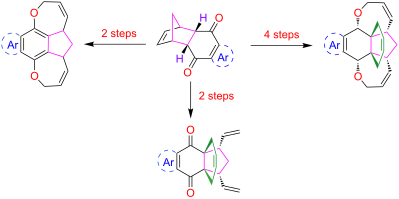
- with a minor amount of compound 9 (8%). The formation of compound 9 may be explained on the basis of a retro-DA reaction [36] followed by reduction and elimination. In the same way, reduction of C-allyl compound 4b under similar reaction conditions gave diol 8b in 88% yield. In the next step, diols 8a

Graphical Abstract

Figure 1: RRM route to propellane derivatives and oxa-bowls.

Scheme 1: Synthesis of the oxa-bowl 1a via RRM.

Scheme 2: Synthesis of RRM products 1b and 5a starting from DA adduct 3b.

Scheme 3: Synthesis of the hexacyclic compound 1c using RRM.

Scheme 4: Synthesis of the propellane/oxa-bowl hybrids 7a,b via RRM.
Dicarboxylic esters: Useful tools for the biocatalyzed synthesis of hybrid compounds and polymers
- Ivan Bassanini,
- Karl Hult and
- Sergio Riva
Beilstein J. Org. Chem. 2015, 11, 1583–1595, doi:10.3762/bjoc.11.174

- beginning of the use of lipases in organic solvents. In 1984 Okumura et al. [48] produced oligomers of several dicarboxylic acids (C6 to C14) in combination with several diols (C2 and C3). Since then the use of lipase-catalyzed preparation of polymers has grow very much and has been reviewed many times (see
- -mercaptosuccinate) could be oxidized by air in DMSO to form a cross-linked insoluble material (Figure 12). In a subsequent paper, the same laboratory prepared different mercaptosuccinate polymers with several diols. In addition they showed that the material cross-linked by air oxidation could be reversibly reduced
- by tributylphosphine to recover the reduced soluble polymer [64]. In a recent review, Khan et al. summarized the synthesis of polymers based on C-5-substituted isophthalates (36, Figure 13) and diols [65]. Using hydroxy or amine groups at C-5 afforded polymers, which could be further modified by

Graphical Abstract

Scheme 1: Activated derivatives of dicarboxylic acids.

Figure 1: Example of natural compounds selectively acylated with dicarboxylic esters.

Figure 2: C6-dicarboxylic acid diesters derivatives of NAG-thiazoline.

Figure 3: Sylibin dimers obtained by CAL-B catalyzed trans-acylation reactions.

Scheme 2: Biocatalyzed synthesis of paclitaxel derivatives.

Figure 4: 5-Fluorouridine derivatives obtained by CAL-B catalysis.

Scheme 3: Biocatalyzed synthesis of hybrid diesters 17 and 18.

Scheme 4: Hybrid derivatives of sylibin.

Figure 5: Bolaamphiphilic molecules containing (L)- and/or (D)-isoascorbic acid moieties.

Figure 6: Doxorubicin (29) trapped in a polyester made of glycolate, sebacate and 1,4-butandiol units.

Figure 7: Polyesters containing functionalized pentofuranose derivatives.

Figure 8: Polyesters containing disulfide moieties.

Figure 9: Polyesters containing epoxy moieties.

Figure 10: Biocatalyzed synthesis of polyesters containing glycerol.

Figure 11: Iataconic (34) and malic (35) acid.

Figure 12: Oxidized poly(hexanediol-2-mercaptosuccinate) polymer.

Figure 13: C-5-substituted isophthalates.

Figure 14: Curcumin-based polyesters.

Figure 15: Silylated polyesters.

Figure 16: Polyesters containing reactive ether moieties.

Figure 17: Polyesters obtained by CAL-B-catalyzed condensation of dicarboxylic esters and N-substituted dietha...

Figure 18: Polyesters comprising mexiletine (38) moieties.

Figure 19: Poly(amide-co-ester)s comprising a terminal hydroxy moiety.

Figure 20: Polymer comprising α-oxydiacid moieties.

Figure 21: Telechelics with methacrylate ends.

Figure 22: Telechelics with allyl-ether ends.

Figure 23: Telechelics with ends functionalized as epoxides.
Preparative semiconductor photoredox catalysis: An emerging theme in organic synthesis
- David W. Manley and
- John C. Walton
Beilstein J. Org. Chem. 2015, 11, 1570–1582, doi:10.3762/bjoc.11.173
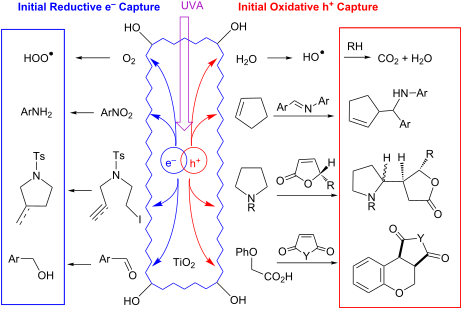
- representative range of aldehydes and ketones using dispersions of P25 with soft UVA in MeCN/MeOH (9:1) as solvent [79]. Aromatic aldehydes yielded the corresponding primary alcohols along with pinacol byproducts. Control experiments confirmed that these diols were formed by the well-known photochemical coupling

Graphical Abstract

Figure 1: Production and utilization of h+ and e– by photoactivation of a semiconductor.

Figure 2: Photoredox activity of TiO2 with moist air.

Scheme 1: TiO2 promoted oxidation of phenanthrene [29].

Scheme 2: SCPC assisted additions of allylic compounds to diazines and imines [40-42].
Scheme 3: TiO2 promoted addition and addition–cyclization reactions of tert-amines with electron-deficient al...

Scheme 4: Reactions of amines promoted by Pt-TiO2 [48,49].

Scheme 5: P25 Promoted alkylations of N-phenylmaleimide with diverse carboxylic acids [53,54]. aAccompanied by R–R d...

Scheme 6: SCPC cyclizations of aryloxyacetic acids with suitably sited alkene acceptors [54]. aYields in brackets...
Scheme 7: TiO2 promoted reactions of aryloxyacetic acids with maleic anhydride and maleimides [53,54].

Scheme 8: Photoredox addition–cyclization reactions of aryloxyacetic and related acids promoted by maleimide [63]....

Scheme 9: SCPC promoted homo-couplings and macrocyclizations with carboxylic acids [64].

Scheme 10: TiO2 promoted alkylations of alkenes with silanes [66] and thiols [67].

Scheme 11: TiO2 reduction of a nitrochromenone derivative [70].
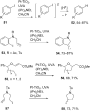
Scheme 12: TiO2 mediated hydrodehalogenations and cyclizations of organic iodides [71].

Scheme 13: TiO2 promoted hydrogenations of maleimides, maleic anhydride and aromatic aldehydes [79].
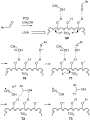
Scheme 14: Mechanistic sketch of SCPC hydrogenation of aryl aldehydes.
Cross-metathesis reaction of α- and β-vinyl C-glycosides with alkenes
- Ivan Šnajdr,
- Kamil Parkan,
- Filip Hessler and
- Martin Kotora
Beilstein J. Org. Chem. 2015, 11, 1392–1397, doi:10.3762/bjoc.11.150

- -deoxyribosides [15]. Finally, there is also a method utilizing an excess of vinylmagnesium bromide in the reaction with 3,5-bis-O-TBDPS-protected 2-deoxy-D-ribofuranose giving rise to a mixture of diastereoisomeric diols. The diasteroisomers were separated and cyclized in the presence of MsCl to the

Graphical Abstract

Scheme 1: Synthesis of vinyl C-deoxyribosides α-2 and β-2.

Figure 1: Alkenes 3 used in cross-metathesis reactions with 2.

Scheme 2: Hydrogenation of β-4b–β-4d to β-5b–β-5d.

Scheme 3: Deprotection of β-4e and β-5b to β-6e and β-7b.
Selected synthetic strategies to cyclophanes
- Sambasivarao Kotha,
- Mukesh E. Shirbhate and
- Gopalkrushna T. Waghule
Beilstein J. Org. Chem. 2015, 11, 1274–1331, doi:10.3762/bjoc.11.142
- , dibromide 83 was converted to bis-aldehyde 84. Finally, McMurry coupling of dialdehyde 84 provided the cyclophane derivative 85 (28%). Yamoto and co-workers have reported the synthesis of medium-sized cyclophanes, [2.n]metacyclophane-1,2-diols 86 and 87 by using the McMurry coupling as a key step (Figure 8
- was explained on the basis of a tandem isomerization of a terminal double bond followed by the macrocyclization with G-II (13). Finally, the oxidation of diols 186 and 189 generated cyclophanes 187 and 190, respectively (Scheme 30). Guan and coworkers [154] have reported a novel synthetic approach to

Graphical Abstract

Figure 1: General representation of cyclophanes.

Figure 2: cyclophanes one or more with heteroatom.

Figure 3: Metathesis catalysts 12–17 and C–C coupling catalyst 18.

Figure 4: Natural products containing the cyclophane skeleton.

Figure 5: Turriane family of natural products.

Scheme 1: Synthesis of [3]ferrocenophanes through Mannich reaction. Reagents and conditions: (i) excess HNMe2...

Scheme 2: Synthesis of cyclophanes through Michael addition. Reagents and conditions: (i) xylylene dibromide,...

Scheme 3: Synthesis of normuscopyridine analogue 37 through an oxymercuration–oxidation strategy. Reagents an...

Scheme 4: Synthesis of tribenzocyclotriyne 39 through Castro–Stephens coupling reaction. Reagents and conditi...

Scheme 5: Synthesis of cyclophane 43 through Glaser–Eglinton coupling. Reagents and conditions: (i) 9,10-bis(...

Scheme 6: Synthesis of the macrocyclic C-glycosyl cyclophane through Glaser coupling. Reagents and conditions...

Scheme 7: Synthesis of cyclophane-containing complex 49 through Glaser–Eglinton coupling reaction. Reagents a...

Scheme 8: Synthesis of cyclophane 53 through Glaser–Eglinton coupling. Reagents and conditions: (i) K2CO3, ac...

Figure 6: Cyclophanes 54–56 that have been synthesized through Glaser–Eglinton coupling.

Figure 7: Synthesis of tetrasubstituted [2.2]paracyclophane 57 and chiral cyclophyne 58 through Eglinton coup...

Scheme 9: Synthesis of cyclophane through Glaser–Hay coupling reaction. Reagents and conditions: (i) CuCl2 (1...

Scheme 10: Synthesis of seco-C/D ring analogs of ergot alkaloids through intramolecular Heck reaction. Reagent...

Scheme 11: Synthesis of muscopyridine 73 via Kumada coupling. Reagents and conditions: (i) 72, THF, ether, 20 ...

Scheme 12: Synthesis of the cyclophane 79 via McMurry coupling. Reagents and conditions: (i) 75, decaline, ref...

Scheme 13: Synthesis of stilbenophane 81 via McMurry coupling. Reagents and conditions: (i) TiCl4, Zn, pyridin...

Scheme 14: Synthesis of stilbenophane 85 via McMurry coupling. Reagents and conditions: (i) NBS (2 equiv), ben...
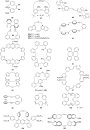
Figure 8: List of cyclophanes prepared via McMurry coupling reaction as a key step.

Scheme 15: Synthesis of paracyclophane by cross coupling involving Pd(0) catalyst. Reagents and conditions: (i...

Scheme 16: Synthesis of the cyclophane 112 via the pinacol coupling and 113 by RCM. Reagents and conditions: (...

Scheme 17: Synthesis of cyclophane derivatives 122a–c via Sonogoshira coupling. Reagents and conditions: (i) C...

Scheme 18: Synthesis of cyclophane 130 via Suzuki–Miyaura reaction as a key step. Reagents and conditions: (i)...

Scheme 19: Synthesis of the mycocyclosin via Suzuki–Miyaura cross coupling. Reagents and conditions: (i) benzy...

Scheme 20: Synthesis of cyclophanes via Wurtz coupling reaction Reagents and conditions: (i) PhLi, Et2O, C6H6,...

Scheme 21: Synthesis of non-natural glycophanes using alkyne metathesis. Reagents and conditions: (i) G-I (12)...

Figure 9: Synthesis of cyclophanes via ring-closing alkyne metathesis.

Scheme 22: Synthesis of crownophanes by cross-enyne metathesis. Reagents and conditions: (i) G-II (13), 5 mol ...

Scheme 23: Synthesis of (−)-cylindrocyclophanes A (156) and (−)-cylindrocyclophanes F (155). Reagents and cond...

Scheme 24: Synthesis of cyclophane 159 derivatives via SM cross-coupling and RCM. Reagents and conditions: (i)...

Scheme 25: Sexithiophene synthesis via cross metathesis. Reagents and conditions: (i) 161, Pd(PPh3)4, K2CO3, T...

Scheme 26: Synthesis of pyrrole-based cyclophane using enyne metathesis. Reagents and conditions: (i) Se, chlo...

Scheme 27: Synthesis of macrocyclic derivatives by RCM. Reagents and conditions: (i) G-I/G-II, CH2Cl2, 0.005 M...

Scheme 28: Synthesis of enantiopure β-lactam-based dienyl bis(dihydrofuran) 179. Reagents and conditions: (i) ...

Scheme 29: Synthesis of a [1.1.6]metaparacyclophane derivative 183 via SM cross coupling. Reagents and conditi...

Scheme 30: Synthesis of a [1.1.6]metaparacyclophane derivative 190 via SM cross coupling. Reagents and conditi...

Scheme 31: Template-promoted synthesis of cyclophanes involving RCM. Reagents and conditions: (i) acenaphthene...

Scheme 32: Synthesis of [3.4]cyclophane derivatives 200 via SM cross coupling and RCM. Reagents and conditions...
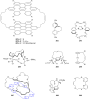
Figure 10: Examples for cyclophanes synthesized by RCM.

Scheme 33: Synthesis of the longithorone C framework assisted by fluorinated auxiliaries. Reagents and conditi...

Scheme 34: Synthesis of the longithorone framework via RCM. Reagents and conditions: (i) 213, NaH, THF, rt, 10...

Scheme 35: Synthesis of floresolide B via RCM as a key step. Reagents and conditions: (i) G-II (13, 0.1 equiv)...

Scheme 36: Synthesis of normuscopyridine (223) by the RCM strategy. Reagents and condition: (i) Mg, THF, hexen...

Scheme 37: Synthesis of muscopyridine (73) via RCM. Reagents and conditions: (i) 225, NaH, THF, 0 °C to rt, 1....

Scheme 38: Synthesis of muscopyridine (73) via RCM strategy. Reagents and conditions: (i) NaH, n-BuLi, 5-bromo...

Scheme 39: Synthesis of pyridinophane derivatives 223 and 245. Reagents and conditions: (i) PhSO2Na, TBAB, CH3...

Scheme 40: Synthesis of metacyclophane derivatives 251 and 253. Reagents and conditions: (i) 240, NaH, THF, rt...

Scheme 41: Synthesis of normuscopyridine and its higher analogues. Reagents and conditions: (i) alkenyl bromid...

Scheme 42: Synthesis of fluorinated ferrocenophane 263 via a [2 + 2] cycloaddition. Reagents and conditions: (...

Scheme 43: Synthesis of [2.n]metacyclophanes 270 via a [2 + 2] cycloaddition. Reagents and conditions: (i) Ac2...

Scheme 44: Synthesis of metacyclophane 273 by a [2 + 2 + 2] co-trimerization. Reagents and conditions: (i) [Rh...

Scheme 45: Synthesis of paracyclophane 276 via a [2 + 2 + 2] cycloaddition reaction. Reagents and conditions: ...

Scheme 46: Synthesis of cyclophane 278 via a [2 + 2 + 2] cycloaddition reaction. Reagents and conditions: (i) ...

Scheme 47: Synthesis of cyclophane 280 via a [2 + 2 + 2] cycloaddition. Reagents and conditions: (i) [(Rh(cod)(...

Scheme 48: Synthesis of taxane framework by a [2 + 2 + 2] cycloaddition. Reagents and conditions: (i) Cp(CO)2 ...

Scheme 49: Synthesis of cyclophane 284 and 285 via a [2 + 2 + 2] cycloaddition reaction. Reagents and conditio...

Scheme 50: Synthesis of pyridinophanes 293a,b and 294a,b via a [2 + 2 + 2] cycloaddition. Reagents and conditi...

Scheme 51: Synthesis of pyridinophanes 296 and 297 via a [2 + 2 + 2] cycloaddition. Reagents and conditions: (...

Scheme 52: Synthesis of triazolophane by a 1,3-dipolar cycloaddition. Reagents and conditions: (i) propargyl b...

Scheme 53: Synthesis of glycotriazolophane 309 by a click reaction. Reagents and conditions: (i) LiOH, H2O, Me...

Figure 11: Cyclophanes 310 and 311 prepared via click chemistry.

Scheme 54: Synthesis of cyclophane via the Dötz benzannulation. Reagents and conditions: (i) THF, 100 °C, 12 h...

Scheme 55: Synthesis of [6,6]metacyclophane by a Dötz benzannulation. Reagents and conditions: (i) THF, 100 °C...

Scheme 56: Synthesis of cyclophanes by a Dötz benzannulation. Reagents and conditions: (i) THF, 65 °C, 3 h; (i...

Scheme 57: Synthesis of muscopyridine (73) via an intramolecular DA reaction of ketene. Reagents and condition...

Scheme 58: Synthesis of bis[10]paracyclophane 336 via Diels–Alder reaction. Reagents and conditions: (i) DMAD,...

Scheme 59: Synthesis of [8]paracyclophane via DA reaction. Reagents and conditions: (i) maleic anhydride, 3–5 ...

Scheme 60: Biomimetic synthesis of (−)-longithorone A. Reagents and conditions: (i) Me2AlCl, CH2Cl2, −20 °C, 7...

Scheme 61: Synthesis of sporolide B (349) via a [4 + 2] cycloaddition reaction. Reagents and conditions: (i) P...

Scheme 62: Synthesis of the framework of (+)-cavicularin (352) via a [4 + 2] cycloaddition. Reagents and condi...

Scheme 63: Synthesis of oxazole-containing cyclophane 354 via Beckmann rearrangement. Reagents and conditions:...

Scheme 64: Synthesis of cyclophanes 360a–c via benzidine rearrangement. Reagents and conditions: (i) 356a–d, K2...

Scheme 65: Synthesis of cyclophanes 365a–c via benzidine rearrangement. Reagents and conditions: (i) BocNHNH2,...

Scheme 66: Synthesis of metacyclophane 367 via Ciamician–Dennstedt rearrangement. Reagents and conditions: (i)...

Scheme 67: Synthesis of cyclophane by tandem Claisen rearrangement and RCM as key steps. Reagents and conditio...

Scheme 68: Synthesis of cyclophane derivative 380. Reagents and conditions: (i) K2CO3, CH3CN, allyl bromide, r...

Scheme 69: Synthesis of metacyclophane via Cope rearrangement. Reagents and conditions: (i) MeOH, NaBH4, rt, 1...

Scheme 70: Synthesis of cyclopropanophane via Favorskii rearrangement. Reagents and conditions: (i) Br2, CH2Cl2...

Scheme 71: Cyclophane 389 synthesis via photo-Fries rearrangement. Reagents and conditions: (i) DMAP, EDCl/CHCl...

Scheme 72: Synthesis of normuscopyridine (223) via Schmidt rearrangement. Reagents and conditions: (i) ethyl s...

Scheme 73: Synthesis of crownophanes by tandem Claisen rearrangement. Reagents and conditions: (i) diamine, Et3...

Scheme 74: Attempted synthesis of cyclophanes via tandem Claisen rearrangement and RCM. Reagents and condition...

Scheme 75: Synthesis of muscopyridine via alkylation with 2,6-dimethylpyridine anion. Reagents and conditions:...

Scheme 76: Synthesis of cyclophane via Friedel–Craft acylation. Reagents and conditions: (i) CS2, AlCl3, 7 d, ...

Scheme 77: Pyridinophane 418 synthesis via Friedel–Craft acylation. Reagents and conditions: (i) 416, AlCl3, CH...

Scheme 78: Cyclophane synthesis involving the Kotha–Schölkopf reagent 421. Reagents and conditions: (i) NBS, A...

Scheme 79: Cyclophane synthesis involving the Kotha–Schölkopf reagent 421. Reagents and conditions: (i) BEMP, ...

Scheme 80: Cyclophane synthesis by coupling with TosMIC. Reagents and conditions: (i) (a) ClCH2OCH3, TiCl4, CS2...

Scheme 81: Synthesis of diaza[32]cyclophanes and triaza[33]cyclophanes. Reagents and conditions: (i) DMF, NaH,...

Scheme 82: Synthesis of cyclophane 439 via acyloin condensation. Reagents and conditions: (i) Na, xylene, 75%;...

Scheme 83: Synthesis of multibridged binuclear cyclophane 442 by aldol condensation. Reagents and conditions: ...

Scheme 84: Synthesis of various macrolactones. Reagents and conditions: (i) iPr2EtN, DMF, 77–83%; (ii) TBDMSCl...

Scheme 85: Synthesis of muscone and muscopyridine via Yamaguchi esterification. Reagents and conditions: (i) 4...

Scheme 86: Synthesis of [5]metacyclophane via a double elimination reaction. Reagents and conditions: (i) LiBr...

Figure 12: Cyclophanes 466–472 synthesized via Hofmann elimination.

Scheme 87: Synthesis of cryptophane via Baylis–Hillman reaction. Reagents and conditions: (i) methyl acrylate,...

Scheme 88: Synthesis of cyclophane 479 via double Chichibabin reaction. Reagents and conditions: (i) excess 478...

Scheme 89: Synthesis of cyclophane 483 via double Chichibabin reaction. Reagents and conditions: (i) 481, OH−;...

Scheme 90: Synthesis of cyclopeptide via an intramolecular SNAr reaction. Reagents and conditions: (i) TBAF, T...

Scheme 91: Synthesis of muscopyridine (73) via C-zip ring enlargement reaction. Reagents and conditions: (i) H...

Figure 13: Mechanism of the formation of compound 494.

Scheme 92: Synthesis of indolophanetetraynes 501a,b using the Nicholas reaction as a key step. Reagents and co...

Scheme 93: Synthesis of cyclophane via radical cyclization. Reagents and conditions: (i) cyclododecanone, phen...

Scheme 94: Synthesis of (−)-cylindrocyclophanes A (156) and (−)-cylindrocyclophanes F (155). Reagents and cond...

Scheme 95: Cyclophane synthesis via Wittig reaction. Reagents and conditions: (i) LiOEt (2.1 equiv), THF, −78 ...

Figure 14: Representative examples of cyclophanes synthesized via Wittig reaction.

Scheme 96: Synthesis of the [6]paracyclophane via isomerization of Dewar benzene. Reagents and conditions: (i)...
Novel stereocontrolled syntheses of tashiromine and epitashiromine
- Loránd Kiss,
- Enikő Forró and
- Ferenc Fülöp
Beilstein J. Org. Chem. 2015, 11, 596–603, doi:10.3762/bjoc.11.66

- convenient route for the preparation of N-heterocyclic β-amino acid derivatives [40][41] or for the stereocontrolled synthesis of functionalized cispentacins [42] and their acyclic counterparts [43][44] (Figure 5). The oxidative ring cleavage of various vicinal diols and the transformation of the resulting
- dialdehyde intermediates has been efficiently applied in recent years for the synthesis of a series of valuable organic molecules [45][46][47][48][49][50][51][52]. In particular, Davies and co-workers have utilized the oxidative ring opening of cyclic vicinal diols followed by ring closure for access to

Graphical Abstract

Figure 1: Some indolizidine alkaloids.

Figure 2: Approaches to racemic tashiromine and epitashiromine.

Figure 3: Synthetic routes to (+)-tashiromine and (+)-epitashiromine.

Figure 4: Synthetic routes to (−)-tashiromine and (−)-epitashiromine.

Figure 5: Oxidative functionalizations of cyclic β-amino acids.

Scheme 1: Retrosynthesis of tashiromine and epitashiromine.

Scheme 2: Synthesis of (±)-tashiromine ((±)-6).

Scheme 3: Synthesis of (±)-epitashiromine ((±)-10).
Diastereoselective and enantioselective conjugate addition reactions utilizing α,β-unsaturated amides and lactams
- Katherine M. Byrd
Beilstein J. Org. Chem. 2015, 11, 530–562, doi:10.3762/bjoc.11.60
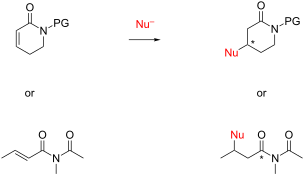
- method to synthesize protected syn-1,3-diols by performing intramolecular conjugate additions to a series of α,β-unsaturated esters and amides [71] (Scheme 8). Upon treatment of 24 with KHMDS and benzyaldehyde, a hemiacetal forms which provides the alkoxide nucleophile for the DCA reaction. These

Graphical Abstract

Scheme 1: Generic mechanism for the conjugate addition reaction.

Figure 1: Methods to activate unsaturated amide/lactam systems.

Scheme 2: DCA of Grignard reagents to an L-ephedrine derived chiral α,β–unsaturated amide.

Figure 2: Chiral auxiliaries used in DCA reactions.

Scheme 3: Comparison between auxiliary 5 and the Oppolzer auxiliary in a DCA reaction.

Scheme 4: Use of Evans auxiliary in a DCA reaction.
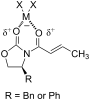
Figure 3: Lewis acid complex of the Evans auxiliary [43].

Scheme 5: DCA reactions of α,β-unsaturated amides utilizing (S,S)-(+)-pseudoephedrine and the OTBS-derivative...

Figure 4: Proposed model accounting for the diastereoselectivity observed in the 1,4-addition of Bn2NLi to α,...

Scheme 6: An example of a tandem conjugate addition–α-alkylation reaction of an α,β-unsaturated amide utilizi...

Scheme 7: Conjugate addition to an α,β-unsaturated bicyclic lactam leading to (+)-paroxetine and (+)-femoxeti...

Scheme 8: Intramolecular conjugate addition reaction to α,β-unsaturated amide.

Scheme 9: Conjugate addition to an α,β-unsaturated pyroglutamate derivative.

Scheme 10: Cu(I)–NHC-catalyzed asymmetric silylation of α,β-unsaturated lactams and amides.

Scheme 11: Asymmetric copper-catalyzed 1,4-borylation of an α,β-unsaturated amide.

Scheme 12: Asymmetric cross-coupling 49 to phenyl chloride.

Scheme 13: Rhodium-catalyzed asymmetric 1,4-arylation of an α,β-unsaturated lactam.

Scheme 14: Rhodium-catalyzed asymmetric 1,4-arylation of an α,β-unsaturated amide.

Scheme 15: Rhodium-catalyzed asymmetric 1,4-arylation of an α,β-unsaturated amide using a chiral bicyclic dien...

Scheme 16: Synthesis of (R)-(−)-baclofen through a rhodium-catalyzed asymmetric 1,4-arylation of lactam 58.

Scheme 17: Rhodium-catalyzed asymmetric 1,4-arylation of an α,β-unsaturated amide and lactam employing organo[...

Scheme 18: Rhodium-catalyzed asymmetric 1,4-arylation of an α,β-unsaturated lactam employing benzofuran-2-ylzi...

Figure 5: Further chiral ligands that have been used in rhodium-catalyzed 1,4-additions of α,β-unsaturated am...

Scheme 19: Palladium-catalyzed asymmetric 1,4-arylation of arylsiloxanes to a α,β-unsaturated lactam.

Scheme 20: SmI2-mediated cyclization of α,β-unsaturated Weinreb amides.

Figure 6: Chiral Lewis acid complexes used in the Mukaiyama–Michael addition of α,β-unsaturated amides.

Scheme 21: Mukaiyama–Michael addition of thioester silylketene acetal to α,β-unsaturated N-alkenoyloxazolidino...

Scheme 22: Asymmetric 1,4-addition of aryl acetylides to α,β-unsaturated thioamides.

Scheme 23: Asymmetric 1,4-addition of alkyl acetylides to α,β-unsaturated thioamides.

Scheme 24: Asymmetric vinylogous conjugate additions of unsaturated butyrolactones to α,β-unsaturated thioamid...

Scheme 25: Gd-catalyzed asymmetric 1,4-cyanation of α,β-unsaturated N-acylpyrroles [205].

Scheme 26: Lewis acid-catalyzed asymmetric 1,4-cyanation of α,β-unsaturated N-acylpyrazole 107.

Scheme 27: Lewis acid mediated 1,4-addition of dibenzyl malonate to α,β-unsaturated N-acylpyrroles.

Scheme 28: Chiral Lewis acid mediated 1,4-radical addition to α,β-unsaturated N-acyloxazolidinone [224].

Scheme 29: Aza-Michael addition of O-benzylhydroxylamine to an α,β-unsaturated N-acylpyrazole.

Scheme 30: An example of the aza-Michael addition of secondary aryl amines to an α,β-unsaturated N-acyloxazoli...

Scheme 31: Aza-Michael additions of anilines to a α,β-unsaturated N-alkenoyloxazolidinone catalyzed by palladi...

Scheme 32: Aza-Michael additions of aniline to an α,β-unsaturated N-alkenoylbenzamide and N-alkenoylcarbamate ...

Scheme 33: Difference between aza-Michael addition ran using the standard protocol versus the slow addition pr...

Scheme 34: Aza-Michael additions of aryl amines salts to an α,β-unsaturated N-alkenoyloxazolidinone catalyzed ...

Scheme 35: Aza-Michael addition of N-alkenoyloxazolidiniones catalyzed by samarium diiodide [244].

Scheme 36: Asymmetric aza-Michael addition of p-anisidine to α,β-unsaturated N-alkenoyloxazolidinones catalyze...

Scheme 37: Asymmetric aza-Michael addition of O-benzylhydroxylamine to N-alkenoyloxazolidinones catalyzed by i...

Scheme 38: Asymmetric 1,4-addition of purine to an α,β-unsaturated N-alkenoylbenzamide catalyzed by (S,S)-(sal...

Scheme 39: Asymmetric 1,4-addition of phosphites to α,β-unsaturated N-acylpyrroles.

Scheme 40: Asymmetric 1,4-addition of phosphine oxides to α,β-unsaturated N-acylpyrroles.

Scheme 41: Tandem Michael-aldol reaction catalyzed by a hydrogen-bonding organocatalyst.

Scheme 42: Examples of the sulfa-Michael–aldol reaction employing α,β-unsaturated N-acylpyrazoles.

Scheme 43: Example of the sulfa-Michael addition of α,β-unsaturated N-alkenoyloxazolidinones.

Figure 7: Structure of cinchona alkaloid-based squaramide catalyst.

Scheme 44: Asymmetric intramolecular oxa-Michael addition of an α,β-unsaturated amide.

Scheme 45: Formal synthesis atorvastatin.
Bis(vinylenedithio)tetrathiafulvalene analogues of BEDT-TTF
- Erdal Ertas,
- İlknur Demirtas and
- Turan Ozturk
Beilstein J. Org. Chem. 2015, 11, 403–415, doi:10.3762/bjoc.11.46
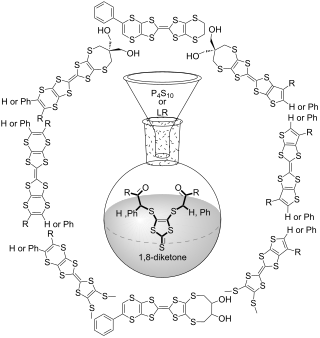
- reflectance of the complex decreased while transmittance increased with increased annealing temperature. Our easy synthesis of dithiin-containing compounds led to the production of various BEDT-TTF analogues, comprising monophenyldithiin, diphenyldithiin, diphenylthiophene and diols [40][46][53]. While

Graphical Abstract

Figure 1: Chemical structure of the TTF analogues and TCNQ.

Figure 2: Oxidation states of TTF.

Figure 3: 1,4-Dithiin and thiophene fused TTF analogues from 1,8-diketone.

Scheme 1: Reaction mechanism of fused 1,4-dithiin and thiophene ring systems.

Scheme 2: Reaction conditions (i) LR, toluene, reflux, overnight; (ii) P4S10, toluene, reflux, 3 h.

Scheme 3: Proposed mechanism for side products.

Scheme 4: Reaction conditions (i) Hg(OAc)2, AcOH/CHCl3, rt, 1h; (ii) (EtO)3P, N2, 3 h, 110 °C.

Scheme 5: Reaction conditions (i) iPr2NEt, MEMCl, THF, rt, 12 h; (ii) LiAlH4, dry ether, rt, 24 h; (iii) tosy...

Scheme 6: Reagents and conditions (i) P4S10, toluene, reflux, dark, 3 h; (ii) P4S10, toluene, reflux, 3 h; (i...

Scheme 7: Reagents and conditions (i) Hg(OAc)2–AcOH, CHCl3, 3 h, rt; (ii) (EtO)3P, 110 °C, N2, 2 h.

Scheme 8: Charge transfer complex of 5,5',6,6'-tetraphenyl-2,2'-bi([1,3]dithiolo[4,5-b][1,4]dithiinylidene) 52...

Scheme 9: Reaction conditions (i) (EtO)3P, 110 °C, N2, 2 h.

Scheme 10: Reaction conditions (i) EtOH, reflux, overnight; (ii) diisopropylethylamine in CH2Cl2, room tempera...

Scheme 11: Reaction and conditions (i) P4S10, NaHCO3, toluene, reflux, 3 h; (ii) P4S10, p-TSA, toluene, reflux...
Anionic sigmatropic-electrocyclic-Chugaev cascades: accessing 12-aryl-5-(methylthiocarbonylthio)tetracenes and a related anthra[2,3-b]thiophene
- Laurence Burroughs,
- John Ritchie,
- Mkhethwa Ngwenya,
- Dilfaraz Khan,
- William Lewis and
- Simon Woodward
Beilstein J. Org. Chem. 2015, 11, 273–279, doi:10.3762/bjoc.11.31
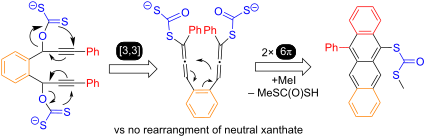
- Laurence Burroughs John Ritchie Mkhethwa Ngwenya Dilfaraz Khan William Lewis Simon Woodward School of Chemistry, The University of Nottingham, University Park, Nottingham NG7 2RD, United Kingdom 10.3762/bjoc.11.31 Abstract 1,4-Diols resulting from the double addition of ArCCLi (Ar = Ph
- Discussion Investigation of the chemistry of Scheme 2 commenced with the preparation of the required diols 8 through simple acetylide addition to o-phthalaldehyde (60–91% yield, see Supporting Information File 1). All of the additions proceeded in high yield, but under all conditions tried, no strong bias to
- equivalent trend in diols 8b–f where two distinct sets of equivalent signals are seen δH 6.14–6.20 and δH 6.23–6.35. On this basis we assign the higher chemical shift signal to the meso diastereomer. Cascade optimisation (Table 1) was carried out using 8a in THF unless otherwise stated. Typically diol 8a (ca

Graphical Abstract

Scheme 1: Use of bis-allene intermediates 2 for rapid access to substituted tetracenes [14,16].

Scheme 2: Proposed access to aryl substituted 5-thiolatotetracene derivatives.

Scheme 3: Equilibration to meso species.

Scheme 4: Competing reaction pathways.

Scheme 5: Stacking motifs in 7a, d, f–h and j. Y = COSMe.
Articulated rods – a novel class of molecular rods based on oligospiroketals (OSK)
- Pablo Wessig,
- Roswitha Merkel and
- Peter Müller
Beilstein J. Org. Chem. 2015, 11, 74–84, doi:10.3762/bjoc.11.11

- convergent approach) and 29 [9] (Scheme 6). Based on ketones 27a–c and diols 28, 29 we obtained ARs 32a–c in two steps consisting of the established double activation acetalization [8] and the CuAAC, catalyzed by Cu/C, with moderate yields (Scheme 7). As mentioned above this sequential approach failed in the

Graphical Abstract

Figure 1: Typical OSK rod A with solubility enhancing sleeve (D) and building blocks B,C,E.

Figure 2: Fundamental structure of articulated rods (blue = legs, red = joint, green = terminal functionaliti...

Figure 3: Synthetic strategy towards articulated rods.
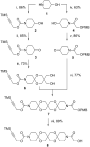
Scheme 1: Synthesis of building block 8 (i: trimethylsilylpropargyl-4-nitrophenylcarbonate. ii: Dess–Martin-p...

Scheme 2: Synthesis of articulated rod 11 (i: CBr4, PPh3, NaN3. ii: K2CO3/MeOH. iii: Cu/C DCM/MeOH 1:1, cat. ...

Scheme 3: Sequential deprotection of 11 and synthesis of triple articulated rod 14 (i: K2CO3/MeOH. ii: CBr4/P...

Scheme 4: Synthesis of articulated rods 23–25 with increased solubility (i: 4-hydroxypiperidine, DCC, HOBt. i...

Scheme 5: Macrocyclization of articulated rod 25.

Scheme 6: Synthesis of building blocks 27–29 (i: 1. pyrene-1-ylacetic acid, DCC/DMAP, 68%; 2. Dess–Martin per...

Scheme 7: Synthesis of articulated rods 32a–c (i: NaH, TMSCl, TMSOTf. ii: Cu/C, Et3N).

Scheme 8: Synthesis of articulated rods 33, 34 and 36.

Scheme 9: Synthesis of articulated rod 39 (i: cinnamoyl chloride, DMAP, pyridine. ii: DMF 120 °C).

Scheme 10: Synthesis of functionalized articulated rod 43 (i: PYBOP, Et3N. ii: KOH, H2O. iii: 32c, quant.).

Scheme 11: Stretched-folded equilibrium of pyrene labelled AR 32a.

Figure 4: Fluorescence spectra of AR 32a in EPA at different temperatures (c = 5·10−6 mol/L).

Figure 5: Monomer–excimer ratio IM/IEX of the fluorescence of 32a depending on solvent viscosity (DCE = 1,2-d...

Figure 6: Monomer–excimer ratio IM/IEX of the fluorescence of 32a depending on the addition of cyclodextrines...

Scheme 12: Formation of pseudorotaxanes from AR 32a and cyclodextrines.

Figure 7: Influence of Triton X-100 on the fluorescence spectra of 32a in aqueous solution. 32a was added fro...

Figure 8: Comparison of photochemical reactivity of 32b, 33a, 39 (left). Irradiation UV spectrum of 32b in AC...
NAA-modified DNA oligonucleotides with zwitterionic backbones: stereoselective synthesis of A–T phosphoramidite building blocks
- Boris Schmidtgall,
- Claudia Höbartner and
- Christian Ducho
Beilstein J. Org. Chem. 2015, 11, 50–60, doi:10.3762/bjoc.11.8
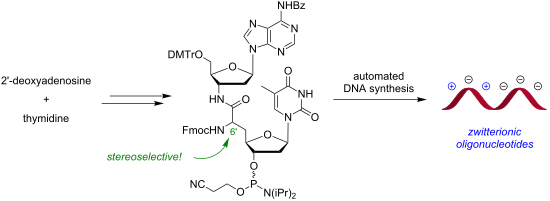
- with ammonium fluoride in methanol at elevated temperature, which afforded diols (S)-27 and (R)-27, each in 66% yield. DMTr protection under standard conditions then provided intermediates (S)-28 and (R)-28 in yields of 72% and 81%, respectively. Finally, phosphitylation of the 3'-hydroxy group gave

Graphical Abstract
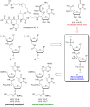
Figure 1: Design concept of nucleosyl amino acid (NAA)-modified oligonucleotides 5 formally derived from stru...

Scheme 1: Retrosynthetic analysis of target phosphoramidites (S)-7 and (R)-7 (BOM = benzyloxymethyl).

Scheme 2: Synthesis of N-Fmoc-protected thymidine-derived nucleosyl amino acids (S)-9 and (R)-9; details on t...

Scheme 3: Synthesis of protected 3'-amino-2',3'-dideoxyadenosine 8.

Scheme 4: Synthesis of target phosphoramidites (S)-7 and (R)-7 and of two NAA-modified DNA oligonucleotides 30...



