


Search results
Search for "environmentally friendly" in Full Text gives 205 result(s) in Beilstein Journal of Organic Chemistry. Showing first 200.
Understanding the unexpected effect of frequency on the kinetics of a covalent reaction under ball-milling conditions
Beilstein J. Org. Chem. 2019, 15, 1226–1235, doi:10.3762/bjoc.15.120
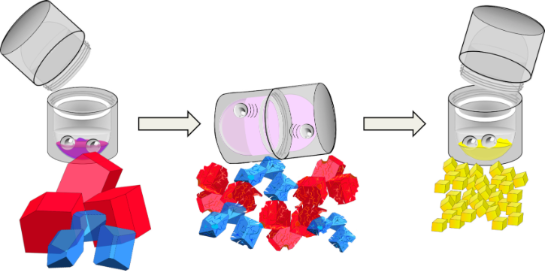
- crystals into smaller particles followed by the accumulation of energy in crystal defects. In recent years, manual and ball-mill grinding have become increasingly routine solid-state synthesis tools [1]. Generally referred to as mechanochemistry, these methods are more environmentally friendly and usually


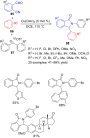
Unexpected polymorphism during a catalyzed mechanochemical Knoevenagel condensation
Beilstein J. Org. Chem. 2019, 15, 1141–1148, doi:10.3762/bjoc.15.110
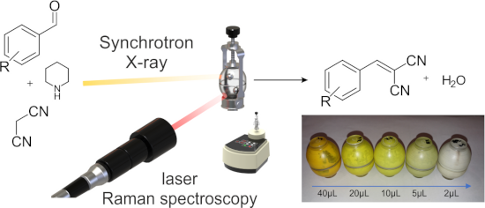
- materials [1]. Interest in these methods stems largely from the fact that they are efficient and more environmentally friendly as compared to traditional approaches [2][3]. Mechanochemistry is a well-established method for the synthesis of coordination polymers, the formation of cocrystals, and in C–C


Precious metal-free molecular machines for solar thermal energy storage
Beilstein J. Org. Chem. 2019, 15, 1096–1106, doi:10.3762/bjoc.15.106
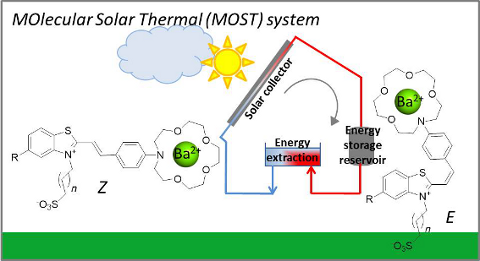
- other processes, quenching the photoisomerization; (v) the energy storing MOST materials have to utilize light in the visible range of the spectrum; (vi) it will be a crucial benefit for the MOST technology, if toxic and precious metals are avoided. Focusing on environmentally friendly MOST system is an




Multicomponent reactions (MCRs): a useful access to the synthesis of benzo-fused γ-lactams
Beilstein J. Org. Chem. 2019, 15, 1065–1085, doi:10.3762/bjoc.15.104
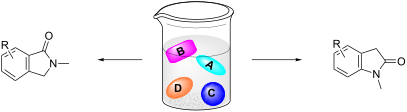
- acid catalyst for this transformation. At room temperature, the product of this environmentally friendly Strecker reaction is nitrile derivative 53 (R2 = CN, Scheme 15, method A), while at reflux carboxamide 53 (R2 = CONH2, Scheme 15, method A) is obtained. Notoriously, aromatic amines 2 did not work
- heterocycle containing five- and six-membered fused N-heterocyclic rings (Scheme 16), including the γ-lactam unit. The first synthesis of this class of compounds was reported by Pal et al. [96] with the aid of montmorillonite K10 as a recyclable catalyst in ethanol. With these environmentally friendly






Mechanochemistry of supramolecules
Beilstein J. Org. Chem. 2019, 15, 881–900, doi:10.3762/bjoc.15.86
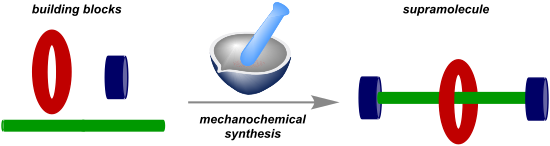
- . Contrastingly, achieving syntheses through mechanochemical methods are generally time-saving, environmentally friendly and more economical. This review is written to shed some light on supramolecular chemistry and the synthesis of various supramolecules through mechanochemistry. Keywords: ball milling


Homo- and hetero-difunctionalized β-cyclodextrins: Short direct synthesis in gram scale and analysis of regiochemistry
Beilstein J. Org. Chem. 2019, 15, 710–720, doi:10.3762/bjoc.15.66
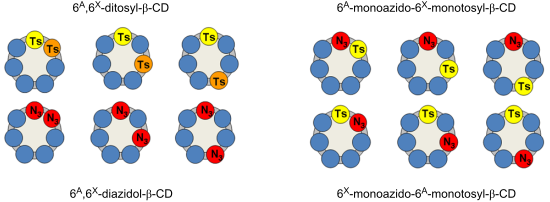
- the 6A,6B-ditosyl-β-CD prepared in reaction 1, see Supporting Information File 1, Figures S18–S19). In summary, the direct ditosylation in environmentally friendly aqueous medium affords the 6A,6C- and 6A,6D-ditosyl-β-CDs, from which the 6A,6C- and 6A,6D-diazides are obtained in overall 29% and 21


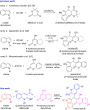
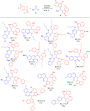
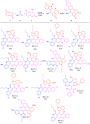
Catalyst-free assembly of giant tris(heteroaryl)methanes: synthesis of novel pharmacophoric triads and model sterically crowded tris(heteroaryl/aryl)methyl cation salts
Beilstein J. Org. Chem. 2019, 15, 642–654, doi:10.3762/bjoc.15.60
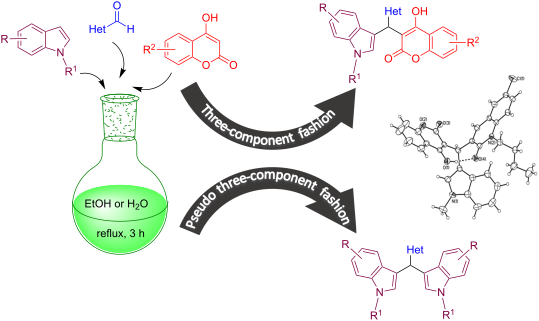
- ]. Furthermore, it is highly desirable to perform these reactions in environmentally friendly solvents such as water, ethanol, and PEG [6][7]. Motifs bearing triarylmethane (Ar3CH) [8][9][10] and their heterocyclic variants (Het-Ar)3CH [8][9][10][11][12], constitute an integral part of a number of bioactive
- of higher complexity by employing simpler, more efficient, catalytic methods that are also environmentally friendly. Molecular hybridization has emerged as an interesting strategy for the synthesis of bioactive molecules with improved properties by combining two or more pharmacophore fragments in a








Aqueous olefin metathesis: recent developments and applications
Beilstein J. Org. Chem. 2019, 15, 445–468, doi:10.3762/bjoc.15.39
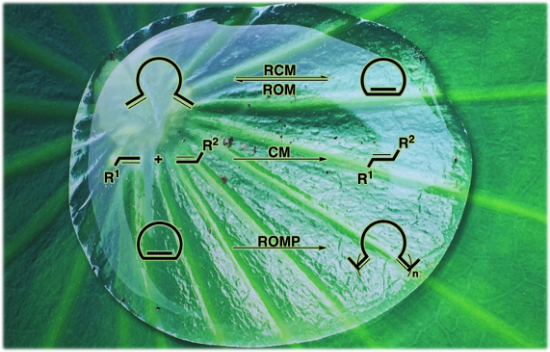
- ][24]. Water is inexpensive, non-flammable, non-toxic and environmentally friendly, all characteristics that make it an ideal solvent. Furthermore, water is the media of biochemical reactions, and metathesis is a bioorthogonal reaction that can be exploited in a biological setting. Figure 1 illustrates




Reusable and highly enantioselective water-soluble Ru(II)-Amm-Pheox catalyst for intramolecular cyclopropanation of diazo compounds
Beilstein J. Org. Chem. 2019, 15, 357–363, doi:10.3762/bjoc.15.31
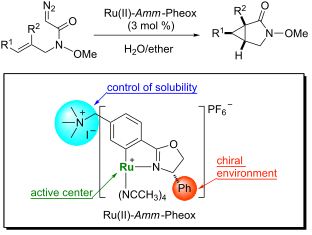
- diazoamide; Ru(II)-Pheox; water-soluble catalyst; Weinreb amide; Introduction Water-soluble transition metal complexes have been attracting increasing interest for catalytic applications because of their many advantages such as simple product separation, low cost, safety, and environmentally friendly


Oxidative radical ring-opening/cyclization of cyclopropane derivatives
Beilstein J. Org. Chem. 2019, 15, 256–278, doi:10.3762/bjoc.15.23
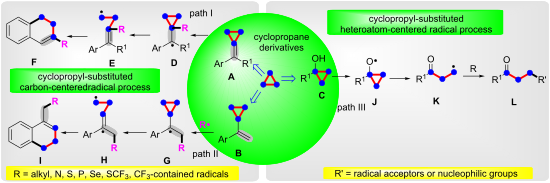
- exploration and many questions to be addressed. Although oxidative radical ring-opening/cyclization of functionalized cyclopropane derivatives has been well developed, the ring-opening/cyclization of common cyclopropane derivatives is conspicuously absent. On the other hand, green and environmentally friendly


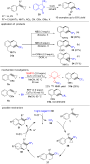


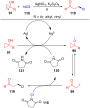


Ammonium-tagged ruthenium-based catalysts for olefin metathesis in aqueous media under ultrasound and microwave irradiation
Beilstein J. Org. Chem. 2019, 15, 160–166, doi:10.3762/bjoc.15.16
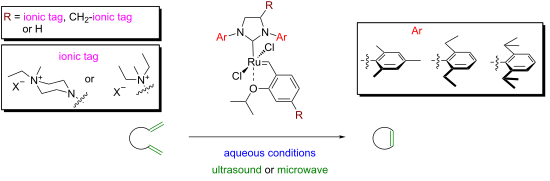
- -heterocyclic carbene (NHC) ligand were revealed. The presented methodology allows for preparation of a variety of polar and non-polar metathesis products under environmentally friendly conditions. Keywords: catalysis; green chemistry; microwave; N-heterocyclic carbene; olefin metathesis; ruthenium; ultrasound


The influence of the cationic carbenes on the initiation kinetics of ruthenium-based metathesis catalysts; a DFT study
Beilstein J. Org. Chem. 2018, 14, 2872–2880, doi:10.3762/bjoc.14.266
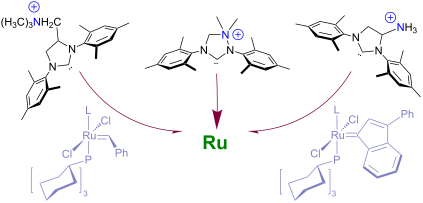
- stable in water and, therefore, environmentally-friendly. The idea of incorporating a quaternary ammonium moiety into the imidazole part of the carbene was later expanded by several other groups, including a number of new water-soluble catalysts synthesized by Skowerski et al. [23][24]. In the meantime



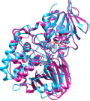
The enzymes of microbial nicotine metabolism
Beilstein J. Org. Chem. 2018, 14, 2295–2307, doi:10.3762/bjoc.14.204
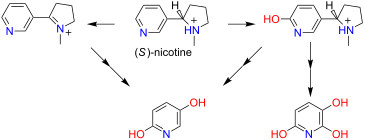
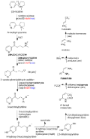
- )-nicotine (L-nicotine) is found at high levels in tobacco leaves and the waste from tobacco processing. The resulting interest in developing environmentally friendly methods of degrading nicotine has driven studies of microbial pathways for metabolizing the compound, with the possible additional benefit of




Applications of organocatalysed visible-light photoredox reactions for medicinal chemistry
Beilstein J. Org. Chem. 2018, 14, 2035–2064, doi:10.3762/bjoc.14.179
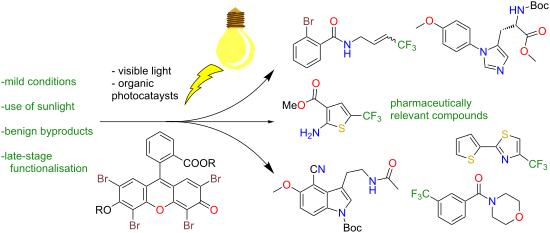
- , scalable and environmentally friendly reaction conditions than the traditional methods employed for making these highly substituted heteroaromatics. Access to the saturated oxazolines and thaziolines from amides and thioamides, respectively, has been described by Nicewicz who used acridinium salt


Water-soluble SNS cationic palladium(II) complexes and their Suzuki–Miyaura cross-coupling reactions in aqueous medium
Beilstein J. Org. Chem. 2018, 14, 1859–1870, doi:10.3762/bjoc.14.160
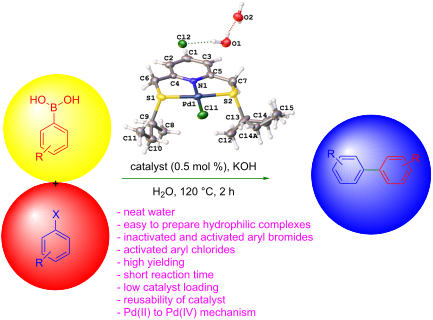
- solvents in the presence of an excess of base [1][2][3]. With the drive for the development of environmentally friendly and low cost protocols, a number of methodologies for the Suzuki–Miyaura reaction under aqueous conditions or in neat water have been reported [4][5][6]. This has been achieved via




Heterogeneous acidic catalysts for the tetrahydropyranylation of alcohols and phenols in green ethereal solvents
Beilstein J. Org. Chem. 2018, 14, 1655–1659, doi:10.3762/bjoc.14.141
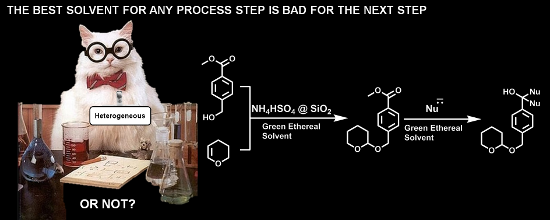
- toxicities and are considered negative for genotoxicity and mutagenicity [26][27][28]. Due to these environmentally friendly characteristics, CPME and 2-MeTHF appear as versatile green alternatives to ethereal solvents such as tetrahydrofuran, dioxane, diethyl ether or methyl tert-butyl ether. Aiming to the
- development of a particularly practical and environmentally friendly procedure to the generation of THP ethers, we devoted our efforts to the employment of heterogeneous acidic catalysts [29][30] in order to set up conditions allowing easy processing of the reaction mixtures and, possibly, the recovery and


A survey of chiral hypervalent iodine reagents in asymmetric synthesis
Beilstein J. Org. Chem. 2018, 14, 1244–1262, doi:10.3762/bjoc.14.107
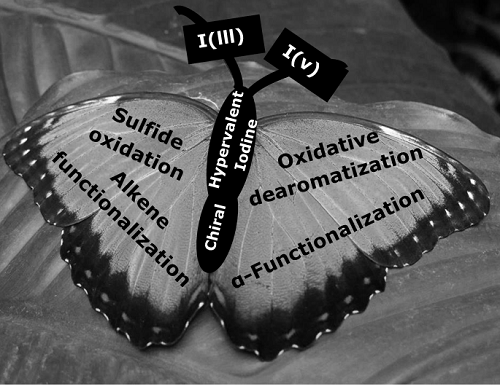
- environmentally friendly, mild and economic reagents have been used in catalytic or stoichiometric amounts as an alternative to transition metals for delivering enantioenriched molecules. Varieties of different chiral reagents and their use for demanding asymmetric transformations have been documented over the
- challenging and application-oriented conversions that can be applied for the total synthesis of natural products as well as in industry related to pharmaceutical and medicinal chemistry. These environmentally friendly, cheap and readily available reagents will surely attract the attention of scientists



Hypervalent iodine(III)-mediated decarboxylative acetoxylation at tertiary and benzylic carbon centers
Beilstein J. Org. Chem. 2018, 14, 1046–1050, doi:10.3762/bjoc.14.92
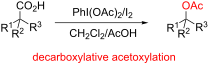
- operation, and the use of readily available and environmentally friendly oxidants. However, despite the great potential of this approach with respect to a decarboxylative C–O bond-forming reaction, the oxidation system was only applied to reactions of uronic acids and α-amino acids [22][23][24], and further


Electrochemically modified Corey–Fuchs reaction for the synthesis of arylalkynes. The case of 2-(2,2-dibromovinyl)naphthalene
Beilstein J. Org. Chem. 2018, 14, 891–899, doi:10.3762/bjoc.14.76
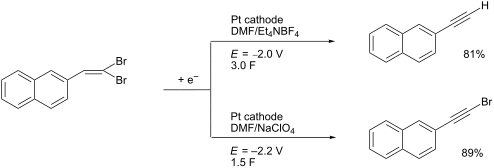
- conditions and in the absence of reducing agents or bases in the reaction mixture. Electrochemical methods can be considered an environmentally friendly technique: they rely on the use of practically massless electrons (which are not converted to byproducts) instead of stoichiometric amounts of redox


Electrochemical Corey–Winter reaction. Reduction of thiocarbonates in aqueous methanol media and application to the synthesis of a naturally occurring α-pyrone
Beilstein J. Org. Chem. 2018, 14, 547–552, doi:10.3762/bjoc.14.41
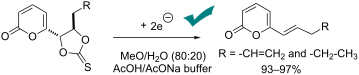
- more environmentally friendly than the classical reaction, where a large excess of trialkyl phosphite as reducing agent and high temperatures are required. Thus, cathodic reduction at room temperature of two cyclic thiocarbonates (−1.2 to −1.4 V vs Ag/AgCl) afforded the corresponding alkenes, trans-6
- /AcONa buffer 0.5 M as electrolytic media. We term this transformation as the “Electrochemical Corey–Winter (ECW) reaction”. This new environmentally friendly process was used to synthetize a metabolite isolated from Trichoderma viride in high yield. Alkenes and α,β-unsaturated ester functionalities are


Functionalization of N-arylglycine esters: electrocatalytic access to C–C bonds mediated by n-Bu4NI
Beilstein J. Org. Chem. 2018, 14, 499–505, doi:10.3762/bjoc.14.35

- the presence of excess amounts of oxidant. On the other hand, the toxicity of residual traces of transition metal (photo)catalyst in products is also highly concerned. Consequently, metal-free and environmentally friendly oxidative C–C bond formation is highly desired. Electrochemistry has proved to


Progress in copper-catalyzed trifluoromethylation
Beilstein J. Org. Chem. 2018, 14, 155–181, doi:10.3762/bjoc.14.11
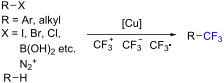
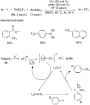
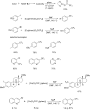
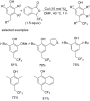
- all components in air, the environmentally friendly nature, and the recycling of the aqueous medium. Subsequently, the group of Li and Duan [58] reported an efficient method for the synthesis of α-trifluoromethyl ketones via addition of CF3 to aryl(heteroaryl)enol acetates using readily available










Exploring mechanochemistry to turn organic bio-relevant molecules into metal-organic frameworks: a short review
Beilstein J. Org. Chem. 2017, 13, 2416–2427, doi:10.3762/bjoc.13.239
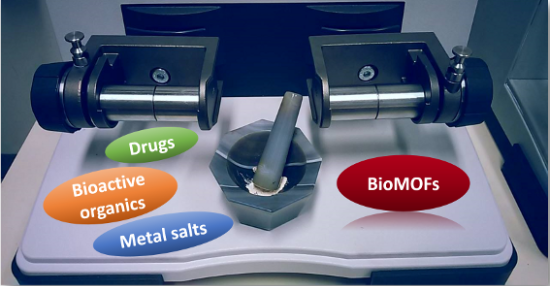
- Vania Andre Silvia Quaresma Joao Luis Ferreira da Silva M. Teresa Duarte Centro de Química Estrutural, Instituto Superior Técnico, Universidade de Lisboa, Av. Rovisco Pais, 1049-001 Lisbon, Portugal 10.3762/bjoc.13.239 Abstract Mechanochemistry is a powerful and environmentally friendly synthetic
- and solvent. It is an approach to green chemistry, an area devoted to the discovery of environmentally friendly synthetic pathways, eliminating or drastically reducing the amount of solvent necessary to catalytically promote reactions. Mechanochemistry consists of grinding together two or more
- (linker), or by encapsulation (guest). Mechanochemistry has proved to be an efficient, high performance, environmentally friendly, cleaner, and faster synthetic procedure, leading to significantly lower costs of production. There is still much to explore in the combination of BioMOFs with mechanochemistry




The effect of milling frequency on a mechanochemical organic reaction monitored by in situ Raman spectroscopy
Beilstein J. Org. Chem. 2017, 13, 2160–2168, doi:10.3762/bjoc.13.216
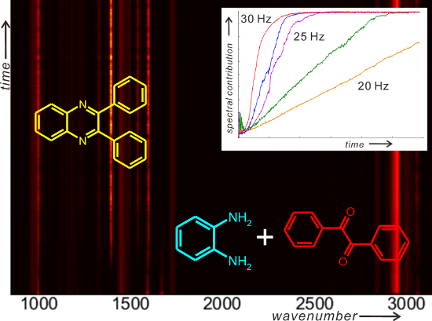
- ] has rendered mechanochemical reactions by ball milling or grinding as viable, highly environmentally-friendly alternatives to solution-based chemistry. Importantly, mechanochemistry provides not only a means to conduct chemical transformations of poorly soluble reagents [17], but also enables access


Superstructures with cyclodextrins: Chemistry and applications IV
Beilstein J. Org. Chem. 2017, 13, 2157–2159, doi:10.3762/bjoc.13.215
- with gold salts, such as KAuBr4, which readily crystallize as fine needles [10]. Based on this finding, a new and environmentally friendly recovery process for gold from excavation material is under development. Significant progress was achieved in the functionalization of CDs through the



