


Search results
Search for "lactone" in Full Text gives 295 result(s) in Beilstein Journal of Organic Chemistry. Showing first 200.
Fluorinated phenylalanines: synthesis and pharmaceutical applications
Beilstein J. Org. Chem. 2020, 16, 1022–1050, doi:10.3762/bjoc.16.91
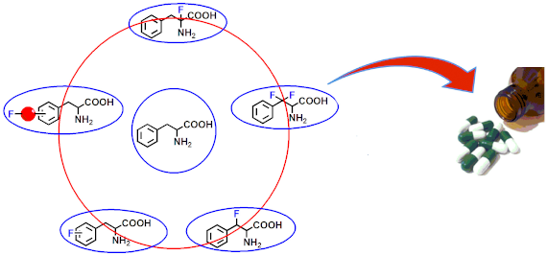
- with zincate 11 using a variety of catalysts and different reaction conditions, was unsuccessful. However, coupling of 4-[bis(dimethoxybenzyl)difluoromethyl]benzyl bromide (14) with the lithium enolate of William`s lactone 15 gave the protected amino acid 16 in 80% yield. The desired protected amino


Towards the total synthesis of chondrochloren A: synthesis of the (Z)-enamide fragment
Beilstein J. Org. Chem. 2020, 16, 670–673, doi:10.3762/bjoc.16.64
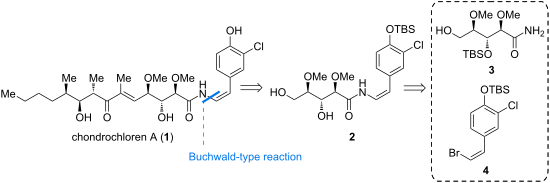
- obtained through a seven-step sequence starting from ᴅ-ribonic acid-1,4-lactone. The (Z)-vinyl bromide 4 is accessible in four steps from 4-hydroxybenzaldehyde. The pivotal cross coupling between both fragments was achieved after extensive experimentation with copper(I) iodide, K2CO3 and N,N
- )-bromide 4 we decided to use a (Z)-selective Buchwald-type reaction encouraged by the previous works of the Buchwald group on producing (E)-enamide coupling products [13][14][15]. The synthesis of the amide 3 started with TIPDS-protection of commercially available ᴅ-ribonic acid-1,4-lactone (5) (Scheme 1


Recent advances in photocatalyzed reactions using well-defined copper(I) complexes
Beilstein J. Org. Chem. 2020, 16, 451–481, doi:10.3762/bjoc.16.42
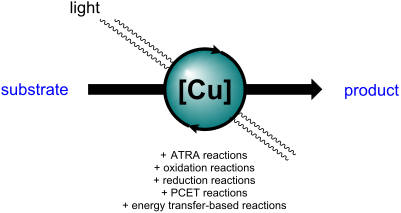
- the best copper-based photocatalyst, Collins and co-workers reported the synthesis of a bicyclic lactone by a PCET reaction manifold (Scheme 32) [39]. Using their methodology, the authors discovered the [Cu(I)(quinitri)(xantphos)]BF4 catalyst as the best one, which afford the cis-lactone in 79
- lactone synthesis using a copper-photocatalyzed PCET reaction. Photocatalytic Pinacol coupling reaction catalyzed by [Cu(I)(pypzs)(BINAP)]BF4. The ligands of the copper complex are omitted for clarity. Azide photosensitization using a Cu-based photocatalyst. Funding This work was partially supported by








Photophysics and photochemistry of NIR absorbers derived from cyanines: key to new technologies based on chemistry 4.0
Beilstein J. Org. Chem. 2020, 16, 415–444, doi:10.3762/bjoc.16.40
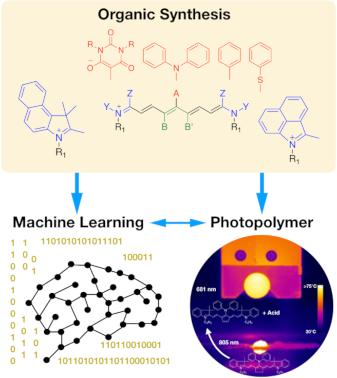
- distributes in literature but is wrong because protons do not exist alone and data related to pH-values relate only to aqueous solutions. Ring opening by rhodamine B lactone quantitatively probed formation conjugate acid by formation of rhodamine B [5]. We interpret the term conjugate acid as a species in


Visible-light-induced addition of carboxymethanide to styrene from monochloroacetic acid
Beilstein J. Org. Chem. 2020, 16, 398–408, doi:10.3762/bjoc.16.38
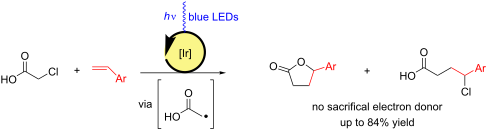
- form in case of fac-[Ir(ppy)3]), which was proven by mass spectrometry and EPR spectroscopy for one of the catalysts (N,N-5,10-di(2-naphthalene)-5,10-dihydrophenazine) used in this work. The generation of HCl resulting from lactone formation could be an additional problem for organometallic photoredox
- catalysts used in this reaction. In an attempt to trap one of the radical intermediates with TEMPO, we observed a compound indicating the generation of a chloromethyl radical. Keywords: ATRA; catalysis; chloroacetic acid; lactone; photoredox; Introduction Monochloroacetic acid is an industrially important
- , Kokotos and co-workers published a visible light photoredox catalyzed lactone formation from iodoacetic acid and alkenes [29] (Scheme 1). In addition, it has been shown that monochloroacetic acid can be reduced by hydrated electrons [30][31]. The group of Goez developed a strategy for the photoredox


Copper-catalyzed enantioselective conjugate addition of organometallic reagents to challenging Michael acceptors
Beilstein J. Org. Chem. 2020, 16, 212–232, doi:10.3762/bjoc.16.24
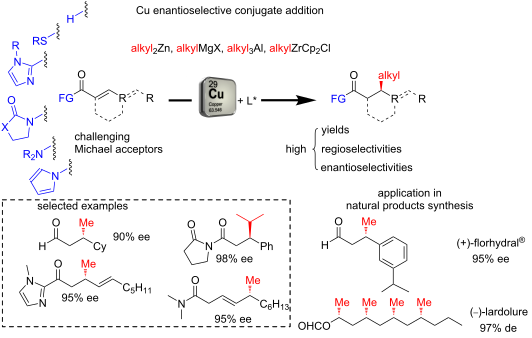
- enantioenriched products (up to 99% ee) were successfully converted to relevant molecules, such as trans-whisky lactone [43]. In 2003, Hoveyda and Hird reported the first 1,4-addition of alkylmetal nucleophiles to α,β-unsaturated N-acyloxazolidinones (Scheme 19) [47]. The chiral triamidophosphane ligand L15a as a




Synthesis of C-glycosyl phosphonate derivatives of 4-amino-4-deoxy-α-ʟ-arabinose
Beilstein J. Org. Chem. 2020, 16, 9–14, doi:10.3762/bjoc.16.2
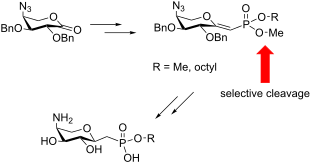
- lactone with the lithium salt of dimethyl methylphosphonate followed by an elimination step of the resulting hemiketal, leading to the corresponding exo- and endo-glycal derivatives. The ensuing selective monodemethylation and hydrogenolysis of the benzyl groups and reduction of the 4-azido group gave the
- Ara4N transferase reacted with the equatorial phosphodiester lipid, we opted to use lactone 4 as a suitable precursor for C-glycosyl phosphonates, based on literature precedents [10][20][21]. Thus, a modified Swern oxidation of lactol 3 with acetic anhydride in DMSO afforded a near-quantitative yield of
- lactone 4, which, however, was unstable towards chromatographic purification and used as crude material after lyophilization to remove the solvent. Coupling of 4 with the lithium salt of dimethyl methylphosphonate (5) in THF afforded the β-anomeric ketol phosphonate derivative 6 in 57% yield. The axial


A green, economical synthesis of β-ketonitriles and trifunctionalized building blocks from esters and lactones
Beilstein J. Org. Chem. 2019, 15, 2930–2935, doi:10.3762/bjoc.15.287
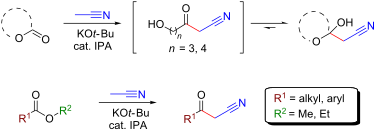
- solubility of both the KOt-Bu base and the acetonitrile derived KCH2CN salt. This effectively accelerates the generation of the latter and as such, its reaction with the lactone (or ester) carbonyl carbon. By increasing the solubility of the conjugate base salt, the pKa of acetonitrile in the ethereal
- alkoxide anions. This reduces the occurrence of undesirable side-reactions, e.g., intermolecular aldol reaction, lactone/ketonitrile product dimerization and ring-opening polymerization. The application of this method to produce the analogous hemiketal 6 from γ-butyrolactone was not as efficient. Although
- from lactone to 20% (Scheme 2). Due to the interest in the potential preparation of pyrimidines from β-ketonitriles and guanidine [18], we wanted to test the general applicability of this method for access to a variety of alkyl and aryl-substituted β-ketonitriles (as summarized in Table 1). When we


Nanangenines: drimane sesquiterpenoids as the dominant metabolite cohort of a novel Australian fungus, Aspergillus nanangensis
Beilstein J. Org. Chem. 2019, 15, 2631–2643, doi:10.3762/bjoc.15.256
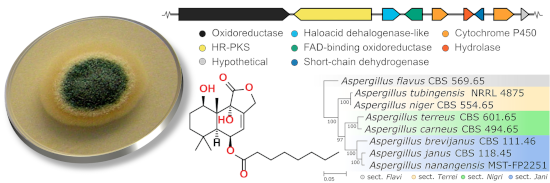
- File 1) yielded ten drimane metabolites shown in Figure 1: one trihydroxylated drimane sesquiterpenoid lactone, nanangenine A (1), four drimane lactones bearing C6/C8 acyl chains, nanangenines B, C, D and E (2, 4, 5 and 6), two acylated drimanes bearing isomeric lactones, isonanangenines B and D (3 and
- ), three methyl groups (C-13, C-14, C-15) and three hydroxy groups (1-OH, 6-OH, 9-OH). Detailed analysis of the 2D NMR data for 1 (Table S3 in Supporting Information File 1) confirmed the presence of a drimane sesquiterpenoid lactone scaffold. A search of the literature revealed 1 to be almost identical to
- revealed the only difference to be the position of the lactone carbonyl group, which was determined to be at C-12 instead of C-11 based on key HBMC correlations from H-7 to C-12 and 9-OH to C-11. Therefore, the structure of 3 was assigned as shown in Figure 1. Compound 3 was previously reported in 2013 as


Synthetic terpenoids in the world of fragrances: Iso E Super® is the showcase
Beilstein J. Org. Chem. 2019, 15, 2590–2602, doi:10.3762/bjoc.15.252
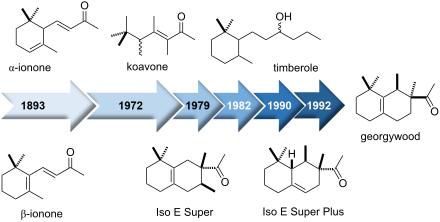
- ]. Oxidation, iodocarboxylation and elimination yielded the lactone 43. A series of functional group manipulations provided enone 44, which underwent a cuprate-mediated Michael addition and liberation of the aldehyde 46 upon ozonolysis. After intramolecular aldol condensation the resulting enone 47 was


Synthesis of novel sulfide-based cyclic peptidomimetic analogues to solonamides
Beilstein J. Org. Chem. 2019, 15, 2544–2551, doi:10.3762/bjoc.15.247
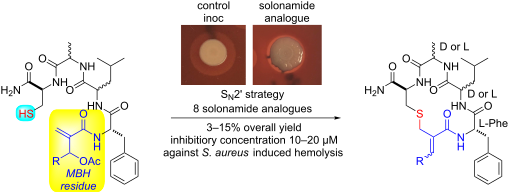
- was based on the conservation of the 16-membered macrocyclic scaffold and the apolar tripeptidyl moiety found in the solonamides. Both features are important to guarantee the interference with S. aureus QS [12][13][14][15]. The ester linkage of the lactone core was substituted by the sulfide group
- File 1). Three main absorption bands could be readily observed around 3280, 1650 and 1520 cm−1. The first one was assigned to the stretch for N–H bonds of the peptide linkage. The stretch for the lactam and lactone C=O bonds gives rise to the broad absorption close to 1650 cm−1. The lowering on the
- wavenumber values for the lactone C=O stretch was also observed for bands assigned to the C=C bonds as consequence of their conjugation. Evaluation of the growth inhibition and hemolytic activity of S. aureus for the solonamide analogues Initially, the antibacterial activity of all analogues 9 was tested by


Sugar-derived oxazolone pseudotetrapeptide as γ-turn inducer and anion-selective transporter
Beilstein J. Org. Chem. 2019, 15, 2419–2427, doi:10.3762/bjoc.15.234
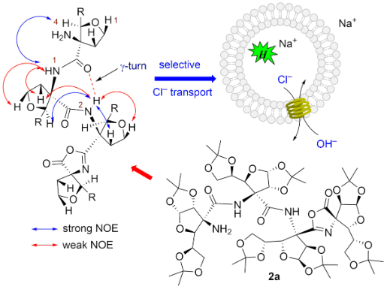
- showed a broad band at 3444–3421 cm−1 indicating the presence of -NHs of amine/amide functionalities. The bands at 1740 and 1688 cm−1 were assigned to the lactone carbonyl and amide (as well as imine) groups, respectively. In the 1H NMR spectrum, the downfield signals at δ 9.03 and 8.52 ppm were assigned
- to the amide NH(I) and NH(II), respectively. The signal at δ 1.80 ppm, integrating for two protons, was assigned to the presence of an NH2 functionality. In the 13C NMR spectrum, the appearance of signals at δ 170.8, 170.6 and 166.7 ppm were assigned to the lactone/amide carbonyl functionalities. The
- δ 2.0 ppm, integrating for three protons, was assigned to the NHCOCH3. In the 13C NMR spectrum, the appearance of five signals in the downfield region (at δ 171.6, 170.9, 167.5, 165.0, and 164.0 ppm) indicated the presence of three amides, lactone carbonyl and imine carbon (-C=N) suggesting the


![[Graphic 2]](/bjoc/content/inline/1860-5397-15-234-i4.svg?max-width=637&scale=1.18182) lucigenin (A). Conce...
lucigenin (A). Conce...
An overview of the cycloaddition chemistry of fulvenes and emerging applications
Beilstein J. Org. Chem. 2019, 15, 2113–2132, doi:10.3762/bjoc.15.209
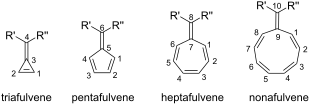
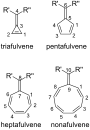
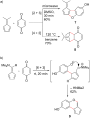
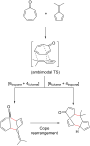
- (3b’ and 6b’) and anti-aromatic (4a’ and 5a’) ring currents. Reaction of 6,6-dimethylpentafulvene with singlet state oxygen to form an enol lactone via the multistep rearrangement proposed by Harada et al. (supporting information was not provided) [51]. Photosensitized oxygenation of 8





Characterization of two new degradation products of atorvastatin calcium formed upon treatment with strong acids
Beilstein J. Org. Chem. 2019, 15, 2085–2091, doi:10.3762/bjoc.15.206
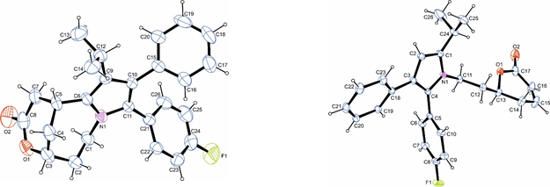
- /dehydration process in the side chain), treatment with conc. aqueous hydrochloric acid gave a complex, bridged molecule under C–C-bond formation of the lactone moiety with the pyrrole, migration of the isopropyl group and loss of the carboxanilide residue. The novel degradation products were characterized by
- process (stereoisomers, products resulting from impure starting materials or side reactions), and only one of these impurities, lactone 2, is most likely a degradation product, resulting from acid-mediated lactonization of the 3,5-dihydroxyheptanoate side chain. A couple of previous publications deal with
- -dihydroxyheptanoate side chain under moderately acidic conditions (0.1 M HCl) [11][12][13][14]. Shah et al. [15] identified six additional decomposition products upon treatment with 0.1 M HCl at 80 °C for 24 h, among which the dehydrated lactone 3 was dominating, accompanied by minor amounts of products arising from


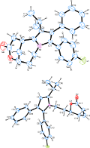


Bipolenins K–N: New sesquiterpenoids from the fungal plant pathogen Bipolaris sorokiniana
Beilstein J. Org. Chem. 2019, 15, 2020–2028, doi:10.3762/bjoc.15.198
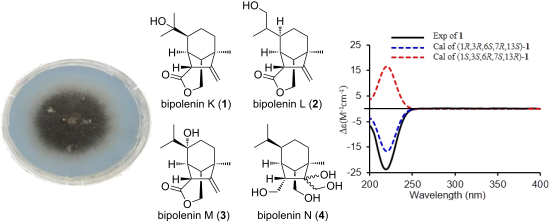
- chromatographed repeatedly with silica gel and RP-HPLC to afford four new sativene-type sesquiterpenoids, bipolenins K–N (1–4), along with eight previously reported compounds (5–12), which were identified as sativene-type sesquiterpenoids prehelminthosporol lactone (5) [1], helminthosporic acid (6) [1
- , 1.88, 2.65 and 3.77), which are typical resonances for sativene-type sesquiterpenoids. The NMR data for 1 were very similar to those for prehelminthosporol lactone (5) except for the replacement of a methine group (δC 32.1; δH 1.42) at C-9 in 5 with a hydroxylated quaternary carbon (δC 73.1) in 1. This
- with reduction of the lactone ring to the dialcohol and dihydroxylation of the Δ2,12 double bond. Detailed analysis of the 2D NMR data for 4 (Figure 2) confirmed the seco-sativene-type scaffold. The relative configurations at C-1, C-3, C-6, C-7 and C-13 were determined to be the same as those of 1–3


Isolation and characterisation of irinans, androstane-type withanolides from Physalis peruviana L.
Beilstein J. Org. Chem. 2019, 15, 2003–2012, doi:10.3762/bjoc.15.196
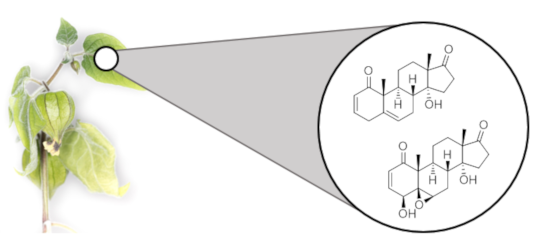
- well as the H-22 oxymethine proton of the lactone moiety. Surprisingly, both compounds showed only two putative methyl signals, and no signal which might correspond to H-22. Thus, we reasoned that both unknown compounds might be truncated withanolide-like compounds. HRESIMS suggested a sum formula of
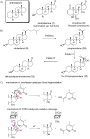
- ). Irinans represent highly unusual withanolide derivatives, as they lack the side-chain lactone ring that is a common structural feature of virtually all known withanolides [3], but possess an androstane backbone instead. While androstanes such as androsterone (7) are well-known human sex hormones (Figure
- without the lactone side chain. We therefore propose that the side-chain cleavage enzyme in withanolide biosynthesis acts at a late stage, using common pathway end products such as 4ß-hydroxywithanolide E (1) as its substrates. Two mechanisms are conceivable for this transformation (Figure 3C): A non



A review of the total syntheses of triptolide
Beilstein J. Org. Chem. 2019, 15, 1984–1995, doi:10.3762/bjoc.15.194
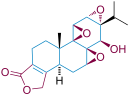
- 88. Ester exchange of 88 with (+)-8-phenylmenthol gave the key cyclization precursor 16. Oxidative radical cyclization of 16 in the presence of Mn(OAc)3 and Yb(OTf)3·H2O afforded the major tricyclic diastereomer 89 (dr = 38:1). Then the construction of the unsaturated lactone was performed by
- conversion of 89 to vinyl triflate 90, followed by reduction and palladium-catalyzed carbonylation–lactone formation to give key intermediate 8 [75][76][77]. After that, the three successive epoxides were installed by known procedures with some modification. The highlights were the introduction of the second
- and its relatives from commercially available acid 32 (Figure 2, route J and Scheme 8) [46]. This synthesis highlights the utilization of an indium(III)-catalyzed cationic polycyclization of 17 and a palladium-catalyzed carbonylation–in situ lactone formation to construct the key intermediate 94


Archangelolide: A sesquiterpene lactone with immunobiological potential from Laserpitium archangelica
Beilstein J. Org. Chem. 2019, 15, 1933–1944, doi:10.3762/bjoc.15.189
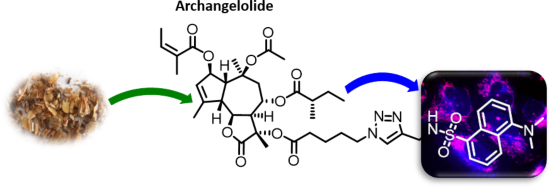
- biological effects. In plants, they are synthesized, among others, for pesticidal and antimicrobial effects. Two such compounds, archangelolide and trilobolide of the guaianolide type, are structurally similar to the well-known and clinically tested lactone thapsigargin. While trilobolide has already been
- fluorescent conjugate; sarco/endoplasmic reticulum calcium ATPase; sesquiterpene lactone; trilobolide analogue; Introduction Sesquiterpene lactones (SLs) have been attracting interest already for some time due to the plethora of biological effects they elicit. Various SLs show anticancer, antimicrobial
- takes place remarkably differs from that in compound 2 and thapsigargin. This is very likely due to stereochemistry on the lactone ring connection at C7 and the absence of a hydroxy group at the same position. The steric circumstances and the presence of the α-carbonyl group makes the tertiary C11




Application of chiral 2-isoxazoline for the synthesis of syn-1,3-diol analogs
Beilstein J. Org. Chem. 2019, 15, 1840–1847, doi:10.3762/bjoc.15.179
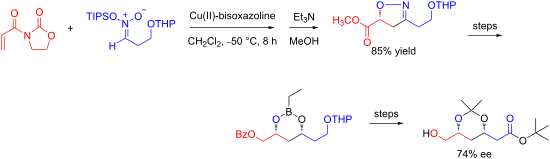
- broad spectrum of natural products [1][2]. (3R)-β-Hydroxy-δ-lactone or its open-ring equivalent (3R)-syn-3,5-dihydroxypentanoic acid, is a common structure in naturally occurring mevastatin (or compactin), lovastatin or closely related statins, and synthetic statins. Either the syn or anti-1,3-diol
- chiral β-hydroxy-δ-lactone moiety or its equivalents, pioneered by Wong [42], is equally competitive. Here, we report the preparations of tert-butyl (3S,5R)-6-hydroxy-3,5-O-isopropylidene-3,5-dihydroxyhexanoate and related syn-1,3-diol analogs from a chiral 2-isoxazoline (Scheme 1b). This work is part of


N-(1-Phenylethyl)aziridine-2-carboxylate esters in the synthesis of biologically relevant compounds
Beilstein J. Org. Chem. 2019, 15, 1722–1757, doi:10.3762/bjoc.15.168

- transition state was involved. Acid-induced aziridine ring openings and subsequent conjugate additions to the α,β-unsaturated lactone led to the formation of cis-fused [5,5']bicyclic compounds 186a or 186b. Reduction of the lactone moiety in 186a and subsequent deprotection gave (2S,3R,4S,5R)-184. In order
- to synthesize the natural (2S,3R,4R,5R)-184 the lactone 186b was subjected to Mitsunobu reaction followed by the ester reduction and the hydrogenolytic cleavage of the 1-phenylethyl group. Piperidines: A cis-disubstituted piperidine scaffold was identified in several piperidine alkaloids of diverse


Steroid diversification by multicomponent reactions
Beilstein J. Org. Chem. 2019, 15, 1236–1256, doi:10.3762/bjoc.15.121
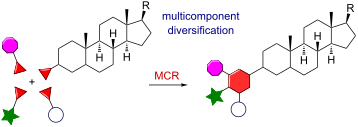
- paraformaldehyde and benzyl isocyanide to form hybrid 11 in good yield. Similarly, the spirostanic lactone 12 was transformed into spirostanic acid 13 and amine 14, which were next ligated to alanine methyl ester and Boc-histidine leading to the amino acid–steroid conjugates 15 and 16, respectively. This approach


Mechanochemical synthesis of poly(trimethylene carbonate)s: an example of rate acceleration
Beilstein J. Org. Chem. 2019, 15, 963–970, doi:10.3762/bjoc.15.93
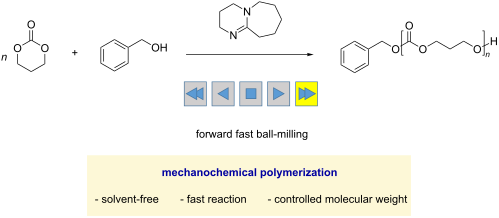
- biomedical applications [24]. The amidine base 1,8-diazabicyclo[5.4.0]undec-7-ene (DBU) is one of the best studied and most popular organocatalysts for ring-opening polymerizations of cyclic carbonates and lactones [25][26][27]. In contrast to the high activity of lactone polymerization, cyclic carbonate


Synthesis and biological investigation of (+)-3-hydroxymethylartemisinin
Beilstein J. Org. Chem. 2019, 15, 567–570, doi:10.3762/bjoc.15.51
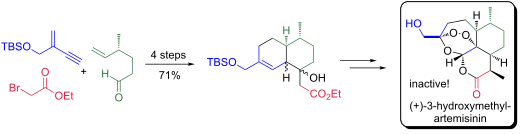
- sesquiterpene lactone is still unknown [5]. Whereas artemisinins are almost non-toxic to normal cells, several studies have confirmed their potent antitumor activity [6][7]. In addition, they have been reported to possess immunosuppressive, anti-inflammatory, antiviral, antifungal and antiparasitic activities
- [8][9][10]. Recently, it was shown that artemisinin interacts with the mammalian protein gephyrin and by stabilizing it, it enhances GABAA receptor signaling resulting in in vivo conversion of pancreatic α-cells into functional β-like cells [11]. Therefore, this sesquiterpene lactone may also find an
- 24% and 16% yield, respectively. Protection of the free hydroxy group of 16 as a silyl ether and methylation of the obtained lactone in α-position (LDA/MeI/HMPA) afforded derivative 17. After removal of the TES protecting group (+)-3-hydroxymethyl-9-epi-artemisinin (18, Scheme 3) was obtained


A chemoenzymatic synthesis of ceramide trafficking inhibitor HPA-12
Beilstein J. Org. Chem. 2019, 15, 490–496, doi:10.3762/bjoc.15.42
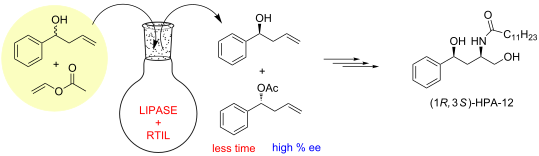
- reaction [20], tandem approach from (S)-Wynberg lactone [21], chiral ruthenium-catalyzed N-demethylative rearrangement of 1,2-isoxazolidines [22], gold(I)-catalyzed cyclization of a propargylic N-hydroxylamine [23], from β-sulfinamido ketones derived from chiral sulfinimines [24], and a Kornblum–DeLaMare


Reusable and highly enantioselective water-soluble Ru(II)-Amm-Pheox catalyst for intramolecular cyclopropanation of diazo compounds
Beilstein J. Org. Chem. 2019, 15, 357–363, doi:10.3762/bjoc.15.31
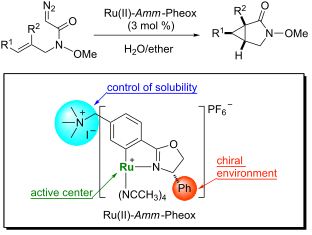
- nature and have excellent biological activity, including strong antibiotic, antihelmetic, antifungal, antitumor, antiviral and anti-inflammatory, which make them interesting lead structures for new drugs [34]. That is why a great deal of attention has been paid to the synthesis of the lactone ring [35
- diazoacetate could be cyclopropanated affording the corresponding lactone with low yield and good enantioselectivity (Table 1, entry 1). In case of the diazo compound derived from cinnamyl diazoacetate the corresponding lactone was obtained in high yield with high enantioselectivity (Table 1, entry 2). A





