Search results
Search for "proteins" in Full Text gives 536 result(s) in Beilstein Journal of Organic Chemistry. Showing first 200.
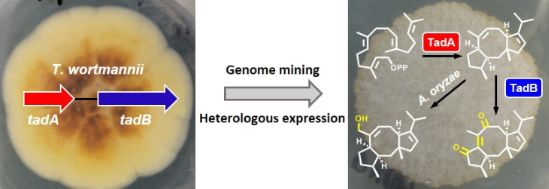
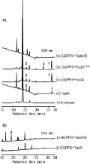
Characterization of a new fusicoccane-type diterpene synthase and an associated P450 enzyme
Beilstein J. Org. Chem. 2022, 18, 1396–1402, doi:10.3762/bjoc.18.144
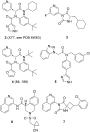
- efficient modulators of 14-3-3 protein–protein interactions (PPIs) [3][4]. 14-3-3 PPIs, which refer to the binding interactions of 14-3-3 proteins with hundreds of “client” proteins, are associated with many diseases, such as cancer and neurodegenerative diseases [3][4]. As a result, lots of attempts



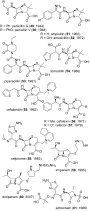
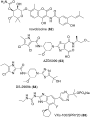
On drug discovery against infectious diseases and academic medicinal chemistry contributions
Beilstein J. Org. Chem. 2022, 18, 1355–1378, doi:10.3762/bjoc.18.141
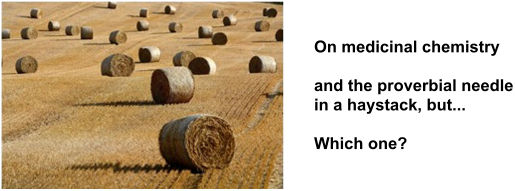
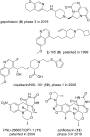
- antibacterial research department of GSK reported the results of their genome-driven seven-year long quest for original antibiotics. This target-based approach actually failed although 300 bacterial genes had been considered and 70 high-throughput screening campaigns, focusing on the corresponding proteins, had
- of antivirals which solely target the dengue virus via the inhibition of an essential interaction between the viral proteins NS3 and NS4B [200]. Still in the domain of infectious diseases, there are two very advanced public-based endeavors aiming at providing drugs against malaria which are







Computational model predicts protein binding sites of a luminescent ligand equipped with guanidiniocarbonyl-pyrrole groups
Beilstein J. Org. Chem. 2022, 18, 1322–1331, doi:10.3762/bjoc.18.137
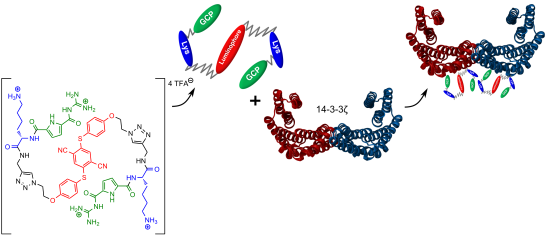
- , 5600 MB Eindhoven, Netherlands 10.3762/bjoc.18.137 Abstract The 14-3-3 protein family, one of the first discovered phosphoserine/phosphothreonine binding proteins, has attracted interest not only because of its important role in the cell regulatory processes but also due to its enormous number of
- interactions with other proteins. Here, we use a computational approach to predict the binding sites of the designed hybrid compound featuring aggregation-induced emission luminophores as a potential supramolecular ligand for 14-3-3ζ in the presence and absence of C-Raf peptides. Our results suggest that the
- discovered phosphoserine/phosphothreonine binding proteins. In total seven isoforms of the 14-3-3 family are known to date (β, ε, γ, τ, θ, σ, and ζ) in mammals [1]. They are forming homo and heterodimers with a profile shaped like the Greek letter “ω” [2]. 14-3-3 proteins have attracted interest due to their




Polymer and small molecule mechanochemistry: closer than ever
Beilstein J. Org. Chem. 2022, 18, 1225–1235, doi:10.3762/bjoc.18.128
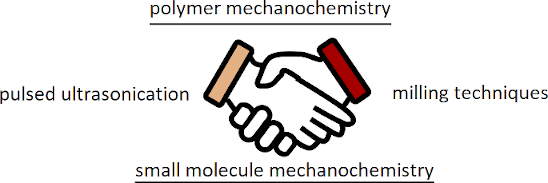
- organocatalytic units embedded in polymers for catalysis in small molecule systems have been discussed [15][19][20]. Moreover, the ability of force to deform the reaction energy landscape and modulate the reversibility of the reactions within proteins has been demonstrated. For example, mechanical force was used


A Streptomyces P450 enzyme dimerizes isoflavones from plants
Beilstein J. Org. Chem. 2022, 18, 1107–1115, doi:10.3762/bjoc.18.113
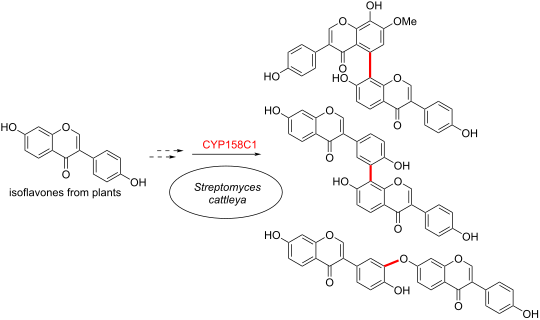
- NaCl, 1 mM TCEP, 10% glycerol, pH 7.5) and stored at −80 °C for further use. The P450 partner proteins, FdR and Fdx, were constructed according to the reported method [40]. For in vitro biochemical assays, the reaction mixture (50 µL) contained 0.4 mM substrate, 3 µM P450 enzyme, 5 µM FdR, 5 µM Fdx, 1


New azodyrecins identified by a genome mining-directed reactivity-based screening
Beilstein J. Org. Chem. 2022, 18, 1017–1025, doi:10.3762/bjoc.18.102
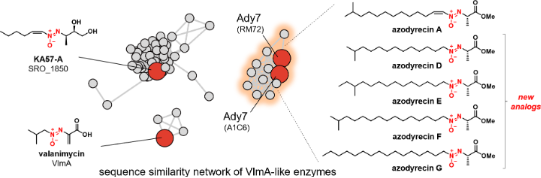
- Supporting Information File 1). They encode five genes that are also present in the biosynthetic gene clusters of valanimycin [19] and KA57-A [20]: the putative two-component flavin-dependent monooxygenase similar to VlmH/VlmR, the homologous protein of VlmA, and two additional hypothetical proteins similar
- the case of azodyrecin biosynthesis. The mechanism for the subsequent rearrangement of the ester intermediate for azoxy bond formation remains unclear; however, the conservation of the two hypothetical proteins Ady6/Ady8 among the biosynthetic gene clusters of valanimycin, KA57-A, and azodyrecins may
- suggest their participation in this step. Ady6 shows weak homology to DUF4260 (PF14079.9), a family of integral membrane proteins with unknown functions, while Ady8 is similar to the ferritin-like superfamily protein (IPR009078). Ady6/Ady8 are homologous to VlmO/VlmB and SRO_1835/SRO_1837 in the




Isolation and biosynthesis of daturamycins from Streptomyces sp. KIB-H1544
Beilstein J. Org. Chem. 2022, 18, 1009–1016, doi:10.3762/bjoc.18.101
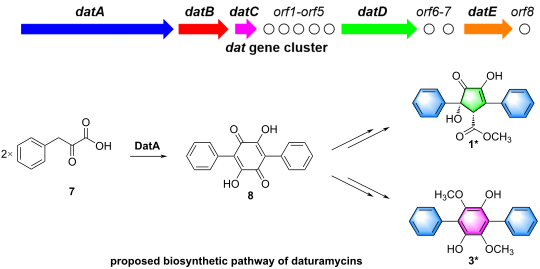
- KDa; GE Healthcare). Then, the collected DatA (or EchA) protein was concentrated and buffer-exchanged into storage buffer (50 mM NaH2PO4, 100 mM NaCl, pH 8.0, containing 10% glycerin). The proteins were tested by SDS-PAGE, frozen using liquid nitrogen, and kept at −80 °C. In vitro reactions DatA


On Reuben G. Jones synthesis of 2-hydroxypyrazines
Beilstein J. Org. Chem. 2022, 18, 935–943, doi:10.3762/bjoc.18.93
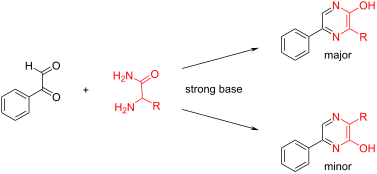
- occurrence of 3,5-substituted-2-hydroxypyrazine as the major reaction product. Keywords: α-aminoamide; condensation; hydroxypyrazine; methylglyoxal; phenylglyoxal; Introduction In a recent report [1], the many ways a pyrazine nucleus is able to interact with proteins were reviewed. In this text, it was


First series of N-alkylamino peptoid homooligomers: solution phase synthesis and conformational investigation
Beilstein J. Org. Chem. 2022, 18, 845–854, doi:10.3762/bjoc.18.85
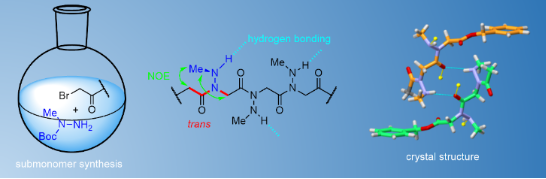
- -supported combinatorial approaches [11][12][13]. The most relevant comparison of peptoids with peptides is in fact with polyprolines due to the presence of backbone tertiary amide linkages, much more prone to cis/trans equilibria than secondary amides. Indeed, in proteins, cis-amide bonds are most often


Synthesis and HDAC inhibitory activity of pyrimidine-based hydroxamic acids
Beilstein J. Org. Chem. 2022, 18, 837–844, doi:10.3762/bjoc.18.84
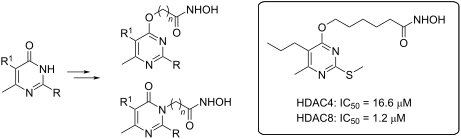
- (HDACs) play an essential role in the transcriptional regulation of cells through the deacetylation of nuclear histone and non-histone proteins and are promising therapeutic targets for the treatment of various diseases. Here, the synthesis of new compounds in which a hydroxamic acid residue is attached
- both the HDAC4 and HDAC8 isoforms, with an IC50 of 16.6 µM and 1.2 µM, respectively. Keywords: alkylation; aminolysis; HDAC inhibitors; hydroxamic acid; pyrimidine; Introduction Histone deacetylases (HDACs) are a family of intracellular proteins responsible for removing acetyl groups in histones
- . This function is essential in the transcription of DNA, as histones with acetyl groups do not interact as strongly with DNA, which opens the chromatin for transcription. HDACs also interact with other cellular proteins to regulate vital functions such as cell differentiation or apoptosis. They have


Identification of the new prenyltransferase Ubi-297 from marine bacteria and elucidation of its substrate specificity
Beilstein J. Org. Chem. 2022, 18, 722–731, doi:10.3762/bjoc.18.72
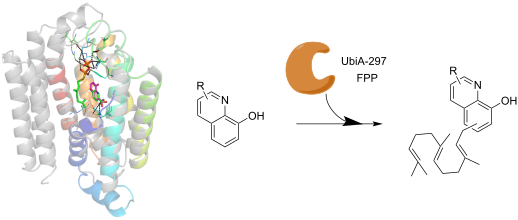
- binding abilities to target proteins [3]. The prenylation reaction, most often a C–C-bond-forming step between an aromatic acceptor moiety and a prenyl chain, is catalyzed by dedicated dominantly membrane-bound prenyltransferases (Ptases) [4][5][6][7]. Ptases belonging to the UbiA-superfamily are
- presence of Mg2+ as co-factor. Product formation was monitored after 2 h using high-resolution tandem mass spectrometry (HRMS/MS). Membrane proteins obtained from E. coli BL21 cultures harboring the empty expression pET28 plasmid were used as negative control (Figure S3 in Supporting Information File 1
- residue was dissolved in methanol (100 µL), and analyzed by HRMS/MS. Denaturation of proteins was performed at 95 °C for 10 min (negative control). Additionally, E. coli BL21 derived enriched membrane fractions served as negative control. In vivo assays: In vivo assays (100 mL) were performed using E


Tetraphenylethylene-embedded pillar[5]arene-based orthogonal self-assembly for efficient photocatalysis in water
Beilstein J. Org. Chem. 2022, 18, 429–437, doi:10.3762/bjoc.18.45
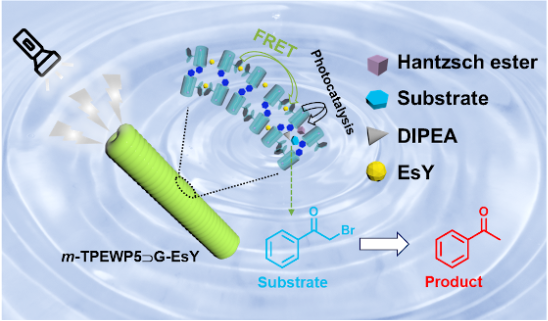
- chemical energy [4][5][6]. Mainly, both antenna molecules and proteins on the thylakoid membrane are combined to form a light-harvesting system through noncovalent interactions. Inspired by photosynthesis, extensive research has been devoted to construct energy transfer systems for the better utilization


![[Graphic 5]](/bjoc/content/inline/1860-5397-18-45-i7.svg?max-width=637&scale=1.18182) G-EsY self-assembled photocat...
G-EsY self-assembled photocat...


![[Graphic 15]](/bjoc/content/inline/1860-5397-18-45-i17.svg?max-width=637&scale=1.18182) G; (b) m-TPEWP5
G; (b) m-TPEWP5![[Graphic 16]](/bjoc/content/inline/1860-5397-18-45-i18.svg?max-width=637&scale=1.18182) G-EsY. [m-TPEWP5] = 1 × 10⁻⁴ M, [G] = 1 × 10⁻⁴ M, [EsY] = ...
G-EsY. [m-TPEWP5] = 1 × 10⁻⁴ M, [G] = 1 × 10⁻⁴ M, [EsY] = ...

![[Graphic 25]](/bjoc/content/inline/1860-5397-18-45-i27.svg?max-width=637&scale=1.18182) G donor assembly...
G donor assembly...

![[Graphic 43]](/bjoc/content/inline/1860-5397-18-45-i45.svg?max-width=637&scale=1.18182) G-EsY na...
G-EsY na...

![[Graphic 48]](/bjoc/content/inline/1860-5397-18-45-i50.svg?max-width=637&scale=1.18182) G-E...
G-E...
Menadione: a platform and a target to valuable compounds synthesis
Beilstein J. Org. Chem. 2022, 18, 381–419, doi:10.3762/bjoc.18.43
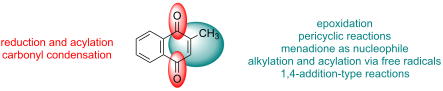
- (DNA and RNA), enzymes, structural proteins, and cell membrane lipids. These effects can lead to dysfunctions that activate the apoptosis process resulting in cell death [42][43][44][45][46]. In addition to participating in redox cycles as biomolecules in various biochemical processes, the 1,4


A Se···O bonding catalysis approach to the synthesis of calix[4]pyrroles
Beilstein J. Org. Chem. 2022, 18, 325–330, doi:10.3762/bjoc.18.36
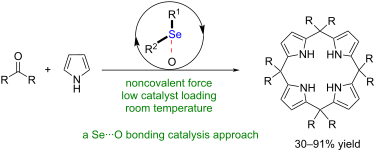
- range of typical reactions [24], thus providing a new platform for organic synthesis. The phenomenon of chalcogen bonding was initially observed in the crystal structures of small organic molecules as well as proteins [25]. The application of this type of bonding interactions has achieved significant



Synthesis of novel [1,2,4]triazolo[1,5-b][1,2,4,5]tetrazines and investigation of their fungistatic activity
Beilstein J. Org. Chem. 2022, 18, 243–250, doi:10.3762/bjoc.18.29
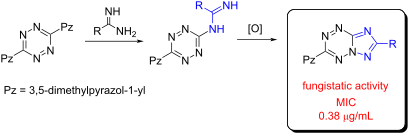
- labeling proteins and visualizing cancer due to the ability of s-tetrazine to fast and biocompatible ligation with alkenes via the inverse electron demand Diels–Alder reactions [29][30][31]. At the same time, azolo-annulated 1,2,4,5-tetrazines remain to be a scarcely studied class of compounds, mainly due


Trichloroacetic acid fueled practical amine purifications
Beilstein J. Org. Chem. 2022, 18, 225–231, doi:10.3762/bjoc.18.26
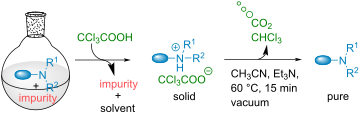
- from rotaxanes, cucurbit[8]uril, to supramolecular smart materials [11][12][13][14][15][16]. TCA is also known for its application in the precipitation of proteins through what is believed to be an unfolding of the proteins structures [17][18]. In this context, we hypothesized that TCA could be used to


Anomeric 1,2,3-triazole-linked sialic acid derivatives show selective inhibition towards a bacterial neuraminidase over a trypanosome trans-sialidase
Beilstein J. Org. Chem. 2022, 18, 208–216, doi:10.3762/bjoc.18.24
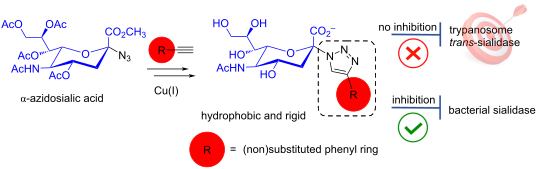
- (GE Healthcare). The column was washed with buffer A to remove unbound proteins followed by elution of bound proteins with buffer B (50 mM Tris-HCl, pH 8.0, 150 mM NaCl, 500 mM imidazole). Further purification was carried out by gel filtration chromatography (Superdex S200 16/600 column, GE Healthcare



The role of chemistry in the success of oligonucleotides as therapeutics
Beilstein J. Org. Chem. 2022, 18, 197–199, doi:10.3762/bjoc.18.22
- messenger (mRNA) to stop the synthesis of proteins using short strands of DNA, now known as antisense oligonucleotides, was first coined about 40 years ago [1]. Almost 20 years later, another endogenous mechanism, known as RNA interference (RNAi) was discovered when it was shown that short stretches of
- double-stranded nucleotides, which are called short interfering RNA or “siRNA,” can target mRNA and prevent it from being translated to make proteins [2]. While the mechanism by which antisense oligonucleotides (single stranded oligonucleotide) and siRNA (short RNA duplexes) work are completely different

Synthesis and late stage modifications of Cyl derivatives
Beilstein J. Org. Chem. 2022, 18, 174–181, doi:10.3762/bjoc.18.19
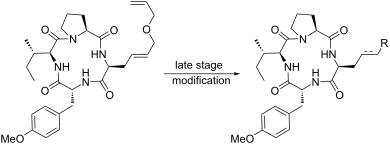
- histones [6][7][8][9][10]. Blockade of the deacylating process causes hyperacetylation of histones and unregulated gene activity, that results in untimely cell death. Eighteen different HDAC enzymes are known so far and they are divided into four classes based on structural homology with yeast proteins [11



Synthesis and bioactivity of pyrrole-conjugated phosphopeptides
Beilstein J. Org. Chem. 2022, 18, 159–166, doi:10.3762/bjoc.18.17
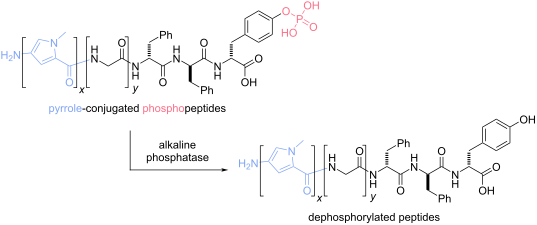
- merits, such as ease of design and tailoring (based on the known structures from proteins), good biocompatibility and degradability, and low immunogenicity. For example, recent works have demonstrated the potential of peptide assemblies for a wide range of applications, including drug delivery [8][9][10


1,2-Naphthoquinone-4-sulfonic acid salts in organic synthesis
Beilstein J. Org. Chem. 2022, 18, 53–69, doi:10.3762/bjoc.18.5
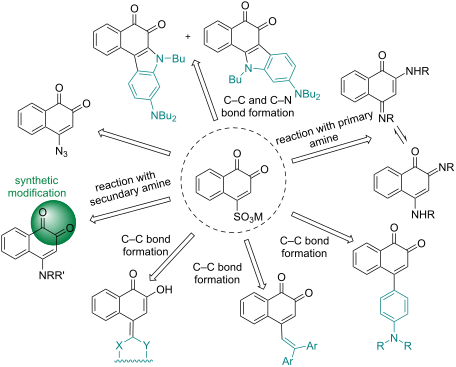
- with amino acids to be used as colorimetric indicators, Folin [45] developed a method based on naphthoquinone since there were records in the literature that indicated that naphthoquinones reacted with amines and proteins to form colored products. Among the tested o-naphthoquinones, he found that 1,2


Peptide stapling by late-stage Suzuki–Miyaura cross-coupling
Beilstein J. Org. Chem. 2022, 18, 1–12, doi:10.3762/bjoc.18.1
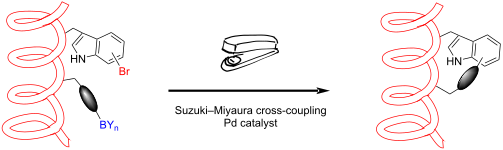
- of biomolecules [35][36][37]. The approaches by Buchwald and Pentelute are suitable for selective, bioorthogonal labelling of cysteine- [38][39][40] and lysine-containing [41][42] peptides and proteins using stochiometric amounts of pre-formed Pd(II)-aryl complexes. They can further be applied for
- 1% in proteins, but is highly conserved in binding sites on protein surfaces mediating PPI [43], it is an attractive target for the development of selective diversifications. C–H activation of the indole C2 position by Pd-catalysis allows both selective arylation [44][45][46][47][48] and formation


Stepwise PEG synthesis featuring deprotection and coupling in one pot
Beilstein J. Org. Chem. 2021, 17, 2976–2982, doi:10.3762/bjoc.17.207

- peptides, proteins and nucleic acids and to evade undesired immune responses, monodisperse PEGs are required or highly desired [12][13]. To meet the needs of monodisperse PEGs, significant efforts have been made to develop stepwise methods for their synthesis [14][15][16][17][18][19][20][21][22][23][24][25


A photochemical C=C cleavage process: toward access to backbone N-formyl peptides
Beilstein J. Org. Chem. 2021, 17, 2932–2938, doi:10.3762/bjoc.17.202
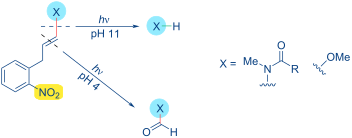
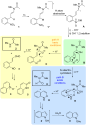
- ” amide products can and does occur under physiological conditions, the rates of this hydrolysis are slow for the simple models in this study. Within more complex peptides or proteins, selectivity in photocleavage pathways may differ significantly, depending on local chemical environment. It is also worth


A tribute to Carsten Schmuck
Beilstein J. Org. Chem. 2021, 17, 2795–2798, doi:10.3762/bjoc.17.190
- exchange of scientific ideas and knowledge. Carsten continuously gave a lot of attention and constructive questions about fine details in targeted binding sites of biomacromolecules (various types of DNA and RNA, or proteins), as well as already known small molecules binding to these targets. Then, taking
- Organic Chemistry at the UDE. It was a privilege in 2010 to start the nucleus of our later Collaborative Research Center 1093 with him, which we called “Supramolecular Chemistry on Proteins” and which he directed as Vice Speaker, with great enthusiasm. In 2011, Carsten organized the first “SupraChem