


Search results
Search for "X-ray crystallography" in Full Text gives 326 result(s) in Beilstein Journal of Organic Chemistry. Showing first 200.
Six-fold C–H borylation of hexa-peri-hexabenzocoronene
Beilstein J. Org. Chem. 2020, 16, 391–397, doi:10.3762/bjoc.16.37
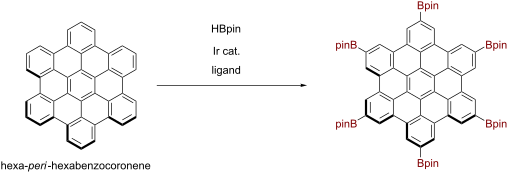
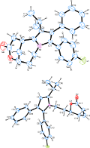
- -catalyzed six-fold C–H borylation of HBC was successfully achieved by screening solvents. The crystal structure of hexaborylated HBC was confirmed via X-ray crystallography. Optoelectronic properties of the thus-obtained hexaborylated HBC were analyzed with the support of density functional theory
- calculations. The spectra revealed a bathochromic shift of absorption bands compared with unsubstituted HBC under the effect of the σ-donation of boryl groups. Keywords: C–H borylation; hexa-peri-hexabenzocoronene; iridium catalyst; X-ray crystallography; Introduction Polycyclic aromatic hydrocarbons (PAHs
- hexaborylated HBC 1. The structure of thus-obtained 1 was confirmed by X-ray crystallography, and the electronic effects of the boryl groups were investigated through optoelectronic measurements and density functional theory (DFT) calculations. Results and Discussion We have examined the conditions for C–H


Synthesis and circularly polarized luminescence properties of BINOL-derived bisbenzofuro[2,3-b:3’,2’-e]pyridines (BBZFPys)
Beilstein J. Org. Chem. 2020, 16, 325–336, doi:10.3762/bjoc.16.32
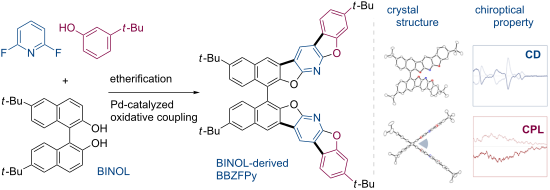
- Information File 290: Summary of X-ray crystallography data, copy of NMR spectra, and copy of HPLC charts. Funding This work was supported by JSPS KAKENHI Grant No. JP 19K15586 (Grant-in-Aid for Young Scientists) to Y.N. and JP 17H06092 (Grant-in-Aid for Specially Promoted Research) to M.M.


SnCl4-catalyzed solvent-free acetolysis of 2,7-anhydrosialic acid derivatives
Beilstein J. Org. Chem. 2019, 15, 2990–2999, doi:10.3762/bjoc.15.295
- editing and proofreading of the manuscript. We also thank Dr. Su-Ching Lin, Ms. Yi-Ping Huang, and Ms. Mei-Man Chen for their help with NMR experiments, Dr. Yuh-Sheng Wen for the X-ray crystallography experiment, and Ms. Ping-Yu Lin for conducting mass spectrometry experiments. Funding This work was
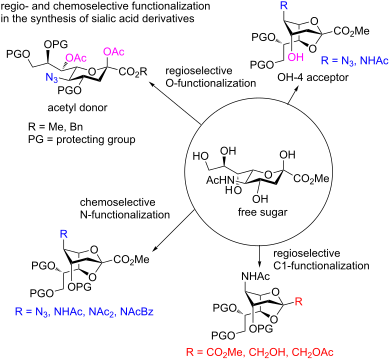
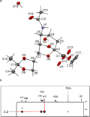
- clearly showed that the NHAc group in position C-5 and the OH-4 group were oriented in a trans-diaxial configuration (Figure 2a). This enhanced the nucleophilicity of the OH-4 group due to the absence of hydrogen bonding between these moieties. After confirming the structure of 4 by single crystal X-ray
- crystallography, compounds 2 and 3 were acetylated with Ac2O in the presence of a catalytic amount of 4-(dimethylamino)pyridine (DMAP) in pyridine to give 5 [6] and 6 in 75 and 77% yield, respectively (Scheme 1), and the compatibility of acetyl protecting groups with the Lewis acids during acetolysis reactions




Influence of the cis/trans configuration on the supramolecular aggregation of aryltriazoles
Beilstein J. Org. Chem. 2019, 15, 2881–2888, doi:10.3762/bjoc.15.282
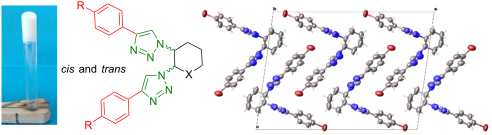
- 12 led to single crystals suitable for X-ray crystallography. Its analysis (Figure 3) not only confirmed the structure, but in addition showed a well-organized crystal packing (Figure 4) where the alternate disposition of the molecules displayed a parallelism between the p-bromophenyl groups as well





A chiral self-sorting photoresponsive coordination cage based on overcrowded alkenes
Beilstein J. Org. Chem. 2019, 15, 2767–2773, doi:10.3762/bjoc.15.268
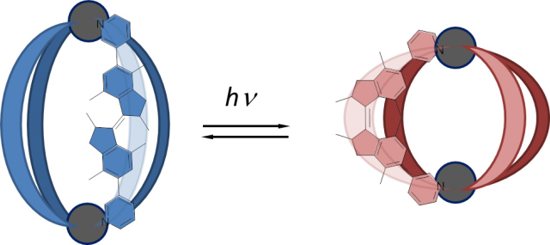
- corresponding stable isomer. Supporting Information Supporting Information File 538: Experimental procedures, compound characterization, CD spectroscopy, binding studies, NMR studies of the photochemical and thermal isomerizations, X-ray crystallography, computational details and Cartesian coordinates of DFT


A combinatorial approach to improving the performance of azoarene photoswitches
Beilstein J. Org. Chem. 2019, 15, 2753–2764, doi:10.3762/bjoc.15.266
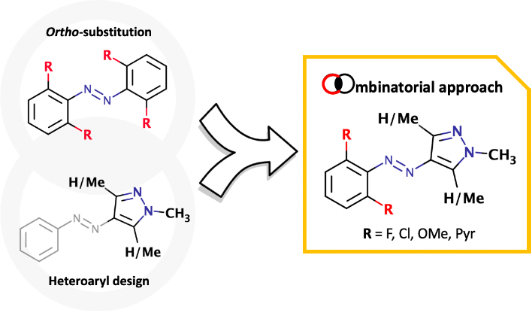
- , 0.012 and 0.087 for 4pzMe-Cl2, 4pzMe-OMe2 and 4pzMe-Pyr2, respectively; see Figure 6 for 4pzH-F2 and 4pzH-Cl2). To experimentally compare the conformations of the E-isomers, we were able to characterize 4pzMe-F2, 4pzMe-Cl2 and 4pzH-F2 by X-ray crystallography (Figure 7). In agreement with the
- characterization and X-ray crystallography data. Supporting Information File 536: CIF files for 4pzMe-F2, 4pzMe-OMe2, 4pzMe-OMe2_diethylether and 4pzH-F2. Acknowledgements J.C. acknowledges the Generalitat Valenciana for the postdoctoral APOSTD/2017/081 fellowship. R.S.L.G would like to thank the Faculty of




Photochromic diarylethene ligands featuring 2-(imidazol-2-yl)pyridine coordination site and their iron(II) complexes
Beilstein J. Org. Chem. 2019, 15, 2428–2437, doi:10.3762/bjoc.15.235
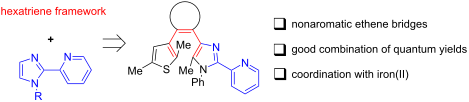
- . Unexpectedly, dinuclear and tetranuclear iron(II) complexes were obtained, which were thoroughly characterized by X-ray crystallography, magnetic measurements, and Mössbauer spectroscopy. The formation of multinuclear complexes is facilitated by two coordination sites of the diarylethene, acting as a bridging
- condensation [33] of 3-(hydroxyimino)pentane-2,4-dione, aniline, and 2-pyridinecarboxaldehyde (Scheme 1). The structure of 1 was confirmed by X-ray crystallography [34]. The ketone 1 was subsequently used for the synthesis of desired photochromic ligands with cyclopentenone (3), cyclopentene (4), and
- successfully applied for the synthesis of a new family of photochromic ligands. The structures of the synthesized diarylethene-based ligands 3, 4, 6, and 7 were confirmed by 1H and 13C NMR spectroscopy and mass spectrometry. The molecular structure of 6 was additionally confirmed by X-ray crystallography. In


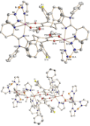
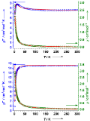
Effect of ring size on photoisomerization properties of stiff stilbene macrocycles
Beilstein J. Org. Chem. 2019, 15, 2408–2418, doi:10.3762/bjoc.15.233
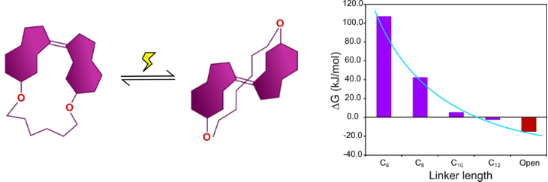
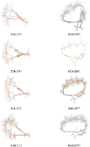
- of the macrocyclic stiff stilbene diethers, a conformational analysis was undertaken (Figure 6). According to X-ray crystallography, in compound (E)-7 (Scheme 4) the aromatic rings of the two indane units are in the same plane (dihedral angle 180°), whereas in (Z)-7 this angle is 9.1° [21]. In the




Reversible switching of arylazopyrazole within a metal–organic cage
Beilstein J. Org. Chem. 2019, 15, 2398–2407, doi:10.3762/bjoc.15.232
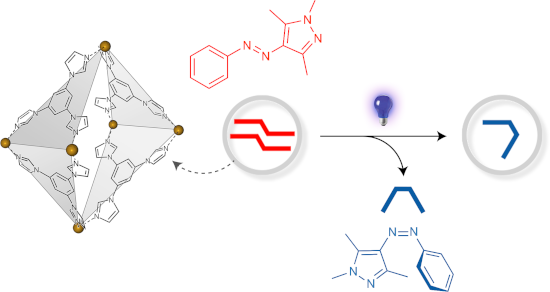
- coordination. Owing to its high water solubility, the cage can solubilize the E isomer of arylazopyrazole, which, by itself, is not soluble in water. NMR spectroscopy and X-ray crystallography have independently demonstrated that each cage can encapsulate two molecules of E-arylazopyrazole. UV-induced
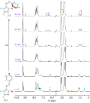
- host is small and is mostly related to the positions of the Pd centers (Figure S16, Supporting Information File 1). We were pleased to find that the structural features of (E-1)22 resolved by X-ray crystallography were in full agreement with a detailed analysis of the complex’s NOE spectra (see Figure


![[Graphic 1]](/bjoc/content/inline/1860-5397-15-232-i3.svg?max-width=637&scale=1.18182) 2 (500 MHz, D2O, 298 K).
2 (500 MHz, D2O, 298 K).




Current understanding and biotechnological application of the bacterial diterpene synthase CotB2
Beilstein J. Org. Chem. 2019, 15, 2355–2368, doi:10.3762/bjoc.15.228
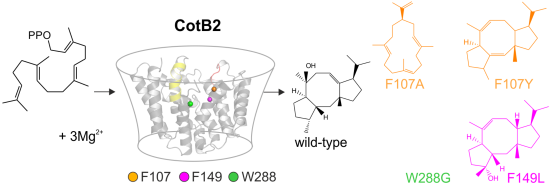
- date, CotB2 represents the best studied bacterial diterpene synthase. Its reaction mechanism has been addressed by isoptope labeling, targeted mutagenesis and theoretical computations in the gas phase, as well as full enzyme molecular dynamic simulations. By X-ray crystallography different snapshots of


Characterization of two new degradation products of atorvastatin calcium formed upon treatment with strong acids
Beilstein J. Org. Chem. 2019, 15, 2085–2091, doi:10.3762/bjoc.15.206
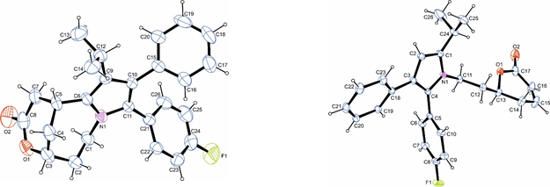
- , confirming the lactone moiety, and the DEPT spectrum showed a new aliphatic methine resonance at 25.2 ppm. By HRESIMS mass data (found: 404.2020 for [M + H]+) a molecular formula of C26H26FNO2 was confirmed, excluding incorporation of HCl into this artefact. Finally, X-ray crystallography structure analysis




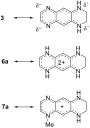
1,2,3,4-Tetrahydro-1,4,5,8-tetraazaanthracene revisited: properties and structural evidence of aromaticity loss
Beilstein J. Org. Chem. 2019, 15, 2059–2068, doi:10.3762/bjoc.15.203
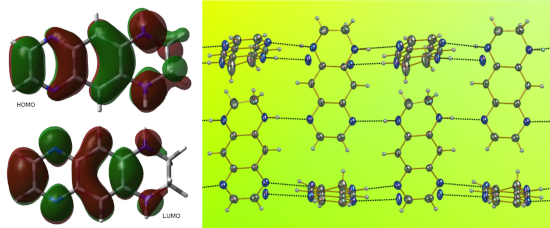
- 1112 instrument. HRMS was made at the Spectropole (http://fr-chimie.univ-amu.fr/spectropole/). The X-ray crystallography data were collected on a Bruker-Nonius KappaCCD diffractometer with CCD detector using Mo Kα radiation, λ = 0.71073 Å. Crystallographic data (excluding structure factors) for the




Synthesis and anion binding properties of phthalimide-containing corona[6]arenes
Beilstein J. Org. Chem. 2019, 15, 1976–1983, doi:10.3762/bjoc.15.193
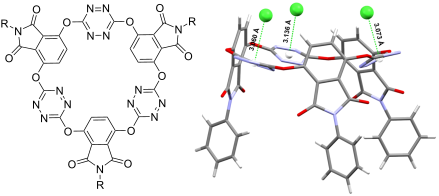
- ability of 3a to bind various anion species in gas phase. To our delight, host molecule 3a co-crystalized with n-Bu4NX (X = Cl, Br) from diffusion of diethyl ether vapor into ethyl acetate solution at ambient temperature to give single crystals of the host–guest complexes (n-Bu4NX)3-3a (X = Cl, Br). X-ray
- crystallography then allowed us to understand the host–guest interactions at the molecular level. As illustrated in the molecular structures in Figure 4, above the centroid of each tetrazine ring there resided a chloride or a bromide. The distance of the anion to the centroid of tetrazine ranged from 3.060 Å to


2,3-Dibutoxynaphthalene-based tetralactam macrocycles for recognizing precious metal chloride complexes
Beilstein J. Org. Chem. 2019, 15, 1460–1467, doi:10.3762/bjoc.15.146
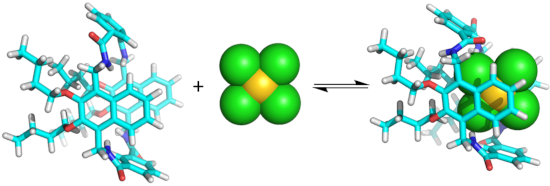
- butyl methylene group next to the oxygen atoms. A single crystal (Figure 2) of 1, which was suitable for X-ray crystallography, was obtained by slow evaporation of its solution in CH3CN. The crystal structure clearly shows that 1 adopts a flattened chair conformation with the two naphthalenes in


Formation of an unexpected 3,3-diphenyl-3H-indazole through a facile intramolecular [2 + 3] cycloaddition of the diazo intermediate
Beilstein J. Org. Chem. 2019, 15, 1347–1354, doi:10.3762/bjoc.15.134
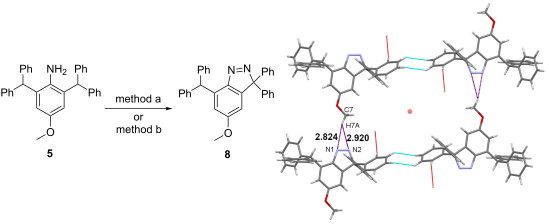
- -butylnitrite, BTEAC and DABSO in the presence of CuCl2 provided an unexpected 3H-indazole product 8. The structure of the compound was determined by HRMS, IR, NMR and further confirmed by single crystal X-ray crystallography. The compound crystallises in the triclinic P-1 space group, with unit cell parameters
- over anhydrous sodium sulphate and the solvent was removed under reduced pressure to give the pure product 8 (0.226 g, 0.485 mmol, 96%). The 1H NMR spectrum of the crude product indicates that it is pure and required no further purification. X-ray crystallography A colourless plate-like crystal of 8


Bambusuril analogs based on alternating glycoluril and xylylene units
Beilstein J. Org. Chem. 2019, 15, 1268–1274, doi:10.3762/bjoc.15.124
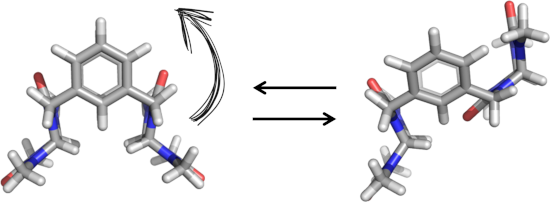
- product. Two disastereomers of the macrocycle were separated and characterized by means of NMR spectroscopy and X-ray crystallography. Conformational changes of these diastereomers were investigated using DFT models and variable-temperature NMR. Keywords: bambusurils; conformers; glycolurils; macrocycles


Heck- and Suzuki-coupling approaches to novel hydroquinone inhibitors of calcium ATPase
Beilstein J. Org. Chem. 2019, 15, 971–975, doi:10.3762/bjoc.15.94
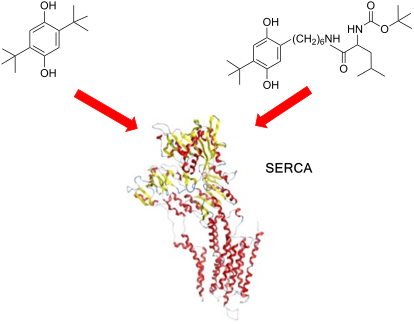
- cancer cells. Even though the Boc group of 14 would not be present in the final cleavage product, it has been demonstrated for TG-based inhibitors that its presence did not affect inhibitory potency [22]. In support of this observation, X-ray crystallography revealed the location of the Boc group in a


Halogen bonding and host–guest chemistry between N-alkylammonium resorcinarene halides, diiodoperfluorobutane and neutral guests
Beilstein J. Org. Chem. 2019, 15, 947–954, doi:10.3762/bjoc.15.91
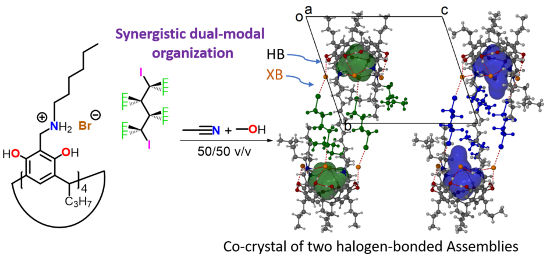
- guest inclusion in solution. Keywords: capsule; dimeric assemblies; halogen bonding; host–guest chemistry; resorcinarene salts; X-ray crystallography; Introduction The construction of specific supramolecular assemblies based on the directional non-covalent bonding has been a central goal of
- potential inclusion guests (Figure 1). The flexibility imparted to the host due to the lack of a defined inclusion guest in these systems is considerable and led to many amorphous systems, as expected. However, two samples were successfully crystallized and structurally characterized by single X-ray
- crystallography: MeOH-MeCN@1&DIOFB and Water@2&DIOFB. These two structures, besides illustrating the potential of halogen bonding for organizing complex capsular systems, shed light on the importance of flexibility in affecting the self-assembled systems. Results and Discussion Single crystal X-ray diffraction


An anomalous addition of chlorosulfonyl isocyanate to a carbonyl group: the synthesis of ((3aS,7aR,E)-2-ethyl-3-oxo-2,3,3a,4,7,7a-hexahydro-1H-isoindol-1-ylidene)sulfamoyl chloride
Beilstein J. Org. Chem. 2019, 15, 931–936, doi:10.3762/bjoc.15.89
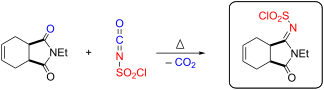
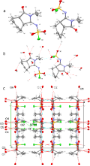
- were measured with Gallenkamp melting point devices. X-ray crystallography was performed using a Rigaku R-AXIS RAPID IP diffractometer. HRMS: electron-spray technique (M+/M−) from the solution in MeOH (Waters LCT PremierTM XE UPLC/MS TOF (Manchester, UK)). All the computations were performed using the




Synthesis of a novel category of pseudo-peptides using an Ugi three-component reaction of levulinic acid as bifunctional substrate, amines, and amino acid-based isocyanides
Beilstein J. Org. Chem. 2019, 15, 852–857, doi:10.3762/bjoc.15.82
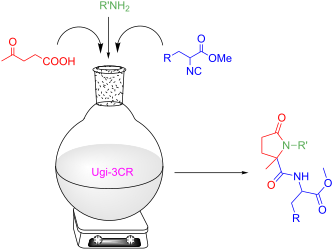
- transfer from oxygen to nitrogen (Mumm rearrangement) in D which completes the Ugi reaction accompanied by formation of the corresponding bis-amides. The structure of products was confirmed by IR, 1H and 13C NMR, CHN and HRMS analyses and by X-ray crystallography for 4a. The IR spectra of the derivatives




Coordination chemistry and photoswitching of dinuclear macrocyclic cadmium-, nickel-, and zinc complexes containing azobenzene carboxylato co-ligands
Beilstein J. Org. Chem. 2019, 15, 840–851, doi:10.3762/bjoc.15.81
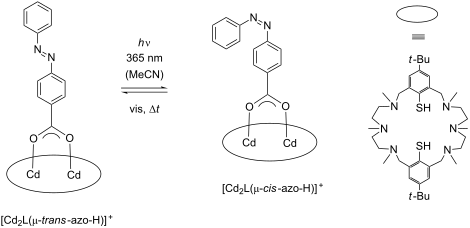
- , SQUID magnetometry and X-ray crystallography is reported herein. Preliminary results concerning the photoisomerization of compound 1 are reported as well. Results and Discussion Synthesis of ligands and metal complexes Scheme 1 shows the synthetic procedures. The yellow-orange colored zinc complexes (3
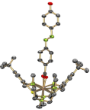
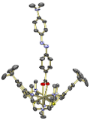
- assigned with the aid of APT, HSQC, HMBC and COSY spectra. The 13C NMR spectrum of complex 6 is also in agreement with C2v symmetry revealing only 11 signals (seven for the aliphatic and four for the aromatic carbon atoms) for the 38 carbon atoms of the [Cd2L]2+ fragment. X-ray crystallography Further
- an applied magnetic field of 0.5 and 1.0 Tesla. The observed susceptibility data were corrected for underlying diamagnetism. The synthesis of the complexes are shown in Supporting Information File 1. X-ray crystallography. Single crystals of 3', 5–8 suitable for X-ray crystallography were selected





Hoveyda–Grubbs catalysts with an N→Ru coordinate bond in a six-membered ring. Synthesis of stable, industrially scalable, highly efficient ruthenium metathesis catalysts and 2-vinylbenzylamine ligands as their precursors
Beilstein J. Org. Chem. 2019, 15, 769–779, doi:10.3762/bjoc.15.73
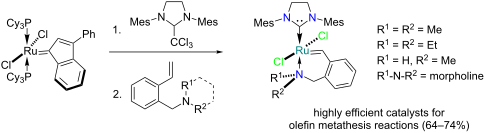
- by NMR, ESIMS, and X-ray crystallography. The utility of this chemistry is further demonstrated by the tests of the novel catalysts (up to 10−2 mol %) in different metathesis reactions such as cross metathesis (CM), ring-closing metathesis (RCM) and ring-opening cross metathesis (ROCM). Keywords: CM
- reagents. The structure of the catalysts were elucidated in detail by 2D NMR and X-ray crystallography. The high catalytic activity of the metallo complexes was demonstrated by several examples of cross metathesis (CM), ring-closing (RCM) and ring-opening cross metathesis (ROCM) reactions. Furthermore


Catalyst-free assembly of giant tris(heteroaryl)methanes: synthesis of novel pharmacophoric triads and model sterically crowded tris(heteroaryl/aryl)methyl cation salts
Beilstein J. Org. Chem. 2019, 15, 642–654, doi:10.3762/bjoc.15.60
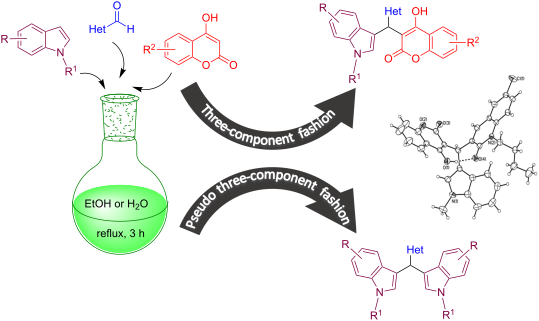
- chemical shifts were referenced to TMS. GIAO magnetic shielding tensors were 31.88 for 1H, 182.5 for 13C, values related to the GIAO isotropic magnetic susceptibility. X-ray crystallography. Colorless crystals were isolated for 9{4,7,1} from acetonitrile and used for the following X-ray diffraction studies








A chemoenzymatic synthesis of ceramide trafficking inhibitor HPA-12
Beilstein J. Org. Chem. 2019, 15, 490–496, doi:10.3762/bjoc.15.42
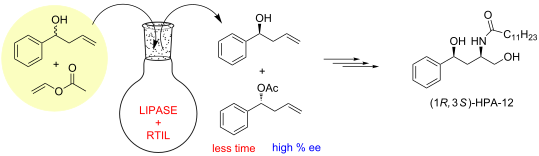
- . However, after the structural revision of the most active stereoisomer, Kobayashi et al. synthesized (1R,3S)-HPA-12 (2, Figure 1) using a Zn-catalyzed asymmetric Mannich-type reaction in water, and unambiguously ascertained the revised configuration by X-ray crystallography [14]. The other syntheses of


Synthesis, biophysical properties, and RNase H activity of 6’-difluoro[4.3.0]bicyclo-DNA
Beilstein J. Org. Chem. 2019, 15, 79–88, doi:10.3762/bjoc.15.9
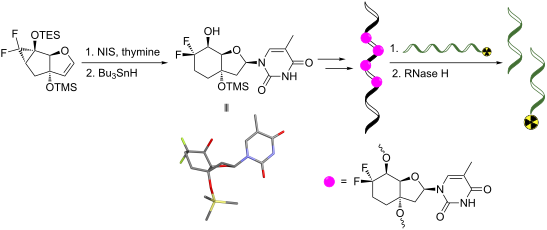
- oligonucleotides hybridized to RNA showed a similar structure than the natural DNA/RNA duplex. Furthermore, since the structural investigation on the nucleoside level by X-ray crystallography and ab initio calculations pointed to a furanose conformation in the southern region, a RNase H cleavage assay was





