Search results
Search for "arene" in Full Text gives 281 result(s) in Beilstein Journal of Organic Chemistry. Showing first 200.
Ruthenium-based olefin metathesis catalysts with monodentate unsymmetrical NHC ligands
Beilstein J. Org. Chem. 2018, 14, 3122–3149, doi:10.3762/bjoc.14.292
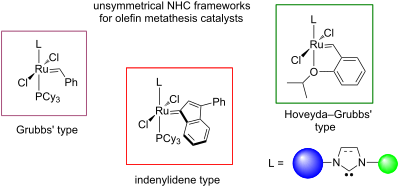
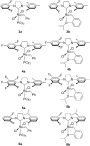
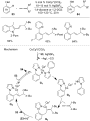
- converted completely within a few hours into complex 2 due to the formation of an intramolecular carbene–arene bond between the benzylidene carbon atom and the ortho position of the N-phenyl ligand (Figure 3). According to the authors, the mechanism of the reaction that occurs only in the presence of oxygen
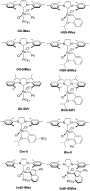
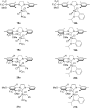
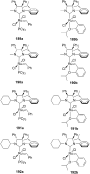
- containing a monosubstituted backbone and two different N-aryl groups (202–204, Figure 37) [63]. The idea behind this new category of compounds lied in the possibility of an efficient transfer of chirality from the backbone group to the metal center through a significant twisting of the monosubstituted arene











Synthesis of aryl sulfides via radical–radical cross coupling of electron-rich arenes using visible light photoredox catalysis
Beilstein J. Org. Chem. 2018, 14, 2520–2528, doi:10.3762/bjoc.14.228
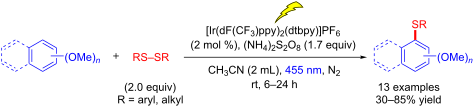
- (dtbpy)]PF6 as the photocatalyst. The reaction was carried out under nitrogen under visible-light irradiation at 455 nm. The oxidation potential of this test arene is 1.02 V vs SCE, which allows oxidation by [Ir(dF(CF3)ppy)2(dtbpy)]PF6 having an estimated excited state oxidation potential of 1.21 V vs
- -methoxyphenyl) disulfide was employed as the thiolating agent (3h). With symmetrical arenes, diarylation was observed. The initially formed mono-arylated product is more reactive than the starting material and reacts to the diarylthiol product. When 1-phenyl-1H-pyrrole-2,5-dione was employed as the arene, the
- sulfenylation occurred exclusively at the double bond instead at the arene to give the product 3k in 58% yield and a trace amount of diarylation product of the aromatic ring. When the more difficult to oxidize 2-methoxynaphthalene was used as substrate, the product 3l was obtained in only 30% yield indicating


Calixazulenes: azulene-based calixarene analogues – an overview and recent supramolecular complexation studies
Beilstein J. Org. Chem. 2018, 14, 2488–2494, doi:10.3762/bjoc.14.225
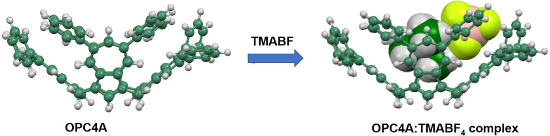
- -containing structures have gained much recent attention. Among the least-studied to date, however, have been the azulene unit-containing calix[4]arene analogues. In 1988 Asao et al. reported the synthesis of the first azulene analogue of the calixarenes, which they called “azulenophane” 2 [14]. They used a


Hydroarylations by cobalt-catalyzed C–H activation
Beilstein J. Org. Chem. 2018, 14, 2266–2288, doi:10.3762/bjoc.14.202
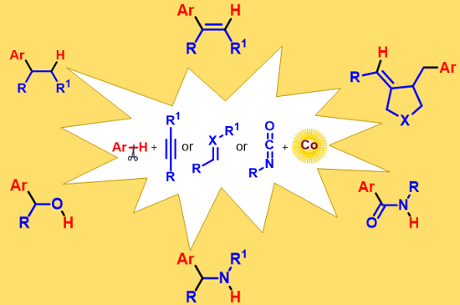
- , Whiteoak’s group reported a cobalt-catalyzed hydroarylation of terminal alkenes with amides 39 [78]. The reaction of vinyl ketones with amides provided alkylated product 40, whereas acrolein resulted in biologically useful azepinones in good yields (Scheme 26b). N-Pyrimidylindole is a highly reactive arene
- , a plausible mechanism was proposed. The reaction starts with the generation of the active cobalt(III) species G1 from [Cp*CoI2(CO)], AgSbF6, and arene 53. Subsequently, C–H metallation of G1 by ligand-to-ligand hydrogen transfer provides cobaltacycle G2 and an allene insertion gives intermediate G3
- form bicyclic cobaltacycle H1. After the reversible coordination of arene 55 with H1 to generate intermediate H2, ortho C–H cobaltation provides complex H3, which changed into product 56 and Co(I) catalyst by reductive elimination of H3. 5. Hydroarylation of C=X (X = N, O) bonds 5.1 Low-valent cobalt








Coordination-driven self-assembly of discrete Ru6–Pt6 prismatic cages
Beilstein J. Org. Chem. 2018, 14, 2242–2249, doi:10.3762/bjoc.14.199
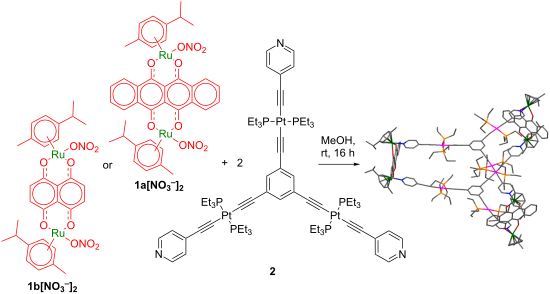
- Aderonke Ajibola Adeyemo Partha Sarathi Mukherjee Department of Inorganic and Physical Chemistry, Indian Institute of Science, Bangalore 560 012, India 10.3762/bjoc.14.199 Abstract The coordination-driven self-assembly of two new Ru6–Pt6 hexanuclear trigonal prismatic cages comprising arene
- supramolecular chemistry leading to the formation of a single major product. Keywords: arene–ruthenium(II); heterometallic cages; platinum metalloligand; self-assembly; supramolecular architectures; Introduction Coordination-driven self-assembly of discrete architectures has evolved as a unique protocol to
- structural rigidity while the second metal is the electron-acceptor building block. The facile self-assembly of 2D-heterobimetallic supramolecular architectures are well reported in the literature [24][93][94], however, 3D-heterobimetallic systems are still less explored [95][96][97]. Dinuclear arene


Synthesis of a water-soluble 2,2′-biphen[4]arene and its efficient complexation and sensitive fluorescence enhancement towards palmatine and berberine
Beilstein J. Org. Chem. 2018, 14, 2236–2241, doi:10.3762/bjoc.14.198
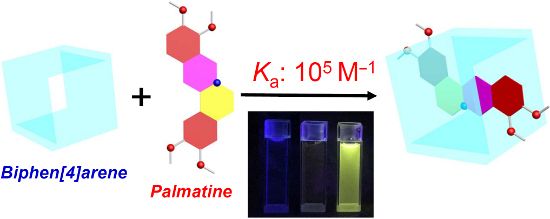
- , Shanghai 200444, P. R. China 10.3762/bjoc.14.198 Abstract A water-soluble 2,2′-biphen[4]arene (2,2’-CBP4) containing eight carboxylato moieties was synthesized and characterized. Its complexation behavior towards two alkaloids, palmatine (P) and berberine (B), was investigated by means of fluorescence and
- specific structures and interesting host–guest properties [21][22][23][24][25][26][27][28][29][30][31][32]. Water-soluble pillar[n]arene derivatives, especially those containing carboxylato moieties, showed low cell toxicity and good biocompatibility, and have been applied in biomedical applications such
- as bioimaging and self-assembled drug delivery systems [33][34][35][36][37][38][39][40]. For example, our group demonstrated a direct host–guest complexation-based drug delivery system for oxaliplatin by carboxylatopillar[6]arene [36]. The encapsulation could not only improve the drug‘s stability in


Evaluation of dispersion type metal···π arene interaction in arylbismuth compounds – an experimental and theoretical study
Beilstein J. Org. Chem. 2018, 14, 2125–2145, doi:10.3762/bjoc.14.187
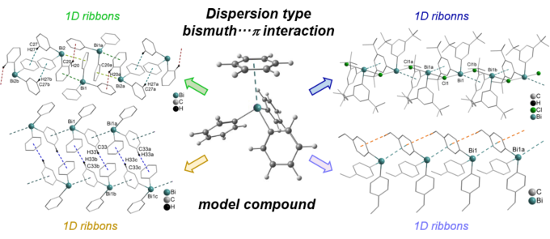
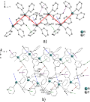
- , Professur Anorganische Chemie, 09107 Chemnitz, Germany 10.3762/bjoc.14.187 Abstract The dispersion type Bi···π arene interaction is one of the important structural features in the assembly process of arylbismuth compounds. Several triarylbismuth compounds and polymorphs are discussed and compared based on
- the analysis of single crystal X-ray diffraction data and computational studies. First, the crystal structures of polymorphs of Ph3Bi (1) are described emphasizing on the description of London dispersion type bismuth···π arene interactions and other van der Waals interactions in the solid state and
- the effect of it on polymorphism. For comparison we have chosen the substituted arylbismuth compounds (C6H4-CH═CH2-4)3Bi (2), (C6H4-OMe-4)3Bi (3), (C6H3-t-Bu2-3,5)3Bi (4) and (C6H3-t-Bu2-3,5)2BiCl (5). The structural analyses revealed that only two of them show London dispersion type bismuth···π arene




Calix[6]arene-based atropoisomeric pseudo[2]rotaxanes
Beilstein J. Org. Chem. 2018, 14, 2112–2124, doi:10.3762/bjoc.14.186
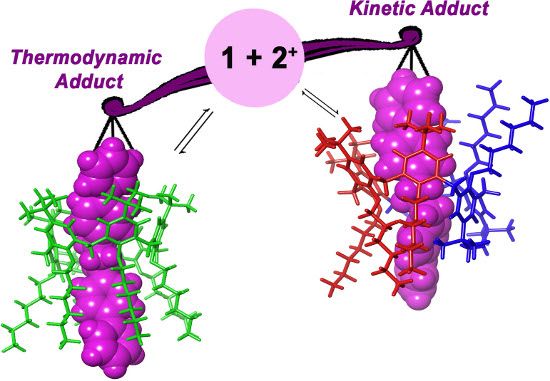
- different conformations adopted by the wheel are reported here. Upon threading hexahexyloxycalix[6]arene 1 with ammonium axles 2+ or 3+, bearing biphenyl or trifluoromethylbenzyl moieties, respectively, two atropoisomeric pseudorotaxanes were formed in which the calix[6]-wheel 1 adopts the 1,2,3-alternate
- -flat wheels, such as calixarenes or cyclodextrins, are threaded along an axle to give a pseudo[3]rotaxane architecture V–VII (Figure 2), where three sequential stereoisomers can arise. We showed that this stereoisomerism can be effectively controlled when two calix[6]arene wheels are threaded along a
- chemical shift of the ArCH2Ar methylene C, which is 30–33 ppm for the syn-orientation of the proximal phenol rings and typically 36–39 ppm with anti-positioned phenol rings as in alternate conformations. As exemplified above, the calix[6]arene macrocycle has been widely used as wheel for the assembly of


![[Graphic 2]](/bjoc/content/inline/1860-5397-14-186-i3.svg?max-width=637&scale=1.18182) 1cone and 2+
1cone and 2+


Revisiting ring-degenerate rearrangements of 1-substituted-4-imino-1,2,3-triazoles
Beilstein J. Org. Chem. 2018, 14, 2098–2105, doi:10.3762/bjoc.14.184
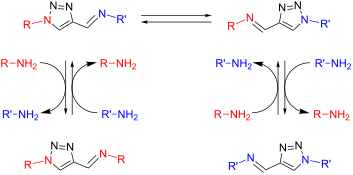
- -phenyl substituent and the triazole ring is 28°, the dihedral angle between the imino group and triazole ring is 0.5° and the dihedral angle between the phenyl and imino group is 32°. This structural detail supports the ability of the 1-triazolyl and imino arene units to communicate electronically


Applications of organocatalysed visible-light photoredox reactions for medicinal chemistry
Beilstein J. Org. Chem. 2018, 14, 2035–2064, doi:10.3762/bjoc.14.179
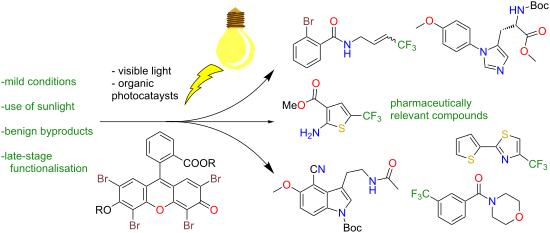
- to both the electronics of the arene and the nucleophilicity of the amine. Particularly electron-rich arenes such as N-methylindole are not tolerated, as is the case for relatively nucleophilic amines such as imidazoles, anilines or alkylamines. The reported substrates are particularly valuable to


Synthesis of new p-tert-butylcalix[4]arene-based polyammonium triazolyl amphiphiles and their binding with nucleoside phosphates
Beilstein J. Org. Chem. 2018, 14, 1980–1993, doi:10.3762/bjoc.14.173
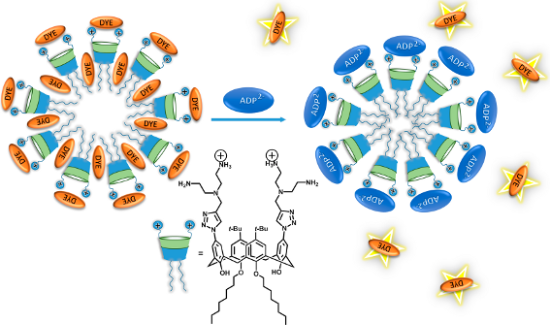
- was elaborated for the naked-eye detection of ADP with a detection limit of 0.5 mM. Keywords: ADP; amphiphile; ATP; calix[4]arene; CuAAC; eosin Y probe; molecular recognition; polydiacetylene; self-assembly; triazole; Introduction During the last two decades many researcher groups have paid much
- the p-tert-butylthiacalix[4]arene platform with 1,3-alternate conformation having polyammonium binding sites. They were shown to effectively interact with calf thymus DNA causing a 4-fold compaction of the latter [25]. Related macrocycles containing two cationic imidazolium fragments demonstrated a
- high affinity to ATP [26]. Herein we report the synthesis of new amphiphilic water-soluble calix[4]arene derivatives with cone conformation containing two or four polyammonium groups on the upper rim by using a click chemistry approach and the results of binding studies toward nucleotides in aqueous


An amphiphilic pseudo[1]catenane: neutral guest-induced clouding point change
Beilstein J. Org. Chem. 2018, 14, 1937–1943, doi:10.3762/bjoc.14.167
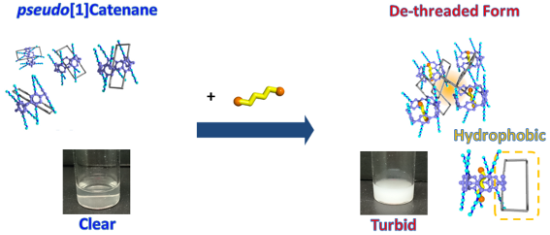
- /hydrophilic ratio in a molecule largely affects its assembled properties in aqueous media. In this study, we synthesized a new bicyclic compound which could dynamically change its hydrophobic/hydrophilic ratio by chemical stimulus. The bicyclic compound consisted of amphiphilic pillar[5]arene and hydrophobic
- alkyl chain rings, and formed a self-inclusion structure in aqueous media, which was assigned as a pseudo[1]catenane structure. The hydrophobic chain ring was hidden inside the pillar[5]arene cavity in the pseudo[1]catenane structure, thus the bicyclic compound was soluble in water at 20 °C with a
- –guest chemistry [5][6][7]. The molecules consist of a non-ionic amphiphilic part containing tri(ethylene oxide) moieties, and a hydrophobic part consisting of a pillar[n]arene core (Figure 1a; 1, n = 5; 2, n = 6). Pillar[n]arenes, which were first reported by our group [11], were used as the macrocyclic


Asymmetric Michael addition reactions catalyzed by calix[4]thiourea cyclohexanediamine derivatives
Beilstein J. Org. Chem. 2018, 14, 1901–1907, doi:10.3762/bjoc.14.164
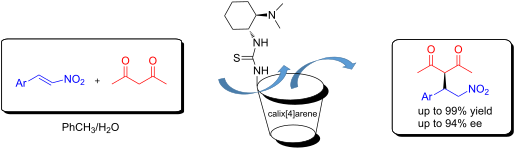
- clearly showed that the upper rim-functionalized hydrophobic calixarene scaffold played an important role in cooperation with the catalytic center to the good reactivities and enantioselectivities. Keywords: asymmetric Michael addition reaction; calix[4]arene; cyclohexanediamine; thiourea; Introduction
- hydrophobic cavity and chiral sites during a catalytic process [24][25]. Recently, we have reported a series of different functionalized organic catalysts based on calixarenes [26][34][35][36][37][38]. For example, we have been developed a calix[4]arene-based L-proline catalyst able to catalyze aldol
- Michael addition reactions of acetylacetone and aromatic nitroalkenes. Results and Discussion Synthesis of catalysts The chemical structures and synthetic pathways for catalysts are shown in Scheme 1 and Scheme 2, respectively. A series of upper rim-functionalized calix[4]arene-based cyclohexanediamine



Strong binding and fluorescence sensing of bisphosphonates by guanidinium-modified calix[5]arene
Beilstein J. Org. Chem. 2018, 14, 1840–1845, doi:10.3762/bjoc.14.157
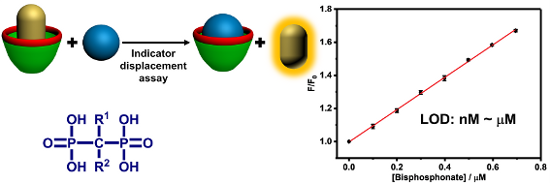
- diseases. Guanidinium-modified calix[5]arene (GC5A) affords strong binding on the micromolar to nanomolar level towards BPs dominantly via multiple salt bridge interactions, which was evaluated by fluorescence competitive titrations. Fluorescent IDA enables the highly sensitive and label-free detection of
- ]arene (GC5A, Scheme 1b). Such label-free sensing strategy exhibits potential application in real-time monitoring concentrations of BPs in urine and pharmacokinetic studies. Results and Discussion The main skeleton of BPs possesses two phosphate groups which are potential binding sites and therefore GC5A
- etidronate in (a) HEPES buffer (10 mM, pH 7.4) and (b) artificial urine at 25 °C. Error bars could not be shown if less than 0.005. The chemical structures of (a) bisphosphonates (BPs) and (b) guanidinium-modified calix[5]arene (GC5A). (c) Schematic illustration of a salt-bridge between a phosphate anion and


Synthesis and photophysical studies of a multivalent photoreactive RuII-calix[4]arene complex bearing RGD-containing cyclopentapeptides
Beilstein J. Org. Chem. 2018, 14, 1758–1768, doi:10.3762/bjoc.14.150
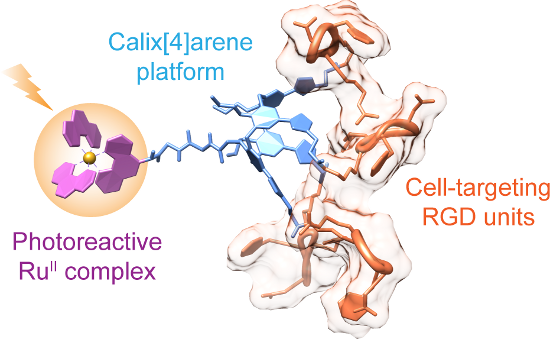
- is also faced by complexes anchored on cell-penetrating peptides. In order to provide a selective cell targeting, we developed a multivalent system composed of a photoreactive ruthenium(II) complex tethered to a calix[4]arene platform bearing multiple RGD-containing cyclopentapeptides. Extensive
- target cancerous cells, we envisaged to graft a photoreactive RuII complex on a multivalent platform decorated with multiple RGD-containing cyclopentapeptides. A calix[4]arene moiety was chosen as the multivalent platform as this rigid macrocycle displays two distinct faces that can be selectively
- functionalized [54][55][56]. It is noteworthy that the calix[4]arene skeleton has been already exploited for the development of multivalent glyco- and peptidocalixarenes that can be recognized by cell-membrane receptors [57][58][59] and of calixarene derivatives able to specifically target membrane proteins





Synthesis of diamido-bridged bis-pillar[5]arenes and tris-pillar[5]arenes for construction of unique [1]rotaxanes and bis-[1]rotaxanes
Beilstein J. Org. Chem. 2018, 14, 1660–1667, doi:10.3762/bjoc.14.142

- Ying Han Li-Ming Xu Cui-Yun Nie Shuo Jiang Jing Sun Chao-Guo Yan College of Chemistry & Chemical Engineering, Yangzhou University, Yangzhou 225002, P. R. China 10.3762/bjoc.14.142 Abstract The pillar[5]arene mono- and di(oxyalkoxy)benzoic acids were successfully prepared in high yields by
- sequential alkylation of ω-bromoalkoxy-substituted pillar[5]arenes with methyl or ethyl p-hydroxybenzoate followed by a hydrolytic reaction under basic conditions. Under catalysis of HOBt/EDCl, the amidation reaction of pillar[5]arene mono(oxybutoxy)benzoic acid with monoamido-functionalized pillar[5]arenes
- afforded diamido-bridged bis-pillar[5]arenes. 1H NMR and 2D NOESY spectra clearly indicated that [1]rotaxanes were formed by insertion of longer diaminoalkylene unit into the cavity of one pillar[5]arene with another pillar[5]arene acting as a stopper. The similar catalysed amidation reaction of pillar[5


Direct electrochemical generation of organic carbonates by dehydrogenative coupling
Beilstein J. Org. Chem. 2018, 14, 1578–1582, doi:10.3762/bjoc.14.135
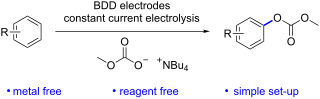
- material could be isolated. We assumed that the presence of different aromatic positions lowered the selectivity of the reaction. We changed to mesitylene as the arene, since it exhibits equivalent aromatic positions for carbonate functionalization. This approach enabled a selective process and led to


A conformationally adaptive macrocycle: conformational complexity and host–guest chemistry of zorb[4]arene
Beilstein J. Org. Chem. 2018, 14, 1570–1577, doi:10.3762/bjoc.14.134
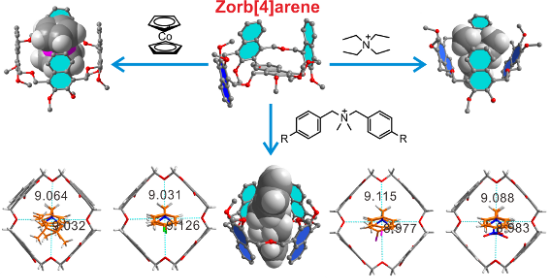
- changes are rare. In this article, we present a thorough study on the host–guest chemistry of a conformationally adaptive macrocycle, namely per-O-ethoxyzorb[4]arene (ZB4). Similar to per-O-ethoxyoxatub[4]arene, ZB4 is capable of accommodating a wide range of organic cations. However, ZB4 does not show
- binding behavior of ZB4 and lays the basis for the construction of stimuli-responsive materials with ZB4 as a major component. Keywords: conformations; host–guest chemistry; macrocycles; supramolecular chemistry; zorb[4]arene; Introduction Macrocyclic receptors are the principal workhorses used in
- network. We have carefully looked into the properties of oxatub[n]arenes and found that the macrocycles have many unique properties. For example, oxatub[4]arene has a wide guest scope and can bind almost all of the common organic cations [32]. It also shows conformational responses to solvent change [33


Hypervalent organoiodine compounds: from reagents to valuable building blocks in synthesis
Beilstein J. Org. Chem. 2018, 14, 1508–1528, doi:10.3762/bjoc.14.128
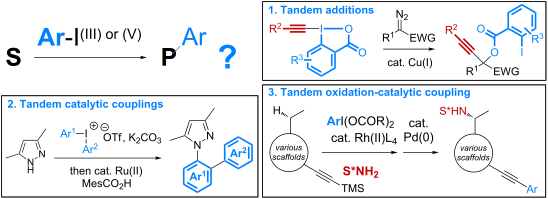
- (trifluoroacetoxy)iodo]arene. Catalytic nitrene additions mediated by [bis(acyloxy)iodo]arenes. Tandem of C(sp3)–H amination/sila-Sonogashira–Hagihara coupling. Tandem reaction using a λ3-iodane as an oxidant, a substrate and a coupling partner. Synthesis of 1,2-diarylated acrylamidines with ArI(OAc)2




Hyper-reticulated calixarene polymers: a new example of entirely synthetic nanosponge materials
Beilstein J. Org. Chem. 2018, 14, 1498–1507, doi:10.3762/bjoc.14.127
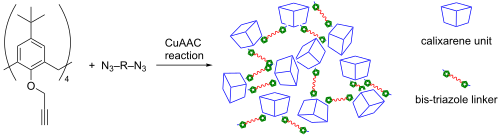
- preliminary tests to assess their supramolecular absorption abilities towards a set of suitable organic guests, selected as pollutant models. The synthesis was accomplished by means of a CuAAC reaction between a tetrakis(propargyloxy)calix[4]arene and an alkyl diazide. The formation of the polymeric network
- ]) between a heptakis(6-azido-6-deoxy)-β-cyclodextrin and a tetrakis(propargyloxy)calix[4]arene [11][31][32]. In this way, a random disposition of the co-monomer units linked by 1,2,3-triazole units is achieved. The obtained CyCaNSs benefit from several advantages. First, the properties of the material can
- ), in which the host monomers are joined by means of bis(1,2,3-triazole) subunits having different features. More in detail, four different nanosponges CaNS1-CaNS4 were obtained by reacting the 5,11,17,23-tetra-tert-butyl-25,26,27,28-tetrakis(propargyloxy)calix[4]arene (Ca-OP, Scheme 1a) with four


Recent applications of chiral calixarenes in asymmetric catalysis
Beilstein J. Org. Chem. 2018, 14, 1389–1412, doi:10.3762/bjoc.14.117
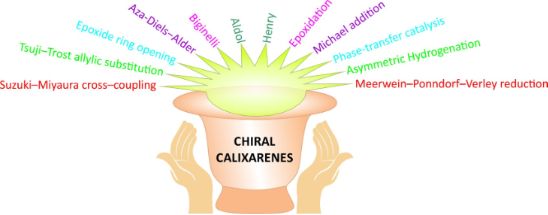
- asymmetric phase-transfer catalysis based on inherently chiral calix[4]arenes, although the asymmetric induction observed remained moderate. Su et al. demonstrated a new approach for the design of a chiral binary integrative phase-transfer catalyst consisting of p-tert-butylcalix[4]arene and a cinchonine
- ammonium salt [38] (Scheme 2). Due to the failure of obtaining monobromo p-tert-butylcalix[4]arene derivative 6 directly from p-tert-butylcalix[4]arene using 1,2-dibromoethane in the presence of several bases, the synthetic route to calixarene-based chiral phase-transfer catalyst 7 comprises a four-step
- sequence including protection/deprotection steps for the benzyl groups. The catalytic efficiency of calix[4]arene-based phase-transfer catalyst 7 was evaluated in the benchmark reaction (Scheme 3) and compared with that of the chiral quaternary ammonium salt 8. The results obtained when 7 used as


Atom-economical group-transfer reactions with hypervalent iodine compounds
Beilstein J. Org. Chem. 2018, 14, 1263–1280, doi:10.3762/bjoc.14.108
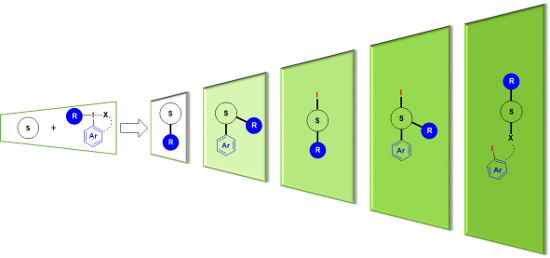
- monoarylations, produces not only the aryl iodide, but also stoichiometric amounts of salt side-products, limiting the AE of these transformations to roughly 10–20% (Scheme 1, reaction (a)). In the second case, both organic residues (one carbon or heteroatom ligand plus the arene of the former aryl-λ3-iodane or
- describe an efficient α-arylation of a variety of 1,3-dicarbonyl derivatives 21 using [bis(trifluoroacetoxy)iodo]benzene (20a, PIFA). In this metal-free approach the target structures 22 are efficiently synthesised even without any initial prefunctionalisation of the arene moiety (Scheme 13). Remarkably


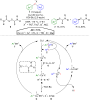


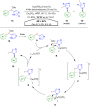


One hundred years of benzotropone chemistry
Beilstein J. Org. Chem. 2018, 14, 1120–1180, doi:10.3762/bjoc.14.98


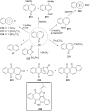






Iodine(III)-mediated halogenations of acyclic monoterpenoids
Beilstein J. Org. Chem. 2018, 14, 1103–1111, doi:10.3762/bjoc.14.96
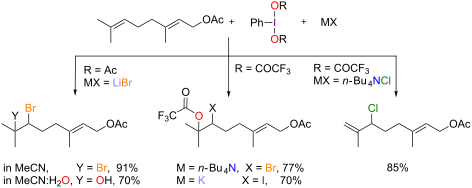
- , reaction 1). Yet in the course of our study we also showed that the reactivity of the key bridged bromonium intermediate could also be steered towards non-cyclizing vicinal difunctionalizations using slightly different combinations of a (diacyloxyiodo)arene and a bromide salt. Indeed, (diacetoxy


An overview of recent advances in duplex DNA recognition by small molecules
Beilstein J. Org. Chem. 2018, 14, 1051–1086, doi:10.3762/bjoc.14.93
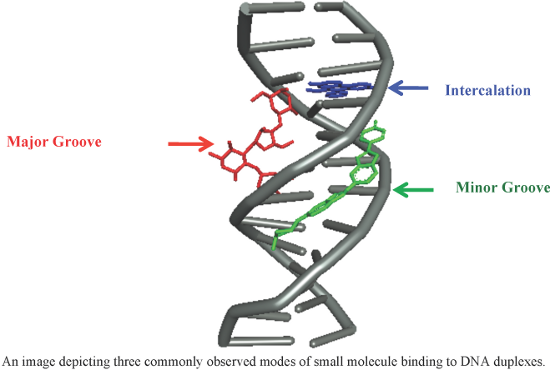
- peptidocalix[4]arenes with arginine-rich short narrow groove binding residues on the lower rim of the calix[4]arene scaffold were reported by Soltani et al. in order to study the binding between well-matched and mismatched DNA duplexes [107]. Fluorescent titrations, ethidium bromide (EB) displacement assays