


Search results
Search for "host–guest" in Full Text gives 226 result(s) in Beilstein Journal of Organic Chemistry. Showing first 200.
Hydroxy-functionalized hyper-cross-linked ultra-microporous organic polymers for selective CO2 capture at room temperature
Beilstein J. Org. Chem. 2016, 12, 1981–1986, doi:10.3762/bjoc.12.185
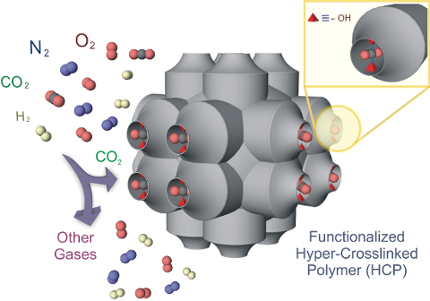
- ]. In terms of surface area, tuneable porosity and feasible host–guest interaction, MOFs have scored over other above mentioned porous materials [6]. But the less hydrolytic stability of metal-organic frameworks limits their real time application [7][8]. So the search for new materials having high


Cross-linked cyclodextrin-based material for treatment of metals and organic substances present in industrial discharge waters
Beilstein J. Org. Chem. 2016, 12, 1826–1838, doi:10.3762/bjoc.12.172
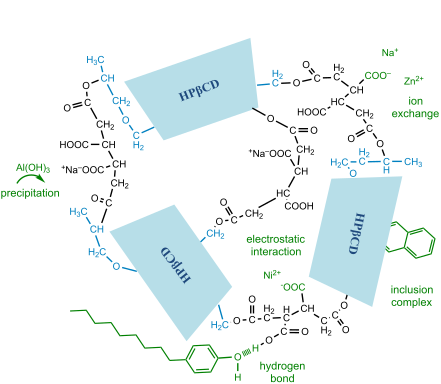
- properties leading to a host–guest relationship with organic substances [6][7][8][9]. These cyclic oligosaccharides are water soluble in their native form and are often modified to prepare novel insoluble CD-based materials. Two patents published by Martel et al. [10], and Trotta et al. [11] can be consulted
- that polyBTCA-CD is a versatile sorbent able to retain substances present at concentrations close to a few milligrams per liter (metals and other inorganic elements) but also at trace concentrations (µg·L−1 for organics). Although ion exchange on the one hand, and host–guest inclusion on the other hand


Organic chemistry meets polymers, nanoscience, therapeutics and diagnostics
Beilstein J. Org. Chem. 2016, 12, 1638–1646, doi:10.3762/bjoc.12.161
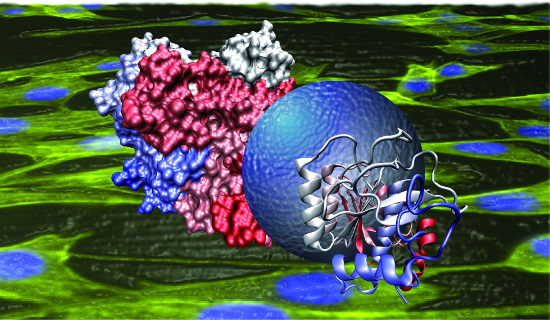
- career phase. Our next move was into polymers, where we started the conceptual journey we are still taking. The key question we asked is "we know what happens when you have one host–guest dyad, but what happens when you have 10, 50, 100 on a polymer?" On a straightforward level, we were able to




Supramolecular chemistry at the interface of biology, materials and medicine
Beilstein J. Org. Chem. 2016, 12, 1101–1102, doi:10.3762/bjoc.12.105
- Eric V. Anslyn Steven C. Zimmerman Department of Chemistry, University of Texas, Austin, TX 78712, United States Department of Chemistry, University of Illinois at Urbana-Champaign, Urbana, Illinois 61801, United States 10.3762/bjoc.12.105 Keywords: biomimetic chemistry; host–guest chemistry
Superstructures with cyclodextrins: chemistry and applications III
Beilstein J. Org. Chem. 2016, 12, 937–938, doi:10.3762/bjoc.12.91
- the group of B. J. Ravoo using host–guest interactions between polyethyleneimine grafted with β-CD and a polyamidoamine dendrimer decorated with ferrocene. The formation of the superstructures was reversible by electrochemical oxidation of the ferrocene moieties [6]. Furthermore, significant progress
From steroids to aqueous supramolecular chemistry: an autobiographical career review
Beilstein J. Org. Chem. 2016, 12, 684–701, doi:10.3762/bjoc.12.69
- was that I had “discovered” molecular concavity and host–guest chemistry, research that I instantly related to the action of the Cytochrome P-450s and other enzymes. Unfortunately however, there was the small problem of financial support. From John’s perspective I had literally appeared out of the
- direct assemblies, the structural definition and kinetic stability of 2:1 host–guest complexes might be low. We therefore wanted to introduce a bias by using very rigid guests. We were therefore grateful to discover that a range of steroids, from as small as estradiol to as large as cholesterol formed
- its exterior and a dry, water-free nano-space for harboring a guest or guests. The range of guests that form 2:1(2) host–guest complexes is illustrated by the examples in Figure 7. As expected, if a co-solvent is added then these complexes are broken down. Thus, screening of eight different co




Interactions between 4-thiothymidine and water-soluble cyclodextrins: Evidence for supramolecular structures in aqueous solutions
Beilstein J. Org. Chem. 2016, 12, 549–563, doi:10.3762/bjoc.12.54
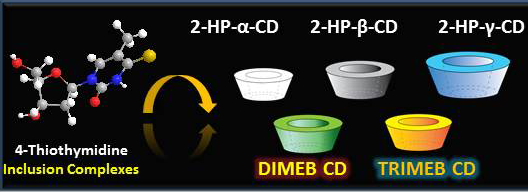
- mentioning that among different kinds of non-covalent interactions, the host–guest type is extensively discussed in literature covering a large field of applications [4]. For example, cyclodextrins (CDs), among host molecules, are reported to occupy an important place in the field of inclusion phenomena [5
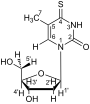
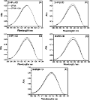
- absorbance difference measured at 337 nm in presence and in absence of CDs are summarized. As explained in [31], this change of absorption can be attributed to host–guest type interactions, during which the guest changes its environment from an aqueous medium to the apolar CD cavity inducing the variations
- well-established with the redox center of S4TdR located inside the host cavity. The results also indicated, as reported in [38], that S4TdR was reduced with more difficulty when it was engaged in the inclusion complexes. Sabapathy et al. [36] and Semeraro et al. [39] suggested that when host–guest type



Interactions of cyclodextrins and their derivatives with toxic organophosphorus compounds
Beilstein J. Org. Chem. 2016, 12, 204–228, doi:10.3762/bjoc.12.23
- use this technique for routine analysis [48]. Finally the binding constant of the host-guest inclusion complex was reported at 690 ± 140 M−1. Pesticides bearing a non-aromatic group X-ray powder diffraction analysis and DSC validated the formation of a complex between (diethoxyphosphinoximino
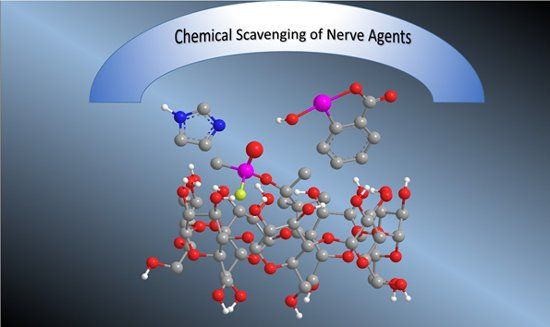
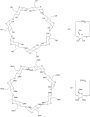
- (Scheme 1). However, the outcome of this complexation strongly depends of the host–guest system. Indeed, α-CD displays a weak inhibitive effect on parathion hydrolysis whereas a mild promotive effect is noticed for methyl parathion and paraoxon hydrolysis. β-CD inhibits parathion and methyl parathion
- ions in the solvent. Acting as the active site, the substitution of secondary hydroxy groups might impact the hydrolysis rate. This was investigated comparing the effect of β-CD, DIMEB and TRIMEB on the alkaline hydrolysis of parathion, methyl parathion, and fenitrothion [53][54]. In all host–guest






Thermal and oxidative stability of Atlantic salmon oil (Salmo salar L.) and complexation with β-cyclodextrin
Beilstein J. Org. Chem. 2016, 12, 179–191, doi:10.3762/bjoc.12.20
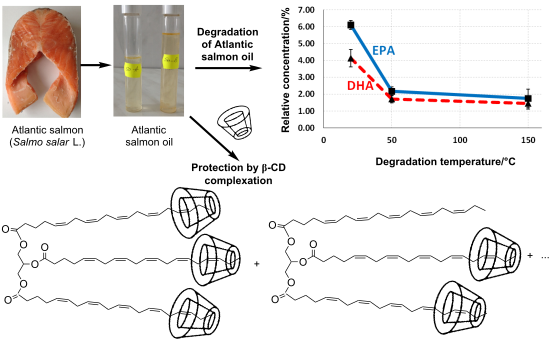
- saturated fatty acids remained constant or slightly increased by a few percent after degradation (e.g., from 10.7% to 12.9% for palmitic acid). Co-crystallization of ASO with β-CD at a host–guest ratio of 1:1 and 3:1 from an ethanol–water mixture and kneading methods has been used for the preparation of β
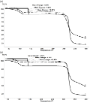
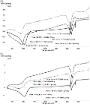
- water and solvent contents in host–guest supramolecular systems by thermal analyses have already been performed for CD/flavonoid and CD/essential oil complexes [37][39]. Differential scanning calorimetry (DSC) analysis DSC can provide further information on the physical and chemical processes occurring
- to water release decreases to 91.3 ± 2.9 °C and 74 ± 6.0 °C for the co-crystallization and kneading methods, respectively (Figure 2 and Supporting Information File 1). The decrease of these DSC peak temperatures can be explained by the formation of the host–guest molecular inclusion compound that



A journey in bioinspired supramolecular chemistry: from molecular tweezers to small molecules that target myotonic dystrophy
Beilstein J. Org. Chem. 2016, 12, 125–138, doi:10.3762/bjoc.12.14
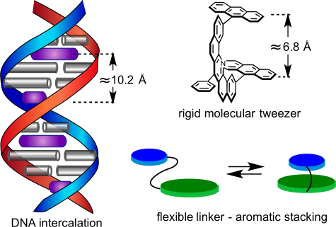
- early career efforts in molecular recognition, especially molecular tweezers. Although designed to complex DNA, these hosts proved more applicable to the field of host–guest chemistry. This early experience and interest in intercalation ultimately led to the current efforts to develop small molecule
- tweezers and a paradigm shift in host–guest chemistry Developing molecular tweezers was one of the main projects I started in my independent academic career at Illinois. The idea originated at Columbia when I began to teach myself the biochemistry and biology lacking in any of my formal coursework. For
- excitement surrounding the 1987 Nobel Prize to Cram, Lehn, and Pedersen had generated an enormous interest in host–guest chemistry and there was at this time a move to go beyond cyclic crown ethers. In particular, the groups of Rebek [11] and Hamilton [12] and many others were developing hosts capable of


Supramolecular structures based on regioisomers of cinnamyl-α-cyclodextrins – new media for capillary separation techniques
Beilstein J. Org. Chem. 2016, 12, 97–109, doi:10.3762/bjoc.12.11
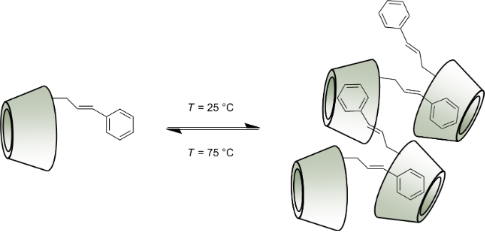
- held together by non-covalent interactions, such as electrostatic interactions, coordination bonds, hydrogen bonds, hydrophobic interactions and host–guest interactions [1]. Their formation is spontaneous and reversible by self-assembly of the monomer units. Because of this special non-covalent
- mainly on intermolecular host–guest interactions between the hydrophobic interior of the CD in one conjugate and between the apolar substituent of another conjugate. Earlier studies however pointed out that the size matching between the covalently attached guest part and the CD’s cavity is not the only
- proximity of the cavity and therefore contributing to the host−guest interaction. More detailed study of the ROESY spectra (see Figure 3) provided relevant information about the mode of the host–guest interaction. Important differences can be observed between the interactions of the two double bond protons


Supramolecular polymer assembly in aqueous solution arising from cyclodextrin host–guest complexation
Beilstein J. Org. Chem. 2016, 12, 50–72, doi:10.3762/bjoc.12.7
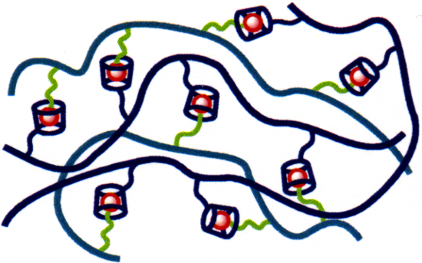
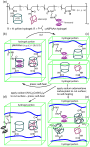
- , Australia Department of Chemical Engineering, Princeton University, Princeton, NJ 08544, USA 10.3762/bjoc.12.7 Abstract The employment of cyclodextrin host–guest complexation to construct supramolecular assemblies with an emphasis on polymer networks is reviewed. The main driving force for this
- supramolecular assembly is host–guest complexation between cyclodextrin hosts and guest groups either of which may be discrete molecular species or substituents on a polymer backbone. The effects of such complexation on properties at the molecular and macroscopic levels are discussed. It is shown that
- cyclodextrin complexation may be used to design functional polymer materials with tailorable properties, especially for photo-, pH-, thermo- and redox-responsiveness and self-healing. Keywords: cyclodextrin; host–guest; polymer; smart-material; supramolecular; Introduction Supramolecular assembly driven by


Determination of formation constants and structural characterization of cyclodextrin inclusion complexes with two phenolic isomers: carvacrol and thymol
Beilstein J. Org. Chem. 2016, 12, 29–42, doi:10.3762/bjoc.12.5
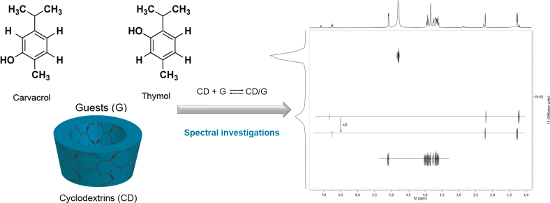
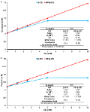
- shifts (Δδ) and diffusion coefficients (ΔD) were plotted as a function of CD concentration for both guests (Figure 4). A global analysis was applied to determine the host/guest affinity. A unique Kf, together with the maximum shifts of each signal, were used to fit simultaneously theoretical and




Synthesis and photophysical characteristics of polyfluorene polyrotaxanes
Beilstein J. Org. Chem. 2015, 11, 2677–2688, doi:10.3762/bjoc.11.288
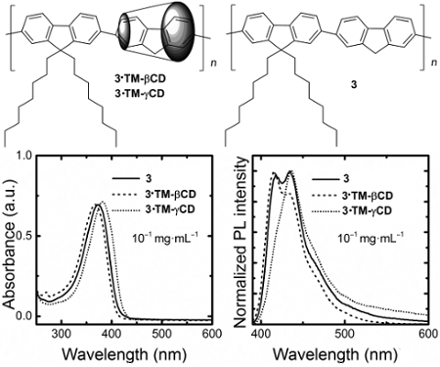
- synthesis of 1·TM-βCD or 1·TM-γCD in polar protic solvents is driven by hydrophobic interactions in combination with electrostatic, van der Waals or π–π interactions. In comparison, in polar aprotic solvents such as DMF, THF relies mostly on host–guest specific interactions, such as dispersion or dipole


Inclusion complexes of 2-methoxyestradiol with dimethylated and permethylated β-cyclodextrins: models for cyclodextrin–steroid interaction
Beilstein J. Org. Chem. 2015, 11, 2616–2630, doi:10.3762/bjoc.11.281
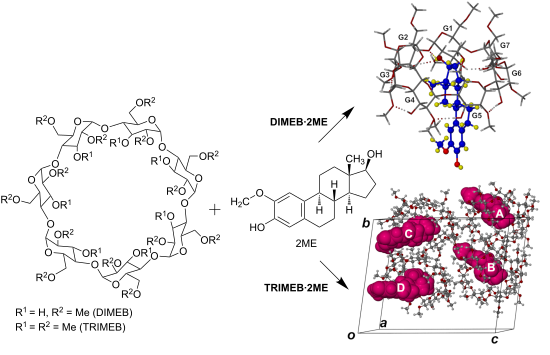
- host–guest β-CD inclusion complex, prepared by two methods, yielded very rapid dissolution in water at 37 °C relative to untreated 2ME, attaining complete dissolution within 15 minutes (co-precipitated complex) and 45 minutes (complex from kneading). Keywords: complexation; cyclodextrin; 2
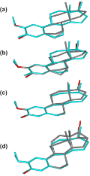
- complexes, some of them having host–guest stoichiometric ratios of 2:1 and 3:2 with β-CD and γ-CD, respectively. An early attempt to acquire basic structural information from PXRD data for crystalline inclusion complexes of β-CD with a series of pregnanes as guests led to the estimation of crystal unit cell
- ). Further routine characterization of the β-CD complex of 2ME by UV spectrophotometry (at λ = 198.5 nm in MeOH/water 50:50 v/v) coupled with thermogravimetric anlysis (TGA) data (8.8 ± 0.4% one-step mass loss in the range 30–150 °C, n = 3) yielded the host–guest stoichiometry (2:1) and crystal water content





Smart molecules for imaging, sensing and health (SMITH)
Beilstein J. Org. Chem. 2015, 11, 2540–2548, doi:10.3762/bjoc.11.274
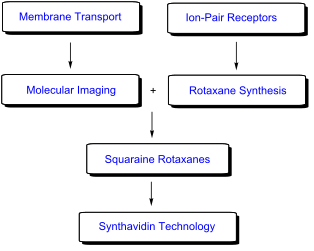
- ”. In 2003, Houk and coworkers published a survey of all known natural and synthetic host/guest binding systems and concluded that the best predictor of strong affinity is the amount of solvent accessible surface area that is buried upon binding [48]. Typically, this surface area is amphiphilic; that is


Size-controlled and redox-responsive supramolecular nanoparticles
Beilstein J. Org. Chem. 2015, 11, 2388–2399, doi:10.3762/bjoc.11.260
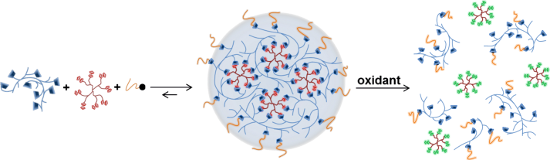
- their use as drug delivery vehicles. Here, we aim to form supramolecular nanoparticles (SNPs) by combining advantages of the reversible assembly properties of SNPs using host–guest interactions and of a stimulus-responsive moiety. The SNPs are composed of a core of positively charged poly(ethylene imine
- core of the SNPs. Keywords: host–guest interactions; nanoparticles; self-assembly; stimulus-responsive; supramolecular chemistry; Introduction Self-assembly and molecular recognition are two core concepts underlying supramolecular chemistry. These offer convenient and versatile pathways to
- these SNPs using host–guest interactions between CD and Ad. Tseng et al. studied the formation of SNPs that are assembled solely by host–guest interactions [11][12]. Here, the core is composed of multivalent interactions between positively charged CD-grafted polymers and positively charged poly


Life lessons
Beilstein J. Org. Chem. 2015, 11, 2350–2354, doi:10.3762/bjoc.11.256
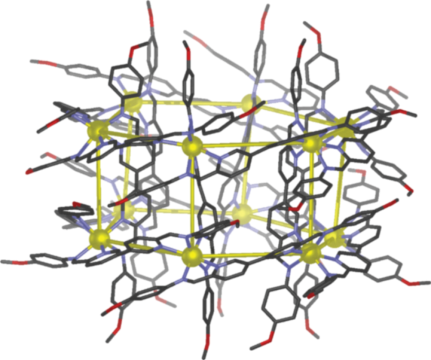
- Learner Keywords: autobiography; host–guest; self-assembly; supramolecular; Review I was raised in Syracuse, New York (USA), and went to a series of state schools of varying quality. Only the faces of the bad teachers stick with me, but I remember the names, too, of a few of the good ones – Karen Curry


Co-solvation effect on the binding mode of the α-mangostin/β-cyclodextrin inclusion complex
Beilstein J. Org. Chem. 2015, 11, 2306–2317, doi:10.3762/bjoc.11.251
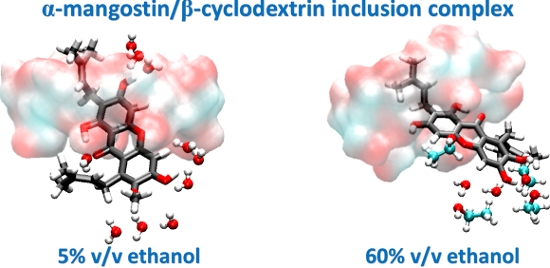
- addition with complexation [2][3][6] have demonstrated that the thermodynamics underlying the interactions between host–guest molecules can be significantly changed in these instances. In these cases, the co-solvent can also occupy the CD cavity in conjunction with the guest (drug) molecules to form CD
- anion affinity and selectivity of a neutral anion receptor, bis(cyclopeptide) [17]. Molecular dynamics (MD) simulations can give important insights into the energetics of structural interactions. The hydrated structure of β-CD in aqueous solution [18] and those showing host–guest interactions between



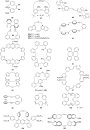
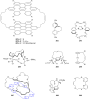
Selected synthetic strategies to cyclophanes
Beilstein J. Org. Chem. 2015, 11, 1274–1331, doi:10.3762/bjoc.11.142
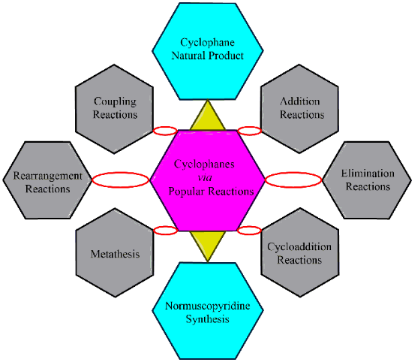
- (s) between the aromatic rings and also provide flexibility to the overall structure. Cyclophanes play an important role in “host–guest” chemistry [39][40][41][42][43] and supramolecular assembly [44][45][46][47]. “Phane”-containing molecules show interactions with π-systems, and they can also bind






Donor–acceptor type co-crystals of arylthio-substituted tetrathiafulvalenes and fullerenes
Beilstein J. Org. Chem. 2015, 11, 1043–1051, doi:10.3762/bjoc.11.117
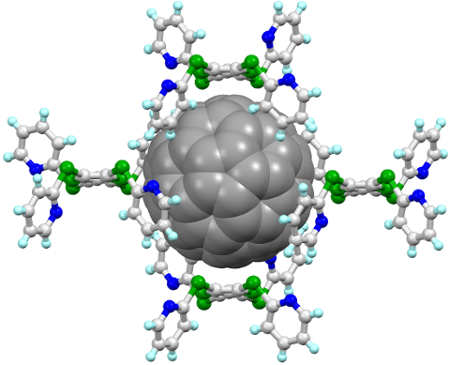
- ) connection of two components through covalent bonds [23][24][25][26][27] or (2) supramolecular assembly between TTFs (as host) and fullerene (as guest) [28][29][30][31][32][33][34][35][36][37][38][39][40][41]. For the formation of the host–guest type supramolecular system, the shape and size complementarity


Glycoluril–tetrathiafulvalene molecular clips: on the influence of electronic and spatial properties for binding neutral accepting guests
Beilstein J. Org. Chem. 2015, 11, 1023–1036, doi:10.3762/bjoc.11.115
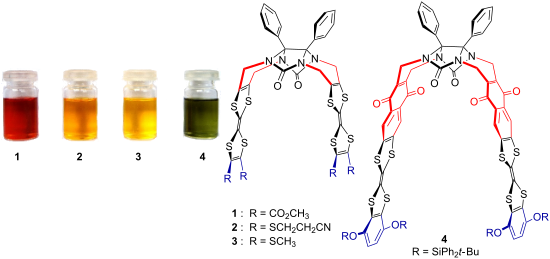
- checked the influence of the redox properties towards binding ability by studying the strong electrodeficient acceptor F4-TCNQ. Interaction with 1,3-dinitrobenzene (m-DNB) The host–guest affinity was detected by UV–visible spectroscopy upon titration of clip 3 (10−3 M in o-C6H4Cl2) with addition of m-DNB
- could not observe any host–guest binding interaction. These results suggest that electronic and spatial properties of the cavity constitute fundamental parameters for binding the m-DNB guest. The binding of such a weak electron acceptor was successful for molecular clip 3 presenting the most suitable




Mechanical stability of bivalent transition metal complexes analyzed by single-molecule force spectroscopy
Beilstein J. Org. Chem. 2015, 11, 817–827, doi:10.3762/bjoc.11.91
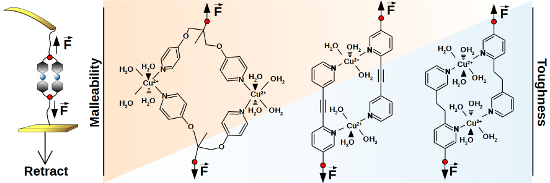
- the β2-adrenergic receptor [24] and rhodopsin [25]. On the field of supramolecular model systems DFS revealed the mechanical stability of coordination bonds [26][27][28], host–guest systems [29][30][31][32], and rotaxanes [33]. In 2008 Guzman et al. analyzed hydrogen bonds of 4H, 6H and 8H chains in




Discrete multiporphyrin pseudorotaxane assemblies from di- and tetravalent porphyrin building blocks
Beilstein J. Org. Chem. 2015, 11, 748–762, doi:10.3762/bjoc.11.85
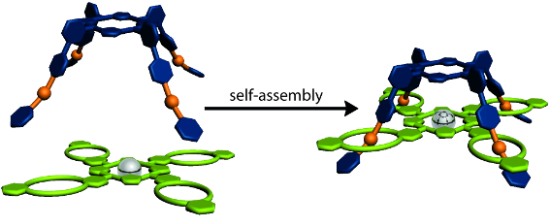
- proving the desired host–guest ratio in the supramolecular structure. Similar results are obtained for the other [3]- and [5]pseudorotaxanes (Figure 3b and Figure 4a,b). However, it should be noted that despite extensive titration experiments (see Supporting Information File 1 for details) a detailed





Synthesis and surface grafting of a β-cyclodextrin dimer facilitating cooperative inclusion of 2,6-ANS
Beilstein J. Org. Chem. 2015, 11, 514–523, doi:10.3762/bjoc.11.58
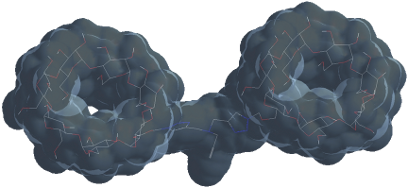
- grafting onto azide-functionalized quartz surfaces. Host–guest interactions with the fluorescent guest molecule 2-anilinonaphthalene-6-sulfonic acid (2,6-ANS) were investigated by NMR and fluorescence spectroscopy. Further, we probe the complex formation of the surface-grafted β-CD dimer with 2,6-ANS by
- negligible. Inclusion complex with free β-CD dimer in solution Host–guest interactions with the fluorescent probe 2,6-ANS were evaluated for the β-CD dimer by steady-state fluorescence spectroscopy and compared to that of the parent β-CD and 2,6-ANS. In water, 2,6-ANS displays only weak fluorescence
- contribution from the linker and the inversion of the host–guest concentration ratio as compared to fluorescence measurements of the free β-CD dimer in solution. In solution, the concentration of the β-CD dimer is kept in excess of the 2,6-ANS. On the surface, the fixed concentration of the β-CD dimer is lower





