Search results
Search for "quantum yield" in Full Text gives 208 result(s) in Beilstein Journal of Organic Chemistry. Showing first 200.
2,3-Dibutoxynaphthalene-based tetralactam macrocycles for recognizing precious metal chloride complexes
Beilstein J. Org. Chem. 2019, 15, 1460–1467, doi:10.3762/bjoc.15.146
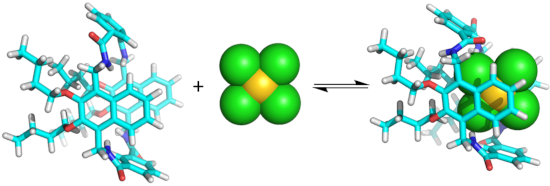
- precious metal chloride complexes. The UV–vis absorption spectrum was shown in Figure S21 (Supporting Information File 1), and the absorption maxima are located at 241 nm and 290 nm. However, the optimal excitation wavelength is at 310 nm with a quantum yield of 6.6% in dichloromethane. The emission


Complexation of a guanidinium-modified calixarene with diverse dyes and investigation of the corresponding photophysical response
Beilstein J. Org. Chem. 2019, 15, 1394–1406, doi:10.3762/bjoc.15.139
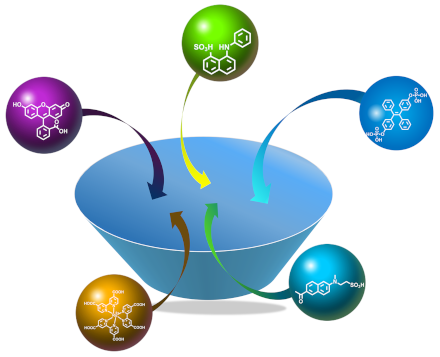
- internal conversion from S1 to S0 is responsible for the increase in the fluorescence quantum yield in these hydrophobic environments [44][45]. The fluorescence intensity of 2,6-TNS was extremely low with a maximum emission wavelength at 495 nm in aqueous solution [46]. Its fluorescence was dramatically



N-doped carbon dots covalently functionalized with pillar[5]arenes for Fe3+ sensing
Beilstein J. Org. Chem. 2019, 15, 1262–1267, doi:10.3762/bjoc.15.123
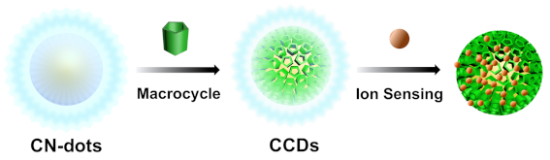
- nm and 365 nm, which coincides with the blue light emission. The obvious blue shift was due to the modification of CP[5], which led to the increase of n–π* transition energy with the formation of new amide bonds [4][25]. The PL quantum yield (QY) of the CCDs aqueous solution was determined to be 4


Remarkable effect of alkynyl substituents on the fluorescence properties of a BN-phenanthrene
Beilstein J. Org. Chem. 2019, 15, 1257–1261, doi:10.3762/bjoc.15.122
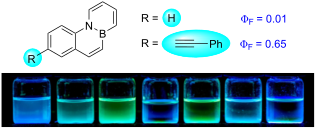
- impressive effect of the presence of alkynyl substituents on the fluorescence quantum yield, which improved from 0.01 in the parent compound to up to 0.65 in derivatives containing a triple bond. Keywords: alkyne; BN-phenanthrene; cross-coupling; fluorescence; heterocycles; Introduction BN-polycyclic
- , whose emission maxima are slightly red-shifted (395 and 392 nm vs 356 nm for unsubstituted 1a). In contrast, 7-alkynyl-substituted BN-phenanthrenes 1e and 1f show emission maxima analogous to that of the parent BN-phenanthrene 1a. With regard to the fluorescence quantum yield, phenyl and morpholine
- to a marked increase in the fluorescence quantum yield (0.44 and 0.65), particularly when the triple bond is bonded to a phenyl ring (1f). A similar increase (Φf = 0.45) is observed when the alkynyl group is attached to C1 (5), thus indicating that the positive influence of the triple bond on the





Precious metal-free molecular machines for solar thermal energy storage
Beilstein J. Org. Chem. 2019, 15, 1096–1106, doi:10.3762/bjoc.15.106
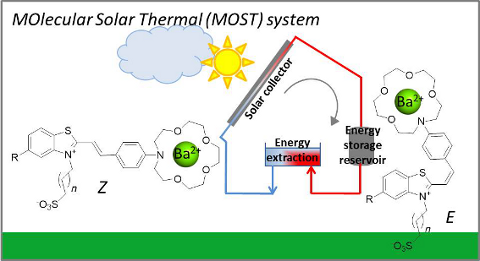
- higher energy form has to be with quite small molar absorptivity in comparison to the lower one; (iv) the quantum yield of the photoisomerization has to be as high as possible, which requires the design of MOST systems with completely suppressed or minimal fluorescence, intramolecular charge transfer or
- that in neat CD3CN (Supporting Information File 1, Figure S9 and Figure S10). A common behavior demonstrated in Figure 2 was observed: the fluorescence quantum yield of all dyes (Table 1) decreases if the concentration of the Ba2+ ions increases, i.e., the formation of the trans-dye–Ba2+ complexes
- ranging from 1 × 10⁻⁵ M to 5 × 10⁻¹ M in ACN. Emission spectra were recorded on FluoroLog3-22, Horiba Jobin Yvon spectrofluorometer with Quanta–φ accessory having a large 150 mm integrating sphere for the quantum yield measurements. All spectra we recorded using quartz cells of 1 cm path length. The




Diaminoterephthalate–α-lipoic acid conjugates with fluorinated residues
Beilstein J. Org. Chem. 2019, 15, 981–991, doi:10.3762/bjoc.15.96
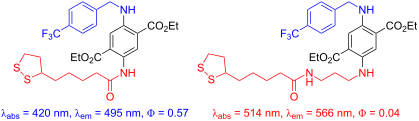
- (CH2Cl2), this material shows strong fluorescence (quantum yield 57% with emission at 495 nm, absorption maximum at 420 nm). The other compound (57% yield over three steps) possesses a propylene spacer between the ALA and the DAT units for electronic decoupling, thus, bathochromic shifts are observed
- (absorption at 514 nm, emission at 566 nm). The quantum yield is, however, lower (4%). Self-assembled monolayers on a gold surface of both compounds were prepared and characterized by high-resolution XPS of the C 1s, O 1s, S 2p, N 1s and F 1s emissions. The high signal-to-noise ratios of the F 1s peaks
- , target compound 3 has the highest (0.57), target compound 7 the lowest (0.04) quantum yield. XPS characterization of SAMs. SAMs were prepared from compounds 3 and 7 exploiting the strong binding affinity of the ALA residue to gold surfaces [52]. The resulting layers of compound 3 (SAM 3) and 7 (SAM 7


Photochemical generation of the 2,2,6,6-tetramethylpiperidine-1-oxyl (TEMPO) radical from caged nitroxides by near-infrared two-photon irradiation and its cytocidal effect on lung cancer cells
Beilstein J. Org. Chem. 2019, 15, 863–873, doi:10.3762/bjoc.15.84
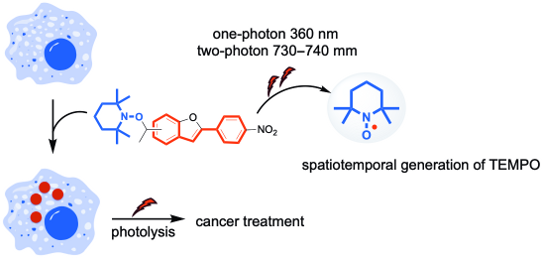
- was 80% after 10 min irradiation in benzene under air atmosphere (Figure 2g). Secondary photoreaction of TEMPO gradually decreased the chemical yield of TEMPO. The quantum yield (Φ) for photochemical release of the TEMPO radical was 2.5% at ≈1% conversion in the photolysis of 2a in benzene under
- irradiation (Figure 2h). In DMSO, the quantum yield for the formation of TEMPO increased significantly to 13.1% (from 2a) and 12.8% (from 2b) at ≈1% conversion of 2 under atmospheric conditions (Figure 1). The notable effect of the solvent on the TEMPO generation may be due to the increase in the lifetime of




Synthesis and fluorescent properties of N(9)-alkylated 2-amino-6-triazolylpurines and 7-deazapurines
Beilstein J. Org. Chem. 2019, 15, 474–489, doi:10.3762/bjoc.15.41
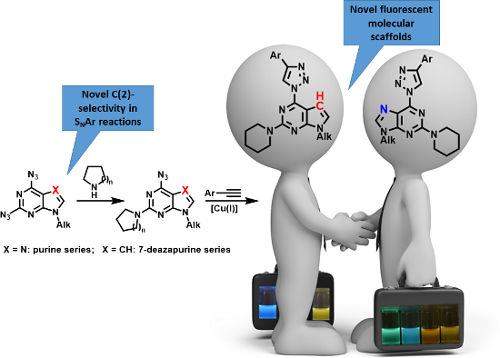
- to increased fluorescence quantum yield (74%) in THF solution. The compounds exhibit low cytotoxicity and as such are useful for the cell labelling studies in the future. Keywords: 7-deazapurines; fluorescence; nucleophilic aromatic substitution; purines; push–pull systems; pyrrolo[2,3-d]pyrimidines
- The optical properties of the synthesized compounds were assessed by performing absorption and fluorescence spectroscopy and fluorescence quantum yield measurements. The quantum yields were determined using a fluorescence standard of quinine sulfate in 0.1 M H2SO4 as a reference [53]. Absorption and
- fluorescence quantum yield to 74% in the case of 7-deazapurine derivative 11c. The solvent change provided a fluorescence shift from dark blue (≈440 nm) to orange (≈620 nm) color. Finally, the purines and 7-deazapurines were tested in live cell imaging on breast cancer cell lines MCF-7 and MDAMB231. They are




Degenerative xanthate transfer to olefins under visible-light photocatalysis
Beilstein J. Org. Chem. 2018, 14, 3047–3058, doi:10.3762/bjoc.14.283

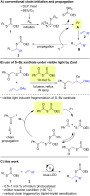
- chain mechanism was further confirmed by calculating the quantum yield (Φ) because a chain process provides multiple equivalents of product per photon absorbed by the photocatalyst (Φ > 1). The photon flux of blue LED (λmax = 469 nm) was determined using the potassium ferrioxalate actinometer [57][58
- presence of 1a in degassed DMSO recorded at different delay times, respectively (excitation wavelength = 355 nm). UV–vis absorption spectrum of 1a (1 mM solution in DMSO). Degenerative radical transfer of xanthates to olefins. Photocatalytic RAFT polymerization of xanthate 4. Determination of quantum yield



Applications of organocatalysed visible-light photoredox reactions for medicinal chemistry
Beilstein J. Org. Chem. 2018, 14, 2035–2064, doi:10.3762/bjoc.14.179
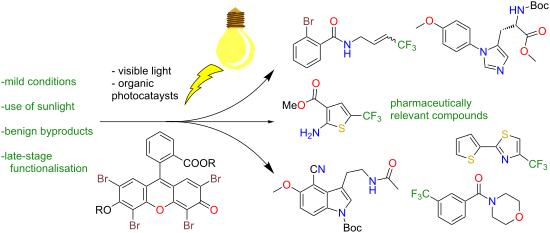
- ). In general, if a molecule is to participate in a reaction in the S1 state, its τf must be greater than 1 ns; N.B. the diffusion rate constant (kdiff) is ≈1–2 × 10¹⁰ s−1. The fluorescence quantum yield (Φf) is another key parameter to consider when determining whether the S1 state of a molecule is
- likely to be involved in PET. A molecule with a low Φf will be unlikely to be found in the S1 state, as this state will be highly susceptible to other decay pathways in the timescale of PET. For a molecule to undergo PET when in the T1 state, the intersystem crossing quantum yield (ΦISC) must be


Rational design of boron-dipyrromethene (BODIPY) reporter dyes for cucurbit[7]uril
Beilstein J. Org. Chem. 2018, 14, 1961–1971, doi:10.3762/bjoc.14.171
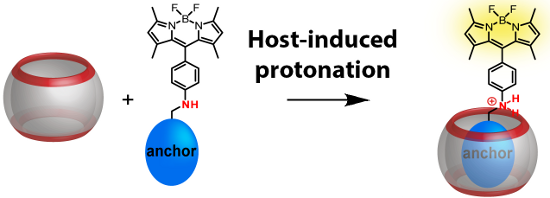
- fluorescence from biological samples, and it would have a high fluorescence quantum yield in either bound or unbound state with a large difference in fluorescence intensity between both. In addition, a tuneable hydrophobicity to render the dye–CB complex membrane permeable or not, and a tuneable affinity for
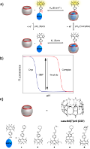
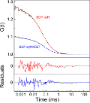
- protonated, or at high pH values above the pKa value of the BODIPY•CB7 complex (see below) had no effect on the spectroscopic properties of the dyes. For example, the fluorescence quantum yield of 2 was identical in absence and presence of CB7 at pH 1.5. At intermediate pH values, however, the fluorescence




Synthesis of 9-arylalkynyl- and 9-aryl-substituted benzo[b]quinolizinium derivatives by Palladium-mediated cross-coupling reactions
Beilstein J. Org. Chem. 2018, 14, 1871–1884, doi:10.3762/bjoc.14.161
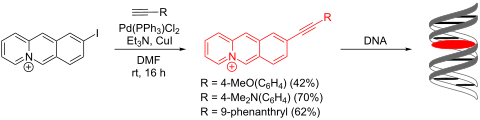
- ][65][66]. The effect of the donor substituent on the emission quenching was supported by the strong increase of the emission quantum yield of 2c upon protonation of the amino group, that is, by the transformation of the donor to an acceptor substituent (Figure 5) [34]. Considering the water solubility


Synthesis and photophysical studies of a multivalent photoreactive RuII-calix[4]arene complex bearing RGD-containing cyclopentapeptides
Beilstein J. Org. Chem. 2018, 14, 1758–1768, doi:10.3762/bjoc.14.150
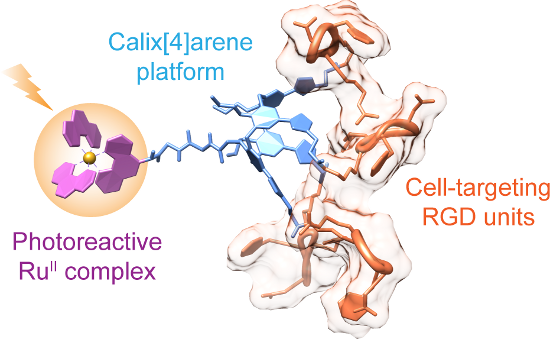
- luminescence lifetime and determined the quantum yield of luminescence under air and argon atmosphere for conjugate 9 and reference [Ru(TAP)2phen]2+ in water with 5% DMSO in order to avoid any formation of aggregates. The data gathered in Table 1 clearly indicate that the tethering of the [Ru(TAP)2phen]2
- ). Emission quantum yields were determined by integrating the corrected emission spectra over the frequencies. [Ru(bpy)3]2+ in water under air was chosen as the standard luminophore (quantum yield of 0.042 under argon). The luminescence lifetimes were measured by the time-correlated single photon counting (TC





Recent advances in phosphorescent platinum complexes for organic light-emitting diodes
Beilstein J. Org. Chem. 2018, 14, 1459–1481, doi:10.3762/bjoc.14.124
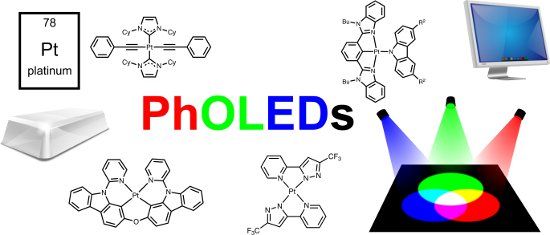
- tuneable over the entire visible spectrum and beyond; together with compounds with photoluminescence quantum yield (PLQY) approaching unity. These peculiar features have greatly fuelled the still growing interest in luminescent TMCs for its potential employment in applications and real-market technology
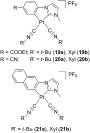
- properties (Figure 6) [37]. The intermolecular interaction was finely tuned as a function of the steric hindrance of the acac-type ancillary ligand, which had a profound impact on the emission quantum yield. Characterization of the electroluminescence performances of these complexes in mixed-matrix OLED led






D–A–D-type orange-light emitting thermally activated delayed fluorescence (TADF) materials based on a fluorenone unit: simulation, photoluminescence and electroluminescence studies
Beilstein J. Org. Chem. 2018, 14, 672–681, doi:10.3762/bjoc.14.55
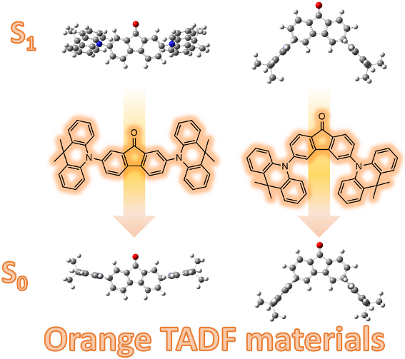
- property according to the energy gap law [16] as vibrational relaxation and intersystem crossing (IC) processes can consume the energy in S1, leading to increased nonradiative deactivation [17], reduced PL quantum yield, and thus reduced singlet exciton utilization. On the contrary, the geometry of 2 is
- -1,1’-biphenyl (CBP) were vacuum co-deposited at a concentration of 8 wt % for photoluminescence quantum yield (PLQY) and time-resolved transient photoluminescence decay measurements. The concentration of the doped films was optimized to ensure complete energy transfer between the host and the guest
- [5][7][16]. where kr, knr, kisc, and krisc represent the rate constant of radiative, nonradiative, intersystem crossing and reverse intersystem crossing, respectively; Φ, ΦPF, ΦTADF, τPF and τTADF represent the photoluminescence quantum yield, quantum yield of the prompt component, quantum yield of


Enhanced quantum yields by sterically demanding aryl-substituted β-diketonate ancillary ligands
Beilstein J. Org. Chem. 2018, 14, 664–671, doi:10.3762/bjoc.14.54
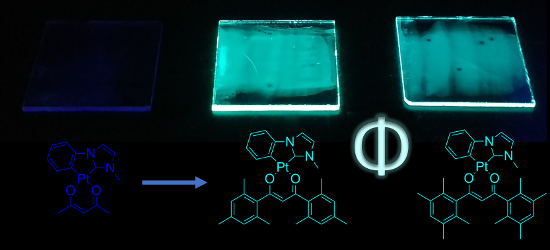
- β-diketonates on the emission properties of C^C* cyclometalated complexes, employing the unsubstituted methyl-phenyl-imidazolium ligand. The quantum yield was significantly enhanced by changing the auxiliary ligand from acetylacetonate, where the corresponding platinum(II) complex shows only a very
- ) complex; quantum yield; Introduction Highly luminescent platinum(II) complexes have successfully been applied for lighting applications such as organic light emitting diodes (OLEDs) [1][2][3][4][5][6]. Although OLEDs are already widely used, the development of stable and efficient blue devices remains
- groups as substituents in acetylacetonate (acac) auxiliary ligands can have a positive influence on the emission properties of platinum(II) phosphors [35][36][37][38]. The use of mesityl and duryl groups enhanced the quantum yield of platinum complexes with a variety of C^C* cyclometalating ligands [18


Investigating radical cation chain processes in the electrocatalytic Diels–Alder reaction
Beilstein J. Org. Chem. 2018, 14, 642–647, doi:10.3762/bjoc.14.51
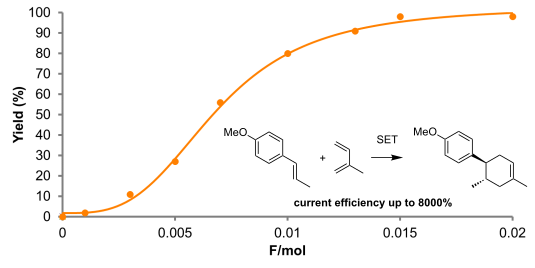
- ion chain processes. As an early example, Bauld estimated the chain lengths of cyclodimerizations of cyclohexadiene and trans-anethole (1) [18]. More recently, Yoon has established a straightforward method to estimate the chain length of photoredox processes using the combination of quantum yield and


Recent advances on organic blue thermally activated delayed fluorescence (TADF) emitters for organic light-emitting diodes (OLEDs)
Beilstein J. Org. Chem. 2018, 14, 282–308, doi:10.3762/bjoc.14.18
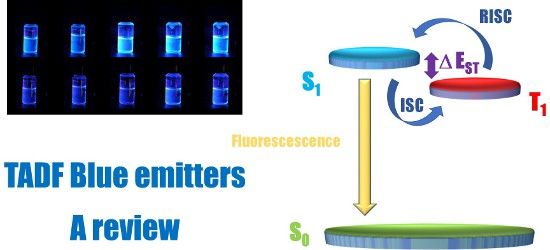
- reducing the global energy demand on Earth, two parameters govern the power consumption of OLEDs, namely the quantum yield of luminescence of the light emitting material and the device stacking. Indeed, the driving voltage of OLEDs is highly sensitive to the thickness of the different layers, the charge
- the light-emitting ability of the emitter, which is directly related to the nature, and the photoluminescence quantum yield (PLQY) of the emitter. Based on spin statistics, upon electrical excitation, singlet and triplet excitons are formed in a 1:3 ratio [4]. In the case of fluorescent materials




Fluorogenic PNA probes
Beilstein J. Org. Chem. 2018, 14, 253–281, doi:10.3762/bjoc.14.17
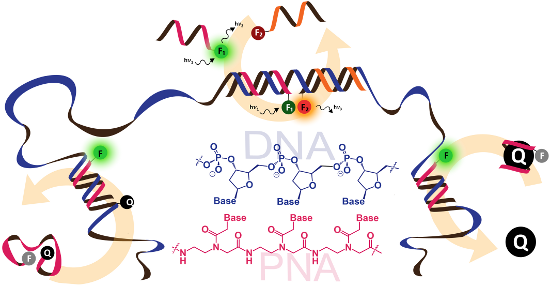
- into PNA, these PhpC derivatives exhibited a bright blue fluorescence with large fluorescence quantum yield (0.5–0.6), which can be useful for monitoring the cellular uptake and distribution of PNA [192]. In addition, the fluorescence was responsive to the base pairing, where up to 60% quenching was
- observed upon duplex formation with DNA or RNA. The fused ring fluorescence cytosine analogue 5,6-benzo-pC gave a large Stokes shift (113 nm) and good quantum yield (0.79) as a monomer. Unfortunately, severe fluorescence quenching was observed upon incorporation of this monomer into PNA sequences and no




Synthesis and spectroscopic properties of β-meso directly linked porphyrin–corrole hybrid compounds
Beilstein J. Org. Chem. 2018, 14, 187–193, doi:10.3762/bjoc.14.13
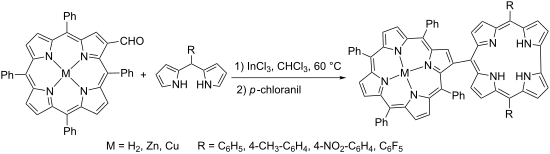
- quantum yield properties of the new hybrid compounds are promising for many applications such as organic optoelectronics or biological imaging. Conclusion In summary, we have synthesized the first examples of β-porphyrin, meso-corrole substituted directly linked porphyrin–corrole hybrid compounds via a


Fluorescent nucleobase analogues for base–base FRET in nucleic acids: synthesis, photophysics and applications
Beilstein J. Org. Chem. 2018, 14, 114–129, doi:10.3762/bjoc.14.7
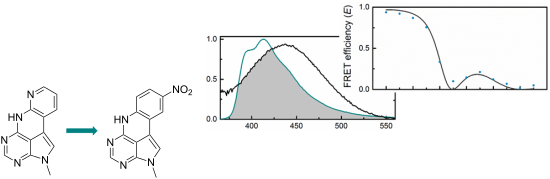
- be seen in Equation 2 the Förster distance depends on the quantum yield of the donor (ΦD), the donor/acceptor spectral overlap integral (JDA, overlap between energies of donor emission and acceptor absorption envelope), the refractive index of the medium (n), and importantly the geometric factor (κ
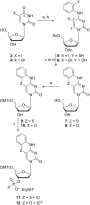
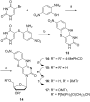
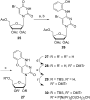
- we found qAN1 to be a promising candidate as a FRET donor due to its high quantum yield of 0.18 (vide infra) [55]. To develop an adenine acceptor for qAN1, a similar approach as for the tricyclic cytosines was performed, i.e., the introduction of a nitro functionality in the outer ring of qA. In an
- , tC shows high and stable quantum yields (around 20%) both in monomeric form, in single- as well as in double-stranded DNA [29][30]. The quantum yield of tCO in different environments is even higher than those of tC [31]. While slightly dependent on the neighboring base environment they are still very






Halogen-containing thiazole orange analogues – new fluorogenic DNA stains
Beilstein J. Org. Chem. 2017, 13, 2902–2914, doi:10.3762/bjoc.13.283
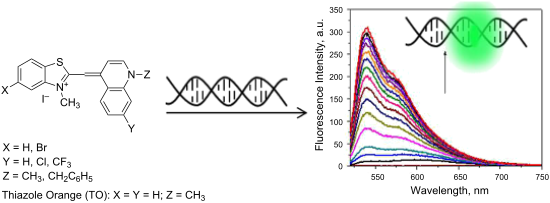
- and the highest fluorescence intensity in presence of dsDNA on the other, which determines the highest fluorescence enhancement factor of 454 for this compound. The latter value (454) is practically identical to that of the reference TO (458), but the fluorescence quantum yield measured for 5a is
- twice as high as that of TO-7Cl, which can be ascribed to the effect of the benzyl substituent. While the chloro substituent itself leads to a decrease of the relative fluorescent quantum yield (62% for TO-7Cl compared to TO), the benzyl group in 5a increases it two fold, making 5a almost 30% brighter
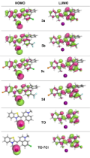
- presence of dsDNA, calculated fluorescence enhancement factor () and relative fluorescence quantum yield in presence of dsDNA with respect to TO. TDDFT/PBE0 excitation energies (eV), wavelengths (nm) (in parentheses), oscillator strength f, HOMO and LUMO energies and energy differences (HOMO–LUMO gap) (eV




Development of a fluorogenic small substrate for dipeptidyl peptidase-4
Beilstein J. Org. Chem. 2017, 13, 2690–2697, doi:10.3762/bjoc.13.267
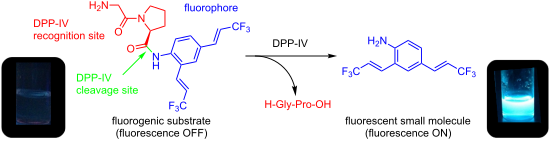
- quantum yield to 0.03. In spectroscopic terms, the fluorescence emission peaks of these compounds red-shifted with increasing TFPE substitution. Additionally, a large Stokes shift was observed for 1, which is important in view of the biomedical use of fluorescent compounds. Next, we changed the solvent
- from THF to H2O/DMSO (9:1) as shown in Figure 2 and Table 3. The fluorescence quantum yield of a fluorophore generally decreases significantly in an aqueous solvent because of release of energy in the excited state of the fluorophore by forming hydrogen bonds with water. However, in the cases of 1 and
- 3, the decreases in the fluorescence quantum yield were small, namely 0.27 and 0.20, respectively. This is reasonable for 1 and 3 because the oxygen-free TFPE group is less likely to form hydrogen bonds, even in aqueous solution. Additionally, the emission peak of 1 is red-shifted from 436 to 461 nm


Pyrene–nucleobase conjugates: synthesis, oligonucleotide binding and confocal bioimaging studies
Beilstein J. Org. Chem. 2017, 13, 2521–2534, doi:10.3762/bjoc.13.249
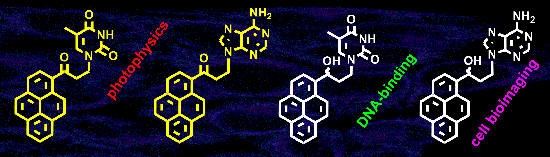
- emission band overlaps with the S1 ← S0 absorption band at 375 nm which is the E00, the energy that is gained by excitation. In degassed solution, the emission decays with a decay constant of τf = 160 ns at a quantum yield of f = 40%. These values correspond to a fluorescence rate kf = f/τf = 2.5 × 10⁶ s−1


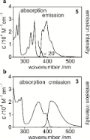


One-pot syntheses of blue-luminescent 4-aryl-1H-benzo[f]isoindole-1,3(2H)-diones by T3P® activation of 3-arylpropiolic acids
Beilstein J. Org. Chem. 2017, 13, 2340–2351, doi:10.3762/bjoc.13.231
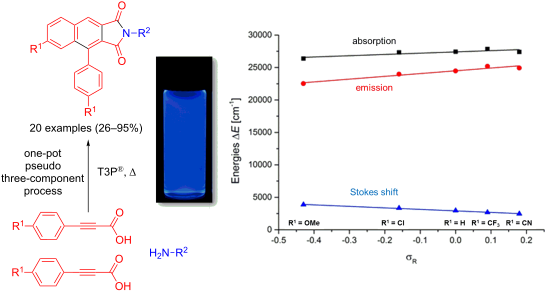
- character, as supported by the influence of the remote polar substitution (Figure 7). Interestingly, compound 4a, which has a fluorescence quantum yield Φf of less than 0.01 in dichloromethane solution, experiences an over eightfold increase to 0.08 in the solid state emission as determined from the powder
- ]-naphthaleneimide 5, which is only weakly luminescent, the pentacycle 6 displays a relative enhancement of the greenish emission at 500 nm by a factor of 340 (relative to compound 4a, Figure 8) and can be quantified with a fluorescence quantum yield of 0.10 (Table 6, entry 12). Conclusion 3-Arylpropiolic acids can