Search results
Search for "Suzuki" in Full Text gives 375 result(s) in Beilstein Journal of Organic Chemistry. Showing first 200.
Mono- and bithiophene-substituted diarylethene photoswitches with emissive open or closed forms
Beilstein J. Org. Chem. 2019, 15, 2344–2354, doi:10.3762/bjoc.15.227
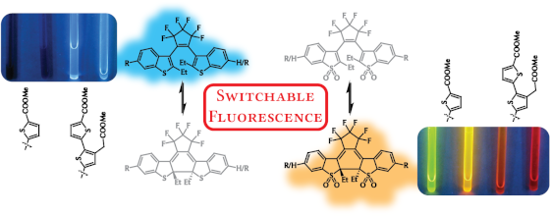
- regioisomeric bromides were also formed, but they were separated by column chromatography on the next step. Bithiophene 11 was prepared in 74% yield by using a Suzuki–Miyaura coupling (catalyzed by PEPPSI-IPr) between boronic ester 9 and bromide 10 [13][14]. Boronation of bithiophene 11 was achieved under
- , AsOTh2, and SyOTh2 (Figure 1) were obtained using a standard procedure for a Suzuki–Miyaura coupling of iodides 4, 5, 7, and 8 with boronic acid esters 9 and 12 (see Scheme 3). Throughout the text, abbreviations “As” and “Sy” denote asymmetric and symmetric substitution patterns, respectively; “O
- esters 9 and 12 (bpy – 4,4’-di-tert-butyl-2,2’-dipyridine; COD – cycloocta-1,5-diene; NBS – N-bromosuccinimide, DCM – dichloromethane). Photoswitchable diarylethenes AsTh1, SyTh1, AsTh2, SyTh2, AsOTh1, SyOTh1, AsOTh2, and SyOTh2 synthesized via a Suzuki–Miyaura coupling. Conditions: 60 °C, argon


Functionalization of 4-bromobenzo[c][2,7]naphthyridine via regioselective direct ring metalation. A novel approach to analogues of pyridoacridine alkaloids
Beilstein J. Org. Chem. 2019, 15, 2304–2310, doi:10.3762/bjoc.15.222
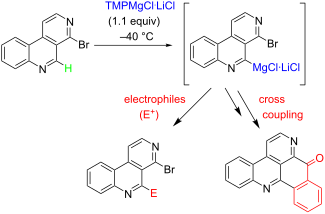
- , phenolates), acyl anions (generated by umpolung of aldehydes with imidazolium salts) and by palladium-catalyzed cross-coupling reactions (Suzuki, Stille) [10]. A related Stille cross coupling of a benzo[c][2,7]naphthyridine bearing a triflate group at C-5 gave an intermediate for the total synthesis of
- , which undergo rearomatization as described above (Figure 2B). 4-Bromo-5-(methoxycarbonyl)benzo[c][2,7]naphthyridine generated this way gave, after Suzuki cross-coupling at C-4, intermediates for the synthesis of analogues of ascididemin (2) [16]. Introduction of (hetero)aromatic rings bearing ester
- groups in ortho-position into 4-bromobenzo[c][2,7]naphthyridine (9d) under Suzuki or Negishi conditions gave 4-aryl derivatives 10 which underwent cyclization to pyridoacridones through directed remote ring metalation at C-5, followed by spontaneous intramolecular trapping of the ester group [17][18




Azologization and repurposing of a hetero-stilbene-based kinase inhibitor: towards the design of photoswitchable sirtuin inhibitors
Beilstein J. Org. Chem. 2019, 15, 2170–2183, doi:10.3762/bjoc.15.214
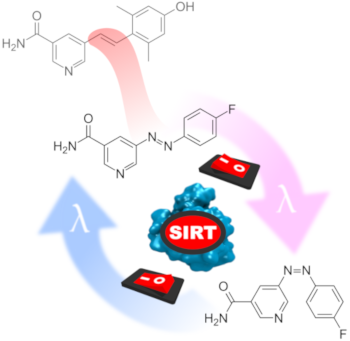
- -bromonicotinate (3b). If 3b was used, transformation to the nicotinamide was accomplished almost quantitatively by addition of a saturated solution of ammonia in anhydrous methanol and stirring in a closed vessel at 40 °C. Compounds 4a and b could easily be obtained through Suzuki coupling with commercially
- ) as alkene component had detrimental effects on the yields in the synthesis of 2d, 2f and 2h. Intermediates 5a and 5b were accessible from 3a and 3b via Suzuki–Miyaura or Stille coupling [34]. Biology The influence on deacetylase activity of three human sirtuin isoforms (Sirt1–3) was determined in a


Norbornadiene-functionalized triazatriangulenium and trioxatriangulenium platforms
Beilstein J. Org. Chem. 2019, 15, 1815–1821, doi:10.3762/bjoc.15.175
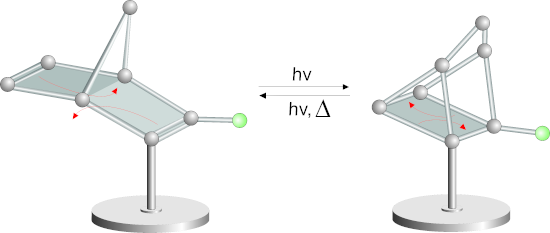
- obtained in a convergent synthesis (Scheme 2). Boronic ester 9 was synthesized as described in the literature [15]. In a Suzuki cross-coupling reaction norbornadiene 4 was coupled with 9 to the extended norbornadiene 10 (38%), which was attached to the TATA platform 6 to yield the extended norbornadiene


Recent advances on the transition-metal-catalyzed synthesis of imidazopyridines: an updated coverage
Beilstein J. Org. Chem. 2019, 15, 1612–1704, doi:10.3762/bjoc.15.165
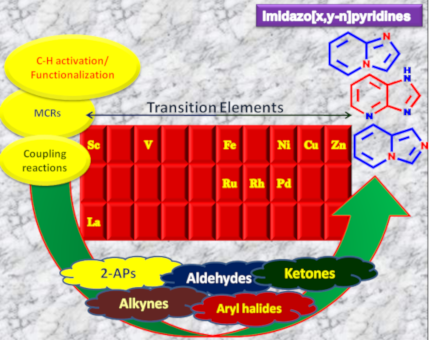
- -catalyzed cross-coupling reactions have laid down the foundation of new C–C bond formations [50][51]. A number of Pd-catalyzed organic reactions viz., C–N coupling, amination and intramolecular amidation, cyclization, and Suzuki–Miyaura coupling [52][53][54][55] have recently been reported in the literature
- Suzuki, Sonogashira and Heck coupling reactions (Scheme 48). The reaction proceeded by the formation of 1-iodoalkyne 142 which was characterized by mass and 1H NMR spetra. This iodoalkyne then formed a complex of Cu(I) with 2-AP. This was followed by migratory insertion of haloalkyne to form reactive Cu


Synthesis of pyrrolo[1,2-a]quinolines by formal 1,3-dipolar cycloaddition reactions of quinolinium salts
Beilstein J. Org. Chem. 2019, 15, 1480–1484, doi:10.3762/bjoc.15.149
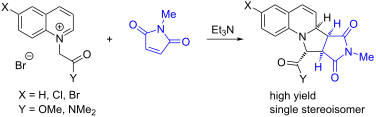
- could be converted to other derivatives by Suzuki–Miyaura coupling, reduction or oxidation reactions. Keywords: azomethine ylide; cycloaddition; heterocycle; pyrrolidine; stereoselective; Introduction Cycloaddition reactions of azomethine ylides are an important class of pericyclic reactions that give
- ). The adducts could be reduced, oxidised, or could undergo Suzuki–Miyaura coupling to give different substituted dihydro- and tetrahydroquinoline derivatives. Single crystal X-ray structure for 7c. Single crystal X-ray structure for 9. Reaction of ketone 1 with electron-deficient alkenes 2. Reactions of
- ester 4 and amide 5 with electron-deficient alkenes 6. Reactions of ester 4 and amide 5 with N-methylmaleimide. Reduction and oxidation of adducts 9 and 10. Formation of amides 15a and 15b and Suzuki–Miyaura coupling to yield 16. Supporting Information Supporting Information File 322: Experimental


Remarkable effect of alkynyl substituents on the fluorescence properties of a BN-phenanthrene
Beilstein J. Org. Chem. 2019, 15, 1257–1261, doi:10.3762/bjoc.15.122
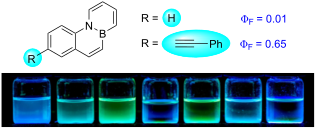
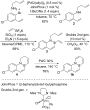
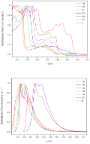
- reactions of 1b, under conditions optimized for a related BN-benzo[c]phenanthrene [30]. Gratifyingly, Suzuki coupling and Buchwald–Hartwig amination yielded the corresponding aryl- and amino-substituted BN-phenanthrenes 1c and 1d in good yields (Scheme 2). Moreover, Sonogashira couplings efficiently proceed





Multicomponent reactions (MCRs): a useful access to the synthesis of benzo-fused γ-lactams
Beilstein J. Org. Chem. 2019, 15, 1065–1085, doi:10.3762/bjoc.15.104
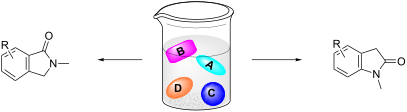
- comprising three palladium-catalysed reactions: Sonogashira, Heck and Suzuki–Miyaura (Scheme 37) [113][114][115]. In this methodology, N-arylpropiolamides 128 reacted with aryl iodides 129 and aryl- or styrylboronic acids 130 under microwave activation to yield 3-(diarylmethylene)oxindoles 131 or 3-(1,3
- palladium-catalysed reactions (Scheme 38). The first one is a Sonogashira coupling reaction between the terminal alkyne of propiolamide 128 and aryl iodide 129, which is preferred to the Suzuki–Miyaura reaction between aryl iodide 129 and boronic acid 130 present in the reaction mixture. Then, an internal
- , presumably by changing the anionic character of the palladium complex to cationic in intermediate 135. Finally, the Suzuki–Miyaura coupling of palladium salt 135 with boronic acid derivative 130 would provide the final oxindoles 131 or 132. Finally, is worth mentioning an example of a multicomponent






A chemically contiguous hapten approach for a heroin–fentanyl vaccine
Beilstein J. Org. Chem. 2019, 15, 1020–1031, doi:10.3762/bjoc.15.100
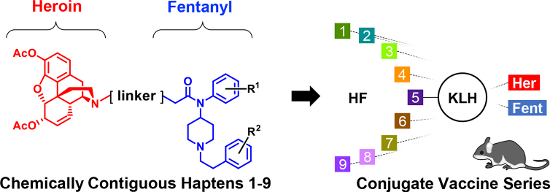
- obtain an aldehyde that could then be used in a reductive amination. Beginning with the commercially available 4-(4-bromophenyl)butanoic acid, an alkene was installed with a Suzuki reaction, which in turn underwent ozonolysis to give 21, shown in Scheme 4. In parallel, a commercially available piperidine




Heck- and Suzuki-coupling approaches to novel hydroquinone inhibitors of calcium ATPase
Beilstein J. Org. Chem. 2019, 15, 971–975, doi:10.3762/bjoc.15.94
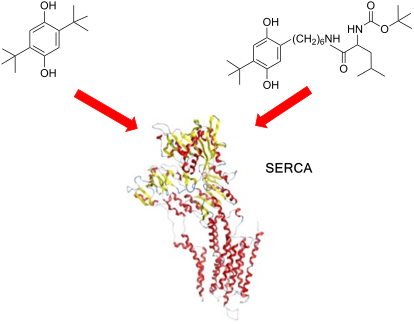
- Abstract In this study, we explored Heck- and Suzuki-coupling methodology to modify the template 2,5-di-tert-butylhydroquinone (BHQ, 2), an inhibitor of the enzyme sarco/endoplasmic reticulum calcium ATPase (SERCA). We found that by utilizing Suzuki coupling, we could successfully attach a six-carbon
- convey specificity for prostate cancer cells. Keywords: calcium ATPase inhibitors; Heck- and Suzuki-coupling reactions; hydroquinones; prostate cancer; tethered amino acid; Introduction Sarco/endoplasmic reticulum calcium ATPase (SERCA) is an integral protein that resides in the membrane of the
- at C-8 of TG, replacing the natural butanoyl group at that position with an ester moiety terminating in a primary amine. Here, we describe our efforts to use transition metal cross-coupling reactions (Suzuki [10] and Heck [11]) to modify BHQ with a side chain terminating with a free primary amine


Solid-phase synthesis of biaryl bicyclic peptides containing a 3-aryltyrosine or a 4-arylphenylalanine moiety
Beilstein J. Org. Chem. 2019, 15, 761–768, doi:10.3762/bjoc.15.72
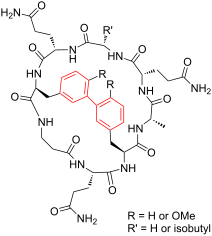
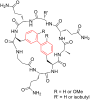
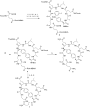
- -Tyr motif has been devised. This approach comprises two key steps. The first one involves the cyclization of a linear peptidyl resin containing the corresponding halo- and boronoamino acids via a microwave-assisted Suzuki–Miyaura cross coupling. This step is followed by the macrolactamization of the
- positively charged groups. Due to these structural properties, biaryl cyclic peptides have a great potential to meet the ever-increasing expectations of new drugs. However, their synthesis is viewed as very challenging. The formation of biaryl bonds in peptides has been performed through a Suzuki–Miyaura
- macrolactamization and the intramolecular Suzuki–Miyaura cross coupling. Another crucial issue is the selection of the anchoring point to the solid support. The glutamine residue placed at the southern hemisphere of 1 was chosen for this purpose. Thus, the synthesis of 1 would involve the preparation of the linear




The LANCA three-component reaction to highly substituted β-ketoenamides – versatile intermediates for the synthesis of functionalized pyridine, pyrimidine, oxazole and quinoxaline derivatives
Beilstein J. Org. Chem. 2019, 15, 655–678, doi:10.3762/bjoc.15.61
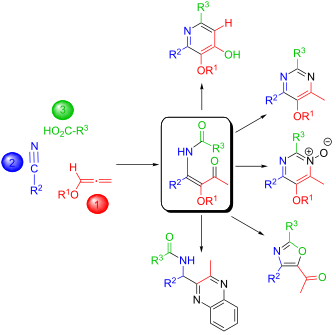
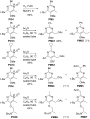
- the examples shown in Scheme 14 [33]. Nonaflate PM54 underwent a Suzuki–Miyaura reaction to PM55 or a Sonogashira coupling to PM56 under standard conditions. The ethynyl-substituted pyrimidine derivative PM12 could also be employed in C–C coupling reactions as shown by its connection to pyridyl




A novel and efficient synthesis of phenanthrene derivatives via palladium/norbornadiene-catalyzed domino one-pot reaction
Beilstein J. Org. Chem. 2019, 15, 291–298, doi:10.3762/bjoc.15.26
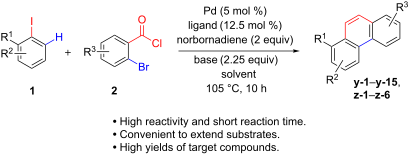
- to multisubstituted arenes. In the previous work, we innovatively developed a strategy for the remote C–H alkylation of arenes [18]. Recently, our group also achieved aromatic ketones [19] and 2-alkynyl aromatic ketones [20] successfully through ortho-acylation and ipso-Suzuki coupling or




Synthesis and biological activity of methylated derivatives of the Pseudomonas metabolites HHQ, HQNO and PQS
Beilstein J. Org. Chem. 2019, 15, 187–193, doi:10.3762/bjoc.15.18
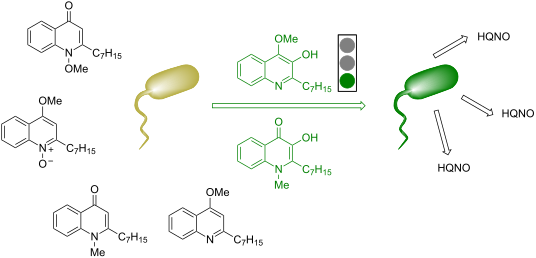
- , its isolation should be possible and enable further modification, for example by ipso-substitution with heteroatom electrophiles. The application of the boronic acid in Suzuki–Miyaura coupling should also be possible [30][31]. Growth inhibition experiments against S. aureus showed that HQNO




Unnatural α-amino ethyl esters from diethyl malonate or ethyl β-bromo-α-hydroxyiminocarboxylate
Beilstein J. Org. Chem. 2018, 14, 2853–2860, doi:10.3762/bjoc.14.264
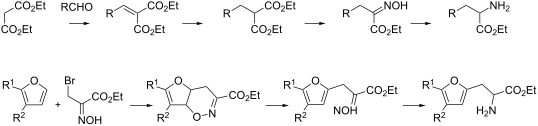
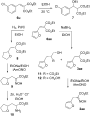
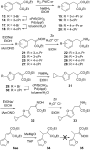
- modifications of some of the intermediates – using Suzuki–Miyaura coupling or cycloadditions – before undertaking the oximation step – provided accesses to further α-amino esters. Moreover, other pathways to α-hydroxyimino esters were explored including an attempt to improve the cycloadditions between ethyl β
- -bromo-α-hydroxyiminocarboxylate and various alkylfuranes. Keywords: α-amino ester; α-hydroxyimino ester; [2 + 4] cycloadditions; [2 + 3] cycloadditions; Knoevenagel; nitrosoacrylate; Suzuki–Miyaura; Introduction Our current work on the chemistry of imidazo[1,2-a]pyrazin-3(7H)-one luciferins [1] has
- that will sometime require a specific study. As shown in Scheme 3, the lack or the cost of some more exotic aldehydes 5 were circumvented as we found out that Suzuki–Miyaura carbon–carbon coupling reactions could be achieved with the brominated alkylidenemalonates 13 or 17 as well as the 5-bromofuran



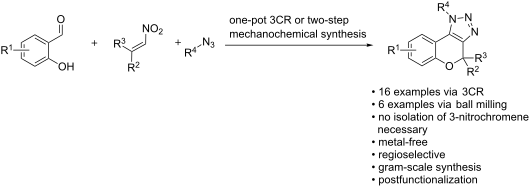
Assembly of fully substituted triazolochromenes via a novel multicomponent reaction or mechanochemical synthesis
Beilstein J. Org. Chem. 2018, 14, 2689–2697, doi:10.3762/bjoc.14.246
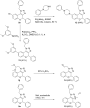
- and 5e furnishes piperazin-1-ylchromene 12 in 64% yield. Furthermore, as highly methylated flavonoid derivatives [47] and 6-(3,5-dimethoxyphenyl)chromenes [48][49] have been demonstrated to be potent anti-seizure drugs and anticancer agents, respectively, a Suzuki–Miyaura reaction was performed




Synthesis and biological evaluation of 1,2-disubstituted 4-quinolone analogues of Pseudonocardia sp. natural products
Beilstein J. Org. Chem. 2018, 14, 2680–2688, doi:10.3762/bjoc.14.245

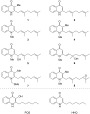
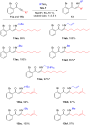
- first developed a strategy which constructed natural products 1–4 by uniting the quinolone cores with the side chain by means of an sp2–sp3 Suzuki–Miyaura coupling reaction [8]. Whilst these compounds unfortunately provided no modulation of PQS quorum screening (as determined using a heterologous






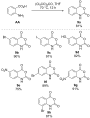
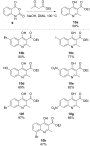
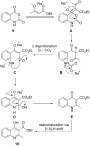
Quinolines from the cyclocondensation of isatoic anhydride with ethyl acetoacetate: preparation of ethyl 4-hydroxy-2-methylquinoline-3-carboxylate and derivatives
Beilstein J. Org. Chem. 2018, 14, 2529–2536, doi:10.3762/bjoc.14.229

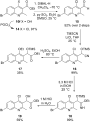
- heterocycle at position 4 is installed by Suzuki coupling with iodide 3a that is synthesized in three steps from ethyl aryl oxalate 4a. The α-ketoester side chain at position 3 was installed by selective halogen-metal exchange of iodide 5a with isopropylmagnesium chloride lithium chloride complex followed by




Calixazulenes: azulene-based calixarene analogues – an overview and recent supramolecular complexation studies
Beilstein J. Org. Chem. 2018, 14, 2488–2494, doi:10.3762/bjoc.14.225
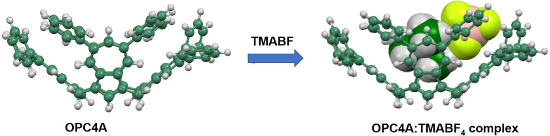
- “OPC4A”, with several electron-deficient tetraalkyammonium salts. As a result of more recent methods developed by us and others employing Suzuki–Miyaura cross-coupling reactions to produce additional functionalized azulenes, the promise of further greater functionalized calixazulenes lies in store to be
- Suzuki–Miyaura coupling reaction of bromobenzene with 5,7-di(Bpin)azulene, which in turn was formed via the exhaustive borylation of azulene with excess bis(pinacolato)diboron (B2pin2) [21]. Cyclocondensation of 5,7-diphenylazulene with formaldehyde produced 5 [22] under conditions similar to those used


Synergistic approach to polycycles through Suzuki–Miyaura cross coupling and metathesis as key steps
Beilstein J. Org. Chem. 2018, 14, 2468–2481, doi:10.3762/bjoc.14.223
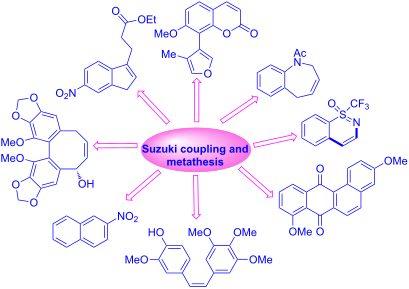
- with Suzuki–Miyaura cross coupling in combination with metathesis (or vice-versa). Several cyclophanes, polycycles, macrocycles, spirocycles, stilbenes, biaryls, and heterocycles have been synthesized by employing a combination of Suzuki cross-coupling and metathesis. Various popular reactions such as
- ; metathesis; polycycles; Suzuki–Miyaura cross coupling; Introduction Transition-metal catalysts are used in metathesis and cross-coupling reactions. Such advances have opened the door for efficient construction of C–C bonds in organic synthesis. These catalysts tolerate diverse functional groups and the
- reaction occurs under mild reaction conditions. Among different metathetic processes, ring-closing metathesis (RCM) [1][2][3][4][5][6] is of a greater interest than cross-metathesis (CM). It is a widely used protocol for the synthesis of unsaturated cyclic systems [7]. Palladium-catalyzed Suzuki–Miyaura


Cobalt- and rhodium-catalyzed carboxylation using carbon dioxide as the C1 source
Beilstein J. Org. Chem. 2018, 14, 2435–2460, doi:10.3762/bjoc.14.221
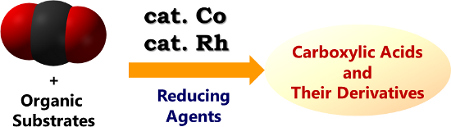
- coumarin derivative. Rhodium catalysts Carboxylation of aryl and alkenylboronic esters Aryl and alkenylboronic acids or their esters are of interest in organic synthesis because they are commonly used for C–C bond-forming reactions such as Pd-catalyzed Suzuki–Miyaura coupling reactions [50][51][52][53



Some mechanistic aspects regarding the Suzuki–Miyaura reaction between selected ortho-substituted phenylboronic acids and 3,4,5-tribromo-2,6-dimethylpyridine
Beilstein J. Org. Chem. 2018, 14, 2384–2393, doi:10.3762/bjoc.14.214
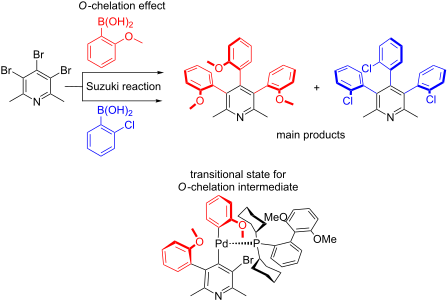
- atropselective Suzuki–Miyaura cross-coupling reaction on 3,4,5-tribromo-2,6-dimethylpyridine was studied. Results: Reactions with various amounts of ortho-substituted phenylboronic acids with 3,4,5-tribromo-2,6-dimethylpyridine gave a series of mono- di- and triarylpyridine derivatives which allowed to draw
- presence of a chiral solvating agent. Conclusion: This regio- and atropselectivity may be generally applicable to other arylpyridine systems. A regio- and atropselective Suzuki–Miyaura cross-coupling process has been observed, giving an efficient access to a class of atropisomeric compounds. An opposite
- selectivity using a differently ortho-substituted phenylbornic acid was observed. Keywords: arylpyridines; atropisomerism; cross-coupling; palladium; Suzuki–Miyaura reaction; Introduction Axially chiral biaryls not only subsist in many classes of natural and bioactive compounds [1][2] but also are an


Applications of organocatalysed visible-light photoredox reactions for medicinal chemistry
Beilstein J. Org. Chem. 2018, 14, 2035–2064, doi:10.3762/bjoc.14.179
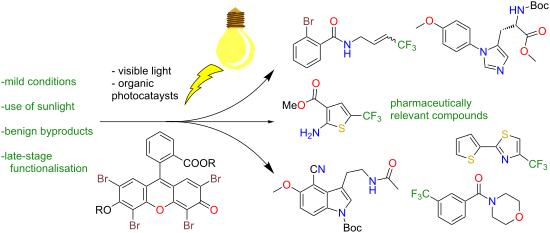
- immediately obvious application of this bioconjugation to biochemistry and molecular biology as a tool for protein labelling, it could also be used as a convenient tool for peptide chemists in medicinal chemistry programs for modification of peptides. 2.2 C(sp2)–C(sp2) bond formation Suzuki–Miyaura and


Synthesis and characterization of π–extended “earring” subporphyrins
Beilstein J. Org. Chem. 2018, 14, 1956–1960, doi:10.3762/bjoc.14.170
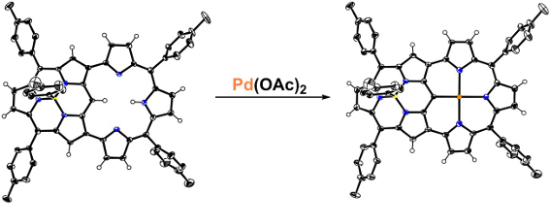
- 10.3762/bjoc.14.170 Abstract A π-extended “earring” subporphyrin 3 was synthesized from β,β′-diiodosubporphyrin and diboryltripyrrane via a Suzuki–Miyaura coupling and following oxidation. Its Pd complex 3Pd was also synthesized and both of the compounds were fully characterized by 1H NMR, MS and X-ray
- boron atom [25][26][27][28][29][30], meso- [31][32] and β-position [33][34][35]. By using the method developed by Osuka the β,β′-diborylsubporphyrins [36] can be obtained in high yields. A subsequent Suzuki–Miyaura coupling smoothly affords various β-aryl-substituted subporphyrins [37]. Alternatively
- cavities π-extended “earring” porphyrins through the aforementioned Suzuki–Miyaura coupling reaction and subsequent oxidation [38]. In this case β,β′-dibromo/tetrabromoporphyrins and diboryltripyrrane were applied as reactants. We discovered that both the π-extended “earring” porphyrins and the


Water-soluble SNS cationic palladium(II) complexes and their Suzuki–Miyaura cross-coupling reactions in aqueous medium
Beilstein J. Org. Chem. 2018, 14, 1859–1870, doi:10.3762/bjoc.14.160
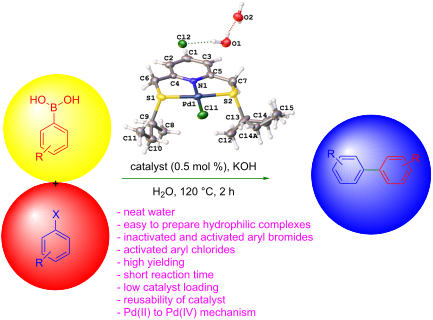
- their SCS analogues, SNS pincer complexes are poorly studied for their use in coupling reactions. Accordingly, a series of water soluble cationic Pd(II) SNS pincer complexes have been successfully synthesised and investigated in detail for their catalytic activity in Suzuki–Miyaura coupling reactions
- investigation of the mechanism of the reaction revealed that a Pd(II) to Pd(IV) route is the more likely pathway which was further supported by computational studies. Keywords: cationic palladium(II) complexes; Pd(II)/Pd(IV) complexes; SNS pincer complexes; Suzuki–Miyaura; Introduction The Suzuki–Miyaura C–C
- solvents in the presence of an excess of base [1][2][3]. With the drive for the development of environmentally friendly and low cost protocols, a number of methodologies for the Suzuki–Miyaura reaction under aqueous conditions or in neat water have been reported [4][5][6]. This has been achieved via