


Search results
Search for "Suzuki–Miyaura" in Full Text gives 197 result(s) in Beilstein Journal of Organic Chemistry.
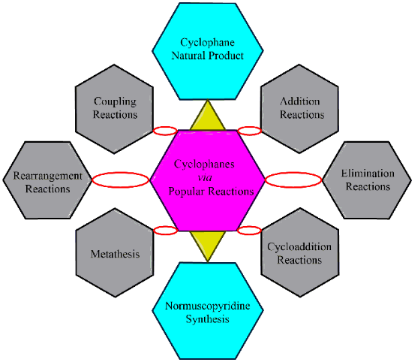
Selected synthetic strategies to cyclophanes
Beilstein J. Org. Chem. 2015, 11, 1274–1331, doi:10.3762/bjoc.11.142
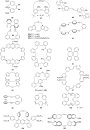
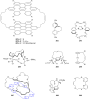
- –Miyaura coupling: Bodwell and Li [127] have reported the synthesis of the cyclophane 130 involving hydroboration and the Suzuki–Miyaura (SM) coupling [128][129][130][131][132][133][134][135] as key steps. 1,3-Diallylindole (127) was first synthesized in two steps from indole (123) by successive allylation
- N-allylation afforded 125 (98%). The treatment of compound 125 with n-BuLi followed by alkylation with allyl bromide gave diallylindole 127 (77%), which on further treatment with 9-BBN (6 equiv) gave the doubly hydroborated species 128. Then, it was directly subjected to the Suzuki–Miyaura coupling
- reaction with 3,6-diiodopyridazine (129) and the desired cyclophane 130 was obtained (30%) as an oil (Scheme 18). In 2012, Hutton and co-workers [136] have synthesized a highly strained bicyclic framework of mycocyclosin (135) by utilizing the intramolecular Suzuki–Miyaura [137] cross-coupling reaction as






A hybrid electron donor comprising cyclopentadithiophene and dithiafulvenyl for dye-sensitized solar cells
Beilstein J. Org. Chem. 2015, 11, 1052–1059, doi:10.3762/bjoc.11.118
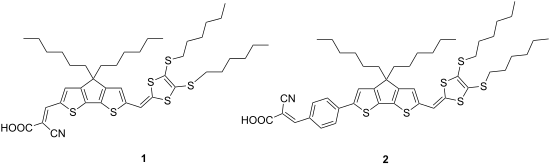
- , the synthesis of the key intermediate 7 involves the protection of one aldehyde group as an acetal using pinacol prior to HWE reaction of 5 with 4,5-bis(hexylthio)-1,3-dithiole-2-thione, followed by deprotection under acidic conditions. Aldehyde 5 was readily obtained by palladium-catalyzed Suzuki
- –Miyaura coupling reaction between 4,4,5,5-tetramethyl-2-(4-(4,4,5,5-tetramethyl-1,3-dioxolan-2-yl)phenyl)-1,3,2-dioxaborolane and 6-bromo-4,4-dihexyl-4H-cyclopenta[2,1-b:3,4-b’]dithiophene-2-carbaldehyde [23]. All these new precursors and the two target dyes 1 and 2 were purified by chromatography and


Chiroptical properties of 1,3-diphenylallene-anchored tetrathiafulvalene and its polymer synthesis
Beilstein J. Org. Chem. 2015, 11, 972–979, doi:10.3762/bjoc.11.109
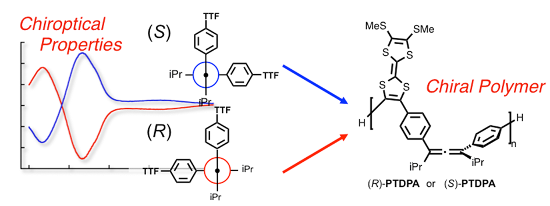
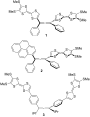
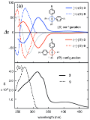
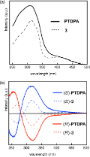
- . Previously, a racemic conjugated polymer in the literature was prepared by a Suzuki–Miyaura or Yamamoto coupling reaction from (rac)-8 [17]. In contrast, to the best of our knowledge, there is no example of a chiral polymer based on the 1,3-diphenylallene frameworks that can be a unit of copolymer with




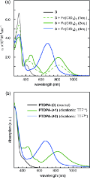
Weakly nucleophilic potassium aryltrifluoroborates in palladium-catalyzed Suzuki–Miyaura reactions: relative reactivity of K[4-RC6F4BF3] and the role of silver-assistance in acceleration of transmetallation
Beilstein J. Org. Chem. 2015, 11, 608–616, doi:10.3762/bjoc.11.68
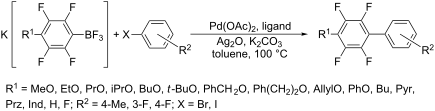
- correlation between the reactivity of K[4-RC6F4BF3] and substituent electron parameters, σI and σR°, of the aryl group 4-RC6F4 was found. Keywords: potassium polyfluoroaryltrifluoroborate; silver(I) acceleration; Suzuki–Miyaura reaction; Introduction The palladium-catalyzed reaction of organoboron compounds
- with C-electrophiles (Suzuki–Miyaura reaction) is one of the most intensively studied processes of the carbon–carbon bond formation. Organoboronic acids, their esters and organotrifluoroborates are partners in these reactions and the choice of the desired reagent depends on the specific requirements in
- ability to transmetallation, to coordinate to the organoboronic acid with the three-coordinated boron atom to ArPdL2OH and subsequent transmetallation (Scheme 1). However, some experimental facts indicate the multilateral role of silver(I) compounds AgmY in the acceleration of the Suzuki–Miyaura cross


A novel 4-aminoantipyrine-Pd(II) complex catalyzes Suzuki–Miyaura cross-coupling reactions of aryl halides
Beilstein J. Org. Chem. 2014, 10, 2821–2826, doi:10.3762/bjoc.10.299
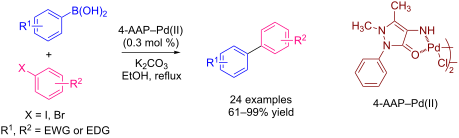
- 58030, tel.: +52 443 326 5790; fax: +52 443 326 5788 10.3762/bjoc.10.299 Abstract A simple and efficient catalytic system based on a Pd complex of 4-aminoantipyrine, 4-AAP–Pd(II), was found to be highly active for Suzuki–Miyaura cross-coupling of aryl iodides and bromides with phenylboronic acids under
- ]. The palladium-catalyzed cross-coupling of arylboronic acid and aryl halides in the Suzuki–Miyaura (SM) reaction is one of the most popular and important methods to obtain biaryls, which are essential structures of many important compounds such as natural products [7], agrochemicals [8
- ppm, with its integration indicating one proton. This result suggests to us that the palladium interacts with the carbonyl and amine groups of the pyrazole ring of 4-AAP. The synthesized 4-AAP–Pd(II) complex was used to carry out all palladium-catalyzed Suzuki–Miyaura cross-coupling reactions


Solution processable diketopyrrolopyrrole (DPP) cored small molecules with BODIPY end groups as novel donors for organic solar cells
Beilstein J. Org. Chem. 2014, 10, 2683–2695, doi:10.3762/bjoc.10.283
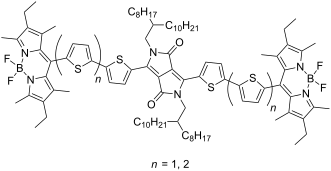
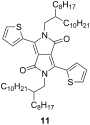
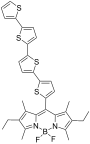
- synthesise 6. Whereas the synthesis of 6 was achieved in 33% yield, the yield decreased to 12% when the derivative with two thiophenes was prepared [47]. The BODIPY-DPP-BODIPY triads (9 and 10) were synthesised via Suzuki–Miyaura cross-coupling by reaction of the functionalised DPP core 8 [48] with the




Phosphinocyclodextrins as confining units for catalytic metal centres. Applications to carbon–carbon bond forming reactions
Beilstein J. Org. Chem. 2014, 10, 2388–2405, doi:10.3762/bjoc.10.249
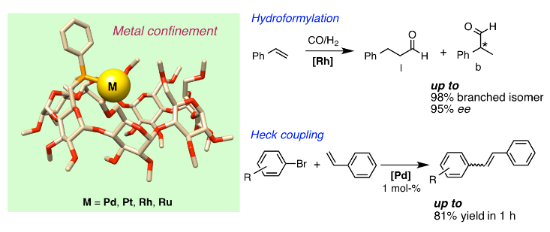
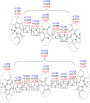
- , Buchwald and Hartwig on the use of monophosphine ligands in cross-coupling reactions, notably carbon–carbon ones such as the Mizoroki–Heck [1][2][3] and Suzuki–Miyaura reactions [4][5][6], there is a renewed interest for tertiary phosphines that favour the formation of singly phosphorus-ligated complexes


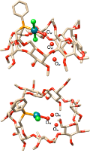


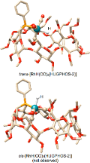


P(O)R2-directed Pd-catalyzed C–H functionalization of biaryl derivatives to synthesize chiral phosphorous ligands
Beilstein J. Org. Chem. 2014, 10, 2071–2076, doi:10.3762/bjoc.10.215
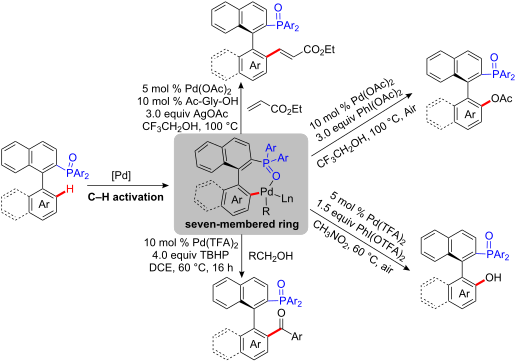
- reported operation, the substrates of biaryl derivatives that contained phosphate with axial chirality were obtained in high yields using the Suzuki–Miyaura coupling reaction with the assistance of this versatile chiral ligand [31][32][33][34]. We used substituted naphthylboronic acid or ortho-substituted
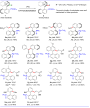
- were successfully synthesized using the Suzuki–Miyaura coupling reaction under the assistance of a chiral ligand. Moreover, the substrates were further C–H functionalized using the P(O)Ar2 directing role with Pd salt as catalyst. Notably, the reactions took place in air atmosphere and at high


Aryl substitution of pentacenes
Beilstein J. Org. Chem. 2014, 10, 1692–1705, doi:10.3762/bjoc.10.178
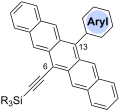
- opportunity to vary the pendent substituent through a Pd-catalyzed cross-coupling protocol (Scheme 2). Thus, pentacene 3g was treated under Suzuki–Miyaura coupling conditions with arylboronic acids, and the desired pentacenes 3j,k were obtained in yields of 92 and 68%, respectively. Notably, anthracenyl
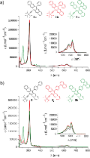
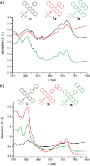
- nucleophilic addition (yields given are for the pentacene product 3, over the two steps from either 4a or 4b). Functionalization of iodoaryl pentacene 3g using the Suzuki–Miyaura cross-coupling reaction. Optical properties of pentacenes 3a–k, unsubstituted pentacene (PEN), and TIPSPc. Thermal properties of a




Atherton–Todd reaction: mechanism, scope and applications
Beilstein J. Org. Chem. 2014, 10, 1166–1196, doi:10.3762/bjoc.10.117

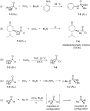
- reaction produced the arylstannane in 75 to 90% yield [88]. The Suzuki–Miyaura cross-coupling reaction is another type of reaction with the phosphate group acting as a leaving group. As exemplified in Scheme 30, the aryl dialkyl phosphate was produced in good yield by an AT reaction [89]. Then, this




4-Hydroxy-6-alkyl-2-pyrones as nucleophilic coupling partners in Mitsunobu reactions and oxa-Michael additions
Beilstein J. Org. Chem. 2014, 10, 1159–1165, doi:10.3762/bjoc.10.116

- could find only limited precedent for this procedure being used previously in this way [15][16][17]. In our case, we were able to further modify the resulting pyronyl ether forming a trisubstituted enol ether, which then underwent a Suzuki–Miyaura cross-coupling or direct arylation-type reaction. As


Palladium-catalysed cross-coupling reaction of ultra-stabilised 2-aryl-1,3-dihydro-1H-benzo[d]1,3,2-diazaborole compounds with aryl bromides: A direct protocol for the preparation of unsymmetrical biaryls
Beilstein J. Org. Chem. 2014, 10, 1107–1113, doi:10.3762/bjoc.10.109
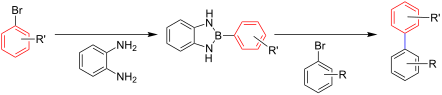
- absorption and fluorescence characteristics. Here we describe the first palladium-catalysed Suzuki–Miyaura cross-coupling reaction of easily accessible and ultra-stabilised 2-aryl-1,3-dihydro-1H-benzo[d]1,3,2-diazaborole derivatives with various aryl bromides. Aryl bromides bearing electron-withdrawing
- , electron-neutral and electron-donating substituents are reacted under the catalytic system furnishing unsymmetrical biaryl products in isolated yields of up to 96% in only 10 minutes. Keywords: aryl bromide; 2-aryl-1,3-dihydro-1H-benzo[d]1,3,2-diazaborole; asymmetrical biaryls; microwave; Suzuki–Miyaura
- [1][2][3][4][5]. Amongst them, the Suzuki–Miyaura cross-coupling reaction of aryl halides/triflates and organoboron compounds is one of the most documented and versatile cross-coupling reaction in the literature [6]. The use of organoboron compounds 1, 2 and 3 (Figure 1) as nucleophilic coupling


Clean and fast cross-coupling of aryl halides in one-pot
Beilstein J. Org. Chem. 2014, 10, 897–901, doi:10.3762/bjoc.10.87
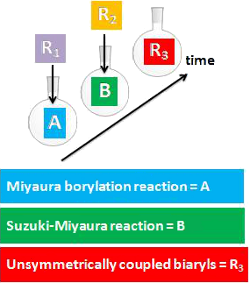
- Unsymmetrically coupled biaryls are synthesized in high yield starting from different aryl bromides and bis(pinacolato)diboron by carrying out the Miyaura borylation reaction followed by the Suzuki–Miyaura reaction in the same reaction pot over 1–2 mol % SiliaCat DPP-Pd. The SiliaCat DPP-Pd catalyst is air-stable
- and the method does not require the use of inert conditions. The use of non-toxic isopropanol or 2-butanol as reaction solvent further adds to the environmental benefits of this new green synthetic methodology. Keywords: borylation; SiliaCat; Suzuki–Miyaura; cross-coupling; one-pot; Findings
- Affording valued biaryls and heterobiaryls, namely ubiquitous chemical moieties in pharmaceuticals, natural products, photoactive species and many other functional molecules, the Suzuki–Miyaura cross-coupling reaction is widely employed by the fine chemicals and pharmaceutical industries [1]. The reaction


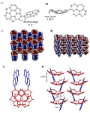
Columnar/herringbone dual crystal packing of pyrenylsumanene and its photophysical properties
Beilstein J. Org. Chem. 2014, 10, 841–847, doi:10.3762/bjoc.10.80
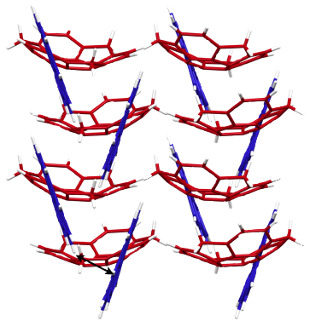
- Pyrenylsumanene (1) was prepared from iodosumanene [8] and pyreneboronic acid in 84% yield through a Suzuki–Miyaura cross-coupling reaction (Scheme 1). The preparation of iodosumanene was improved by using a catalytic amount of scandium (III)triflate (Sc(OTf)3) with 6,6’-diiodo-2,2’-dimethoxy-1,1’-binaphthol (DIH




Synthesis of fluorescent (benzyloxycarbonylamino)(aryl)methylphosphonates
Beilstein J. Org. Chem. 2014, 10, 741–745, doi:10.3762/bjoc.10.68
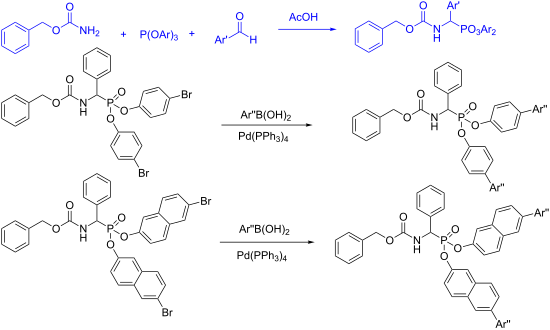
- % as the monophenyl ester. This library was enlarged by application of the Suzuki–Miyaura approach with compounds 2e and 2k being chosen as substrates (Scheme 3) [23][24]. Despite the enormous number of data considering application of this reaction, according to the best of our knowledge, there is no


Consecutive cross-coupling reactions of 2,2-difluoro-1-iodoethenyl tosylate with boronic acids: efficient synthesis of 1,1-diaryl-2,2-difluoroethenes
Beilstein J. Org. Chem. 2013, 9, 2470–2475, doi:10.3762/bjoc.9.286

- . Since the use of a proper base in the Suzuki–Miyaura reaction is an important factor to increase the yield of coupled product, we screened bases to get the optimized reaction conditions. When 2 was reacted with 1 equiv of phenylboronic acid in the presence of 5 mol % of Pd(OAc)2 and Cs2CO3 (2 equiv) in


The chemistry of isoindole natural products
Beilstein J. Org. Chem. 2013, 9, 2048–2078, doi:10.3762/bjoc.9.243
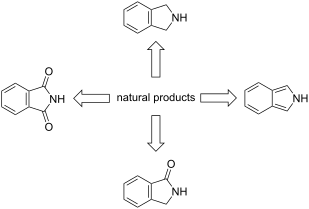
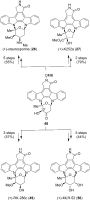
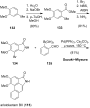
- following one-pot Suzuki–Miyaura/aldol condensation of 134 with boronic acid 135 was carried out at 150 °C in a microwave reactor and gave aristolactam BII (115) in good yield. By variation of the coupling partners, Heo was able to efficiently synthesize a library of natural and non-natural analogues












One-step synthesis of pyridines and dihydropyridines in a continuous flow microwave reactor
Beilstein J. Org. Chem. 2013, 9, 1957–1968, doi:10.3762/bjoc.9.232
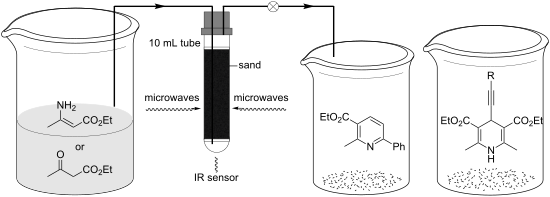
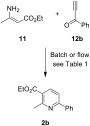
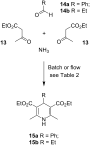
- an encapsulated palladium catalyst by Baxendale and Ley, et al. [25], the latter to process multigram quantities in a microwave-assisted Suzuki–Miyaura coupling. A comparison on the use of palladium(0) nanoparticle catalysts on glass-polymer composite materials in batch and flow-through experiments




Synthesis of enones, pyrazolines and pyrrolines with gem-difluoroalkyl side chains
Beilstein J. Org. Chem. 2013, 9, 1943–1948, doi:10.3762/bjoc.9.230
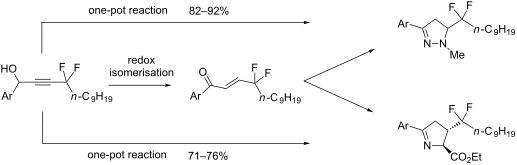
- possibility of using these molecules as scaffolds for the preparation of focused chemical libraries. In order to explore this possibility we developed representative examples of Pd-catalyzed reactions starting from p-bromo derivatives 4e and 6e. The results are given in Scheme 7 for pyrazoline 4e. Suzuki
- –Miyaura coupling [35] gave biphenyl derivative 7e in 82% yield, while the Heck [36] and Sonogashira [37] reactions afforded also the desired targets 8e and 9e in 72% and 77% yield respectively. Similar results were obtained in Pd-mediated reactions starting from pyrroline 6e, as indicated in Scheme 8. The


ML212: A small-molecule probe for investigating fluconazole resistance mechanisms in Candida albicans
Beilstein J. Org. Chem. 2013, 9, 1501–1507, doi:10.3762/bjoc.9.171
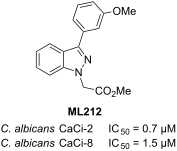
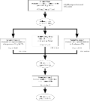
- Two different routes were adopted to access the various functionalized indazoles required to evaluate the SAR associated with hit compound 1 (Scheme 1). The robust Suzuki–Miyaura reaction was selected for the preparation of analogues bearing substituents around the central indazole core. This approach



Controlled synthesis of poly(3-hexylthiophene) in continuous flow
Beilstein J. Org. Chem. 2013, 9, 1492–1500, doi:10.3762/bjoc.9.170
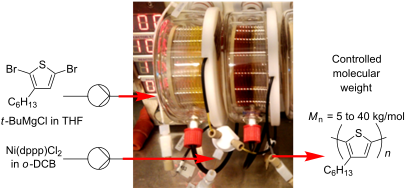
- Suzuki–Miyaura and Stille coupling [12]. In this study, the continuous-flow synthesis of P3HT is examined. Distinct from a recent report of P3HT synthesis in a droplet-based microreactor [20], development of the flow synthesis is described in detail and controlled polymerization of P3HT, both in terms of



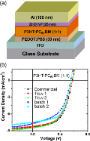
Incorporation of perfluorohexyl-functionalised thiophenes into oligofluorene-truxenes: synthesis and physical properties
Beilstein J. Org. Chem. 2013, 9, 1243–1251, doi:10.3762/bjoc.9.141
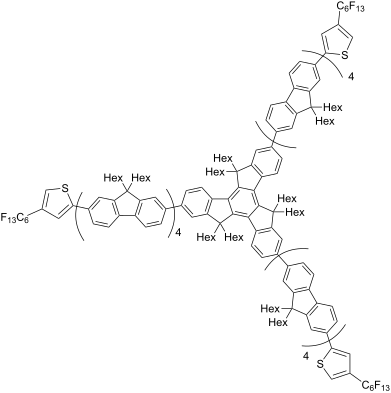
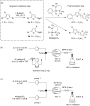
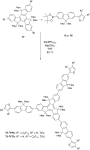
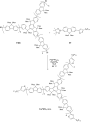
- -iodo-4-perfluorohexylthiophene, which was separated by column chromatography. Compound 4 then underwent Suzuki–Miyaura coupling with compound 5, which was synthesised according to our previously published method [17], and the product obtained, 6, was deprotected by bromination to give compound 7 and




Camera-enabled techniques for organic synthesis
Beilstein J. Org. Chem. 2013, 9, 1051–1072, doi:10.3762/bjoc.9.118
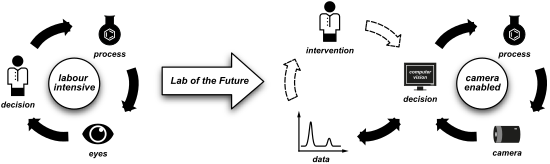
- reported the application of the synthetically powerful Suzuki–Miyaura reaction within aqueous microdroplets buffered by catalytically active fluorous interfaces [45]. Images of the flow channels captured by a high-speed camera provided preliminary kinetic data by allowing the precipitation of the solid
- setup that might not otherwise be available. Suzuki–Miyaura reaction performed within a microfluidic system. The product is observed by high-speed microscope photography, which shows a precipitate forming within the microdroplets. Friedel–Crafts reactions performed by using solid-acid catalysis at high


Direct alkenylation of indolin-2-ones by 6-aryl-4-methylthio-2H-pyran-2-one-3-carbonitriles: a novel approach
Beilstein J. Org. Chem. 2013, 9, 809–817, doi:10.3762/bjoc.9.92
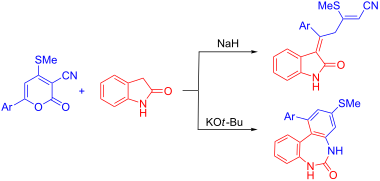
- hydride-AIBN initiated radical cyclization [33][34]. In 2005, Player and co-workers reported a tandem Heck/Suzuki–Miyaura coupling process for the synthesis of (E)-3,3-(diaryl)oxindoles [35][36][37]. Recently, alkenylation of indolin-2-ones has been developed by palladium-catalyzed aromatic C–H activation


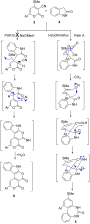


Synthesis and structure of trans-bis(1,4-dimesityl-3-methyl-1,2,3-triazol-5-ylidene)palladium(II) dichloride and diacetate. Suzuki–Miyaura coupling of polybromoarenes with high catalytic turnover efficiencies
Beilstein J. Org. Chem. 2013, 9, 698–704, doi:10.3762/bjoc.9.79
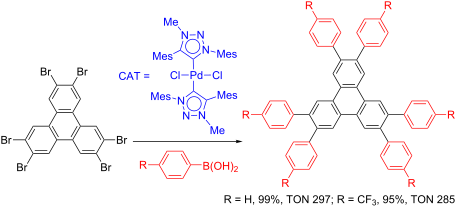
- Abstract trans-Bis(1,4-dimesityl-3-methyl-1,2,3-triazol-5-ylidene)palladium(II) dichloride has been shown to be an excellent catalyst for the multiple Suzuki–Miyaura coupling reactions of polybromoarenes to the corresponding fully substituted polyarylarenes. The reactions proceeded in excellent yields and
- structures of the chloro (1) as well as the corresponding acetato (2) complexes are also reported and compared with the corresponding complexes of 1,4-diphenyl-3-methyl-1,2,3-triazol-5-ylidene as the ligand. Keywords: C–C coupling; N-heterocyclic carbene; palladium; Suzuki–Miyaura coupling; 1,2,3
- reactions one often encounters the formation of partially coupled products and incomplete reactions leading to problematic separation of pure fully substituted compounds. Herein we report very clean multiple Suzuki–Miyaura coupling of polybromoarenes. In every case reported herein the final product, namely





