Search results
Search for "absolute configuration" in Full Text gives 314 result(s) in Beilstein Journal of Organic Chemistry. Showing first 200.
Mechanochemical enzymatic resolution of N-benzylated-β3-amino esters
Beilstein J. Org. Chem. 2017, 13, 1728–1734, doi:10.3762/bjoc.13.167

- ); however, the best results continued to be obtained by using the conditions indicated in Table 1, entry 3. To establish the absolute configuration of product 2a, a sample was crystallized to give a suitable single-crystal for X-ray diffraction analysis. The resulting structure showed the R configuration


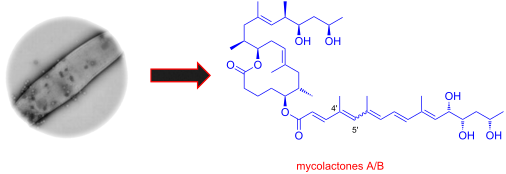
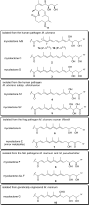
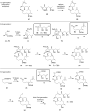
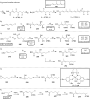
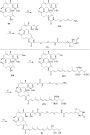
The chemistry and biology of mycolactones
Beilstein J. Org. Chem. 2017, 13, 1596–1660, doi:10.3762/bjoc.13.159









Effect of uridine protecting groups on the diastereoselectivity of uridine-derived aldehyde 5’-alkynylation
Beilstein J. Org. Chem. 2017, 13, 1533–1541, doi:10.3762/bjoc.13.153
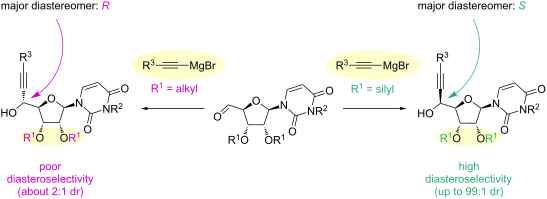
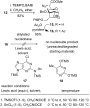
- conditions provided (5’S)-17 and (5’R)-17 [12] (Scheme 3). The differences between 1H NMR data of the related diastereomeric compounds (Figure 2 and Figure 3) provided a conclusive evidence to unequivocally attribute the absolute configuration at C-5’ of the synthesized compounds. Thus, for compounds 11–15


Bifunctional organocatalysts for the asymmetric synthesis of axially chiral benzamides
Beilstein J. Org. Chem. 2017, 13, 1518–1523, doi:10.3762/bjoc.13.151
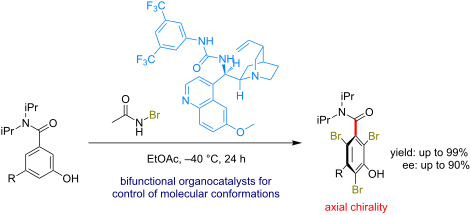
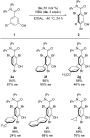
- - and diisobutylamide groups resulted in much lower enantioselectivities (2b and 2c). Substrates bearing cyclohexyl groups or a piperidinyl moiety provided the corresponding products in high yields; however, the enantioselectivities were not as high as that of 2a. The absolute configuration of 2d was




Construction of highly enantioenriched spirocyclopentaneoxindoles containing four consecutive stereocenters via thiourea-catalyzed asymmetric Michael–Henry cascade reactions
Beilstein J. Org. Chem. 2017, 13, 1342–1349, doi:10.3762/bjoc.13.131
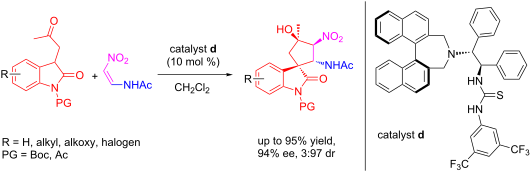
- the catalyst d. The absolute configuration of 3g was determined by X-ray analysis (see Supporting Information File 1, Figure S1). Conclusion We have developed a highly efficient and practical strategy for a single step construction of saturated spirocyclopentaneoxindoles containing four consecutive



Cycloheximide congeners produced by Streptomyces sp. SC0581 and photoinduced interconversion between (E)- and (Z)-2,3-dehydroanhydrocycloheximides
Beilstein J. Org. Chem. 2017, 13, 1039–1049, doi:10.3762/bjoc.13.103
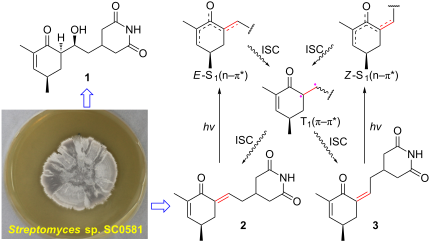
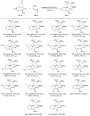
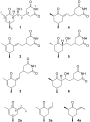
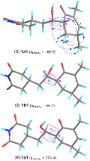
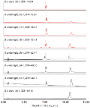
- Hα/H6, which were inconsistent with the small JH6/Hα value (4.3 Hz) and the absence of an NOE correlation between Hα/H5ax in the experimental spectra. Accordingly, the relative configuration of 1 was assigned to be 4R*,6R*,αS*. In order to determine the absolute configuration, the low-energy
- -dehydroanhydrocycloheximides, respectively. It is noted that a compound of unspecified absolute configuration was recently reported to possess the same planar structure as 3 [11]. Photoinduced interconversion between 2 and 3 When elucidating the structures of 2 and 3, we understood that the interconversion between 2 and 3 is




Use of costic acid, a natural extract from Dittrichia viscosa, for the control of Varroa destructor, a parasite of the European honey bee
Beilstein J. Org. Chem. 2017, 13, 952–959, doi:10.3762/bjoc.13.96
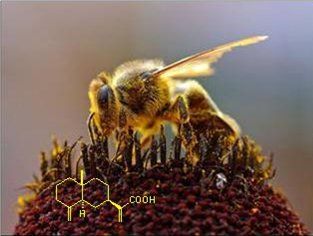
- tertiary and a secondary carbon, respectively. Concerning the absolute configuration of costic acid, we propose that it is the same as that reported by Bawdekar et al. [39] as indicated by a value of [α]D = + 24.03 (c 1.3, MeOH) ([α]D = + 23.42 (c 1.3, MeOH) [39]). Costic acid is a known natural product
- [40], Ferula communis L [41], Laggera pterodonta (DC.) Benth [42], Nectandra membranacea (Sw.) Griseb [43], and Stevia polyphylla DC [44]. It has also been isolated from another species of Dittrichia, namely, Dittrichia graveolens (L.) Greuter [45]. The first study on the structure and the absolute
- configuration of the compound is from a report on the isolation of the acidic fraction of costus root oil [39]. The plant extracts exhibit a spectrum of biological activities [46]. D. viscosa extracts exhibited abortifacient, anti-implantational and luteolytic effects on rats [47]. The acidic components of its


Secondary metabolome and its defensive role in the aeolidoidean Phyllodesmium longicirrum, (Gastropoda, Heterobranchia, Nudibranchia)
Beilstein J. Org. Chem. 2017, 13, 502–519, doi:10.3762/bjoc.13.50
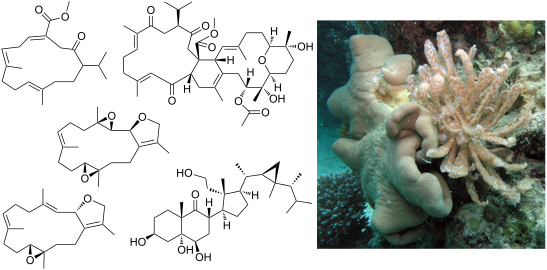
- C-13 as in pavidolide A or three at C-2, C-6 and C-13 in methyl sarcoate). Both related molecules and compound 5 have only one stereogenic center, i.e., at C-1. The reported absolute configuration of pavidolide A ([α]D20 +124, c 0.25, CHCl3) at C-1 is R [30]. The specific rotation value of 5 is +3.5
- and does not allow indicating any configuration for C-1 in compound 5. Due to the instability of the substance and its rapid degradation, it was not possible to determine the absolute configuration unambiguously. Structural similarity of the compound 5 with pavidolide A and close relationship between
- and NOESY; all NMR spectral data in Supporting Information File 1, Figures S32–36 and Table S4) experiments and propose the absolute configuration of bisepoxide 12. Bisepoxide 12 has five stereogenic centers, found at the epoxide moieties between C-3 and C-4, and C-11 and C-12, as well as C-2 of the



Diastereoselective anodic hetero- and homo-coupling of menthol-, 8-methylmenthol- and 8-phenylmenthol-2-alkylmalonates
Beilstein J. Org. Chem. 2017, 13, 33–42, doi:10.3762/bjoc.13.5
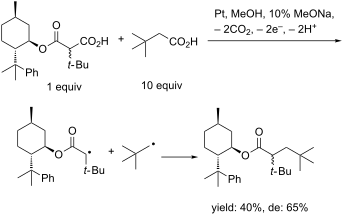
- in a statistical ratio of 1:2:1. Facial selectivity is indicated by deviation from this statistical ratio. The selectivity for re,re-coupling vs re,si-coupling is given by the ratio 2 (a:b), the selectivity for re,si- vs si,si-coupling by b:2c (Table 2). The absolute configuration of the major




Characterization of the synthetic cannabinoid MDMB-CHMCZCA
Beilstein J. Org. Chem. 2016, 12, 2808–2815, doi:10.3762/bjoc.12.279
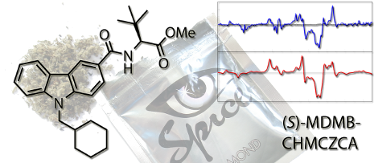
- chain. As part of the ongoing EU-project “SPICE profiling”, MDMB-CHMCZCA samples from test purchases in online shops and police seizures were analyzed to obtain analytical data and chemical properties. Another aim was to assess the absolute configuration and optical purity of the selected product
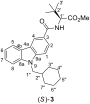
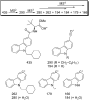
- CO and/or a cyclohexyl radical or methylenecyclohexane. As MDMB-CHMCZCA bears a stereogenic center at C-1', the elucidation of the absolute configuration of the sample was attempted by ECD spectroscopy. While the UV spectra can be adequately predicted by TD-DFT calculations (time-dependent density
- functional theory, see Supporting Information File 1 for details), a comparison of the experimental and calculated ECD spectra did not allow for a safe assignment of the cannabimimetic’s absolute configuration (Figure 4). The main two positive ECD signals in the range above 230 nm are correctly predicted by




Identification, synthesis and mass spectrometry of a macrolide from the African reed frog Hyperolius cinnamomeoventris
Beilstein J. Org. Chem. 2016, 12, 2731–2738, doi:10.3762/bjoc.12.269
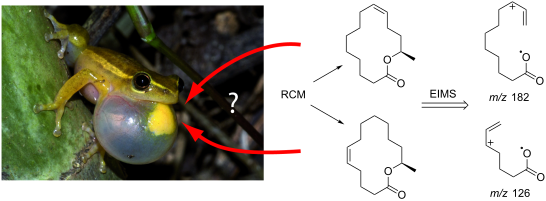
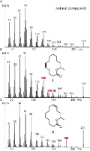
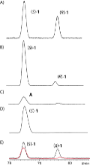
- mass spectra (Figure 3) and gas chromatographic retention times of pure (Z)-1, the (E/Z)-mixture obtained by the Hoyveda–Grubbs II catalyst, and 2 with those of the natural compound proved the frog compound to be (Z)-tetradec-5-en-13-olide (1). For the determination of the absolute configuration of the



Biomimetic synthesis and HPLC–ECD analysis of the isomers of dracocephins A and B
Beilstein J. Org. Chem. 2016, 12, 2523–2534, doi:10.3762/bjoc.12.247
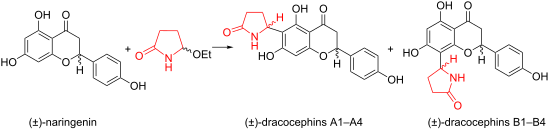
- Dracocephalum rupestre, have been synthesized in a one-pot reaction. The separation of 2a–d and 3a–d was achieved by preparative HPLC. The four stereoisomers of each natural product were separated by analytical chiral HPLC and their absolute configuration was studied by the combination of HPLC–ECD measurements
- and TDDFT–ECD calculations. The synthesized flavonoid alkaloids were further characterized by physicochemical and in vitro pharmacological studies. Keywords: absolute configuration; Dracocephalum rupestre; dracocephins A–B; ECD calculation; flavonoid alkaloids; HPLC–ECD; Introduction Flavonoid
- racemates (2a, 2c/2b, 2d; 3a, 3c/3b, 3d) by HPLC–ECD analysis (Figure 1). The planar structure and absolute configuration of the first-eluted stereoisomer of dracocephins A (±)-2a–d was determined by single-crystal X-ray diffraction analysis as (2R,5”S)-2a [2]. The biosynthesis of these flavonoid


A detailed view on 1,8-cineol biosynthesis by Streptomyces clavuligerus
Beilstein J. Org. Chem. 2016, 12, 2317–2324, doi:10.3762/bjoc.12.225
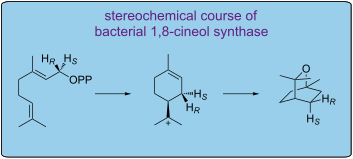
- labelling experiments that gave insights into the cyclisation mechanism of the bacterial 1,8-cineol synthase. Results The absolute configuration of the intermediate terpinyl cation While the two possible cyclisation pathways via (R)- and (S)-6 to 1 cannot be distinguished with unlabelled GPP, its two


Highly chemo-, enantio-, and diastereoselective [4 + 2] cycloaddition of 5H-thiazol-4-ones with N-itaconimides
Beilstein J. Org. Chem. 2016, 12, 2293–2297, doi:10.3762/bjoc.12.222
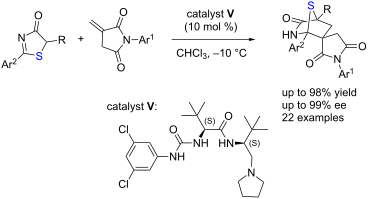
- enantioselectivities. The absolute configurations of annulation adducts 3 were assigned based on X-ray crystallographic analysis of a single crystal of 3r [20]. Through an analysis of the absolute configuration of adduct 3, it is proposed that a plausible reaction mechanism should be similar to the DP-TAA-catalyzed [4


A new and expeditious synthesis of all enantiomerically pure stereoisomers of rosaprostol, an antiulcer drug
Beilstein J. Org. Chem. 2016, 12, 2234–2239, doi:10.3762/bjoc.12.215
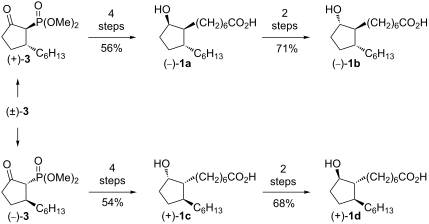
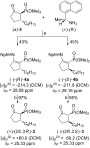
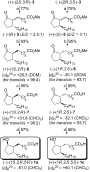
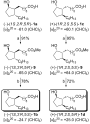
- stereostructure–bioactivity relationship in biologically active compounds [18][19], including selected prostanoids [20][21][22], we decided to synthesize all four rosaprostol stereoisomers 1a–d in enantiomerically pure form (Figure 2). The two rosaprostol stereoisomers 1c and 1d have an absolute configuration at
- in the ketoacid (−)-7 by L-Selectride produced the second stereoisomer of rosaprostol (+)-1c, [α]D20 = +60.1 (CHCl3). The overall yield of the four-step conversion of (−)-3 into (+)-1c was 54.5%. With regard to the assignment of the absolute configuration to (+)-3, it is important to notice that
- (−)-1a obtained herein has the absolute configuration R at the C-2 stereogenic center. As the chirality at this carbon atom remains unchanged in the four-step conversion of (+)-3 into (−)-1a, the same chirality has to be assigned to the corresponding carbon atom (now C-3) in (+)-3. Taking into account a



Determination of the absolute stereostructure of a cyclic azobenzene from the crystal structure of the precursor containing a heavy element
Beilstein J. Org. Chem. 2016, 12, 2211–2215, doi:10.3762/bjoc.12.212
- date there have been several spectroscopic, diffraction methods developed to determine the absolute stereostructure of chiral molecules [26][27][28][29][30][31][32][33][34][35]. The non-empirical methods employed to determine the absolute configuration of a molecule include circular dichroism, exciton
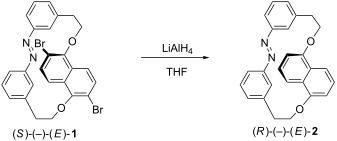
- [45]. In this study, we employ this enantiomer as a precursor for the determination of the absolute configuration of its reduced product, which is expected as one of the enantiomers of (E)-2. In order to characterize the reduced product we have carried out the 1H NMR spectroscopy of the compound and
- enantiomer of (E)-2. According to the Cahn–Ingold–Prelog (CIP) priority rules [51], the absolute configuration of the reduced product should be ‘R’. The priorities of the functional groups on the reduced product reverse on removal of the bromine atom from the parent structure. Comparing the HPLC and CD data


The direct oxidative diene cyclization and related reactions in natural product synthesis
Beilstein J. Org. Chem. 2016, 12, 2104–2123, doi:10.3762/bjoc.12.200
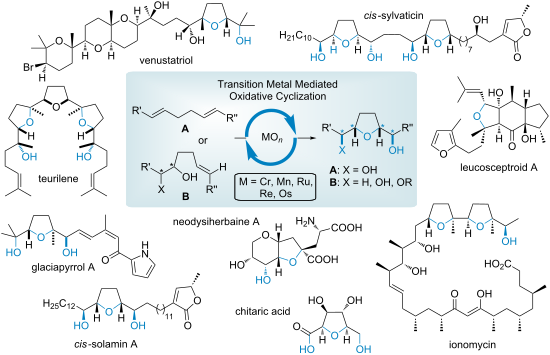
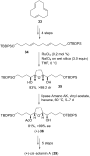
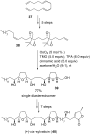
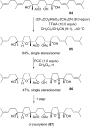
- tropical fruit tree Annona muricata in 1998 [72]. The relative stereochemistry within the THF diol core was assigned as threo-cis-threo, whereas the absolute configuration present in cis-solamin was not established at the time of isolation. Then in 2006, the groups of Figadère and Brown were able to show






Chiral ammonium betaine-catalyzed asymmetric Mannich-type reaction of oxindoles
Beilstein J. Org. Chem. 2016, 12, 2099–2103, doi:10.3762/bjoc.12.199
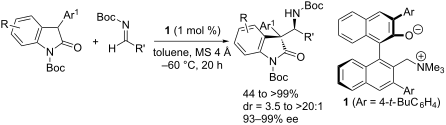
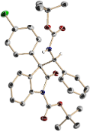
- efficiently converted into 4ga and 4ha with rigorous relative and absolute stereocontrol (Table 2, entries 15 and 16). The absolute configuration of 4ca was unequivocally determined by X-ray crystallographic analysis (Figure 2), and the stereochemistry of the remaining examples was assumed to be analogous


New furoisocoumarins and isocoumarins from the mangrove endophytic fungus Aspergillus sp. 085242
Beilstein J. Org. Chem. 2016, 12, 2077–2085, doi:10.3762/bjoc.12.196
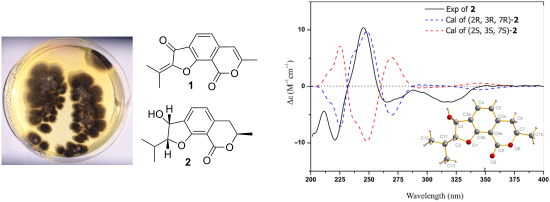
- ) [16][17], which allowed the assignment of the absolute configuration of 2 as (2R,3R,7R) (Figure 3). Moreover, the predicted ECD curves of 2 and its relevant enantiomer were computed at the [B3LYP/6-31 G(2d,p)] level, and the experimental ECD curve of 2 agreed well with the predicted one (Figure 4), in
- the optical rotation of 3 with data reported for dihydrocoumarins [18], it was possible to assign the absolute configuration of C-7 as R. So, the structure of compound 3 was identified as (R)-2-isopropyl-7-methyl-6,7-dihydro-9H-furo[3,2-h]isochromen-9-one. Asperisocoumarin D (4) was isolated as a
- spectrum (Figure 5), allowed the definition of the absolute configuration at C-7 (R) of compound 4 [18]. Thus, the structure of compound 4 was identified as (R)-2-isopropyl-7-methyl-6,7-dihydro-9H-furo[3,2-h]isochromen-9-one. Asperisocoumarin E (5) was obtained as a pale yellow powder and the molecular


Enantioconvergent catalysis
Beilstein J. Org. Chem. 2016, 12, 2038–2045, doi:10.3762/bjoc.12.192
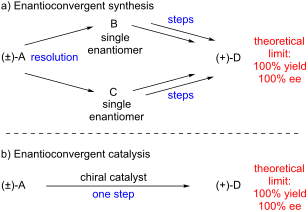
- 32 of each of these kinetic resolutions had the same absolute configuration. Combining these two complementary catalysts leads to a highly efficient parallel process wherein each catalyst enantioselectively hydrolyzes one enantiomer of the epoxide, ultimately forming diol (R)-32 in 92% yield with 89


Varioloid A, a new indolyl-6,10b-dihydro-5aH-[1]benzofuro[2,3-b]indole derivative from the marine alga-derived endophytic fungus Paecilomyces variotii EN-291
Beilstein J. Org. Chem. 2016, 12, 2012–2018, doi:10.3762/bjoc.12.188
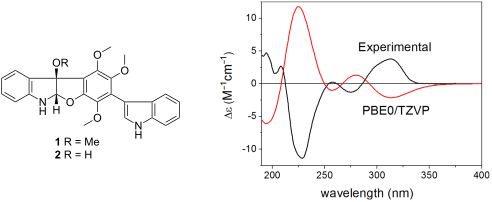
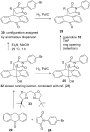
- indolyl-6,10b-dihydro-5aH-[1]benzofuro[2,3-b]indole derivative, varioloid A (1), was isolated from the marine alga-derived endophytic fungus Paecilomyces variotii EN-291. Its structure was elucidated on the basis of extensive analysis of 1D and 2D NMR data and the absolute configuration was determined by
- cyclized bisindolyl benzenoid derivatives (compounds 1 and 2) (Figure 1). The rare planar structure of compound 2 was previously reported but the full NMR data were not disclosed and the relative and absolute configuration had not been determined [13]. Herein we describe the isolation, structural
- elucidation including the assignment of the absolute configuration, and the cytotoxicity studies of these compounds. Results and Discussion Varioloid A (1), obtained as a light brown solid, has the molecular formula C26H24N2O5 as established from a prominent pseudomolecular ion peak at m/z 445.1766 [M + H



Stereo- and regioselectivity of the hetero-Diels–Alder reaction of nitroso derivatives with conjugated dienes
Beilstein J. Org. Chem. 2016, 12, 1949–1980, doi:10.3762/bjoc.12.184
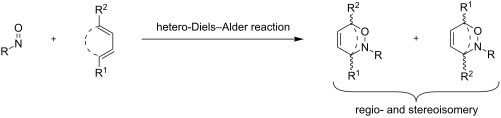
- -diene (120) with the acylnitroso dienophile 119 (Scheme 24) [10]. The reaction proceeded in 81% overall yield with a major cycloadduct 121 and minor diastereomer 122, with 98% de. The absolute configuration of the major cycloadduct was confirmed by an independent synthesis from the known bicyclic (1R,4S




A chiral analog of the bicyclic guanidine TBD: synthesis, structure and Brønsted base catalysis
Beilstein J. Org. Chem. 2016, 12, 1870–1876, doi:10.3762/bjoc.12.176
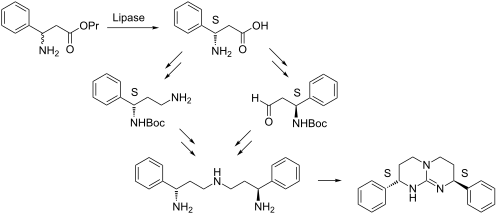
- base the retro-aldol reaction of some cycloadducts with kinetic resolution of the enantiomers. In three cases, the retro-aldol products (48–83% ee) could be recrystallized to high enantiopurity (≥95% ee). The absolute configuration of several compounds is supported by anomalous X-ray diffraction and by
- chemical correlation. Keywords: absolute configuration; anthrone; cycloaddition; kinetic resolution; lipase; Introduction In guanidinium ions charge delocalization is an important factor to stabilize the protonated form. As a result, guanidines are exceptionally strong nitrogen bases. As part of the


Mechanistic investigations on six bacterial terpene cyclases
Beilstein J. Org. Chem. 2016, 12, 1839–1850, doi:10.3762/bjoc.12.173
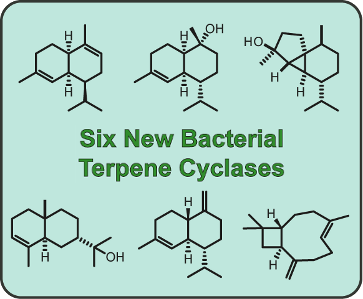
- containing water or deuterium oxide allowed for detailed insights into the cyclisation mechanisms of the bacterial terpene cyclases. Keywords: absolute configuration; biosynthesis; enzyme mechanisms; structure elucidation; terpenes; Introduction Terpenes are structurally fascinating natural products with
- established the structure of T-muurolol (2). The absolute configuration was determined as (1R,6S,7R,10R)-(+)-T-muurolol (2) from its optical rotary power ([α]D23 = +99.4 (c 1.10, CH2Cl2)). This is the same compound as was reported from a terpene cyclase from Streptomyces clavuligerus (accession number
- face. These data established the structure of 4-epi-cubebol (3). Its optical rotary power was determined as [α]D24 = +7.1 (c 0.29, CH2Cl2). This points to the same enantiomer as reported from the heartwood of Cryptomeria japonica [44], but the absolute configuration of 3 remains unknown. The (+)-4-epi


Synthesis of the C8’-epimeric thymine pyranosyl amino acid core of amipurimycin
Beilstein J. Org. Chem. 2016, 12, 1765–1771, doi:10.3762/bjoc.12.165
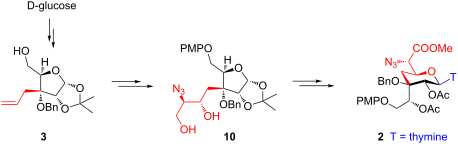
- an azide nucleophile. The synthesis of allyl alcohol C from D-glucose was reported by us earlier. Our synthesis started with the homoallyl alcohol 3 (with defined ‘R’ absolute configuration at the C3-quaternary center) that is obtained from D-glucose as reported earlier by us in 37% overall yield [15
- the ratio of 18:82 in 83% yield. With the understanding of SAE mnemonic, we assigned the absolute configuration in epoxide 8 as 7S,8S and in epoxide 9 as 7R,8R. Subsequently, major isomers of epoxy alcohols 8 and 9 were individually subjected to regioselective epoxide ring opening using trimethyl
- orientation indicating 5’S absolute configuration as anticipated from the SAE mnemonic in compound 8. As the C5’ and C6’ stereocenters in 14 are derived from the regioselective SN2 opening of epoxide 8 by NaN3, the configuration at the C6’ (carrying azido group) was therefore assigned as 6’R. In the 1H NMR