Search results
Search for "bifunctional" in Full Text gives 250 result(s) in Beilstein Journal of Organic Chemistry. Showing first 200.
Enantioselective addition of diphenyl phosphonate to ketimines derived from isatins catalyzed by binaphthyl-modified organocatalysts
Beilstein J. Org. Chem. 2016, 12, 1551–1556, doi:10.3762/bjoc.12.149
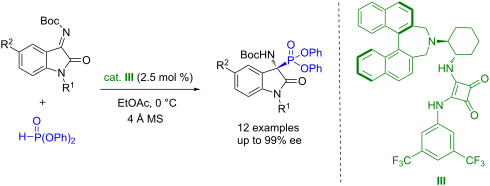
- isatins has been achieved. This method affords practical and efficient access to chiral 3-amino-3-phosphonyl-substituted oxindole derivatives in high yields with excellent enantioselectivities (up to 99% ee). Keywords: 3-amino-3-phosphonyl-substituted oxindole; α-aminophosphonates; bifunctional
- phosphonate to ketimines derived from isatins catalyzed by binaphthyl-modified bifunctional organocatalysts (Figure 1). Results and Discussion To determine suitable reaction conditions for the organocatalytic enantioselective addition reaction of diphenyl phosphonate to ketimines derived from isatins, we
- initially investigated a reaction system with ketimine 1a derived from N-allylisatin and diphenyl phosphonate (2) with organocatalyst in the presence of 4 Å molecular sieves. We first surveyed the effect of the structure of bifunctional organocatalysts I–VI (Figure 1) on enantioselectivity in ethyl acetate


Biosynthesis of oxygen and nitrogen-containing heterocycles in polyketides
Beilstein J. Org. Chem. 2016, 12, 1512–1550, doi:10.3762/bjoc.12.148
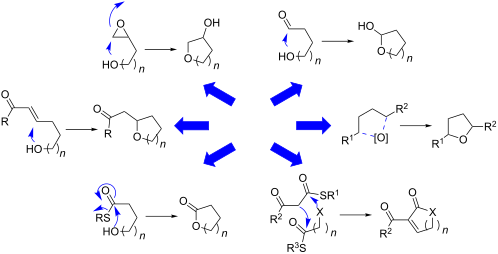
- domains. Within a module, PS domains are usually located adjacent to DH domains and act on their transiently formed dehydration product [14]. The arrangement is somewhat different in the case of AmbDH3 from ambruticin biosynthesis (Scheme 4) [15]. This bifunctional domain catalyses both steps, dehydration




Towards potential nanoparticle contrast agents: Synthesis of new functionalized PEG bisphosphonates
Beilstein J. Org. Chem. 2016, 12, 1366–1371, doi:10.3762/bjoc.12.130
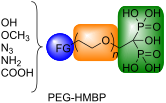
- bifunctional molecules substituted by amines, thiols, carboxylates, sulfonates, phosphonates or bisphosphonates [5][6][7]. Particularly, a strong interaction between the NPs and the phosphonic moiety was observed and more interestingly the best results were obtained with bisphosphonate products [8][9]. For the
- past years, our group has focused its interest in the synthesis of various functionalized hydroxymethylene bisphosphonates (HMBPs) [10] and their applications in health science, especially in antitumor therapy [11][12][13]. Herein, we described the synthesis of novel bifunctional PEG-HMBP compounds in
- obtain the expected HMBP-PEG-COOH 23 in 85% yield. Conclusion In summary, novel bifunctional PEG-HMBPs ligands for the coating of iron oxide nanoparticles have been synthesized. The procedure is efficient to introduce different functional groups such as azide, carboxylic acid, amine permitting further


Application of Cu(I)-catalyzed azide–alkyne cycloaddition for the design and synthesis of sequence specific probes targeting double-stranded DNA
Beilstein J. Org. Chem. 2016, 12, 1348–1360, doi:10.3762/bjoc.12.128
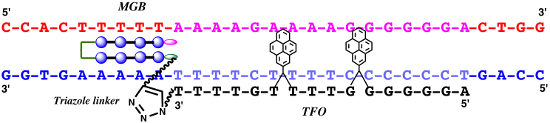
- synthesis of conjugates of pyrrole–imidazole polyamide minor groove binders (MGB) with fluorophores and with triplex-forming oligonucleotides (TFOs). Diverse bifunctional linkers were synthesized and used for the insertion of terminal azides or alkynes into TFOs and MGBs. The formation of stable triple
- for the synthesis of MGB-fluorophore and MGB-TFO conjugates via CuAAC (Figure 2). Properties of the conjugates obtained are discussed. Results and Discussion Synthesis of bifunctional linkers Two components in MGB-TFO conjugates must be connected by a linker, which is at least 12 chemical bonds long
- [10][11][34]. Several different bifunctional linkers were designed and synthesized (Figure 3). All of them contain, on one side, an alkyne or azide group for "click chemistry” and, on the other side, either an amino group for interaction with electrophiles (for example, activated terminal phosphates


Cyclisation mechanisms in the biosynthesis of ribosomally synthesised and post-translationally modified peptides
Beilstein J. Org. Chem. 2016, 12, 1250–1268, doi:10.3762/bjoc.12.120
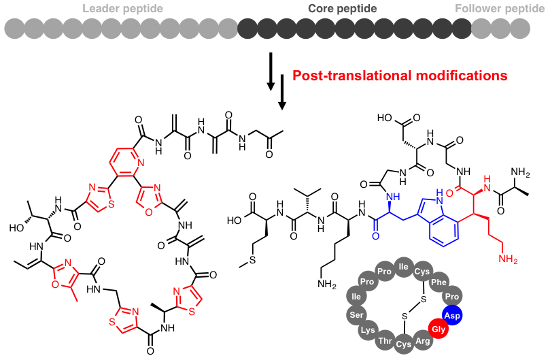
- cyclisation reactions are catalysed by bifunctional lanthionine synthetases for classes II–IV [47][49][54]. Furthermore, dehydration in each of these classes has been shown to proceed via phosphorylation of the amino acid side chain rather than by glutamylation [54]. Class II synthetases (“LanM”) have an N





Conjugate addition–enantioselective protonation reactions
Beilstein J. Org. Chem. 2016, 12, 1203–1228, doi:10.3762/bjoc.12.116
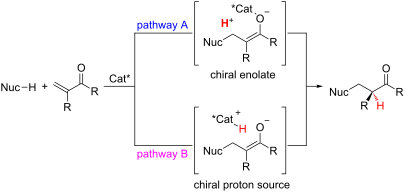
- reported the enantioselective conjugate addition of thiols to unactivated α-substituted acrylates followed by enantioselective protonation (Scheme 9) [28]. To overcome the low inherent electrophilicity of 38, the authors postulated that bifunctional iminophosphoran (BIMP) organocatalysts with increased


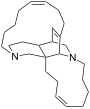
Towards the total synthesis of keramaphidin B
Beilstein J. Org. Chem. 2016, 12, 1096–1100, doi:10.3762/bjoc.12.104
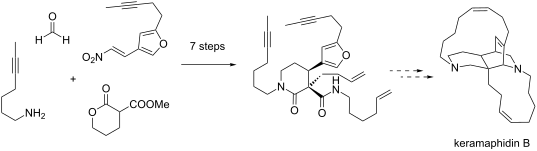
- pronucleophile to a substituted furanyl nitroolefin catalysed by a bifunctional cinchonine-derived thiourea has been used as the key stereocontrolling step in a new synthetic strategy to the heavily functionalised piperidine core of keramaphidin B. Keywords: bifunctional organocatalyst; enantioselective Michael
- 1 as a suitable synthetic target. Our plan was to design and implement a new synthetic route that integrated some of our newly developed bifunctional organocatalytic reactions, as well as cascade technologies, to rapidly and stereoselectively build up the core of this fascinating molecule. Herein we
- nitroolefin 9 under the control of a cinchona-derived bifunctional Brønsted base/H-bond donor organocatalyst developed in our group and others [16][17][18][19]. Bifunctional organocatalysed Michael addition studies In our previous total syntheses of nakadomarin A [5][7][20] and manzamine A [10] the



Bifunctional catalysis
Beilstein J. Org. Chem. 2016, 12, 1079–1080, doi:10.3762/bjoc.12.102
- Darren J. Dixon Chemistry Research Laboratory, University of Oxford, Mansfield Road, Oxford OX1 3TA, UK, Tel: +44 (0)1865 275648; Fax: +44 (0)1865 285002 10.3762/bjoc.12.102 Keywords: bifunctional catalysis; Bifunctional catalysis concerns the use of low molecular weight, structurally defined
- , stereochemically defined products through the action of the bifunctional catalyst system. Many bifunctional catalysts possess either Lewis or Brønsted basic functionality and a hydrogen-bond donor group suitably positioned over a chiral scaffold. Compared to single functional group catalysts, the cooperative
- reactivity and selectivity in synthetically relevant reactions. Furthermore, owing to the great number of pronucleophiles and electrophiles that are available, the number of polar addition reactions that are amenable to catalysis through the action of bifunctional catalysts is enormous, and consequently, the
Catalytic asymmetric synthesis of biologically important 3-hydroxyoxindoles: an update
Beilstein J. Org. Chem. 2016, 12, 1000–1039, doi:10.3762/bjoc.12.98
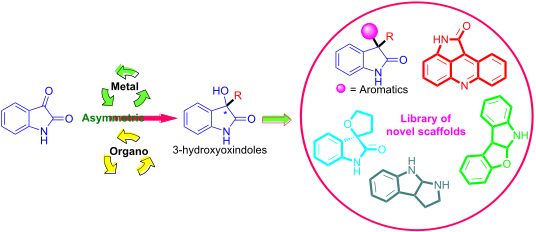
- state for the observed stereoselectivity. Pyrrole attacked the ketone from the Si face to generate (R)-3-pyrrolyl-3-hydroxyoxindoles. Very recently, Feng et al. revealed that the bifunctional guanidine (L3)/CuI catalyst can catalyze asymmetric alkynylation of isatins with terminal alkynes, affording
- ). Interestingly, a satisfactory result (89% yield and >99% ee) was also obtained when the reaction was performed on a 7.0 mmol scale using 15% of catalyst loading. Similarly, Chen and co-workers reported that β-ICD, as a bifunctional catalyst, can also efficiently catalyze the MBH reactions of 7-azaisatins with
- of the bifunctional thiourea catalyst (cat. 24, 10 mol %), affording the E-adducts in high yields (up to 95%) and with moderate to good enantioselectivities (up to 99% ee). Different allyl ketones were examined under these conditions, affording the corresponding products in good yields, especially




1H-Imidazol-4(5H)-ones and thiazol-4(5H)-ones as emerging pronucleophiles in asymmetric catalysis
Beilstein J. Org. Chem. 2016, 12, 918–936, doi:10.3762/bjoc.12.90
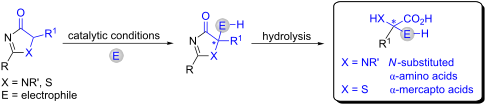
- reactions. Keywords: asymmetric catalysis; bifunctional catalysts; 1H-imidazol-4(5H)-ones; pronucleophiles; thiazol-4(5H)-ones; Introduction Asymmetric catalysis [1][2][3] constitutes a very powerful tool for the preparation of enantiomerically pure compounds [4]. Recent efforts in the field have been
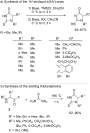
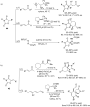
- acceptors in reactions promoted by bifunctional Brønsted bases. 1.2.1 Nitroalkenes as acceptors. Investigation of the base-catalyzed Michael addition reaction of 2-thio-1H-imidazol-4(5H)-ones 4 to nitroalkenes 5 [55] revealed that cinchona alkaloids such as quinine, (DHQ)2Pyr or even thiourea tertiary amine
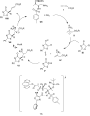
- an heuristic model (Figure 3) to account for the experimentally encountered selectivity where the catalyst is proposed to act in a bifunctional way. In this proposal the imidazolone would be coordinated to the two NH bonds of the squaramide and the ortho-ArH in C1, whilst the nitroalkene would form a








Asymmetric α-amination of 3-substituted oxindoles using chiral bifunctional phosphine catalysts
Beilstein J. Org. Chem. 2016, 12, 725–731, doi:10.3762/bjoc.12.72
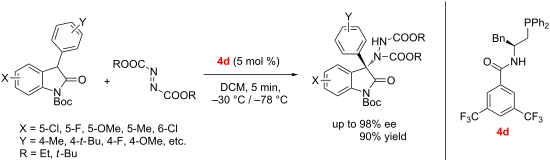
- novel amino acid-derived chiral bifunctional organophosphine catalysts, which have successfully applied to catalyze various asymmetric reactions [40][41]. As a general concept, a tertiary phosphine adds to an electrophilic reactant to form a zwitterion which serves as either a nucleophile or a Bronsted
- (diethyl azodicarboxylate, 2a) was selected as the model reaction for the evaluation of chiral phosphine catalysts (Table 1). Using bifunctional thiourea catalysts 4a and 4b, the reaction proceeded smoothly at room temperature to afford the product 3a in good yields, albeit with low enantiomeric excesses
- face of the enolate, driving the electrophile to attack from the Si face. Conclusion In summary, we have realized enantioselective α-aminations of 3-substitued oxindoles with azodicarboxylates by using amino acid-derived bifunctional phosphine catalysts. These reactions afford a variety of chiral 2


Stereoselective amine-thiourea-catalysed sulfa-Michael/nitroaldol cascade approach to 3,4,5-substituted tetrahydrothiophenes bearing a quaternary stereocenter
Beilstein J. Org. Chem. 2016, 12, 643–647, doi:10.3762/bjoc.12.63
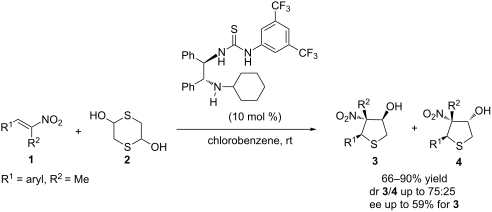
- [22] with 1,4-dithiane-2,5-diol. Based on all above considerations and prompted by our interest in asymmetric synthesis of functionalized tetrahydrothiophenes [14], we wondered whether we could use bifunctional organocatalysts to develop a diastereo- and enantioselective cascade sulfa-Michael
- -dithiane-2,5-diol as precursor of mercaptoacetaldehyde, using 10 mol % loading of different bifunctional organocatalysts (Scheme 1, Table 1). In the case of trans-β-nitrostyrene (1), a mixture of diastereoisomers 5 and 6 were rapidly formed, irrespective of the catalyst used, with a poor level of diastereo
- increased to 50% ee for diastereoisomer 7a when using chlorobenzene as the solvent at room temperature (Table 2, entry 5). It is worth noting that bifunctional organocatalyst VII appears to be more effective in terms of diastereocontrol than previously employed Brønsted base/Lewis acid system TMG/ZnI2


Supported bifunctional thioureas as recoverable and reusable catalysts for enantioselective nitro-Michael reactions
Beilstein J. Org. Chem. 2016, 12, 628–635, doi:10.3762/bjoc.12.61
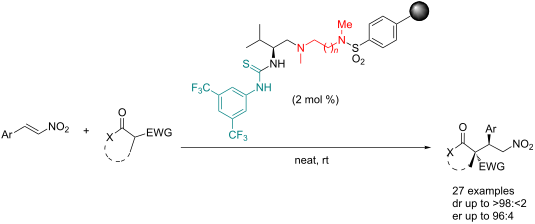
- bifunctional thioureas on sulfonylpolystyrene resins has been studied in the nitro-Michael addition of different nucleophiles to trans-β-nitrostyrene derivatives. The activity of the catalysts depends on the length of the tether linking the chiral thiourea to the polymer. The best results were obtained with
- the thiourea derived from (L)-valine and 1,6-hexanediamine. The catalysts can be used in only 2 mol % loading, and reused for at least four cycles in neat conditions. The ball milling promoted additions also worked very well. Keywords: bifunctional organocatalysts; organocatalysis; stereoselective
- nitro-Michael addition; supported catalysts; thioureas; Introduction The use of chiral bifunctional thioureas that allow the simultaneous activation of a electrophile, by hydrogen bonding, and a nucleophile, by deprotonation, plays a major role in the stereoselective formation of C–C bonds in different


The aminoindanol core as a key scaffold in bifunctional organocatalysts
Beilstein J. Org. Chem. 2016, 12, 505–523, doi:10.3762/bjoc.12.50
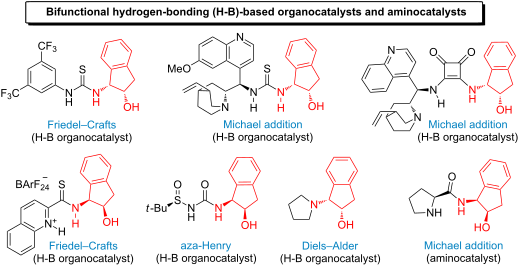
- The 1,2-aminoindanol scaffold has been found to be very efficient, enhancing the enantioselectivity when present in organocatalysts. This may be explained by its ability to induce a bifunctional activation of the substrates involved in the reaction. Thus, it is easy to find hydrogen-bonding
- ; bifunctional; organocatalysis; hydrogen bonding; Introduction The structural and chemical properties of the 1,2-aminoindanol scaffold 1 have transformed aminoindanol derivatives into versatile building blocks for the construction of catalysts and the efficient induction of chirality in asymmetric processes
- disulfides and sulfides, which are involved in the synthesis of ligands and pharmaceutical chiral synthetic precursors [1][2] and in (b) the transfer-hydrogenation reaction catalyzed by bifunctional chiral ruthenium complexes, employed in the synthesis of peptide mimics with an interesting


(Thio)urea-mediated synthesis of functionalized six-membered rings with multiple chiral centers
Beilstein J. Org. Chem. 2016, 12, 462–495, doi:10.3762/bjoc.12.48
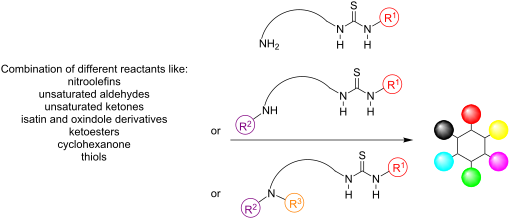
- main tools a synthetic chemist has to perform asymmetric catalysis. In this review the synthesis of six-membered rings, that contain multiple chiral centers, either by a ring closing process or by a functionalization reaction on an already existing six-membered ring, utilizing bifunctional (thio)ureas
- involves hydrogen bonding, which is also postulated to be present in enzymatic reactions. (Thio)urea moieties have been employed in order to activate electrophiles and in order to allign them, in a specific manner, so as to react with nucleophiles (Scheme 3) [6][7]. In addition, many bifunctional (thio
- of a bifunctional catalyst. The first family of these bifunctional catalysts, that are going to be discussed, are the "primary amine-thioureas". Initially, catalyst 4 was studied as an organocatalyst in the addition of isobutyraldehyde (1) to (E)-methyl 2-oxo-4-phenylbut-3-enoate (2) for the


Recent advances in N-heterocyclic carbene (NHC)-catalysed benzoin reactions
Beilstein J. Org. Chem. 2016, 12, 444–461, doi:10.3762/bjoc.12.47
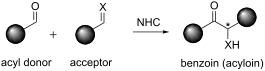
- developed the pyroglutamic acid-derived triazolium salt 10 which mediated benzoin reactions in similar enantioselectivities [14]. The chiral triazolium catalyst 11 transfers chiral information to the benzoin products by engaging in hydrogen-bonding interactions [15]. Waser’s chiral bifunctional (thio)urea



Cupreines and cupreidines: an established class of bifunctional cinchona organocatalysts
Beilstein J. Org. Chem. 2016, 12, 429–443, doi:10.3762/bjoc.12.46
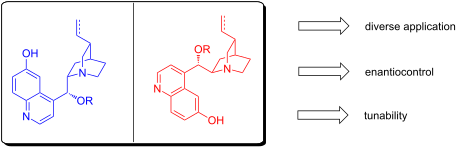
- asymmetric organocatalysis. This fascinating class of bifunctional catalyst offers a genuine alternative to the more commonly used thiourea systems and because of the different spacing between the functional groups, can control enantioselectivity where other organocatalysts have failed. In the main, this
- . Keywords: bifunctional; cupreidine; cinchona; cupreine; organocatalysis; Introduction The cinchona alkaloids, comprising quinine (QN), quinidine (QD), cinchonidine (CD), cinchonine (CN, Figure 1), and their derivatives have revolutionized asymmetric catalysis owing to their privileged structures. The
- optimize their stereoselective behaviour has seen their utility burgeon dramatically over the last decade. Of particular note is the use of these cinchona systems within bifunctional thiourea catalysis [3][4][5][6][7][8][9][10][11][12]. Cupreine (CPN) and cupreidine (CPD), the non-natural demethylated


Enantioselective [3 + 2] annulation of α-substituted allenoates with β,γ-unsaturated N-sulfonylimines catalyzed by a bifunctional dipeptide phosphine
Beilstein J. Org. Chem. 2016, 12, 343–348, doi:10.3762/bjoc.12.37
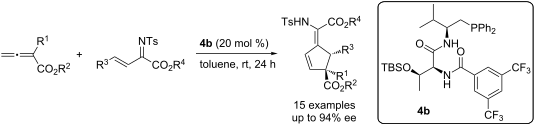
- -sulfonylimines proceeded in an unexpected [3 + 2] annulation mode to afford a cyclopentene ring with an all-carbon quaternary center (Scheme 1) [48]. In recent years our group has developed a family of amino acid-derived bifunctional phosphines and has intensively investigated related asymmetric transformations
- [49][50][51][52][53][54][55][56][57][58][59][60][61][62][63]. We became interested in developing an asymmetric variant of the above transformation by utilizing our amino acid-derived bifunctional phosphine catalysts. Results and Discussion We chose the [3 + 2] annulation between α-benzyl-substituted
- allenoate 1a and β,γ-unsaturated N-sulfonylimine 2a as a model reaction and evaluated a number of amino acid based bifunctional phosphines as catalyst. As shown in Table 1, simple L-valine-derived phosphines 3a–c were found to be effective in promoting the reaction, and products were obtained in moderate to


Application of 7-azaisatins in enantioselective Morita–Baylis–Hillman reaction
Beilstein J. Org. Chem. 2016, 12, 309–313, doi:10.3762/bjoc.12.33
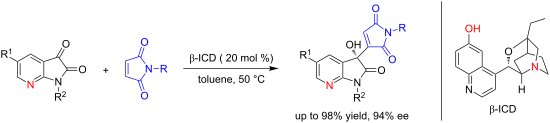
- in diverse biologically active substances. Here 7-azaisatins turned out to be more efficient electrophiles than the analogous isatins in the enantioselective Morita–Baylis–Hillman (MBH) reactions with maleimides using a bifunctional tertiary amine, β-isocupreidine (β-ICD), as the catalyst. This route
- allows a convenient approach to access multifunctional 3-hydroxy-7-aza-2-oxindoles with high enantiopurity (up to 94% ee). Other types of activated alkenes, such as acrylates and acrolein, could also be efficiently utilized. Keywords: 7-azaisatins; β-isocupreidine; bifunctional catalysis; maleimide; MBH
- the identical catalytic conditions [14]. Remarkably, these reactions were usually promoted by bifunctional catalysts, such as β-ICD, whose C6’-OH group served as a H-bond donor to facilitate the proton-transfer step and to stabilize the transition state in MBH reactions [11][12][13][14]. Nevertheless


Organocatalytic asymmetric Henry reaction of 1H-pyrrole-2,3-diones with bifunctional amine-thiourea catalysts bearing multiple hydrogen-bond donors
Beilstein J. Org. Chem. 2016, 12, 295–300, doi:10.3762/bjoc.12.31
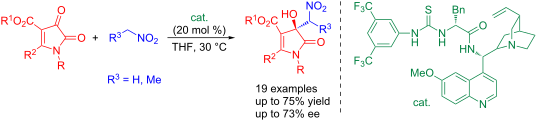
- 100049, China 10.3762/bjoc.12.31 Abstract For the first time, a catalytic asymmetric Henry reaction of 1H-pyrrole-2,3-diones was achieved with a chiral bifunctional amine-thiourea as a catalyst possessing multiple hydrogen-bond donors. With this developed method, a range of 3-hydroxy-3-nitromethyl-1H
- -pyrrol-2(3H)-ones bearing quaternary stereocenters were obtained in acceptable yield (up to 75%) and enantioselectivity (up to 73% ee). Keywords: asymmetric catalysis; bifunctional catalysts; Henry reaction; organocatalysis; 1H-pyrrole-2,3-diones; Introduction Asymmetric organocatalysis has been
- demonstrated to be an effective and versatile strategy in facilitating a variety of organic transformations over the past decade, and numerous catalytic asymmetric reactions have been developed with various activation modes [1][2][3][4][5][6]. In this realm, chiral bifunctional catalysts, possessing two active


Highly stable and reusable immobilized formate dehydrogenases: Promising biocatalysts for in situ regeneration of NADH
Beilstein J. Org. Chem. 2016, 12, 271–277, doi:10.3762/bjoc.12.29
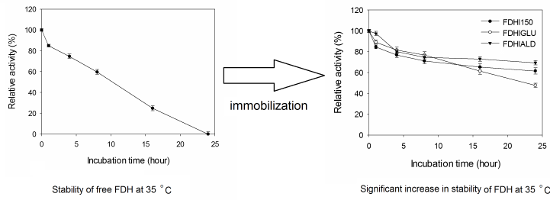
- initial loading protein per gram of Immobead 150 support and the immobilized FDH (FDHI150) showed 31% activity of the free FDH upon immobilization. Another commonly used strategy to covalently immobilize enzyme is using a bifunctional reagent glutaraldehyde. A Schiff base is formed between the carbonyl


A quadruple cascade protocol for the one-pot synthesis of fully-substituted hexahydroisoindolinones from simple substrates
Beilstein J. Org. Chem. 2016, 12, 253–259, doi:10.3762/bjoc.12.27
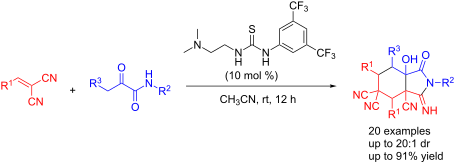
- -substituted hexahydroisoindolinones was developed by using bifunctional tertiary amine-thioureas as powerful catalysts. As far as we know, there is no efficient synthetic method developed toward fully-substituted hexahydroisoindolinones. The products were obtained in good yield and diastereoselectivity. The
- one-pot cascade quadruple protocol features readily available starting materials, simple manipulation, mild conditions and good atom economy. Keywords: bifunctional catalysis; hexahydroisoindolinones; one-pot synthesis; quadruple cascade; Introduction Isoindolines and their congeners are one kind of
- when K2CO3 was used as the catalyst (Table 1, entry 4). When thioureas were used as the catalysts, we also did not get the expected product (Table 1, entries 5 and 6). Since bifunctional tertiary amine-thioureas have been proved as powerful catalysts that can catalyze a variety of organocascade


Asymmetric α-amination of β-keto esters using a guanidine–bisurea bifunctional organocatalyst
Beilstein J. Org. Chem. 2016, 12, 198–203, doi:10.3762/bjoc.12.22
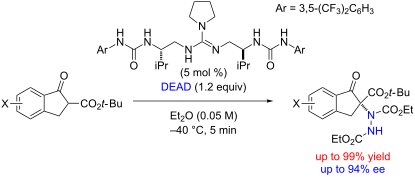
- presence of a guanidine–bisurea bifunctional organocatalyst was investigated. The α-amination products were obtained in up to 99% yield with up to 94% ee. Keywords: α-amination; bifunctional catalyst; guanidine; hydrogen-bonding catalyst; urea; Introduction Asymmetric α-amination of β-keto esters is an
- particular, catalytic asymmetric α-amination of β-keto esters has been widely explored, using both metal catalysts and organocatalysts [5][6][7][8][9][10][11][12][13][14][15][16][17][18]. We have developed a series of guanidine–bis(thio)urea bifunctional organocatalysts, and have used them in a variety of
- asymmetric reactions [19][20]. Recently, we disclosed an α-hydroxylation of tetralone-derived β-keto esters 2 using guanidine–bisurea bifunctional organocatalyst 1a in the presence of cumene hydroperoxide (CHP) as an oxidant (Figure 1a) [21]. This reaction provides the corresponding α-hydroxylation products


Versatile deprotonated NHC: C,N-bridged dinuclear iridium and rhodium complexes
Beilstein J. Org. Chem. 2016, 12, 117–124, doi:10.3762/bjoc.12.13
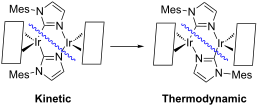
- atom. Although most of the studies on NHCs together with metal moieties are based on the interaction of the carbene carbon of the NHC with the metal [23][24][25][26], the high instability due the NH group of the pNHCs can induce secondary interactions leading to bifunctional catalysis [27][28


Catalytic asymmetric formal synthesis of beraprost
Beilstein J. Org. Chem. 2015, 11, 2654–2660, doi:10.3762/bjoc.11.285
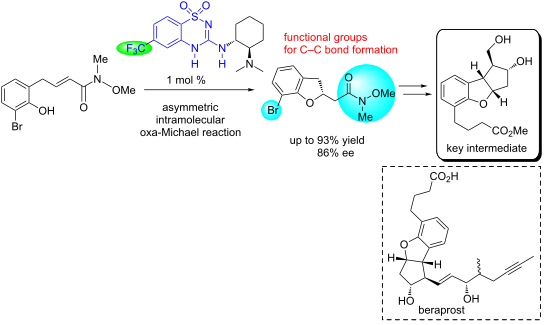
- the tricyclic core were controlled via Rh-catalyzed stereoselective C–H insertion and the subsequent reduction from the convex face. Keywords: bifunctional catalysis; hydrogen bonding; organocatalyst; oxa-Michael; prostacyclin; Introduction Prostacyclin (PGI2, Figure 1) is a physiologically active
- nucleophile and relatively unreactive Michael acceptors [27][28][29][30][31][32][33]. We envisioned that our recently developed powerful hydrogen bond (HB)-donor bifunctional organocatalyst [33] could promote the desired reaction of 7 or 8, which can be synthesized from commercial sources 9 or 10. Overall