Search results
Search for "catalysts" in Full Text gives 1321 result(s) in Beilstein Journal of Organic Chemistry. Showing first 200.
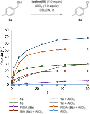
Oxidation of benzylic alcohols to carbonyls using N-heterocyclic stabilized λ3-iodanes
Beilstein J. Org. Chem. 2024, 20, 1677–1683, doi:10.3762/bjoc.20.149
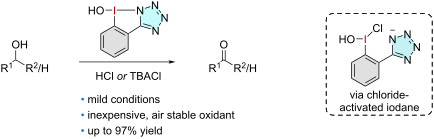
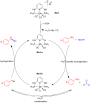
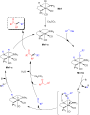
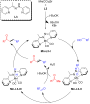
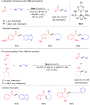
- oxidants in combination with transition-metal catalysts. Metal-free methods employ chlorodimethylsulfonium compounds as the reactive species and have gained great popularity under the name Swern oxidation or the Corey–Kim oxidation [11]. Hypervalent iodine compounds have also been studied and are well


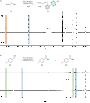


pKalculator: A pKa predictor for C–H bonds
Beilstein J. Org. Chem. 2024, 20, 1614–1622, doi:10.3762/bjoc.20.144
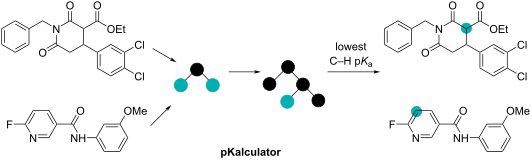
- ] and experimentally validated their approach using six pharmaceutical intermediates from medicinal chemistry programs. In the article, they state that ”Iridium catalysts ligated by bipyridine ligands catalyze the borylation of the aryl C–H bonds that are most acidic and least sterically hindered…”[45


![[Graphic 9]](/bjoc/content/inline/1860-5397-20-144-i12.svg?max-width=637&scale=1.3000021)


Generation of multimillion chemical space based on the parallel Groebke–Blackburn–Bienaymé reaction
Beilstein J. Org. Chem. 2024, 20, 1604–1613, doi:10.3762/bjoc.20.143

- involving the use of Sc(OTf)3 and TsOH as the catalysts were tested on a broad substrate scope, and prevalence of the first method was clearly demonstrated. Furthermore, the scope and limitations of the procedure were established. A model 790-member library was obtained with 85% synthesis success rate
- -house experience on isonitrile-based parallel reactions, electron-poor (hetero)aromatic isonitriles were not included in the study). According to Boltjes and Dömling, the following three catalysts were applied most often to promote the title reaction [21]: Sc(OTf)3 (described first in the original work
- space were found in the ChEMBL database, and some of them had high potency against various biological targets. Marketed drugs comprising imidazo[1,2-a]azine scaffolds. Yields of library members 4 synthesized using both Sc(OTf)3 and TsOH as the catalysts. Amino heterocycles 1{1–27} demonstrating poor


Electrocatalytic hydrogenation of cyanoarenes, nitroarenes, quinolines, and pyridines under mild conditions with a proton-exchange membrane reactor
Beilstein J. Org. Chem. 2024, 20, 1560–1571, doi:10.3762/bjoc.20.139
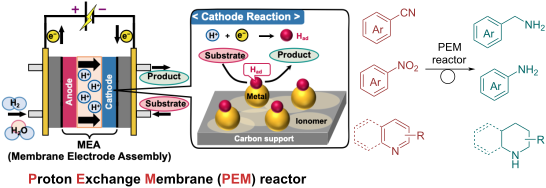
- ), the charge for screening was set to 2.0 F mol−1 for rapid evaluation, and several cathode catalysts were examined. When Pd/C was used as the cathode, the reaction did not proceed (Table 3, entry 1). The desired reduction proceeded with Ru/C and 5a was obtained in 79% of current efficiency (Table 3
- F mol−1 of electricity should be required ideally to reduce quinoline (6a) to 1,2,3,4-tetrahydroquinoline (7a), 4.0 F mol−1 of electricity was applied for the reactions. Pd/C, Ir/C, Ru/C, and Pt/C were used as cathode catalysts, and 3–5% yields of 7a were obtained by the use of each catalyst (Table
- 5, entries 1–4). We chose Pt/C, one of the most common catalysts used in fuel-cell reactors, and increased the charge to complete the reaction. With 50 F mol−1 of electricity, 6a was completely consumed and 7a was obtained in 96% yield (Table 5, entry 5). However, the electrochemical reaction of 6a


Benzylic C(sp3)–H fluorination
Beilstein J. Org. Chem. 2024, 20, 1527–1547, doi:10.3762/bjoc.20.137

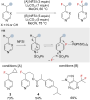
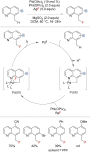
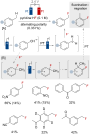
- authors displayed the stability of the secondary benzyl fluoride 9 to various SNAr conditions. While these methods demonstrate excellent application of palladium catalysts to perform benzylic fluorinations, the need to install a directing group can limit substrate scope. Therefore, methods that can
- -methylquinoline derivatives could be fluorinated in yields of up to 70%. In 2013, Groves and co-workers reported the use of manganese salen and manganese porphyrin catalysts in the preparation of a range of secondary benzyl fluorides via C–H fluorination (Figure 31) [80]. Substrates bearing electron-withdrawing








Primary amine-catalyzed enantioselective 1,4-Michael addition reaction of pyrazolin-5-ones to α,β-unsaturated ketones
Beilstein J. Org. Chem. 2024, 20, 1518–1526, doi:10.3762/bjoc.20.136
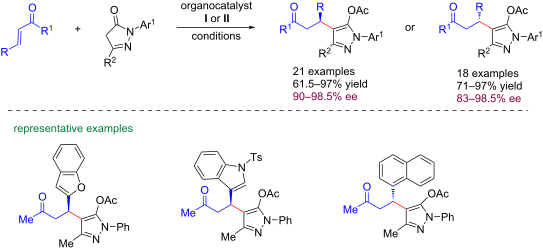
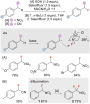
- -covalent catalysis via bifunctional hydrogen-bonding organocatalysts. The C-4 nucleophilicity of pyrazolin-5-ones was also explored in enantioselective reactions with α,β-unsaturated carbonyl compounds through covalent catalysis with chiral amine-based catalysts; however, it has achieved limited success
- metal catalytic conditions. In continuation of our work in the field of organocatalysis [26][27][28][29], herein, we present the Michael addition reaction of 4-unsubstituted pyrazolin-5-ones with arylidene/heteroarylideneacetones using cinchona alkaloid-derived primary amine catalysts. The developed
- primary amine catalysts (see Table S1 in Supporting Information File 1) in toluene at room temperature (30–32 °C). When the test reaction was conducted in the presence of 15 mol % of 9-amino-9-deoxy-epicinchonidine (I) as catalyst [30] for 12 h and treated with Ac2O followed by DABCO, the reaction gave




Tetrabutylammonium iodide-catalyzed oxidative α-azidation of β-ketocarbonyl compounds using sodium azide
Beilstein J. Org. Chem. 2024, 20, 1510–1517, doi:10.3762/bjoc.20.135
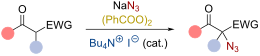
- ][25][26][27][28][29][30][31]. Such oxidative coupling strategies of two inherently nucleophilic species allow for the direct utilization of simple starting materials in an efficient manner and especially the use of quaternary ammonium iodides as redox active catalysts has emerged as a powerful
- easily available and cheapest nucleophilic N3 source (for other remarkable approaches using alternative catalysts and oxidants see references [24][25][26]). In addition to the racemic approach, they also showed that this reaction can be rendered enantioselective by using advanced Maruoka-type quaternary


Towards an asymmetric β-selective addition of azlactones to allenoates
Beilstein J. Org. Chem. 2024, 20, 1504–1509, doi:10.3762/bjoc.20.134
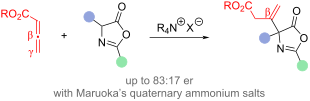
- , Iran 10.3762/bjoc.20.134 Abstract We herein report the asymmetric organocatalytic addition of azlactones to allenoates. Upon using chiral quaternary ammonium salt catalysts, i.e., Maruoka’s binaphthyl-based spirocyclic ammonium salts, the addition of various azlactones to allenoates proceeds in a β
- [29] as well as α-amino acid-based thiazolones [30] have successfully been used for asymmetric β-selective additions to allenoates when using chiral ammonium salt catalysts or chiral organobase catalysts. However, to the best of our knowledge the β-selective asymmetric addition of azlactones 1 to
- these catalysts (Table 1, entries 1–4, other cinchona alkaloid-based ammonium salt derivatives as well as free base cinchona alkaloids were tested too but did not allow for any improvement). Using the established and commercially available Maruoka catalysts B1 and B2 [39] next turned out to be more


Electrophotochemical metal-catalyzed synthesis of alkylnitriles from simple aliphatic carboxylic acids
Beilstein J. Org. Chem. 2024, 20, 1497–1503, doi:10.3762/bjoc.20.133
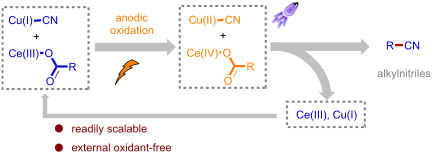
- efficiency. Results and Discussion Our study of this new electrophotochemical metal-catalyzed decarboxylative cyanation commenced with the evaluation of various combinations of Ce and Cu catalysts. A simple undivided cell using a carbon felt, inexpensive and practical porous material as the anode, and a Pt
- success of this transformation (Table 1, entries 6–9). We also tested other photoredox catalysts that are capable of driving the oxidative decarboxylation, only Fukuzumi catalyst [47] was able to deliver the product with a meaningful yield (Table 1, entry 10). The scope of this transformation was next


Synthesis of 2-benzyl N-substituted anilines via imine condensation–isoaromatization of (E)-2-arylidene-3-cyclohexenones and primary amines
Beilstein J. Org. Chem. 2024, 20, 1468–1475, doi:10.3762/bjoc.20.130
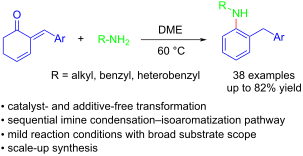
- acceptable to high yields. Mild reaction conditions, no requirement of metal catalysts, operational simplicity and the potential for scale-up production are some of the highlighted advantages of this transformation. Keywords: aniline; (E)-2-arylidene-3-cyclohexenone; imine condensation; isoaromatization
- -benzylidenecyclohex-3-en-1-one (2a) and 4-methoxybenzylamine (3a) as starting materials to investigate the feasibility and efficiency of the reaction (Table 1). Initially, the reaction was conducted in the presence of 2.0 equiv of 3a in toluene at 60 °C without any addition of catalysts or additives. To our delight
- , 2a could be fully converted and the 2-benzylaniline 4aa was obtained in 52% yield after 46 h (Table 1, entry 1). Some commonly used acid catalysts were tested, however, neither Brønsted acids such as AcOH and TsOH, nor Lewis acids such as FeCl3 and BF3·Et2O, showed a promoting effect on the aimed


A comparison of structure, bonding and non-covalent interactions of aryl halide and diarylhalonium halogen-bond donors
Beilstein J. Org. Chem. 2024, 20, 1428–1435, doi:10.3762/bjoc.20.125
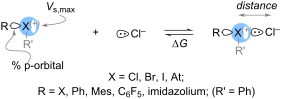
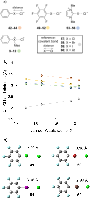
- of cationic monovalent halogen-bond donors 37–40 with chloride as the imidazolium iodide is a well-established core of halogen-bonding catalysts [34][35] (Scheme 3). In general, we observed that more exergonic association of the halogen-bond donors with chloride were associated with closer X---Cl




Hypervalent iodine-catalyzed amide and alkene coupling enabled by lithium salt activation
Beilstein J. Org. Chem. 2024, 20, 1405–1411, doi:10.3762/bjoc.20.122

- development of chiral hypervalent iodines by Wirth, Kita, Ishihara, Muñiz, and many others, have firmly established these reagents as useful catalysts for a wide variety of chemical transformations [6][7][8][9][10][11][12][13][14][15][16][17]. A number of features, including low toxicity, high stability, ease
- of handling, and versatile reactivity, etc. render these catalysts highly attractive for adoption in organic synthesis. In particular, the field of olefin difunctionalization, known for its rapid assembly of molecular complexity, has been a fertile ground for innovation for hypervalent iodine
- alkenes regioselectively to furnish their respective oxazoline regioisomer (Scheme 1d). Herein, we report that lithium salts such as LiBF4 or LiPF6, which are often used in lithium-ion batteries, can be used to activate hypervalent iodine catalysts to enable olefin oxyamination reactions with simple



Synthetic applications of the Cannizzaro reaction
Beilstein J. Org. Chem. 2024, 20, 1376–1395, doi:10.3762/bjoc.20.120
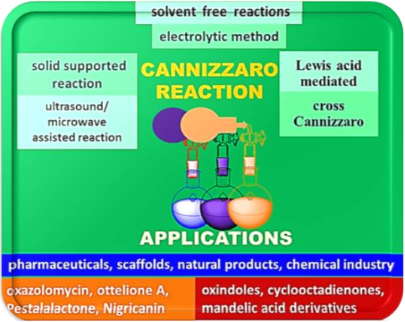
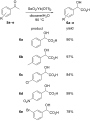
- KSF clays as recyclable and heterogeneous catalysts to catalyze the Cannizzaro reaction by 1,4-diazabicyclo[2.2.2]octane under microwave irradiation and solvent-free conditions giving the products in excellent yields within seconds. The solid clay applied in the first cycle can be recovered and reused
- different phase-transfer reagents and catalysts such as benzyltriethylammonium chloride, tetrabutylammonium bromide and many others have had profound impacts on the Cannizzaro reaction. Entezari and Shameli [27] studied the effect of an ultrasonic wave on the Cannizzaro reaction catalyzed by a phase
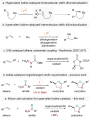
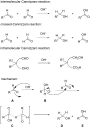
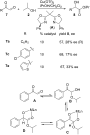
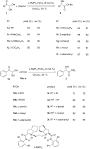
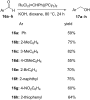
- numerous modified techniques, which established the greener side of the reaction. The use of Lewis acid catalysis in this regard [34][35][36][37][38][39] played a significant role, which also suppressed the epimerization in the case of chiral molecules. Among the various Lewis acid catalysts such as








Generation of alkyl and acyl radicals by visible-light photoredox catalysis: direct activation of C–O bonds in organic transformations
Beilstein J. Org. Chem. 2024, 20, 1348–1375, doi:10.3762/bjoc.20.119
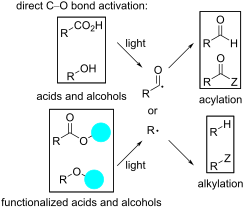
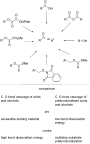
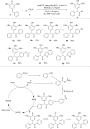
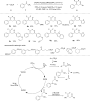
- photocatalysts, transition-metal photoredox catalysts, and metallaphotocatalysts to produce acyl and alkyl radicals driven by visible light. Keywords: acyl radical; alkyl radical; sustainable catalysis; visible light; Introduction The growing awareness of the necessity for sustainable developments has been
- of novel synthetic strategies. It has expanded the scope of available synthetic methods and contributed to the synthesis of complex molecules with high efficiency and selectivity. Ongoing research in this field continues to explore new catalysts, photosensitizers, and reaction mechanisms to further
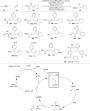
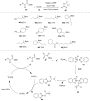
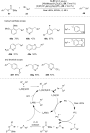
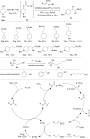
- side product 85 was transformed into the aldehyde by acidic workup. Conclusion The techniques, catalysts, and mechanistic analyses of homogeneous catalytic deoxygenation processes for high-value products have advanced significantly over the last few years. This review presents an extensive overview of








Rhodium-catalyzed homo-coupling reaction of aryl Grignard reagents and its application for the synthesis of an integrin inhibitor
Beilstein J. Org. Chem. 2024, 20, 1341–1347, doi:10.3762/bjoc.20.118
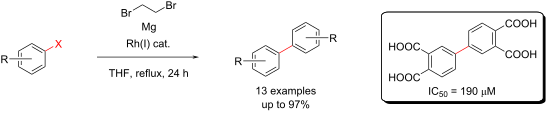
- . Therefore, alternative procedures for homo-coupling reactions using other transition-metal catalysts such as palladium, nickel, manganese, and iron have been developed [5][6][7][8][9][10][11][12][13]. In recent years, transition-metal-free coupling reactions have also been developed for environmentally
- reaction mixture (Table 1, entry 10). Next, we investigated various Rh catalysts and solvents, and the results are summarized in Table 2. All Rh catalysts that were examined in this reaction gave the product in good yields, although in the absence of a Rh catalyst the reaction failed as shown in Table 2
- Grignard reagents. Rh-catalyzed one-pot Ullmann-type reaction with bromobenzene under optimized reaction conditions. Synthesis of compound 10n as a candidate for an integrin inhibitor. Examination of various alkyl halides as an oxidant. Examination of various Rh catalysts and solvents. Supporting


Transition-metal-catalyst-free electroreductive alkene hydroarylation with aryl halides under visible-light irradiation
Beilstein J. Org. Chem. 2024, 20, 1327–1333, doi:10.3762/bjoc.20.116
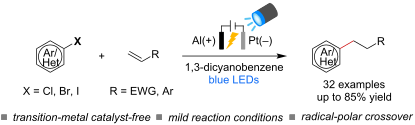
- by preventing overreduction [39]. While the metal-catalyst-free radical cyclization of alkene-tethered aryl halides has been well documented in the literature [40][41][42][43], the efficient intermolecular hydroarylation of alkenes still relies on the use of transition-metal catalysts, including Pd
- , including aryl chlorides, by employing 1,3-DCB under visible-light irradiation. The present transformation proceeded smoothly in a common organic solvent without transition-metal catalysts, and hydroarylation products were obtained from a variety of electron-deficient alkenes and styrene derivatives in good


Sustainable tandem acylation/Diels–Alder reaction toward versatile tricyclic epoxyisoindole-7-carboxylic acids in renewable green solvents
Beilstein J. Org. Chem. 2024, 20, 1308–1319, doi:10.3762/bjoc.20.114
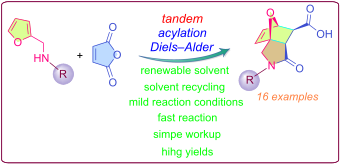
- developed in this study, isolated double bonds in the fatty acid chains in sunflower oil do not undergo a side ene reaction with maleic anhydride, which requires high temperatures and/or metal catalysts, since the IMDAF reaction can be performed at 50 ºC or room temperature (Scheme 2) [125][126]. The olefin


Phenotellurazine redox catalysts: elements of design for radical cross-dehydrogenative coupling reactions
Beilstein J. Org. Chem. 2024, 20, 1292–1297, doi:10.3762/bjoc.20.112
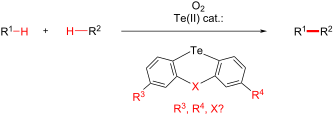
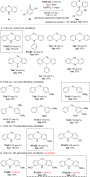
- Alina Paffen Christopher Cremer Frederic W. Patureau Institute of Organic Chemistry, RWTH Aachen University, Landoltweg 1, 52074 Aachen, Germany 10.3762/bjoc.20.112 Abstract Redox active phenotellurazine catalysts have been recently utilized in two different cross-dehydrogenative coupling
- reactions. In this study, we revisit the design of the phenotellurazine redox catalysts. In particular, we investigate the level of cooperativity between the Te- and N-centers, the effect of secondary versus tertiary N-centers, the effect of heterocyclic versus non-heterocyclic structures, and the effect of
- reaction [6][7], and Gabbaï yet another in a different cyclization reaction [8][9], among other catalytic chalcogen bonding activation examples [10][11][12][13][14][15][16][17][18][19][20][21][22][23][24][25][26][27][28][29]. In contrast, we have reported recently some redox-active Te-based catalysts



Mechanistic investigations of polyaza[7]helicene in photoredox and energy transfer catalysis
Beilstein J. Org. Chem. 2024, 20, 1236–1245, doi:10.3762/bjoc.20.106
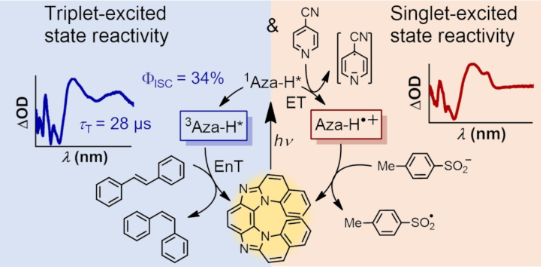
- ][13][14][15]. Most of the established organic catalysts (acridinium salts [16][17][18][19], cyanoarenes [8][20][21][22], quinones [23][24], etc.) [10][25] are cationic or electron-deficient and tend to act as excited state oxidants in a reductive quenching cycle. Only recently, more reducing catalyst
- classes have been investigated, including second-generation cyanoarenes [8], arylamines [26], phenothiazines, phenazines and phenoxazines [9][27][28], which can act as excited state reductants comparable to precious metal-based photoredox catalysts. Singlet-excited organic chromophores often have short
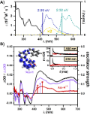
- triplet reactivity of the Aza-H photocatalyst through spectroscopic measurements. The careful characterization of the versatile Aza-H photochemistry might contribute to the development of a new class of photoactive catalysts that can compete with traditional metal complexes and well-known organic




Competing electrophilic substitution and oxidative polymerization of arylamines with selenium dioxide
Beilstein J. Org. Chem. 2024, 20, 1221–1235, doi:10.3762/bjoc.20.105
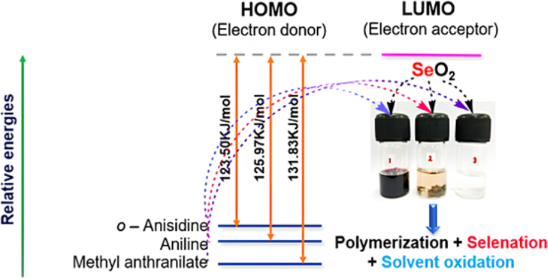
- . have very recently reported the synthesis of the black solid 4,4'-selenodianiline without the use of catalysts, preactivation, or any blocking groups (Scheme 1) [37]. In contrast, Kim et al., utilizing a CuI-catalyzed reaction [38], have reported that 4,4'-selenodianiline is a pale brown solid, which


Introduction of peripheral nitrogen atoms to cyclo-meta-phenylenes
Beilstein J. Org. Chem. 2024, 20, 1207–1212, doi:10.3762/bjoc.20.103
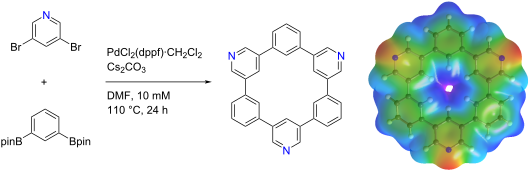
- . However, a MALDI-TOF MS analysis of the crude mixture showed that macrocyclisation did not complete to afford a complex mixture containing noncyclic, linear oligomers (Figure S1, Supporting Information File 1). After examining the Pd-catalysts, we found that macrocyclisation with PdCl2(dppf)·CH2Cl2 worked



Bismuth(III) triflate: an economical and environmentally friendly catalyst for the Nazarov reaction
Beilstein J. Org. Chem. 2024, 20, 1167–1178, doi:10.3762/bjoc.20.99
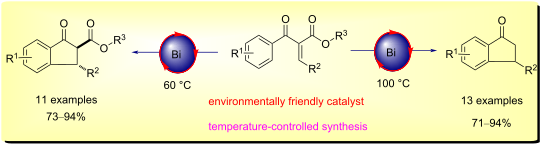
- , Dhoro and Tius demonstrated that weak acids could also be used as efficient catalysts for the Nazarov reaction [24]. In this context, some research groups developed methodologies that allowed the use of a catalytic amount of Lewis acid. By using more reactive divinyl ketone derivatives, the
- use of Lewis acids sensitive to moisture [2][27][28][30][31][33][34][36][40][41][42][43][46][47][48][49]. Despite the numerous reports on catalytic versions of the Nazarov reaction, few of them describe the use of bismuth salts as catalysts for Nazarov-type reactions [50][51] and none for the
- increased to 93%, in addition to a marked decrease in the reaction time (Table 1, entry 3). Despite this excellent result, we continued to evaluate other catalysts to improve the yield and reaction time further. For this purpose, a series of Lewis acids, such as Bi(NO)3, BiBr3, BiCl3, Yt(OTf)3, Dy(OTf)3


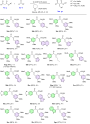
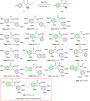
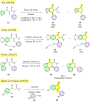


Manganese-catalyzed C–C and C–N bond formation with alcohols via borrowing hydrogen or hydrogen auto-transfer
Beilstein J. Org. Chem. 2024, 20, 1111–1166, doi:10.3762/bjoc.20.98
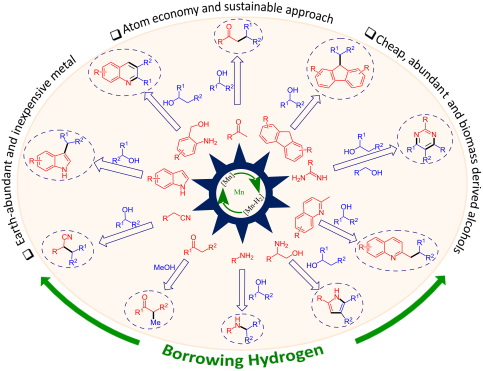
- reactions allow the sustainable construction of C–C and C–N bonds using alcohols as hydrogen donors. In recent years, manganese complexes have been explored as efficient catalysts in these reactions. This review highlights the significant progress made in manganese-catalyzed C–C and C–N bond-formation
- reactions via hydrogen auto-transfer, emphasizing the importance of this methodology and manganese catalysts in sustainable synthesis strategies. Keywords: alcohols; alkylation; amines; borrowing hydrogen; hydrogen auto-transfer; manganese; Introduction The construction of C–C and C–N bonds is of utmost
- achieving both selective dehydrogenation and hydrogenation is highly important. A typical BH process is demonstrated in Scheme 1. Several precious transition-metal catalysts have been used successfully in this area, including iridium, rhodium, ruthenium, and osmium [4]. However, these noble metals are toxic









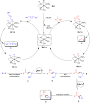


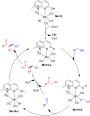


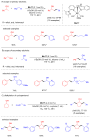

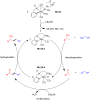









Auxiliary strategy for the general and practical synthesis of diaryliodonium(III) salts with diverse organocarboxylate counterions
Beilstein J. Org. Chem. 2024, 20, 1020–1028, doi:10.3762/bjoc.20.90
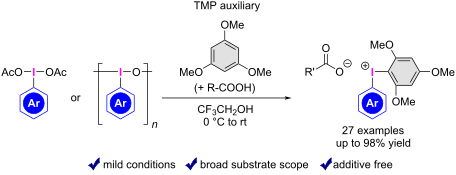
- are versatile reagents that exhibit a range of reactions, both in the presence and absence of metal catalysts. In this study, we developed efficient synthetic methods for the preparation of aryl(TMP)iodonium(III) carboxylates, by reaction of (diacetoxyiodo)arenes or iodosoarenes with 1,3,5
- presence or absence of transition metal catalysts under thermal or photochemical conditions [2][3][4][5]. Furthermore, these compounds have practical applications in the synthesis of radiochemicals utilized in positron emission tomography (PET) imaging [6], as well as serving as photoacid generators for


Carbonylative synthesis and functionalization of indoles
Beilstein J. Org. Chem. 2024, 20, 973–1000, doi:10.3762/bjoc.20.87
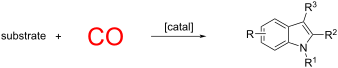
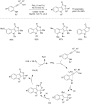
- %, respectively) in methanol under 90 bar of CO at 100 °C for two hours (Scheme 6). As already seen, triple bonds can be activated by Pd(II) catalysts towards the addition of nucleophiles in the right position, leading to heterocyclization reactions. Taking advantage of this possibility, in the Della Cá group, a
- conditions (200 °C and 80 bar CO) for 5 hours in the presence of catalysts such as Fe(CO)5, Ru3(CO)12, or Rh6(CO)16 [21]. The process was not selective because aniline derivatives and other byproducts were also formed; moreover, the substrate conversion, in some cases, was not complete (Scheme 8). In
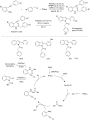
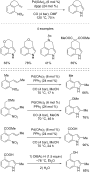
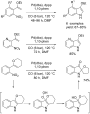
- as ligand, because it was already known that catalysts derived from palladium(II) salts and bidentate nitrogen ligands were highly reactive systems for the reduction of o-nitrostyrenes [28][29][30]. The catalytic system Pd(OAc)2/1,10-phen worked better than Söderberg´s one (Pd(OAc)2/PPh3) under mild