


Search results
Search for "couplings" in Full Text gives 311 result(s) in Beilstein Journal of Organic Chemistry. Showing first 200.
Position-dependent impact of hexafluoroleucine and trifluoroisoleucine on protease digestion
Beilstein J. Org. Chem. 2017, 13, 2869–2882, doi:10.3762/bjoc.13.279
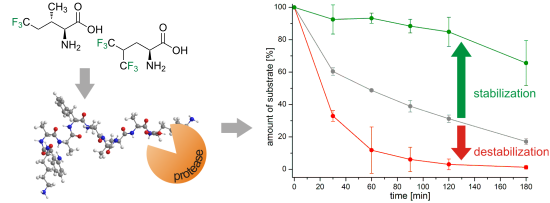
- support by means of an Fmoc/tert-butyl protecting group strategy on a preloaded Fmoc-Lys(Boc)Wang resin (0.57 mmol/g loading) using 10 mL polypropylene reactors. HfLeu containing peptides were synthesized with an Activo-P11 automated peptide synthesizer (Activotec, Cambridge, United Kingdom). Couplings of
- non-fluorinated amino acids were performed in dimethylformamide (DMF) with the Fmoc-L-amino acid, 1-hydroxybenzotriazole (HOBt) and N,N’-diisocarbodiimide (DIC) in an eight-fold excess with respect to the resin amount. In order to ensure completion of the reaction the couplings were performed twice


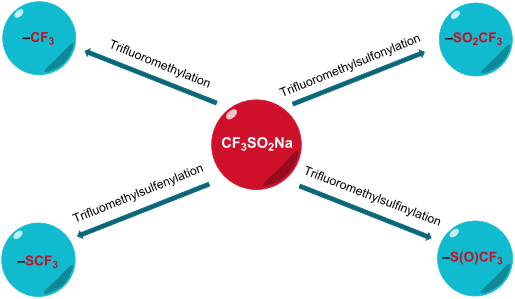
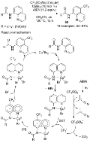
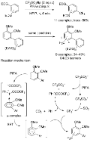
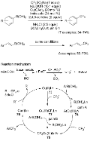
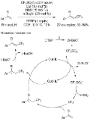
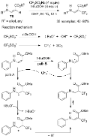
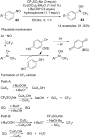
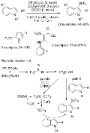
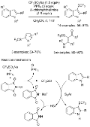
CF3SO2X (X = Na, Cl) as reagents for trifluoromethylation, trifluoromethylsulfenyl-, -sulfinyl- and -sulfonylation. Part 1: Use of CF3SO2Na
Beilstein J. Org. Chem. 2017, 13, 2764–2799, doi:10.3762/bjoc.13.272



















Synthesis of 1,3-cis-disubstituted sterically encumbered imidazolidinone organocatalysts
Beilstein J. Org. Chem. 2017, 13, 2577–2583, doi:10.3762/bjoc.13.254
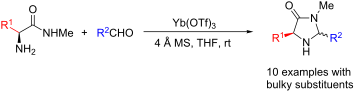
- accessible from amino acids, are widely used in these kinds of reactions [13][14][15][16][17][18]. More recent examples demonstrate the applicability in various reactions like diastereoselective α-fluorination [19], total syntheses [20][21], cross-dehydrogenative couplings [22], selectivity-reversed Friedel


15N-Labelling and structure determination of adamantylated azolo-azines in solution
Beilstein J. Org. Chem. 2017, 13, 2535–2548, doi:10.3762/bjoc.13.250
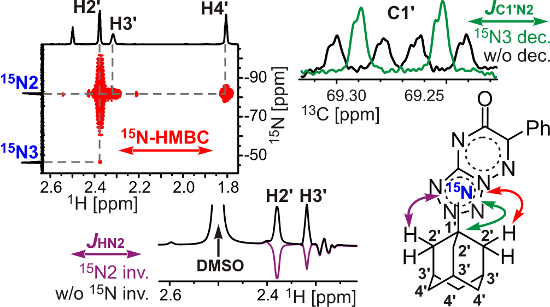
- of the azolo-1,2,4-triazines. The combined analysis of the JHN and JCN couplings in 15N-labelled compounds provides an efficient method for the structure determination of N-alkylated azolo-azines even in the case of isomer formation. The isomerization of adamantylated tetrazolo[1,5-b][1,2,4]triazin-7
- the most efficient way to measure JHN couplings [24]. Previously, the incorporation of a single 15N label in position 1 of the 1,2,4-triazole fragment of compounds 5 and 6 and analysis of the JCN couplings permitted the unambiguous identification of the structures of the N3-adamantylated derivatives
- ]pyrimidin-7-one and the N-adamantylation of the obtained compounds. The combined analysis of the JCN and JHN couplings permitted the straightforward determination of the adamantylation sites in these azolo-azines, even when a mixture of regioisomers is formed. Results Synthesis. Derivatives of 1,2,4





A mechanochemical approach to access the proline–proline diketopiperazine framework
Beilstein J. Org. Chem. 2017, 13, 2169–2178, doi:10.3762/bjoc.13.217
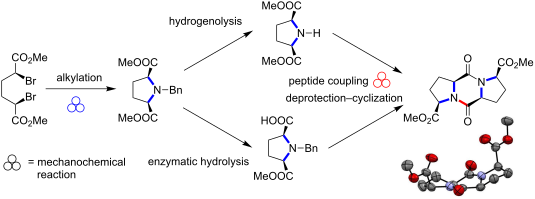
- alternative approach, we tested the optimal conditions developed previously for peptide mechanosynthesis [25], starting with unactivated amino acids together with a coupling agent. We had indeed reported two successful examples of couplings involving proline amino esters. The initial conditions, using 1-ethyl


Synthesis of substituted Z-styrenes by Hiyama-type coupling of oxasilacycloalkenes: application to the synthesis of a 1-benzoxocane
Beilstein J. Org. Chem. 2017, 13, 2122–2127, doi:10.3762/bjoc.13.209
- ]. Developed somewhat later than the aforementioned methods and the couplings of organomagnesium and organotin reagents was the cross-coupling of silanes, pioneered by Hiyama [3][4] and siloxanes [5]. This versatile method has been extensively reviewed [6][7][8]. The cross-coupling of alkenyl silanols [9][10
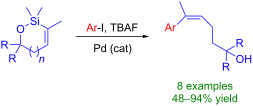
- . The siloxanes 8 participated efficiently in Hiyama-type cross-couplings with aryl iodides in the presence of Pd2(dba)3 catalyst and tetrabutylammonium fluoride (TBAF, Table 1). Both electron-rich (Table 1, entries 1, 2, and 7) and electron-poor (Table 1, entries 5 and 6) iodides give coupled products
- established in applying the Buchwald–Hartwig coupling to 15, producing the benzoxocane 24, which contains the carbon skeleton of heliannuol A. Retrosynthetic analysis of heliannuol A. Hydrosilylation of alkynols. Hydrogenation of benzoxocane 24. Pd-catalyzed couplings of oxasilacycloalkenes with aryl iodides


New bio-nanocomposites based on iron oxides and polysaccharides applied to oxidation and alkylation reactions
Beilstein J. Org. Chem. 2017, 13, 1982–1993, doi:10.3762/bjoc.13.194
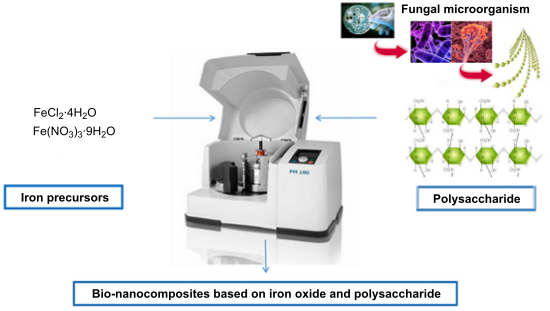
- applications in heterogeneous catalysis [10][11][12][13][14]. Transition metal and metal oxide nanoparticles have been reported to be highly active and selective in several processes, such as redox [15][16][17], C–C and C–heteroatom couplings [18][19]. In particular, iron oxide nanoparticles have been the


An efficient Pd–NHC catalyst system in situ generated from Na2PdCl4 and PEG-functionalized imidazolium salts for Mizoroki–Heck reactions in water
Beilstein J. Org. Chem. 2017, 13, 1735–1744, doi:10.3762/bjoc.13.168
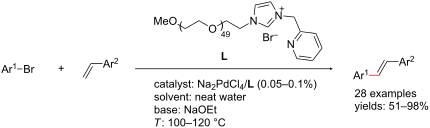
- alkenes were obtained in good to excellent yields using the Na2PdCl4/L1 catalyst system with only a 0.05–0.1 mol % palladium loading. To the best of our knowledge, the catalyst loading in the current report for aqueous Mizoroki–Heck couplings of aryl bromides is much lower than other previously reported


Encaging palladium(0) in layered double hydroxide: A sustainable catalyst for solvent-free and ligand-free Heck reaction in a ball mill
Beilstein J. Org. Chem. 2017, 13, 1661–1668, doi:10.3762/bjoc.13.160
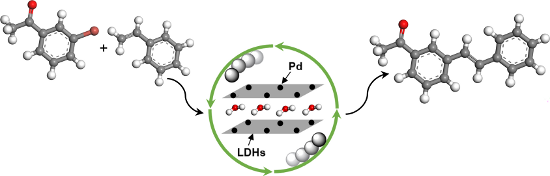
- and promote the reaction efficiently. Furthermore, the couplings of heteroaryl bromides (1m–o) and styrene (2a) as well as substituted bromobenzene (1i) and butyl acrylate (2f, 2g) were investigated to extend the scope and generality of the reaction. The results clearly demonstrate that all the


Chemical systems, chemical contiguity and the emergence of life
Beilstein J. Org. Chem. 2017, 13, 1551–1563, doi:10.3762/bjoc.13.155
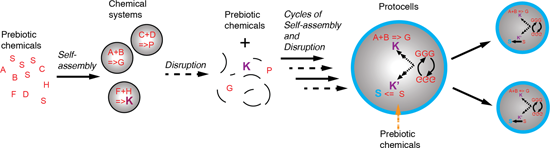
- approach have already yielded some noteworthy successes, which augur rather well for the future of the field. Indeed, the integration of the various components of presumptive pre-cellular entities within single chemical models have led to the discovery of new dynamic couplings between chemicals within a


Direct catalytic arylation of heteroarenes with meso-bromophenyl-substituted porphyrins
Beilstein J. Org. Chem. 2017, 13, 1524–1532, doi:10.3762/bjoc.13.152
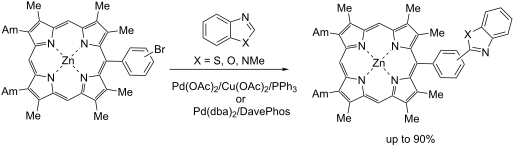
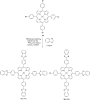
- ][11], Suzuki–Miyaura [12][13][14][15] and Stille couplings [16][17][18][19][20][21][22] were successfully applied for this purpose. Direct arylation and alkenylation are modern approaches for the formation of C–C bonds, and the application of these methodologies to porphyrins was widely studied by


Framing major prebiotic transitions as stages of protocell development: three challenges for origins-of-life research
Beilstein J. Org. Chem. 2017, 13, 1388–1395, doi:10.3762/bjoc.13.135
- chemistry, fortunately, is very rich in terms of possibilities for coupling different types of processes and, thereby, its careful exploration is bound to lead us towards proper proto-cellular and proto-metabolic systems (‘a-to-b’ transition in Figure 1). In addition to direct reaction couplings and
- ]), or the dynamic changes they could provoke in the conditions under which the chemistry takes place (e.g., their capacity to generate pH gradients during growth [53] or the ‘osmotic couplings’ they may induce among internal molecular species via volume changes [54]). In any case, all these projected or
- -up synthetic-biology example of how this can be approached, see [55]. Challenge 2: finding conditions and mechanisms for minimal functional integration. A focused search for the specific experimental conditions and the set of molecular interaction mechanisms (physicochemical couplings) that lead to

Synthesis of oligonucleotides on a soluble support
Beilstein J. Org. Chem. 2017, 13, 1368–1387, doi:10.3762/bjoc.13.134
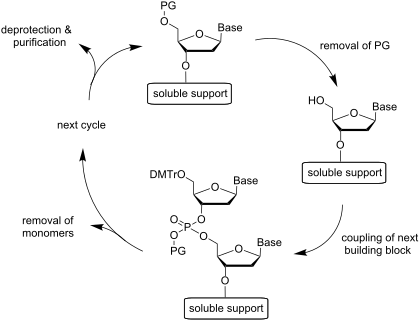
- carbocation, prolonged heating of the oily residue was avoided. Precipitation from MeOH quantitatively removed the traces of the DMTr carbocation as a methyl ether. Couplings were carried out in a 1:1 (v/v) mixture of DMF and MeCN using standard phosphoramidite building blocks (1.5 equiv) and 4,5
- extraction with water. The couplings were carried out with 1.5 equiv of standard 2-cyanoethyl-N,N-diisopropylphosphoramidites in THF or MeCN, using DCI as an activator. Unreacted phosphoramidites were quenched by EtOH and the support was precipitated before the oxidation step, repeatedly when needed. The
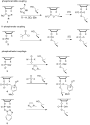
- succinyl linker, detritylated with DCA in DCM and precipitated and washed with Et2O (Scheme 12). 3´-(2-Cyanoethyl H-phosphonate)s of 5´-O-DMTr-2´-deoxyribonucleosides were then used as synthons for the chain elongation. The oxidative couplings were carried out in a 4:1 (v/v) mixture of MeCN and Et3N using




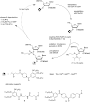


Synthesis of novel 13α-estrone derivatives by Sonogashira coupling as potential 17β-HSD1 inhibitors
Beilstein J. Org. Chem. 2017, 13, 1303–1309, doi:10.3762/bjoc.13.126
- -catalyzed C–C coupling reactions. Some Sonogashira couplings on estrane, but not on the 13α-estrane core have been performed at C-2, -3, -11, -16 and -17. To the best of our knowledge, 4-coupled regioisomers have not been synthesized to date [19]. Couplings of steroidal alkynes with small molecular halides
- are already described, and reactions of steroidal halides or triflates with small molecular alkynes also exist [20]. Certain phenethynyl estrone derivatives described in the literature possess substantial biological activities. Möller et al. performed the couplings of 2-iodoestrone-3-acetate with
- starting materials for the Sonogashira couplings, since the reactivity of the aryl iodides is higher than that of their bromo counterparts (Scheme 1) [22]. The optimizations of the coupling reactions were carried out using phenylacetylene (7a) as a model reagent. The optimal reaction conditions were found


Synthesis of tetrasubstituted pyrazoles containing pyridinyl substituents
Beilstein J. Org. Chem. 2017, 13, 895–902, doi:10.3762/bjoc.13.90
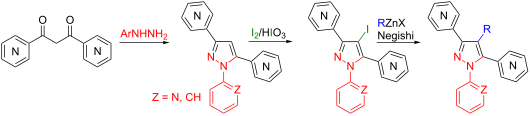
- the main product, but also containing biphenyl, traces of the desired product 6a, the homocoupling dimer 7a as well as a compound 8, obviously resulting from attack of PhLi to the pyridine system attached to pyrazole N-1 (Scheme 4). Negishi cross-couplings with 4-iodopyrazoles 3a–d The Negishi cross
- –halogen exchange and subsequent carboxylation with iodopyrazoles 3a–d. Attempted cross-coupling reactions with 4-halopyrazoles 5 and 3a. Negishi couplings with 4-iodopyrazoles 3a,b. Formation of pyrazoloquinolizin-6-ium iodide 12 upon reaction of 3a with (phenylethynyl)zinc bromide. Prototropic


Secondary metabolome and its defensive role in the aeolidoidean Phyllodesmium longicirrum, (Gastropoda, Heterobranchia, Nudibranchia)
Beilstein J. Org. Chem. 2017, 13, 502–519, doi:10.3762/bjoc.13.50
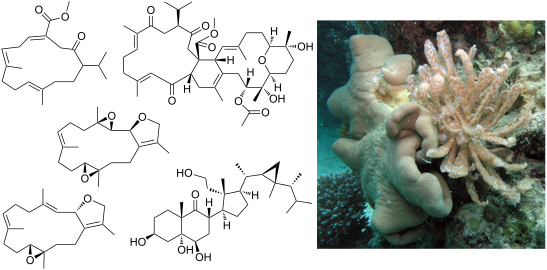
- spin system A was established . Two further smaller fragments were established via COSY correlations from H-5 to H-7 (B), and from H-9 to H-11 (C). These subunits could be assigned to a 14-membered cembrane skeleton according to couplings detected in the HMBC experiment. Key heteronuclear long range



Biosynthetic origin of butyrolactol A, an antifungal polyketide produced by a marine-derived Streptomyces
Beilstein J. Org. Chem. 2017, 13, 441–450, doi:10.3762/bjoc.13.47
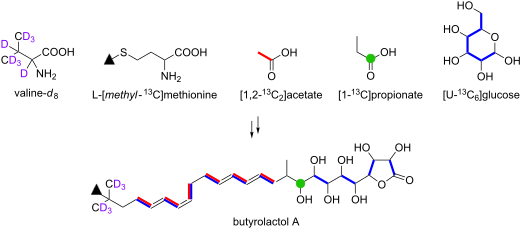
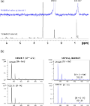
- malonate units. In the 13C NMR spectrum, split signals arising from 13C–13C couplings were observed for six pairs of carbons: C-11/C-12, C-13/C-14, C-15/C-16, C-17/C-18, C-19/C-20, and C-21/C-22 (Table 1, Figure S1 in Supporting Information File 1). In the 2D-INADEQUATE spectrum of 13C-labeled 1 obtained
- investigate this possibility, we conducted a feeding experiment of [U-13C6]glucose which could label carbons derived from malonyl-CoA and hydroxymalonyl-ACP. In the 13C NMR spectrum, 13C–13C couplings were observed for C-1/C-2, C-3/C-4, C-5/C-6, C-7/C-8 in addition to the carbon pairs C-11/C-12, C-13/C-14, C



Decarboxylative and dehydrative coupling of dienoic acids and pentadienyl alcohols to form 1,3,6,8-tetraenes
Beilstein J. Org. Chem. 2017, 13, 384–392, doi:10.3762/bjoc.13.41
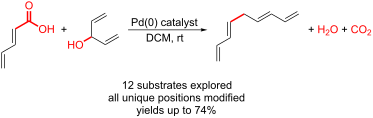
- . Prior and current decarboxylative couplings. Esters examined in the decarboxylation reaction. Possible mechanistic pathways. Optimization of the one-component decarboxylation reaction.a Optimization of the two-component decarboxylation reaction.a Substrate scope for the two-component decarboxylation


Highly bulky and stable geometry-constrained iminopyridines: Synthesis, structure and application in Pd-catalyzed Suzuki coupling of aryl chlorides
Beilstein J. Org. Chem. 2017, 13, 213–221, doi:10.3762/bjoc.13.24
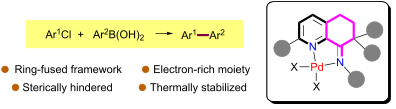
- showed a good catalytic efficiency for both Suzuki and Heck cross-coupling reactions. The favorable effect originated from the ring-fused framework being able to establish a strained environment for better stability. Efficient couplings were achieved with aryl bromides or iodides as substrates, however


Dynamics and interactions of ibuprofen in cyclodextrin nanosponges by solid-state NMR spectroscopy
Beilstein J. Org. Chem. 2017, 13, 182–194, doi:10.3762/bjoc.13.21
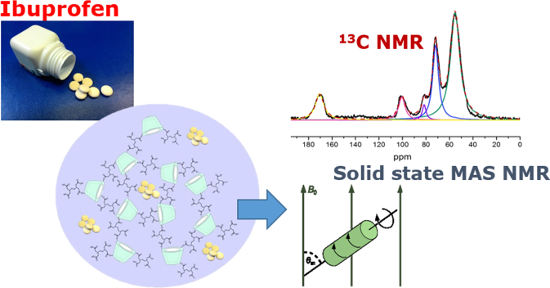
- couplings [14]. In the opposite case, i.e., when weak I*−S and strong I−I* couplings are present, the CP kinetics follow the more general I−S model. As a final remark, we wish to stress that the oscillatory behaviour described above has not been reported frequently so far, and that the data reported and
- discussed in the following of this work represent an example. Results and Discussion Solid-state NMR 1H MAS NMR spectroscopy 1H high-resolution spectra of small organic molecules, characterised by the isotropic chemical shift and J couplings, are easily obtained in solution. By contrast, for rigid solids
- , the corresponding solid-state 1H NMR spectrum generally shows broad, featureless lines due to the strong homonuclear dipolar couplings among protons, which in many cases exceed the range of chemical shifts. Consequently, solid-state 1H NMR spectra are seldom reported, the assignment of the 1H


Silyl-protective groups influencing the reactivity and selectivity in glycosylations
Beilstein J. Org. Chem. 2017, 13, 93–105, doi:10.3762/bjoc.13.12

- unsuccessful. NMR studies of 1 revealed that the compound adopted a skew-boat conformation, based on the small 3J coupling constants, as well as long range w-couplings. This conformational flip is induced by the presence of the bulky trans-vicinal silyl groups [6]. Also with the purpose of having acid-labile


Iodination of carbohydrate-derived 1,2-oxazines to enantiopure 5-iodo-3,6-dihydro-2H-1,2-oxazines and subsequent palladium-catalyzed cross-coupling reactions
Beilstein J. Org. Chem. 2016, 12, 2898–2905, doi:10.3762/bjoc.12.289
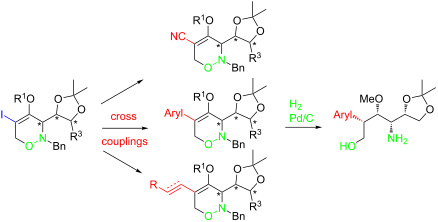
- coupling. For this purpose, we selected (trimethylsilyl)acetylene as alkyne component. The Sonogashira couplings of 5-iodo-1,2-oxazines syn-4a and anti-4a were carried out under standard conditions using a catalytic system consisting of PdCl2(PPh3)2, CuI and triethylamine in toluene at room temperature to
- transformation was considerably improved when an alternative coupling protocol (Pd(OAc)2, PPh3, CuI in NEt3/DMF) was employed, the yield was significantly enhanced and the coupling product anti-6 was obtained in 59% yield. Sonogashira couplings of 4-benzyloxy- and 4-(2-trimethylsilyl)ethoxy-substituted 1,2
- component in other Sonogashira couplings presented in former publications [23][32]. The reaction of syn-4a and alkyne 10 using palladium acetate, triphenylphosphine, and copper(I) iodide in a solvent mixture of diisopropylamine and DMF at room temperature gave the 5-(imidazolylethynyl)-substituted 1,2


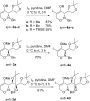


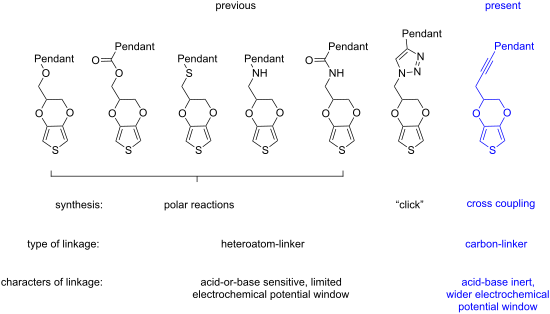
A versatile route to polythiophenes with functional pendant groups using alkyne chemistry
Beilstein J. Org. Chem. 2016, 12, 2682–2688, doi:10.3762/bjoc.12.265
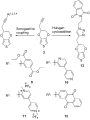
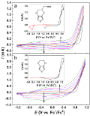
- the nitrogen atom. As shown by our synthesis, all of these electron acceptor units were tolerant to Sonogashira coupling conditions, which produced new EDOT derivatives 9, 10, 11 and 12 (Scheme 4). The Sonogashira couplings were performed between the alkyne terminal of pyEDOT and a brominated ring


From betaines to anionic N-heterocyclic carbenes. Borane, gold, rhodium, and nickel complexes starting from an imidazoliumphenolate and its carbene tautomer
Beilstein J. Org. Chem. 2016, 12, 2673–2681, doi:10.3762/bjoc.12.264
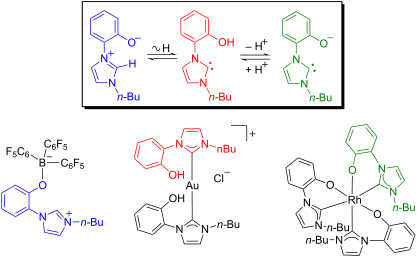
- = 749.2 which corresponds to the molecular peak of a [Rh(7)3 + H]+ complex. In the 13C NMR spectra, the Ccarbene resonance frequencies were detected at 173.5 ppm, 171.0 ppm, and 164.4 ppm and have been identified by their 1JRhCcarbene couplings of 35.6 Hz, 35.6 Hz, and 48.5 Hz, respectively. These




Inhibition of peptide aggregation by means of enzymatic phosphorylation
Beilstein J. Org. Chem. 2016, 12, 2462–2470, doi:10.3762/bjoc.12.240
- according to standard Fmoc chemistry using preloaded Fmoc-Leu-NovaSyn®TGA resin (0.3 mmol g−1, Novabiochem). Standard couplings were performed in DMF with Fmoc-amino acids and TBTU (O-(benzotriazole-1-yl)-N,N,N’,N’-tetramethyluronium tetrafluoroborate)/HOBt (1-hydroxybenzotriazole)/DIC (N,N
- ’-diisopropylcarbodiimide) in eight-fold and NaClO4 in ten-fold excess with double couplings of one hour coupling time. Fmoc-Ser(PO(OBzl)OH)-OH was activated with HATU (O-(7-azabenzotriazol-1-yl)-N,N,N’,N’-tetramethyluronium hexafluorophosphate)/HOBt five-fold and fifteen-fold excess of DIPEA (N,N-diisopropylethylamine
- ) with respect to the resin and two hour double couplings. A mixture of DBU (1,8-diazabicyclo[5,4,0]undec-7-ene) and piperidine (2% each) in DMF was used for Fmoc-deprotection (3 × 10 min). The resin was washed between each step with DMF and DCM (3 × 6 mL each). Peptides were cleaved from the resin by





