


Search results
Search for "cross-coupling reactions" in Full Text gives 308 result(s) in Beilstein Journal of Organic Chemistry. Showing first 200.
Development of a fluorogenic small substrate for dipeptidyl peptidase-4
Beilstein J. Org. Chem. 2017, 13, 2690–2697, doi:10.3762/bjoc.13.267
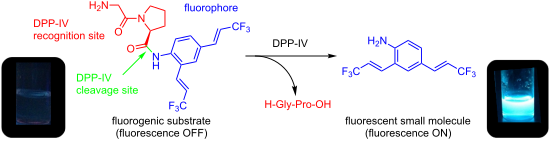
- groups. The data in Table 1 show that Hiyama cross-coupling reactions gave the desired TFPE-anilines and TFPE-phenylenediamines (1–4) in moderate to good yields. This method has the advantage that complete substitution of diiodo- and triiodoarenes can proceed to give disubstituted (1 and 3) and
- on addition of DPP-4. Use of 1 as fluorogenic probe for DPP-4 activity. Synthesis of fluorogenic probe H-Gly-Pro-1. Synthesis of TFPE-anilines 1–4 via Hiyama cross-coupling reactions of iodoanilines with (E)-trimethyl(3,3,3-trifluoroprop-1-enyl)silane.a UV–vis absorption and fluorescence data for 1–4
- fluorophore structure. This suggests that substitution with TFPE would be a reasonable approach to producing new fluorescent molecules. However, there are few methods for synthesizing TFPE-substituted compounds. In a previous study, we achieved the facile introduction of TFPE groups via Hiyama cross-coupling


Asymmetric synthesis of propargylamines as amino acid surrogates in peptidomimetics
Beilstein J. Org. Chem. 2017, 13, 2428–2441, doi:10.3762/bjoc.13.240
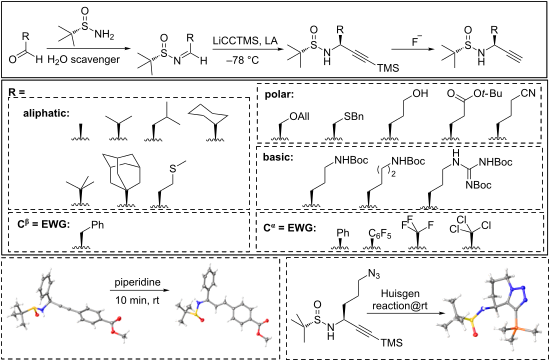
- ], gold-catalyzed azetidin-3-one formation [16], as well as various transition metal-mediated additions and cross-coupling reactions [17] represent further important reactions of propargylamines, providing the potential to form innovative peptidomimetics (Figure 2). Our attention has been focused on the
- , forming the scaffold of versatile peptidomimetics 11. According to the proposed rearrangement of alkyne 7 (Figure 9), the choice of base is crucial for such cross-coupling reactions. To get a better understanding of the reactivity of propargylamines, the stability and propensity for base induced


Structure–property relationships and third-order nonlinearities in diketopyrrolopyrrole based D–π–A–π–D molecules
Beilstein J. Org. Chem. 2017, 13, 2374–2384, doi:10.3762/bjoc.13.235
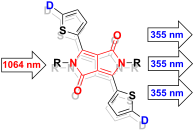
- Engineering, Czestochowa University of Technology, Armii Krajowej 17, Czestochowa, 42-200, Poland 10.3762/bjoc.13.235 Abstract Nine new quadrupolar chromophores based on diketopyrrolopyrrole were designed and prepared by cross-coupling reactions. The property tuning has been achieved by structural variation
- and its final cross-coupling reactions (Scheme 1). The construction of the DPP central scaffold 6 was accomplished by a well-known reaction between thiophene-2-carbonitrile and dimethyl succinate in the presence of sodium tert-amylalcoholate generated in situ [32]. The reaction provided 6 with a high
- 7 using a larger excess of NBS resulted in its decomposition. According to the current literature reports [18][19][27], DPP derivative 8 undergoes smooth cross-coupling reactions. Hence, we have utilized twofold Suzuki–Miyaura and Migita–Stille reactions leading to chromophores 1a–3a and 4a




Synthesis and application of trifluoroethoxy-substituted phthalocyanines and subphthalocyanines
Beilstein J. Org. Chem. 2017, 13, 2273–2296, doi:10.3762/bjoc.13.224
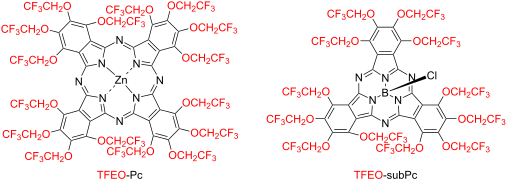
- ][91] or a peptide [92]. For example, TFEO-Pcs conjugated with peptides (15) have been reported [93]. A3B type TFEO-Pc was successfully condensed with peptides by palladium-catalyzed cross-coupling reactions in good yield (Scheme 5). These TFEO-Pc-peptide conjugates, which show a sharp Q band in the UV








Synthesis of substituted Z-styrenes by Hiyama-type coupling of oxasilacycloalkenes: application to the synthesis of a 1-benzoxocane
Beilstein J. Org. Chem. 2017, 13, 2122–2127, doi:10.3762/bjoc.13.209
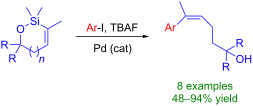
- James R. Vyvyan Courtney A. Engles Scott L. Bray Erik D. Wold Christopher L. Porter Mikhail O. Konev Department of Chemistry, Western Washington University, 516 High Street, Bellingham, WA 98225, USA 10.3762/bjoc.13.209 Abstract Several Hiyama cross-coupling reactions of oxasilacycloalkenes and


Ni nanoparticles on RGO as reusable heterogeneous catalyst: effect of Ni particle size and intermediate composite structures in C–S cross-coupling reaction
Beilstein J. Org. Chem. 2017, 13, 1796–1806, doi:10.3762/bjoc.13.174
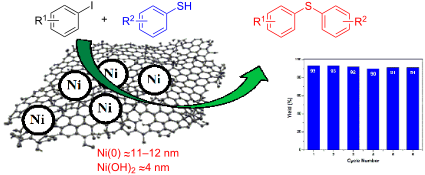
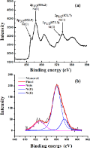
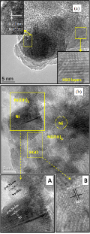
- catalyst. It is observed that the uniformly dispersed Ni NPs supported on RGO could exhibit excellent catalytic activity in C–S cross-coupling reactions and the catalytic application is generalized with diverse coupling partners. Although the electron-rich planar RGO surface helps in stabilizing the
- first palladium-catalyzed arylation of thiols was reported by Migita and co-workers in 1980 [5], and soon after Cristau and co-workers developed a nickel-catalyzed route for C–S cross-coupling reactions [6]. Other metals such as copper [7], cobalt [8], iron [9], rhodium [10], manganese [11], indium [12
- properties [14]. The Ni-catalyzed C–S cross-coupling reactions generally involved Ni salts [15][16][17][18], Ni–phosphine complexes [19][20][21], or Ni–NHC complexes [22][23], although the actual catalyst is believed to be a Ni(0)/Ni(I) species [16][17][18][19][20][21]. NiO supported on zirconia (NiO–ZrO2




An efficient Pd–NHC catalyst system in situ generated from Na2PdCl4 and PEG-functionalized imidazolium salts for Mizoroki–Heck reactions in water
Beilstein J. Org. Chem. 2017, 13, 1735–1744, doi:10.3762/bjoc.13.168
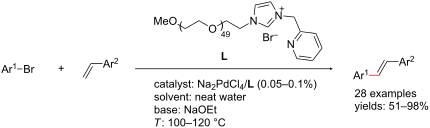
- -catalyzed cross-coupling reactions to form C–C bonds are very powerful synthetic tools in modern organic synthesis [7]. With their increasing applications in the synthesis of pharmaceuticals, natural products and functional materials [8][9][10], moving these useful transformations to occurring in aqueous
- media became more and more attractive [11]. Despite there are several strategies for palladium-catalyzed cross-coupling reactions in water, such as microwave heating [12], ultrasonic irradiation [13][14] and ligand-free methodology [15][16], the more efficient and preferable one is the use of water
- ligands, functionalized with sulfonate- [41][42][43][44][45][46], carboxylate- [47][48][49][50][51][52], polyether- [53][54][55][56][57][58][59] and other hydrophilic groups [60][61][62][63], have been developed and used in the aqueous Pd-catalyzed cross-coupling reactions. Among them, most of them were


Encaging palladium(0) in layered double hydroxide: A sustainable catalyst for solvent-free and ligand-free Heck reaction in a ball mill
Beilstein J. Org. Chem. 2017, 13, 1661–1668, doi:10.3762/bjoc.13.160
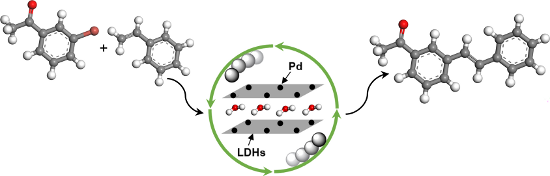
- easily recovered and reused for at least five times without significant loss of catalytic activity. Keywords: ball milling; Heck reaction; layer double hydroxides; solvent-free; supported Pd catalyst; Introduction High-speed ball milling (HSBM)-assisted transition metal-catalyzed cross-coupling reactions
- %), TBAB (1.5 mmol), K2CO3 (3.6 mmol), and silica gel 5 g were placed in a 80 mL stainless-steel vessel (ΦMB = 0.25, dMB = 5 mm). HSBM conditions: 60 min at 800 rpm. Supported catalysts in cross-coupling reactions. MM represents mixer mill; PM represents planetary mill. Selected model reaction. Pd/MgAl


The chemistry and biology of mycolactones
Beilstein J. Org. Chem. 2017, 13, 1596–1660, doi:10.3762/bjoc.13.159
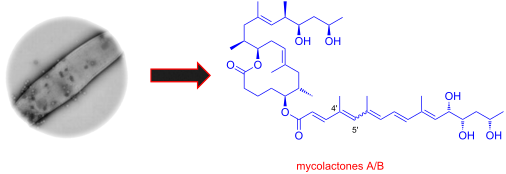
- ], published in 2007, Kishi and co-workers increased the overall efficiency of the synthesis by reorganizing the assembly of the principal fragments and by optimizing the key C(sp2)–C(sp3) Negishi cross-coupling reactions as well as the choice of protecting groups. The 3rd generation approach [123], published
- mycolactone core structure is depicted in Scheme 1. It relied on two consecutive Negishi cross-coupling reactions [124] to construct the linear C1–C20 fragment, which was to be cyclized by macrolactonization [39]. Vinyl iodide 19, corresponding to the C14–C20 part of the core extension, was synthesized from









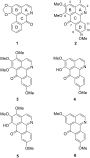
A novel approach to oxoisoaporphine alkaloids via regioselective metalation of alkoxy isoquinolines
Beilstein J. Org. Chem. 2017, 13, 1564–1571, doi:10.3762/bjoc.13.156
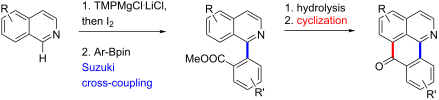
- species with ZnCl2 should lead to at C-1 zincated isoquinolines, which could undergo Negishi cross-coupling reactions with appropriately substituted methyl 2-bromobenzoates to give methyl 2-(isoquinolin-1-yl)benzoates. These would again open an access to oxoisoaporphine alkaloids via intramolecular
- , which were expected to be versatile substrates for Suzuki cross-coupling reactions with appropriate phenylboronic acids to gain methyl 2-(isoquinolin-1-yl)benzoates as the central intermediates (Scheme 1). Results and Discussion As we reported previously, metalation of 6,7-dimethoxyisoquinoline (7a) and



Synthesis of the heterocyclic core of the D-series GE2270
Beilstein J. Org. Chem. 2017, 13, 1407–1412, doi:10.3762/bjoc.13.137
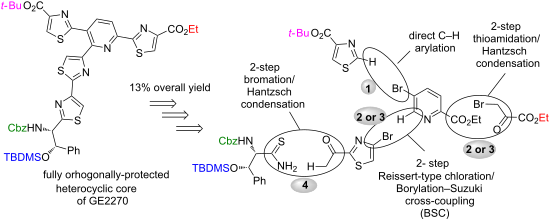
- thiazole units using cross-coupling reactions and Hantzsch-type condensation to a pyridine central platform. This second strategy has been first initially explored by Kelly in 1991 for the first preparation of heterocyclic core of micrococcinic acid [12][13] but due to the unique and original mode of
- the neat synthesis of GE2270 central core in 33% yield over a 4-step sequence (Figure 1) including three Negishi and Stille cross-coupling reactions to achieve the direct introduction of mono- and dithiazolyl units to a 2,3,6-trihalopyridine [17]. The strategy has then extended to the total synthesis
- by using two developed innovative cross-coupling reactions, the palladium-catalyzed direct C–H (hetero)arylation of thiazole-4-carboxylate [21] and a palladium-catalyzed borylation-Suzuki coupling (BSC) 2-ketothiazole unit at 4-position as alternative to thiazolyltin intermediate [22]. Herein, an



Nitration of 5,11-dihydroindolo[3,2-b]carbazoles and synthetic applications of their nitro-substituted derivatives
Beilstein J. Org. Chem. 2017, 13, 1396–1406, doi:10.3762/bjoc.13.136
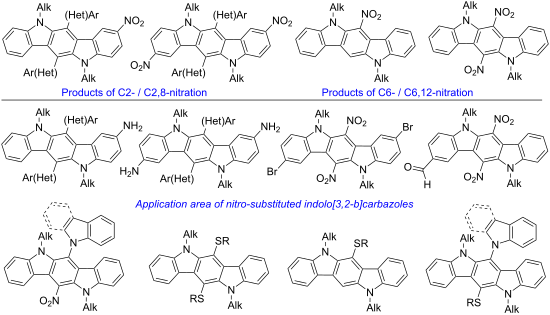
- ICZs [37], as well as C2- and C2,8-bromination of 6,12-disubstituted ICZs [23][38]. Bromo-containing ICZ derivatives have also been involved in further lithiation and metal-catalyzed cross-coupling reactions. Herein, we describe an effective protocol for nitration of 5,11-dihydroindolo[3,2-b]carbazoles


Total synthesis of elansolids B1 and B2
Beilstein J. Org. Chem. 2017, 13, 1280–1287, doi:10.3762/bjoc.13.124
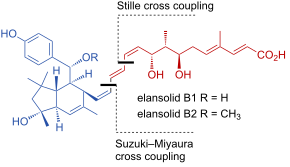
- ) was the installation of the side chain at C1–C13. The synthesis relied on two consecutive Sonogashira–Hagihara cross-coupling reactions that provided the ene–diyne system (C10–C15) 10 in good yield. However, partial hydrogenation (only the zinc–copper couple worked) furnished the desired (Z,E,Z
- elansolid B1 (2). The improvements are mainly associated with the preparation of the triene unit at C10–C15 by utilizing the Stille and the Suzuki–Miyaura cross-coupling reactions as well as the highly versatile difunctionalized building block 14. In principal, the synthesis sheds light on how such (Z,E,Z


Transition-metal-free one-pot synthesis of alkynyl selenides from terminal alkynes under aerobic and sustainable conditions
Beilstein J. Org. Chem. 2017, 13, 910–918, doi:10.3762/bjoc.13.92
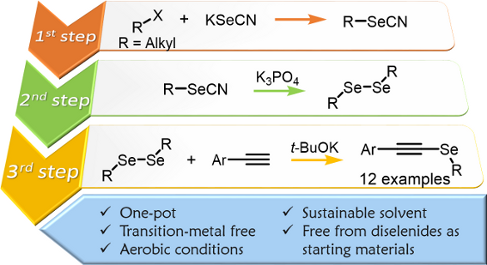
- applications of alkynyl selenides are electrophilic addition reactions, many of them modulated by transition-metal catalysts [11]. Some examples are: hydroboration which results in a vinylborane selenide used in Pd-catalyzed Suzuki cross-coupling reactions [12], the addition to tributyltin hydride in the
- synthesis of seleno-functionalized heterocycles [20][21]. Recently, the use of alkynyl selenides as substrates for Pd-catalyzed Suzuki, Negishi, Kumada and Sonogashira cross-coupling reactions has been reported with good yields [22]. Due to the synthetic relevance of alkynyl selenides several methodologies


Synthesis of tetrasubstituted pyrazoles containing pyridinyl substituents
Beilstein J. Org. Chem. 2017, 13, 895–902, doi:10.3762/bjoc.13.90
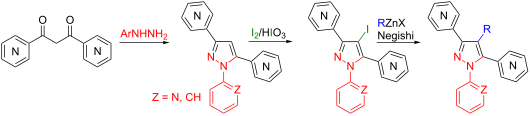
- corresponding 1,3,5-trisubstituted pyrazoles. Iodination at the 4-position of the pyrazole nucleus by treatment with I2/HIO3 gives the appropriate 4-iodopyrazoles which served as starting materials for different cross-coupling reactions. Finally, Negishi cross-coupling employing organozinc halides and Pd
- -protected pyrazoles [21] or sequential cross-coupling reactions starting from 3-iodopyrazole [22] have been described. Herein, we report the synthesis of fully substituted pyrazoles containing at least two pyridinyl substituents by combining the before mentioned approaches: reaction of 1,3-dipyridinyl-1,3
- 2a,b, 3a,b and 4a,b) strongly hints to the involvement of the former into an intramolecular hydrogen bond as indicated in Scheme 3. Cross-coupling reactions Initial attempts to react 4-bromopyrazole 5 – obtained from reaction of 2a with N-bromosuccinimide – with phenylboronic acid (or 3


Substitution of fluorine in M[C6F5BF3] with organolithium compounds: distinctions between O- and N-nucleophiles
Beilstein J. Org. Chem. 2017, 13, 703–713, doi:10.3762/bjoc.13.69
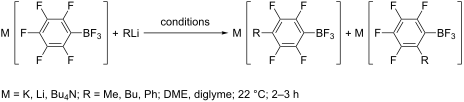
- ]. Over the last 15 years, we reported the successful application of polyfluorinated organoborates K[RC6F4BF3], K[C6F5B(OMe)3] and K[CF2=CFBF3] as boron-containing reagents in the Pd-catalyzed cross-coupling reactions with C-electrophiles [22][23][24][25][26][27]. Nowadays a common approach to these


Pd- and Cu-catalyzed approaches in the syntheses of new cholane aminoanthraquinone pincer-like ligands
Beilstein J. Org. Chem. 2017, 13, 564–570, doi:10.3762/bjoc.13.55
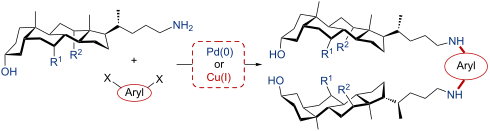
- with copper cation in comparison to bidentate ligands 5c and 5d. However, the cholane skeleton in 5c and 5d can be useful for integration of these ligands into lipophilic membranes. Conclusion Cu- and Pd-catalyzed cross-coupling reactions were applied for the preparation of arylamino derivatives of


Contribution of microreactor technology and flow chemistry to the development of green and sustainable synthesis
Beilstein J. Org. Chem. 2017, 13, 520–542, doi:10.3762/bjoc.13.51
- the process was the use of an integrated supported monolithic Pd(0) catalyst that allowed to perform cross-coupling reactions in continuous flow mode (Scheme 8). This integrated microflow system allow to handle the borylation of aryl halides (Ar1X), and the subsequent Suzuki–Miyaura coupling using






Decarboxylative and dehydrative coupling of dienoic acids and pentadienyl alcohols to form 1,3,6,8-tetraenes
Beilstein J. Org. Chem. 2017, 13, 384–392, doi:10.3762/bjoc.13.41
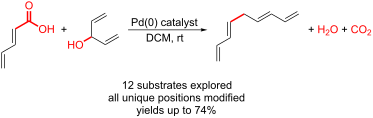
- important problem in organic synthesis. Cross-coupling reactions provide avenues to these otherwise difficult reactions, but often require prefunctionalization of the coupling partners [1][2][3][4][5][6][7][8][9]. However, recent C–H activation research has enabled the use of further simplified starting


(Z)-Selective Takai olefination of salicylaldehydes
Beilstein J. Org. Chem. 2017, 13, 323–328, doi:10.3762/bjoc.13.35
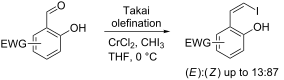
- , particularly in the field of total synthesis where it is often used to install vinyl iodides with high levels of geometric purity which can then be utilised in metal-catalysed cross-coupling reactions [2][6]. Hodgson et al. [7] and later Takai et al. [5] have proposed very similar models to explain the (E


Synthesis and optical properties of new 5'-aryl-substituted 2,5-bis(3-decyl-2,2'-bithiophen-5-yl)-1,3,4-oxadiazoles
Beilstein J. Org. Chem. 2017, 13, 313–322, doi:10.3762/bjoc.13.34
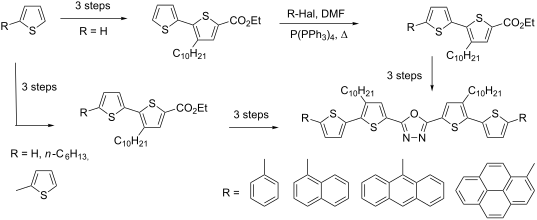
- elaboration of a new synthetic procedure. In this communication we present a detailed study of cross-coupling reactions between еthyl 3-decyl-2,2'-bithiophene-5-carboxylate and different aryl halides. The resulting esters are subsequently used as substrates in the preparation of new D–A–D compounds with an


Highly bulky and stable geometry-constrained iminopyridines: Synthesis, structure and application in Pd-catalyzed Suzuki coupling of aryl chlorides
Beilstein J. Org. Chem. 2017, 13, 213–221, doi:10.3762/bjoc.13.24
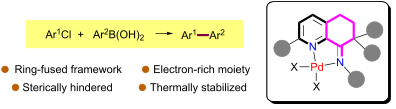
- showed a good catalytic efficiency for both Suzuki and Heck cross-coupling reactions. The favorable effect originated from the ring-fused framework being able to establish a strained environment for better stability. Efficient couplings were achieved with aryl bromides or iodides as substrates, however
- up to 325 °C. With these sterically hindered iminopyridine–palladium complexes Pd1 to Pd5 in hand, we firstly investigated their catalytic activity directly in Suzuki cross-coupling reactions with chlorobenzene as the electrophile. The reactions were performed under the previously reported conditions
- , 27.9, 27.7, 27.2, 23.6, 23.5, 21.0; HRMS (ESI+) m/z: [M – Cl + CH3CN]+ calcd for C22H28ClN2Pd·CH3CN, 504.1235; found, 504.1231. General procedure for Pd-catalyzed Suzuki cross-coupling reactions To a Young tube, aryl chlorides (5.0 mmol), K2CO3 (1.5 g, 11 mmol), arylboric acid (6 mmol), complex Pd2


Efficient access to β-vinylporphyrin derivatives via palladium cross coupling of β-bromoporphyrins with N-tosylhydrazones
Beilstein J. Org. Chem. 2017, 13, 195–202, doi:10.3762/bjoc.13.22
- in the literature for other palladium-catalyzed cross-coupling reactions [34][35][36], namely in some reactions involving halogenated porphyrin derivatives [37]. Presumably in this particular case the lack of efficiency of the catalytic system is probably responsible for this secondary reaction
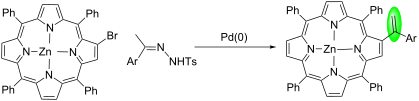
- -catalyzed cross-coupling reaction between aryl halides and N-tosylhydrazones. A retrosynthetic scheme for the synthesis of β-alkenyl-type porphyrin derivatives from the Zn(II) complex of β-bromo-meso-tetraphenylporphyrin and N-tosylhydrazones. Palladium catalysed cross-coupling reactions between β
- -brominated porphyrin 1 and N-tosylhydrazones 2a–c. Results obtained in the palladium-catalyzed cross-coupling reactions between β-brominated porphyrin 1 with N-tosylhydrazones 2a–c. Supporting Information Supporting Information File 46: Copies of NMR, HRMS(ESI) and UV–vis spectra of the new derivatives


Iodination of carbohydrate-derived 1,2-oxazines to enantiopure 5-iodo-3,6-dihydro-2H-1,2-oxazines and subsequent palladium-catalyzed cross-coupling reactions
Beilstein J. Org. Chem. 2016, 12, 2898–2905, doi:10.3762/bjoc.12.289
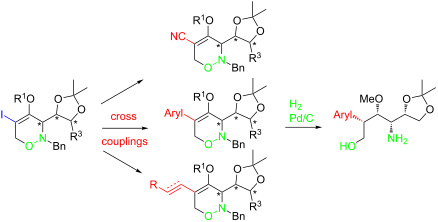
- -forming reactions such as Sonogashira, Heck, or Suzuki coupling reactions as well as a cyanation reaction. These cross-coupling reactions led to a series of 5-alkynyl-, 5-alkenyl-, 5-aryl- and 5-cyano-substituted 1,2-oxazine derivatives being of considerable interest for further synthetic elaborations
- . This was exemplarily demonstrated by the hydrogenation of syn-21 and anti-24 and by a click reaction of a 5-alkynyl-substituted precursor. Keywords: amino alcohol; click reaction; cross-coupling reactions; hydrogenation; iodination; 1,2-oxazines; Introduction Over the last decade, we have intensively
- [21][22]. We previously reported the synthesis of enantiopure 1,2-oxazin-4-yl nonaflates and phosphates starting from precursors of type 3 and their conversion into differently C-4-substituted products employing palladium-catalyzed cross-coupling reactions [23]. In a related study, we have also




Benzothiadiazole oligoene fatty acids: fluorescent dyes with large Stokes shifts
Beilstein J. Org. Chem. 2016, 12, 2739–2747, doi:10.3762/bjoc.12.270
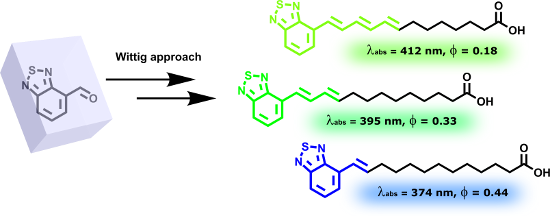
- membranes. Results and Discussion Synthesis The most prominent methods to access oligoene structures are either cross-coupling reactions [17][18][19] or Wittig-type reactions [20][21][22]. The advantage of the latter ones is that they are often conducted at low temperatures and therefore are employed for





