Search results
Search for "glycine" in Full Text gives 198 result(s) in Beilstein Journal of Organic Chemistry.
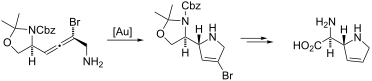
An approach towards azafuranomycin analogs by gold-catalyzed cycloisomerization of allenes: synthesis of (αS,2R)-(2,5-dihydro-1H-pyrrol-2-yl)glycine
Beilstein J. Org. Chem. 2013, 9, 1936–1942, doi:10.3762/bjoc.9.229
- Jorg Erdsack Norbert Krause Organic Chemistry, Dortmund University of Technology, Otto-Hahn-Strasse 6, D-44227 Dortmund, Germany 10.3762/bjoc.9.229 Abstract The synthesis of (αS,2R)-(2,5-dihydro-1H-pyrrol-2-yl)glycine (22, normethylazafuranomycin) by the gold-catalyzed cycloisomerization of α
- . Later, we found that a higher excess of thioanisole, which captures benzylic cations in the deprotection step, affords higher yields of the amino acid (Scheme 5). After successful conclusion of the model studies, the synthesis of (αS,2R)-(2,5-dihydro-1H-pyrrol-2-yl)glycine (22, normethylazafuranomycin
- synthesis of the azafuranomycin analog (αS, 2R)-(2,5-dihydro-1H-pyrrol-2-yl)glycine (22) in 13 linear steps with an overall yield of 2.4% starting from the Cbz-protected Garner aldehyde (R)-2. The key step is the gold-catalyzed cycloisomerization of α-aminoallene 17 to dihydropyrrole 18. The sequence was


Synthesis and antibacterial activity of monocyclic 3-carboxamide tetramic acids
Beilstein J. Org. Chem. 2013, 9, 1899–1906, doi:10.3762/bjoc.9.224

- ) carboxamides. Results and Discussion Synthesis The synthesis of the required tetramic acid systems 2a–g (Scheme 1), 2h (Scheme 2) and 3a–f (Scheme 3) was achieved by Dieckmann cyclisation of the required N-alkyl-N-malonyl glycine (readily prepared from glycine). A similar strategy for the base-mediated
- ratio of mass to charge in Daltons. Synthesis. The synthesis of monocyclic precursor tetramate compounds from glycine has been reported in our previous publication [33]. Calculations. Density Functional B3LYP (6-31G*) in Spartan 02 was used for the calculation of the energy in equilibrium geometry at
- equiv), EtOH, reflux; (b) monoethyl malonate (1.1 equiv), DCC (1.1 equiv), CH2Cl2, rt; (c) NaOMe (1.1 equiv), benzene, EtOH, reflux; (d) RNH2 (1.0 equiv), toluene, reflux. Synthesis of N-alkyl 3-carboxamide tetramic acid. Reaction conditions: (a) 1. glycine methyl ester∙HCl (1.0 equiv), Et3N (1.2 equiv


Ethyl diazoacetate synthesis in flow
Beilstein J. Org. Chem. 2013, 9, 1813–1818, doi:10.3762/bjoc.9.211

- quantities. Ethyl diazoacetate was prepared in a biphasic mixture comprising an aqueous solution of glycine ethyl ester, sodium nitrite and dichloromethane. Optimization of the reaction was focused on decreasing the residence time with the smallest amount of sodium nitrite possible. With these boundary
- efficient than the sulfonylhydrazone pathway, we chose to synthesize EDA (1) from glycine ethyl ester (2) using readily available sodium nitrite [20] (Scheme 1). Although the diazotization step itself resembles the first step of Ley’s hydroxy acid synthesis, we specifically aimed to produce and isolate the
- immediately used for either batch [13][15] or continuous-flow [16][17] follow-up reactions. Straightforward scale-up or scale-out of microreactor technology renders this method viable for industrial application. Results and Discussion Flow synthesis Ethyl diazoacetate (1) was synthesized from glycine ethyl


Polymeric redox-responsive delivery systems bearing ammonium salts cross-linked via disulfides
Beilstein J. Org. Chem. 2013, 9, 1652–1662, doi:10.3762/bjoc.9.189
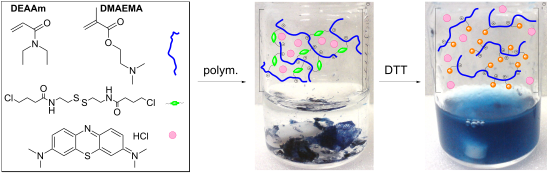
- considerably faster than the kinetics of other functionalities like esters and carbonates, whose degradation take days to weeks or even months inside the human body [29][30][31]. Dithiothreitol (DTT), tris(2-carboxyethyl)phosphine (TCEP) and glutathione tripeptide (γ-glutamyl-cysteinyl-glycine; GSH) are known


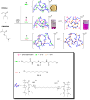


C–C Bond formation catalyzed by natural gelatin and collagen proteins
Beilstein J. Org. Chem. 2013, 9, 1111–1118, doi:10.3762/bjoc.9.123
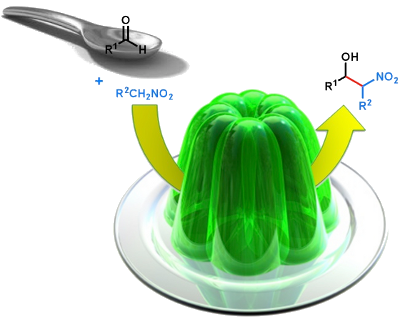
- composition of gelatin in terms of its amino acids content has been reported in several publications (arginine, glutamic acid, alanine, glycine, proline and hydroxyproline are the most abundant amino acids (ca. 10–25%)) [1], which makes the protein itself suitable for catalytic studies. The Henry (nitroaldol
- case, the most common motifs in the amino acid sequence, which could be also associated with catalytic sites, are glycine-proline-X and glycine-X-hydroxyproline, where X is any other amino acid (see Supporting Information File 1). However, despite gelatin and collagen forming triple helices as a chiral


Recent progress in the discovery of small molecules for the treatment of amyotrophic lateral sclerosis (ALS)
Beilstein J. Org. Chem. 2013, 9, 717–732, doi:10.3762/bjoc.9.82
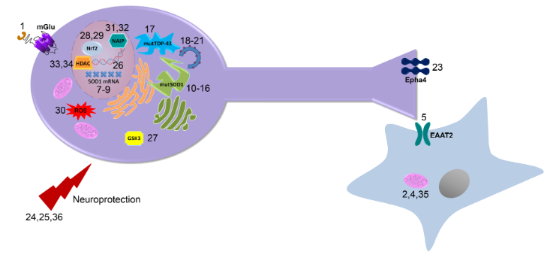
- systems to study this disorder. The most common of these mouse models carries the SOD1 G93A mutation where glycine is substituted for alanine at position 93 in the superoxide dismutase 1 protein [6][7]. Other related mutations in SOD1 include H46R, A4V, and G85R. These mutations are not believed to reduce
- neuroblastoma-spinal cord (NSC)-34 cells, a motor neuron cell line [19]. Since D-serine serves as a co-agonist at the glycine site of the NMDA glutamate receptor, increases in D-serine are likely to contribute to glutamate excitotoxicity in ALS patients. These data suggest that reducing D-serine levels through


A peptidic hydrogel that may behave as a “Trojan Horse”
Beilstein J. Org. Chem. 2013, 9, 417–424, doi:10.3762/bjoc.9.44
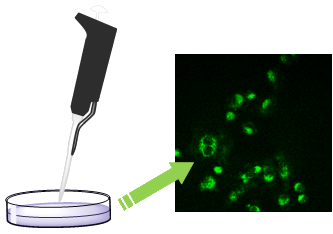
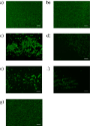
- and then fixed with 3% paraformaldehyde and washed with 0.1 M glycine in PBS and 1% BSA in PBS. Preparations were embedded in Mowiol, and the images were acquired by using sequential laser excitations at 488 nm. The images were collected by using a Nikon C1s confocal laser scanning microscope


Towards a biocompatible artificial lung: Covalent functionalization of poly(4-methylpent-1-ene) (TPX) with cRGD pentapeptide
Beilstein J. Org. Chem. 2013, 9, 270–277, doi:10.3762/bjoc.9.33
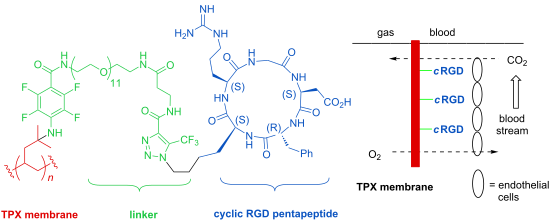
- water-soluble protein coating, which is necessary for the cell attachment. In this paper, we disclose a strategy to strongly attach ECs to TPX 2 membranes by covalent functionalization of the chemically rather inert material with a cyclic peptide, containing the RGD (arginine-glycine-asparagine) amino


A new synthetic protocol for coumarin amino acid
Beilstein J. Org. Chem. 2013, 9, 254–259, doi:10.3762/bjoc.9.30
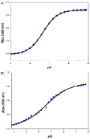
- , Wuhan 430070, China 10.3762/bjoc.9.30 Abstract The hydrochloride of the racemic amino acid (2-(7-hydroxycoumarin-4-yl)ethyl)glycine, which can serve as a fluorescent probe in proteins, and two halogen derivatives of it, were synthesized by using a new synthetic protocol in five steps. It is less costly
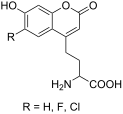
- ; Pechmann condensation; Introduction Since α-L-(2-(7-hydroxycoumarin-4-yl)ethyl)glycine (1a, Figure 1), a fluorescent non-natural amino acid, was genetically incorporated at a defined site in proteins in living organisms for the first time by Schultz and co-workers [1] there have been more and more
- coumarinylacetic acid, which was then reduced to an alcohol by borane-dimethyl sulfide. After the phenolic hydroxy group was protected with a tert-butyl(dimethyl)silyl group, the alcohol was converted into a bromide and was used to alkylate a glycine enolate synthon to afford an imine. All the protecting groups


Development of peptidomimetic ligands of Pro-Leu-Gly-NH2 as allosteric modulators of the dopamine D2 receptor
Beilstein J. Org. Chem. 2013, 9, 204–214, doi:10.3762/bjoc.9.24
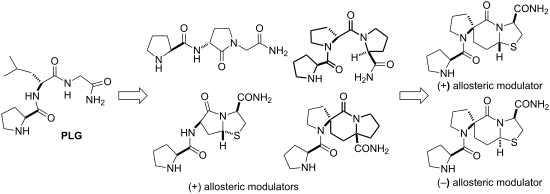
- modulatory binding site in a different manner than 2 and its analogues [33]. Possible support for such a hypothesis can be seen in the different activity profiles of α,α-disubstituted glycine analogues of PLG and the corresponding α,α-disubstituted derivatives of lactam PLG peptidomimetic 2 [35]. In addition




A chemist and biologist talk to each other about caged neurotransmitters
Beilstein J. Org. Chem. 2013, 9, 64–73, doi:10.3762/bjoc.9.8
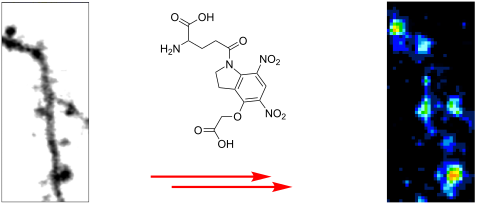
- , glycine) and an important collaboration [18][19][20][21][22][23][24] between George Hess (a biophysicist) and Barry Carpenter (a chemist). Why was this collaboration important for this field? The answer has two parts. First, it is rare for one group to encompass all the expertise required for the


Peptoids and polyamines going sweet: Modular synthesis of glycosylated peptoids and polyamines using click chemistry
Beilstein J. Org. Chem. 2013, 9, 56–63, doi:10.3762/bjoc.9.7
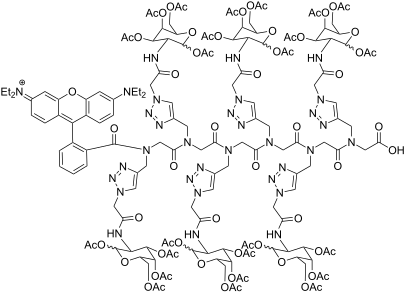
- oligonucleotides [5][6][7][11][12][13] displaying only very little toxicity towards mammalian cells [11]. They have also been shown to function in the recognition of biomacromolecules. Likewise, other polycationic species, such as the N-alkylated glycine oligomers (peptoids) [14][15][16][17][18][19][20][21][22][23


Mechanochemistry assisted asymmetric organocatalysis: A sustainable approach
Beilstein J. Org. Chem. 2012, 8, 2132–2141, doi:10.3762/bjoc.8.240
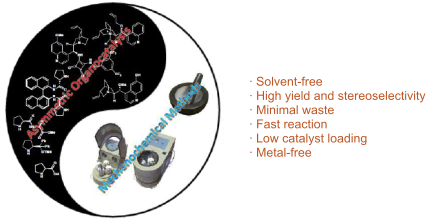
- . Alkylation of imine Alkylation of glycine imine by using a chiral phase-transfer catalyst emerged as a very good strategy for the asymmetric synthesis of amino-acid derivatives [59][60][61]. Lamaty and co-workers prepared a series of glycine Schiff bases 22 in excellent yield (97–98%) in short reaction time
- by milling protected glycine hydrochloride 21 and diphenylmethanimine (20), under solvent-free conditions (Scheme 11) [62]. The asymmetric alkylation of glycine imine 22 was carried out by using a phase-transfer catalyst under basic conditions in a ball-mill. The Schiff base reacted rapidly with
- Michael reaction assisted by pestle and mortar grinding. C-2 symmetric thiourea catalysed enantioselective MBH reaction. Quinine-catalysed ring opening of meso-anhydride by ball-milling. Ball-milling-assisted (A) synthesis of glycine schiff bases and (B) their organocatalytic asymmetric alkylation


Asymmetric synthesis of γ-chloro-α,β-diamino- and β,γ-aziridino-α-aminoacylpyrrolidines and -piperidines via stereoselective Mannich-type additions of N-(diphenylmethylene)glycinamides across α-chloro-N-sulfinylimines
Beilstein J. Org. Chem. 2012, 8, 2124–2131, doi:10.3762/bjoc.8.239
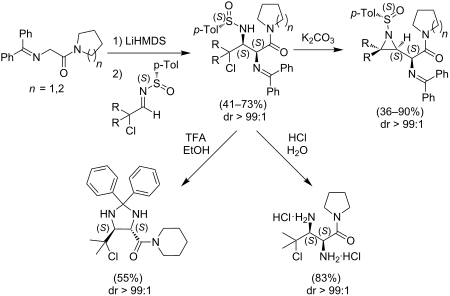
- ,2R,3R)-γ-chloro-α,β-diaminocarboxyl esters obtained via Mannich-type addition of analogous N-(diphenylmethylene)glycine esters across a chiral α-chloro-N-p-toluenesulfinylaldimine. Selective deprotection under different acidic reaction conditions and ring closure of the γ-chloro-α,β
- chemistry and is continuously under development [1][2][3]. Recently, our research group elaborated the asymmetric synthesis of new chiral γ-chloro-α,β-diaminocarboxyl esters by highly diastereoselective Mannich-type reactions of N-(diphenylmethylene)glycine esters across a chiral α-chloro-N-p
- ring closure and deprotection of the α-amino functionality of the synthesized γ-chloro-α,β-diaminocarboxylamides were explored as well. Results and Discussion The stereoselective synthesis of chiral γ-chloro-α,β-diaminocarboxylamides was performed by using a Mannich-type addition of glycine amides 4




Flow photochemistry: Old light through new windows
Beilstein J. Org. Chem. 2012, 8, 2025–2052, doi:10.3762/bjoc.8.229
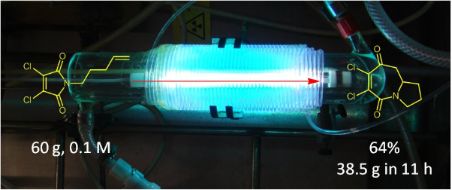
- to Grignard reagents that can be employed under aqueous conditions [58]. Initially, the α-photodecarboxylation of phthaloyl glycine 44 (Scheme 16) was investigated in a microflow Dwell device and compared with the reaction under batch conditions. The microflow reactor required a shorter residence


Design and synthesis of quasi-diastereomeric molecules with unchanging central, regenerating axial and switchable helical chirality via cleavage and formation of Ni(II)–O and Ni(II)–N coordination bonds
Beilstein J. Org. Chem. 2012, 8, 1920–1928, doi:10.3762/bjoc.8.223
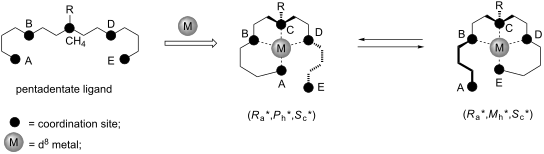
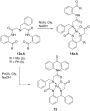
- framework of our recently described methodology for applying a new generation of nucleophilic glycine equivalents [27][28][29][30][31][32] to a general asymmetric synthesis of α-amino acids [33][34][35][36][37][38]. In this manner, modular assembly of achiral C2-symmetric pentadentate ligands 12 was carried
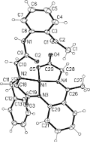
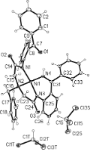
- compounds 12 with glycine. As shown in Scheme 4, heating of pentadentate ligands 12 in acetonitrile in the presence of a Ni(II) source [NiCl2 or Ni(NO3)2], glycine and a base, lead to the formation of the quite unusual complexes 14. In a similar manner, by using PdCl2 instead of Ni(II), the Pd-chelated
- complex 15 was obtained. As it follows from these results, only one carbonyl group in the starting ligands 12 was involved in the formation of the corresponding Schiff base with glycine, similar to the reactivity observed for tridentate ligands with Ni(II) [49][50][51][52][53]. In the 1H and 13C NMR



Peptides presenting the binding site of human CD4 for the HIV-1 envelope glycoprotein gp120
Beilstein J. Org. Chem. 2012, 8, 1858–1866, doi:10.3762/bjoc.8.214
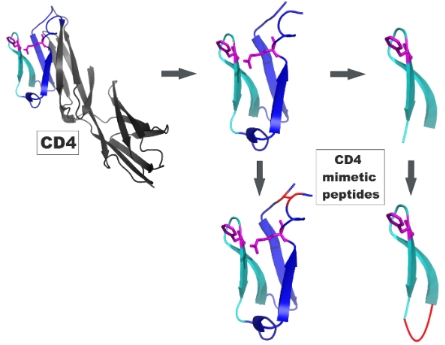
- site of gp120. Ionic interactions of R59 of CD4 with D368 of gp120 stabilize this interaction [3] (Figure 1). Mutation of F43 and R59 to alanine or glycine [11][12][13][14] dramatically impairs binding to gp120, corroborating the importance of F43 and R59 for the interaction of CD4 with gp120


Dimerization of a cell-penetrating peptide leads to enhanced cellular uptake and drug delivery
Beilstein J. Org. Chem. 2012, 8, 1788–1797, doi:10.3762/bjoc.8.204
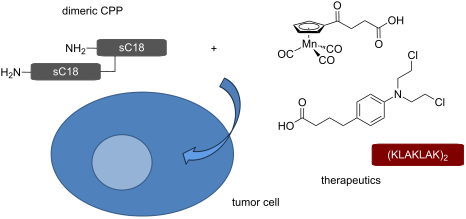
- /DIC. Synthesis of branched (sC18)2 was achieved by N-terminal coupling of Dde-Lys(Fmoc)-OH to sC18(5-16) and subsequent automated elongation of the peptide chain at the lysine side chain by using Nα-Boc protected glycine at the terminal position. Cleavage of the Dde group was achieved by treatment


Asymmetric desymmetrization of meso-diols by C2-symmetric chiral 4-pyrrolidinopyridines
Beilstein J. Org. Chem. 2012, 8, 1778–1787, doi:10.3762/bjoc.8.203
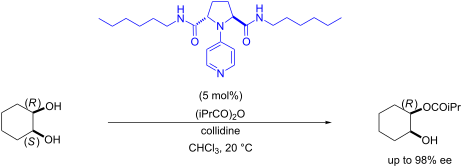
- and 8b with a D-tryptophan side chain gave (1R,2S)-6 [8] by asymmetric desymmetrization of 5, catalysts with achiral side chains were then examined. The acylation of 5 with catalyst 9 which possesses a tryptamine moiety gave 6 in 72% ee and 74% yield (Table 1, entry 3). Catalyst 10 with a glycine


Antifreeze glycopeptide diastereomers
Beilstein J. Org. Chem. 2012, 8, 1657–1667, doi:10.3762/bjoc.8.190
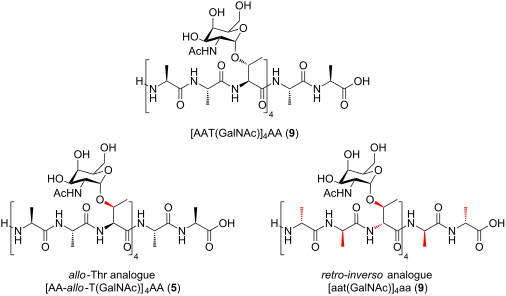
- of sequential mutations on the adsorption of such synthetic AFGP analogues onto ice surfaces, and to corroborate the molecular mechanism of antifreeze activity. Recently, we published the synthesis of monosaccharide-based AFGP analogues containing glycine, proline and serine instead of alanine


Synthetic studies towards bottromycin
Beilstein J. Org. Chem. 2012, 8, 1652–1656, doi:10.3762/bjoc.8.189
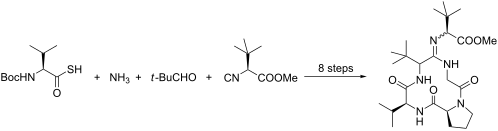
- . 3668-L2, named bottromycin A and B [13][14]. Acidic hydrolysis provided a mixture of all-(S)-configured amino acids containing 3-methylphenylalanine [15], tert-leucine, valine, β-(2-thiazolyl)-β-alanine [16] and glycine. While also proline was found in bottromycin B, cis-3-methylproline is a component
- endothiopeptide and ring closure between proline and glycine. The same group also undertook some modifications on the natural product [26]. Results and Discussion Our group is also involved in the synthesis of peptide-based natural products [27][28][29][30][31][32], and of course the structure of bottromycin is


Synthesis of conformationally restricted glutamate and glutamine derivatives from carbonylation of orthopalladated phenylglycine derivatives
Beilstein J. Org. Chem. 2012, 8, 1569–1575, doi:10.3762/bjoc.8.179
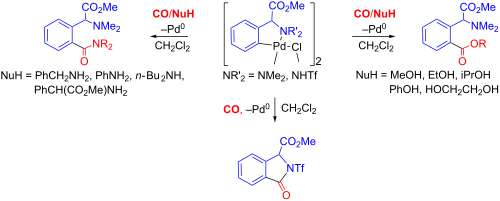
- , and pure isolated compound 5 has been characterized as containing the NHTf group and two different CO2Me moieties, as represented in Scheme 5 (left). This result can be interpreted as a competing reaction between the nucleophilic abilities of the N atom of the glycine moiety and the oxygen atom of the


N-Heterocyclic carbene-catalyzed direct cross-aza-benzoin reaction: Efficient synthesis of α-amino-β-keto esters
Beilstein J. Org. Chem. 2012, 8, 1499–1504, doi:10.3762/bjoc.8.169
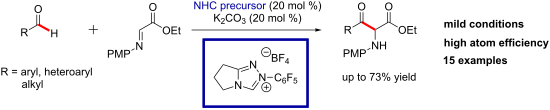
- migration of the N-acyl glycine derivatives [18]. The other consists of C–N bond-forming reactions, such as (c) a rhodium-catalyzed N–H insertion reaction with α-diazo-β-keto esters [19][20][21], and (d) α-oxidation of β-keto esters to the corresponding oximes and the subsequent hydrogenation [22]. However


Approaches to α-amino acids via rearrangement to electron-deficient nitrogen: Beckmann and Hofmann rearrangements of appropriate carboxyl-protected substrates
Beilstein J. Org. Chem. 2012, 8, 1393–1399, doi:10.3762/bjoc.8.161

- transformation of 1 to 5 indicates that 1 functions as a glycine enolate equivalent with the benzoylamino group in 5 being introduced in umpolung fashion (reaction involves the migration to an electrophilic nitrogen center). Hofmann rearrangement approach Our strategy was based on the known ethyl
- alkylation methodology has been co-opted to generate substitution α to the amino group, i.e., the (trioxaadamantyl)acetate 6 functions potentially as a glycine enolate equivalent. It is also noteworthy that, as the Hofmann rearrangement involves migration to electron-deficient nitrogen [10][11][12], the


Building photoswitchable 3,4'-AMPB peptides: Probing chemical ligation methods with reducible azobenzene thioesters
Beilstein J. Org. Chem. 2012, 8, 890–896, doi:10.3762/bjoc.8.101
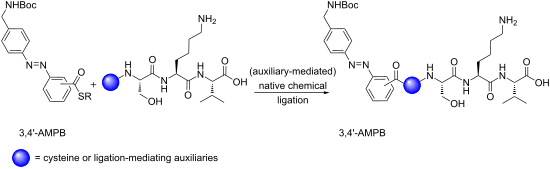
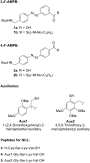
- we had to place the ligation junction next to the third amino acid serine of the SKV binding motif. In the case of the conventional NCL, we used cysteine at the ligation site, and for the auxiliary mediated ligations, we decided to introduce auxiliary-glycine-conjugates at the N-terminus, due to the
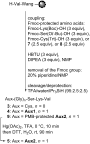
- procedures (Supporting Information File 1) [4][17]. The syntheses of the auxiliary-linked glycine conjugates 7 and 8 were accomplished by using literature protocols developed by Dawson, Offer and MacMillan [7][8] (Figure 2). The Cys-peptide 3 and the Nα-auxiliary peptides 4 and 5 were assembled on Wang resin
- for the application in ligation studies. AMPB = (aminomethylphenylazo)benzoic acid. Structure of the glycine-linked auxiliary conjugates 7 and 8. Structural differences between the trans- and the cis-state of azopeptides with a SKV PDZ binding motif. Solid-phase synthesis of the ligation-mediating