


Search results
Search for "glycosylation" in Full Text gives 197 result(s) in Beilstein Journal of Organic Chemistry.
Short synthesis of the common trisaccharide core of kankanose and kankanoside isolated from Cistanche tubulosa
Beilstein J. Org. Chem. 2013, 9, 705–709, doi:10.3762/bjoc.9.80
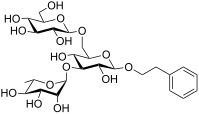
- isolated from the medicinally active plant Cistanche tubulosa. All glycosylations were carried out under nonmetallic reaction conditions. Yields were very good in all intermediate steps. Keywords: Cistanche tubulosa; glycosylation; kankanoside; synthesis; trisaccharide; Introduction Cistanche tubulosa (C
- , H2 and I isolated from C. tubulosa thereby exploiting newly developed regio- and stereoselective glycosylation conditions (Figure 1). This straightforward synthetic strategy employs a minimum number of steps. Results and Discussion The target trisaccharide 1 in the form of its 2-phenylethyl glycoside
- presence of molecular iodine [13] furnished compound 5 in 86% yield. Regioselective 3-O-glycosylation of compound 5 with L-rhamnose derived trichloroacetimidate derivative 3 [11] in the presence of NOBF4 [14] followed by acetylation in the same pot furnished disaccharide derivative 6 in 76% yield. In this


De novo synthesis of D- and L-fucosamine containing disaccharides
Beilstein J. Org. Chem. 2013, 9, 332–341, doi:10.3762/bjoc.9.38
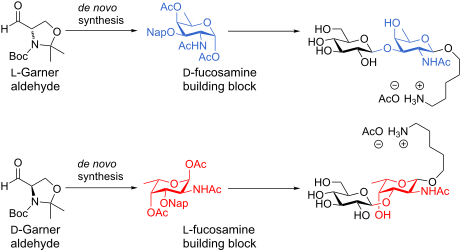
- influenced by their glycosylation patterns [1][2]. Therefore, an understanding of protein glycosylation is of utmost importance in order to develop new therapeutics [3][4][5][6]. The ability of bacteria to colonize human hosts and cause diseases is directly influenced by their capacity to synthesize
- microarray platform and their conjugation to carrier proteins, an appropriate linker was required at the anomeric position [67]. Placement of a C3 naphthyl ether anticipated the site for further glycosylation at this position, which typically serves as the connection to the next sugar. Therefore, building
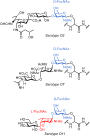
- block 8a is ideal in terms of orthogonality and chemical synthesis. Hence, we tested the ability of D-8a to undergo anomeric functionalization and to effect glycosylation at the C3 hydroxy group. Due to the presence of N-acetylated D- and L-fucosamine residues in P. aeruginosa O-linked glycans, the



Synthesis and testing of the first azobenzene mannobioside as photoswitchable ligand for the bacterial lectin FimH
Beilstein J. Org. Chem. 2013, 9, 223–233, doi:10.3762/bjoc.9.26
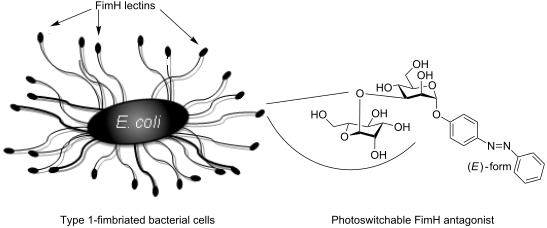
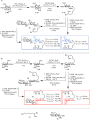
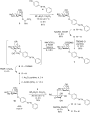
- , glycosylation of the key intermediate 10 by using the mannosyl donor 3 gave the desired mannobioside 11 in 76% yield. Finally, removal of the O-acetyl groups according to Zemplén led to the unprotected 1,3-linked target mannobioside α-D-Man-(1→3)-D-Man (2). With the two azobenzene glycosides 6 and 2 at hand
- , open-gate conformation). Bottom: (Z)-isomer (C, closed-gate; D, open-gate conformation). Synthesis of azobenzene mannoside 6 and azobenzene mannobioside 2 by glycosylation. Characterisation of the (E)- and (Z)-isomers of azobenzene glycosides 6 and 2. Inhibition of adhesion of E. coli to a mannan



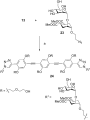
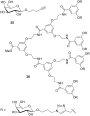
Efficient synthesis of phenylene-ethynylene rods and their use as rigid spacers in divalent inhibitors
Beilstein J. Org. Chem. 2013, 9, 215–222, doi:10.3762/bjoc.9.25
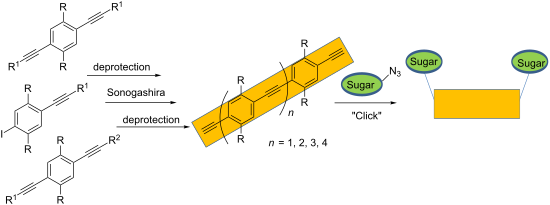
- rigid linkages between functional units. Examples of these have been reported in areas such as nanoelectronics and nanooptics [1], surfactants [2][3][4], photoelectrochemical detection [5], catalysis [6], glycosylation reactions [7], and carbohydrate–protein interactions [8]. Many different strategies


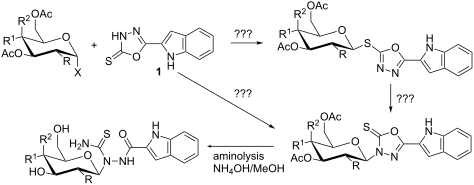
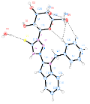
A new synthetic access to 2-N-(glycosyl)thiosemicarbazides from 3-N-(glycosyl)oxadiazolinethiones and the regioselectivity of the glycosylation of their oxadiazolinethione precursors
Beilstein J. Org. Chem. 2013, 9, 135–146, doi:10.3762/bjoc.9.16


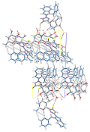
Glycosylation efficiencies on different solid supports using a hydrogenolysis-labile linker
Beilstein J. Org. Chem. 2013, 9, 97–105, doi:10.3762/bjoc.9.13
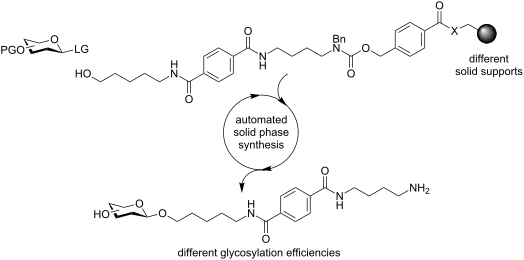
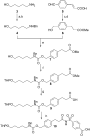
- /bjoc.9.13 Abstract Automated oligosaccharide assembly requires suitable linkers to connect the first monosaccharide to a solid support. A new hydrogenolysis-labile linker that is stable under both acidic and basic conditions was designed, synthesized and coupled to different resins. Glycosylation and
- cleavage efficiencies on these functionalized solid supports were investigated, and restrictions for the choice of solid support for oligosaccharide synthesis were found. Keywords: glycosylation; hydrogenolysis; linkers; oligosaccharides; resins; solid-phase synthesis; Findings Since Bruce Merrifield
- ][22][23]. It was early on recognized that the linker plays a pivotal role for oligosaccharide synthesis, as its chemical properties determine the conditions that can be used for glycosylation and deprotection reactions [7][20][23][24][25]. Equally important is the choice of solid support and many


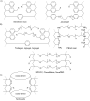


Peptoids and polyamines going sweet: Modular synthesis of glycosylated peptoids and polyamines using click chemistry
Beilstein J. Org. Chem. 2013, 9, 56–63, doi:10.3762/bjoc.9.7
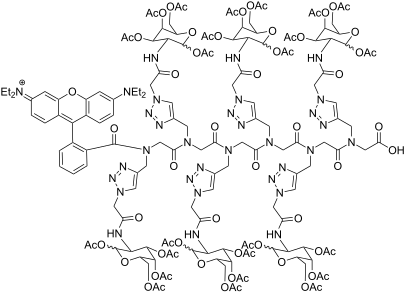
- fast methods for the decoration of biomimetic molecules with sugars is of fundamental importance. The glycosylation of peptoids and polyamines as examples of such biomimetic molecules is reported here. The method uses Cu-catalyzed azide alkyne cycloaddition to promote the reaction of azidosugars with
- copper ions. In some cases, changing the base from DIPEA to DBU was beneficial (Scheme 2). After these encouraging results, we turned our attention to peptoids. For the glycosylation of peptoids, we envisaged the generation of a fully glycosylated peptoid in order to investigate the compatibility of


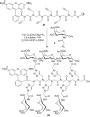
Synthesis of a derivative of α-D-Glcp(1->2)-D-Galf suitable for further glycosylation and of α-D-Glcp(1->2)-D-Gal, a disaccharide fragment obtained from varianose
Beilstein J. Org. Chem. 2012, 8, 2142–2148, doi:10.3762/bjoc.8.241

- synthesis of α-D-Galf-(1→2)-D-galactose by the same glycosylaldonolactone approach [25]. The same derivative 4 was envisaged as precursor of 1 due to the high regioselectivity previously achieved in glycosylation at HO-2. Additionally, this procedure would afford derivative 8, a valuable intermediate for
- in Et2O, employing TMSOTf as catalyst, proceeded with complete regio- and stereoselectivity, affording the α-glycosylaldonolactone 5 in 79% yield (Scheme 1). The α-anomeric configuration and the regioselectivity of the glycosylation were confirmed on the basis of the NMR spectra. In the 1H NMR
- into an apparent triplet. On the other hand, in the 13C NMR spectrum of 5 the signal corresponding to C-1 appeared at δ 170.1, shifted 4 ppm in comparison with the corresponding signal of 4, as result of glycosylation at the vicinal position [28]. For the reduction of the lactone function, compound 5


Acylsulfonamide safety-catch linker: promise and limitations for solid–phase oligosaccharide synthesis
Beilstein J. Org. Chem. 2012, 8, 2067–2071, doi:10.3762/bjoc.8.232
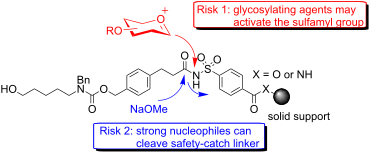
- cleavage products revealed shortcomings for oligosaccharide synthesis. Keywords: glycosaminoglycans (GAGs); glycosylation; resins; safety-catch linker; solid-phase synthesis; Findings Solid-phase oligosaccharide synthesis [1][2] has been automated [3][4][5] to rapidly assemble complex oligosaccharides
- . In the process of evaluating the performance of this linker in solid-phase glycosylation reactions, the potential as well as some severe limitations became apparent. Linker 10 is the newly designed acylsulfonamide safety-catch linker (Scheme 1). The safety-catch linkage to the resin permits
- acylsulfonamide safety-catch linker 10 plus the Zemplén cleavage site, were employed in glycosylation reactions on a solid phase using an automated synthesizer [13], subsequently cleaved with NaOMe, and the products were analyzed by HPLC (Scheme 3, see Supporting Information File 1). Glycosylations were performed




Convergent synthesis of the tetrasaccharide repeating unit of the cell wall lipopolysaccharide of Escherichia coli O40
Beilstein J. Org. Chem. 2012, 8, 2053–2059, doi:10.3762/bjoc.8.230
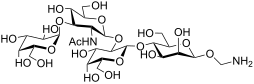
- using a convergent block glycosylation strategy. A disaccharide donor was coupled to a disaccharide acceptor by a stereoselective glycosylation. A 2-aminoethyl linker was chosen as the anomeric protecting group at the reducing end of the tetrasaccharide. All glycosylation steps are significantly high
- yielding and stereoselective. Keywords: Escherichia coli; glycosylation; lipopolysaccharide; O-antigen; tetrasaccharide; Introduction Infantile diarrhoea is one of the major causes of morbidity and mortality in infancy in developing countries [1]. Among several factors, Escherichia coli (E. coli
- strategy. Results and Discussion The target tetrasaccharide 1 as its 2-aminoethyl glycoside was synthesized by a stereoselective glycosylation of a disaccharide acceptor 8 and a disaccharide thioglycoside donor 9 using a [2 + 2] block synthetic strategy. The disaccharide intermediates were synthesized from


Antifreeze glycopeptide diastereomers
Beilstein J. Org. Chem. 2012, 8, 1657–1667, doi:10.3762/bjoc.8.190
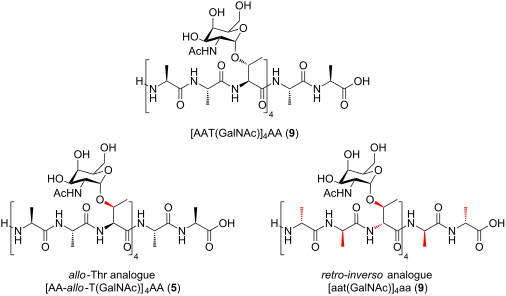
- polyproline helix type II (PPII) [13]. The larger AFGP1-4 are known to form flexible rods with segmental mobility [14][15]. Recent research has been directed toward the assembly of synthetic AFGPs with tailored amino acid composition and glycosylation pattern. The main target is to investigate the influence
- recrystallization assays. The glycosylation of threonine in D- and allo-L-configuration with N-acetyl galactosamine relies on an efficient synthetic procedure by Paulsen et al. [21] adapted by us [16][22][23] (Scheme 1). Azidochlorination of a suitably protected L-galactal provides the peracetylated 2-azido-2
- -desoxygalactopyranosyl chloride serving as a glycosyl donor in a silver-mediated Koenigs–Knorr glycosylation of the particular Fmoc- and t-Bu-protected amino acids, i.e., the allo-L-configured (1A) and D-configured (1B) threonine derivatives. Both glycosylated amino acids (2) were obtained in good yields and very good


The Amadori rearrangement as glycoconjugation method: Synthesis of non-natural C-glycosyl type glycoconjugates
Beilstein J. Org. Chem. 2012, 8, 1619–1629, doi:10.3762/bjoc.8.185

- chemistry (Huisgen cycloaddition) [4][5], glycosylation protocols [6][7], and Staudinger ligation [8], just to mention the most prominent examples. However, many applications in this respect require a ligation method that is functional in aqueous medium, and, for economic purposes in general, protecting


Automated synthesis of sialylated oligosaccharides
Beilstein J. Org. Chem. 2012, 8, 1601–1609, doi:10.3762/bjoc.8.183
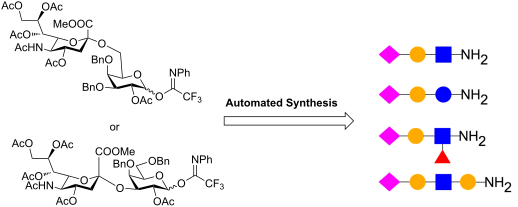
- this important class of molecules. The automated synthesis of oligosaccharides has been significantly improved since the first report in 2001 [4]. Currently, the platform enables the rapid assembly of complex oligosaccharides and accommodates the most commonly employed glycosylation reactions [5][6][7
- the glycosylation of building blocks 1, 8 and 10 with galactal 2 under similar conditions (Table 1, entries 1–3). Sialylation with building block 8 failed to yield any disaccharide 9 (Table 1, entry 1), while glycosylating agents 10 and 1 gave moderate yields and good selectivity (Table 1, entries 2
- and 3). The glycosylation of galactal 2 with phosphite 1, which we described in the supporting information of [5], was further optimized. In particular, elevating the reaction temperature proved beneficial and disaccharide 9 was isolated in higher overall yield, albeit with a slight decrease in


Studies on the substrate specificity of a GDP-mannose pyrophosphorylase from Salmonella enterica
Beilstein J. Org. Chem. 2012, 8, 1219–1226, doi:10.3762/bjoc.8.136

- -benzylidene-α-D-mannopyranoside (19) [26] was first methylated giving 20 and then converted into glycosyl acetate 21 in 49% yield over the two steps. Subsequent thioglycosylation provided a 52% yield of 22. The protected dibenzyl phosphate 23 was next formed by the NIS–AgOTf promoted glycosylation of dibenzyl


Synthesis of 4” manipulated Lewis X trisaccharide analogues
Beilstein J. Org. Chem. 2012, 8, 1134–1143, doi:10.3762/bjoc.8.126
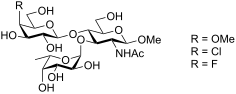
- is modified at O-4 as a methyloxy, deoxychloro or deoxyfluoro, were synthesized. We first report the preparation of the modified 4-OMe, 4-Cl and 4-F trichloroacetimidate galactosyl donors and then report their use in the glycosylation of an N-acetylglucosamine glycosyl acceptor. Thus, we observed
- that the reactivity of these donors towards the BF3·OEt2-promoted glycosylation at O-4 of the N-acetylglucosamine glycosyl acceptors followed the ranking 4-F > 4-OAc ≈ 4-OMe > 4-Cl. The resulting disaccharides were deprotected at O-3 of the glucosamine residue and fucosylated, giving access to the
- toward glycosylation [64][65][66]. However, we have reported the successful O-4 glycosylation of an N-acetylglucosamine monosaccharide acceptor using peracetylated gluco- and galactopyranose α-trichloroacetimidate donors under activation with 2 equivalents of BF3·OEt2 at room temperature or 40 °C [14][67


Synthesis and structure of tricarbonyl(η6-arene)chromium complexes of phenyl and benzyl D-glycopyranosides
Beilstein J. Org. Chem. 2012, 8, 1059–1070, doi:10.3762/bjoc.8.118

- reacting acetobromoglucose with 6-tert-butyl-2-hydroxypyridine [20] under Helferich conditions (Hg(CN)2). Only the corresponding O-glycoside 1l was obtained, and no N-glycoside was formed in this Helferich glycosylation (Scheme 1). Sterically hindered 6-tert-butyl-2-hydroxypyridine was chosen as the
- . Treatment of pentaacetylglucose and 2-tert-butylphenol with BF3-etherate in dichloromethane afforded 1o in 31% yield. Glycoside 1p was prepared by a Helferich glycosylation of o-methylbenzyl alcohol with acetobromoglucose. For further details see Supporting Information File 1. Table 2 summarizes the results


The use of glycoinformatics in glycochemistry
Beilstein J. Org. Chem. 2012, 8, 915–929, doi:10.3762/bjoc.8.104
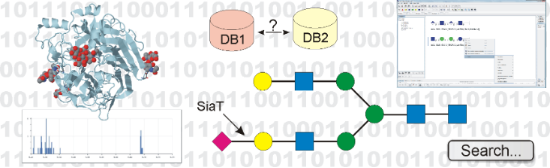
- that it provides information on proteins to which specific glycans were found to be attached, including details on glycosylation sites. The Japan Consortium for Glycobiology and Glycotechnology DataBase (JCGGDB) [34] provides a collection of individual databases that are cross-linked with each other
- used to create models of carbohydrate chains. The latter program can also perform in silico glycosylation by adding the glycan chains to a protein 3D structure, and provides input files for the AMBER [94][95] modeling programs using the GLYCAM force field [99]. Glycan 3D structures calculated by Sweet
- CHARMM [97] input files from PDB files that contain carbohydrates. Various tools to predict the occupancy state of potential glycosylation sites from protein sequence data are available as well (Table 5). If a protein–carbohydrate complex is to be modeled, generally available docking tools such as

Synthetic glycopeptides and glycoproteins with applications in biological research
Beilstein J. Org. Chem. 2012, 8, 804–818, doi:10.3762/bjoc.8.90
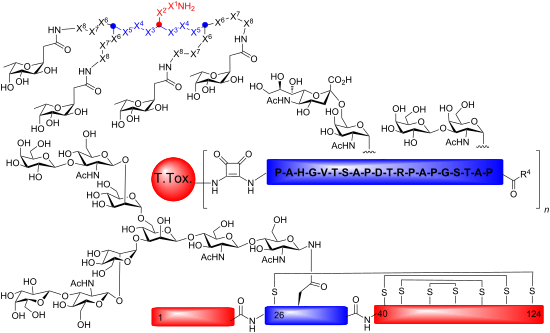
- -tuning of native chemical ligation (NCL), expressed protein ligation (EPL), and chemoenzymatic glycosylation techniques have all together enabled the synthesis of functional glycoproteins. The synthesis of structurally defined, complex glycopeptides or glyco-clusters presented on natural peptide
- glycosylation sites, is valuable for functional biological studies. Glycopeptides have, for instance, been applied to evaluate the role of conformational and proteolytic stability [6]. In other studies, synthetic glycopeptides have been employed in vaccines to induce specific immune responses or for the
- the discovery, by Springer et al., that glycoproteins on the outer cell membrane of epithelial tumor cells have an altered glycosylation consisting of the Thomsen-Friedenreich (T-) antigen and its precursor TN-antigen structure, the synthesis and evaluation of anti-tumor vaccines have been a topic of


An easily accessible sulfated saccharide mimetic inhibits in vitro human tumor cell adhesion and angiogenesis of vascular endothelial cells
Beilstein J. Org. Chem. 2012, 8, 787–803, doi:10.3762/bjoc.8.89
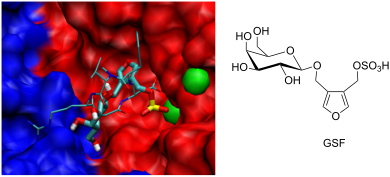
- among cells are mediated by binding of proteins such as lectins to oligosaccharides. Upon progression to higher malignancy, the glycosylation patterns of glycoproteins and glycosphingolipids on tumor cell surfaces undergo several alterations [6]. These changes are closely associated with distinct
- cellular processes, such as adhesion to the ECM, and modulation of the tumor-associated microenvironment, which represent advantages for the capacity of the cell to invade the host tissue and to secure undisturbed growth [7]. The glycosylation pattern of tumor cells is therefore the focus in the
- , represents a strong candidate for the design of saccharide mimetics to be used as anti-tumor drugs. Results and Discussion Syntheses of saccharide mimetics Glycosylation of 3,4-bis(hydroxymethyl)furan (1) with 1.0 equiv imidate 2 in CH2Cl2 afforded 48% of monosaccharide 3. The synthesis of (4-{[(β-D


Synthesis and antifungal properties of papulacandin derivatives
Beilstein J. Org. Chem. 2012, 8, 732–737, doi:10.3762/bjoc.8.82
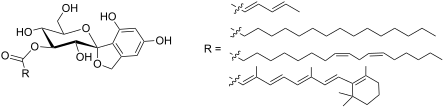
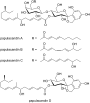
- glycal 18, led us to compound 37. This compound opens the way to a total synthesis of disaccharides such as the papulacandins A–C. Selective protection of the hydroxy group of C(6) followed by glycosylation of the hydroxy group at C(4), should accomplish this. In our biological assay we did not see any



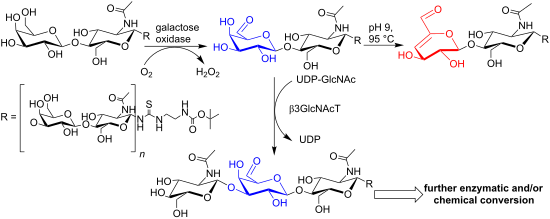
Chemo-enzymatic modification of poly-N-acetyllactosamine (LacNAc) oligomers and N,N-diacetyllactosamine (LacDiNAc) based on galactose oxidase treatment
Beilstein J. Org. Chem. 2012, 8, 712–725, doi:10.3762/bjoc.8.80
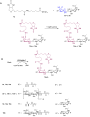
- experiment (bold printed in tables) and confirmed by the downfield glycosylation shift of the involved carbons (C-4 for Glc, C-3 for Gal). Chemical shifts of GlcNAc carbons C-2 agree with N-acetylation. Because of isomerism on the NH-C=S bond, signals of H-1A and CS were not detected. Chemical shifts of
- singlets. The above-mentioned spin systems were put together by using information extracted from the 1H,13C HMBC experiment (diagnostic correlations are bold printed in the Tables NMR 5 and NMR 6 in Supporting Information File 2). The glycosidic linkage was also demonstrated by the downfield glycosylation




An easy α-glycosylation methodology for the synthesis and stereochemistry of mycoplasma α-glycolipid antigens
Beilstein J. Org. Chem. 2012, 8, 629–639, doi:10.3762/bjoc.8.70
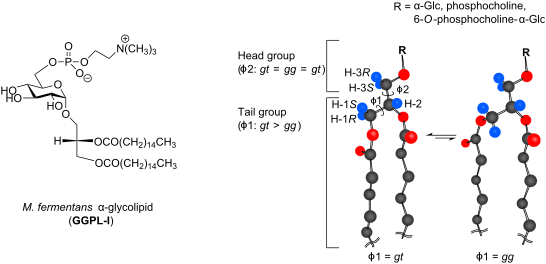
- one-pot α-glycosylation method was effectively applied. The synthetic GGPL-I isomers were characterized with 1H NMR spectroscopy to determine the equilibrium among the three conformers (gg, gt, tg) at the acyclic glycerol moiety. The natural GGPL-I isomer was found to prefer gt (54%) and gg (39
- the cytoplasm fluid membrane together with ubiquitous phospholipids, without inducing stereochemical stress. Keywords: cytoplasm membrane; glycolipid antigen; glycosylation; mycoplasma; stereochemistry; Introduction Mycoplasmas constitute a family of gram-positive microbes lacking rigid cell walls
- access to both a natural GGPL-I homologue (C16:0) and its diastereomer I-a and I-b, in which our one-pot α-glycosylation methodology [25][26] is effectively applied. The two GGPL-I isomers prepared thereby were characterized with 1H NMR spectroscopy, in terms of configuration and conformation at the


2-Allylphenyl glycosides as complementary building blocks for oligosaccharide and glycoconjugate synthesis
Beilstein J. Org. Chem. 2012, 8, 597–605, doi:10.3762/bjoc.8.66
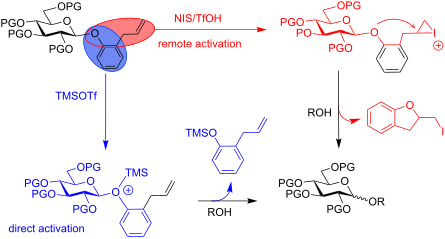
- activated for chemical glycosylation under a variety of conditions, through both direct and remote pathways. Differentiation between the two activation pathways was achieved in a mechanistic study. The orthogonal-type activation of the AP moiety along with common thioglycosides allows for the execution of
- efficient oligosaccharide assembly. Keywords: carbohydrates; glycosylation; leaving group; oligosaccharides; orthogonal strategy; selective activation; Introduction Current knowledge about the key roles of carbohydrates is still limited. However, thanks to the explosive growth of the field of glycobiology
- particularly stimulating for major scientific efforts in the field of modern glycosciences. The traditional chemical synthesis of oligosaccharides is lengthy because it involves multiple manipulations of protecting and/or leaving groups between glycosylation steps [5]. Many advanced strategies that shorten the


Electrochemical generation of 2,3-oxazolidinone glycosyl triflates as an intermediate for stereoselective glycosylation
Beilstein J. Org. Chem. 2012, 8, 456–460, doi:10.3762/bjoc.8.52
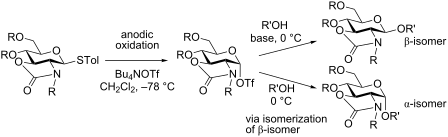
- temperatures. However, α-selectivity was observed in the absence of base at elevated reaction temperatures. In situ generated triflic acid promotes the isomerization of β-products to α-products. Keywords: amino sugar; anomerization; electrochemical oxidation; glycosylation; thioglycoside; Introduction
- glycosylations via glycosyl triflate intermediates. In this paper, we report the generation, accumulation, and characterization by low-temperature NMR analyses, of the corresponding glycosyl triflates. Electrochemical glycosylation of the thioglycoside donor with 2,3-oxazolidinone protecting group gave both 1,2
- carbon is around 100 ppm in all cases and the corresponding cross peaks of the anomeric protons and carbons were observed in HMQC spectra. Using electrochemically generated glycosyl triflate 2a, the stereoselectivity of the glycosylation was investigated by the addition of five equiv of various alcohols


Facile synthesis of nitrophenyl 2-acetamido-2-deoxy-α-D-mannopyranosides from ManNAc-oxazoline
Beilstein J. Org. Chem. 2012, 8, 428–432, doi:10.3762/bjoc.8.48
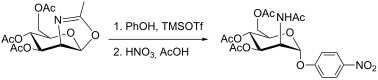
- , Czech Republic 10.3762/bjoc.8.48 Abstract The synthetic procedures for a large-scale preparation of o- and p-nitrophenyl 2-acetamido-2-deoxy-α-D-mannopyranoside are described. The synthetic pathway employs the glycosylation of phenol with ManNAc oxazoline, followed by nitration of the aromatic moiety
- yielding a separable mixture of the o- and p-nitrophenyl derivative in a 2:3 ratio. Keywords: α-ManNAc; glycosidase; glycosylation; nitrophenyl; oxazoline; Introduction Hexosamines are fundamental structural elements and precursors of the peptidoglycan and membrane lipopolysaccharide layer as well as of
- % yield) or from methyl 4,6-O-benzylidene-α-D-glucopyranoside (5 steps, 23%). Unfortunately, in our hands this synthetic procedure did not afford the published yields, namely in the triflate and consequent azide substitution steps. Oxazolines, such as 3, have been used as glycosylation agents in the





