


Search results
Search for "mechanistic studies" in Full Text gives 209 result(s) in Beilstein Journal of Organic Chemistry. Showing first 200.
Stereo- and regioselectivity of the hetero-Diels–Alder reaction of nitroso derivatives with conjugated dienes
Beilstein J. Org. Chem. 2016, 12, 1949–1980, doi:10.3762/bjoc.12.184
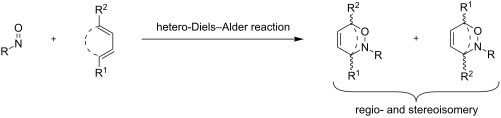
- hetero-Diels–Alder reaction. In the reaction of arylnitroso dienophiles containing a nitro group in close proximity to the reaction center, unsubstituted dienes show a higher reactivity than substituted dienes, due to steric effects. Mechanistic studies of the nitroso hetero-Diels–Alder reaction


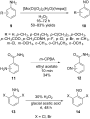


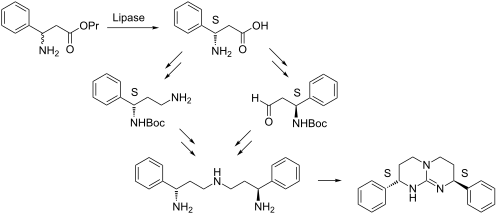
A chiral analog of the bicyclic guanidine TBD: synthesis, structure and Brønsted base catalysis
Beilstein J. Org. Chem. 2016, 12, 1870–1876, doi:10.3762/bjoc.12.176
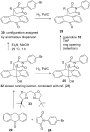
- the Michael products [19] which are the dominant products in polar solvents [25]. Previous mechanistic studies by Koerner and Rickborn [25] have collected strong arguments for a fast concerted [4 + 2]-cycloaddition of the deprotonated anthrone. Michael products were shown to be secondary products of a


From supramolecular chemistry to the nucleosome: studies in biomolecular recognition
Beilstein J. Org. Chem. 2016, 12, 1863–1869, doi:10.3762/bjoc.12.175
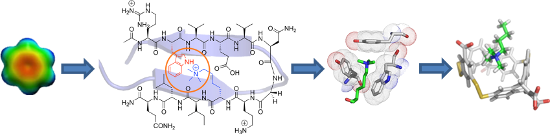
- organometallic methodology, asymmetric catalysis, total synthesis, and mechanistic studies. I opted for the latter and spent my Ph.D. studying the mechanism of the Wulff–Dötz reaction [1], while at the same time gaining a broad background in methodology and synthesis (Figure 2). I had a fantastic time in
- mimic, etc), only to find out after several months of synthesis that it did not function as planned! I wanted to utilize versatile chemistry that allowed me to synthesize and evaluate the compound of interest quickly and modify it rapidly for further mechanistic studies. This led me to become a peptide


Rh-Catalyzed reductive Mannich-type reaction and its application towards the synthesis of (±)-ezetimibe
Beilstein J. Org. Chem. 2016, 12, 1608–1615, doi:10.3762/bjoc.12.157
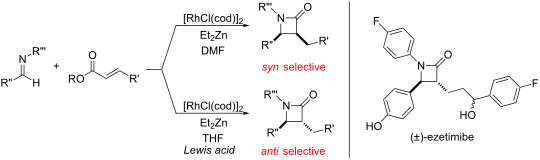
- . However, some of the reactions using β-substituted α,β-unsaturated esters did not afford the products or gave the products in very low yield (Scheme 2). Herein, we report an expansion for our previous reductive Mannich-type reaction and mechanistic studies for the stereoselectivity of this reaction


On the mechanism of imine elimination from Fischer tungsten carbene complexes
Beilstein J. Org. Chem. 2016, 12, 1322–1333, doi:10.3762/bjoc.12.125
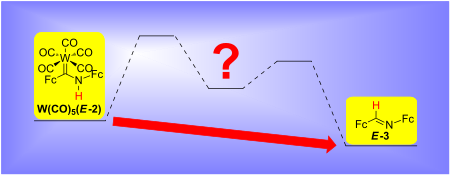
- mechanistic studies to the formation of imine E-3 are performed by NMR, IR and UV–vis spectroscopy and liquid injection field desorption ionization (LIFDI) mass spectrometry as well as by trapping experiments for low-coordinate tungsten complexes with triphenylphosphane. W(CO)5(E-2) decays thermally in a
- ) followed by detailed mechanistic studies regarding the formation of imine E-3 are presented including mass spectrometric, NMR, IR and UV–vis spectroscopic kinetic studies in combination with (TD)-DFT methods. Results and Discussion Synthesis of W(CO)5(E-2) The diferrocenyl NH carbene complex W(CO)5(E-2) is




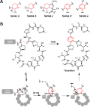
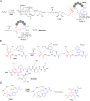
Cyclisation mechanisms in the biosynthesis of ribosomally synthesised and post-translationally modified peptides
Beilstein J. Org. Chem. 2016, 12, 1250–1268, doi:10.3762/bjoc.12.120
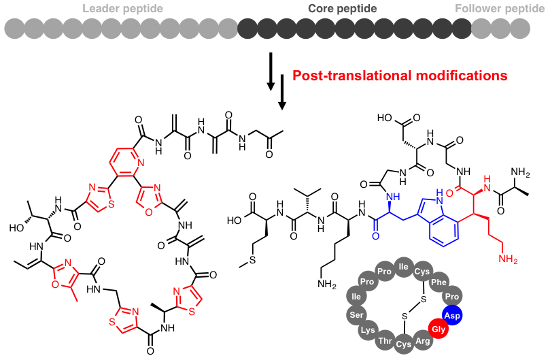
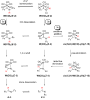
- -terminal dehydratase domain and a C-terminal LanC-like cyclase domain, and detailed mechanistic studies on LamM enzymes was enabled by the in vitro reconstitution of lacticin 481 synthetase, LctM [47][54][55][56]. Both class III (“LanKC” [57]) and IV (“LanL” [49]) synthetases feature three domains, where a





Chiral cyclopentadienylruthenium sulfoxide catalysts for asymmetric redox bicycloisomerization
Beilstein J. Org. Chem. 2016, 12, 1136–1152, doi:10.3762/bjoc.12.110
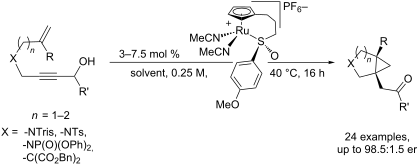
- and selectivity [24] (Scheme 2a). Unfortunately, the scope of this reaction is rather limited, as this is the only example presented in the paper. Mechanistic studies performed by the same group on this system support a hydropalladation/cyclization/β-hydride elimination mechanism. Rhodium catalysis of
- lithium aluminum hydride in excellent yield. The absolute configuration of the [3.1.0] pyrrolidines was assigned by analogy to 76, which was determined to be (R,R) by single crystal X-ray crystallography. Mechanistic studies After having successfully developed this synthetic methodology, a few questions


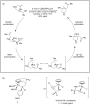


Cationic Pd(II)-catalyzed C–H activation/cross-coupling reactions at room temperature: synthetic and mechanistic studies
Beilstein J. Org. Chem. 2016, 12, 1040–1064, doi:10.3762/bjoc.12.99
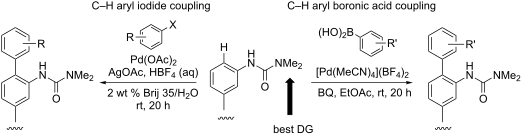
- temperature. In this account we disclose, in addition to full details associated with this C–H activation chemistry, additional applications of room temperature Fujiwara–Moritani reactions including a synthesis of the herbicide boscalid, as well as spectroscopic and mechanistic studies. Results and Discussion
- favorably with all known routes to this pesticide shown in Scheme 6 [86][208][209][210][211][212][213]. Mechanistic insight Although there have been a number of mechanistic studies on C–H activation reactions involving neutral palladium species [34][108][109][110][111][112][113][114][115][116][117][118][119






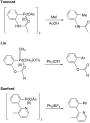
Catalytic asymmetric synthesis of biologically important 3-hydroxyoxindoles: an update
Beilstein J. Org. Chem. 2016, 12, 1000–1039, doi:10.3762/bjoc.12.98
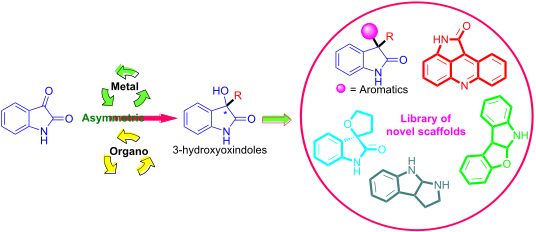
- diastereoselectivities (all >95:5 dr) and enantioselectivities (up to >99% ee, Scheme 58) [75]. Mechanistic studies showed that this cascade reaction proceeded via a vinylogous Michael addition/Friedel–Crafts process involving a dual H-bonding activation of substrates. In 2015, Wang and co-workers reported Lewis acid


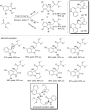


The synthesis of functionalized bridged polycycles via C–H bond insertion
Beilstein J. Org. Chem. 2016, 12, 985–999, doi:10.3762/bjoc.12.97
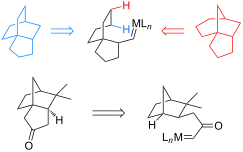
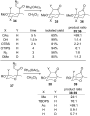
- . Carbene cascade for fused bicycles. Cascade formation of bridged rings. Conformational effects. Hydrazone cascade reaction. Mechanistic studies. Gold carbene formation from alkynes. Au-catalyzed bridged-bicycle formation. Gold carbene/alkyne cascade. Gold carbene/alkyne cascade with C–H bond insertion




Enantioselective carbenoid insertion into C(sp3)–H bonds
Beilstein J. Org. Chem. 2016, 12, 882–902, doi:10.3762/bjoc.12.87
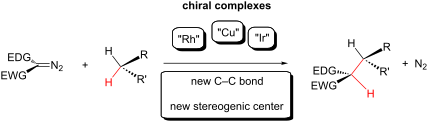
- is an important tool for the synthesis of complex molecules due to the high control of enantioselectivity in the formation of stereogenic centers. This paper presents a brief review of the early issues, related mechanistic studies and recent applications on this chemistry area. Keywords: C–H


(Thio)urea-mediated synthesis of functionalized six-membered rings with multiple chiral centers
Beilstein J. Org. Chem. 2016, 12, 462–495, doi:10.3762/bjoc.12.48
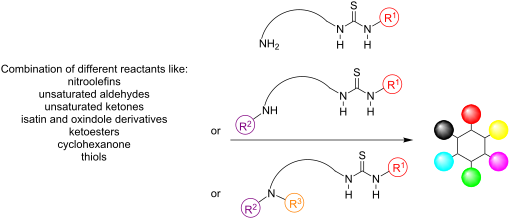
- reaction between malonitirile 184 and substituted aromatic imine 185 catalyzed by bifunctional thiourea 88 (Scheme 60) [81]. Many functional groups were tolerated, obtaining the desired densely functionalized tetrahydroquinolines 186. Additional mechanistic studies by the authors strongly suggest the
- to be employed in order to obtain spiro-dihydropyran-oxindole derivatives 231 in good to excellent yields, using catalyst 232 (Scheme 72) [91]. The mechanistic studies showed that the 3,5-bis(trifluoromethyl)phenyl group was an essential component of the thiourea catalyst. After the optimization of


Enantioselective [3 + 2] annulation of α-substituted allenoates with β,γ-unsaturated N-sulfonylimines catalyzed by a bifunctional dipeptide phosphine
Beilstein J. Org. Chem. 2016, 12, 343–348, doi:10.3762/bjoc.12.37
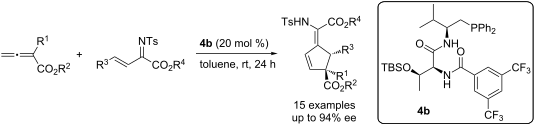
- reactions yielded highly functionalized cyclopentenes with an all-carbon quaternary center in moderate to good yields and good to excellent enantioselectivities. Further extension of the reaction reported herein and mechanistic studies are ongoing in our laboratory. Experimental General procedure for the [3


Enantioselective additions of copper acetylides to cyclic iminium and oxocarbenium ions
Beilstein J. Org. Chem. 2015, 11, 2696–2706, doi:10.3762/bjoc.11.290
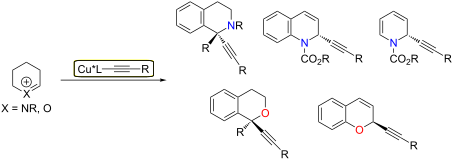
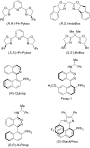
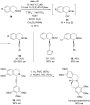
- high levels of enantioselectivity. This lack is likely due to the multiple possibilities for copper acetylide structures (monomer, dimer, dicopper acetylide, etc.) [18][59][60][61][62][63][64][65]. Careful mechanistic studies to elucidate the structures of chiral copper acetylides and to provide





Iron complexes of tetramine ligands catalyse allylic hydroxyamination via a nitroso–ene mechanism
Beilstein J. Org. Chem. 2015, 11, 2549–2556, doi:10.3762/bjoc.11.275
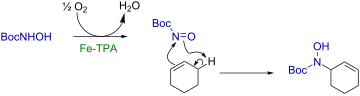
- is a trickier proposition [14], although this has been demonstrated in an intramolecular context [22]. Mechanistic studies Previous studies of iron-promoted allylic amination reactions with N-phenylhydroxylamine, and copper-catalysed reactions with N-Boc-hydroxylamine (8) return regio- and


Beyond catalyst deactivation: cross-metathesis involving olefins containing N-heteroaromatics
Beilstein J. Org. Chem. 2015, 11, 2223–2241, doi:10.3762/bjoc.11.241
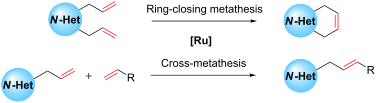
- in the literature. In addition, recent mechanistic studies have focused on the rationalization of nitrogen-induced catalysts deactivation. The purpose of this mini-review is to give a brief overview of successful metathesis reactions involving olefins containing N-heteroaromatics in order to
- especially as a simple chlorine substituent is sufficient to allow the metathesis to proceed (Table 5). Conclusion N-Heteroaromatics are known to have a deleterious impact on metathesis by inducing ruthenium catalysts deactivation. Based on NMR and kinetic mechanistic studies, Lewis and/or Brønsted basicity


Molecular-oxygen-promoted Cu-catalyzed oxidative direct amidation of nonactivated carboxylic acids with azoles
Beilstein J. Org. Chem. 2015, 11, 2158–2165, doi:10.3762/bjoc.11.233
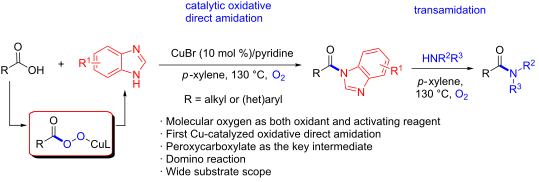
- scope. The mechanistic studies reveal that oxygen plays an essential role in the success of the amidation reactions with copper peroxycarboxylate as the key intermediate. Transamidation occurs smoothly between azole amide and a variety of amines. Keywords: amidation; azoles; Cu-catalyzed; molecular




Computational study of productive and non-productive cycles in fluoroalkene metathesis
Beilstein J. Org. Chem. 2015, 11, 2150–2157, doi:10.3762/bjoc.11.232
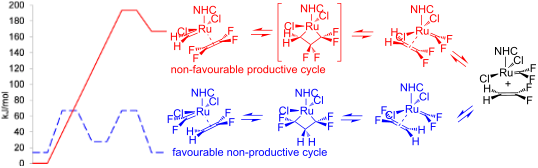
- valuable in the study of reaction mechanisms. In particular, the use of time-efficient DFT methods for the theoretical study of alkene metathesis has been extensively reviewed [9][10][11] and computational results have been found to agree well with recent experimental mechanistic studies based on easily




C–H bond halogenation catalyzed or mediated by copper: an overview
Beilstein J. Org. Chem. 2015, 11, 2132–2144, doi:10.3762/bjoc.11.230
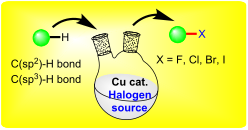
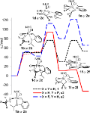
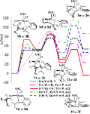
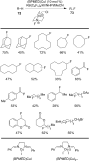
- modified catalytic conditions (Scheme 11). However, it was found that the oxidative bromination of phenols exhibited generally lower para regioselectivity than the corresponding chlorination [49]. Mechanistic studies on these reactions indicated that the halogenation reactions proceeded via a free radical


Preparative semiconductor photoredox catalysis: An emerging theme in organic synthesis
Beilstein J. Org. Chem. 2015, 11, 1570–1582, doi:10.3762/bjoc.11.173
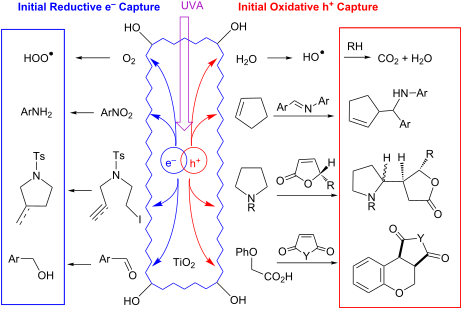
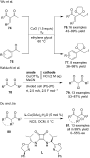
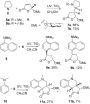
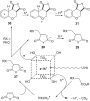
- discoveries of SCPC mediated bond forming processes Several investigations during the 80s and early 90s demonstrated that bond forming organic transformations could be accomplished using SCPC [30][31][32][33][34], but these were mainly spectroscopic and/or mechanistic studies on the formation of well-known







Surprisingly facile CO2 insertion into cobalt alkoxide bonds: A theoretical investigation
Beilstein J. Org. Chem. 2015, 11, 1340–1351, doi:10.3762/bjoc.11.144
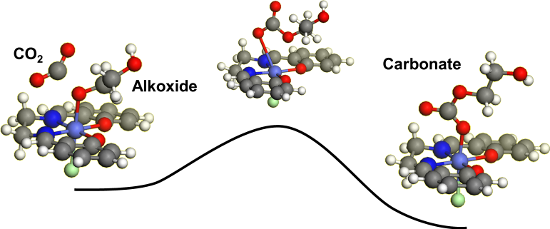
- feasible. In mechanistic studies on zinc dicarboxylates and their application in the heterogeneously catalysed copolymerisation of CO2 and epoxides a bimetallic mechanism was proposed [31]. As post-modification of the prepared catalysts with water proved to be important for the activity of the catalysts


Are D-manno-configured Amadori products ligands of the bacterial lectin FimH?
Beilstein J. Org. Chem. 2015, 11, 1096–1104, doi:10.3762/bjoc.11.123
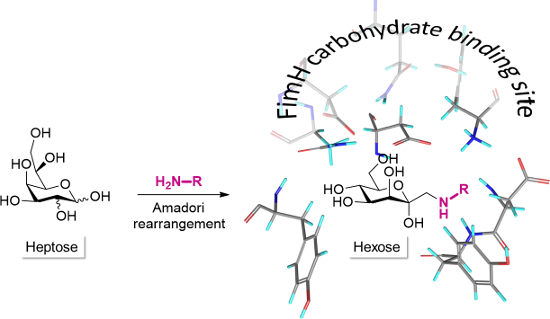
- potential as therapeutics and as tools for mechanistic studies in biology. This is because they are not sensitive towards enzymatic hydrolysis such as in physiological environment, in contrast to the naturally occurring O- and N-glycosides. With respect to our long-lasting interest in the design and


Radical-mediated dehydrative preparation of cyclic imides using (NH4)2S2O8–DMSO: application to the synthesis of vernakalant
Beilstein J. Org. Chem. 2015, 11, 1008–1016, doi:10.3762/bjoc.11.113
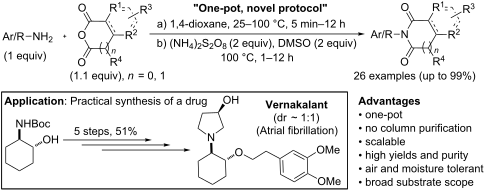
- /unsubstituted aromatic amines and unsaturated anhydridesa. Imides from aliphatic amines and saturated anhydridesa. Supporting Information Supporting Information File 116: Experimental details, characterization data, copies of NMR spectra of all compounds and the details of mechanistic studies


Further exploration of the heterocyclic diversity accessible from the allylation chemistry of indigo
Beilstein J. Org. Chem. 2015, 11, 481–492, doi:10.3762/bjoc.11.54
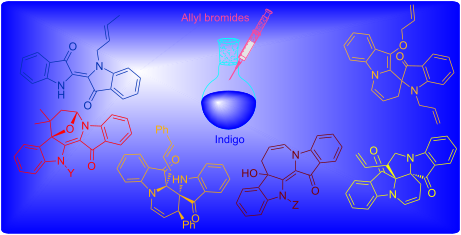
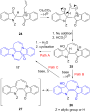
- the possibility for variations outside these complex sequences, for example the radical-induced 1,3-shift of a cinnamyl moiety, likely to occur at a point buried within the mechanistic mix illustrated in Scheme 9. Clearly, further mechanistic studies will be required to continue to explain the




A procedure for the preparation and isolation of nucleoside-5’-diphosphates
Beilstein J. Org. Chem. 2015, 11, 469–472, doi:10.3762/bjoc.11.52
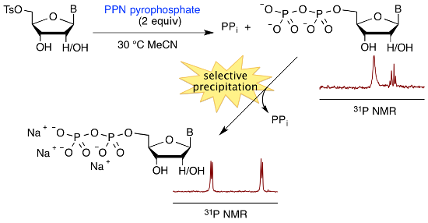
- synthesis; nucleic acids; nucleoside-5’-diphosphate; phosphorylation; Introduction Nucleoside-5'-phosphates are key to many mechanistic studies and chemical biology applications [1][2][3]. Synthetic approaches towards nucleoside-5'-phosphates are well-established [4], however, the methods tend to be





