Search results
Search for "thiophene" in Full Text gives 267 result(s) in Beilstein Journal of Organic Chemistry. Showing first 200.
Isoxazole derivatives as new nitric oxide elicitors in plants
Beilstein J. Org. Chem. 2017, 13, 659–664, doi:10.3762/bjoc.13.65
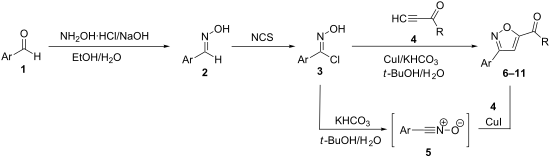
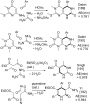
- procedures towards isoxazole derivatives were developed [36][37]. As part of our continued efforts to develop simple synthetic routes towards bioactive heterocyclic compounds [38][39][40][41][42][43], we report here the synthesis of several 3,5-isoxazole derivatives, bearing benzo[1,3]dioxole and thiophene
- ]. The thiophene is a core system of a large number of bioactive molecules such as antineoplastic agents [49], non-steroidal anti-inflammatory drugs [50] or compounds with antibacterial activities against several Gram-positive strains [51]. Thus, 3,5-disubstituted isoxazole derivatives were obtained by


Synthesis and optical properties of new 5'-aryl-substituted 2,5-bis(3-decyl-2,2'-bithiophen-5-yl)-1,3,4-oxadiazoles
Beilstein J. Org. Chem. 2017, 13, 313–322, doi:10.3762/bjoc.13.34
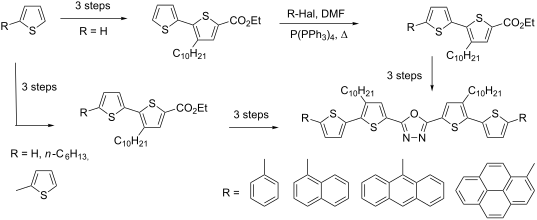
- ) The ethyl esters of 2,2'-bithiophenes 7 having no (7a), an alkyl (7b), or a thienyl (7c) substituent in the C-5' position can be easily obtained by this method. On the other hand, the substitution of the thiophene ring with phenyl or fused aromatic rings is much more challenging and requires the
- between 389 and 409 nm, ascribed to the π–π* transition. A comparison of the absorption spectra of 15b and 15c–g indicates that the presence of a thiophene ring or carboaromatic substituents at the C-5' position in the 2,5-bis(2,2'-bithiophen-5-yl)-1,3,4-oxadiazole leads to a slight bathochromic shift of
- to the π–π* transition for the studied thiophene, phenyl, naphthalene and anthracene-substituted derivatives, shows a small hypsochromic shift with increasing spatial volume of the substituent R. This observation is in a full accordance with the aforementioned relationship of the molecule planarity


The reductive decyanation reaction: an overview and recent developments
Beilstein J. Org. Chem. 2017, 13, 267–284, doi:10.3762/bjoc.13.30
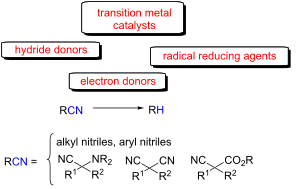
- less reactive nitriles, the C–CN bond cleavage usually requires hydrogen under pressure and high temperatures [86]. Tao et al. reported the decyanation of 2-cyanobenzo[b]thiophene using hydrogen and Pd, Pt/TiO2 or Pd/TiO2-Cu as catalyst at 200–300 °C with yields varying from 79 to 90% (Scheme 14) [87
- both methods (34h) but, with the bromo counterpart, dehalogenation also occurs. 2-Cyanothiophene results in quantitative yield of thiophene 60 with both methods but cyanopyridines are not converted, probably due to the coordination abilities of the pyridine. Finally, decanenitrile is decyanated with
- reduction by NaH [81]. Reductive decyanation catalyzed by nickel nanoparticles. Yields are given in weight % from GC–MS data [85]. Decyanation of 2-cyanobenzo[b]thiophene [87]. Simplified pathways involved in transition-metal-promoted reductive decyanations [93][95]. Fe-catalyzed reductive decyanation


Regiochemistry of cyclocondensation reactions in the synthesis of polyazaheterocycles
Beilstein J. Org. Chem. 2017, 13, 257–266, doi:10.3762/bjoc.13.29
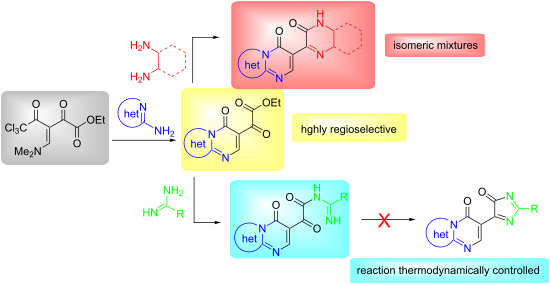
- , thiophene-2-glyoxylic acid, and N-(2-amino-4-nitrophenyl)acetamide, in accordance with the mechanism proposed in this work. To rationalize why the cyclization reaction between the amidines 8g,h and the α-ketoester did not occur, the HOMO coefficient and charge densities for the nitrogens of the amidine were


A versatile route to polythiophenes with functional pendant groups using alkyne chemistry
Beilstein J. Org. Chem. 2016, 12, 2682–2688, doi:10.3762/bjoc.12.265
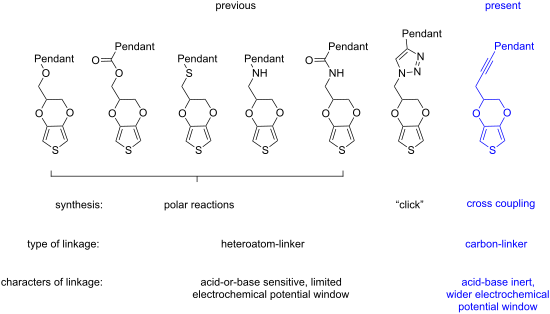
- polymers; polythiophene; Sonogashira coupling; thiophene; Introduction Currently organic conjugated polymers are attracting considerable interest for various applications in plastic electronics. In particular, poly(3,4-ethylenedioxythiophene) (PEDOT) [1] and its derivatives [2][3][4][5][6][7] play an
- , these functionalizations require only readily available starting materials. A related concept, i.e., attachment of a terminal alkyne moiety to the polymerizable thiophene derivative ProDOT, an EDOT analogue, and its utilization for “click“ chemistry has been reported [28]. However, this involved an
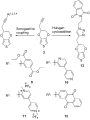
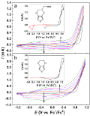
- phthalimide-EDOT derivative 13 failed to polymerize. A plausible reason could be an interference of the electron rich aromatic moieties with the thiophene radical cations formed during polymerization, in analogy to previous suggestions from Bäuerle et al. for triazolomethyl-substituted EDOT. Post


Effects of solvent additive on “s-shaped” curves in solution-processed small molecule solar cells
Beilstein J. Org. Chem. 2016, 12, 2543–2555, doi:10.3762/bjoc.12.249
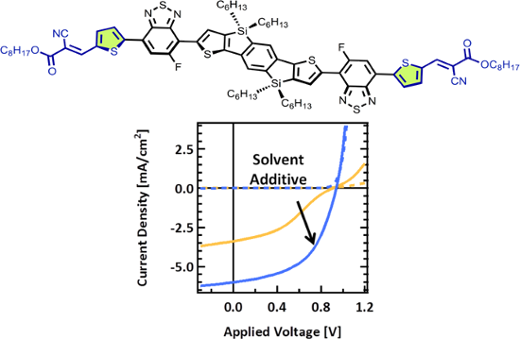
- -silolo[3,2-b]thiophene-2,2′-diyl)bis(6-fluoro-4-(5′-hexyl-[2,2′-bithiophene]-5-yl)benzo[c][1,2,5]thiadiazole, p-SIDT(FBTTh2)2, (Figure 1), we have modified the conjugated backbone to include electron-withdrawing octyl cyanoacetate (CA8) end groups, essentially forming an “A1–D1–A2–D2–A2–D1–A1” molecular
- skeleton, benzo[1,2-b:4,5-b]bis(4,4′-dihexyl-4H-silolo[3,2-b]thiophene-2,2′-diyl)bis(6-fluoro-4-((E)-octyl-3-(5-thiophen-2-yl)-2-cyanoacrylate]-5-yl)benzo[c][1,2,5]thiadiazole, p-SIDT(FBTThCA8)2. We will show that this molecular substitution did indeed significantly reduce the bandgap while maintaining


A new paradigm for designing ring construction strategies for green organic synthesis: implications for the discovery of multicomponent reactions to build molecules containing a single ring
Beilstein J. Org. Chem. 2016, 12, 2420–2442, doi:10.3762/bjoc.12.236
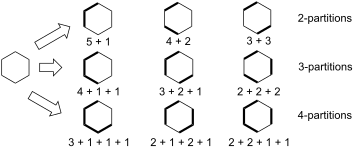
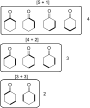
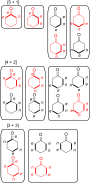
- dihydropyridine, hydantoin, imidazole, indole, isoquinoline, isoxazole, oxazole, 4H-pyran, pyrazine, pyridazine, pyridine, pyridinone, pyrimidine, pyrimidone, pyrrole, 3H-quinazolin-4-one, quinoline, 1H-quinolin-4-one, and thiophene. For heterocycles that are composed of a fused aromatic ring, such as








High performance p-type molecular electron donors for OPV applications via alkylthiophene catenation chromophore extension
Beilstein J. Org. Chem. 2016, 12, 2298–2314, doi:10.3762/bjoc.12.223
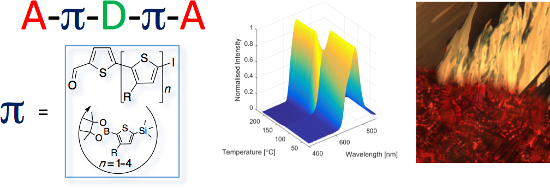
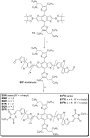
- , Melbourne, Australia 10.3762/bjoc.12.223 Abstract The synthesis of key 4-alkyl-substituted 5-(trimethylsilyl)thiophene-2-boronic acid pinacol esters 3 allowed a simplified alkylthiophene catenation process to access bis-, ter-, quater-, and quinquethiophene π-bridges for the synthesis of acceptor–π-bridge
- recently used side-chain engineering, through regioregular placement of hexyl side chains on a thiophene π-bridge [13], to generate a MM with a planar core structure and enhanced device performance, up to 9.3% power conversion efficiency (PCE) [14]. This material, built from three key building blocks
- -bromothiophene-2-carboxaldehyde to generate the bithiophene 4, Scheme 3. It has previously been reported that direct coupling of 2-(trimethylsilyl)thiophene with aryl halides proceeds in good yield with protodesilylation being the major side reaction under the reaction conditions, even at short reaction times




Regiocontroled Pd-catalysed C5-arylation of 3-substituted thiophene derivatives using a bromo-substituent as blocking group
Beilstein J. Org. Chem. 2016, 12, 2197–2203, doi:10.3762/bjoc.12.210
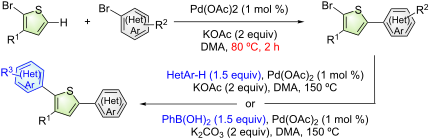
- “green” access to arylated thiophene derivatives as it reduces the number of steps to prepare these compounds and also the formation of wastes. Keywords: aryl bromides; C–H bond activation; catalysis; direct arylation; palladium; thiophenes; Introduction Thiophene derivatives bearing aryl substituents
- -substituted thiophene derivatives is an important topic in sustainable chemistry [4]. Stille or Suzuki palladium-catalysed coupling reactions [5][6][7][8][9][10] are some of the most efficient methods for the preparation of 5-arylated 3-substituted thiophenes [11][12][13][14]. However, before these coupling
- reactions can be performed, an organometallic compound must be synthesized. In 1990, Ohta and co-workers described the Pd-catalysed direct arylation of thiophene derivatives by coupling reaction with aryl halides [15][16]. This is a highly powerful method for a greener access to a very broad range of




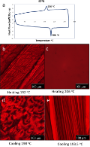
Comparing blends and blocks: Synthesis of partially fluorinated diblock polythiophene copolymers to investigate the thermal stability of optical and morphological properties
Beilstein J. Org. Chem. 2016, 12, 2150–2163, doi:10.3762/bjoc.12.205
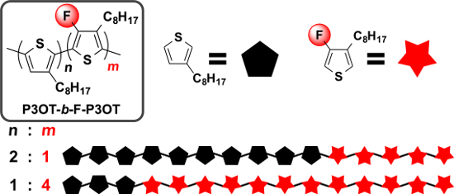
- KCTP using a method analogous to that used for thiophene-selenophene block copolymers [26]. Due to the much lower solubility of F-P3OT compared to P3OT, the more soluble P3OT block was grown first from the activated monomer 2, followed by the addition of 4 to the P3OT macroinitiator. Relative block
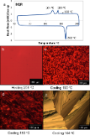
- washing. The true relative block lengths were calculated from the 1H NMR spectra of the purified polymers, based on the relative intensities of the signals assigned to the methylene protons adjacent to the thiophene ring (Figure 2). Due to the reduced solubility of the polymers, the spectra were recorded
- -rich polymer chains is found to be substantially different to the corresponding blend at temperatures below the thermal transition. While the intensity of the thiophene C=C stretching mode steadily decreases with increasing temperature in the case of the blend, it remains constant in the block


Thiophene-forming one-pot synthesis of three thienyl-bridged oligophenothiazines and their electronic properties
Beilstein J. Org. Chem. 2016, 12, 2055–2064, doi:10.3762/bjoc.12.194
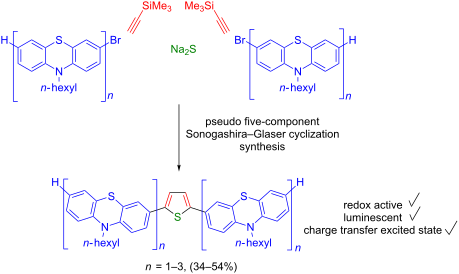
- electronics [37][38][39][40]. In comparison to thiophene, phenothiazine, a tricyclic dibenzo-1,4-thiazine, possesses a significantly lower oxidation potential, similar to aniline. However, phenothiazine derivatives form stable deeply colored radical cations with perfect Nernstian reversibility [41][42][43][44
- to form self-assembled monolayers on gold [69][70][71] as well as on zinc and iron oxide surfaces [72]. Conceptually, thienyl-bridged oligophenothiazines can be considered as a novel type of structurally well-defined electron-rich oligophenothiazine–thiophene hybrids (Figure 1). Thereby, the strong
- luminescent 2,5-di(hetero)arylfurans [77] could open a highly convergent thiophene forming approach to the proposed title compounds. Here, we report the pseudo five-component synthesis of three thienyl-bridged oligophenothiazines by a one-pot Sonogashira–Glaser cyclization sequence and the electronic


Application of heterocyclic aldehydes as components in Ugi–Smiles couplings
Beilstein J. Org. Chem. 2016, 12, 2032–2037, doi:10.3762/bjoc.12.191
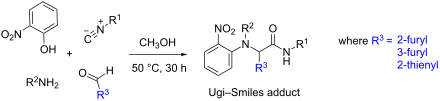
- barriers associated with the use of heterocyclic aldehydes, compared to simple aliphatic aldehydes, providing access to Ugi–Smiles adducts. The use of a sulfur-based heterocyclic aldehyde, thiophene-2-carboxaldehyde, provided the Ugi–Smiles adducts in low yields (Scheme 3). While such thienyl-substituted
- observed for 2- and 3-furaldehyde with a variety of amine components. In the presence of a competent dienophile, the Ugi–Smiles coupling is followed by a facile intramolecular Diels–Alder cycloaddition to generate oxatricyclic N-arylepoxyisoindolines. Initial results with thiophene-2-carboxaldehyde show


Effect of the π-conjugation length on the properties and photovoltaic performance of A–π–D–π–A type oligothiophenes with a 4,8-bis(thienyl)benzo[1,2-b:4,5-b′]dithiophene core
Beilstein J. Org. Chem. 2016, 12, 1788–1797, doi:10.3762/bjoc.12.169
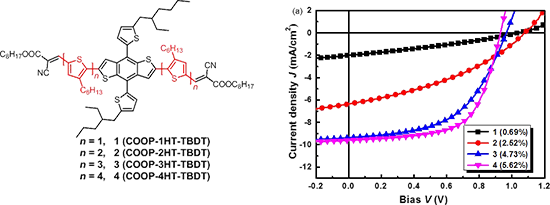
- characterization of BDT derivatives based on oligothiophene π-bridges with more than three thiophene units [27], where symmetric quater- and quinquethiophenes were used as the π-conjugation bridge. Surprisingly, the quaterthiophene-bridged compound showed the worst photovoltaic performance when blending with a



Rearrangements of organic peroxides and related processes
Beilstein J. Org. Chem. 2016, 12, 1647–1748, doi:10.3762/bjoc.12.162
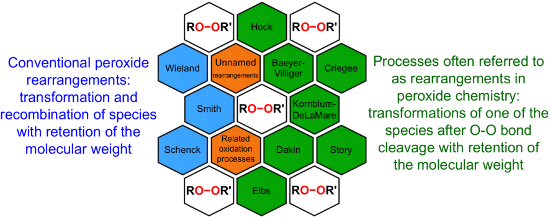
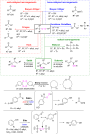
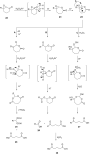
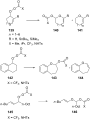
- synthesis of various heterocyclic systems, such as furan, thiophene, and pyrrole derivatives. The reaction of unsymmetrical epoxy dioxanes 290a–d with triethylamine is accompanied by the 1,2-dioxane-ring opening to form 4-hydroxy-2,3-epoxy ketones 291a–d in high yields. The base catalysis involves the











Synthesis and characterization of benzodithiophene and benzotriazole-based polymers for photovoltaic applications
Beilstein J. Org. Chem. 2016, 12, 1629–1637, doi:10.3762/bjoc.12.160
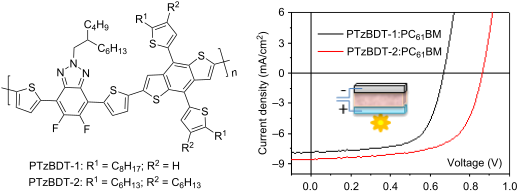
- -conjugation from the backbone to the lateral substituent (2D π-conjugated systems), thus leading to a bandgap reduction and higher charge carrier mobilities [15][16][17][18]. On the other hand, the Tz moiety, usually sandwiched between adjacent thiophene spacers to limit the inter-monomers steric hindrance
- PTzBDT-2 (Scheme 1), based on Tz and BDT moieties. The Tz ring was substituted with an asymmetrically branched alkyl side chain and sandwiched between two thiophene rings. The chemical structure of the Tz based monomer was made to be the same in both polymers for the comparative study. On the other hand
- polymers were determined using size exclusion chromatography and the results are summarized in Table 1. PTzBDT-2 showed a higher molecular weight (Mn = 41.7 kDa) due to the two n-hexyl solubilizing alkyl side chains per thiophene attached to the BDT core unit. On the contrary, PTzBDT-1 with a relatively


Synthesis of ferrocenyl-substituted 1,3-dithiolanes via [3 + 2]-cycloadditions of ferrocenyl hetaryl thioketones with thiocarbonyl S-methanides
Beilstein J. Org. Chem. 2016, 12, 1421–1427, doi:10.3762/bjoc.12.136
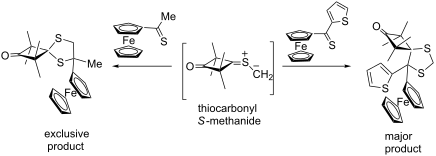
- described [1]. The latter substrates were prepared efficiently via acylation of ferrocene with in situ generated mixed anhydrides containing a trifluoroacetyl unit or, alternatively, by ferrocenylation of furan, thiophene or selenophene with mixed trifluoroacetyl anhydride. The obtained ferrocenyl
- polar axis, but achiral. Refinement of the absolute structure parameter [14][15] yielded a value of 0.13(1), which indicates that the crystal is a partial inversion twin with a major twin fraction of 0.87(1). In the cases of 5e and 5f, the thiophene and selenophene rings are disordered over two


Biradical vs singlet oxygen photogeneration in suprofen–cholesterol systems
Beilstein J. Org. Chem. 2016, 12, 1196–1202, doi:10.3762/bjoc.12.115
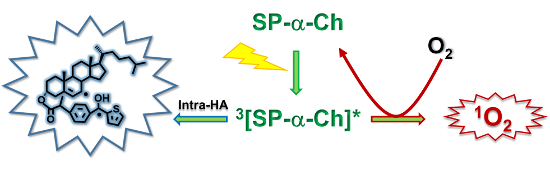
- relevant interaction was found between the allylic proton at C7 and the protons of the thiophene ring (Figure 4). More details are provided in the Supporting Information File 1. Having established the nature of the occurring photochemical reactions, it appeared interesting to explore the possible


The role of alkyl substituents in deazaadenine-based diarylethene photoswitches
Beilstein J. Org. Chem. 2016, 12, 1103–1110, doi:10.3762/bjoc.12.106
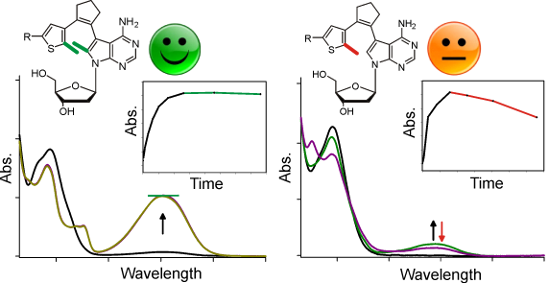
- benzenesulfonyl chloride, resulting in a four-fold increased yield of 6 compared to the original route. The other part of the diarylethene, namely the cyclopentenyl bridge with the attached substituted thiophene ring was furnished as shown in Scheme 3 and activated as boronic acid pinacolate ester. Suzuki


Syntheses of dibenzo[d,d']benzo[2,1-b:3,4-b']difuran derivatives and their application to organic field-effect transistors
Beilstein J. Org. Chem. 2016, 12, 805–812, doi:10.3762/bjoc.12.79
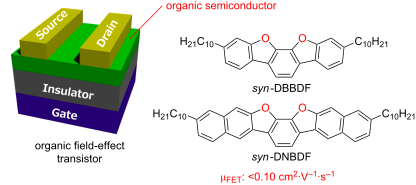
- far reported, thiophene-fused π-conjugated compounds have been widely studied as organic semiconducting materials and found to exhibit high semiconducting performances [5][13][14][15][16]. Furan-containing π-conjugated compounds have attracted less attention until recently [17][18][19][20][21][22][23




Iridium/N-heterocyclic carbene-catalyzed C–H borylation of arenes by diisopropylaminoborane
Beilstein J. Org. Chem. 2016, 12, 654–661, doi:10.3762/bjoc.12.65

- instability of 11-B during isolation (Table 2, entry 8). Our protocol was able to borylate non-benzofused five-membered heteroarenes. Pyrrole 12 was much less reactive than indoles, and required neat conditions to obtain a modest yield of the borylated product 12-B (Table 2, entry 9). Thiophene (13) afforded


Copper-mediated arylation with arylboronic acids: Facile and modular synthesis of triarylmethanes
Beilstein J. Org. Chem. 2016, 12, 496–504, doi:10.3762/bjoc.12.49
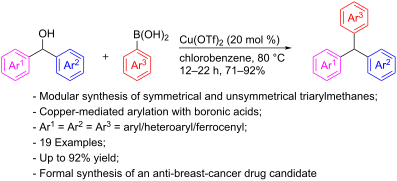
- respective pyrene-containing unsymmetrical triarylmethanes 11q–r in good yields (Table 3). Next, the coupling reaction of phenyl(ferrocenyl)methanol (9d) with thiophen-3-ylboronic acid (10m) provided triarylmethane 11s, which has ferrocene, thiophene and phenyl rings installed on the central carbon. The


A quadruple cascade protocol for the one-pot synthesis of fully-substituted hexahydroisoindolinones from simple substrates
Beilstein J. Org. Chem. 2016, 12, 253–259, doi:10.3762/bjoc.12.27
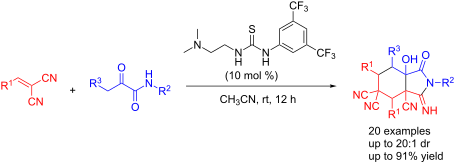
- , entry 11). A heteroaromatic substrate such as thiophene could also be successfully employed to afford rac-3 with medium yield and diastereoselectivity (Table 2, entry 13). 3,4-Dichloro-substituted and 3,5-dimethoxy-substituted substrates produced the desired products in 84% and 55% yield with 20:1 and


Hydroquinone–pyrrole dyads with varied linkers
Beilstein J. Org. Chem. 2016, 12, 89–96, doi:10.3762/bjoc.12.10
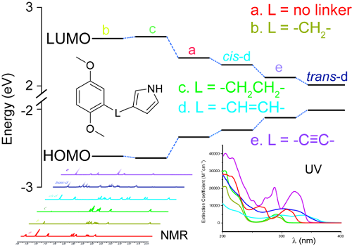
- utilized for C–C cross coupling of benzyl halides with heteroarylboronic acids. However, in contrast to its use for the synthesis of thiophene and furane derivatives, it has rarely been employed for the coupling of pyrrolylboronic acids with benzyl halides [13][14][15][16][17]. We applied the Suzuki


N-Methylphthalimide-substituted benzimidazolium salts and PEPPSI Pd–NHC complexes: synthesis, characterization and catalytic activity in carbon–carbon bond-forming reactions
Beilstein J. Org. Chem. 2016, 12, 81–88, doi:10.3762/bjoc.12.9
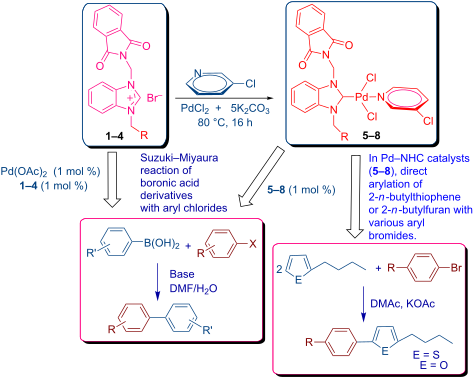
- entry 9. However, when we further increased the temperature by more than 30 degrees to 110 °C, a maximum yield of 98% was obtained (Table 1, entry 11). In the reaction catalyzed by 5, 2-butyl-5-(4-methoxyphenyl)thiophene was obtained in 79% yield (Table 1, entry 12). Catalytic activity of synthesized
- –NHC complex as catalyst resulted in low yields and conversions (Table 3, entries 9–12). The usage of the morpholinoethyl substituted benzimidazolium compound 4 with Pd(OAc)2 resulted in higher yields of 2-(4-nitrophenyl)benzo[b]thiophene compared to the usage of compounds 1–3. Generally, the PEPPSI Pd


Pyridylidene ligand facilitates gold-catalyzed oxidative C–H arylation of heterocycles
Beilstein J. Org. Chem. 2015, 11, 2737–2746, doi:10.3762/bjoc.11.295
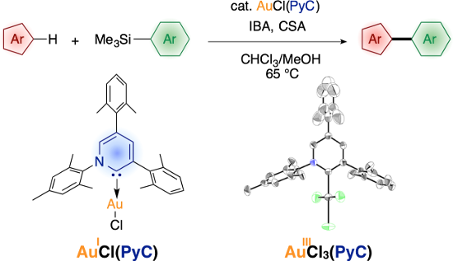
- reaction gave sterically congested heterobiaryl 3da in 17% yield (Table 2, entry 8). In the case of the reaction of indole 1e, 3-arylindole 3ea was exclusively obtained in 44% yield (Table 2, entry 9). On the other hand, arylation of benzo[b]thiophene (1f) mainly afforded 2-arylbenzothiophene 3fa along