


Search results
Search for "alkaloid" in Full Text gives 241 result(s) in Beilstein Journal of Organic Chemistry. Showing first 200.
Boron-substituted 1,3-dienes and heterodienes as key elements in multicomponent processes
Beilstein J. Org. Chem. 2014, 10, 237–250, doi:10.3762/bjoc.10.19

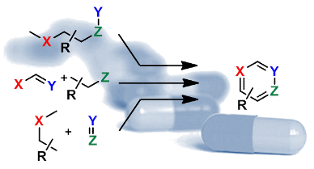
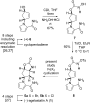
- involving 1-aza-4-borono-1,3-dienes 28 as key starting materials for the preparation of α-hydroxyalkylpiperidines. These scaffolds are present in several natural products, particularly in the alkaloid family of palustrine. The tandem process started with the hetero-[4 + 2]-cycloaddition of an hydrazonodiene


Recent applications of the divinylcyclopropane–cycloheptadiene rearrangement in organic synthesis
Beilstein J. Org. Chem. 2014, 10, 163–193, doi:10.3762/bjoc.10.14
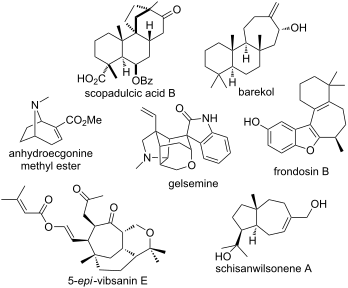
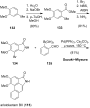
- the less hindered α,β-unsaturated ester and subsequent reduction. Alkaloid targets Davies and co-worker [112] were the first to apply the DVCPR to the total synthesis of alkaloids. Anhydroecgonine methyl ester (131, see Scheme 16) is a tropane alkaloid structurally related to cocaine, which can be
- and reductive amination after Boc-deprotection to yield the desired natural product 131 in only five steps. Perhaps one of the most prominent alkaloid syntheses using a DVCPR was carried out by Fukuyama and coworker [118][119][120] and targeted gelsemine (146, see Scheme 17 and Scheme 18), an alkaloid
- . Removal of the MOM-protecting group followed by reduction of the amide concluded Fukuyama’s total synthesis of gelsemine (146). An approach similar to Davies formal [4 + 3]-cycloaddition [81] was used by the group of Kende [130] to access the alkaloid isostemofoline (158, see Scheme 19) [131]. Rhodium


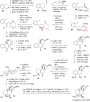


Synthesis of indole-based propellane derivatives via Weiss–Cook condensation, Fischer indole cyclization, and ring-closing metathesis as key steps
Beilstein J. Org. Chem. 2013, 9, 2709–2714, doi:10.3762/bjoc.9.307
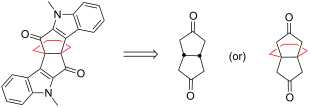
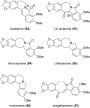
- stable [5]. Among them, indole-based propellanes are useful in biology and medicine [6][7][8][9][10][11][12]. In 1963 Djerassi [13][14] isolated fendleridine and 1-acetylaspidoalbidine both of which belong to the aspidoalbine alkaloid family [15][16][17][18][19][20]. Kopsia alkaloids (Figure 2) show a
- vincristine-resistant KB cancer cells [23][24]. Minfiensine alkaloid [25][26][27][28][29][30][31] containing a novel 1,2,3,4-tetrahydrocarbazole ring skeleton shows anticancer activity [32]. König and co-workers identified some propellane derivatives as cannabinoid CB1 receptor antagonists [33], which are
- potential drugs for the treatment of schizophrenia and alcohol addiction [34]. However, the synthesis of indole alkaloid derivatives containing a propellane ring system is a challenging task due to the presence of quaternary centers involved with these systems [35]. We envisioned a new synthetic route to


Stereoselectively fluorinated N-heterocycles: a brief survey
Beilstein J. Org. Chem. 2013, 9, 2696–2708, doi:10.3762/bjoc.9.306
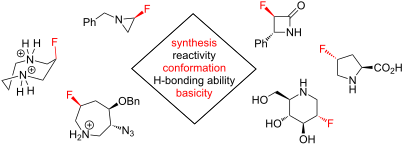
- derivatives bearing a pendant nitrogen nucleophile, and the source of chirality was a substoichiometric quantity of the cinchona alkaloid derivative (DHQ)2PHAL (70). This method was shown to work very well with several different pendant nucleophiles, but the N-acetamido nucleophile was found to be optimal
- , giving the corresponding product 71 in an impressive 92% ee. Elucidating the mechanism of chiral induction in this type of process is not straightforward, but preliminary experiments showed that associative complexation between the substrate 69 and the alkaloid catalyst 70 may account for the observed


Towards stereochemical control: A short formal enantioselective total synthesis of pumiliotoxins 251D and 237A
Beilstein J. Org. Chem. 2013, 9, 2358–2366, doi:10.3762/bjoc.9.271
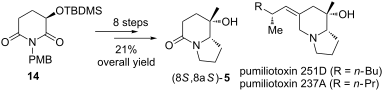
- structurally characterized by a (Z)-6-alkylidene-8-hydroxy-8-methylindolizidine ring system, which distinguishes from one to another by the 6-alkylidene side chain [1]. Interestingly, it is known that poison frogs don’t produce the alkaloids themselves, instead, they accumulate alkaloids from dietary alkaloid


An overview of the synthetic routes to the best selling drugs containing 6-membered heterocycles
Beilstein J. Org. Chem. 2013, 9, 2265–2319, doi:10.3762/bjoc.9.265
- uptake inhibitor originally developed over 20 years ago by Novo Nordisk and Abbott and is currently used as anticonvulsant in the treatment of epilepsy. For a long time it has been recognised that the simple core alkaloid structures as found in nipecotic acid (2.37), guvacine (2.38), β-homoproline (2.39


An investigation of the observed, but counter-intuitive, stereoselectivity noted during chiral amine synthesis via N-chiral-ketimines
Beilstein J. Org. Chem. 2013, 9, 2103–2112, doi:10.3762/bjoc.9.247
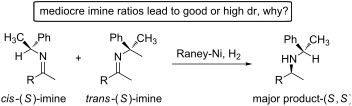
- sometimes offer competitive solutions regarding the synthesis of challenging chiral amine structures [9][22]. Furthermore, it is common that alkaloid or amine containing pharmaceutical drug syntheses proceed through imine intermediates that lead to diastereomeric amine products [36][37][38][39][40]. With


The chemistry of isoindole natural products
Beilstein J. Org. Chem. 2013, 9, 2048–2078, doi:10.3762/bjoc.9.243
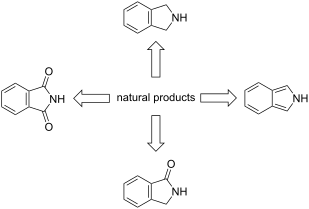
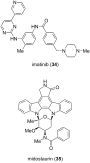
- have a huge potential for the development of new chemistry. Review Indolocarbazoles. Staurosporine (26) was the first member of the indolocarbazole alkaloid family to be discovered by Ōmura from Streptomyces staurosporeus at the Kitasato Institute in 1977 [16]. Over the past 35 years, more than 60
- subclasses. The first comprises two linkages, exemplified by (+)-staurosporine (26) and (+)-K252a (27), whereas the second class contains only one glycosidic bond as found in rebeccamycin (28) and holyrine A (29). Selected members of the indolocarbazole alkaloid family are depicted in Figure 2. The strong
- , Vedejs), the convergent approach reported by Myers allows a modular entry to diverse members of the cytochalasin alkaloid family [68]. As proof of concept, the macrolactone cytochalasin B (52) and the carbocyclic cytochalasin L-696,474 (78), a potent HIV-1 protease inhibitor [69][70][71][72], were












Total synthesis of (−)-epimyrtine by a gold-catalyzed hydroamination approach
Beilstein J. Org. Chem. 2013, 9, 2042–2047, doi:10.3762/bjoc.9.242
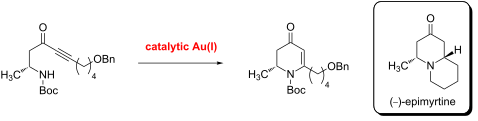
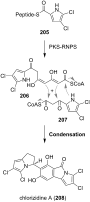
- alkaloid; total synthesis; Findings (−)-Epimyrtine, isolated from Vaccinium myrtillus (Ericaceae) [1][2], is a quinolizidine alkaloid. This alkaloid family exhibits potential pharmacological properties such as anticancer, antibacterial, antiviral and anti-inflammation activities [3][4][5]. This alkaloid
- has been a target of interest for synthetic chemists because of its structural simplicity among the family of quinolizidine structures. Since it has been isolated, numerous total syntheses of this alkaloid in racemic form have been reported in the literature. However, only a few asymmetric syntheses


Asymmetric allylic alkylation of Morita–Baylis–Hillman carbonates with α-fluoro-β-keto esters
Beilstein J. Org. Chem. 2013, 9, 1853–1857, doi:10.3762/bjoc.9.216
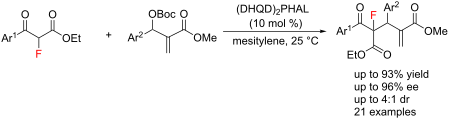
- and Biological Chemistry, Nanyang Technological University, 21 Nanyang Link, Singapore 637371 10.3762/bjoc.9.216 Abstract In the presence of a commercially available Cinchona alkaloid as catalyst, the asymmetric allylic alkylation of Morita–Baylis–Hillman carbonates, with α-fluoro-β-keto esters as
- with hetereoaromatic groups, such as thiophene and furan (Table 2, 2n–o). Conclusion We have developed an asymmetric allylic alkylation of MBH carbonates with α-fluoro-β-ketoesters, catalyzed by a commercially available Cinchona alkaloid. Several fluorinated adducts, with chiral quaternary carbon

Synthesis of the reported structure of piperazirum using a nitro-Mannich reaction as the key stereochemical determining step
Beilstein J. Org. Chem. 2013, 9, 1737–1744, doi:10.3762/bjoc.9.200
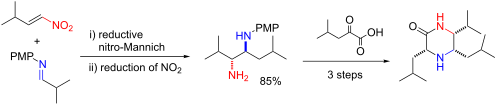
- unambiguously assigned by single crystal X-ray diffraction but the spectroscopic data did not match those reported for the natural product. The structure of the natural product must therefore be revised. Keywords: alkaloid; aza-Henry; natural products; nitro-Mannich; piperazinone; stereoselective synthesis
- a novel bioactive alkaloid, piperazirum (2, Scheme 2), which to our knowledge had not been previously synthesised. Piperazirum was isolated from the leaf extract of Arum palaestinum Boiss and was shown to possess significant cytotoxicity against cultured tumor cell lines in vitro [46]. Its chemical


Organocatalyzed enantioselective desymmetrization of aziridines and epoxides
Beilstein J. Org. Chem. 2013, 9, 1677–1695, doi:10.3762/bjoc.9.192
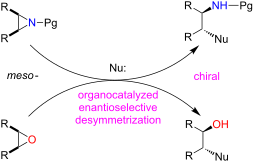
- including cinchona alkaloid derivatives, chiral phosphoric acids, chiral amino alcohols, chiral thioureas, chiral guanidines, and chiral 1,2,3-triazolium chlorides. In this review, the research work of enantioselective desymmetrization of meso-aziridines is organized into sections according to the employed
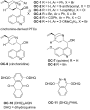
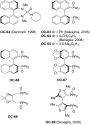
- organocatalysts. Cinchona alkaloid derivatives The first organocatalytic enantioselective desymmetrization of meso-aziridines was discovered by Hou and co-workers in 2007 [40] with various arylthiols as nucleophiles in CCl4 at 0 °C in the presence of cinchonine-derived phase-transfer catalysts (PTCs, Figure 2, OC
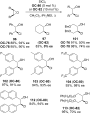
- -1 to OC-6). The substituent on the bridgehead nitrogen of cinchona alkaloids has a great impact on the enantioselectivity of the reactions. The catalyst OC-2 with 9-anthracenylmethyl on the bridgehead nitrogen is more efficient than other cinchona alkaloid-derived catalysts for the desymmetrization








Bioinspired total synthesis of katsumadain A by organocatalytic enantioselective 1,4-conjugate addition
Beilstein J. Org. Chem. 2013, 9, 1601–1606, doi:10.3762/bjoc.9.182
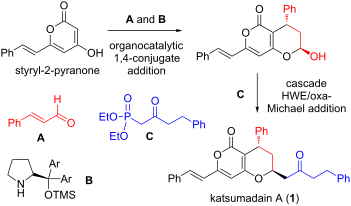
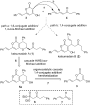
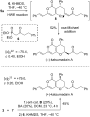
- [19][20][21][22][23], the 9-amino-9-deoxyepicinchona alkaloid-promoted Michael addition is particularly attractive, mainly due to the availability of the catalyst and its superior reactivity towards the activation of the unsaturated ketone substrates through formation of the corresponding iminium


Selective copper(II) acetate and potassium iodide catalyzed oxidation of aminals to dihydroquinazoline and quinazolinone alkaloids
Beilstein J. Org. Chem. 2013, 9, 1194–1201, doi:10.3762/bjoc.9.135

- to affect the selective oxidation of ring-fused aminals to dihydroquinazolines and quinazolinones, respectively. These methods enable the facile preparation of a number of quinazoline alkaloid natural products and their analogues. Keywords: aminal; copper; oxygen; tert-butylhydroperoxide
- ; quinazoline alkaloid; Introduction Quinazoline alkaloids are a class of naturally occurring compounds with a range of medicinal properties and have been indicated for use as bronchodilators, vasodilators, anti-inflammatory agents and acetylcholinesterase inhibitors [1][2][3][4][5]. Many of the plants these
- preparation of novel materials for biological studies. Examples of naturally occurring quinazoline alkaloids. Different approaches to the synthesis of quinazoline alkaloid structures. Oxidation of other aminal systems. Optimization of conditions for deoxyvasicine (2) formation.a Scope of the copper-catalyzed


Exploration of an epoxidation–ring-opening strategy for the synthesis of lyconadin A and discovery of an unexpected Payne rearrangement
Beilstein J. Org. Chem. 2013, 9, 1179–1184, doi:10.3762/bjoc.9.132
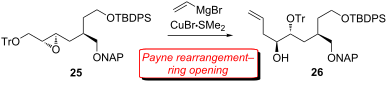
- Brad M. Loertscher Yu Zhang Steven L. Castle Department of Chemistry and Biochemistry, Brigham Young University, C100 BNSN, Provo, UT, 84602, USA 10.3762/bjoc.9.132 Abstract In the context of synthetic efforts targeting the alkaloid lyconadin A, scalemic epoxide 25 was prepared by a highly
- for synthesis. Herein, we provide an account of our studies directed toward the construction of this alkaloid. Specifically, we describe our efforts to prepare advanced intermediates that could be employed in the aforementioned pyridone annulation and tandem radical cyclization processes. In the
- location of the trityl ether in 26, they do provide compelling evidence that the carbon backbone of this compound is correct as drawn and is produced by a Payne rearrangement of some type. Conclusion In the context of synthetic efforts targeting the polycyclic alkaloid lyconadin A, we prepared scalemic


Establishing the concept of aza-[3 + 3] annulations using enones as a key expansion of this unified strategy in alkaloid synthesis
Beilstein J. Org. Chem. 2013, 9, 1170–1178, doi:10.3762/bjoc.9.131
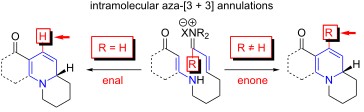
- synthesis; catalysis; enones; intramolecular aza-[3 + 3] annulation; N-heterocycles; natural product; vinylogous amides; Introduction Throughout the past decade, we have been developing an aza-[3 + 3] annulation reaction as a general and unified strategy in alkaloid synthesis [1][2][3][4][5][6][7][8][9][10
- of isomerization and hydrolysis (Figure 1) [34][35][36][37]. The prevalence of six-membered nitrogen heterocyclic motifs in alkaloids renders the development of this aza-[3 + 3] annulation into a powerful strategy a unique opportunity in the field of alkaloid synthesis [1][2][3][4][8][9][10][11][12
- acidic conditions, thereby implying that the observed ratio of 12 and 14 represents a thermodynamic one in favor of the more stable isopropyleine [48]. With these experimental findings, Mueller and Thompson concluded that the alkaloid isolated by Tursch and co-workers [46][47] was in fact a mixture of


Tandem dinucleophilic cyclization of cyclohexane-1,3-diones with pyridinium salts
Beilstein J. Org. Chem. 2013, 9, 1119–1126, doi:10.3762/bjoc.9.124
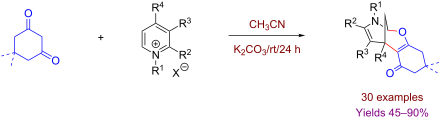
- containing an annulated pyridinium core, such as quinolinium and isoquinolinium salts, are of considerable importance as building blocks for the synthesis of various alkaloid frameworks [10][25][26][27][28][29][30][31][32][33][34][35]. During the past decade the reaction of dinucleophiles with
- addition of acid due to decomposition [36]. Additionally, we have shown a broad application of the quinolinium [44][45][46][47][48] and isoquinolinium [49] salts for the synthesis of a wide variety of alkaloid-like frameworks. Results and Discussion Reaction optimization During the course of the above




Formal synthesis of (−)-agelastatin A: an iron(II)-mediated cyclization strategy
Beilstein J. Org. Chem. 2013, 9, 860–865, doi:10.3762/bjoc.9.99
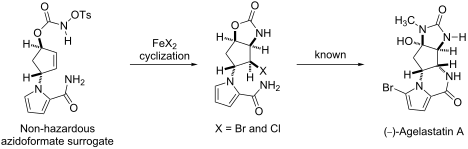
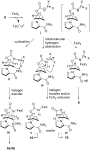
- intermediate for the synthesis of (−)-agelastatin A (AA, 1), a potent antiproliferative alkaloid. The present synthetic endeavour offered an insight into the mechanism underlying the iron(II)-mediated aminohalogenation of N-tosyloxycarbamate, in which the radical properties of the N–iron intermediates in the
- redox states were operative. Keywords: agelastatin; aminohalogenation; iron(II); free radical; natural product synthesis; Introduction Marine organisms often produce bioactive substances that potentially serve as attractive resources for drug discovery. (−)-Agelastatin A (AA, 1), a cytotoxic alkaloid





Diastereoselective synthesis of nitroso acetals from (S,E)-γ-aminated nitroalkenes via multicomponent [4 + 2]/[3 + 2] cycloadditions promoted by LiCl or LiClO4
Beilstein J. Org. Chem. 2013, 9, 838–845, doi:10.3762/bjoc.9.96
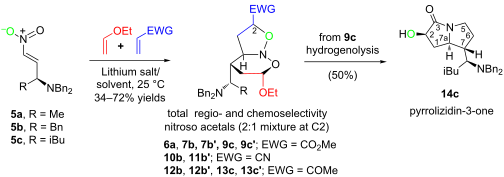
- -dipolarophiles to furnish nitroso acetals of type 4 in an inter- or intramolecular fashion [1][2][3][8][9]. These nitroso acetals can be transformed into functionalized pyrrolizidin-3-ones and in sequence into alkaloid nuclei [1][3][10][11]. The majority of the tandem nitroalkene cycloadditions require the


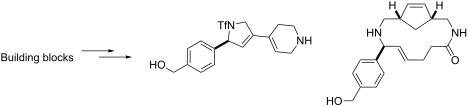
Synthesis of skeletally diverse alkaloid-like molecules: exploitation of metathesis substrates assembled from triplets of building blocks
Beilstein J. Org. Chem. 2013, 9, 775–785, doi:10.3762/bjoc.9.88


Inter- and intramolecular enantioselective carbolithiation reactions
Beilstein J. Org. Chem. 2013, 9, 313–322, doi:10.3762/bjoc.9.36

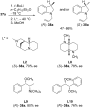
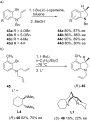
- chiral ligands for lithium, thus opening new opportunities for their application in asymmetric synthesis. The naturally occurring alkaloid (−)-sparteine, which has been until recently inexpensive and commercially available, is the most widely used chiral ligand in enantioselective carbolithiation
- retention of configuration affords a new organolithium, which can be reacted with electrophiles to afford pyrrolizidines with no loss of optical purity. Scheme 12a shows the application to the synthesis of the pyrrolizidine alkaloid (+)-pseudoheliotridane (33) [43]. The reaction can be extended to the





Engineering of indole-based tethered biheterocyclic alkaloid meridianin into β-carboline-derived tetracyclic polyheterocycles via amino functionalization/6-endo cationic π-cyclization
Beilstein J. Org. Chem. 2012, 8, 1901–1908, doi:10.3762/bjoc.8.220
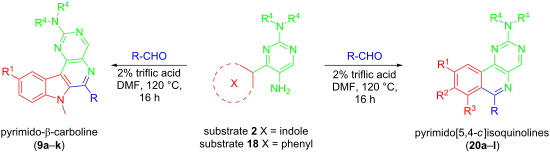
- -based alkaloid meridianins into annulated indole-based polyheterocycles as novel chemprobes. For the synthesis of meridianin-inspired indole-based annulated polyheterocycles, we proposed to transform tethered biheterocycles into β-carboline-based polyheterocycles, a new prototype hitherto not reported
- inhibition [48] to inhibition of cGMP-dependent processes [49][50]. In this communication, we report engineering of naturally occurring tethered indole-based biheterocyclic alkaloid meridianins into β-carboline-derived tetracyclic polyheterocycles by amino functionalization of the pyrimidine ring followed by


Determination of the relative configuration of tropinone and granatanone aldols by using TBDMS ethers
Beilstein J. Org. Chem. 2012, 8, 1877–1883, doi:10.3762/bjoc.8.216

- of cocaine (ent-cocaine) [2], knightinol [3], alkaloid KD-B [3] and ferrugine [4][5]. Stereoselective syntheses of nortropinone aldols [6][7] and N-protected nortropinone aldols [5][8][9], which can open access to other N-substituted analogues, have also been described. The known diastereomerically


Organocatalytic tandem Michael addition reactions: A powerful access to the enantioselective synthesis of functionalized chromenes, thiochromenes and 1,2-dihydroquinolines
Beilstein J. Org. Chem. 2012, 8, 1668–1694, doi:10.3762/bjoc.8.191
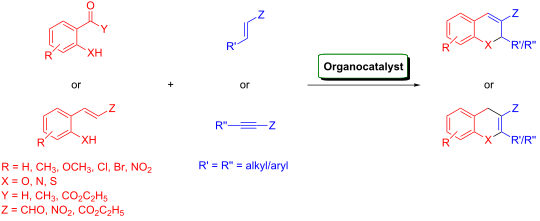
- unprecedented asymmetric domino thio-Michael–Michael process, involving dynamic kinetic resolution, was reported by Wang et al. [72] using cinchona alkaloid amine-thiourea XXXIb as catalyst at a low catalytic loading of 2 mol %. Reaction of 3-(2-mercaptophenyl)-2-propenoic acid ethyl esters 50 with α,β
- α,β-unsaturated oxazolidinones, as presented by Wang and co-workers. Domino Michael–aldol reaction of 2-mercaptobenzaldehydes with maleimides catalyzed by cinchona alkaloid thiourea, as reported by Wang’s group. Domino thio-Michael–aldol reaction between 2-mercaptoacetophenone and enals developed by
- Córdova and co-workers. Enantioselective tandem Michael–Henry reaction of 2-mercaptobenzaldehyde with β-nitrostyrenes reported by Zhao. Enantioselective tandem Michael–Knoevenagel reaction between 2-mercaptobenzaldehydes and benzylidenemalonates, as developed by the Zhao group. Cinchona alkaloid thiourea






Organocatalytic asymmetric Michael addition of unprotected 3-substituted oxindoles to 1,4-naphthoquinone
Beilstein J. Org. Chem. 2012, 8, 1360–1365, doi:10.3762/bjoc.8.157
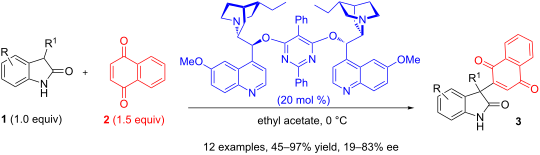
- [26][27]. To construct the C3 quaternary stereogenic carbon center, we have designed a novel cinchona alkaloid-based phosphoramide bifunctional catalyst to realize a highly enantioselective Michael addition of both unprotected 3-alkyl- and 3-aryloxindoles to nitroolefins [28]. Based on these results
- -phenyloxindole 1a and 1,4-naphthoquinone (2a), with ethyl acetate (EtOAc) as the solvent at 0 °C (Table 1, Figure 1). A variety of bifunctional cinchona alkaloid-derived catalysts 5–9 were first tried, aiming to facilitate the reaction by the dual activation of both reaction partners, with H-bonding donor moiety
- reactivity and enantioselectivity of this reaction is now in progress in our lab. Cinchona alkaloid-derived catalysts screened for condition optimization (Table 1). A one-pot synthesis of enantioenriched 3,3-diaryloxindoles. Condition optimization for the reaction of 1a and 2a. Substrate scope of unprotected





