Search results
Search for "analogues" in Full Text gives 929 result(s) in Beilstein Journal of Organic Chemistry. Showing first 200.
Efficient and regioselective synthesis of dihydroxy-substituted 2-aminocyclooctane-1-carboxylic acid and its bicyclic derivatives
Beilstein J. Org. Chem. 2022, 18, 77–85, doi:10.3762/bjoc.18.7
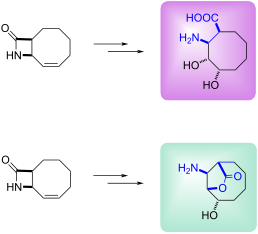
- biological activities [6][7]. Moreover, they can be used as starting substances for different heterocycles, as precursors for the synthesis of polymers, as potential pharmacons, for the synthesis of natural products or analogues, and also as building blocks in drug research [8][9][10][11]. Furthermore, some


1,2-Naphthoquinone-4-sulfonic acid salts in organic synthesis
Beilstein J. Org. Chem. 2022, 18, 53–69, doi:10.3762/bjoc.18.5
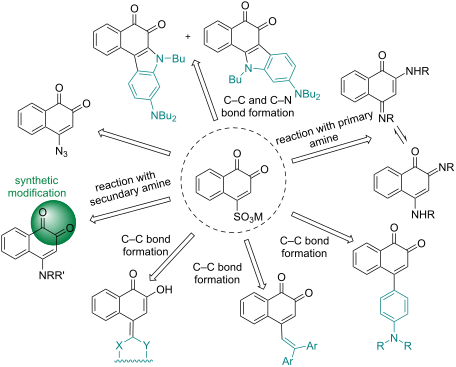
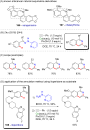
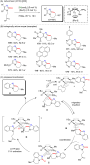
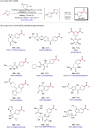
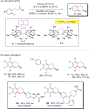
- . All cases will be covered throughout the text. Synthesis of 4-amino-β-naphthoquinones and analogues from β-NQS After the first discovery that β-NQS reacts quickly with amines to form colored products in good yields, this reagent became quite popular in quantitative analytical determinations of some


Peptide stapling by late-stage Suzuki–Miyaura cross-coupling
Beilstein J. Org. Chem. 2022, 18, 1–12, doi:10.3762/bjoc.18.1
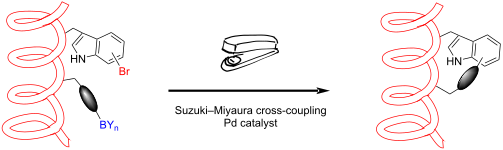
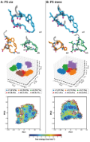
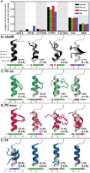
- of the three cleavage sites are blocked by the macrocycle. Accelerated molecular dynamics simulations verified a significantly higher degree of helicity for SMC stapled peptide P5 compared to the linear analogues P6 and aAxWt, which is in accordance with the experimental data obtained from CD and


A photochemical C=C cleavage process: toward access to backbone N-formyl peptides
Beilstein J. Org. Chem. 2021, 17, 2932–2938, doi:10.3762/bjoc.17.202
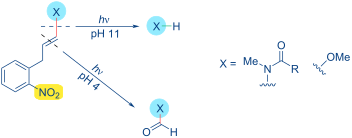
- , which leads to formyl products from formal oxidative cleavage of a C=C bond. Our interest in vinylogous analogues of 2-nitroaryl photoreactive groups stems from studies into alkenylboronic acid reagents for Chan–Lam-type modification of peptide backbone N–H bonds, directed by a proximal histidine
- . C–O cleavage, Figure 1A) through H-atom abstraction from a photoexcited intermediate, which produces an oxonium-type intermediate (in brackets). Hydrolysis of this intermediate then affords an alcohol product. Recently [16][17], we demonstrated that vinylogous analogues of this mechanism (Figure 1B


First total synthesis of hoshinoamide A
Beilstein J. Org. Chem. 2021, 17, 2924–2931, doi:10.3762/bjoc.17.201
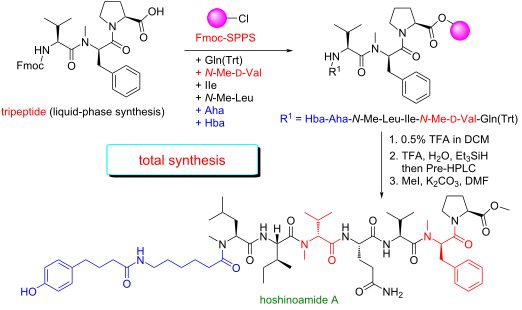
- hoshinoamide A and other highly methylated polypeptide analogues. Our strategy was also helpful to further study its antimalarial activity. Structure-and-activity and functional studies with the fluorescent-labeled analogs are currently under investigation in our lab. Experimental General experimental


Iron-catalyzed domino coupling reactions of π-systems
Beilstein J. Org. Chem. 2021, 17, 2848–2893, doi:10.3762/bjoc.17.196
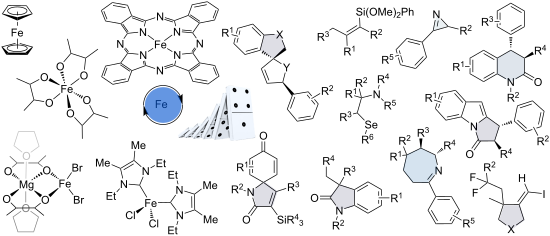
- ]. In the same year, the Du group investigated the FeCl2·4H2O decarboxylative radical alkylative cyclization of cinnamamides 131/134 as an expedient approach towards dihydroquinolinone 133 and pyrrolo[1,2-a]indole 135 analogues in good yield and excellent diastereoselectivity (Scheme 27) [120]. In terms













A tribute to Carsten Schmuck
Beilstein J. Org. Chem. 2021, 17, 2795–2798, doi:10.3762/bjoc.17.190
- into account particular features of “Carsten’s GCP” unit, or related analogues, he would propose several feasible structural modifications, which could provide novel properties of scientific interest. Finally, upon mutually agreeing on the next generation of new compounds, he would always take the

The ethoxycarbonyl group as both activating and protective group in N-acyl-Pictet–Spengler reactions using methoxystyrenes. A short approach to racemic 1-benzyltetrahydroisoquinoline alkaloids
Beilstein J. Org. Chem. 2021, 17, 2716–2725, doi:10.3762/bjoc.17.183
- about 2,500 known structures. Among these are “simple” benzylisoquinolines and, even more important, their 1,2,3,4-tetrahydro analogues and bisbenzylisoquinolines derived thereof, as well as more complex tetra- and pentacylic ring systems (aporphines, protoberberines, cularines, morphinane-type
- ][4][5]. In continuation of our recent work on the chemistry and pharmacology of benzylisoquinolines and related compounds [6][7][8][9][10][11][12][13][14] we investigated truncated analogues of the bisbenzylisoquinoline alkaloid tetrandrine as blockers of the calcium channel two-pore channel 2 (TPC2
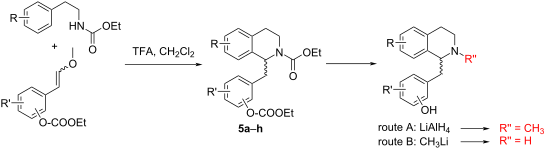
- should lead to an N-methyl group and to reductive cleavage of the carbonate-protected phenol(s); route B is based on treatment with an alkyllithium compound [26], which should remove all ethoxycarbonyl groups and provide N-nor analogues of the products obtained in route A (Figure 3). The required


Synthetic strategies toward 1,3-oxathiolane nucleoside analogues
Beilstein J. Org. Chem. 2021, 17, 2680–2715, doi:10.3762/bjoc.17.182
- sulfur atom at the 3’-position, these compounds have proved to be structurally potent nucleoside analogues, and the best example is BCH-189. The majority of methods traditionally involves the chemical modification of nucleoside structures. It requires the creation of artificial sugars, which is
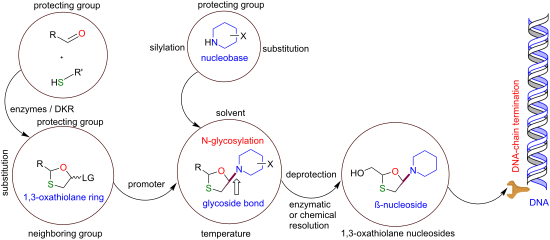
- -oxathiolane nucleosides via resolution methods. The chemical as well as enzymatic procedures are reviewed and segregated in this review for effective synthesis of 1,3-oxathiolane nucleoside analogues. Keywords: chiral auxiliaries; enzymes; Lewis acids; N-glycosylation; 1,3-oxathiolane sugar and nucleosides
- . These molecules play a significant role in replication, transmission, and transcription of genetic material in life forms [1]. Structural analogues similar to the naturally occurring 2'-deoxynucleosides and ribonucleosides, the DNA and RNA building blocks, respectively, are expected to mimic their


Adjusting the length of supramolecular polymer bottlebrushes by top-down approaches
Beilstein J. Org. Chem. 2021, 17, 2621–2628, doi:10.3762/bjoc.17.175
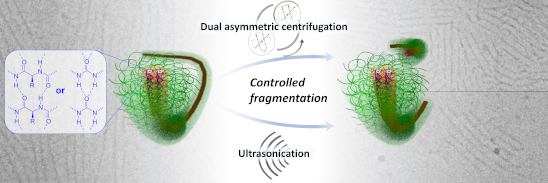
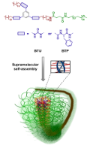
- the spherical analogues with regard to blood circulation time, drug loading, and tumor penetration abilities [1][2][3]. However, the straightforward preparation of cylindrical polymer aggregates with defined and reproducible length still remains challenging but represents a prerequisite for the



α-Ketol and α-iminol rearrangements in synthetic organic and biosynthetic reactions
Beilstein J. Org. Chem. 2021, 17, 2570–2584, doi:10.3762/bjoc.17.172
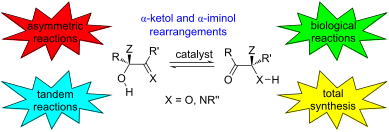
- catalyst containing the chiral bisoxazoline ligand (S,S)-8 led to the α-ketol rearrangement product 7 in 70% yield and 68% ee (Figure 3) [5]. The study further demonstrated the effectiveness of the catalyst for a series of analogues of 6 bearing various replacements for the phenyl group, often proceeding




Silica gel and microwave-promoted synthesis of dihydropyrrolizines and tetrahydroindolizines from enaminones
Beilstein J. Org. Chem. 2021, 17, 2543–2552, doi:10.3762/bjoc.17.170
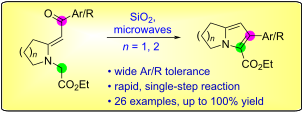
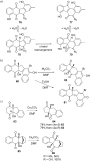
- with the microwave-assisted synthesis of 2,3-dihydro-1H-pyrrolizines from pyrrolidine-based enaminones suggested that the technique might also be suitable for preparing 5,6,7,8-tetrahydroindolizine analogues from the corresponding piperidine systems. In a preliminary investigation we prepared three
- the six-membered analogues, which readily lose the exocyclic double bond to give the iminium system 27 upon essentially irreversible protonation. Is this perhaps another example of the lower reactivity and greater relative stability of double bonds exo- to five-membered rings when compared with their
- 5,6,7,8-tetrahydroindolizines 26, respectively, when subjected to microwave heating with silica gel in suitable solvents. The enaminone acted as an electrophile in these cyclization reactions rather than as a nucleophile, as had previously been found with N-phenacyl analogues [18]. The formation of




Synthesis of new substituted 7,12-dihydro-6,12-methanodibenzo[c,f]azocine-5-carboxylic acids containing a tetracyclic tetrahydroisoquinoline core structure
Beilstein J. Org. Chem. 2021, 17, 2511–2519, doi:10.3762/bjoc.17.168
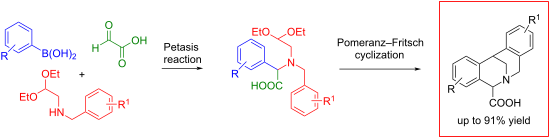
- ]nonane, isolated from Papaveraceae and Ranunculaceae species. Natural isopavines (e.g., amurensinine (I), and O-methylthalisopavine (II), Figure 1) as well as their synthetic analogues have attracted much attention [4][5] because of their interactions with the receptors in the central nervous system


Synthesis and investigation on optical and electrochemical properties of 2,4-diaryl-9-chloro-5,6,7,8-tetrahydroacridines
Beilstein J. Org. Chem. 2021, 17, 2450–2461, doi:10.3762/bjoc.17.162
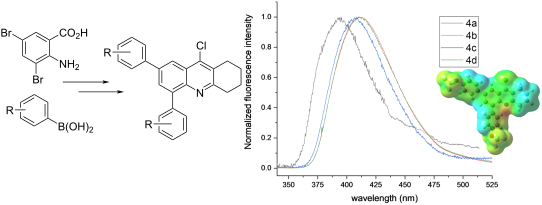
- optoelectronic properties [32][35][36][37]. Acridines, as aza-analogues of anthracene have obtained much attention in the field of organic light emitting diodes [38][39][40][41]. While considerable attention has been devoted to the photophysical properties of acridines, not much work has been reported related to
- their partially hydrogenated analogues, even though they were used as electron-donor groups for OLED applications [42][43]. On the other hand, tetrahydroacridines have received much attention in medicinal chemistry, due to their ability to inhibit topoisomerase enzymes and block the DNA transcription




Strategies for the synthesis of brevipolides
Beilstein J. Org. Chem. 2021, 17, 2399–2416, doi:10.3762/bjoc.17.157
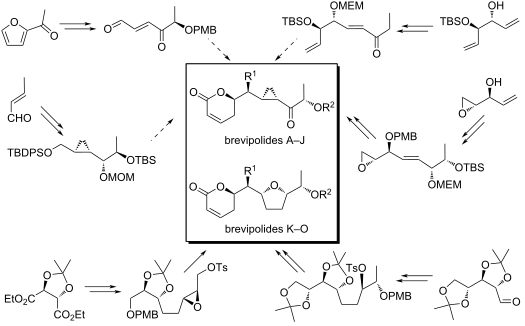
- design new synthetic methodologies for reproducing these natural products and their analogues as well as to develop new pharmaceuticals from them. Structures of brevipolides A–O (1 – 15). Retrosynthetic analysis of brevipolide H (8) by Kumaraswamy. Attempt to synthesize brevipolide H (8) by Kumaraswamy


Synthesis and antimicrobial activity of 1H-1,2,3-triazole and carboxylate analogues of metronidazole
Beilstein J. Org. Chem. 2021, 17, 2377–2384, doi:10.3762/bjoc.17.154
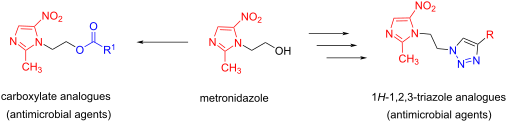
- agents; carboxylate analogues; 1H-1,2,3-triazole analogues; metronidazole; synthesis; Introduction Metronidazole (1) is an important antimicrobial agent which has been clinically used successfully for a long time. It was originally used for the treatment of infections caused by Trichomonas varginalis
- cost-effective drug. Due to its impressive antimicrobial activity and limited adverse effect metronidazole (1) has been considered as a “Gold Standard” antibiotic (Figure 1). However, to avoid the problem related to clinical resistance to this antimicrobial agent some novel and improved analogues of
- 1H-1,2,3-triazole was based on its known activities and its broad range of applications in biochemical, pharmaceutical, biomedicinal and materials sciences [4][5]. Results and Discussion Chemistry: synthesis of 1H-1,2,3-triazole analogues of metronidazole Metronidazole (1) has a free primary hydroxy


Phenolic constituents from twigs of Aleurites fordii and their biological activities
Beilstein J. Org. Chem. 2021, 17, 2329–2339, doi:10.3762/bjoc.17.151
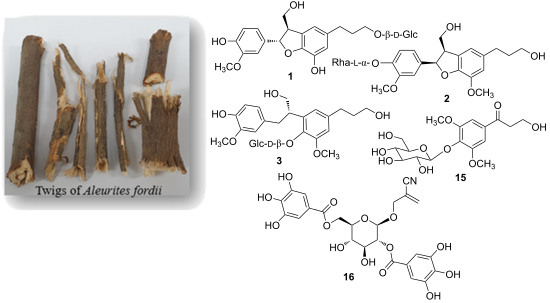
- 14 known analogues (4–14 and 17–19). The structural elucidation of the new compounds was performed through the analysis of their NMR, HRMS, and ECD spectra and by chemical methods. All isolated compounds were tested for their antineuroinflammatory and neuroprotective activities. Keywords: Aleurites


Base-free enantioselective SN2 alkylation of 2-oxindoles via bifunctional phase-transfer catalysis
Beilstein J. Org. Chem. 2021, 17, 2287–2294, doi:10.3762/bjoc.17.146
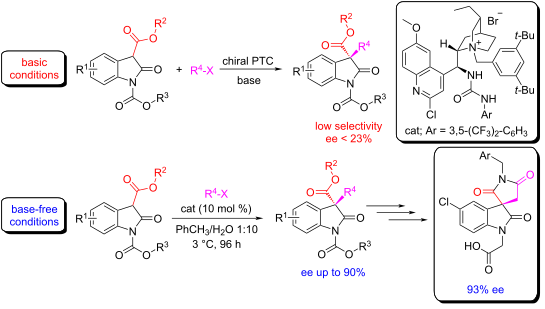
- employment of benzyl bromides bearing electron-withdrawing groups led to products with moderate ee in the cases of para-substituted analogues (Table 2, entries 4 and 5) while an increase in enantioselectivity, up to 79% ee, was observed using meta-substituted variants (Table 2, entries 6 and 7). To our



Constrained thermoresponsive polymers – new insights into fundamentals and applications
Beilstein J. Org. Chem. 2021, 17, 2123–2163, doi:10.3762/bjoc.17.138
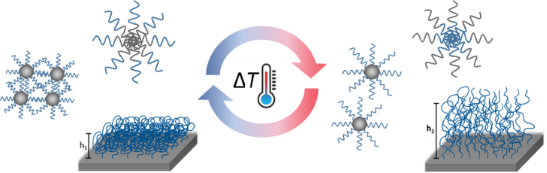
- polymers, such as PDMAPS and its structural analogues [88][89][90][91], and on the other hand, polymers with strong hydrogen acceptor and donor units, like the uncharged PNAGA [92][93][94][95][96], show a pronounced UCST. In contrast, the solubilization process of a polymer with LCST behavior is an


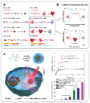
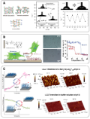
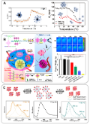
Progress and challenges in the synthesis of sequence controlled polysaccharides
Beilstein J. Org. Chem. 2021, 17, 1981–2025, doi:10.3762/bjoc.17.129
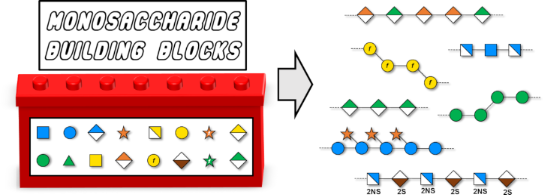
- of the glycosidic bond. In this system, the SEE was hydrolytically inactive and the acid catalysis activated the C-1 at the reducing end efficiently to promote chain-elongation. Immobilized catalysis provided cellulose analogues with very high crystallinity. A synthetic mutant enzyme of endoglucanase
- ), including the 6-deoxy [85], 13C-labelled [24], ʟ-Glc [86], and ethyl/methyl analogues [87][88][89]. Depending on the methyl/ethyl content, it was possible to tune the solubility of the polymer in water. 6-O-Methyl- and 6-O-ethyl-celluloses were poorly soluble in water, in contrast to heterogeneous polymers
- structures in low yields. To overcome this issue, the products were converted and studied as their acetate analogues, as in the case of a cellulose 20mer obtained with a convergent approach [91][92]. To date, the longest well-defined cellulose analogue produced via chemical synthesis is a 12mer (13, Scheme 2










Asymmetric organocatalyzed synthesis of coumarin derivatives
Beilstein J. Org. Chem. 2021, 17, 1952–1980, doi:10.3762/bjoc.17.128
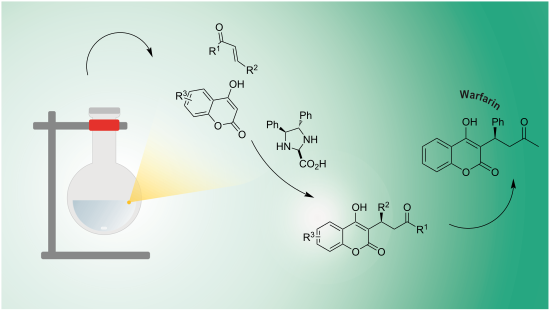
- amine (S)-warfarin analogues 3 could be obtained with moderate to excellent enantiomeric excesses (Scheme 27b). In 2018, Modrocká et al. described the synthesis of 2,3-dihydrofurocoumarins 89 through an enantioselective Michael addition of 4-hydroxycoumarins 1 to β-nitrostyrenes 88, followed by an




On the application of 3d metals for C–H activation toward bioactive compounds: The key step for the synthesis of silver bullets
Beilstein J. Org. Chem. 2021, 17, 1849–1938, doi:10.3762/bjoc.17.126
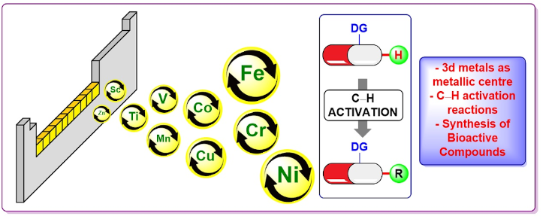
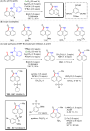
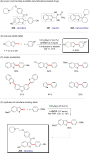
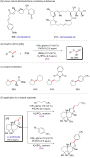
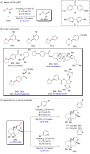
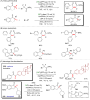
- full agonists (54 and 55, Scheme 20A) [139]. Ackermann and co-workers presented a manganese(I)-catalyzed C–H allylation, installing α,β-unsaturated esters in peptide analogues bearing indole motifs (Scheme 22B) [140]. Starting with tryptophan, the enantioselective allylation reaction afforded the
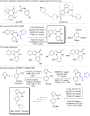
- commercially available anticancer drug [192]). They achieved the C–H methylation by following two methods (method A or method B, Scheme 36A) and obtained the methylated analogues 107–119 in moderate to very high yields (Scheme 36B and C). Ellman and co-workers described a powerful and interesting three
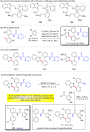
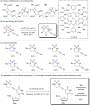
- ligands but also to the diene R5 and R6 substituents. With this innovative method in hands, the authors explored the synthetic applicability in the preparation of a core unit from lasalocid A (124), a known antibiotic drug [194] that, along with its four analogues 120–123 (Scheme 37A), were extracted from

























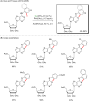

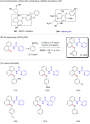

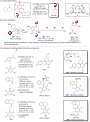

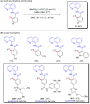
Cationic oligonucleotide derivatives and conjugates: A favorable approach for enhanced DNA and RNA targeting oligonucleotides
Beilstein J. Org. Chem. 2021, 17, 1828–1848, doi:10.3762/bjoc.17.125
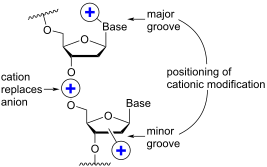
- simultaneously with cleavage from the solid support [66]. It was found that the modified ON gave an improved duplex stability relative to the unmodified ON by 15 °C at 150 mM NaCl [66]. Later, improved syntheses of the phosphoramidite derivatives of guanine analogues have been developed [67]. Thus, many studies
- NaCl) [68]. It has been demonstrated that C-2 modified guanidine analogues containing nor-spermidine (30) and the shorter diethylenetriamine (29) (Table 3D) could be synthesized via the C2-fluoro modified monomer. This resulted in ONs with slightly higher Tm (approximately 3 °C for 29 and 30) when
- incorporated into TFOs all induced excellent triplex stability at pH 7.0 [94] (Table 6). To circumvent the laborious work related to the monomers described above, post-ON conjugation via click-chemistry was utilized to attach two different spermidine analogues, carrying either two (56) or three (57) positive


Development of N-F fluorinating agents and their fluorinations: Historical perspective
Beilstein J. Org. Chem. 2021, 17, 1752–1813, doi:10.3762/bjoc.17.123
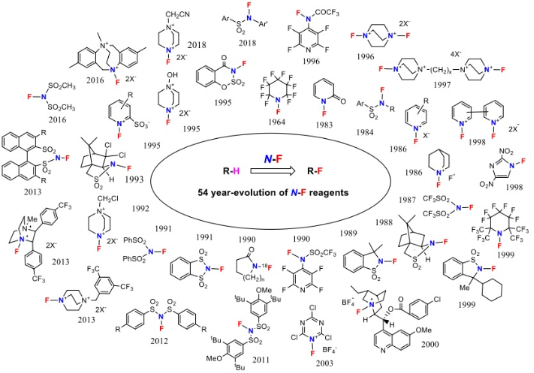
- that the fluorinations with 1-1 were suppressed by the formation of perfluoro-3,4,5,6-tetrahydropyridine (1-5), which was reactive to the nucleophilic substrates existing in the reaction mixture. In 1986, Banks and co-worker reported the preparation of polymeric analogues of perfluoro-N
- )-27-6. Enantioselective fluorinations of typical enolates were then performed (Scheme 63). The (R)-27-6 reagent gave up to 79% yield and 88% enantiomeric excess in the case of 2-benzyl-α-tetralone. 1-28. (R)- and (S)-N-fluoro-3-tert-butyl-7-nitro-benzothiazine 1,1-dioxides and spiro-type analogues In

























Sustainable manganese catalysis for late-stage C–H functionalization of bioactive structural motifs
Beilstein J. Org. Chem. 2021, 17, 1733–1751, doi:10.3762/bjoc.17.122

- ]. Based on an initial optimization study, manganese(I) pentacarbonyl bromide was deemed as the optimal catalyst, enabling a robust racemization-free allylation process. In addition to tryptophan-containing peptides, diazepam and nucleoside analogues were found to be viable allylation substrates, affording
- peptides. B) Intramolecular late-stage alkynylative cyclic peptide formation. a0.05 mol % of BPh3 was added. Late-stage Mn-catalyzed C–H allylation of peptides and bioactive motifs. Intramolecular C–H allylative cyclic peptide formation. Late-stage C–H glycosylation of tryptophan analogues. Late-stage C–H